On Meet the Press, Jay Sekulow, a member of the Trump personal legal team, tells Chuck Todd that the president is besieged by leaks, but that there is no investigation of him personally.
Jay Sekulow argues on Face the Nation that President Trump "was not and is not a target" of investigations into Russian election meddling and related controversies.
HEATED DEBATE over the facts: Jay Sekulow vs. Chris Wallace discussing the possible investigation of President Trump over the firing of FBI Directory James Comey.
Donald Trump tweeted that he is under investigation, but his lawyer stated on Sunday that he is not. Joy Reid and her panel discuss this contradiction, and the full scope of the Russia probe. Duration: 15:07
Joy Reid and her panel discuss the wide scope of Russian-backed cyber-attacks that occurred at the local level in recent U.S. elections, and how these municipalities don’t have the resources to fight back. Duration: 10:59
Journalist Greg Palast tells Joy Reid that in his reporting he’s found many instances – usually driven by Republicans' initiatives – in which voters have been purged from rolls among other methods, allegedly to influence elections. Duration: 9:10
Republicans call on Democrats to change the 'tone'
AM Joy 6/18/17
Are Republicans laying all the blame for today’s vicious tone in politics at the Democrats’ feet? Joy Reid and her panel debate who’s truly responsibly for the current political atmosphere. Duration: 14:17
Jordan Klepper of The Daily Show joins Joy Reid on the show’s exhibition of classic Trump tweets and more on display through Sunday at 10 p.m. at 3 W. 57th street in New York City. Duration: 7:10
Joy Reid interviews award-winning author Howard Jacobson on his new satirical work about Donald Trump – with an unusual name – that makes a major statement about our times. Duration: 7:15
Full Show - Public Agrees That Megyn Kelly Destroyed Herself - 6/18/17
Published on Jun 19, 2017 by The Alex Jones Channel
Sunday, June 18th 2017[, with appearances by Mike Cernovich, Steve Pieczenik, Jack Posobiec and Mike Malice]: NBC Airs Alex Jones Hit Piece - Following significant backlash, NBC will air its controversial interview with Infowars founder Alex Jones at 6PM CT, despite calls from Jones and others not to air the piece. We'll break down how Alex was able to scoop Megyn Kelly and NBC, and look at the media fallout over the network's decision. Also, we look at the Trump assassination play disruption and the president's tweets regarding the investigation "witch hunt." https://www.infowars.com/alex-jones-leaks-megyn-kellys-interview-pitch-its-not-gonna-be-some-gotcha-hit-piece-i-promise/
We’ve heard a lot of talk about coal miners in the last year, but what are the real issues surrounding coal? John Oliver and a giant squirrel look into it.
Republican Coal King Sues HBO Over John Oliver’s Show The late-night comedian aired a pointed segment about miner safety—and predicted the lawsuit that has just been lodged against him 06.21.17 http://www.thedailybeast.com/coal-king-sues-hbo-over-john-olivers-show [with embedded document]
Kushner Is Said to Be Reconsidering His Legal Team Abbe Lowell, right, a prominent trial lawyer, in 2014. Mr. Lowell was said to have been recently contacted about joining Jared Kushner’s legal team. JUNE 18, 2017 Representatives of Jared Kushner, President Trump’s son-in-law and senior adviser, have quietly contacted high-powered criminal lawyers about potentially representing him in the wide-ranging investigation into Russia’s influence on the 2016 election, according to three people briefed on the matter. Some of Mr. Kushner’s allies have raised questions about the link between his current lawyer, Jamie S. Gorelick, and Robert S. Mueller III [ http://topics.nytimes.com/top/reference/timestopics/people/m/robert_s_iii_mueller/index.html ], the special counsel appointed to investigate the Trump campaign’s ties to Russia, according to one of the people who spoke on condition of anonymity. Before the Justice Department named him to the special counsel post, Mr. Mueller was a law partner with Ms. Gorelick at the Washington firm of WilmerHale. Such connections are common in Washington legal circles and are often resolved by an acknowledgment from the client of the possible conflict. In this case, Ms. Gorelick urged Mr. Kushner to consider other representation first. In recent days, Mr. Kushner has had discussions with at least one prominent trial lawyer, one of the people said. And if Mr. Kushner chooses to hire a new lawyer, this person may either supplement or replace Ms. Gorelick’s team. So far, Mr. Kushner’s legal team remains unchanged. Ms. Gorelick, who has repeatedly said Mr. Kushner will cooperate with all Russia-related inquiries, is preparing him for a meeting with investigators for the Senate Select Committee on Intelligence. Mr. Kushner also provided a statement on Sunday from Ms. Gorelick describing the recent discussions with other lawyers as seeking advice as opposed to replacing or adding to his legal team. “After the appointment of our former partner Robert Mueller as special counsel, we advised Mr. Kushner to obtain the independent advice of a lawyer with appropriate experience as to whether he should continue with us as his counsel,” the statement from Ms. Gorelick said. The outreach to other lawyers began last month, the people briefed on the matter said, when news reports revealed that at a meeting with Russia’s ambassador in December, Mr. Kushner had reportedly discussed establishing a secret communication channel between the Trump transition team and Moscow. Mr. Mueller’s investigators are examining Mr. Kushner’s contacts with Russian officials as part of a broader investigation into whether any Trump advisers colluded in Russia’s attempts to interfere in the 2016 presidential election. [...] Although Ms. Gorelick is a well-known lawyer who has often handled complex cases involving government investigations — and some of her colleagues on her team are noted courtroom litigators — she is also not primarily a trial lawyer. In contrast, people within Mr. Kushner’s circle recently reached out to some courtroom litigators about possibly joining his legal team. Among the lawyers contacted, one person said, was Abbe D. Lowell, a prominent trial lawyer whose previous clients include Jack Abramoff, the powerful Republican lobbyist, in a corruption scandal that shook Washington in 2005. Mr. Lowell is currently defending Senator Robert Menendez, Democrat of New Jersey, against federal corruption charges. Mr. Lowell declined to comment. The outreach has come as a number of White House officials have mulled whether to hire personal lawyers. An aide to Vice President Mike Pence said Thursday that Mr. Pence had retained Richard Cullen [ https://www.nytimes.com/2017/06/15/us/politics/pence-hires-criminal-defense-lawyer.html ]. Other White House officials are also considering hiring lawyers, and on Friday, the president added a well-known litigator, John M. Dowd, to his legal team. [...] https://www.nytimes.com/2017/06/18/business/jared-kushner-trump-russia-election-investigation.html
Israel Will Not Accept a Single Palestinian to Old Borders, Says Defense Minister [ https://twitter.com/theIMEU/status/872914840880336896 (with comment)] 6/23/17 Israel's defense minister has said that his government will not allow any Palestinians to return to the lands historically settled by them and currently claimed by Israel. Defense Minister Avigdor Lieberman outright dismissed the possibility that his government would make any deals recognizing Palestinians' claims to territory that was allocated to them by a 1949 armistice between Israel and neighboring Arab countries, but later taken by Israel during the Six Day War in 1967. Israel has since expanded itself geographically by annexing the eastern half of Jerusalem, which both Israelis and Palestinians claim as their capital, and parts of the West Bank. The U.N. has not recognized these moves, but Israel argues that returning to the pre-1967 war lines would compromise national security. Whereas previous leaders. such as former Prime Minister Ehud Olmert, suggested such a withdrawal was possible, Lieberman said it would never happen. "We will not agree to the return of a single refugee to within the ‘67 borders," Lieberman said at a conference in Herzilya, near Tel Aviv, according to Palestinian media outlet Maan News [ https://www.maannews.com/Content.aspx?id=777764 ] and Israel's far-right Arutz Sheva [ http://www.israelnationalnews.com/News/News.aspx/231414 ]. "There will never be another prime minister who makes propositions to Palestinians like Ehud Olmert did," he added. [...] Trump's son-in-law and senior adviser, Jared Kushner, arrived in Israel Wednesday in order to pursue the White House's stated goal of achieving peace in the region. While the White House described a meeting between Kushner and Netanyahu as "productive," The Washington Post [ https://www.washingtonpost.com/world/middle_east/on-first-trip-as-envoy-kushner-wades-into-the-israel-and-palestinian-conflict/2017/06/21/c3eb79fc-55dc-11e7-840b-512026319da7_story.html ] said neither Palestinians nor Israelis reportedly expressed much optimism toward any breakthroughs, nor the return of the 5 million Palestinian refugees, the largest refugee population in the world, recorded by the United Nations Relief and Works Agency [ https://www.unrwa.org/ ]. http://www.newsweek.com/israel-not-accept-single-palestinian-old-borders-defense-628786 [with embedded video, and comments]
How Michael Flynn’s Disdain for Limits Led to a Legal Quagmire Michael T. Flynn, President Trump’s former national security adviser, tried to build a lucrative consulting business after he was fired by the military. Instead, he sparked a scandal. Bijan R. Kian, second from right, with Mr. Flynn, right, in 2014. Mr. Kian, a business partner of Mr. Flynn’s, supervised much of the political work they did for Turkish interests. JUNE 18, 2017 WASHINGTON — Michael T. Flynn was a man seething and thwarted. In the summer of 2014, after repeatedly clashing with other Obama administration officials over his management of the Defense Intelligence Agency — and what he saw as his unheeded warnings about the rising power of Islamic militants — Mr. Flynn was fired, bringing his military career to an abrupt end. Mr. Flynn decided that the military’s loss would be his gain: He would parlay his contacts, his disdain for conventional bureaucracy, and his intelligence career battling Al Qaeda into a lucrative business advising cybersecurity firms and other government contractors. Over the next two years he would sign on as a consultant to nearly two dozen companies, while carving out a niche as a sought-after author and speaker — and ultimately becoming a top adviser to President Trump. “I’ve always had that entrepreneurial spirit,” Mr. Flynn said in an interview in October 2015. In the military, he added, “I learned that following the way you’re supposed to do things isn’t always the way to accomplish a task.” But instead of lofting him into the upper ranks of Beltway bandits [ http://www.dictionary.com/browse/beltway-bandit ], where some other top soldiers have landed, his foray into consulting has become a legal and political quagmire, driven by the same disdain for boundaries that once propelled his rise in the military. His business ties are now the subject of a broad inquiry by a special counsel investigating Russian interference in the 2016 election and possible collusion with Trump associates. That investigation now includes work Mr. Flynn did for Russian clients [ https://www.nytimes.com/2017/03/16/us/politics/michael-flynn-russia-paid-trip.html ] and for a Turkish businessman [ https://www.nytimes.com/2017/03/10/us/politics/michael-flynn-turkey.html ] with ties to that country’s president, Recep Tayyip Erdogan. Mr. Flynn sometimes seemed to be trying to achieve through business what he could not accomplish in government. He believed that the United States was engaged in a “world war” [ https://www.nytimes.com/2016/11/18/us/politics/michael-flynn-national-security-adviser-donald-trump.html ] against Islamist militants, and that Washington’s national security elite had so thoroughly politicized [ https://www.nytimes.com/2016/12/12/us/politics/donald-trump-cia-michael-flynn.html ] the country’s intelligence agencies that few left in government could see the threat. The United States, he believed, needed to take a tougher line against the Islamic State, and it needed to cultivate Russia [ https://www.nytimes.com/2017/01/10/us/politics/trumps-national-security-pick-sees-ally-in-fight-against-islamists-russia.html ] as an ally in the fight. “He got out of the service and had a passion to reform the intelligence community, where he saw some deficiencies,” said Todd Wilcox, a former Green Beret and C.I.A. officer who founded Patriot Capital, a Florida-based defense contractor that named Mr. Flynn to an advisory board in 2015. But Mr. Flynn also became entangled with controversial clients. One company that paid him, OSY Technologies, is part of a cyberweapons company whose software has been used to hack Mexican activists and an opposition leader in the Middle East. Another, a Boston company selling a technology to replace lie detectors, is accused by its former chief scientist of marketing a counterfeit version of his technology to foreign clients. Dozens of interviews and a review of public documents suggest that Mr. Flynn’s business was as scattershot as it was ambitious — and that there were few opportunities he would pass up. His clients ranged from a drone manufacturer in Florida to major software companies; at one point, Mr. Flynn took a $5,000 gig as an expert witness in a personal injury case. Some of his clients came through a tight-knit circle of Iranian-Americans, one of whom became a key partner in Mr. Flynn’s businesses. Mr. Flynn’s work paid well — while it lasted. Financial disclosure forms released in March showed income of between $1.37 million and $1.47 million [ https://www.nytimes.com/2017/04/01/us/politics/michael-flynn-financial-disclosure-russia-linked-entities.html ] for a period that roughly covered 2016, the bulk of it from the Flynn Intel Group. Mr. Flynn closed the Flynn Intel Group at the end of 2016, as he planned to join the Trump administration. But within months, he was fired as Mr. Trump’s national security adviser [ https://www.nytimes.com/2017/02/13/us/politics/donald-trump-national-security-adviser-michael-flynn.html ]; the White House has said he was forced out for misleading Vice President Mike Pence about the nature of conversations he had with the Russian ambassador to the United States. Now under scrutiny by the F.B.I. and congressional investigators, Mr. Flynn faces legal bills that are well into the six figures, and former clients are scrambling to distance themselves from the ex-general whose counsel they once avidly sought. Mr. Flynn declined to comment for this article, and his lawyer, Robert Kelner, declined to answer questions from The New York Times. But in an interview not long ago, Mr. Flynn expressed pride in his moneymaking skills. “I’m a capitalist at heart,” Mr. Flynn said in October. “If I’ve discovered anything, it’s that I’m a good businessman.” [...] https://www.nytimes.com/2017/06/18/us/politics/michael-flynn-intel-group-trump.html
*
Flynn didn’t disclose role in Saudi deal with Russians, congressional letter says June 19, 2017 WASHINGTON — Former National Security Advisor Michael Flynn appears to have failed to report a 2015 trip to Saudi Arabia on behalf of a U.S./Russia business plan to build nuclear reactors, according to a congressional letter issued Monday requesting documents from the companies he allegedly represented. The seven-page letter — which contains the signatures of Democratic ranking members of the House Oversight and Foreign Affairs committees, but no Republicans — is framed as a request to three companies Flynn allegedly represented in the effort. The joint venture, which the letter notes was first noted in a Newsweek article, involved U.S. companies, a Russian state-sponsored company and Saudi financing, and was geared towards providing “nuclear power to the Arab world.” In recent months, Flynn has been a common target of congressional inquiries [ http://www.mcclatchydc.com/news/politics-government/congress/article152248637.html ] looking into Russian interference in the 2016 election and the possible collusion by President Donald Trump’s campaign. The letter questions why he failed to mention one trip, and underreported a second, on a January 2016 application for the renewal of his federal security clearance [ http://www.mcclatchydc.com/news/politics-government/white-house/article138986738.html ]. It also questions why Flynn failed to mention “any of these contacts with Saudi or other foreign officials on his security clearance application or during his interview with security clearance investigators.” The letter does not directly state that Flynn could face jail time for failing to provide this information, but does quote a federal criminal law regarding the federal security clearance applications [ http://www.mcclatchydc.com/news/politics-government/white-house/article149347839.html ], explaining that “knowingly falsifying or concealing a material fact is a felony which may result in fines and/or up to five years imprisonment.” Flynn’s attorney, Robert Kelner, of Covington & Burling, declined to comment.The letter says Flynn testified about a Saudi Arabia trip to the House Foreign Relations Committee, but failed to report any foreign business interests in the matter. The letter also raises the specter of Flynn’s alleged ties to Russia. It explains that not long after his summer 2015 trip to Saudi Arabia to talk about nuclear power plants, the Saudis made a $100 billion deal with the Russian state nuclear corporation, Rosatom, to build 16 nuclear power units. The letter does not indicate whether Flynn received any payment for the deal. “It does not appear that General Flynn disclosed this trip or any foreign contacts as part of his security clearance renewal process,” the letter states. The letter also addresses a second trip to Saudi Arabia, noting that Flynn did report a later trip, in October 2015. But the letter says Flynn “omitted key details.” The letter states that he reported traveling to Saudi Arabia with a friend for six days to speak at a conference. He claimed he stayed at the King Khaled International Hotel and that his expenses were paid by a “work sponsor.” “Unfortunately, Gen. Flynn did not disclose... what type of ‘business’ he had in Saudi Arabia, who his U.S. ‘friend’ was who accompanied him, what ‘conference’ he attended, or which ‘work sponsor’ paid for his expenses.” The letter also indicates that the hotel does not appear to exist. [...] http://www.mcclatchydc.com/news/nation-world/national/article157014574.html [with the letter embedded; no comments yet]
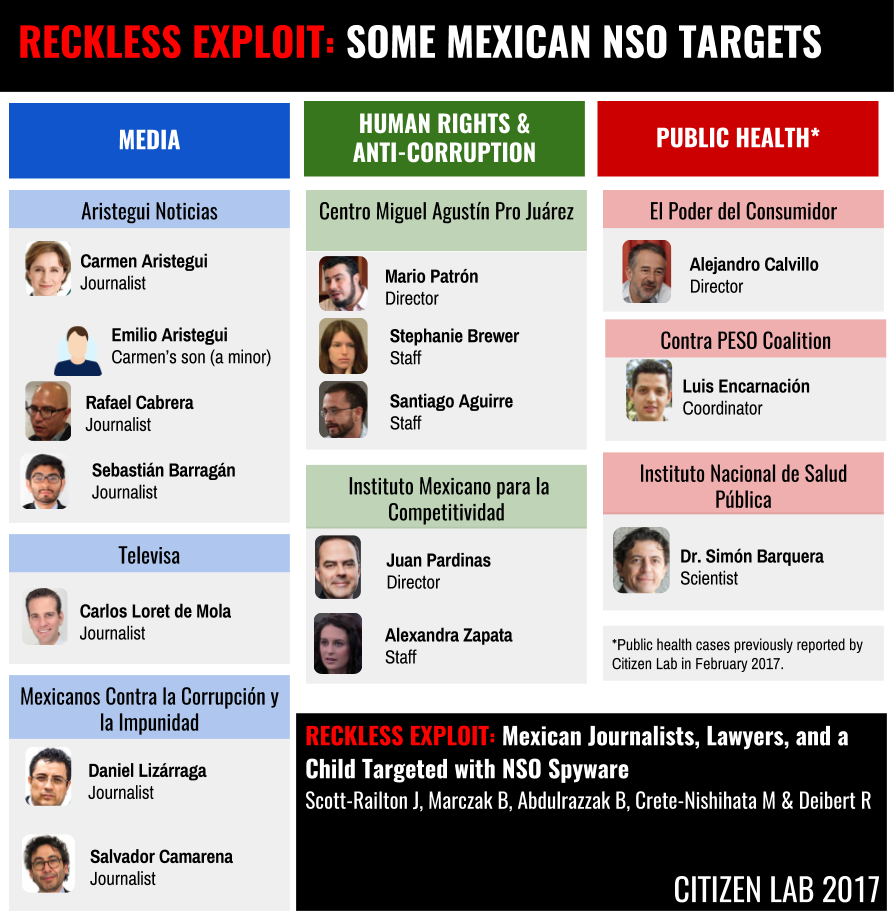
Michael Flynn Worked With Foreign Cyberweapons Group That Sold Spyware Used Against Political Dissidents While serving as a top campaign adviser to Donald Trump, Flynn worked with firms linked to NSO Group — which develops spyware and sells it to governments. 06/19/2017 Updated June 20, 2017 WASHINGTON — While serving as a top campaign aide to Donald Trump [ http://www.huffingtonpost.com/topic/donald-trump ], former national security adviser Michael Flynn [ http://www.huffingtonpost.com/topic/michael-flynn ] made tens of thousands of dollars on the side advising a company that sold surveillance technology that repressive governments used to monitor activists and journalists. Flynn, who resigned [ http://www.huffingtonpost.com/entry/michael-flynn-resignation-letter_us_58a284e5e4b03df370d99aaa ] in February after mischaracterizing his conversations with the Russian ambassador to the U.S., has already come under scrutiny for taking money from foreign outfits. Federal investigators began probing Flynn’s lobbying efforts [ https://www.nytimes.com/2017/05/17/us/politics/michael-flynn-donald-trump-national-security-adviser.html ] on behalf of a Dutch company led by a businessman with ties to the Turkish government earlier this year. Flynn’s moonlighting wasn’t typical: Most people at the top level of major presidential campaigns do not simultaneously lobby for any entity, especially not foreign governments. It’s also unusual for former U.S. intelligence officials to work with foreign cybersecurity outfits. Nor was Flynn’s work with foreign entities while he was advising Trump limited to his Ankara deal. He earned nearly $1.5 million last year as a consultant, adviser, board member, or speaker for more than three dozen companies and individuals, according to financial disclosure forms released earlier [ http://www.huffingtonpost.com/entry/michael-flynn-russia-payments_us_58cac910e4b0ec9d29d9ba8c ] this year [ http://www.huffingtonpost.com/entry/flynn-russia-speeches_us_58e06f6ee4b0b3918c841b32 ]. Two of those entities are directly linked to NSO Group, a secretive Israeli cyberweapons dealer founded by Omri Lavie and Shalev Hulio, who are rumored [ https://www.forbes.com/sites/thomasbrewster/2016/08/25/everything-we-know-about-nso-group-the-professional-spies-who-hacked-iphones-with-a-single-text/ ] to have served in Unit 8200, the Israeli equivalent of the National Security Agency. Flynn received $40,280 last year as an advisory board member for OSY Technologies, an NSO Group offshoot based in Luxembourg, a favorite tax haven for major corporations. OSY Technologies is part of a corporate structure that runs from Israel, where NSO Group is located, through Luxembourg, the Cayman Islands, the British Virgin Islands, and the U.S. Flynn also worked as a consultant last year for Francisco Partners, a U.S.-based private equity firm that owns NSO Group, but he did not disclose how much he was paid. At least two Francisco Partners executives have sat on OSY’s board. Flynn’s financial disclosure forms do not specify the work he did for companies linked to NSO Group, and his lawyer did not respond to requests for comment. Former colleagues at Flynn’s consulting firm declined to discuss Flynn’s work with NSO Group. Executives at Francisco Partners who also sit on the OSY Technologies board did not respond to emails. Lavie, the NSO Group co-founder, told HuffPost he is “not interested in speaking to the press” and referred questions to a spokesman, who did not respond to queries. Many government and military officials have moved through the revolving door between government agencies and private cybersecurity companies. The major players in the cybersecurity contracting world — SAIC, Booz Allen Hamilton, CACI Federal and KeyW Corporation — all have former top government officials in leadership roles or on their boards, or have former top executives working in government. But it’s less common for former U.S. intelligence officials to work with foreign cybersecurity outfits. “There is a lot of opportunity in the U.S. to do this kind of work,” said Ben Johnson, a former NSA employee and the co-founder of Obsidian Security. “It’s a little bit unexpected going overseas, especially when you combine that with the fact that they’re doing things that might end up in hands of enemies of the U.S. government. It does seem questionable.” What is clear is that during the time Flynn was working for NSO’s Luxembourg affiliate, one of the company’s main products — a spy software sold exclusively to governments and marketed as a tool for law enforcement officials to monitor suspected criminals and terrorists — was being used to surveil political dissidents, reporters, activists, and government officials. The software, called Pegasus, allowed users to remotely break into a target’s cellular phone if the target responded to a text message. Last year, several people targeted by the spyware contacted Citizen Lab, a cybersecurity research team based out of the University of Toronto. With the help of experts at the computer security firm Lookout, Citizen Lab researchers were able to trace the spyware hidden in the texts [ https://citizenlab.org/2016/08/million-dollar-dissident-iphone-zero-day-nso-group-uae/ ] back to NSO Group spyware. After Citizen Lab publicized its findings, Apple introduced patches to fix the vulnerability. It is not known how many activists in other countries were targeted and failed to report it to experts. [...] http://www.huffingtonpost.com/entry/michael-flynn-nso-group-spyware_us_59468386e4b06bb7d273c398 [with embedded video, and comments]
Using Texts as Lures, Government Spyware Targets Mexican Journalists and Their Families President Enrique Peña Nieto vowed last month to take concrete steps to ensure the safety of journalists in Mexico. Since 2011, the Mexican government has bought around $80 million worth of spyware for the stated purpose of combating crime. JUNE 19, 2017 https://www.nytimes.com/2017/06/19/world/americas/mexico-spyware-anticrime.html [with comments]
‘Our Phones Are Being Monitored’: How a Hacking Story Unfurled Relatives at a protest in Mexico City last month carried posters of some of the 43 students from a teachers college who disappeared in September 2014. A lawyer representing families of the students was targeted by highly sophisticated spyware that could take over a cellphone. JUNE 19, 2017 https://www.nytimes.com/2017/06/19/pageoneplus/how-a-hacking-story-unfurled-mexican-journalists-monitored-phones.html
Despite Concerns About Blackmail, Flynn Heard C.I.A. Secrets Mike Pompeo, the C.I.A. director, center, at the Capitol to brief members of the House Intelligence Committee last month. JUNE 20, 2017 WASHINGTON — Senior officials across the government became convinced in January that the incoming national security adviser, Michael T. Flynn, had become vulnerable to Russian blackmail. At the F.B.I., the C.I.A., the Justice Department and the Office of the Director of National Intelligence — agencies responsible for keeping American secrets safe from foreign spies — career officials agreed that Mr. Flynn represented an urgent problem. Yet nearly every day for three weeks, the new C.I.A. director, Mike Pompeo, sat in the Oval Office and briefed President Trump on the nation’s most sensitive intelligence — with Mr. Flynn listening. Mr. Pompeo has not said whether C.I.A. officials left him in the dark about their views of Mr. Flynn, but one administration official said Mr. Pompeo did not share any concerns about Mr. Flynn with the president. The episode highlights another remarkable aspect of Mr. Flynn’s stormy 25-day tenure in the White House: He sat atop a national security apparatus that churned ahead, despite its own conclusion that he was at risk of being compromised by a hostile foreign power. The concerns about Mr. Flynn’s vulnerabilities, born from misleading statements he made to White House officials about his conversations with the Russian ambassador, are at the heart of a legal and political storm that has engulfed the Trump administration. Many of Mr. Trump’s political problems, including the appointment of a special counsel and the controversy over the firing of the F.B.I. director, James B. Comey, can be ultimately traced to Mr. Flynn’s tumultuous tenure. Time and again, the Trump administration looked the other way in the face of warning signs about Mr. Flynn. Mr. Trump entrusted him with the nation’s secrets despite knowing that he faced a Justice Department investigation [ https://www.nytimes.com/2017/05/17/us/politics/michael-flynn-donald-trump-national-security-adviser.html ] over his undisclosed foreign lobbying. Even a personal warning from President Obama [ https://www.nytimes.com/2017/05/08/us/politics/obama-flynn-trump.html ] did not dissuade him. Mr. Pompeo sidestepped questions from senators last month about his handling of the information about Mr. Flynn, declining to say whether he knew about his own agency’s concerns. “I can’t answer yes or no,” he said. “I regret that I’m unable to do so.” His words frustrated Senator Ron Wyden, an Oregon Democrat and a member of the Senate Intelligence Committee. “Either Director Pompeo had no idea what people in the C.I.A. reportedly knew about Michael Flynn, or he knew about the Justice Department’s concerns and continued to discuss America’s secrets with a man vulnerable to blackmail,” Mr. Wyden said in a statement. “I believe Director Pompeo owes the public an explanation.” After Mr. Pompeo’s Senate testimony, The New York Times asked officials at several agencies whether Mr. Pompeo had raised concerns about Mr. Flynn to the president and, if so, whether the president had ignored him. One administration official responded on the condition of anonymity that Mr. Pompeo, whether he knew of the concerns or not, had not told the president about them. A C.I.A. spokesman declined to discuss any interactions between the president and Mr. Pompeo. “Whether the C.I.A. director briefed the president on a specific intelligence issue during a specific time frame is not something we publicly comment on and we’re not about to start today,” said Dean Boyd, a C.I.A. spokesman. Concerns across the government about Mr. Flynn were so great after Mr. Trump took office that six days after the inauguration, on Jan. 26, the acting attorney general, Sally Q. Yates, warned the White House [ https://www.nytimes.com/2017/05/08/us/politics/michael-flynn-sally-yates-hearing.html ] that Mr. Flynn had been “compromised.” Ms. Yates’s concerns focused on phone calls that Mr. Flynn had in late December with Sergey I. Kislyak, the Russian ambassador to the United States. When the White House faced questions about whether the two men had discussed lifting American sanctions on Russia, Vice President Mike Pence told reporters that Mr. Flynn had assured him that sanctions were not discussed. Intelligence officials knew otherwise, based on routine intercepts of Mr. Kislyak’s conversations. “That created a compromise situation,” Ms. Yates later told Congress, “a situation where the national security adviser essentially could be blackmailed by the Russians.” Mr. Trump waited 18 days from that warning before firing Mr. Flynn, a period in which Mr. Pompeo continued to brief Mr. Flynn and the president. The White House has offered changing explanations for why the president waited until Feb. 13 — soon after Ms. Yates’s warning made national news — before firing Mr. Flynn [ https://www.nytimes.com/2017/02/13/us/politics/donald-trump-national-security-adviser-michael-flynn.html ]. White House officials have said they moved deliberately both out of respect for Mr. Flynn and because they were not sure how seriously they should take the concerns. They also said the president believed that Ms. Yates, an Obama administration holdover, had a political agenda [ https://www.nytimes.com/2017/05/09/us/politics/sally-yates-michael-flynn-white-house.html ]. She was fired days later [ https://www.nytimes.com/2017/01/30/us/politics/trump-immigration-ban-memo.html ] over her refusal to defend in court Mr. Trump’s ban on travel for people from several predominantly Muslim countries. A warning from Mr. Pompeo might have persuaded the White House to take Ms. Yates’s concerns more seriously. Mr. Pompeo, a former congressman, is a Republican stalwart whom Mr. Trump has described as “brilliant and unrelenting.” Mr. Pompeo was sworn in three days before Ms. Yates went to the White House. He testified last month that he did not know what was said in that meeting. By that time, C.I.A. officials had attended meetings with F.B.I. agents about Mr. Flynn and reviewed the transcripts of his conversations with the Russian ambassador, according to several current and former American security officials. Separately, intelligence agencies were aware that Russian operatives had discussed ways to use their relationship with Mr. Flynn to influence Mr. Trump [ https://www.nytimes.com/2017/05/24/us/politics/russia-trump-manafort-flynn.html ]. Mr. Pompeo, who briefs the president nearly every day, had frequent opportunities to raise the issue with Mr. Trump. [...] https://www.nytimes.com/2017/06/20/us/politics/mike-pompeo-cia.html
--
this is part 2 of a 17-part post which proceeds (point arising on the given) day by (point arising on the given) day from June 17, 2017 through July 3, 2017 -- the preceding part is the post to which this is a reply; the next part is a reply to this post -- the following 'see also (linked in)' listing, updated for intervening posts along the way, is common to all 17 parts
--
in addition to (linked in) the post to which this is a reply and preceding and (other) following, see also (linked in):