Now this seemed, to me, to contradict a lot of the media releases from refugee advocacy groups about how many refugees we take. I decided to do a little research of my own.
According to the UNHCR 2011 statistics, Australia took 0.98 refugees per 1,000 population, or 21, 805. That does not look like the “third largest number of refugees of any country”.
I looked at some other rather well-known countries (other countries take more, these are a selection only):
Sweden: 82,629 - 8.81 per 1,000 population Switzerland: 48,813 - 6.37 per 1,000 population Germany: 594,269 - 7.22 per 1,000 population France: 200,687 - 3.20 per 1,000 population Canada: 165,549 - 4.87 per 1,000 population United Kingdom: 238,150 - 3.84 per 1,000 population United States: 264,574 - 0.85 per 1,000 population Thailand: 96,675 - 1.40 per 1,000 population
[ from the UHHCR link below Australia: 0.98 per 1,000 population ]
Who on earth wrote the budget media release? What sources did that writer use to substantiate the glowing assertions about Australia’s contribution to the global humanitarian crisis?
Is this a pretty good example of “spin”?
What is your opinion? Please share, because I’d love to know how we can reconcile the facts with the media release!
.. yup, we do share in the ugly specter of racism ..
Jen Rosenberg, Matt Wade - Date July 30, 2012
After violent attacks on Indian students, the damage to Australia's reputation is improving, albeit slowly.
Safe and sound … 26-year-old Indian student Radhika Ghumare says that as a student at UTS, she was satisfied with the security provided at her accommodation. Photo: Kate Geraghty
Street crime once had little to do with Australia's international reputation, or its export performance. But the globalisation of education has changed that.
Australia learnt this the hard way in 2009 and 2010 when a series of attacks on Indian students received blanket media coverage on the subcontinent.
"The crisis has cost Australia billions of dollars and thousands of jobs. Beyond the Lost Decade report"
The crisis damaged Australia's standing in India, strained relations between Delhi and Canberra, and plunged Australia's education system into turmoil.
A major restructuring of the international education program followed. But the lingering sensitivity was underscored when two Chinese students were bashed on a Sydney train in April, sparking fears of another ''Indian situation''. Officials went into damage control when Chinese media started reporting the incident.
One-fifth of all international students are from China and with a large resident community in Australia, the potential for disaster was huge. If the negative messages spiraled out of control, it could have dwarfed the diplomatic, cultural and economic rift between Australia and India.
Most Australians don't comprehend how much the attacks on students dominated public discussion in India from mid-2009 to early 2010.
''You had to live in India to see what a big deal it was,'' says John McCarthy, who was Australia's high commissioner in New Delhi when the crisis flared.
''I don't think it's ever quite sunk in for people back here in Australia how much this issue caught the public imagination.''
Young Indians - a crucial market for Australia's international education sector - have voted with their feet.
The number of Indians seeking an Australian education plummeted from a peak of 120,000 in 2009 to 37,000 in the first quarter of this year.
A report by the Australia India Institute, Beyond the Lost Decade,
~~~~~~~~~~ .. insert .. in case any are interested ..
University of Melbourne Vice-Chancellor highlights Beyond The Lost Decade 31 July 2012
says the root cause of the problem was a shift towards seeing international education ''as a cash cow for universities, colleges and government'', rather than an important dimension of Australia's engagement with Asia that brought secondary financial benefits.
''The crisis has cost Australia billions of dollars and thousands of jobs in associated industries,'' the report says.
Australia's reputation in India is improving. Polling for the Beyond the Lost Decade report found Indians now rank Australia eighth among 38 countries in terms of overall favourability, which is up from 35th in 2010.
A former Indian high commissioner to Australia and co-author of the report, Gopalaswami Parthasarathy, says relations between Australia and India might benefit from the student crisis because ''we understand each other better now''.
But the report warns swift action is needed to protect and build on the gains, including a rating system to improve delivery of international education services by the states and changes to immigration rules for foreign students.
Radhika Ghumare, a 26-year-old from Nagpur, hasn't been scared off by the bad publicity and has taken advantage of the security services offered in the hostel accommodation where she lives as a student at the University of Technology, Sydney. She arrived from India in 2006 to do a double degree at Macquarie University and has just received her results for her master of professional accounting from UTS.
''There are many precautions one has to take working in the city,'' she says. ''For example, it's always busy and crowded, and [there are] drunken people around usually at the weekend.
''But as a student I don't see much of a security concern. If a student is staying in a hostel, they would be well protected because the university will make sure that there is security guards in the hostel at all times.''
Like many institutions, UTS beefed up security for students to move safely between campus and residences. But for those who are not in campus accommodation, getting home to far-flung suburbs after studying, working or socialising late can be a dangerous affair, and the NSW and Victorian governments have been pushed to extend travel concessions for domestic students to their international peers. The student crisis was not just about safety but also discontent with the poor standards of some institutions offering vocational training and teaching English.
The Gillard government has taken steps to crack down on dubious education businesses trying to cash in on the lucrative market in the vocational training sector. The new president of the Council of International Students Australia, Aleem Nizari, says reforms were needed but they have created uncertainty.
''Students feel less secure about choosing Australia as a destination because [of] the frequent changes,'' he says.
The head of international engagement and business development at TAFE Directors Australia, Peter Holden, says a broader approach to education for TAFE has included providing offshore sites - he says three times as many people studied at Australian campuses overseas than here - developing leadership programs and fostering better ties with businesses, particularly from India, Indonesia and China.
''We're developing a much more mature attitude in relation to other countries in the region,'' Holden says. ''For too long the focus has been on international students to the exclusion of things like student and teacher exchanges and joint research and initiatives around capacity building.
''Those countries recognise that Australia has a very well-developed vocational education system and are very keen to learn from our experiences.''
Many students come to Australia hoping to stay and one of the institute report authors, Christopher Kremmer, says residency shouldn't be off the table.
''Immigration outcomes are a part of student choices and those choices all have their role,'' he says. ''It's nothing unusual. It's one of the factors that they consider when they choose where they're going to go, along with the strength of the dollar, along with the quality of education.''
Residency is certainly an aim for Ghumare, who is looking for work after learning on Thursday her temporary residency had been approved.
''My parents and [I], we've invested a lot in an education here and we definitely need to reap the benefits before I leave the country,'' she says.
This was the sticking point that led to some of her friends returning home, rather than safety fears.
Despite the recent turmoil, Indian demand for Australia's education services is likely to grow.
''Higher education offers a huge opportunity given India's growth,'' says the director of the Australia India Institute, Professor Amitabh Mattoo.
''You need at least 500 to 1000 new universities in the next 10 years.
''That cannot happen easily. The plan's to have 100 more universities but the options of quality students from India coming to places like Australia are great.''
Jane Lee, Nino Bucci, Dan Oakes and Farah Farouque
The al Furqan centre and book shop in Springvale.
Police terror raids have entered their second day, with authorities searching a house in the eastern suburb of Ormond this morning.
Police arrived at the house — the 12th property raided over the past two days — as The Age was interviewing the occupant, who said she had just returned from overseas.
The raid occurred as the only man arrested so far was taken to hospital suffering from abdominal pains. Although police said last night that the 23-year-old from Officer was expected to be charged with terror offences, he had not been at the time he was hospitalised.
An Officer home where a man has been arrested over alleged terror links. Photo: Penny Stephens
Last night’s arrest was made at a neat, double-storey Officer home, which has a ‘‘for sale’’ sign at the front. People inside the property this morning refused to speak to Fairfax Media.
Neighbours in the modern housing development said yesterday’s raid came as a shock.
One neighbour said he heard police knocking at the arrested man’s front door at 6am and saw about five police cars.
He said he believed the man shared the home with his brother and their wives and worked in insulation.
He said he did not know the arrested man but the brother was friendly.
Another neighbour, Trish Bourke, said she was taken aback by the news.
‘‘I’m a bit concerned that I’m living two doors up from a possible terrorist. I’d rather they were caught than not, but I was still a bit surprised,’’ she said.
She believed the brothers had lived at the property for about 18 months.
This morning, AFP officers continued to search a house in Hallam.
Officers at the scene would not comment on the raid, other than to say they had not made arrests or finished searching the property.
At another property in Hallam, which was raided yesterday morning, a woman said her son was innocent and she had no idea why the house had been targeted.
A computer and CD were seized from the house.
"I don’t know why the police were here,’’ the woman said.
"My son does nothing wrong.’’
Police also remain at two houses in Narre Warren South.
Officers at the scene would not comment.
Police told two men at one of the Narre Warren South houses they would be finished their search as soon as possible.
Police are also searching the garages of the properties.
There were at least five AFP officers at both houses.
The operation, revealed exclusively last night by theage.com.au, was targeted at individuals connected with the Al-Furqan centre in Springvale.
The group soon posted in Bosnian on its Facebook page. ’’The raid took everyone by surprise, someone calling himself Sehzad Goran wrote. ’’I can confirm that local and federal police raided [name withheld] house and prayer place. Currently ASIO (aka, Gestapo) are still going through the house. Agents include women agents also.’’
The centre, which also hosts a bookshop, while not a mosque is associated with fringe Muslim preacher Sheikh Harun, also known as Harun Mehicevic, who is believed to be overseas.
The imam of the nearby Bosnian mosque in Noble Park, Ibrahim Omerdic, said Sheikh Harun had led a group of ’’radical followers’’ away from the Noble Park mosque about 10 years ago.
Mr Omerdic described Sheikh Harun as a very patriotic Bosnian, but said he had left with a small group of followers and went on to form the Al-Furqan Islamic Centre after doctrinal disagreements.
’’They radicalised matters regarding women and men. He said Muslims were not allowed to vote,’’ he said.
Another community source said last night that Sheikh Harun’s ’’following is not large but his teachings are very fiery. He’s a pretty marginalised figure in the Muslim community.’’
The source said the people targeted for the operation were not believed to have been involved in a fully realised terror plot, but were involved in ’’contemplating and getting information’’ about terrorist activities.
A search warrant for the Al-Furqan centre says police were looking for material relating to 11 people between the ages of 22 and 40, and information connected to 12 addresses. They were in Narre Warren, Springvale South, Narre Warren South, Officer, Craigieburn, Hallam, Ormond, Endeavour Hills and Noble Park. Most of the properties were raided in the operation, which began early yesterday.
The warrant also says police are looking for copies of the infamous al-Qaeda-produced magazine Inspire, which reportedly nominated Sydney as a potential terror target earlier this year. The warrant says the material police are searching for is either connected with terrorist acts or the collecting and making of documents that are ’’likely to facilitate terrorist acts’’.
Sources said the men targeted were Australian residents of mixed cultural backgrounds. One man whose house was raided condemned the police and intelligence services in a Facebook posting. ’’And look at the tactics. They come early in the morning [6am] and break the door of the markaz and about 20-30 come to the door of my neighbour as well. He [the neighbour] is overseas and has no control over what’s happening over here,’’ he wrote.
It is believed authorities relied in part on information provided by people from Melbourne’s Islamic community. Police briefed the Islamic Council of Victoria during the raids. ’’I want to commend police for consulting with community figures,’’ said president Ramzi Elsayed. ’’We support the police in their community safety endeavours and that [the operation was] conducted with cultural and religious sensitivity.’’
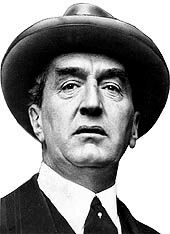
Stanley Bruce .. 1920s .. White Australia Policy .. attacks on workers rights .. strikes ..
"Cultivating Identity - Thomas Keneally"
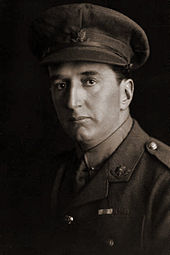
Stanley Melbourne Bruce, 1st Viscount Bruce of Melbourne, CH, MC, FRS, PC (15 April 1883 – 25 August 1967), was an Australian politician and diplomat, and the eighth Prime Minister of Australia. He was the second Australian granted an hereditary peerage of the United Kingdom, but the first whose peerage was formally created. He was the first incumbent Prime Minister to lose his seat at an election; the only other being John Howard in 2007.
The Right Honourable The Viscount Bruce of Melbourne CH, MC, FRS, PC
8th Prime Minister of Australia Elections: 1925, 1928, 1929
Bruce in the 1910s
Early life
Stanley Bruce was born on Grey Street, St Kilda, a Melbourne suburb, in 1883; however, his family moved shortly after to "Wombalano" on Kooyong Road, Toorak (now owned by the Murdoch family). The boy's father, of Scottish descent, was a prominent businessman.
Bruce was educated at Glamorgan (now part of Geelong Grammar School), Melbourne Grammar School, and then at Cambridge University. After graduation he studied law in London and was called to the bar in 1907. He practised law in London, and also managed the London office of his father's importing business. When World War I broke out he joined the British Army, and was commissioned to the Worcestershire Regiment, seconded to the Royal Fusiliers. In 1917 he was severely wounded in France, winning the Military Cross and the Croix de guerre[disambiguation needed].
Bruce was invalided home to Melbourne, and soon became involved in recruiting campaigns for the Army. His public speaking attracted the attention of the Nationalist Party .. http://en.wikipedia.org/wiki/Nationalist_Party_of_Australia, and in 1918 he was elected to the House of Representatives as MP for Flinders, near Melbourne. His background in business led to his being appointed Treasurer (finance minister) in 1921.
Bruce then entered negotiations with the Country Party leader, Earle Page, for a coalition government. On 9 February 1923 he became prime minister at the age of only 39,
[...]
In general Bruce formed an effective partnership with Page, and exploited public fears of Communism and militant trade unions to dominate Australian politics through the 1920s. Despite predictions that Australians would not accept such an aloof leader as Bruce, he won a smashing victory over a demoralised ALP, led by Matthew Charlton, at the 1925 election. Throughout his term of office, he pursued a policy of support for the British Empire, the League of Nations, and the White Australia Policy:
Bruce in the 1920s
"We intend to keep this country white and not allow its peoples to be faced with the problems that at present are practically insoluble in many parts of the world."
In his policy launch speech made at the Shire Hall in Dandenong, south-eastern Melbourne, on 25 October 1925, Bruce reiterated his government's commitment to the White Australia Policy .. http://en.wikipedia.org/wiki/White_Australia_Policy:
"It is necessary that we should determine what are the ideals towards which every Australian would desire to strive. I think those ideals might well be stated as being to secure our national safety, and to ensure the maintenance of our White Australia Policy to continue as an integral portion of the British Empire."
On 8 July 1928 he was appointed a Companion of Honour.[7] His government was reelected, though with a significantly reduced majority, in 1928.
Maritime Industries crisis
Prime Minister Bruce holding a meeting with Prime Minister-elect Scullin a day before Scullin's swearing in.
Bruce (Back row centre) at the 1926 Imperial Conference.
Strikes of sugar mill workers in 1927, waterside workers in 1928, then of transport workers, timber industry workers and coal miners erupted in riots and lockouts in New South Wales in 1929. Bruce responded with a Maritime Industries Bill that was designed to do away with the Commonwealth Court of Conciliation and Arbitration .. http://en.wikipedia.org/wiki/Commonwealth_Court_of_Conciliation_and_Arbitration .. and return arbitration powers to the States.
On 10 September 1929, Hughes and five other Nationalist members joined Labor in voting against the Bill. The Bill was lost by 34 votes to 35 when Littleton Groom, the Speaker, abstained, bringing down the Bruce–Page government and forcing the 1929 election .. http://en.wikipedia.org/wiki/Australian_federal_election,_1929.
Labor, now led by James Scullin .. http://en.wikipedia.org/wiki/James_Scullin .. (Charlton had resigned from the party's leadership in 1928), won a landslide victory, scoring an 18-seat swing—at the time, the second-worst defeat of a sitting government in Australian history. Bruce was defeated by Labor's candidate Jack Holloway .. http://en.wikipedia.org/wiki/Jack_Holloway .. in his electorate of Flinders. Bruce had gone into the election holding Flinders with what appeared to be a fairly safe 10.7 percent two-party majority. However, on the second count an independent Liberal candidate's preferences flowed mostly to Holloway, thus making Bruce the first sitting prime minister to lose his seat. The only other sitting Australian prime minister to be defeated in his own electorate is John Howard .. http://en.wikipedia.org/wiki/John_Howard, at the 2007 election .. http://en.wikipedia.org/wiki/Australian_federal_election,_2007.
Aussi treasurer Wayne Swan claims "cranks & crazies" have taken over the Republican Party
========
NOTE: Australian (Liberal) conservatives use the same language to denigrate legitimate evidence based opinion .. "immature contribution" .. "reckless disregard for the debt burden the US faces" .. "peddling hatred" ..
Republican 'cranks and crazies' the biggest threat to global economy: Swan
Jessica Wright - Date September 21, 2012
[ embedded video ]
The opposition has accused Wayne Swan of "peddling hatred" after the Treasurer described some sections of the Republican Party in the United States as "cranks and crazies".
In a speech to a financial services forum in Sydney, Mr Swan said today the global economic recovery was progressing and had cleared ''some of the major hurdles'' but that the ''finish line is still well-off in the distance''.
Mr Swan identified the biggest threat to a full resurgence in the United States economy as ''the cranks and crazies that have taken over a part of the Republican Party'' and preventing Congress resolving its budget problem, the so-called ''fiscal cliff''. Advertisement
''With the world watching, it is imperative that the US Congress resolve an agreement to support growth in the short term," he said.
''In a throwback to a year ago, global markets are nervously watching the positioning of hardline elements of the Republican Party for signs that they will dangerously block reasonable attempts at compromise.
"Let's be blunt and acknowledge the biggest threat to the world's biggest economy are the cranks and crazies that have taken over a part of the Republican Party."
After the speech, Mr Swan told reporters the federal opposition were also guilty of ''stooping'' to Tea Party politics.
''I know there are people who will go out there like [Opposition Leader] Tony Abbott and talk our economy down and behave in a Tea Party fashion,'' he said. ''The fact is the fundamentals in the Australian economy are strong.''
Opposition treasury spokesman Joe Hockey said Mr Swan's comments criticising the Tea Party movement and in turn, the opposition, amounted to little more than ''peddling hatred''.
''What is it with the Labor Party and hatred?'' Mr Hockey said.
''They hate people that make money, they constantly attack individuals who are successful and employ other Australians ... I'd like to hear Wayne Swan say something positive about someone, somewhere.
''They've got to stop talking about the people they hate and start talking about the people they admire.
"And I'd go beyond Bruce Springsteen in that regard,'' Mr Hockey added, in a reference to Mr Swan's declared admiration for the music and values of the American singer.
Opposition Leader Tony Abbott said Mr Swan's speech was ''extraordinary''.
''This is someone who is spending his time criticising others rather than getting on with his job,'' he told reporters in Sydney.
''The treasurer of Australia should be bigger than going around labelling members of the Republican Party of the United States 'cranks and crazies'.
''They would be quite entitled to retort that the cranks and crazies are the people in charge of economic policy in Australia, giving this great country a completely unnecessary carbon tax and saddling generations of Australians yet unborn with the consequences of a $120 billion black hole of spending that Wayne Swan has promised.''
Prime Minister Julia Gillard backed the substance of Mr Swan's speech, saying it was appropriate for her deputy to point out the risks facing the global economy and their potential consequences for Australia.
''The treasurer has been making appropriate comments today about potential risks,'' she said. ''You would expect him to be doing that.''
Mr Swan denied his comments were inflammatory in a presidential election year, saying it would be ''pretty inflammatory'' to see a country default.
''That would have very serious implications for the global economy,'' he said. ''It's the last thing the global economy needs.''
Mr Swan painted a rosier domestic fiscal picture, vowing again to return to surplus, and saying although the task ''is made harder by a fall in commodity prices'', a surplus is ''still our best defence against the current global economic volatility and sends a clear message that we are committed to responsible fiscal policy".
Mr Swan said the International Monetary Fund had given an upbeat assessment of the Australian economy, while endorsing the government's aim of returning its budget to surplus and the flexibility of the Reserve Bank to adjust monetary policy.
Delivering the speech, the Treasurer was also an optimist about China, saying economic discussions there have convinced him much of its slowdown is deliberately engineered.
"We really just need to keep things in perspective," he will say. "China is now 40 per cent larger than in 2008 so its growth rate can be 20 per cent lower for it to make the same contribution to global growth."
"It's like Usain Bolt easing off a bit at the end of the 100m because he's 10 metres in front and has already smashed the world record."
.. one from a proud American citizen Rupert Murdoch paper The Australian ..
PM backs Wayne Swan over US 'cranks' warning
by: Ben Packham - From: The Australian - September 21, 2012 4:52PM - 39 comments
[ embedded video ]
Treasurer Wayne Swan has weighed in on the US presidential campaign, attacking the economic credentials of Republican 'cranks and crazies'.
Wayne Swan warns "cranks and crazies" in the US Republican Party pose a threat to the world's economy. Picture: Dan Himbrechts Source: The Australian
JULIA Gillard has backed Wayne Swan's extraordinary intervention into US politics in which he claimed a Republican Party infiltrated by "cranks and crazies" posed a threat to the world's economy.
The opposition lashed the Treasurer over the comments, branding them a “calculated insult” against elected US politicians.
But the Prime Minister said Mr Swan was simply doing his job.
“The strength of the American economy matters to the global economy,” she said.
“The Treasurer has been making appropriate comments today about potential risks for the global economy and consequently for the Australian economy. You would expect him to be doing that.”
In a speech this morning, Mr Swan criticised the Republican Party's position on the US budget, warning that negotiations to prevent a “fiscal cliff” caused by a major withdrawal of government spending were critical to the global economy.
“Let's be blunt and acknowledge the biggest threat to the world's biggest economy are the cranks and crazies that have taken over a part of the Republican Party,” he said.
The key line in the speech was softened slightly from an initial version provided to The Australian.
The original speech said “cranks and crazies” had “taken over the Republican Party”, not just “part of” it.
Opposition foreign affairs spokeswoman Julie Bishop accused Mr Swan of “yet another immature contribution” on the complex fiscal situation in the United States.
“He is showing reckless disregard for the debt burden the US faces.
“It was a calculated insult to the elected representatives of our key ally.”
She said Mr Swan was “an embarrassment in any event”, but would prove even more so if Republican candidate Mitt Romney won the US presidential election.
Tony Abbott said Mr Swan was in no position to dish out advice to others.
“The Treasurer of Australia should be bigger than going around labelling members of the Republican Party of the United States `cranks and crazies',” he said.
“They would be quite entitled to retort that the cranks and crazies are the people in charge of economic policy in Australia, giving this great country a completely unnecessary carbon tax and saddling generations of Australians yet unborn with the consequences of a $120 billion black hole of spending that Wayne Swan has promised.”
Shadow treasurer Joe Hockey said Mr Swan was peddling more Labor Party hatred, which was unproductive.
“What is it with the Labor Party and hatred?” Mr Hockey asked reporters in Sydney.
He said the Labor Party hated people that made money, and constantly attacked individuals who were successful and employed other Australians.
But Mr Swan responded: “The reason Tony Abbott and Joe Hockey have reacted ... is because they're importing this destructive style of politics to Australia.”
Mr Swan earlier stood by his speech, saying it would be “pretty inflammatory” to see the United States default on its debt.
“That would have very serious implications for the global economy,” he said.
“It's the last thing the global economy needs.”
The Treasurer also accused the federal opposition of stooping to Tea Party-style politics.
“I know there are people who will go out there like (Opposition Leader) Tony Abbott and talk our economy down and behave in a Tea Party fashion.
When former prime minister John Howard attacked then-presidential candidate Barack Obama in 2007, declaring terrorists would be hoping for his election as president, Labor howled in protest.
Then opposition leader Kevin Rudd moved a censure motion against Mr Howard in parliament, saying it was a grave matter to accuse the party of Franklin D Roosevelt, Harry S Truman and John F Kennedy of being the terrorists' party of choice.
“This is a serious matter,” he said at the time. “This is a grave mistake.”
THE radio star was talking at a Liberal Party event and was unaware that his highly insensitive comments were being recorded
List of auction items from the Alan Jones dinner held by Sydney Uni Liberal Club. Source: Supplied
ALAN Jones has apologised publicly to PM Julia Gillard, after claiming that her late father "died of shame".
"The comments were in the light of everything unacceptable," Jones said.
"They merit an apology by me."
He said his comments to a Sydney University Liberal Club dinner were unacceptable, and said he had contacted the Prime Minister's office to see if she would accept a personal apology.
"It was a throw-away thing at a private function - I thought it was a private function."
"I spoke without notes for 55 minutes, I've no idea of the material I covered."
Jones said it was fairly raucous night.
Jones said he did not dislike the Prime Minister, but did dislike her policies.
He said that Twitter trolls had attacked him and said they wished his prostate cancer would return.
Has Alan Jones finally gone too far? Yes [79.4%] No [sad to see 22% ]
[ COMMENT: that 22% is a sad indication of the level of right-wing hate and utter lack of human decency existing in Australia in 2012 ]
Jones issued the apology following a Sunday Telegraph report about his speech to the Sydney University Liberal Club President's Dinner.
The dinner also featured an auction with items that included a jacket made of chaff bags autographed by Alan Jones.
The material is a reference to the broadcaster's infamous comment that Julia Gillard should be "put in a chaff bag and thrown into the sea".
The annual $100-per-head Sydney University Liberal Club President's Dinner was held on the top floor of Sydney's Waterfront restaurant in The Rocks last Saturday.
The Sunday Telegraph was present at the dinner and photographed the auction list, which also included a pair of fishnet stockings autographed by former foreign minister Alexander Downer.
During his 50-minute speech at the dinner, 2GB host and veteran broadcaster told the group of 100 Young Liberals that John Gillard's death was the fault of his proud child.
Jones went on to suggest Ms Gillard's tears of grief, for a man she publicly said she "will miss for the rest of my life", were what sparked a sudden leap in political polling for her.
The Sunday Telegraph's poll has been inundated with responses, with more than 21,000 readers saying Jones went too far with his comments.
Mr Gillard, a former psychiatric nurse, died in Adelaide on September 8, age 83.
After referring to Ms Gillard's track record with telling the truth to voters over issues including the carbon tax, Mr Jones said her father's death was caused by the Prime Minister herself.
"The old man recently died a few weeks ago of shame," Mr Jones told a group of party members and MPs, including Alex Hawke, Ray Williams and Sussan Ley.
"To think that he had a daughter who told lies every time she stood for parliament.
"Every person in the caucus of the Labor Party knows that Julia Gillard is a liar."
Some members of the audience gasped with surprise.
The radio star went on to say Ms Gillard had enjoyed a recent spike in polls sparked by her tears. He also said she was being given an easy ride by the "brainwashed" Liberal Party who had backed down because she was a woman.
Organisers of the dinner were not aware a journalist from The Sunday Telegraph, who had purchased a ticket, was present.
The Young Liberals club posted a tweet praising the speech the following day: “brilliant speech by Alan Jones lat night. No wonder he's the nation's most influential broadcaster! #presdientsdinner"
The tweet has since been deleted and the club tweeted this response to the controversy Jones' words sparked: “we apologise for recent comments. Alhough out of context and not our own, they've cause offence &distracted from the national debate. AD"
The event was staged by Sydney University Liberal Club president and aspiring MP Alex Dore. Mr Jones has endorsed his political endeavours.
Yesterday, Mr Dore said Mr Jones had not made the comments about Ms Gillard's father. Later, informed there was a recording of the speech, his position changed.
"It was a very long speech and I did not hear it. I have always found Alan to be respectful," Mr Dore said.
He said there was "no need" to "pick apart Alan's speech. All you are doing is reducing it to a very small thing which distracts from the issues facing Australia".
Jones' remarks condemned
Meanwhile, Jones' remarks about the Prime Minister's late father have drawn wide spread criticism.
Senior Liberal Malcolm Turnbull said the remarks were cruel and Jones should apologise.
“Alan Jones' comments about the late John Gillard were cruel and offensive. He should apologise to the PM and her family," Turnbull tweeted earlier today.
Conservative columnist Andrew Bolt condemned Jones' comments in this blog this morning.
“Those who were there and are quoted in the article deny hearing any such comment, but if it was indeed said it was very cruel, very wrong," Bolt wrote.
“UPDATE: No, the tape confirms it. The remark is shameful. I wish the few Young Liberals who laughed in apparent surprise or scorn had booed or otherwise protested instead.
“Alan Jones is a colleague, and I've long valued his courage. But this is very wrong," Bolt said.
Foreign Minister Bob Carr said he expected both Alan Jones and Opposition Leader Tony Abbott to apologise.
"I've heard indecent things in politics but never something as thoroughly indecent as this," Senator Carr told Network Ten.
Melbourne talkback commentator Neil Mitchell said Opposition Tony Abbott needed to take a stand on the issue.
“What Alan Jones said about Julia Gullard's [sic] late father is poisonous and disgraceful and hurtful. Australia must be above this," he tweeted earlier today.
“Tony Abbott must reject what Jones said and condemn it," the 3AW host tweeted.
Former Prime Minister Kevin Rudd tweeted: "Alan Jones' comments are lowest of the low. Abbott must dismiss Jones from Liberal Party now & ban him from future Liberal events. KRudd."
Sydney Uni Liberal Club tweet
This tweet has been removed from the Sydney University Liberal Club's twitter feed. Source: Supplied
Gillard's grief
While paying tribute to her father in parliament on September 19, Ms Gillard spoke of the rough and tumble of politics and how that affected the family.
She said her father "felt more deeply than me, in many ways, some of the personal attacks that we face in the business of politics, but I was always able to reassure him that he had raised a daughter with sufficient strength not to let that get her down".
Mr Jones made several mentions about why Liberal leader Tony Abbott should be Australia's next PM.
"His overweening weakness is his humility. You will never ever hear this bloke argue his ability, his virtue, or indeed his competence," he said.
"He is a man of incomparable integrity and conviction."
The broadcaster said it was vital every member of Mr Abbott's party united behind their leader in the lead-up to the election. Mr Jones said some members of the Labor caucus were scared of the Liberal leader and others thought he was sexist.
Yesterday Mr Jones did not respond to approaches from The Sunday Telegraph.
Mr Williams would not be drawn on Mr Jones' remarks.
"I will just let this one go through to the keeper, the room was a bit a noisy at the time, I can't remember him saying it," he said.
Fellow MPs Mr Hawke and Ms Ley could not be reached.
Mr Abbott had previously expressed his condolences for the Prime Minister.
"This is a tragic time for (Ms Gillard) and we all feel for her at this very sad time," he told parliament. "It is a remarkable parent who produces a prime minister of this country."
During the five-hour event, three spoof songs were sung by Young Liberals member Simon Berger, Woolworths' government relations manager.
Prime Minister Julia Gillard has announced the creation of a national royal commission into institutional responses to instances of child sexual abuse.
The decision was taken at a meeting of federal cabinet this afternoon.
Ms Gillard had been under pressure to act following growing calls for a national inquiry into explosive allegations by a senior New South Wales police investigator that the Catholic Church covered up evidence involving paedophile priests.
A number of senior Labor MPs, as well as key independents, had already voiced their support for action on a national scale.
Opposition Leader Tony Abbott also declared his support for a "wide-ranging" royal commission into child sex abuse but said it should not just focus on claims involving the Catholic Church.
Ms Gillard said the Government would take the coming weeks to consult stakeholders before announcing the terms of reference.
The Prime Minister said the commission would look at all religious organisations, state care providers, not-for-profit bodies as well as the responses of child service agencies and the police.
"The allegations that have come to light recently about child sexual abuse have been heartbreaking," Ms Gillard told reporters in Canberra.
"There have been too many revelations of adults who have averted their eyes from this evil". Prime Minister Julia Gillard
"These are insidious, evil acts to which no child should be subject.
"Australians know... that too many children have suffered child abuse, but have also seen other adults let them down - they've not only had their trust betrayed by the abuser but other adults who could have acted to assist them have failed to do so.
"There have been too many revelations of adults who have averted their eyes from this evil.
"I believe in these circumstances that it's appropriate for there to be a national response through a royal commission."
Ms Gillard said she would speak with relevant premiers and chief ministers in the coming days to discuss how the royal commission would relate to any similar inquiries proposed or underway.
"Discussions will also take place with victims' groups, religious leaders and community organisations," she said.
"Further announcements, including the proposed commissioner and detailed terms of reference, will be made in coming weeks.
"I commend the victims involved for having the courage to speak out.
"I believe we must do everything we can to make sure that what has happened in the past is never allowed to happen again."
Catholic Archbishop of Sydney Cardinal George Pell has welcomed the announcement of a royal commission, saying the church will cooperate fully.
"Public opinion remains unconvinced that the Catholic Church has dealt adequately with sexual abuse," he said in a statement.
"Ongoing and at times one-sided media coverage has deepened this uncertainty.
"This is one of the reasons for my support for this royal commission.
"I welcome the Prime Minister’s announcement. I believe the air should be cleared and the truth uncovered."
The investigator whose allegations sparked calls for a national inquiry, Detective Chief Inspector Peter Fox, has told the ABC's triple j that the royal commission was what he had been pushing for.
He said he was stunned it had happened so quickly.
"And delighted, absolutely delighted, for all those victims out there because this gives us so much of an opportunity to get things right, to look at recommendations for laws that should be changed to protect kids," he said.
The NSW Government has set up an inquiry in response to the claims raised by Detective Chief Inspector Fox. A separate parliamentary inquiry into church sex abuse is already underway in Victoria.
Chief Inspector Fox today said he was "saddened" by the narrowness of the inquiry set up by NSW Premier Barry O'Farrell in response to his concerns.
"I'm not politically aligned to anyone, and I haven't always been a big fan of Julia Gillard personally, but my God she's had some guts this afternoon, a lot more guts than Barry O'Farrell," Inspector Fox said.
"He was so disappointing and some, thank heavens, have stood up and done the right thing."
Acting Minister for Families, Brendan O'Connor, told the ABC's 7.30 program the Government wants to ensure a broad range of institutions be examined.
"The child sex abuse offences, and indeed allegations of child sex abuse, are not confined to one church," he said.
"They're not confined to one religious organisation.
"Unfortunately, offences against children have occurred to children in state care and indeed, have occurred to children under the care in other religious organisations and of course also not-for-profit organisations.
"It would be very unfair and quite cruel to confine the examination - or the commission's examination to one body."
He added the royal commission decision was "a very significant one".
"This Government is responding I think to the need to ensure that voices are heard by the victims and their families, that claims are properly investigated," he said.
"This Government wants to provide this forum, this process, so that victims get an opportunity to tell their story, to have their story heard.
"Beyond that I think as a government we want to ensure through this vehicle, the royal commission, that institutions that are caring for children are responding properly and adequately to those allegations that have been made.
"Now what we know to date is that has not been the case. We need to do better."
Earlier this afternoon Mr Abbott pledged his support if the Government decided to establish a "wide-ranging" inquiry.
"Wherever abuse has occurred it must be tackled and it must be tackled vigorously, openly and transparently," Mr Abbott said in a statement.
"It's clear that for a long period there was insufficient awareness and insufficient vigilance when it came to predatory behaviour by people in positions of authority over children.
"Any investigation must be wide-ranging, must consider any evidence of the abuse of children in Australia, and should not be limited to the examination of any one institution.
"It must include all organisations, government and non-government, where there is evidence of sexual abuse."
Several Labor MPs had publicly declared their support for a nationally constituted royal commission, with some pushing for terms of reference that would allow it to look beyond the immediate allegations involving the Catholic Church. Call for action
Fellow Labor MP Joel Fitzgibbon, whose NSW electorate covers the Hunter Valley, earlier said it had become clear to him that a royal commission would be in the best interests of victims, their families and the church.
"The victims and their families need and deserve an assurance that no crimes or serious breaches of trust and responsibility have gone unpunished and that action has been taken to ensure that no such crimes or breaches can occur in the future," he said in a statement.
"It is clear that only the powers of a royal commission can adequately deliver those assurances.
"The Catholic Church will struggle to rebuild its reputation while ever questions about institutional wrongs are not properly tested." Joel Fitzgibbon
"Further, the Catholic Church will struggle to rebuild its reputation while ever questions about institutional wrongs are not properly tested.
"Worse, the church will remain subject to all kinds of allegations and innuendo unless a formal process is established, and all the church's ongoing good work will pass unnoticed and unappreciated until the allegations are properly dealt with."
Earlier today, independent MP Tony Windsor said he had written to the Prime Minister urging her to take action to deal with the issue on a national scale.
Fellow independent Rob Oakeshott also backed calls for a national royal commission, saying there needed to be an inquiry with coercive powers to get to the bottom of the problem.
"No-one or no entity should be able to hide from the police in the gathering of evidence, particularly in an area that involves sexual abuse and children," Mr Oakeshott told ABC News Online.
"If it's not a national royal commission with wide powers, it would certainly be something of an equivalent such as a special commission of inquiry."
The Greens and independent senator Nick Xenophon have also publicly backed calls for a national royal commission into sexual abuse claims.
USA taser death stats getting Australia air time today
Amnesty International: More than 270 TASER deaths in USA since 2001
Since June 2001, there have been more than 270 TASER-related deaths in the United States. AI is concerned that TASERs are being used as tools of routine force, rather than as weapons of last resort. Rigorous, independent, impartial study of their use and effects is urgently needed.
WHY NOW? .. we have just had a TERRIBLE case of thuggish police taser behavior, leading to death.
Fresh taser debate sparked in Australia
14 Nov 2012, 6:14 pm - Source: Cecilia Lindgren, SBS
[ EMBEDDED VIDEO ]
Fresh debate has been sparked over the use of Tasers by police, after inquest findings over the death of two men in Australia were handed down today, Cecilia Lindgren reports.
Debate around the use of Tasers in Australia continues as findings from the inquests into the Taser-related deaths of a Queensland man and a Brazilian student were handed down today.
Taser supporters say they are a less than lethal and safer alternative to guns, however critics claim their use is abused by police.
Figures obtained by New South Wales Greens MP David Shoebridge indicate the introduction of Tasers has not reduced the use of firearms.
“So what we have seen is no displacement of guns, we're not seeing Tasers used instead if firearms, we've just seen a whole new class of corporal punishment, physical punishment, being delivered by police through the use of 50,000 volts at the end of a taser”, he said.
Professor of Criminology at Monash University, Jude McCullogh, argues police should improve their negotiation skills instead of resorting to Tasers.
“The problem with less than lethal weapons such as Tasers is that police come to rely on them as a technical quick-fix and move away from those negotiation skills that are often far more effective, particularly with people who are high on drugs or going through a psychotic episode relating to a mental illness.”
Despite the criticism of Taser use, Ian Leavers from the Queensland Police Union says they remain a vital weapon in subduing violent offenders.
“They do save lives, and they will continue to do so. It’s a positive thing, but to say that police don’t like to use any force at all, it is a last resort and it has to be a case by case scenario,”
Amnesty International claims at least 500 people have died in the US after being Tasered.
But Taser International - the multinational company behind the weapon - says it saves lives and has never been a direct cause of anyone's death.
“Nothing's one hundred per cent safe, but at this stage we don't know of anything that Tasers can actually [do to] harm a person, but physically if someone's tasered and they're on the edge of a building they can fall off.
"So you've got to say that Tasers isn't one hundred per cent safe but then it all comes back to training,” said George Hateley, Australian distributor of Taser stun guns.
There are currently no nationally consistent police guidelines on how to safely use Tasers, but all states and territories agree that Tasers should only be used to protect human life or prevent potential injury to police officers or members of the public.
[ two links inside inoperative for me ]
Your Comments .. [ 3 of the comments ]
Absolute Garbage
phil - from perth, 14 hours ago
This argument is complete garbage. Police should be given as much freedom as they see fit to use whatever method of defence they see as necessary for the circumstances, from drawing weapons and firing to tazering which there should be more of. Times are changing, the streets are crawling with violent people and the police need to defend themselves and the public.... talk to them nicely !!! put yourself in their position you idiot.....bring it on.
Indiscriminate power to kill with Tasers by Police
Kelly Buckman - from Brisbane, 16 hours ago
Our Justice system prosecutes criminals for manslaughter and murder, how is this any different.? Tasers are being used on people who are not endangering anyone, instead the two most recent taser deaths were due to alcohol and mental issues.. Because the Police are protected by the fact that they are Police, their indiscriminatory powers given to use these dangerous weapons, Tasers. Which Kill and have killed innocent people. Disciplinary Action is not sufficient.
be careful what you ask for
A Vet - from Artarmon, Sydney, 16 hours ago
I was a copper from 1987 to 2010 and spent all of that time on the street. I never used o/c spray or taser at all although I was trained and issued with them. I am 6ft 2" (187cm) and 120 kgs. Capsicum spray and tasers have been brought in because police forces have let physical entry standards slip, preferring "educated" new age police instead of big,old school, footy playing,dumb arsed, hard headed coppers. This is the price of progress. Be careful of what you ask for - you just got it.
Corruption USA/AUSTRALIA - Nixon USA then - Obeids NSW now .. no .. these are not nearly of the same magnitude .. just a bit of then-and-now-here-and-there
Evidence against Obeid corruption arises
Updated: 05:37, Thursday November 15, 2012
There's been more evidence against the Obeid family at the corruption inquiry looking into the conduct of some members of the former NSW Labor government.
The ICAC hearing's been told that the Obeids used inside information that coal mining would start in the NSW Bylong Valley to snap up farms sitting on lucrative coal deposits.
It's investigating former Labor minister Ian Macdonald's decision in 2008 to open the Bylong Valley to coal mining and how it benefited Eddie Obeid, another ex-minister.
Confidential documents made by Anthony Rumore, a lawyer for the Obeid family, were shown to the inquiry yesterday, revealing a meeting between Mr Rumore and Eddie Obeid's sons Paul and Gerard to discuss the beginning of coal mining in the area.
The meeting took place on June 23, 2008, but the government expression of interest in coal mining in the area wasn't issued until September 9, 2008.
Yesiree .. every country has highly corrupt people; the only new is the type of corruption, and whether the guilty are punished .. or not ..
ASIDE: the USA's darkest political moment?
Think President Nixon's Mafia connections and his political use of them ..
1960 - (Nixon as VP Nixon pressured Mafia/CIA to assassinate Castro) .. Nixon had been Eisenhower's "point man for Cuba and he used that role to pressure the CIA to work with the Mafia to assassinate Cuban leader Fidel Castro before the election" ..
1972 - (facing close election, again plot to kill Castro, before the election) ..
Long-term Mafia connections .. huge bribes .. first to drop charges against Jimmy Hoffa .. then later to free him from jail.
Watergate: .. nope, not one 3rd rate attempted burglary at DNC headquarters, but .. 'dozens of illegal felonies illegal political espionage (wiretaps, surveillance, bugging, beatings) to massive corporate bribes and illegal slush funds .. early 70's only a few in Justice and Congress knew of Nixon's clear culpability'.
Note: the cover-up was NOT worse than the crime(s).
Anyway, i digress .. lol .. back to Australia ..
Coal corruption worst scam 'since Rum Corps'
Kate McClymont and Linton Besser- Date November 13, 2012
Eddie Obeid reaped millions. Photo: Jon Reid
THE family of New South Wales Labor power broker Eddie Obeid received $30 million and stood to make a further $70 million using inside information on coal exploration licences provided by disgraced former mining minister Ian Macdonald.
Not only is this ''the most important investigation ever undertaken'' by the Independent Commission Against Corruption but ''it is corruption on a scale probably unexceeded since the days of the Rum Corps,'' counsel assisting the inquiry, Geoffrey Watson, SC, said in his opening address on Monday.
Mr Obeid, the dominant factional player in the state ALP's branch, manipulated Mr Macdonald to do his bidding. This included rigging a public tender, demoting a senior official and even making changes to the state's formal coal licence maps to ensure the scam would ''confer massive cascading profits upon Mr Obeid and his family'', the inquiry heard. ''In all, decisions taken or influenced by Ian Macdonald may have enabled Eddie Obeid and his family to acquire profits in the order of $100 million,'' Mr Watson said. ''An important motive is money - a motive with a long pedigree.''
Forensic accountants have trawled through hundreds of accounts and traced thousands of payments through a complex web of trusts, shelf companies and nominee directors, which the Obeids used to disguise their activities.
Labor's Opposition Leader, John Robertson, last night suspended Mr Obeid from the party, describing allegations aired about him during the corruption hearing as ''shocking''.
''The gravity of the allegations that came out this morning at the ICAC in the opening statements are so shocking that I have moved to act immediately,'' Mr Robertson said. ''I, like most people, can't believe the magnitude and the seriousness of these allegations.''
Mr Macdonald's decisions deprived the taxpayers of NSW of tens of millions of dollars in revenue, the inquiry heard.
Instead, some of the nation's wealthiest individuals, as well as the Obeids and their associates, stood to benefit from inside information, including one deal that would have netted them $60 million each.
The inquiry heard that the Obeids had both ends of the coalmining deal sewn up. Using inside information, the family and its associates bought three adjoining properties over which Mr Macdonald would later grant an exploration licence. The profit for the Obeids and their associates from this deal alone was almost $26 million.
They also had highly confidential information about who would win the government tender. This allowed them to join forces with the successful bidder, Cascade Coal, and later extract $60 million from Cascade from an outlay of a mere $200,000, Mr Watson said.
Cascade Coal is a private company owned by Travers Duncan, John McGuigan, John Kinghorn, Brian Flannery, John Atkinson, Richard Poole, an investment banker, as well as Mr Macdonald's best friend, Greg Jones.
The inquiry heard that in October 2010 the Obeids received $30 million from Cascade and had been ''recently pressing to get the next $30 million''. Cascade tried to disguise the payment of the $30 million to the Obeids. The bank account of an eastern suburbs socialite, Amanda Poole, the wife of Richard Poole, one of the investors in Cascade, was used to transfer $7.5 million to the Obeids.
Crucially, five of the Cascade investors were directors of the much larger, publicly listed miner White Energy. Mr Duncan was the White Energy chairman and Mr Flannery was White's managing director.
The inquiry heard that each of the seven were to make $60 million when they sold Cascade to White Energy.
''For an outlay of about $1 million, Cascade Coal had acquired rights which they were reselling for $500 million,'' said Mr Watson.
This, he said, was in effect ''a kind of 'gift' of $500 million from us, the people of NSW, to the seven investors of Cascade Coal''. The beneficiaries of this ''gift'' were already ''very wealthy men'', Mr Watson said.
In the end, shareholder discontent meant the deal did not go ahead. Mr Macdonald was to have received ''a substantial payment'' when the Cascade and White Energy deal was completed. Cascade is seeking other buyers for its one asset, the Mount Penny tenement.
The inquiry heard that Alan Coutts, the deputy head of the Department of Primary Industries, was told to ''shut up'' by Mr Macdonald when he raised concerns about the licences. He was subsequently moved out of the department without warning.
The rising influence of vested interests is threatening Australia’s egalitarian social contract.
A decade ago, as I waited for my order outside a Maroochydore fish and chip shop, a tall, barefoot young man strolled past wearing a T-shirt that read: ‘Greed is good. Trample the weak. Hurdle the dead.’ Those brutal lines seemed to encapsulate what was then a growing sense of unease in Australia. The world of my Queensland childhood, governed by its implicit assumptions of equality and mutual care, was being driven from sight by a combination of ruthless individualism and unquestioning materialism. Looking out for number one was not only tolerated but encouraged by a government whose agenda, particularly in industrial relations, seemed very far from the social contract, based on a fair day’s pay for a fair day’s work with a decent social safety net for the vulnerable, that had served our nation so well for so long.
Today, when a would-be US president, Mitt Romney, is wealthier than 99.9975% of his fellow Americans, and wealthier than the last eight presidents combined, there’s a global conversation raging about the rich, the poor, the gap between them, and the role of vested interests in the significant widening of that gap in advanced economies over the past three decades.
This is a debate Australia too must be part of. We’ve always prided ourselves on being a nation that’s more equal than most – a place where, if you work hard, you can create a better life for yourself and your family. Our egalitarian spirit is the product of our history and our national character, as well as the institutions and safeguards built up over more than a century. This spirit informed our stimulus response to the global financial crisis, and meant we avoided the kinds of immense social dislocation that occurred elsewhere in the developed world.
But Australia’s fair go is today under threat from a new source. To be blunt, the rising power of vested interests is undermining our equality and threatening our democracy. We see this most obviously in the ferocious and highly misleading campaigns waged in recent years against resource taxation reforms and the pricing of carbon pollution. The infamous billionaires’ protest against the mining tax would have been laughed out of town in the Australia I grew up in, and yet it received a wide and favourable reception two years ago. A handful of vested interests that have pocketed a disproportionate share of the nation’s economic success now feel they have a right to shape Australia’s future to satisfy their own self-interest.
So I write this essay to make a simple point: if we don’t grow together economically, our community will grow apart.
Of course, rewards should be proportionate to effort, recognising the hard work and entrepreneurship that create wealth and employment. We should not seek pure equality, but we do need to combat the types of disparities in opportunity that damage our society. That’s why providing more people with a good education and a decent job with fair rights and conditions should be an economic as well as a moral goal.
President Obama described rising income inequality as the defining issue of our time. It has always been one of the defining issues of my political life. It was the theme of a book that I wrote back in 2005, Postcode, and like most Labor activists, tackling rising inequality was one of the tasks that called me into politics. It remains today the horizon towards which we always march.
It was also the abiding purpose of those big-hearted and articulate working people and assorted radicals who created Labor in the nineteenth century. Many of them brought with them to Australia a direct experience of the social tumult of the Industrial Revolution in Britain and Europe.One of our earliest leaders, Andrew Fisher, literally worked down the pit as a child. It was an era in which technological advances were increasing average wealth dramatically but giving the benefits overwhelmingly to a fortunate few. Instead of a mutual obligation between rich and poor, this era bred a winner-takes-all mentality that left many even worse off than they had been before industrialisation. To be working class at that time usually meant a life of grinding poverty, which often ended in an early death. There were few provisions for sickness or old age, leaving many with no option but to endure the harsh conditions.
Many of those who journeyed to Australia came here precisely to escape this sort of life.
Here they saw a chance to create a more equal society in which some of the wealth actually made it to the bottom. And they did it by vesting the role of ameliorating poverty not in an aristocracy but in a democratic state. This is the best way to understand the greatest Australian achievements of the last two centuries: a living wage, a welfare system, public health care, mass home ownership, and accessible technical and higher education.
*
With the American presidential election processes now underway we’re hearing one term a lot: ‘middle-class society’. Americans still aspire to it even as it slips further from their grasp. ‘Middle-class society’ is a better label for Australia than for the United States, where the middle class is shrinking and economic mobility is under threat.
While America’s rich have left so many of their fellow citizens light years behind them, rising incomes in Australia have been spread far more evenly across the community. Incomes for the poorest 10% in Australia have grown at more than double the average for developed economies in recent decades, while growth in the US and the UK has been substantially below average, according to the OECD.
As well as sharing the gains of economic growth, Australia has done better at preserving economic mobility – the idea that success can be determined by effort and enterprise and not simply where you were born or who your parents are. Across 17 OECD economies, Australians in the bottom 20% of income earners are the equal third most likely to lift themselves out of that situation within three years.
Australian lifestyles bear out what these statistics are saying. Though many still find it hard to make ends meet, working Australians are more likely to holiday overseas, drive a recent model car and live in a bigger home than their parents’ generation. This generalised affluence is now shaping our national culture. Today the tradie has more traction in our national psyche than the celebrity because he or she symbolises the idea of economic self-determination and affluence that half a century ago was obtainable only by a fortunate few. By world standards, and particularly by the standards of a generation ago, the Australian working class is now mostly middle class.
Having said that, we’re not an economically equal society by any means. There are sizeable pockets of considerable social disadvantage to be found in every state, especially among Indigenous communities and in older industrial and regional areas. There is a lot left to do to tackle poverty and disadvantage; we have not won a decisive victory.
To help maintain our egalitarianism, policies need to do some heavy lifting. We’ve seen a quiet revolution underway in recent years in our tax and transfer system to ensure the relief goes to those who need it most. Australia’s plans to means-test the private health insurance rebate and treble the tax-free threshold are just the latest examples of the sort of progressive reform that is now next to impossible in the US because of political gridlock. Australia’s egalitarian social contract is also underpinned by a fair and flexible industrial relations system. Over the past century, labour laws have developed which balance the interests of workers and employers, providing both incentives for hard work and protections against exploitation. It was the erosion of these laws, under the guise of WorkChoices, that the Australian people so thoroughly rejected at the 2007 election.
A look at the US shows how well our policies are doing by comparison. Shortly after World War II, Australia and the US were roughly equal in the percentage of total income going to the top 1%. Today the gap between the rich and the rest in the US is around twice the size of ours: in 2008, the top 1% in the US received around 17.7% of all income, while the figure is just 8.6% in Australia.
If President Obama is right about inequality being the defining issue of our time, then it follows that here in Australia we should be doing all we can to maintain our sense of egalitarian fairness. This is what one of the most eloquent defenders of social democracy, historian and philosopher Tony Judt, was getting at when he wrote just before his death in 2010, paralysed from the neck down by the degenerative Lou Gehrig’s disease, that the type of society of generalised middle-class affluence that social democracy had managed to create was worth fighting hard for to retain.
Today, surveying the wreckage of the worst global downturn since the Great Depression, many leading thinkers argue the ideal of the middle-class society is under mortal threat in the West, even as a growing middle class is lifting hundreds of millions out of poverty in the East. One of the most compelling contributions to the debate comes from Francis Fukuyama, who wrote in Foreign Affairs about the dangers of the erosion of the middle-class social base in the developed world. “From the days of Aristotle,” writes Fukuyama, “thinkers have believed that stable democracy rests on a broad middle class and that societies with extremes of wealth and poverty are susceptible either to oligarchic domination or populist revolution.” These are the extremes, but, as he goes on to argue, we are already witnessing “some very troubling economic and social trends … which threaten the stability of contemporary liberal democracies and dethrone democratic ideology as it is now understood.”
These trends are all too evident in a recently released and widely discussed report by the OECD, ‘Divided We Stand: Why Inequality Keeps Rising’. It found that starting in the 1970s and through the 1980s, coinciding with the Reagan–Thatcher revolutions, inequality in the West has widened considerably. Across the developed world, the top is accelerating away from the middle much faster than the middle is moving away from the bottom.
The catchcry of Wall Street’s Zuccotti Park and the Occupy movement, ‘We are the 99%’, has shone a spotlight on the top 1%. Between 1979 and 2007 in the US, the top 1% saw their after-tax incomes rise 275%, while the middle two thirds saw their after-tax incomes increase by less than 40%.
Investment income is a strong driver of this concentrated privilege, with Forbes finding the top 0.1% net over half of all capital gains in the US. Even as this group’s share of the pie has rapidly increased, their tax rates have been in decline for five decades. This sort of unfairness can’t go on. Statistics like these have fanned public condemnation of the far-right, ‘you’re-on-your-own’ school of economics responsible. Some have argued that it was the reincarnation of these policies in Britain that led to violent riots in London last year. The Archbishop of Canterbury observed many of those involved were people who felt they had nothing to lose in a society where, increasingly, the winners take all.
What makes the increasing inequality in countries like the US and UK so much worse is that basic pay levels have stagnated. Not surprisingly, the beneficiaries have set out to defend and hang on to their gains. In the US in particular this inequality has become self-reinforcing, as immense personal and corporate wealth has created seemingly unstoppable lobbying power which aims to head off any effort to impose reasonable levels of regulation and taxation.
This lobbying effort contributed directly to the worldwide financial collapse of four years ago, from which the world economy has not yet recovered. Some, it seems, never learn. For instance, all remaining Republican candidates have pledged if elected to repeal the Dodd–Frank Act which imposed more and better regulation on the financial sector in response to the 2008 Wall Street collapse. So let’s understand what’s at stake: allowing vested interests to distort the shape of economic growth for their own narrow advantage is not only bad for our democracy and our community, it is bad for our economy.
Thankfully, other voices are calling loudly for change. The chairman of the White House Council of Economic Advisors, Alan Krueger, has warned that the US has “reached the point that inequality in incomes is causing an unhealthy division in opportunities, and is a threat to our economic growth”. Prior to its Davos meeting earlier this year, the World Economic Forum put severe income disparity at the top of its list of global risks over the next ten years. According to the WEF, risks posed by income inequalities or major systemic financial collapse have this year eclipsed climate change.
Similarly, a Pew Research Center survey found that friction between rich and poor in the US is now a greater source of social tension than the issues of race and immigration. Concern about conflict between rich and poor is now higher than it was in 2009, which tells a powerful story about how the financial disaster that began in 2008 continues to shape American life.
I was heartened that the champion of the free market, the Financial Times, recently took up the debate in its ‘Capitalism in Crisis’ series, editorialising that “public confidence in shareholder capitalism can only be restored if owners recognise this responsibility [to society]”. As part of this excellent series, John Plender warned that the excessive greed of those at the top of the economy, most notably those in the finance sector, is now causing a crisis of legitimacy that is eroding business’s social licence and undermining support for open trade. He cites a recent book by economist Stewart Lansley to show that, since 2007, while average households have experienced a “long and deep squeeze”, high finance has become “a cash-cow for a global super-rich elite”. John Maynard Keynes, Plender reminds us, pointed out that the legitimacy of capitalism rests on the existence of an implicit social contract between the rich and the rest. Rampant money-making of the sort witnessed today is dissolving that contract before our very eyes.
Elsewhere in the series, Philip Stephens has written that “in a time of austerity, the gulf between the 1% and the 99% puts a question mark over the legitimacy of the market system”. He quotes a recent poll that shows Americans’ support for free enterprise has fallen dramatically in just ten years, from 80% to 60%. This is worrying because, despite its faults, the market system is still the best mechanism for generating prosperity for more people. We can’t afford to let it be undermined by the excessive greed of a wildly irresponsible few.
As I have mentioned, the idea that the economy exists to serve society was for generations one of the foundational and legitimising pillars of capitalism. Central to this threat is the rising power of vested interests. As President Obama has pointed out, well-funded lobby groups give “an outsized voice to the few” by “selling out our democracy to the highest bidder”. They are not, however, limited to Washington. Australian vested interests too are gathering force.
In the last couple of years, Australia has seen the emergence of our own distributional coalitions willing to use their considerable wealth to oppose good public policy and economic reforms designed to benefit the majority. The combination of industry deep pockets, conservative political support, biased editorial policy and shock-jock ranting has been mobilised in an attempt to protect vested interest. It’s reflected in how the Coalition under Tony Abbott has recently radicalised itself into an Australian version of the Tea Party, more than willing to kneecap Australia’s three-decade reform project for cheap political points.
There are many Australians of great wealth who make important and considered contributions to the national debate. I always welcome that involvement in the discussion of public policy whether I agree with them or not. What characterises the vested interests that I’m concerned about is how they misrepresent their self-interest as the national interest. There has been a perceptible shift in this country in recent years, and it is sadly very much in the American direction of stronger and stronger influence being wielded by a smaller and smaller minority of vested interests. Crucially, much of our media seems more and more inclined to accept that growing influence.
I know that 99% of businesspeople want the best for Australia, and that most people want us to remain the nation of the fair go. I talk to business owners from coast to coast and am constantly impressed by their forward-looking and can-do natures. For every Andrew Forrest who wails about high company taxes and then admits to not paying any, there are a hundred Australian businesspeople who held on to their employees and worked with government to keep the doors of Australian business open during the GFC. Despite the howling of a small minority, the vast bulk of the resources industry is in the cart for more efficient profits-based resource taxation which serves to strengthen our entire economy. The vast majority of our miners accept that they have a social obligation to pay their fair share of tax on the resources Australians own.
But again, it’s that tiny 1%, or even 0.1%, who are trying to drown out the others, who are blind to the national interest, and who pour their considerable personal fortunes into advertising, armies of lobbyists, dodgy modelling and corporate and commercial manoeuvring designed to influence editorial decisions.
The latest example of this is the foray by Australia’s richest person, Gina Rinehart, into Fairfax Media, reportedly in an attempt to wield greater influence on public opinion and further her commercial interests at a time when the overwhelming economic consensus is that it’s critical to use the economic weight of the resources boom to strengthen the entire economy. Without a blush, her friend and fellow media owner John Singleton let the cat out of the bag when he told the Sydney Morning Herald that he and Rinehart had been “able to overtly and covertly attack governments … because we have people employed by us like Andrew Bolt and Alan Jones and Ray Hadley who agree with [our] thinking”.
I fear Australia’s extraordinary success has never been in more jeopardy than right now because of the rising power of vested interests. This poison has infected our politics and is seeping into our economy. Though these vested interests have not yet prevailed, every day their demands get louder.
Politicians have a choice: between exploiting divisions by promoting fear and appealing to the sense of fairness and decency that is the foundation of our middle-class society; between standing up for workers and kneeling down at the feet of the Gina Rineharts and the Clive Palmers.
Australia’s future in the Asian Century will rely on retaining a strong, united, middle-class society. We will need a nation which calls on everyone’s skills; which is tolerant not resentful; which recognises the need for public investment in skills, infrastructure and education; and which continues to extend a social licence to the market so Australia’s flair for entrepreneurship, innovation and free trade can continue to create more wealth for all of us.
Instead of capitulating to the demands of the vested interests, and allowing the benefits to amass disproportionately to them, we have a chance to bend the extraordinary shift in the global economy from West to East to the advantage of all Australians. This is neither the fierce pro-market capitalism that got us into a global financial fix, nor is it anti-market socialist ideology. It’s simply the best way to keep growing Australia’s economic pie so ultimately we all end up better off. Ensuring the social contract does not erode is vital if we want to avoid a hollowed-out capitalism assured of its own collapse.
*
To me, the most significant question in politics when I started out in the late ’70s, when I wrote Postcode, and when I go to work tomorrow, is what we use our prosperity for. It’s not just about putting dollars in people’s pockets, but about building a better society; a society that creates wealth and spreads opportunity, a society that lifts up the worst-off and gives everyone a decent shot at a decent life.
When we were confronted with the biggest economic downturn in 75 years, our egalitarian values underpinned our response. Our stimulus package was designed to protect jobs and business. Our unemployment rate is now around half that of Europe and our economy is 7% larger than it was before the GFC, while other developed economies have yet to make up the ground they lost.
We have some big challenges ahead of us, like lifting productivity and managing the effects of the mining boom, the impact of climate change and the stresses of an economy in transition. As part of addressing these economic challenges, we must fight a pitched battle against the influence of vested interests that seek to shape public policy to their own excessive benefit and at the expense of our middle-class society.
Our country cannot afford to let them win out over the broader community. There is simply too much at stake. Australia walks tall in the world for the strength of our economy and our egalitarianism. We can show the way in our politics as well, by ensuring that the voices of the majority are not drowned out by the interests of a well-funded, noisy handful. Success for us will require not the growth of inequality and a shrinking middle class, but shrinking inequality and a growing middle class. This is the heritage and the heartbeat of the Australian Labor Party. This is what I’ve spent my career striving to protect and promote. It is the only way forward if we are to ensure the great mass of good-hearted Australians are winners in the Asian Century, and not just a fortunate few.
The Deputy Prime Minister and Treasurer thanks friends and colleagues for assistance with this piece.
~~~~~~~~~~ conix .. a higher minimum wage means more money in circulation so better for the economy, also fewer poor .. that has been my sense since whenever .. don't know if it's 100% right, but have never been told it's a nonsense concept .. yet, conservatives in Australia have attacked the concept of and the increasing of consistently, and the review body that considers it each year ..
why some are so stubborn when down deep ALL of us know a more equal society is a more socially cohesive one, i'll never really understand .. a more equal society is better for ALL ..
Noel Pearson (born 25 June 1965) is an Aboriginal Australian lawyer, academic, land rights activist and founder of the Cape York Institute for Policy and Leadership, an organisation promoting the economic and social development of Cape York.
Pearson came to prominence as an advocate for Indigenous peoples' rights to land - a position he maintains.[1] Since the end of the 1990s his focus has encompassed a range of additional issues: he has strongly argued that Indigenous policy needs to change direction, notably in relation to welfare, substance abuse, child protection, and economic development. Pearson criticises approaches to these problems which, while claiming to be "progressive," in his opinion merely keep Indigenous people dependent on welfare and out of the "real economy." He outlined this position in 2000 in his speech, The light on the hill .. http://www.australianpolitics.com/news/2000/00-08-12a.shtml .
by: Jamie Walker and Sarah Elks From: The Australian October 05, 2012 12:00AM
Hopevale mayor Greg McLean says the indigenous alcohol management plan had not solved the grog abuse problem in his town. Picture: Brian Cassey Source: The Australian
NOEL Pearson's home town of Hopevale is set to split over statutory alcohol limits, as indigenous communities across Queensland get their say on the future of a program credited with curbing violence and putting more children into school.
Hopevale Mayor Greg McLean insists that a majority of the 850 residents favour easing the restrictions that allow drinkers a single carton of mid-strength beer or one 750ml bottle of table wine at a time, while banning spirits and fortified wine.
Elsewhere in Queensland, alcohol management plans ban alcohol outright in Aboriginal communities, backed by state law.
Mr McLean is on a collision course with Mr Pearson, the internationally recognised indigenous activist who was instrumental in setting up AMPs a decade ago. His spokesman confirmed yesterday that Mr Pearson would strongly oppose any move to pump more alcohol into the Cape York town.
Traditional elder Tim McGreen, a member of the Hopevale congress of clans, said he felt let down by the Queensland government's move to review the system when he had gone to the trouble to campaign for Premier Campbell Newman in the lead-up to the state election last March.
Today, he will attend the funeral of a young man, related to Mr McLean, who was struggling with an alcohol problem at the time he took his life. It was the second such tragedy in six months in Hopevale.
Disputing Mr McLean's claim of majority support for relaxing the community's AMP, Mr McGreen said: "It's only a handful who want it . . . the people who sit down and drink and smoke with him."
He hopes that Mr Newman can be persuaded to leave the AMPs as they stand in 19 largely remote indigenous settlements. "It's going to make it hard for me as a non-drinker, non-smoker if this goes ahead," said Mr McGreen, 49. "It won't make the community happier; it will make people sadder."
The mayors of two notionally dry peninsula communities, Pormpuraaw and Kowanyama, say they will apply to lift their zero alcohol limits.
Former ALP national president and GenerationOne social advocacy group boss Warren Mundine stepped up his criticism of the AMP review, announced on Wednesday, calling on Aboriginal leaders to speak with a "unified voice" against it.
But the architect of the Howard government's 2007 intervention in Northern Territory Aboriginal communities, Mal Brough, said blanket bans on grog were always going to be temporary.
Mr McLean said the "one carton" limit should stay in Hopevale, but people should be free to have full-strength beer or the equivalent in cans of pre-mixed spirit drinks. A car would not be allowed to carry more than two cartons of drink at a time, provided there were at least two adults in it.
"I don't think there's a person who will disagree with what we've put forward in Hopevale because it gives them back partly their human rights," Mr McLean said.
"And it gives dignity back to the individuals."
Pormpuraaw mayor Richard Tarpencha said AMPs constituted a form of racial discrimination and had caused marijuana abuse to spike on the peninsula.
He wants Pormpuraaw residents to be allowed to bring one carton of beer per car into the community.
"Non-indigenous Australians after work can get a carton and go back home and drink it, with their families, but the indigenous people can't do that," Mr Tarpencha complained.
Kowanyama mayor Rob Holness said AMPs had led to some positive changes. However, there should be a privately run, family-friendly licensed restaurant in the community.
"We're all Australians, we're all Queenslanders and we should be treated like everyone else," Mr Holness said.
"We don't want to go back to the old days when it's open slather, but we want to be able to make our own rules, have the AMP lifted and let each council run their community the way they want to."
Queensland Aboriginal and Torres Strait Islander Affairs Minister Glen Elmes has stressed indigenous community councils would need to demonstrate there would be no backsliding on violence or school attendance rates before alcohol restrictions were eased. He is in accord with federal Indigenous Affairs Minister Jenny Macklin that the rules cannot be changed at the expense of protecting women, children and the elderly. Mr Elmes said he wanted to strengthen penalties for sly grog running as part of the review into the AMP system.
A bottle of rum that retailed for $50 in Cairns would fetch up to $250 when smuggled into Aurukun, the 1200-strong community near the tip of the cape that had indicated that it would retain the existing prohibition.
On Mornington Island, also notionally dry, a home brew based on Vegemite had a potentially lethal 11 per cent alcohol content. Mr Elmes said an unintended consequence of AMPs had been to "open up" communities to contraband and dangerous home-made grog.
Mr McLean said Hopevale's AMP was not worth persevering with in its current form.
"The AMP worked for statistics, it's worked for the bureaucrats, it's worked for those who wanted to get funding for the problem, but it has not worked as a solution," he said.
CLIVE Palmer has lashed out at Premier Campbell Newman in a press release explaining his resignation from the party.
Mr Palmer has likened the Premier to Caesar and accused him of implementing policies for which he did not have a mandate.
"He has therefore made the LNP as an organization redundant and arrogantly turned his back on thousands of LNP members throughout the State," Mr Palmer said.
He said he had done his best to ensure the party and its members were respected.
"I can't support the Newman Government that has no accountability to the people that elected it," he said.
Earlier, Clive Palmer quit the LNP on Thursday night after a dramatic few hours in which the outspoken life member, who had been suspended from the party, was reinstated.
The Courier-Mail understands lawyers for the LNP and for Mr Palmer exchanged letters tonight, ending the billionaire's tumultuous relationship with the party he has been associated with for more than 40 years.
In two surprise moves, the party reinstated Mr Palmer who then resigned.
``I'm very sad to see Professor Palmer go from the LNP but I'm sure that he will support our side of politics in the future,'' LNP state president Bruce McIver said.
``When Professor Palmer is through his business-interest issues, it would be nice to see him come back into the party he's belonged to and served so faithfully for many years.''
Mr Palmer's public battle with the LNP parliamentary wing has taken a toll on the party, which is also fending off criticism on a separate front as some ministers continue to be embroiled in controversy.
Mr Palmer was suspended by the LNP on November 9 after he publicly attacked the LNP Government's leadership and demanded Deputy Premier Jeff Seeney and Treasurer Tim Nicholls be removed.
``These books have been cooked by the biggest crooks that have ever occupied office in the state of Queensland," Mr Palmer told a press conference before his suspension.
The party was due to decide on his membership at a state executive meeting today.
Mr Palmer had previously labelled his suspension undemocratic and vowed to fight.
But the resignation is unlikely to silence Mr Palmer as he continues his crusade against the leadership of the parliamentary wing, including railing against the rejection of his Waratah Coal project as a preferred tenderer for a multi-billion-dollar development.
The mining magnate is also unhappy with Mr Seeney's decision to order an audit of his mining operations, likening it to ``stormtrooper tactics''.
Mr Palmer had previously been one of Premier Campbell Newman's biggest supporters and one of the party's biggest donors, helping it capitalise on its resurgence in Queensland.
But the relationship quickly soured once the LNP took office following its landslide win at the March election.
In August, Mr Palmer donated to a union fund to help sacked public servants, appearing at a press conference with Together secretary Alex Scott.
He earned an instant rebuke from Mr Seeney.
``Hell hath no fury like a billionaire scorned,'' the Deputy Premier said at the time.
Mr Newman accused Mr Palmer of trying to bully his Government over his plans for a $2.5 billion tourism development on the Sunshine Coast.
``Well, Mr Palmer has sought to use his contacts in the LNP to lobby myself, the Deputy Premier, members of the Cabinet, over some of his proposals which frankly are inappropriate,'' he said.
Gillard and Abbott’s ‘race to the top’ to support private schools
.. the battle for public education and against the grading of schools goes on ..
[ can't copy the image here ] The debate on schools funding has taken a strange turn with both sides racing to increase funding to private schools. AAP Image/Alan Porritt
David Zyngier - Senior Lecturer Faculty of Education at Monash University -22 August 2012, 6.08am AEST
In a political echo of the unseemly bi-partisan “race to the bottom” over asylum seekers, we now have a “race to the top” with the prime minister and opposition leader vying to offer the most support to non-government schools.
Abbott on the other hand told the forum .. ttp://www.theage.com.au/opinion/political-news/private-schools-hard-done-by-says-abbott-20120820-24ita.html .. that because 66% of Australian school students who attend public schools get 79% of government funding “there is no question of injustice to public schools here. If anything, the injustice is the other way.” Abbott reached this conclusion because the 34% of students who attend independent schools get 21% of government funding.
Pyne also stated publicly .. http://www.abc.net.au/lateline/content/2012/s3547117.htm .. last month that there isn’t an equity issue in Australian schools and that the problem was with student outcomes. He has also declared that any government changes to the funding model of schools would be repealed under a coalition government.
Extending privileges for the privileged
This latest unedifying part of the debate comes after 10 years of public critique of the iniquitous funding formula. A system developed by the Howard government and continued under the Rudd and Gillard governments that is blind to the real needs of students, as well as schools and teachers and sees the most disadvantaged students in our community receiving the least amount of funding.
The results of this 12 year program have only extended the privileges of the already privileged.
The fact is that the fundamental pattern for the last 12 years of Australian Government funding for schools is that while most additional funding goes to non-government schools this has never prevented private schools raising their annual fees more than 10% per annum.
Those most concerned with public education today in Australia were, until now, quietly optimistic that the unfair education funding system would be changed.
The Gonski Review sought to change an unfair system into one that was more transparent, financially sustainable and effective in promoting excellent outcomes for all students.
When the Gonski Review was released .. https://theconversation.edu.au/gonski-review-experts-respond-5452 .. earlier this year, it a was watershed moment in the debate on schools funding. It embraced the OECD definition of equity in education as its starting point; that every child should be able to achieve her potential regardless of social, cultural or economic background or their relationship to property, power or possession.
Gonski also gave overdue recognition to the fact that disadvantage has been “rusted on” to our education system. And he finally acknowledged our private schools whether independent or Catholic are not looking after our most vulnerable students.
Disadvantaging the disadvantaged
But there were weaknesses in the report. Gonski in fact understated the great weight of disadvantage shouldered by our public schools, the same who are least equipped and able to deal with this disadvantage: 85% of indigenous students, 78% of disabled students, 79% of low SES students attend our public schools.
While the rhetoric around social justice is espoused by both independent and especially Catholic school sectors that they are looking after the poor, in reality they are not.
The Gonski Review does not have the depth of analysis about this disadvantage but politically it may have been impossible.
False premises … flawed data
The review’s resource based funding model starts with a false premise. Since the Karmel Report 40 years ago, we have witnessed a slow but ever-increasing movement of taxpayer’s dollars from public schools to the private sector, all apparently on the basis of Commonwealth provision for school education on the principle of “need”.
The Gonski Review has accepted as holy writ the “unique Australian tradition” that if parents decide not to send their child to the local public school, then the rest of the country is required to subsidise that choice. No other OECD country has such a tradition yet Gonski said these examples don’t count.
Statistics or lies
Abbott’s claims in this debate could be a case of lies, damn lies and statistics. Just because private schools gain 21% of the education budget and represent 34% of all school students is irrelevant.
What is relevant is the total funding per student including what parents voluntarily contribute to the private school. What has happened to the “user pays” theory of liberal philosophy?
Did it go out the door for the wealthy, and only apply to those who can least afford to pay in society?
What are the facts?
Recent pronouncements .. http://www.abc.net.au/lateline/content/2012/s3547117.htm .. by opposition education spokesperson Christopher Pyne, are replete with false assumptions based on flawed data. The claim that Australian school education funding has increased by 44% since 2009 has been repeated so often that it is now accepted as truth.
The fact is that the fundamental pattern of Australian government funding for schools is that most additional funding goes to non-government schools. OECD figures tell another story.
In 2001 Australia’s education expenditure was 4.9% of GDP falling to 4.4% in 2008 before rising to 5.1% in 2009 as a result of the BER capital investment in all schools. Over the same period government education expenditure as a percentage of total government expenditure in Australia fell from 14.2% to 12.9%.
Annual government expenditure on Australian government schools was $US6980 per student, compared to the OECD average of $US7262. Australia ranked 15th of the 22 OECD countries. The difference in spending on secondary students is even lower.
Finland’s government expenditure on schools was $US7178 per student. In Finland government expenditure on education was 6.1% of GDP in 2001 rising to 6.8% in 2009.
Why $5 billion (or more) is needed …
The reason for the $5 billion price tag is because the Gillard government pledged that no school would be worse of as a result of any reform to funding schedules. But in actual fact even the $5 billion is less than one half of 1 % of GDP.
OECD research explains that any increase in student outcomes has a correlative increase in productivity – so in effect this extra funding will return as additional taxes and productivity for Australia.
But despite its weakness, the recommendations of the Gonski review remain a strong step in the right direction and should be implemented in full and as soon as possible.
Gillard and Abbott need to take the recommendations on balance, look at the facts and elevate the debate around this important policy issue.
This summer's English GCSE grading fiasco will render this year's school league tables invalid, and leave many schools unjustly labelled "failing", head teachers' leaders say.
ASCL general secretary Brian Lightman said a quarter of schools saw dramatic falls in the headline GCSE scores used to measure success.
It comes after grade boundaries were changed part way through the year.
Exam regulator Ofqual has refused to order regrades.
In an open letter to the chairman of the Commons Education Committee Graham Stuart, Mr Lightman said a "gross injustice" had been done to many young people.
'Profound crisis'
He said his union, the Association of School and College Leaders, which is part of a group threatening a judicial review of the grading decisions, had amassed a vast amount of feedback from schools over the past few weeks.
He warned that the series of events had led to "a profound crisis of confidence amongst school and college leaders, teachers, parents and students in our current examinations system".
He said his union's own research suggested about a quarter of secondary schools nationally saw a drop of at least 10 percentage points in the number of pupils gaining five GCSEs A* to C including English and maths.
And a further fifth saw drops of 15 percentage points.
~~~~~~~~ GCSE GRADING ROW
* Issues with GCSE English grading emerged as results reached schools in August * Heads suggested the exams had been marked over-harshly after Ofqual told exam boards to keep an eye on grade inflation * Exam boards told reporters grade boundaries had changed significantly mid-way through the year * Alterations were as much as 10 marks * Heads complained pupils who sat GCSE English in the winter would have got a higher mark than if they had sat it in the summer * Their unions called for an investigation and some mentioned legal action * Ofqual held a brief inquiry, and stood by the June boundaries * Heads, teachers and local authorities are threatening a judicial review ~~~~~~~~
He added: "The schools involved are a complete cross-section including academies, 'outstanding schools', rural, inner city etc.
"The key overt distinguishing factor" was the time pupils sat certain parts of the English exam.
He told the BBC the results were "causing havoc", adding: "It's completely skewing the results of many different schools."
He said: "It renders invalid this year's performance league tables and the data that's used for the basis of the whole accountability system because they are not results that reflect trends within schools.
"It has pushed lots of schools below the floor standards."
This means that they will effectively be classed as failing by official standards.
He said that an early survey of members suggested at least 160 extra schools would fall below the target of getting 40% of pupils getting five good GCSEs including English and maths.
The Department for Education would not comment on the claims, saying the issue was a matter for exams regulator Ofqual and the exam boards.
Ofqual has already said in an interim report on the issue that the January grading was too lenient, and is standing by the harsher June grades. It is due to report more fully on the issue shortly.
thanks to sideeki for that one .. below is also in reply there ..
An apology to forced adoption birth mothers: it’s about time
.. some background, and to other reconciliation efforts..
25 June 2012, 3.19pm AEST
[ image, unable to reproduce ] The trauma of women forced to give up their children will finally be recognised. .Andi.
Authors Patricia Fronek - Senior Lecturer School of Human Services and Social Work at Griffith University Denise Cuthbert - Dean, School of Graduate Research, RMIT at RMIT University
Disclosure Statement Patricia Fronek is a member of NICAAG (National Intercountry Adoption Advisory Group).
Denise Cuthbert is one of three Chief Investigators on an Australian Research Council funded project, A history of adoption in Australia.
On the 18th July, South Australia will apologise to Australian mothers whose children were removed. The Western Australian government, the Sisters of Mercy, the Catholic Church, the Uniting Church and Melbourne’s Royal Women’s Hospital have already offered apologies.
Planning for the national apology is underway. Australian mothers have worked hard to bring these breaches of human rights into public consciousness. They have also been among the first to recognise that their experiences and treatment by individuals, institutions and governments are strikingly similar to those of birth mothers in overseas adoptions.
Research into the circumstances of overseas adoptions tells us that children adopted overseas are taken away because the mothers were single, widowed or divorced or most often simply poor.
Government policies (or the absence of them), disasters, child trafficking and the private market provide the means to separate many children from their families. Resources are directed at institutionalisation and child removal for adoption instead of social policies for health and welfare, education, community development and the most basic safety nets necessary for family preservation in times of crises.
Birth mothers, adoptees and in some cases adoptive parents are working together to effect change in South Korea where vast numbers of children have been adopted overseas since the 1950s. A Korean 60 Minutes broadcast .. http://www.youtube.com/watch?v=7xnSuTNPAwE .. exposed corrupt practices and abuses of birth mothers on Korean television in 2005.
In more impoverished countries, such as Romania and Ethiopia, birth mothers continue to experience breaches of their basic rights and lack of support. Many birth mothers, like adoptive parents and adoptees before them, are connecting with each other internationally via the internet. They share their stories, achievements and support.
Social workers and other professionals are addressing human rights and social justice concerns and supporting family reunification in Asia and the South Americas.
Australian society has changed. Apologies to groups harmed by past practices tell us clearly that these practices are no longer acceptable in 2012. Some commentators might argue that past abuses happened because we were unaware of the consequences. In Australia today, we can’t claim ignorance of the circumstances of overseas birth mothers.
A growing body of research tells us that lack of options, coercion, and unethical and illegal practices do exist. U.S. legal academic, David Smolin, warns that the position of birth mothers is the “elephant in the room” whenever overseas adoption is talked about.
More than 10,000 children have lost their first families and been adopted into Australia since the 1970s. As yet there is no consistent national approach to post-adoption support, including assisting adoptees searching for their birth families.
Australia is leading the way in apologies to Australian birth mothers. Governments and birth mothers in the UK, Canada and elsewhere are watching events in Australia closely. Overseas birth mothers should also be on the Australian radar.
We will be called at some time in the future to account for our complicity and offer apologies to those affected by what we already know. ----------------------- Articles also by These Authors
Secrets and lies in the histories of overseas babies
Esther Han - Date November 26, 2012
Many adoptees struggle with displacement, loss and powerlessness, writes Esther Han.
Stunned by the truth … intercountry adoptee Kim Myung-Soo as a baby with her older sister in Korea. Photo: Steven Siewert
UNTIL she was in her late 20s, Kim Myung-Soo believed she was put up for adoption because she was born out of wedlock to South Korean factory workers. She was four when an Australian couple picked her up from Seoul and brought her up in rural NSW.
But when the 30-year-old from Canterbury was reunited with her birth mother in Seoul, she was stunned by the truth. Her parents had been married, did not work in a factory, and her real name was altered to Myung-Joo.
She learnt her mother was forced to relinquish her in order to remarry after her father had died. Single mothers are shunned in Korean society.
"Most of the Korean adoptees I know have confronted problems in the search for their family," said the social work student. "Half records, false information, whole files missing. Could be something big, something small, but it's nearly a given something will be incorrect."
Adoptee support groups and adoption experts are calling on the federal government to recognise the suffering of overseas birth mothers and their children in its impending apology for domestic forced adoption practices.
They claim many intercountry adoptions were also characterised by lack of freely given consent, deception and coercion, and that the government failed to prevent overseas children being removed in conditions it was opposed to in Australia.
Academics from nine Australian universities have written to the government's apology reference group, urging it to consider the growing research that shows the "loss and pain [suffered by overseas birth mothers] is at least equal to that of mothers in Australia".
Adoptees from countries including New Zealand, the US and South Korea have also sent a letter demanding an apology, saying as intercountry adoptees they "have also suffered similar hardships … including displaced belonging, disempowerment in relation to access to adoption information and their identity, and a profound sense of loss".
The dean of graduate research at RMIT, Denise Cuthbert, said international studies showed birth mothers were often separated from their children because they were single, widowed, divorced or poor.
"The federal government failed to satisfy itself that women in sending countries were relinquishing their children with free consent in a way it now insists Australian women do," Professor Cuthbert said. "No immigration can take place without the Commonwealth so they have direct involvement.''
More than 10,000 children have been adopted into Australia since the 1970s from countries such as China, Ethiopia and the Philippines. Of the 384 adoptions of children in 2010-11, 56 per cent involved overseas children.
South Korea has sent 2282 children to Australian parents since 1987, making it one of the top countries of origin.
Korean adoptee HeeRa Heaser signed both protest letters. "A 2005 government committee report showed that domestic adoption decreased when intercountry adoption occurred. It recognises the two are interconnected," she said.
A spokesman from the Attorney-General's Department said the apology reference group was focusing on "past adoption policies and practices specifically in Australia''.
The department said that, as a signatory of the Hague Convention, it would adhere to international standards for intercountry adoptions, which includes measures to prevent the abduction of, sale of or traffic in children.
Kim Myung-Soo is one of more than 200,000 Koreans adopted overseas since the Korean War armistice in 1953. While she believes recognition of intercountry adoption in a formal apology is a good first step, she is not convinced "lumping it" with domestic adoption is the best option.
"Including intercountry adoption is not going to reflect the complexities of two different cultures, two different historical contexts and two different lived experiences," she said.
Last month a 24-year-old Korean from Sydney filed a complaint to the Attorney-General after she learnt her adoption was unlawful. Her record showed her parents were unwed but her birth mother was told by a midwife she was stillborn.
Australia - National Disability Insurance Scheme has become political football
by: Steven Scott From: The Courier-Mail May 02, 2013 12:00AM
Trudi Ayken and son Marcus, who has Cerebral Palsy, at home at Salisbury, on Brisbane's south. Ms Ayken says the NDIS would give her life more certainty. PIC: Glenn Barnes Source: The Courier-Mail
THE National Disability Insurance Scheme, which both sides of politics claim to support, has become a political football.
Prime Minister Julia Gillard turned desperately needed help for the disabled into a political stoush with plans to increase the Medicare levy to help pay for it.
Within hours yesterday she shifted to two new positions on how to get the necessary legislation through parliament.
Opposition leader Tony Abbott will today outline his own plans to pay for the scheme, but he branded Ms Gillard's announcement of a tax rise "chaotic".
The scheme is meant to eventually provide lifelong support for 410,000 people with disabilities.
Ms Gillard yesterday said she would seek a mandate from voters for her plan to increase the Medicare levy from 1.5 per cent to 2 per cent from July 2014.
But after Mr Abbott urged her to put the plan to parliament, Ms Gillard said she was willing to introduce legislation before the September 14 election only if the opposition guaranteed support.
"If the Leader of the Opposition is unable to answer the question, what he believes in, on this matter, or wants to oppose this increase to the Medicare levy, then I will take it to the Australian people in September," Ms Gillard said.
Mr Abbott said he was concerned the Medicare levy increase would only pay for part of it.
"If you have only got half the funding, it stands to reason that you're only going to get half the scheme," Mr Abbott said.
"We want it to happen, we want it to happen in this term of parliament."
Mr Abbott has not confirmed whether he would support the increased levy.
But Opposition Treasury spokesman Joe Hockey earlier said the tax rise would "hit every household budget".
EDITORIAL: Check out devil in NDIS detail .. [ link operative, no URL?? .. first time for me ]
Under the proposal, which was previously ruled out by Ms Gillard, taxpayers would pay an extra 0.5 per cent Medicare levy to set up a fund to help pay for the disability insurance scheme.
This would cost about $350 a year for people who earn $75,000.
The tax increase would raise about $3.3 billion a year and $20.4 billion by 2018-19 when the disability scheme is meant to be fully operational.
The tax would cover only part of the cost of the insurance scheme, which is likely to be $8 billion a year and rise to $15 billion by the end of the decade.
But the government says this compares with the Medicare levy, which currently covers about half of federal spending on health.
State governments have been offered a quarter of the money to cover their costs over the next decade.
Ms Gillard won backing from Queensland Premier Campbell Newman, who had previously called for a levy and complained the state could not afford the scheme.
"We need to be grown up about this. Australians have said that they want this scheme, well it has to be paid for somehow," he said.
"If you're going to do something like that you have to either find new money - a tax or a levy and savings - or you have to do a combination."
Queensland is now almost certain to take part in the scheme and Mr Newman said the state may host some trial sites.
But West Australian Premier Colin Barnett attacked the proposal and said it was part of a federal take over of disability support.
People with Disability Australia spokesman Craig Wallace said the levy would take the scheme out of annual Budget debates.
"It makes it perpetual and actually means there's a secure underpinning of the scheme," he said.
Government announces National Disability Insurance Scheme guidelines
by: JOE KELLY From: The Australian March 06, 2013 12:00AM
The federal government is set to part fund the National Disability Insurance Scheme by requiring those whose disability is acquired through an injury to sue for compensation. Source: HWT Image Library
THE GOVERNMENT has released a series of draft ``rules'' informing people how to access the National Disability Insurance Scheme and what level of support can be provided to them.
The rules, which also set out how the government can deliver assistance, are open to public comment until March 23 and will be readjusted as required following the launch of the program in five sites across NSW, Victoria, South Australia, the ACT and Tasmania.
The rules establish guidelines on how to determine who is best positioned to make decisions on behalf of children with disabilities, who has parental responsibility and when children are capable of making decisions for themselves.
The determination of a "nominee'' to act on behalf of those with a disability is also set out in the draft criteria Rules governing how people with disabilities can participate in the launch of the NDIS, starting on July 1, are also established provided that potential beneficiaries meet the age, residence and disability requirements.
The age requirement will be met if the applicant was aged below 65 years when submitting an access request, although more stringent tests will apply in South Australia and Tasmania.
The residence requirements require the applicant to hold Australian citizenship or a permanent visa and live within the areas designated by each state and territory for the launch. The rules state that if a person stops meeting the residence requirements, their status as a participant in the launch can be revoked.
An individual meets the relevant disability requirements if their impairment is likely to be permanent, results in substantially reduced functional capacity to undertake basic daily activities and obtain work.
The rules clarify that participants in the launch will have individual plans, setting out the various supports that can be funded for them.
Unless their plans are managed directly with the NDIS Launch Transition Agency, there are no restrictions on who can provide the relevant assistance.
However, to become a ``registered support provider'' applications must be submitted to the agency containing an Australian Business Number, account details and a declaration of compliance with occupational health and safety laws.
The applicant must also demonstrate they possess the qualifications necessary to provide the support required and the necessary experience. They must inform the agency if they receive complaints, become insolvent or subject to an adverse action.
National Disability Insurance Scheme Budget Review 2012–13 Index
Luke Buckmaster
The Government has committed $1.0 billion over four years for the first stage of the National Disability Insurance Scheme (NDIS), to be established in up to four locations from 2013–14. The locations will be determined through negotiations between the Australian Government and the states and territories. In its first year, the NDIS will provide care and support for up to 10 000 people with significant and permanent disability. This will increase to 20 000 people from 2014–15.[1]
The latest Defence scandal has prompted calls for a zero-tolerance approach to misconduct, with experts suggesting that ingrained sexism in the Army may be worse than first thought.
A further five personnel are facing suspension and nine others are being investigated, with around 90 more people implicated in the emails.
On Thursday night Lt Gen Morrison told 7.30 he has been in contact with several of the women targeted by the emails to apologise.
------- Key points:
* Three senior Army personnel suspended, five facing suspension and nine under investigation. * 90 people implicated over the emails, which contained explicit and offensive images and text. * Women at the centre of the emails are angry and concerned. * Email scandal said to be worse than the Skype incident due to the seniority of the staff involved. * Incidents occurred during the investigation of sexism and sexual abuse within Defence Force. -------
"There are victims of this group's alleged behaviour who have been denigrated in different ways," he said.
"Some through texts, some through distortion of imagery, some through the distribution of material without consent."
Defence Minister Stephen Smith says the Army should take a zero-tolerance approach to the misconduct.
Australia's Sex Discrimination Commissioner, Elizabeth Broderick, made a similar recommendation when she investigated the culture of sexism in the Defence Force less than a year ago.
The email scandal involves a Lieutenant Colonel, majors, warrant officers, sergeants and corporals.
Ms Broderick says she is appalled at the range of people implicated.
"That's what's so abhorrent about it and it also shows the complexity of the issues that have to be solved," she said.
"Because this is just not a particular rank who are all coming together, it's across from senior officers - Lieutenant Colonel - right through to general enlistment."
Culture of sexually objectifying women
Dr Ben Wadham spent five years in the Australian Defence Force and is now a sociologist at Flinders University.
Dr Wadham, a former infantryman, says the use of images to denigrate women is a long-standing tradition in the Australian Defence Forces, but he says the involvement of senior personnel shows the problem may be much worse than previously thought.
"My own experience of being involved in Facebook groups, watching soldiers engage in this sort of behaviour... younger soldiers and... soldiers of different ranks, and the kinds of imagery - the kinds of words and meanings and names and things which come out - are often quite extreme," he said.
"This is a case of quite senior officers over a long period of time and we've just got to ask the question, when will military culture get this right?"
Dr Wadham says the senior ranks of those involved shows that sexism is not confined to young members of the Defence Force.
"I think it also highlights many of the excuses that the Australian Defence Force has used over the past don't hold water," he said.
"In the past, we've blamed it on young men. We've said that this is the sort of behaviour we see in broader society, even in universities. Well, here's an example of a very entrenched culture, a predatory culture amongst a group of men sexually objectifying women."
Lt Gen Morrison was at a loss when he was asked to explain why the poor behaviour persists in the Defence Force.
"I don't have one. I can't be more honest with you than that. I can't put a theory on it. I certainly can't find an easy switch to flick to turn it off," he said.
"I suspect that it's rooted in part in human nature, but that's no excuse either. It's on me. I'm responsible for this, I'm the Chief of the Australian Army.
"This is a setback, but I'm going to pick myself up, use it in conversations with the workforce of Army, reflect on where things have gone wrong and try and put them right."
'Backwards step' for women in defence
The email scandal comes as the Defence Force tries to recover from the 2011 Skype incident, in which a female ADFA cadet was unknowingly broadcast having consensual sex on camera.
Prime Minister Julia Gillard has told Fairfax radio the allegations are very disappointing.
"A lot of work has gone into changing the culture in the Army to make it embracive of women. I'm very disappointed, I'm very concerned and clearly the material here is repugnant," she said.
Mr Smith says the latest scandal will damage the reputation of the Army and have a real impact in the ranks of the entire Defence Force.
"To the Army to the Air Force and Navy, the service chiefs, all of whom are seeking to encourage more women to join, this is a backwards step," he said.
"This will discourage women from thinking about either joining the Army, the Air Force or the Navy, or continuing their career," he said.
Lt Gen Morrison says he would still encourage women to join the Army.
"I would say the Army workplace environment will provide challenges for you because we are yet to deal completely with the issues that confront many other workplaces in Australian society in terms of employment for women," he said.
"But I got to tell you the hundreds of thousands of women who are part of our Army are doing an extraordinary job."
Army scandal - experience levels Those suspended or under investigation include commissioned and non-commissioned officers with years of experience and in dozens or in some cases hundreds of soldiers under their command.
Rank ...... Status ...... Level of Experience
Lieutenant-Colonel .. Commissioned officer .. More than a decade of service. Usually in command of units of up to 650 soldiers and responsible for unit's military capability. Highest of the non-senior ranks.
Major .. Commissioned officer .. Usually between eight and 10 years service. Command a sub-unit (a company, squadron or battery) of 120 soldiers. Also employed in HQ staff roles.
Captain .. Commissioned officer .. Usually between three and eight years experience and 2IC of a sub-unit of 120 soldiers.
Warrant Officer .. Non-commissioned .. A Class One officer is senior adviser to a unit commanding officer, responsible for discipline of up to 650 officers and soldiers. Typically has 18 years of service.
Corporal .. Non-commissioned .. Usually six to eight years service. Command of small group of soldiers. Can be used as instructors to train junior soldiers.
Chief of Army responds to questions around ADF culture
Published on Mar 1, 2012
The Chief of Army, Lieutenant General David Morrison, responds to our story on Facebook comments by past and present ADF personnel and discusses the army's approach to social media. http://www.youtube.com/watch?v=f4YC8pfHV9Q
no wonder he is angry today .. yet, it is very difficult to change such a disgraceful culture .. hard work and takes time .. -------
Sydney - Australia's army chief on Friday told troops to quit if they could not respect women, warning he would ruthlessly rid the military of misogynist men after a new sex scandal exploded.
Lieutenant-General David Morrison said no stone would be left unturned to weed out those who "exploit and demean" female recruits.
"I will be ruthless in ridding the army of people who cannot live up to its values," he said in a message posted on the Australian Defence Force website and YouTube.
"Those who think that it is okay to behave in a way that demeans or exploits their colleagues have no place in this army.
"If that does not suit you, then get out. You may find another employer where your attitude is accepted, but I doubt it.
"The same goes for those who think that toughness is built on humiliating others."
The hardline comments follow Morrison's revelations on Thursday that 17 personnel, including officers, were under investigation after hundreds of "explicit and repugnant" emails and images demeaning women were uncovered.
Almost 100 other recruits were implicated.
‘Skype scandal’
The Australian newspaper on Friday said officers allegedly filmed themselves having sex with women, including colleagues and civilians, then distributed the images to military personnel around the country.
The Sydney Morning Herald reported that the ring of soldiers at the heart of the scandal called themselves the Jedi Council, swapping footage of their sexual encounters without the women's knowledge.
Morrison said the reports were a "fair description" of what he had been told.
The revelations follow a government report last year detailing more than 1 000 claims of sexual or other abuse in the forces from the 1950s to the present day.
It also depicted a culture in the military of covering up, failing to punish perpetrators and hostility towards victims who complained.
That report was sparked by the so-called Skype scandal in 2011, when footage of a young male recruit having sex with a female classmate was streamed online to cadets in another room without her knowledge.
Morrison said the military was working hard to change, implementing new policies on social media, recruitment and the way in which complaints are handled, and urged soldiers to come forward with any similar incidents.
"If you become aware of any individual degrading another then show moral courage and take a stand against them," he said in the message.
"No-one has ever explained to me how the exploitation and degradation of others enhances capability or honours the traditions of the Australian army.
Legally Brown: Muslim comedian finds the funny in radical, be it jihadists or bogans
"Cultivating Identity .. Thomas Keneally"
Waleed Aly Date September 24, 2013 Comments 123 [.. YouTube of embed .. ]
http://www.youtube.com/watch?v=0o1bW61eNsc Legally Brown - Trailer Legally Brown is an all-new, outrageously funny weekly comedy series which puts politics and culture in the line of fire.
Probably the most telling moment in last night's debut episode of Legally Brown was when Nazeem Hussain quipped that white viewers would be “expecting funny accents, jokes about the weird foods we eat and stories about my wacky ethnic parents. Sorry to disappoint”. And although he then proceeds immediately to impersonate his mum, he's making a statement here that “ethnic” comedy in Australia has hitherto been about the parading of stereotypes for comfortable, mainstream consumption. He's not interested in that.
This show is not Acropolis Now .. [ http://en.wikipedia.org/wiki/Acropolis_Now ] Certainly, that show is an Australian landmark, but its power was in taking back ownership of wog stereotypes, thereby defanging them. It was hardly a show that punched back, even if it popularised “skippy” as a derisive ethnic marker. Hussain is a creature of a different time and circumstance.
"He's exposing a binary world where there's whiteness, and then otherness. Where white people are individuals and non-white people (a singular group) are not."
Wogs out of Work[ http://en.wikipedia.org/wiki/Wogs_Out_of_Work ] began as a way of young Australian-raised wogs to laugh among themselves. They were lampooning their parents, their cousins, the kinds of situations that arise when a cultural gap exacerbates a generation gap. Hussain does that, too, but his is the world of post-9/11 Australian Muslims. It's about more than ethnic stereotyping. It's about being a consistent target of political opportunism, where everyone from the Prime Minister to the Foreign Minister to an otherwise washed-up backbencher with a view on burqas has you in their sights; where bombs detonate in Western capitals and unrelated nations are invaded. It is an altogether heavier, more politically contentious world.
A voice for Australian Muslims: Legally Brown with Nazeem Hussain. Photo: Jessica Dale
Hussain's work has grown out of this period. The social temperature in which he has been speaking has always been high. So he's not terribly interested in presenting minstrel characters for our amusement. He wants to interrogate his audience. But, truth be known, it's hardly one-way traffic. Hussain is interrogating in every direction. Sure, he'll pot racist bogans. But last night's “Indian Tourrette's” sketch ridiculed the naiveties of political correctness. “Muslim Shore” – with its subtext that we all have our losers lacking in self-awareness – will no doubt irritate Muslims expecting Hussain to offer them sanitised self-promotion.
And then there's Uncle Sam. He was born on community television at a time when the news media was completely preoccupied with radical preachers, and pop-culture was obsessed with Australian Idol[ http://en.wikipedia.org/wiki/Australian_Idol ]. Hence, 'Australian Imam', the search for Australia's most controversial imam. Uncle Sam was a contestant, designed to embody society's greatest fears about Muslim radicalism. In the SBS series of Salam Café[ http://en.wikipedia.org/wiki/Salam_Cafe ], he stood for mayor of Camden, which at the time was home to a visceral campaign against the establishment of an Islamic school. He resurfaces in Legally Brown as an unlikely prime ministerial candidate with a promise to “Make Australia Halal”.
It riles the vacuous, like Michael Smith who can see nothing more than a character trying to demonstrate “how funny jihad is”. But Uncle Sam is also a buffoon: completely blind to his own outrageous double standards and the utter ridiculousness of his agenda to Islamicise everything, fully expecting Australians to be delighted by the idea. Everyone's a target here: the racists in Camden or Frankston who know nothing about Muslims except how much they hate them, and the Muslims who spout radical, conspiratorial nonsense and expect to be taken seriously. Trouble is, they often are. Hussain's putting them back in the box they belong.
A Muslim Shore skit from the comedy series Legally Brown.
There's no doubt Hussain is testing social limits with all this. Precisely how this goes will ultimately say more about his audience than Hussain himself. The truth is that – at least on the small sample we have so far – is only confronting because the Australian cultural majority is so unused to hearing minorities speak with such assertiveness. I worked with Hussain for years on Salam Café, reading the same audience reaction and, inevitably, the same hate mail. By far the most common theme was that we had no right, as Muslims, to be critical of some aspect of Australia. We were lucky to have been allowed into this country. How dare we presume to criticise, well, anything? Never mind that almost all of us were Australian born. Never mind that plenty of people shared our criticisms. The message was clear: we were outsiders, and should behave as such. We were not, to borrow from Michael Smith again, “real Australians”. We should know our place. We are welcome, but only as supplicants, celebrating the nation's unblemished virtue.
Hussain isn't a supplicant. Not content with neutralising prejudices, he's throwing them back. On next week's show, he dresses as a range of non-white celebrities he doesn't remotely resemble (Will.i.am, Sachin Tendulkar), only to fool members of the public into believing they're in the presence of celebrity. He's exposing a binary world where there's whiteness, and then otherness. Where white people are individuals and non-white people (a singular group) are not.
Is that edgy? In Australia that description is typically reserved for someone who drops the c-bomb or says something unkind about Don Bradman [ http://en.wikipedia.org/wiki/Donald_Bradman ]. We simply don't have the tradition of lacerating American comics like Dave Chappelle or Bill Hicks.
[ Here's a good one about Limbaugh .. insert embed ..
Hussain, by his own admission, isn't as provocative as all that. He's just speaking with a voice we rarely hear from a minority: one that simply assumes its place as an insider. His is a political voice, sure. But it's also an Australian voice. And that, I suspect, is what's most likely to offend.
Nazeen Hussein stars in Legally Brown. Photo: Supplied
Waleed Aly is a columnist for Fairfax Media and a lecturer in political studies at Monash University. He has also been a long-time friend to Nazeem Hussain after having worked together on comedy talk show, Salam Cafe.
[hidden]Only 20-30% of Muslims construct their identity on the basis of their religious practice, writes Saman Shad.
Australia's Islamic communities are becoming a world-leading example of positive integration. It's time we recognise that Muslims are a diverse lot, writes Saman Shad.
By Saman Shad
UPDATED 4:35 PM - 13 Dec 2013
It might surprise some people in Australia that not all Muslims in this country are the same. Yup, not all of us wear hijabs or pray in mosques or grow beards. In fact some of us don’t even consider our ‘Muslim-ness’ as inherent to our identities. Just as most people consider themselves to be unique individuals, most Muslims do too. (Here’s a secret – we are people just like you and everyone else).
A survey of 6,000 Muslims in ten different countries, conducted by Professor Hasan of Flinders University in South Australia, has revealed that “Between 20-30 per cent of Muslims construct their identity, their 'Muslim-ness', because of their (religious) practice... .. http://www.sbs.com.au/news/article/2013/12/01/what-muslim-ness-australia ” Which indicates that a large majority of Muslims don’t believe their religion should be a factor in how they are perceived.
This shouldn’t come as a surprise – not many of us want to be defined by our religion, or ethnic background or our race. Most of us want to be viewed by our achievements, where we grew up, where we live, our career aspirations, or basically by what we do for most of the day. Most of us residing here in Australia, simply want to be perceived as Australians more than anything else.
Professor Hasan agrees and states that “Muslim Australians are in many ways in the first instance Australians.” He also believes that Muslims in this country are more positively integrated than anywhere else in the world.
----- This should be a cause of celebration. We should embrace the fact that no matter what our religion we all want to be identified as being of this nation first and foremost. Yet despite this, many still don’t view Muslims as a valued part of society. -----
Last year, for example, some media commentators used the violent protests against the screening of an anti-Islam film .. http://en.wikipedia.org/wiki/2012_Sydney_anti-Islam_film_protests .. to paint a picture of a society where a clash of cultures seemed to be raging. They used the incident to show that Muslims found it hard to fit in to the Australian mindset; that they are angry and not loyal to the values that are upheld in this country .. http://www.heraldsun.com.au/news/opinion/keep-their-hate-out-of-our-country/story-e6frfhqf-1226475229425 . This is despite the fact that the perpetrators of the violence represented a very tiny minority of the almost half a million Muslims in Australia.
It is no wonder then that many Muslims are beset with frustration – despite feeling like we have integrated into the country we call home, many of our countrymen feel we don’t belong here. The reason for this may be that the majority of the populace has a very narrowly defined image of a Muslim. They typically imagine a very socially conservative person, who wants Sharia law to govern Australia, who holds sexist views towards women, and is pro-terrorism. A bit like Uncle Sam perhaps – who is actually, you know, a caricature.
It shouldn’t need to be said but Muslims come from all walks of life and hold all sorts of views – just like the general population. Islam in Australia isn’t a recent occurrence. As Professor Possamai from the University of Western Sydney .. http://www.sbs.com.au/news/article/2013/12/01/what-muslim-ness-australia .. says, “There is a supposition Islam arrives in the 1970s in Australia. But in fact there is a hidden history of Islam in Australia that started with the Macassar from Indonesia back in the 1700s, and with the Afghan cameleers [in the 19th and 20th centuries].”
So it seems Muslims in Australia have a long and varied history in this nation. Yet while the vast majority of Muslims have done their best to integrate into Australian society, society itself is often not particularly welcoming. The onus is now on society at large to change its views of Muslims. It’s time all Australians educated themselves about the religion and its adherents that so many in this country seem to demonise - because the reality is we all have to live together in this great big land - the more harmoniously we can do it, the better.
Saman is right "it shouldn't need to be said", however sadly paranoia and xenophobia of so many makes it essential that it is said, over and over and over, red rover, again.
Ballarat Orphanage: Digging resumes for children's bodies
"Cultivating Identity Thomas Keneally"
Ballarat is south of Sydney, in Victoria .. "approximately 105 kilometres (65 mi) west -north-west of the state capital, Melbourne" .. http://en.wikipedia.org/wiki/Ballarat
Date April 15, 2015 - 10:51AM
Marissa Calligeros and Chloe Booker
Excavators at the site of the old orphanage. Photo: Kate Healy
The search has resumed for children's bodies believed to buried in the grounds of an old Ballarat orphanage associated with historic sexual and physical abuse.
The orphanage closed in 1968 and the site has since been bought by a developer, but former residents raised concerns with Ballarat City Council two years ago that children's bodies may be buried there.
The former orphanage was built in the mid-1860s and was home to more than 4000 children during its tenure.
The search for children's remains resumed on Wednesday morning. Photo: Kate Healy
More than 25 children, aged between two and 15, are suspected to have died as a result of abuse or neglect there.
Frank Golding, who lived at the orphanage for 11 years, said children would often disappear with no explanation.
"If children died of explicable causes, they were buried in the cemetery. I could only imagine that children would be buried at the orphanage without formalities if somebody was trying to conceal a crime," he told radio station 3AW.
Police at the site of the old orphanage. Photo: Kate Healy
He and other former residents are concerned about how the remains of children buried there would be respected if the site was redeveloped.
Police began searching the grounds of the orphanage earlier this week and returned on Wednesday morning with large excavating equipment. Forensic investigators have established a command post at the site, where they are expected to remain for up to 10 days.
Former residents have alleged horrific sexual, physical and emotional abuse took place at the orphanage. Allegations include that Catholic nuns "procured children" for notorious paedophile priest Gerald Ridsdale. [see post this one replies to]
Mr Golding said about 10 to 15 per cent of children at the orphanage were members of the stolen generation.
"If children did die and they were Aboriginal children, there would be very few questions asked because parents wouldn't know where they were," he said.
Mr Golding's two aunts attended the orphanage, where one of them died from a neglected medical condition.
He said it was important the allegations were tested and, if found, the children given proper burials.
"It will clear the air once and for all," he said.
Superintendent Andy Allen said police had been investigating the allegations on behalf of the coroner since they were first raised at the council meeting in 2013.
"It's been a process since 2013 and it's been a matter of going through a legal framework and identifying what [the] location [of the bodies] might be," he told reporters at the scene on Wednesday.
"There was some previous testing done at the site which led us to commencing the excavation in the last couple of days. There were indications that took us back to the coroner and as a consequence of that we're now excavating an area on the site of the Ballarat Orphanage."
Victoria police are working with the coroner and forensic scientists to search the orphanage grounds.
Child sexual abuse in a highly exclusive Presbyterian school in Sydney, Australia.
Victims of sex abuse at elite school say cries for help ignored
Date February 28, 2015
Damien Murphy and Rachel Browne
Knox Grammar School was more worried about its reputation than its pupils' plights when sexual abuse was alleged, a royal commission has been told.
Knox Grammar School is the latest Australian institution to be exposed for covering up paedophilia.
It might be an exclusive school but there is nothing exclusive about how Knox Grammar School dealt with allegations of sexual predatory behaviour by teachers towards its students.
Since public hearings at the Royal Commission into Institutional Child Sexual Abuse began 17 months ago Australia has become used to seeing a regular pattern to how it plays out:
A lone victim speaks out against an institution.
A cover-up is put in place to protect the institution's reputation at the expense of the victim.
Frustrated, crushed, shocked, betrayed, the victim seeks to be heard by bashing down a door - either through police, inquiry or media.
Only when another institution draws near is a public apology made.
For more than a year the nation has watched as some pillars of society, including the Catholic and church, the Anglican churches, Jewish centres and schools in Sydney and Melbourne, the Salvation Army, the YMCA, and various state governments, have been exposed as providing opportunity and shelter to paedophiles.
The culture that permeated Knox revealed in the royal commission this week has shocked many out of their faith in the school's tradition and its promise to enable boys to succeed and grow into young men of faith, wisdom, integrity and compassion.
Sexuality is hard country for teenagers but many students at high net worth private schools live with a morbid fascination about it, their discomfort and longing to belong often expressed through showy displays of revulsion towards sexual ambiguity.
A throwaway insult for generations of Sydney private school boys runs:
"Tiddlywinks, young man
Run as fast as you can
If you can't get a girl
Get a Cranbrook man"
The rhyme was readily adapted to Grammar/Riverview/Barker.
For decades, Knox had been the target of gossip, lies and innuendo along the North Shore Line.
And then in 2009, something far more serious erupted from these nudge nudge, wink wink cultural undercurrents when numbers of former students alleged they had been sexually abused by teachers at the school between 1970 and 2009. It was the ultimate breach of the trust they and their families had placed in the school.
Police established Strike Force Arika to investigate the allegations. Five teachers were convicted of child sex offences against students. The royal commission was given evidence of abuse by another three. One, art teacher Bruce Barratt, died in the mid-1980s, and was remembered on a school gate with the droll epitaph, "He touched us all"." The plaque has been removed.
For more than three decades boys were subjected to the teachers' predations, the school failed to notify police of any incident of child sexual abuse.
Tim Hawkes, the headmaster of The King's School, Parramatta, was a former teacher and boarding house master at Knox when one of his young boarders was groped in the dormitory just before dawn in 1988 by a man wearing a balaclava and Knox tracksuit. Hawkes told the commission he did not call the police because he believed it the responsibility of the then headmaster, Ian Paterson. He said he was then unaware of the legislative requirement to report sex abuse to the Department of Family and Community Services.
"I think in those days, authority structures in schools - we're talking about over a quarter of a century [ago] - were very much more hierarchical than they are today. They are very much more horizontal today and, I think, thankfully so," he said.
"And I think today, not only aided and abetted by changes to the law but also by social custom, I think the empowerment of people at all levels and seniority within schools is such that, today, the initiative to notify police would be unquestioned."
Such buck passing outrages Lesley Saddington, whose son, Tony Carden, died of AIDS aged 33. She says he was nine at Knox preparatory school in 1971 when he was "groomed" by teachers. She believes the abuse continued at senior school.
"One can only arrive at the conclusion that over the past several decades Knox, as a school run by the Uniting Church, has lost its moral compass," she says.
There is no doubt that the five convicted Knox paedophiles, Craig Treloar, Damian Vance, Adrian Nisbett, Barrie Stewart, and Roger James, chose their targets with precision.
They picked the weak and vulnerable with boarders the easiest of prey. Day boys with troubled home lives were vulnerable to grooming.
Victims told the royal commission of feeling so ashamed they could not tell anyone, let alone complain to someone in authority.
A 52-year-old former boarder given the pseudonym ARY recalled Stewart's opportunistic groping in the school's hallways. "Often in passing in the hallways he would grab a boy's genitals," he said. "This happened so casually it was like a handshake."
Those who spoke up were shunned by peers. "They became victimised and ostracised in the boarding house," ARY said. "They were seen as weak and they became everybody's bitch."
Former student Scot Ashton could see no point reporting abuse, which included an incident where music teacher Stewart inserted a finger into his anus.
"I felt very isolated because I was the victim of abuse and had this terrible shame and secret which I could not discuss and I was intimidated by the general bullying culture of the school which preyed on the vulnerable and weak and I could not afford to be vulnerable by complaining about the abuse and I felt that it would be pointless," he told the commission.
And then there were constant reminders of how privileged they were to be at such a good school and who would want to bring that into disrepute?
"Everyone was expected to keep up the reputation of Knox," ARY said.
He told the commission he would find it "astounding" if staff weren't aware of the extent of the abuse, a sentiment echoed by many.
Coryn Tambling, who boarded during the 1980s, sheeted the blame home to then headmaster Paterson.
Tambling was 13 and a boarder from the Northern Territory when Treloar showed him hardcore pornography featuring bestiality and paedophila before propositioning him for sex. His behaviour deteriorated and his parents asked what was wrong.
"I said that 'one of the teachers in the boarding house had showed me pornography and asked me to suck his dick'," Tambling said. "My mother didn't believe me. She said, 'you would have told us in one of your letters home if it was true'. My mother had continued to hold a very high opinion of the school."
When his father said there wasn't much to worry about, "I went back to Knox, heartbroken and angry".
Other students, whose behaviour and academic performance plummeted in the wake of abuse, were simply asked to leave school.
A man given the pseudonym ARG, molested by art teacher Barratt and English teacher Nisbett, told of being forced out but being unable to tell his parents why.
"They were beautiful people and churchgoers," he said. "I was scared, embarrassed and didn't know whether anyone would believe me. I had horrible emotions going."
Meanwhile, the behaviour of the paedophile teachers continued largely unchecked.
The commission is yet to hear evidence of Stewart being sanctioned in any way. Treloar kept his job after admitting to watching pornography with boys. Vance was allowed to "resign" to spend time with his sick mother in 1989, despite the commission hearing the school was aware he had indecently assaulted a student underneath the Knox chapel.
Religious education teacher Christopher Fotis was never charged over sexual abuse at Knox but allowed to "resign" after being arrested for masturbating outside a school in North Ryde in 1989. Fotis failed to appear at the commission and an arrest warrant was issued on Wednesday.
Fotis and Vance were provided with glowing references about their professional skills by Paterson.
Treloar was still teaching at the school when arrested over multiple sex offences in 2009.
John Rentoul, a former assistant headmaster of Knox, told the commission that it was "extraordinary and reprehensible that these men continued to teach at Knox and abuse students.".
"I believe the school was more interested in protecting the reputation of Knox than ensuring the safety and welfare of its students," he told the commission.
In heartbreaking testimony, Rentoul told the commission his son, David, was abused by Stewart, something he believes led to David's early death from multiple organ failure.
The 80-year-old, who left Knox in 1981 to teach in New Zealand, told the commission that private school students may be more vulnerable to abuse by teachers.
"In my view, private schools may be more susceptible to instances of sexual abuse because of more opportunities for the development of close relationships between teacher and students."
Speaking outside the commission, Independent Education Union general secretary John Quessy agreed this was an issue for independent schools.
"Where you have situations where students and teachers are interacting extensively outside of a classroom situation it would appear there are more opportunities for impropriety to take place," he said.
Some former students have received six-figure compensation payments from the school and the Uniting Church but say the money will never fix the damage done.
For others, the legal process was unnecessarily gruelling.
"It made me feel like I was being screwed all over again," former student Adrian Steer drily observed of his experience with Knox's lawyers.
Counsel assisting David Lloyd lamented lack of documentary evidence about the abuse which complicated the redress process.
"A difficulty has arisen in investigating these questions because of the paucity of contemporaneous documentary records which record allegations of abuse and the school's response to them," he said.
The commission has been told that Paterson kept all documents regarding allegations of abuse in a black folder in his office.
When new headmaster Peter Crawley took over from Paterson in 1999 he was told the folder contained the sensitive information but was stunned to see just a few snippets of notes and nothing of substance.
"In my view it was a very unprofessional folder," he said. "I remember just being aghast at what I was looking at."
Former head of the Knox Grammar Preparatory School Robert Thomas was similarly surprised when he looked at Treloar's file and saw no mention of his six-month suspension for watching pornography with students.
The commission heard that files of students who made complaints have also gone missing,
Lloyd said the hearing would examine the fate of these missing documents, "whether they were deliberately destroyed in order to eliminate evidence which might adversely affect the school, and who from the school might have been involved in and/or aware of any deliberate destruction of relevant documentary records"."
This culture of cover-up only adds to the trauma of those who have suffered abuse, according to Craig Hughes-Cashmore, co-founder and director of Survivors and Mates Support Network
"Sadly, many feel that they won't be believed and even if they do speak up, there is that constant fear that it will just be swept under the rug," he said.
Conclusive evidence of extreme labour exploitation, slave-like conditions and black market labour gangs has been found on farms and in factories supplying Australia's biggest supermarkets and fast food chains.
A Four Corners investigation has revealed the food being picked, packed and processed by exploited workers is being sold to consumers nationwide. The supermarkets involved include Woolworths, Coles, Aldi, IGA and Costco.
Fast food outlets KFC and Red Rooster are also implicated. Four Corners understands a third major fast food chain is also involved.
The foods tainted by exploitation include a wide variety of vegetables and poultry products, with some of the biggest brand names set to be named.
Migrant workers from Asia and Europe are being routinely abused, harassed and assaulted at work, the Four Corners investigation found. Women are also being targeted sexually, with women being propositioned for sex and asked to perform sexual favours in exchange for visas.
The exploitation is widespread and in some cases involves organised syndicates.
The shocking forms of exploitation are all accompanied by the gross underpayment of wages, with potentially hundreds of millions of dollars in stolen pay going missing every year.
A scam is being run by unscrupulous labour hire contractors - dodgy middle men who sell groups of cut-price migrant workers to farms and factories producing fresh food across the country.
The migrant workers enter Australia legally on 417 working holiday visas, which were designed as a cultural exchange program.
The visa allows migrant workers to travel and work for up to six months in one location, performing low-skilled jobs such as fruit and vegetable picking or working in meat and poultry factories in regional locations and some cities.
Australia's international reputation 'under threat'
Labour law and migration expert Dr Joanna Howe, a senior lecturer with the University of Adelaide Law School, said the 417 visa system had been corrupted so severely it was jeopardising Australia's reputation globally.
"We will be known as a country that exploits vulnerable people who are looking for a better chance at life," she said.
"We would never accept this if it were Australian workers being treated in this way, but because it's 417 visa holders and we don't know them, there's a lid on it, we accept that it's OK.
"You know we just turn a blind eye."
Federal Member for Hinkler Keith Pitt was even more scathing.
"I think our reputation has already been damaged," he said.
"The reality is we need these people. Horticulture in particular needs the additional workforce to get their crop off."
Ethical farmers and suppliers suffering
Four Corners has also found farmers and suppliers who play by the rules and pay workers correctly are being dropped by the supermarkets, who are instead awarding contracts and sourcing food from cheaper suppliers using grossly exploited labour.
SA Potatoes, one of the largest potato suppliers in Australia, recently lost supply contracts to supermarkets, which opted to go for cheaper competitors using exploited migrant workers.
"It's gutting," company CEO Steve Marafioti said, referring to the situation in South Australia.
"They're cheating the system. They're taking it from the little guy, from the people on the farm and the people in the pack sheds and using that as their competitive advantage in the marketplace.
"It's not the correct thing. It's not the right thing. It's actually changing the shape of our industry."
Calls for supermarkets to lead urgent reforms
Industry insiders and federal politicians are calling for urgent reforms to Australia's fresh food supply chain before it is too late.
There are calls at a federal level for the supermarkets to stop shirking responsibility by passing accountability back to the suppliers and farmers.
The relentless downward pressure applied by supermarkets and the lax auditing regime governing labour hire contractors is forcing farmers and suppliers to resort to cut-price labour hire contractors to stay afloat.
"It's a matter for the supermarkets to investigate," Mr Pitt said.
"They certainly have no issues with putting all sorts of regulation and red tape and green tape on their growers and their suppliers.
"I'd suggest this is something else that they should look at."
Governments turn a blind eye; low-skilled work visa needed
Dr Howe said the solution was to replace the 417 visa with a new low-skill work visa.
"The Government, successive governments, Labor and Liberal have turned a blind eye to the fact that both international students and working holiday makers are being used as a low-skilled source of labour for farmers and other people across the country," she said.
"They know that this is occurring and yet they allow these [417] visas to proliferate without any regulation.
"That's the Pandora's box. Governments are afraid to open it because it would mean regulating. What we need is the Government to shed some light on this issue and to show some balls and to say 'let's investigate the possibility of a low-skill work visa'.
"It would allow the whole system to be better regulated."
Multiple authorities and government agencies responsible for regulating the system, including the Fair Work Ombudsman and the Department of Immigration, stand accused of failing to stop the problem with labour hire contractors, which has reached breathtaking proportions.
"The significant problem is effectively that it's across so many departments," Mr Pitt said.
"It affects Fair Work, taxation, local government, hire services at the state level.
"We really need all of those departments to come together and tackle this in a consistent way.
"We need a multi-jurisdictional taskforce. We need to coordinate our enforcement action.
"To be able to catch these crooks, and I'll call them crooks because they are, actually takes a significant amount of intelligence and resources."
You can watch the full report on Four Corners tonight at 8.30pm.