



 AI
AI








Sunday, September 16, 2012 5:39:59 AM
Stanley Bruce .. 1920s .. White Australia Policy .. attacks on workers rights .. strikes ..
"Cultivating Identity - Thomas Keneally"
Stanley Melbourne Bruce, 1st Viscount Bruce of Melbourne, CH, MC, FRS, PC (15 April 1883 – 25 August 1967), was an Australian politician and diplomat, and the eighth Prime Minister of Australia. He was the second Australian granted an hereditary peerage of the United Kingdom, but the first whose peerage was formally created. He was the first incumbent Prime Minister to lose his seat at an election; the only other being John Howard in 2007.
The Right Honourable
The Viscount Bruce of Melbourne
CH, MC, FRS, PC
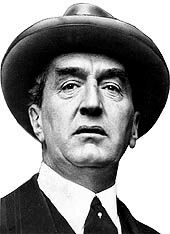
8th Prime Minister of Australia
Elections: 1925, 1928, 1929
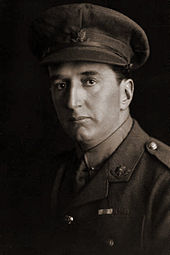
Bruce in the 1910s
Early life
Stanley Bruce was born on Grey Street, St Kilda, a Melbourne suburb, in 1883; however, his family moved shortly after to "Wombalano" on Kooyong Road, Toorak (now owned by the Murdoch family). The boy's father, of Scottish descent, was a prominent businessman.
Bruce was educated at Glamorgan (now part of Geelong Grammar School), Melbourne Grammar School, and then at Cambridge University. After graduation he studied law in London and was called to the bar in 1907. He practised law in London, and also managed the London office of his father's importing business. When World War I broke out he joined the British Army, and was commissioned to the Worcestershire Regiment, seconded to the Royal Fusiliers. In 1917 he was severely wounded in France, winning the Military Cross and the Croix de guerre[disambiguation needed].
Bruce was invalided home to Melbourne, and soon became involved in recruiting campaigns for the Army. His public speaking attracted the attention of the Nationalist Party .. http://en.wikipedia.org/wiki/Nationalist_Party_of_Australia, and in 1918 he was elected to the House of Representatives as MP for Flinders, near Melbourne. His background in business led to his being appointed Treasurer (finance minister) in 1921.
The Nationalist Party lost its majority at the 1922 election .. http://en.wikipedia.org/wiki/Australian_federal_election,_1922, and could only stay in office with the support of the Country Party .. http://en.wikipedia.org/wiki/National_Party_of_Australia. However, the Country Party let it be known it would not serve under incumbent Prime Minister Billy Hughes .. http://en.wikipedia.org/wiki/Billy_Hughes. This gave the more conservative members of the Nationalist Party an excuse to force Hughes to resign; the conservatives had only tolerated Hughes in order to keep the Australian Labor Party .. http://en.wikipedia.org/wiki/Australian_Labor_Party .. out of power. Bruce was chosen as Hughes's successor.
Bruce then entered negotiations with the Country Party leader, Earle Page, for a
coalition government. On 9 February 1923 he became prime minister at the age of only 39,
[...]
In general Bruce formed an effective partnership with Page, and exploited public fears of Communism and militant trade unions to dominate Australian politics through the 1920s. Despite predictions that Australians would not accept such an aloof leader as Bruce, he won a smashing victory over a demoralised ALP, led by Matthew Charlton, at the 1925 election. Throughout his term of office, he pursued a policy of support for the British Empire, the League of Nations, and the White Australia Policy:

Bruce in the 1920s
"We intend to keep this country white and not allow its peoples to be faced with the problems that at present are practically insoluble in many parts of the world."
In his policy launch speech made at the Shire Hall in Dandenong, south-eastern Melbourne, on 25 October 1925, Bruce reiterated his government's commitment to the White Australia Policy .. http://en.wikipedia.org/wiki/White_Australia_Policy:
"It is necessary that we should determine what are the ideals towards which every Australian would desire to strive. I think those ideals might well be stated as being to secure our national safety, and to ensure the maintenance of our White Australia Policy to continue as an integral portion of the British Empire."
On 8 July 1928 he was appointed a Companion of Honour.[7] His government was reelected, though with a significantly reduced majority, in 1928.
Maritime Industries crisis

Prime Minister Bruce holding a meeting
with Prime Minister-elect Scullin a
day before Scullin's swearing in.

Bruce (Back row centre) at the 1926 Imperial Conference.
Strikes of sugar mill workers in 1927, waterside workers in 1928, then of transport workers, timber industry workers and coal miners erupted in riots and lockouts in New South Wales in 1929. Bruce responded with a Maritime Industries Bill that was designed to do away with the Commonwealth Court of Conciliation and Arbitration .. http://en.wikipedia.org/wiki/Commonwealth_Court_of_Conciliation_and_Arbitration .. and return arbitration powers to the States.
On 10 September 1929, Hughes and five other Nationalist members joined Labor in voting against the Bill. The Bill was lost by 34 votes to 35 when Littleton Groom, the Speaker, abstained, bringing down the Bruce–Page government and forcing the 1929 election .. http://en.wikipedia.org/wiki/Australian_federal_election,_1929.
Labor, now led by James Scullin .. http://en.wikipedia.org/wiki/James_Scullin .. (Charlton had resigned from the party's leadership in 1928), won a landslide victory, scoring an 18-seat swing—at the time, the second-worst defeat of a sitting government in Australian history. Bruce was defeated by Labor's candidate Jack Holloway .. http://en.wikipedia.org/wiki/Jack_Holloway .. in his electorate of Flinders. Bruce had gone into the election holding Flinders with what appeared to be a fairly safe 10.7 percent two-party majority. However, on the second count an independent Liberal candidate's preferences flowed mostly to Holloway, thus making Bruce the first sitting prime minister to lose his seat. The only other sitting Australian prime minister to be defeated in his own electorate is John Howard .. http://en.wikipedia.org/wiki/John_Howard, at the 2007 election .. http://en.wikipedia.org/wiki/Australian_federal_election,_2007.
Later life, and all links .. http://en.wikipedia.org/wiki/Stanley_Melbourne_Bruce
See also:
Australia urged to tackle 'pockets of racism'
ABC News Breakfast's Amy Bainbridge
"Julian Burnside: Gillard shredding child refugee protections"
Updated January 26, 2010 11:10:00
External Link: Five charged over attack on Indian students
http://www.abc.net.au/news/stories/2010/01/26/2801170.htm "
http://investorshub.advfn.com/boards/read_msg.aspx?message_id=67589290
.. in reply to that one ..
* Duped by Katter, a ‘civil libertarian’ as long as you’re not gay
http://investorshub.advfn.com/boards/read_msg.aspx?message_id=68015952
* Drivers with Aussie flags on their cars 'more racist' research shows
http://investorshub.advfn.com/boards/read_msg.aspx?message_id=71224421
* Writing About the Extreme Right in Australia - Andrew Moore
http://investorshub.advfn.com/boards/read_msg.aspx?message_id=74405800
one more
Muslims condemn violent Sydney protest
http://investorshub.advfn.com/boards/read_msg.aspx?message_id=79602799
Soooo there ya go .. cultivating Australian identity goes on .. ratbags? .. of course .. on-balance mostly good .. :)
"Cultivating Identity - Thomas Keneally"
Stanley Melbourne Bruce, 1st Viscount Bruce of Melbourne, CH, MC, FRS, PC (15 April 1883 – 25 August 1967), was an Australian politician and diplomat, and the eighth Prime Minister of Australia. He was the second Australian granted an hereditary peerage of the United Kingdom, but the first whose peerage was formally created. He was the first incumbent Prime Minister to lose his seat at an election; the only other being John Howard in 2007.
The Right Honourable
The Viscount Bruce of Melbourne
CH, MC, FRS, PC
8th Prime Minister of Australia
Elections: 1925, 1928, 1929
Bruce in the 1910s
Early life
Stanley Bruce was born on Grey Street, St Kilda, a Melbourne suburb, in 1883; however, his family moved shortly after to "Wombalano" on Kooyong Road, Toorak (now owned by the Murdoch family). The boy's father, of Scottish descent, was a prominent businessman.
Bruce was educated at Glamorgan (now part of Geelong Grammar School), Melbourne Grammar School, and then at Cambridge University. After graduation he studied law in London and was called to the bar in 1907. He practised law in London, and also managed the London office of his father's importing business. When World War I broke out he joined the British Army, and was commissioned to the Worcestershire Regiment, seconded to the Royal Fusiliers. In 1917 he was severely wounded in France, winning the Military Cross and the Croix de guerre[disambiguation needed].
Bruce was invalided home to Melbourne, and soon became involved in recruiting campaigns for the Army. His public speaking attracted the attention of the Nationalist Party .. http://en.wikipedia.org/wiki/Nationalist_Party_of_Australia, and in 1918 he was elected to the House of Representatives as MP for Flinders, near Melbourne. His background in business led to his being appointed Treasurer (finance minister) in 1921.
The Nationalist Party lost its majority at the 1922 election .. http://en.wikipedia.org/wiki/Australian_federal_election,_1922, and could only stay in office with the support of the Country Party .. http://en.wikipedia.org/wiki/National_Party_of_Australia. However, the Country Party let it be known it would not serve under incumbent Prime Minister Billy Hughes .. http://en.wikipedia.org/wiki/Billy_Hughes. This gave the more conservative members of the Nationalist Party an excuse to force Hughes to resign; the conservatives had only tolerated Hughes in order to keep the Australian Labor Party .. http://en.wikipedia.org/wiki/Australian_Labor_Party .. out of power. Bruce was chosen as Hughes's successor.
Bruce then entered negotiations with the Country Party leader, Earle Page, for a
coalition government. On 9 February 1923 he became prime minister at the age of only 39,
[...]
In general Bruce formed an effective partnership with Page, and exploited public fears of Communism and militant trade unions to dominate Australian politics through the 1920s. Despite predictions that Australians would not accept such an aloof leader as Bruce, he won a smashing victory over a demoralised ALP, led by Matthew Charlton, at the 1925 election. Throughout his term of office, he pursued a policy of support for the British Empire, the League of Nations, and the White Australia Policy:

Bruce in the 1920s
"We intend to keep this country white and not allow its peoples to be faced with the problems that at present are practically insoluble in many parts of the world."
In his policy launch speech made at the Shire Hall in Dandenong, south-eastern Melbourne, on 25 October 1925, Bruce reiterated his government's commitment to the White Australia Policy .. http://en.wikipedia.org/wiki/White_Australia_Policy:
"It is necessary that we should determine what are the ideals towards which every Australian would desire to strive. I think those ideals might well be stated as being to secure our national safety, and to ensure the maintenance of our White Australia Policy to continue as an integral portion of the British Empire."
On 8 July 1928 he was appointed a Companion of Honour.[7] His government was reelected, though with a significantly reduced majority, in 1928.
Maritime Industries crisis

Prime Minister Bruce holding a meeting
with Prime Minister-elect Scullin a
day before Scullin's swearing in.

Bruce (Back row centre) at the 1926 Imperial Conference.
Strikes of sugar mill workers in 1927, waterside workers in 1928, then of transport workers, timber industry workers and coal miners erupted in riots and lockouts in New South Wales in 1929. Bruce responded with a Maritime Industries Bill that was designed to do away with the Commonwealth Court of Conciliation and Arbitration .. http://en.wikipedia.org/wiki/Commonwealth_Court_of_Conciliation_and_Arbitration .. and return arbitration powers to the States.
On 10 September 1929, Hughes and five other Nationalist members joined Labor in voting against the Bill. The Bill was lost by 34 votes to 35 when Littleton Groom, the Speaker, abstained, bringing down the Bruce–Page government and forcing the 1929 election .. http://en.wikipedia.org/wiki/Australian_federal_election,_1929.
Labor, now led by James Scullin .. http://en.wikipedia.org/wiki/James_Scullin .. (Charlton had resigned from the party's leadership in 1928), won a landslide victory, scoring an 18-seat swing—at the time, the second-worst defeat of a sitting government in Australian history. Bruce was defeated by Labor's candidate Jack Holloway .. http://en.wikipedia.org/wiki/Jack_Holloway .. in his electorate of Flinders. Bruce had gone into the election holding Flinders with what appeared to be a fairly safe 10.7 percent two-party majority. However, on the second count an independent Liberal candidate's preferences flowed mostly to Holloway, thus making Bruce the first sitting prime minister to lose his seat. The only other sitting Australian prime minister to be defeated in his own electorate is John Howard .. http://en.wikipedia.org/wiki/John_Howard, at the 2007 election .. http://en.wikipedia.org/wiki/Australian_federal_election,_2007.
Later life, and all links .. http://en.wikipedia.org/wiki/Stanley_Melbourne_Bruce
See also:
Australia urged to tackle 'pockets of racism'
ABC News Breakfast's Amy Bainbridge
"Julian Burnside: Gillard shredding child refugee protections"
Updated January 26, 2010 11:10:00
External Link: Five charged over attack on Indian students
http://www.abc.net.au/news/stories/2010/01/26/2801170.htm "
http://investorshub.advfn.com/boards/read_msg.aspx?message_id=67589290
.. in reply to that one ..
* Duped by Katter, a ‘civil libertarian’ as long as you’re not gay
http://investorshub.advfn.com/boards/read_msg.aspx?message_id=68015952
* Drivers with Aussie flags on their cars 'more racist' research shows
http://investorshub.advfn.com/boards/read_msg.aspx?message_id=71224421
* Writing About the Extreme Right in Australia - Andrew Moore
http://investorshub.advfn.com/boards/read_msg.aspx?message_id=74405800
one more
Muslims condemn violent Sydney protest
http://investorshub.advfn.com/boards/read_msg.aspx?message_id=79602799
Soooo there ya go .. cultivating Australian identity goes on .. ratbags? .. of course .. on-balance mostly good .. :)
It was Plato who said, “He, O men, is the wisest, who like Socrates, knows that his wisdom is in truth worth nothing”
Discover What Traders Are Watching
Explore small cap ideas before they hit the headlines.



