conix, A NYT article finally. Good. It would have been even better if you had not cut the bottom attribution off.
"Communist China Deserves Donald Trump a Human Wrecking Ball" [...] "All of this is now coming to a head in these trade talks. Either the U.S. and China find a way to build greater trust — so globalization can continue apace and we can grow together in this new era — or they won’t. In which case, globalization will start to fracture, and we’ll both be poorer for it."
conix, Why the US has a weak case against China’s ‘unfair’ trade practices
"Communist China Deserves Donald Trump a Human Wrecking Ball"
Your source shouldn't have stuck the Communist into the heading.
Though Friedman knows much more about it than i ever will, the article felt a bit unbalanced so i had a look and this is the first grabbed.
Stephen Roach says the claims of hostile trading policies that the US trade representative has made against China ignore the diminishing threat of Chinese cyberespionage and the history of industrial policy among the US and its allies
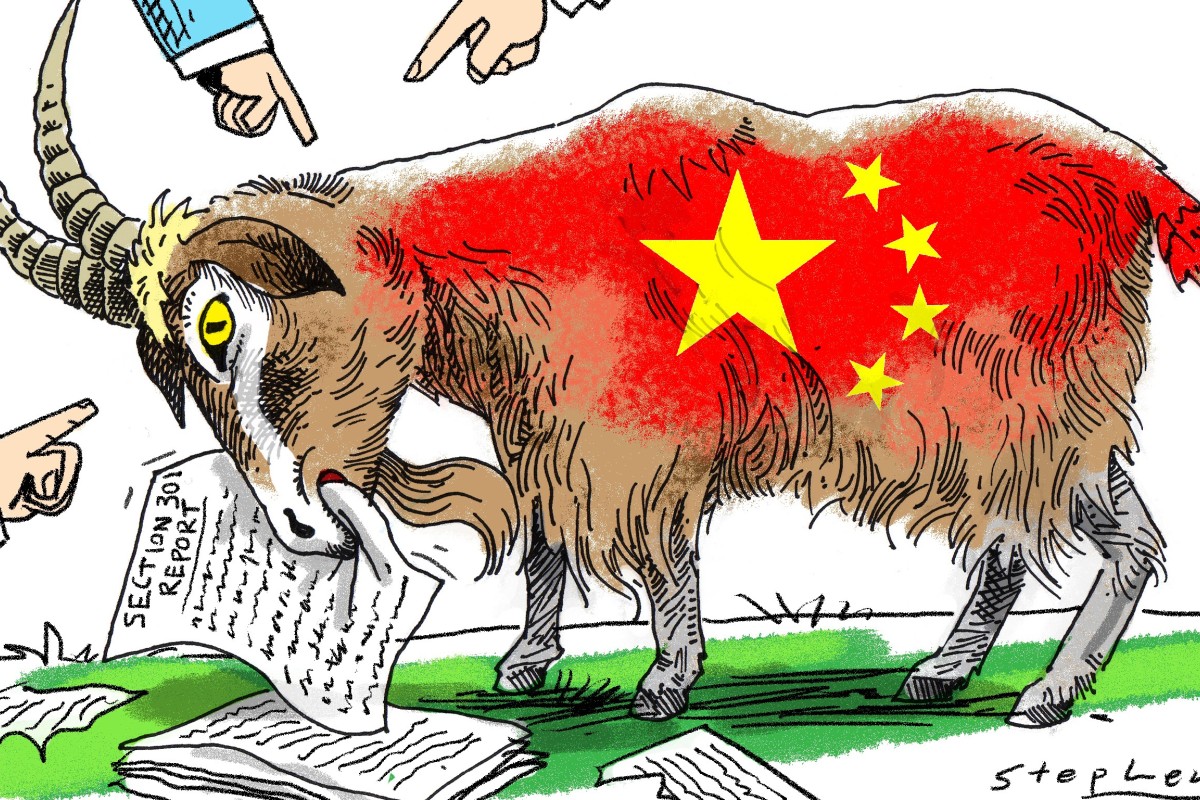
The case made by the US trade representative is an embarrassing symptom of a scapegoat mentality that has turned America into a nation of whiners. Illustration: Craig Stephens
But don’t be fooled. The report is wide of the mark in several key areas.
First, it accuses China of “forced technology transfer”, arguing that US companies must turn over the blueprints of proprietary technologies and operating systems in order to do business in China. This transfer is alleged to take place within the structure of joint-venture arrangements – partnerships with domestic counterparts which China and other countries have long established as models for the growth and expansion of new businesses.
Significantly, US and other multinational corporations willingly enter these legally negotiated arrangements for commercially sound reasons – not only to establish a toehold in China’s rapidly growing domestic markets, but also as a means to improve operating efficiency with a low-cost offshore Chinese platform. Portraying US companies as innocent victims of Chinese pressure is certainly at odds with my own experience as an active participant in Morgan Stanley’s joint venture with the China Construction Bank .. http://www.scmp.com/topics/china-construction-bank .. (and a few small minority investors) to establish China International Capital Corporation in 1995.
Yes, as we joined our partners in creating China’s first investment bank, we shared our business practices, proprietary products and distribution systems. Yet, contrary to the assertions of the US trade representative, we were hardly forced into these arrangements. We had our own commercial objectives and wanted to build a world-class financial services firm in China. By the time we sold our stake in 2010, the bank was well on its way to attaining those goals.
Never mind that industrial policies are a time-tested strategy for developing countries seeking to avoid the dreaded middle-income trap .. http://www.scmp.com/news/china/economy/article/2116295/has-china-really-avoided-middle-income-trap .. by shifting from imported to indigenous innovation. China is accused of sponsoring a unique strain of state-directed, heavily subsidised industrial policy unfairly aimed at snatching competitive supremacy from free and open market-based systems like the US, which are supposedly playing by different rules.
Yet, even developed countries have relied on industrial policy to achieve national economic and competitive objectives. It was central to Japan .. http://www.scmp.com/topics/japan ’s so-called planned rational development state, which underpinned its rapid growth in the 1970s and the 1980s. The Ministry of International Trade and Industry perfected the art of state-subsidised credit allocation and tariffs to protect Japan’s sunrise industries, an effort that was matched by Germany .. http://www.scmp.com/topics/germany ’s equally impressive Wirtschaftswunder (economic miracle), augmented by strong support for the Mittelstand (small and medium-size enterprises).
Yes, the US trade representative is entirely correct in underscoring the role that innovation plays in shaping any country’s future. But to claim that China alone relies on industrial policy as a means towards this end is the height of hypocrisy.
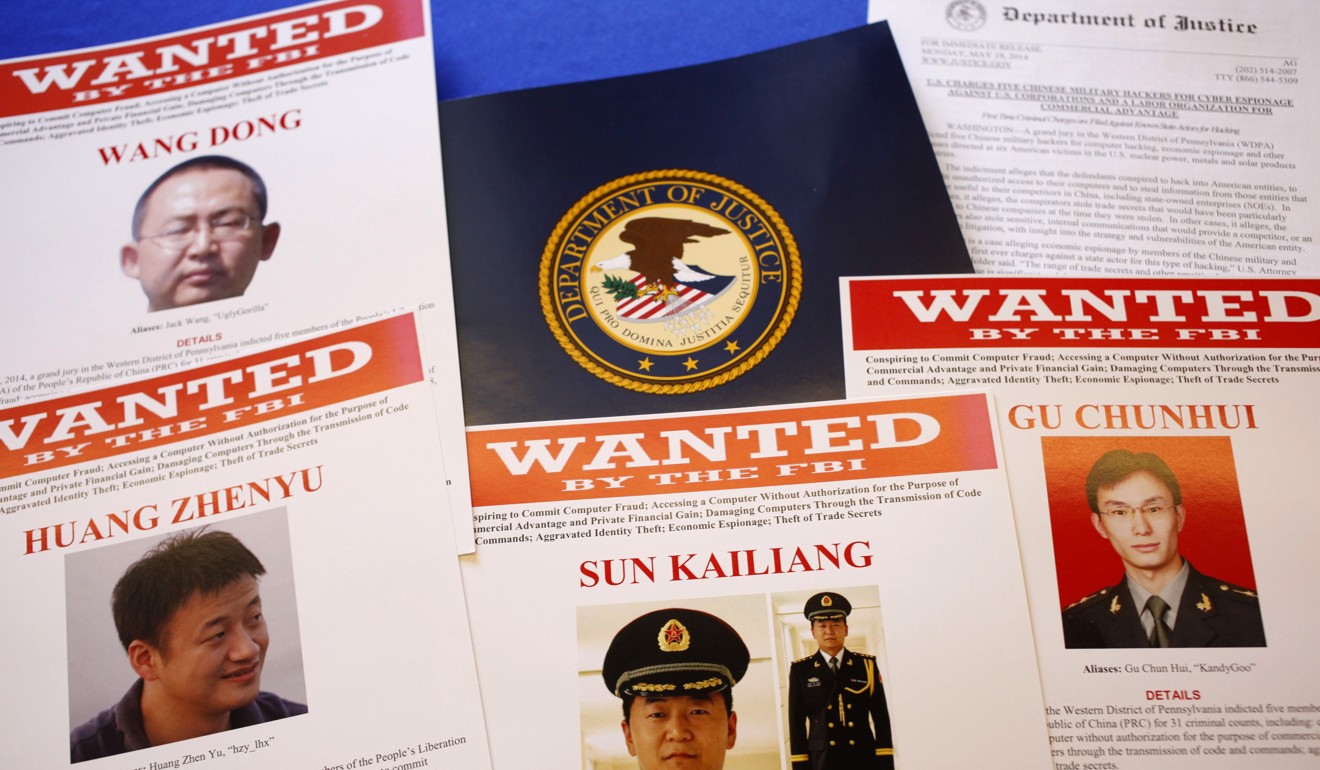
Press handouts are displayed on a table at the Justice Department in Washington before then-attorney general Eric Holder spoke at a news conference in May 2014, announcing that a US grand jury had charged five Chinese hackers with economic espionage and theft of trade secrets. Photo: AP
INSERT: Note Obama gained a result without a wanker trade war which hurts others and, which Trump believes, makes him look good.
In short, the seemingly impressive Section 301 report is a biased political document that has further inflamed anti-China sentiment in the US. As a result, Chinese-sponsored intellectual property theft is now taken as a given by an America that increasingly sees itself as a victim. Yes, like the rest of us, the Chinese are tough competitors, and they don’t always play by the rules. For that, they need to be held accountable. But the case made by the US trade representative is an embarrassing symptom of a scapegoat mentality that has turned America into a nation of whiners.
Stephen S. Roach, a faculty member at Yale University and former chairman of Morgan Stanley Asia, is the author of Unbalanced: The Codependency of America and China. Copyright: Project Syndicate .. http://www.project-syndicate.org/
This article appeared in the South China Morning Post print edition as: A flawed argument
I'm thinking you posted the Times article because you felt it made Trump look like a genuinely caring, tough guy who is doing something all positive which presidents before him hadn't had the courage to do. Unfortunately there are too many others around (in Australia also) who believe the same.


 Market Data
  Markets


 AI
AI