



 AI
AI








Thursday, May 23, 2019 3:24:14 AM
conix, Why the US has a weak case against China’s ‘unfair’ trade practices
"Communist China Deserves Donald Trump a Human Wrecking Ball"
Your source shouldn't have stuck the Communist into the heading.
Though Friedman knows much more about it than i ever will, the article
felt a bit unbalanced so i had a look and this is the first grabbed.
Stephen Roach says the claims of hostile trading policies that the US trade representative has made against China ignore
the diminishing threat of Chinese cyberespionage and the history of industrial policy among the US and its allies
Stephen Roach
Published: 6:00pm, 26 Apr, 2018
Updated: 8:47pm, 20 Jul, 2018
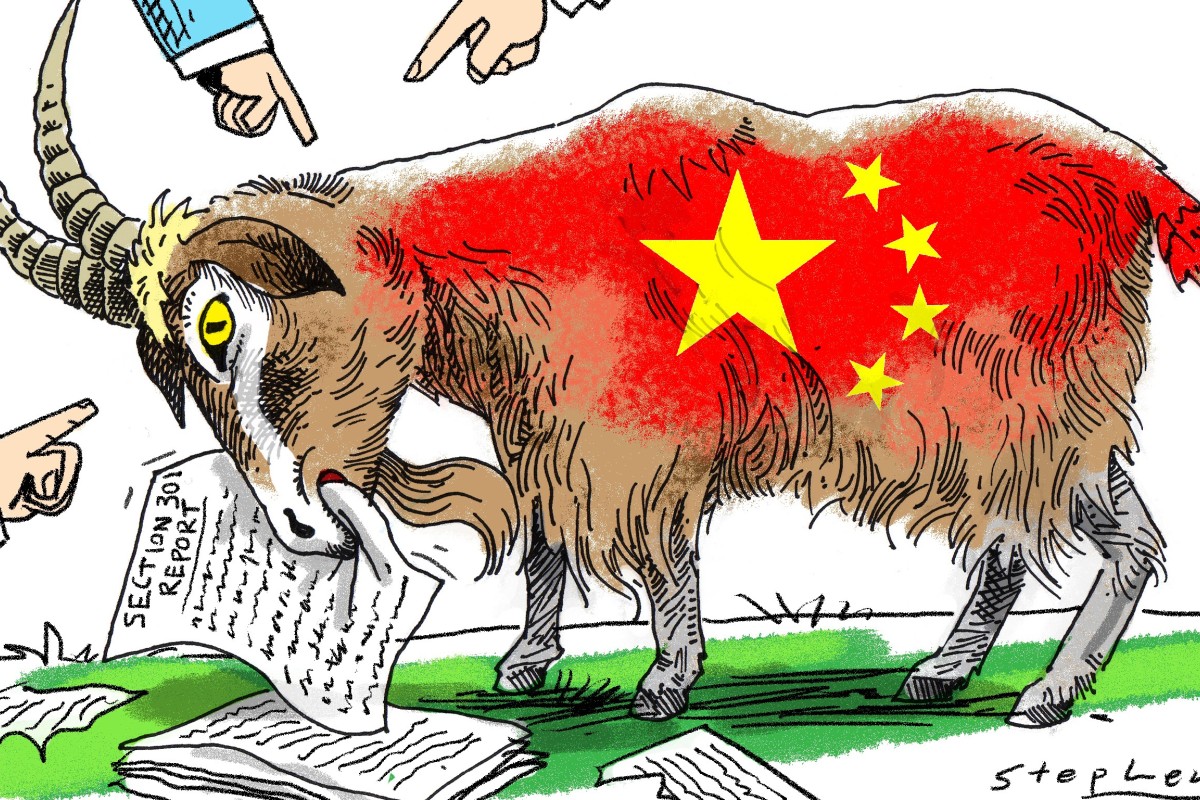
The case made by the US trade representative is an embarrassing symptom of a scapegoat mentality that has turned America into a nation of whiners.
Illustration: Craig Stephens
On the surface, US .. http://www.scmp.com/topics/united-states .. Trade .. http://www.scmp.com/topics/trade .. Representative Robert Lighthizer appears to have made an ironclad case against China .. http://www.scmp.com/news/china .. in the so-called Section 301 report .. https://ustr.gov/sites/default/files/Section%20301%20FINAL.PDF .. issued on March 22. Laid out in a detailed 182-page document (which, with 1,139 footnotes and five appendices, would make any legal team blush with pride), the indictment of China on charges of unfair trading practices regarding technology .. http://www.scmp.com/tech .. transfer, intellectual property .. http://www.scmp.com/topics/intellectual-property-china .. and innovation .. http://www.scmp.com/tech/innovation .. seems both urgent and forcing. It has quickly been accepted as foundational evidence in support of the tariffs and other punitive trade measures that President Donald Trump .. http://www.scmp.com/topics/donald-trump ’s administration has initiated .. http://www.scmp.com/news/china/article/2135341/donald-trump-likely-impose-stiff-steel-and-aluminium-tariffs-china-and .. against China in recent months.
But don’t be fooled. The report is wide of the mark in several key areas.
First, it accuses China of “forced technology transfer”, arguing that US companies must turn over the blueprints of proprietary technologies and operating systems in order to do business in China. This transfer is alleged to take place within the structure of joint-venture arrangements – partnerships with domestic counterparts which China and other countries have long established as models for the growth and expansion of new businesses.
Significantly, US and other multinational corporations willingly enter these legally negotiated arrangements for commercially sound reasons – not only to establish a toehold in China’s rapidly growing domestic markets, but also as a means to improve operating efficiency with a low-cost offshore Chinese platform. Portraying US companies as innocent victims of Chinese pressure is certainly at odds with my own experience as an active participant in Morgan Stanley’s joint venture with the China Construction Bank .. http://www.scmp.com/topics/china-construction-bank ..
(and a few small minority investors) to establish China International Capital Corporation in 1995.
Don’t call this Trump’s trade war. It’s much bigger than that
http://www.scmp.com/week-asia/opinion/article/2142568/us-china-trade-war-not-about-trade-not-about-trump-heres-what-it
Yes, as we joined our partners in creating China’s first investment bank, we shared our business practices, proprietary products and distribution systems. Yet, contrary to the assertions of the US trade representative, we were hardly forced into these arrangements. We had our own commercial objectives and wanted to build a world-class financial services firm in China. By the time we sold our stake in 2010, the bank was well on its way to attaining those goals.
IMAGE
Home-grown tech and domestic spend are key to China’s battle plan for trade war, leadership indicates ..
http://www.scmp.com/news/china/economy/article/2143144/home-grown-tech-and-domestic-spend-are-key-chinas-battle-plan
The second area where the Section 301 report is problematic is its portrayal of China’s focus on outward investment – its “going out” strategy .. http://www.scmp.com/business/banking-finance/article/1903703/chinese-companies-well-positioned-fulfil-going-out-strategy – as a unique state-directed plan aimed at gobbling up newly emerging US companies and their proprietary technologies. In fact, the report devotes more than twice as many pages to charges concerning China’s supposed external technology theft .. http://www.scmp.com/news/china/article/2137414/courageous-donald-trump-will-soon-get-options-crack-down-chinas-ip-theft .. via such acquisitions – which are framed as a blatant grab for America’s most precious assets – as it does to internal transfers through joint ventures and alleged unfair licencing practices.
As such, the Made in China 2025 ,, http://www.scmp.com/tech/enterprises/article/2138680/what-happens-made-china-2025-trade-war-fears-grow .. campaign is presented as prima facie evidence of a devious socialist plot to attain global dominance in the great industries of the future: autonomous vehicles .. http://www.scmp.com/topics/autonomous-driving , high-speed rail, advanced information technologies and machine tools, exotic new materials, biopharma and sophisticated medical products, as well as new power sources and advanced agricultural .. http://www.scmp.com/topics/food-and-agriculture .. equipment.
Never mind that industrial policies are a time-tested strategy for developing countries seeking to avoid the dreaded middle-income trap .. http://www.scmp.com/news/china/economy/article/2116295/has-china-really-avoided-middle-income-trap .. by shifting from imported to indigenous innovation. China is accused of sponsoring a unique strain of state-directed, heavily subsidised industrial policy unfairly aimed at snatching competitive supremacy from free and open market-based systems like the US, which are supposedly playing by different rules.
VIDEO -
What happens to ‘Made in China 2025’ as trade war fears grow ..
http://www.scmp.com/tech/enterprises/article/2138680/what-happens-made-china-2025-trade-war-fears-grow
Yet, even developed countries have relied on industrial policy to achieve national economic and competitive objectives. It was central to Japan .. http://www.scmp.com/topics/japan ’s so-called planned rational development state, which underpinned its rapid growth in the 1970s and the 1980s. The Ministry of International Trade and Industry perfected the art of state-subsidised credit allocation and tariffs to protect Japan’s sunrise industries, an effort that was matched by Germany .. http://www.scmp.com/topics/germany ’s equally impressive Wirtschaftswunder (economic miracle), augmented by strong support for the Mittelstand (small and medium-size enterprises).
And, of course, it was US president Dwight Eisenhower who in 1961 drew attention to America’s powerful military-industrial complex as the linchpin of state-sponsored, taxpayer-funded innovation in the US. Nasa-related spin-offs, the internet .. http://www.scmp.com/topics/internet , GPS, breakthroughs in semiconductors, nuclear power, imaging technology, pharmaceutical .. http://www.scmp.com/topics/pharmaceuticals .. innovations and more: all are important and highly visible manifestations of industrial policy the American way. The US does it though its federal defence .. http://www.scmp.com/topics/defence .. budget – where outlays of close to US$700 billion this year are more than the combined total earmarked for defence in China, Russia .. http://www.scmp.com/topics/russia , the UK .. http://www.scmp.com/topics/britain , India .. http://www.scmp.com/topics/india .. , France .. http://www.scmp.com/topics/france , Japan, Saudi Arabia .. http://www.scmp.com/topics/saudi-arabia ..
and Germany.
Yes, the US trade representative is entirely correct in underscoring the role that innovation plays in shaping any country’s future. But to claim that China alone relies on industrial policy as a means towards this end is the height of hypocrisy.
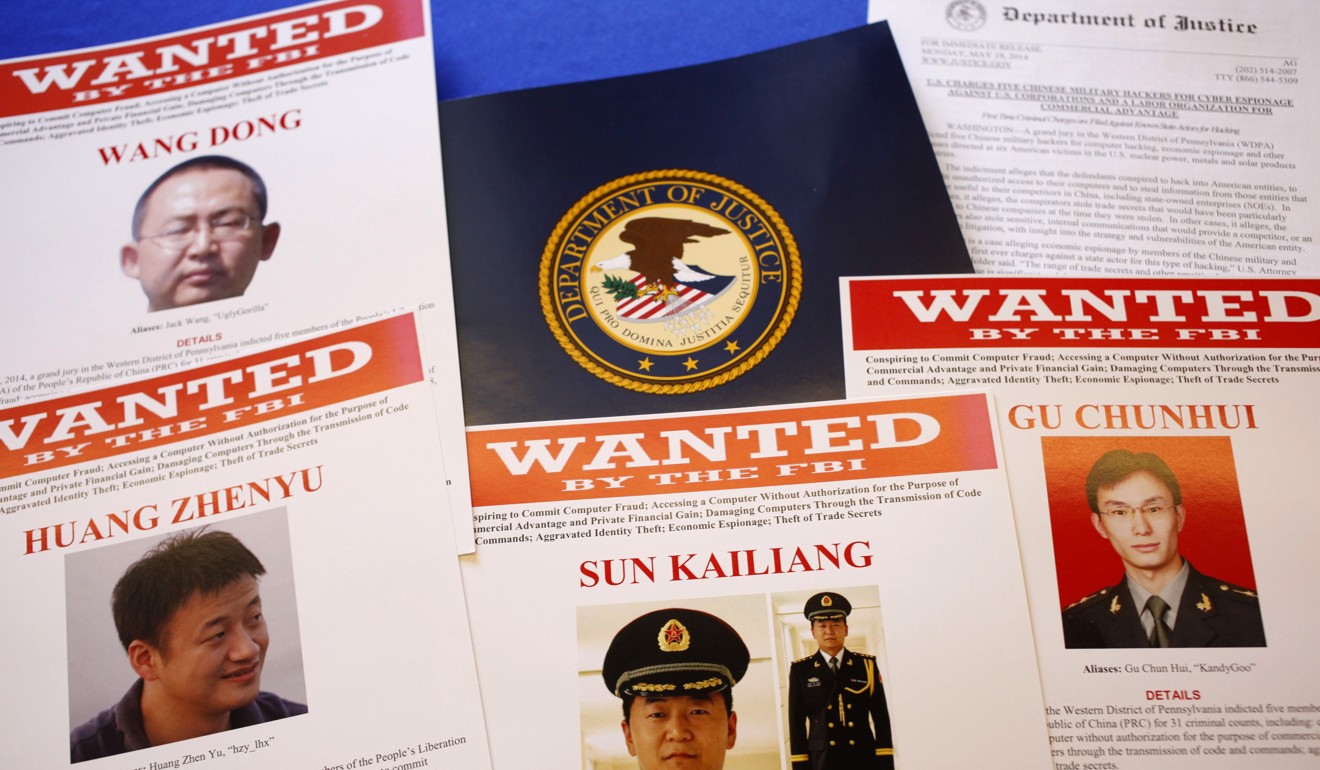
Press handouts are displayed on a table at the Justice Department in Washington before then-attorney general Eric Holder spoke at a news conference in May 2014,
announcing that a US grand jury had charged five Chinese hackers with economic espionage and theft of trade secrets. Photo: AP
China hackers accused of attacking Japanese defence firms
http://www.scmp.com/news/china/diplomacy-defence/article/2142863/china-hackers-accused-attacking-japanese-defence-firms
Cyberespionage .. http://www.scmp.com/news/china/article/2141525/us-official-accuses-china-industrial-cyber-spying-amid-looming-trade-war .. is the third leg of the stool in the US case against China. In this area, there can be no mistaking the evidence underscoring the role played by China’s People’s Liberation Army .. http://www.scmp.com/topics/china-military .. as a major actor in cyberintrusions directed at US commercial interests. These problems were, in fact, so serious that former president Barack Obama .. http://www.scmp.com/topics/barack-obama .. presented top-secret evidence of state-sponsored computer hacking to President Xi Jinping .. http://www.scmp.com/topics/xi-jinping .. in September 2015. Since then, most reports point to a reduction in Chinese incursions. Unfortunately, the evidence cited in the US trade representative’s report in support of cyber-related trade violations largely predates that confrontation.
INSERT: Note Obama gained a result without a wanker trade war which hurts others and, which Trump believes, makes him look good.
In short, the seemingly impressive Section 301 report is a biased political document that has further inflamed anti-China sentiment in the US. As a result, Chinese-sponsored intellectual property theft is now taken as a given by an America that increasingly sees itself as a victim. Yes, like the rest of us, the Chinese are tough competitors, and they don’t always play by the rules. For that, they need to be held accountable. But the case made by the US trade representative is an embarrassing symptom of a scapegoat mentality that has turned America into a nation of whiners.
Stephen S. Roach, a faculty member at Yale University and former chairman of Morgan Stanley Asia, is the author of
Unbalanced: The Codependency of America and China. Copyright: Project Syndicate .. http://www.project-syndicate.org/
This article appeared in the South China Morning Post print edition as: A flawed argument
Copyright © 2019 South China Morning Post
https://www.scmp.com/comment/insight-opinion/article/2143496/why-us-has-weak-case-against-chinas-unfair-trade-practices
I'm thinking you posted the Times article because you felt it made Trump look like a genuinely caring, tough guy who is doing something all positive
which presidents before him hadn't had the courage to do. Unfortunately there are too many others around (in Australia also) who believe the same.
"Communist China Deserves Donald Trump a Human Wrecking Ball"
Your source shouldn't have stuck the Communist into the heading.
Though Friedman knows much more about it than i ever will, the article
felt a bit unbalanced so i had a look and this is the first grabbed.
Stephen Roach says the claims of hostile trading policies that the US trade representative has made against China ignore
the diminishing threat of Chinese cyberespionage and the history of industrial policy among the US and its allies
Stephen Roach
Published: 6:00pm, 26 Apr, 2018
Updated: 8:47pm, 20 Jul, 2018
The case made by the US trade representative is an embarrassing symptom of a scapegoat mentality that has turned America into a nation of whiners.
Illustration: Craig Stephens
On the surface, US .. http://www.scmp.com/topics/united-states .. Trade .. http://www.scmp.com/topics/trade .. Representative Robert Lighthizer appears to have made an ironclad case against China .. http://www.scmp.com/news/china .. in the so-called Section 301 report .. https://ustr.gov/sites/default/files/Section%20301%20FINAL.PDF .. issued on March 22. Laid out in a detailed 182-page document (which, with 1,139 footnotes and five appendices, would make any legal team blush with pride), the indictment of China on charges of unfair trading practices regarding technology .. http://www.scmp.com/tech .. transfer, intellectual property .. http://www.scmp.com/topics/intellectual-property-china .. and innovation .. http://www.scmp.com/tech/innovation .. seems both urgent and forcing. It has quickly been accepted as foundational evidence in support of the tariffs and other punitive trade measures that President Donald Trump .. http://www.scmp.com/topics/donald-trump ’s administration has initiated .. http://www.scmp.com/news/china/article/2135341/donald-trump-likely-impose-stiff-steel-and-aluminium-tariffs-china-and .. against China in recent months.
But don’t be fooled. The report is wide of the mark in several key areas.
First, it accuses China of “forced technology transfer”, arguing that US companies must turn over the blueprints of proprietary technologies and operating systems in order to do business in China. This transfer is alleged to take place within the structure of joint-venture arrangements – partnerships with domestic counterparts which China and other countries have long established as models for the growth and expansion of new businesses.
Significantly, US and other multinational corporations willingly enter these legally negotiated arrangements for commercially sound reasons – not only to establish a toehold in China’s rapidly growing domestic markets, but also as a means to improve operating efficiency with a low-cost offshore Chinese platform. Portraying US companies as innocent victims of Chinese pressure is certainly at odds with my own experience as an active participant in Morgan Stanley’s joint venture with the China Construction Bank .. http://www.scmp.com/topics/china-construction-bank ..
(and a few small minority investors) to establish China International Capital Corporation in 1995.
Don’t call this Trump’s trade war. It’s much bigger than that
http://www.scmp.com/week-asia/opinion/article/2142568/us-china-trade-war-not-about-trade-not-about-trump-heres-what-it
Yes, as we joined our partners in creating China’s first investment bank, we shared our business practices, proprietary products and distribution systems. Yet, contrary to the assertions of the US trade representative, we were hardly forced into these arrangements. We had our own commercial objectives and wanted to build a world-class financial services firm in China. By the time we sold our stake in 2010, the bank was well on its way to attaining those goals.
IMAGE
Home-grown tech and domestic spend are key to China’s battle plan for trade war, leadership indicates ..
http://www.scmp.com/news/china/economy/article/2143144/home-grown-tech-and-domestic-spend-are-key-chinas-battle-plan
The second area where the Section 301 report is problematic is its portrayal of China’s focus on outward investment – its “going out” strategy .. http://www.scmp.com/business/banking-finance/article/1903703/chinese-companies-well-positioned-fulfil-going-out-strategy – as a unique state-directed plan aimed at gobbling up newly emerging US companies and their proprietary technologies. In fact, the report devotes more than twice as many pages to charges concerning China’s supposed external technology theft .. http://www.scmp.com/news/china/article/2137414/courageous-donald-trump-will-soon-get-options-crack-down-chinas-ip-theft .. via such acquisitions – which are framed as a blatant grab for America’s most precious assets – as it does to internal transfers through joint ventures and alleged unfair licencing practices.
As such, the Made in China 2025 ,, http://www.scmp.com/tech/enterprises/article/2138680/what-happens-made-china-2025-trade-war-fears-grow .. campaign is presented as prima facie evidence of a devious socialist plot to attain global dominance in the great industries of the future: autonomous vehicles .. http://www.scmp.com/topics/autonomous-driving , high-speed rail, advanced information technologies and machine tools, exotic new materials, biopharma and sophisticated medical products, as well as new power sources and advanced agricultural .. http://www.scmp.com/topics/food-and-agriculture .. equipment.
Never mind that industrial policies are a time-tested strategy for developing countries seeking to avoid the dreaded middle-income trap .. http://www.scmp.com/news/china/economy/article/2116295/has-china-really-avoided-middle-income-trap .. by shifting from imported to indigenous innovation. China is accused of sponsoring a unique strain of state-directed, heavily subsidised industrial policy unfairly aimed at snatching competitive supremacy from free and open market-based systems like the US, which are supposedly playing by different rules.
VIDEO -
What happens to ‘Made in China 2025’ as trade war fears grow ..
http://www.scmp.com/tech/enterprises/article/2138680/what-happens-made-china-2025-trade-war-fears-grow
Yet, even developed countries have relied on industrial policy to achieve national economic and competitive objectives. It was central to Japan .. http://www.scmp.com/topics/japan ’s so-called planned rational development state, which underpinned its rapid growth in the 1970s and the 1980s. The Ministry of International Trade and Industry perfected the art of state-subsidised credit allocation and tariffs to protect Japan’s sunrise industries, an effort that was matched by Germany .. http://www.scmp.com/topics/germany ’s equally impressive Wirtschaftswunder (economic miracle), augmented by strong support for the Mittelstand (small and medium-size enterprises).
And, of course, it was US president Dwight Eisenhower who in 1961 drew attention to America’s powerful military-industrial complex as the linchpin of state-sponsored, taxpayer-funded innovation in the US. Nasa-related spin-offs, the internet .. http://www.scmp.com/topics/internet , GPS, breakthroughs in semiconductors, nuclear power, imaging technology, pharmaceutical .. http://www.scmp.com/topics/pharmaceuticals .. innovations and more: all are important and highly visible manifestations of industrial policy the American way. The US does it though its federal defence .. http://www.scmp.com/topics/defence .. budget – where outlays of close to US$700 billion this year are more than the combined total earmarked for defence in China, Russia .. http://www.scmp.com/topics/russia , the UK .. http://www.scmp.com/topics/britain , India .. http://www.scmp.com/topics/india .. , France .. http://www.scmp.com/topics/france , Japan, Saudi Arabia .. http://www.scmp.com/topics/saudi-arabia ..
and Germany.
Yes, the US trade representative is entirely correct in underscoring the role that innovation plays in shaping any country’s future. But to claim that China alone relies on industrial policy as a means towards this end is the height of hypocrisy.
Press handouts are displayed on a table at the Justice Department in Washington before then-attorney general Eric Holder spoke at a news conference in May 2014,
announcing that a US grand jury had charged five Chinese hackers with economic espionage and theft of trade secrets. Photo: AP
China hackers accused of attacking Japanese defence firms
http://www.scmp.com/news/china/diplomacy-defence/article/2142863/china-hackers-accused-attacking-japanese-defence-firms
Cyberespionage .. http://www.scmp.com/news/china/article/2141525/us-official-accuses-china-industrial-cyber-spying-amid-looming-trade-war .. is the third leg of the stool in the US case against China. In this area, there can be no mistaking the evidence underscoring the role played by China’s People’s Liberation Army .. http://www.scmp.com/topics/china-military .. as a major actor in cyberintrusions directed at US commercial interests. These problems were, in fact, so serious that former president Barack Obama .. http://www.scmp.com/topics/barack-obama .. presented top-secret evidence of state-sponsored computer hacking to President Xi Jinping .. http://www.scmp.com/topics/xi-jinping .. in September 2015. Since then, most reports point to a reduction in Chinese incursions. Unfortunately, the evidence cited in the US trade representative’s report in support of cyber-related trade violations largely predates that confrontation.
INSERT: Note Obama gained a result without a wanker trade war which hurts others and, which Trump believes, makes him look good.
In short, the seemingly impressive Section 301 report is a biased political document that has further inflamed anti-China sentiment in the US. As a result, Chinese-sponsored intellectual property theft is now taken as a given by an America that increasingly sees itself as a victim. Yes, like the rest of us, the Chinese are tough competitors, and they don’t always play by the rules. For that, they need to be held accountable. But the case made by the US trade representative is an embarrassing symptom of a scapegoat mentality that has turned America into a nation of whiners.
Stephen S. Roach, a faculty member at Yale University and former chairman of Morgan Stanley Asia, is the author of
Unbalanced: The Codependency of America and China. Copyright: Project Syndicate .. http://www.project-syndicate.org/
This article appeared in the South China Morning Post print edition as: A flawed argument
Copyright © 2019 South China Morning Post
https://www.scmp.com/comment/insight-opinion/article/2143496/why-us-has-weak-case-against-chinas-unfair-trade-practices
I'm thinking you posted the Times article because you felt it made Trump look like a genuinely caring, tough guy who is doing something all positive
which presidents before him hadn't had the courage to do. Unfortunately there are too many others around (in Australia also) who believe the same.
It was Plato who said, “He, O men, is the wisest, who like Socrates, knows that his wisdom is in truth worth nothing”
Discover What Traders Are Watching
Explore small cap ideas before they hit the headlines.



