News Focus
News Focus
icon url

JCNJ

08/27/15 12:25 PM

#232499 RE: cjgaddy #232486

CJ
I appreciate your posts over the years, and know you have been in this as long as I. I am interested in your take on the proposal to issue the additional 175M shares. Just curious is you are inclined to opine.

Thanks and good luck
icon url

cjgaddy

09/03/15 2:47 PM

#233445 RE: cjgaddy #232486

Peregrine Exhibiting & 3-Presentations Sept6-9 at IASLC World Conf. in Denver – recall, PPHM KOL/SAB’r Dr. David Carbone becomes President of The IASLC on 9-9-15. 3 Bavi presentations (1 poster, 1 Mini-Oral, 1 Oral) by UTSW (David Gerber, Rolf Brekken, Xianming Huang) and Moffitt CC (Scott Antonia), all with Peregrine co-authors…

Sept6-9 2015: “IASLC’s 16th World Conf. on Lung Cancer”, Denver
http://wclc2015.iaslc.org/
“The World Conference on Lung Cancer (WCLC) is the world’s largest meeting dedicated to lung cancer and other thoracic malignancies. More than 7,000 delegates come from more than 100 countries to discuss the latest developments in thoracic malignancy research. Attendees include surgeons, medical oncologists, radiation oncologists, pulmonologists, radiologists, pathologists, epidemiologists, basic research scientists, nurses, allied health professionals, advocates, and patients.”
http://www.iaslc.org/events/16th-world-conference-lung-cancer
2015 Exhibitor: Peregrine Pharm. (1 of 39) - booth #1724 (adjacent to Abbvie)
• RECALL: PPHM KOL/SAB Dr. David Carbone becomes President of IASLC 9-9-15 ( https://www.iaslc.org/about-us/board ). “…I also personally find it rewarding to participate in the global fight against cancer, and am honored to have been elected President of the IASLC, eff. Sept. 9, 2015." http://www.supportohiostate.org/site/TR?px=1009121&fr_id=1151&pg=personal
• IASLC Faculty & Staff Disclosures: Heather A. Wakelee, MD - Grant/Research Support: Genentech/Roche, Lilly, Pfizer, Novartis, Exelixis, Xcovery, AstraZeneca, Clovis, Regeneron; Consultant: Peregrine. http://www.gotoper.com/conferences/ilc/meetings/15th-international-lung-cancer-congress “Associate Prof. of Medicine, Div. of Oncology; Faculty Director, Cancer Clinical Trials Office; Co-leader, Lung Cancer Disease Mgt Group, Stanford Univ. School of Medicine, Stanford CA”
PGM-Search: http://content.webges.com/library/wclc/browse/search

- - - - - - - - - - - - - - - - - - - - - - -
WCLC 2015 Track: Treatment of Advanced Diseases - NSCLC
9/7/15 9:30am-5:00pm, Exhibit Hall (Hall B+C)
POSTER #P1.01-075: “Phase III, Randomized, Double-Blind Trial of Bavituximab Plus Docetaxel in Previously Treated Stage IIIb/IV Non-Squamous NSCLC (SUNRISE) (ID 1581)
David R. Spigel, Joseph Shan, Alberto Chiappori, Ulrich Keilholz, Martin Reck, Martin Edelman, Manuel Domine, Keunchil Park, Tae Won Jang, Wu-Chou Su, Rachel E. Sanborn, Leora Horn, Rebecca Heist, Paul Mainwaring, David E. Gerber (UTSW)
ABSTRACT…
BACKGROUND: Exposed phosphatidylserine (PS) in the tumor microenvironment is highly immunosuppressive. PS binding to PS receptors on myeloid derived suppressor cells (MDSC) and M2 macrophages leads to production of anti-inflammatory cytokines such as TGF-B and IL-10. Bavituximab, a first-in-class PS-targeting monoclonal antibody, counters these effects, resulting in production of pro-inflammatory cytokines such as TNF-a and IL-12, maturation of dendritic cells and induction of tumor specific cytotoxic T lymphocyte (CTL) immunity. Docetaxel has also been shown to suppress MDSCs while increasing tumor antigens and T-cell mediated cytotoxicity, thereby enhancing bavituximab’s immunomodulatory effects. In a prior double-blind Phase II trial in 2nd line non-squamous NSCLC, bavituximab 3 mg/kg + docetaxel was well-tolerated and demonstrated 60% improvement (11.7 vs 7.3 mos) in median overall survival (OS) compared to control.
METHODS: SUNRISE is a Phase III, double-blind trial where patients with previously treated Stage IIIb/IV non-squamous, non-small cell lung cancer are randomized in a 1:1 ratio to receive up to six 21-day cycles of docetaxel in combination with either weekly 3 mg/kg bavituximab or placebo, followed by maintenance with weekly bavituximab or placebo until progression or toxicity. Patients will be stratified by region (North America, Europe, or Rest of World), disease stage (IIIb or IV), and previous maintenance/targeted therapy (yes or no). This trial was initiated in Dec.2013 and accrual of 582 patients across 160+ sites in 14 countries is planned over 24 months. The primary endpoint is OS and 2 interim analyses are planned. Secondary endpoints include progression-free survival (PFS), overall response rate (ORR) and safety. Radiographic tumor response is centrally assessed every 2 cycles during combination therapy and every nine weeks during maintenance. Exploratory analysis will include the assessment of changes in circulating immune cells and cytokines to better understand the immunotherapeutic mechanism.
RESULTS: Trial in progress
CONCLUSION: Trial in progress

- - - - - - - - - - - - - - - - - - - - - - -
WCLC 2015 Track: MINI ORAL #14 - Pre-Clinical Therapy (ID 119)
Moderators: Lynnette Fernandez-Cuesta Adi F. Gazdar
9/8/15, 10:45am-12:15pm, Mile High Ballroom 2c-3c
MINI-ORAL #14.07: “Bavituximab Activates CD8+ TILs in a 3D Ex Vivo System of Lung Cancer Patients Derived Tumors With Negative PD-L1 Expression”
Soner Altiok, Melanie Mediavilla Valera, Jenny Kreahling, Nikoletta L. Kallinteris, David Noyes, Tiffany N. Razabdouski, Joseph Shan, Jeff Hutchins, Kerstin Menander, Scott J. Antonia (Moffitt CC)
ABSTRACT…
BACKGROUND: Bavituximab is a chimeric monoclonal antibody that targets the membrane phospholipid phosphatidylserine (PS) exposed on endothelial cells and cancer cells in solid tumors. Bavituximab blocks PS-mediated immune suppression and activates cytotoxic T lymphocyte anti-tumor responses.
METHODS: Tissues from consented patients with adenocarcinoma of the lung were extracted at the time of surgical resection and disaggregated to characterize expression of immune checkpoint proteins such as PD-1, CTLA-4, LAG3, TIM3, BTLA and adenosine A2A receptor on both CD4+ and CD8+ tumor infiltrating cells by flow cytometry (FACS) and stained for PD-L1, CD68, and CD163 via immunohistochemistry (IHC). 3D tumor microspheres were prepared and treated ex vivo with an IgG control, F(ab)’2 version of bavituximab, bavituximab, docetaxel, anti-PD-1 or PD-L1 and combinations of bavituximab, anti-PD-1 or PD-L1 and docetaxel for 36 hours within an intact tumor microenvironment. A multiplex human cytokine assay was used to simultaneously analyze the differential secretion of cytokines. Additionally, a NanoString platform containing probes to quantitate 770 immune function genes was used to determine potential positive or negative associations between expression of immune function genes and TIL activation by treatment. In a few cases, the expanded TILs were tested in PDX models using the consented patient’s tumor.
RESULTS: Bavituximab induces activation of TILs in 3D ex vivo tumor microsphere models of lung cancer, as demonstrated by a significant increase in IFN-y, TNF-a, and GM-CSF secretion. FACS, IHC, and NanoString gene function analysis read out assays revealed that this effect was associated with low PD-1 expression on CD8+ cells, negative PD-L1 expression in the stating biopsy tissue, and a conversion of the M2 to M1 macrophage phenotype.
CONCLUSION: These data support the use of bavituximab as an immunomodulatory treatment in adenocarcinoma of the lung by enhancing the activation of CD8+ TIL derived from patients' tumors with negative PD-L1 expression; correlating with increased cytokine production by lymphoid cells and repolarization of myeloid cells from an immunosuppressive to an immune active state.

- - - - - - - - - - - - - - - - - - - - - - -
WCLC 2015 Track: ORAL #41 - Immune Biology, Microenvironment & Novel Targets (ID 159)
Moderators: Sukhmani K. Padda, Raphael Nemenoff
9/9/15, 6:30-8:00pm, Four Seasons Ballroom F1+F2
ORAL #41.05: “Targeting Phosphatidylserine-Mediated Immune Suppression Enhances the Efficacy of Immune Checkpoint Blockade in Pre-Clinical Tumor Models”
Rolf A. Brekken (UTSW), Bruce Freimark, Jian Gong, Carrie Baldwin, Van Nguyen, Michael Gray, Shen Yin, Jeff Hutchins, Alan Schroit, Xianming Huang (UTSW)
ABSTRACT…
BACKGROUND: Despite substantial progress, only a subset of cancer patients benefit from blockade of the PD-1 immune checkpoint. Multifocal immune suppression in the tumor microenvironment is the underlying cause for the limited efficacy of immune checkpoint blockade. Persistent immune suppression prevents the development of a robust T cell response to tumor specific antigens that is required for effective downstream immune checkpoint blockade. An underappreciated but significant contributor to immune suppression in tumors is the expression of the membrane phospholipid phosphatidylserine (PS) on the surface of tumor cells and tumor-derived microvesicles. PS is recognized by receptors on immune cells where it triggers the secretion of immune suppressive cytokines, prevents the differentiation of myeloid-derived suppressor cells (MDSCs) and inhibits dendritic cell (DC) maturation; events that prevent a productive anti-tumor T cell response. Bavituximab, a chimeric monoclonal antibody that targets PS and inhibits PS-mediated immunosuppressive signaling, drives immune activation by reducing the levels of MDSCs, by polarizing tumor-associated macrophages towards an M1 phenotype and by promoting the maturation of dendritic cells (DCs).
METHODS: The efficacy of bavituximab, anti-PD-1 and combination therapy was evaluated in multiple syngeneic, pre-clinical tumor models. Treatment efficacy was determined by inhibition of tumor growth and by immunophenotyping of spleen and tumor infiltrating leukocytes.
RESULTS: The combination of antibody-mediated PS and PD-1 blockade was significantly more effective in reducing tumor burden and promoting immune activation than single agent therapy. Combination therapy increased tumor infiltration of effector T-cells (Teff), increased the Teff:T regulatory cell ratio in the tumor and enhanced Teff function as determined by IFN-y, TNFa and granzyme B levels associated with Teff cells in the spleen and tumor. Furthermore combined blockade of PS and PD-1 signaling reduced the level of immune suppressive cells (e.g., MDSCs, M2 macrophages, and Treg) in the tumor microenvironment.
CONCLUSION: These results raise the possibility that PS blockade with bavituximab can enhance the efficacy of anti-PD-1 therapy even in patients with tumors that are unresponsive to single agent immune checkpoint therapy.
icon url

cjgaddy

09/09/15 5:39 PM

#234220 RE: cjgaddy #232486

Q1FY16 Avid Revs=$9.4MM(record), GP=$4.8mm, GP%=51% (Licensing-Revs=$292k)

Updated PPHM REVS-BY-QTR TABLE, now thru FY16/Q1 (q/e 7-31-15), per the 7-31-15 10-Q (http://tinyurl.com/pemub47 ) issued 9-9-15.
• Total Revs since May’06: ($138.6mm/Avid + $24.1mm/Govt + $2.4mm/Lic.) = $165.2mm
• ***Deferred-Revs at 7-31-15, going fwd into FY’16/Q2 (q/e 10-31-15), total $8.3mm, UP from the $6.6mm of Deferred-Revs at 4-30-15 that drove into FY’16/Q1(qe 7-31-15).
• Avid’s Gross-Profit over last 3 qtrs: $12.5mm on revs of $24.4mm (GP% = 49%)
• Recall, Avid Rev$ from Gov’t DTRA Contract work (6/30/08 – 4/15/11, totaling $24.15mm), went into GOVT-REVS, not AVID-REVS, in the Financials.
Avid’s website: http://www.avidbio.com
 
AVID PROFITABILITY (GROSS*) BY QTR:
QTR Avid-Rev$ CostofMfg$ Gross-Profit$ GP%
FY13Q1 7-31-12 4,135,000 2,024,000 2,111,000 51%
FY13Q2 10-31-12 6,061,000 3,703,000 2,358,000 39%
FY13Q3 1-31-13 6,961,000 3,651,000 3,310,000 47%
FY13Q4 4-30-13 4,176,000 3,217,000 959,000 23%
FY13 TOTAL: 21,333,000 12,595,000 8,738,000 41%*
FY14Q1 7-31-13 4,581,000 2,670,000 1,911,000 42%
FY14Q2 10-31-13 7,354,000 4,195,000 3,159,000 43%
FY14Q3 1-31-14 3,885,000 2,416,000 1,469,000 38%
FY14Q4 4-30-14 6,474,000 3,829,000 2,645,000 41%
FY14 TOTAL: 22,294,000 13,110,000 9,184,000 41%*
FY15Q1 7-31-14 5,496,000 3,583,000 1,913,000 35%
FY15Q2 10-31-14 6,263,000 4,139,000 2,124,000 34%
FY15Q3 1-31-15 5,677,000 3,113,000 2,564,000 45%
FY15Q4 4-30-15 9,308,000 4,758,000 4,550,000 49%
FY15 TOTAL: 26,744,000 15,393,000 11,151,000 42%*
FY16Q1 7-31-15 9,379,000 4,608,000 4,771,000 51%
*Avid Net-Profit (ie, incl. Selling, G&A) not split out from PPHM-Corp. in the financials.
.
PPHM REVENUES (in thousands) DEFERRED
-------REVENUES------- REVENUES INVEN-
Quarter Avid Govt Lic. TOTAL Avid Govt TORIES
FY07Q1 7-31-06 398 0 23 421 317 0 971
FY07Q2 10-31-06 636 0 48 684 1388 0 1899
FY07Q3 1-31-07 347 0 16 363 2202 0 1325
FY07Q4 4-30-07 2111 0 129 2240 1060 0 1916
FY08Q1 7-31-07 1621 0 4 1625 1820 0 2363
FY08Q2 10-31-07 1863 0 29 1892 1338 0 3500
FY08Q3 1-31-08 1662 0 13 1675 1434 0 2394
FY08Q4 4-30-08 751 0 150 901 2196 0 2900
FY09Q1 7-31-08 1193 324 0 1517 4021 980 4628
FY09Q2 10-31-08 983 958 0 1941 6472 1701 6700
FY09Q3 1-31-09 5778 1048 0 6826 4805 3262 5547
FY09Q4 4-30-09 5009 2683 175 7867 3776 3871 4707
FY10Q1 7-31-09 2070 4671 9 6750 5755 2332 6177
FY10Q2 10-31-09 5308 1510 78 6896 4260 3989 5850
FY10Q3 1-31-10 2945 6854 78 9877 3052 76 3861
FY10Q4 4-30-10 2881 1461 78 4420 2406 78 3123
FY11Q1 7-31-10 983 2111 115 3209 3719 47 4692
FY11Q2 10-31-10 3627 966 78 4671 2447 35 3555
FY11Q3 1-31-11 1922 882 79 2883 4300 40 3915
FY11Q4 4-30-11 1970 681 78 2729 5617 0 5284
FY12Q1 7-31-11 5439 0 216 5655 4145 0 4481
FY12Q2 10-31-11 4154 0 78 4232 2012 0 3178
FY12Q3 1-31-12 3203 0 78 3281 2552 0 2722
FY12Q4 4-30-12 1987 0 78 2065 3651 0 3611
FY13Q1 7-31-12 4135 0 116 4251 6056 0 5744
FY13Q2 10-31-12 6061 0 78 6139 6221 0 5426
FY13Q3 1-31-13 6961 0 78 7039 5061 0 4635
FY13Q4 4-30-13 4176 0 78 4254 4171 0 4339
FY14Q1 7-31-13 4581 0 107 4688 4164 0 5679
FY14Q2 10-31-13 7354 0 0 7354 3468 0 4033
FY14Q3 1-31-14 3885 0 0 3885 4329 0 5224
FY14Q4 4-30-14 6474 0 0 6474 5241 0 5530
FY15Q1 7-31-14 5496 0 0 5496 4670 0 5998
FY15Q2 10-31-14 6263 0 37 6300 3612 0 5379
FY15Q3 1-31-15 5677 0 0 5677 5752 0 6148
FY15Q4 4-30-15 9308 0 0 9308 6630 0 6148
FY16Q1 7-31-15 9379 0 292 9671 8291 0 10457
Totals: 129212 24149 2416 165156 <=since5/1/2006
.
TOTAL REV’s BY YEAR (Avid+Gov’t+Lic):
FY04 4-30-04 3,314 …Avid(CMO)= 3,039 (Avid-Revs don’t incl. Govt-SVCS)
FY05 4-30-05 4,959 …Avid(CMO)= 4,684
FY06 4-30-06 3,193 …Avid(CMO)= 3,005
FY07 4-30-07 3,708 …Avid(CMO)= 3,492
FY08 4-30-08 6,093 …Avid(CMO)= 5,897
FY09 4-30-09 18,151 …Avid(CMO)= 12,963
FY10 4-30-10 27,943 …Avid(CMO)= 13,204
FY11 4-30-11 13,492 …Avid(CMO)= 8,502
FY12 4-30-12 15,233 …Avid(CMO)= 14,783
FY13 4-30-13 21,683 …Avid(CMO)= 21,333
FY14 4-30-14 22,401 …Avid(CMO)= 22,294
FY15 4-30-15 26,781 …Avid(CMO)= 26,744
...Total Gov’t Revs from 7-2008 inception thru FY11Q1(Apr’11): $24.15mm
.
AVID “Total Services”:
AVID OUTPUT$ 3rd-PARTY + PEREGRINE = TOTAL-OUTPUT$
FY09 4-30-09 13mm 10mm $23mm #
FY10 4-30-10 13mm 17mm $30mm #
FY11 4-30-11 9mm 11mm $20mm @
FY12 4-30-12 15mm 11mm $26mm @
FY13 4-30-13 21mm ~10mm ~$31mm ^
LTM ended 1/2010 3rd/$15.3mm + Govt/$8.3mm + PPHM/$8.8mm = $32.4mm *
@SKing 3-18-2013 RothOC/DanaPT (Slide21) http://tinyurl.com/cebtwen
#SKing 7-12-2012 JMP/NYC Conf. (Slide27) http://tinyurl.com/csdclwb
*SKing 3-17-2010 RothOC/DanaPT Conf. (Slide18) http://tinyurl.com/ye9v7jq
^PLytle 7-11-2013 Qtly-CC “Avid did ~$10mm in equivalent services for Peregrine in FY13, which doesn’t get reflected into the fin. statements, it's eliminated in consolidation.”
.
PPHM’S QTLY. NET LOSS BY QTR:
FY08Q1 7-31-07 4,656,000
FY08Q2 10-31-07 6,207,000
FY08Q3 1-31-08 6,154,000
FY08Q4 4-30-08 6,159,000
FY09Q1 7-31-08 5,086,000
FY09Q2 10-31-08 4,497,000
FY09Q3 1-31-09 3,332,000
FY09Q4 4-30-09 3,609,000
FY10Q1 7-31-09 2,428,000
FY10Q2 10-31-09 2,787,000
FY10Q3 1-31-10 1,538,000
FY10Q4 4-30-10 7,741,000
FY11Q1 7-31-10 7,695,000
FY11Q2 10-31-10 7,513,000
FY11Q3 1-31-11 8,929,000
FY11Q4 4-30-11 10,014,000
FY12Q1 7-31-11 8,092,000
FY12Q2 10-31-11 12,055,000
FY12Q3 1-31-12 11,090,000
FY12Q4 4-30-12 10,882,000
FY13Q1 7-31-12 7,664,000
FY13Q2 10-31-12 8,753,000
FY13Q3 1-31-13 4,914,000
FY13Q4 4-30-13 8,449,000
FY14Q1 7-31-13 7,600,000
FY14Q2 10-31-13 7,790,000
FY14Q3 1-31-14 9,724,000
FY14Q4 4-30-14 10,248,000
FY15Q1 7-31-14 13,129,000
FY15Q2 10-31-14 12,100,000
FY15Q3 1-31-15 12,994,000
FY15Q4 4-30-15 12,135,000
FY16Q1 7-31-15 13,723,000

= = = = = = = =
OPER. CASH BURNS* BY QTR(FROM THE 10-Q/K’S):
FY10Q1 7-31-09 2,024,000 (from 10Q pg.25)
FY10Q2 10-31-09 2,351,000 (Q1+Q2: 4,375,000 pg.28)
FY10Q3 1-31-10 1,158,000 (Q1+Q2+Q3: 5,533,000 pg.30)
FY10Q4 4-30-10 6,375,000 (FY’10: 11,908,000 10K pg.58)
FY11Q1 7-31-10 6,567,000 (from 10Q pg.24)
FY11Q2 10-31-10 6,167,000 (Q1+Q2: $12,734,000 pg.25)
FY11Q3 1-31-11 7,736,000 (Q1+Q2+Q3: $20,470,000 pg.26)
FY11Q4 4-30-11 8,961,000 (FY’11: 29,431,000 10K pg.54)
FY12Q1 7-31-11 6,984,000 (from 10Q pg.25)
FY12Q2 10-31-11 11,668,000 (Q1+Q2: 18,652,000 pg.25)
FY12Q3 1-31-12 8,490,000 (Q1+Q2+Q3: 27,142,000 pg.25)
FY12Q4 4-30-12 11,265,000 (FY’12: 38,407,000 10K pg.55)
FY13Q1 7-31-12 6,742,000 (from 10Q pg.21)
FY13Q2 10-31-12 6,162,000 (Q1+Q2: 12,904,000 pg.23)
FY13Q3 1-31-13 3,597,000 (Q1+Q2+Q3: 16,501,000 pg.23)
FY13Q4 4-30-13 7,053,000 (FY’13: 23,554,000 10K pg.60)
FY14Q1 7-31-13 5,750,000 (from 10Q pg.23)
FY14Q2 10-31-13 5,834,000 (Q1+Q2: 11,584,000 10Q pg.24)
FY14Q3 1-31-14 7,875,000 (Q1+Q2+Q3: 19,459,000 10Q pg.26)
FY14Q4 4-30-14 8,706,000 (FY’14: 28,165,000 10K pg.55)
FY15Q1 7-31-14 11,076,000 (from 10Q pg.23)
FY15Q2 10-31-14 9,947,000 (Q1+Q2: 21,023,000 10Q pg.25)
FY15Q3 1-31-15 11,116,000 (Q1+Q2+Q3: 32,139,000 10Q pg.26)
FY15Q4 4-30-15 10,474,000 (FY’15: 42,613,000 10K pg.54)
FY16Q1 7-31-15 12,306,000 (from 10Q pg.2x)

FY’09 total Op-Burn: $14,715,000
FY’10 total Op-Burn: $11,908,000
FY’11 total Op-Burn: $29,431,000
FY’12 total Op-Burn: $38,407,000
FY’13 total Op-Burn: $23,554,000
FY’14 total Op-Burn: $28,165,000
FY’15 total Op-Burn: $42,613,000
*The 10-Q’s define OPER.BURN as, ”Net cash used in operating activities before chgs. in operating assets & liabilities”.
The 7-21-2001 10Q explains OP.BURN very nicely:
“RESULTS OF OPERATIONS. Before we discuss the Company's total expenses (cash & non-cash expenses), we would like to discuss the Company's operational burn rate (cash expenses used in operations, net of interest and other income) for q/e July 31, 2001 compared to the same period in the prior year. The operational burn rate is calculated by taking the net income (loss) from operations and subtracting all non-cash items, such as the recognition of deferred license revenue, depreciation and amortization and stock-based compensation expense.”

= = = = = = = = = = = =
“Going Concern” statement ELIMINATED from 4-30-13 10-K issued 7-11-2013…
2012: 4-30-12 10-K iss. 7-16-12 http://tinyurl.com/79o57b2
Pg.68: “As more fully described in Note 2, the Company’s recurring losses from operations and recurring negative cash flows from operating activities raise substantial doubt about its ability to continue as a going concern.”
2013 & 2014 10-K's: http://tinyurl.com/p58jcbw & http://tinyurl.com/mhva3k3 ==> ((((NO GOING CONCERN STATEMENT INCLUDED.))))
CASH a/o 4-30-13: $35.2mm
CASH a/o 6-30-13: $42.6mm
CASH a/o 7-31-13: $41.6mm
CASH a/o 10-31-13: $44.4mm
CASH a/o 1-31-14: $63.2mm
CASH a/o 2-15-14: $79.7mm
CASH a/o 4-30-14: $77.5mm
CASH a/o 6-30-14: $78.3mm
CASH a/o 7-31-14: $73.3mm
CASH a/o 10-31-14: $64.4mm
CASH a/o 1-31-15: $55.2mm
CASH a/o 4-30-15: $68.0mm
CASH a/o 7-31-15: $59.0mm
= = = = = = = = = = A look at #Employees per the 10K’s…
2011 10-K: "As of 4-30-11, we employed 154 full-time emps & 2 part-time emps”
2012 10-K: "As of 4-30-12, we employed 172 full-time emps & 2 part-time emps."
2013 10-K: "As of 4-30-13, we employed 182 full-time emps & 5 part-time emps."
2014 10-K: "As of 4-30-14, we employed 180 full-time emps & 4 part-time emps."
2015 10-K: "As of 4-30-15, we employed 211 full-time emps & 4 part-time emps."

- - - - - - - - - - - - - - - - -
Latest 10K 4-30-15 iss. 7-14-15 http://tinyurl.com/ocrtkuj PR: http://tinyurl.com/nw2v5u6 (Cash 4-30-15=$68.0mm)
Latest 10Q 7-31-15 iss. 9-9-15 http://tinyurl.com/pemub47 PR: http://tinhttp://ir.peregrineinc.com/releasedetail.cfm?ReleaseID=930887 (Cash 7-31-15=$59.0mm)
ALL SEC filings for PPHM: http://tinyurl.com/6d4jw8
- - - - - - - - -
[ From 10-Q header: “As of Sept 4, 2015, there were 202,124,031 shares outstanding.”
icon url

cjgaddy

09/28/15 9:15 AM

#236857 RE: cjgaddy #232486

ESMO/Vienna Sept25-29: Peregrine/Booth#405 and Dr. Jeff Hutchins speaking on the 29th...

Sep25–29 2015: 40th ESMO/ECCO European Cancer Congress, Vienna http://www.esmo.org/Conferences/European-Cancer-Congress-2015
ESMO = European Society for Medical Oncology
ECCO = European CanCer Organization
Pgm: http://www.europeancancercongress.org/Scientific-Programme/Searchable-Programme
* Sept29 10:25-10:40am, Dr. Jeff Hutchins (PPHM's Dir./Preclin.Res) speaks: “Targeting Phosphatidylserine-Mediated Immune Suppression Enhances the Efficacy of Immune Checkpoint Blockade in Preclinical Tumor Models of Melanoma & Breast Cancer”
* Peregrine exhibiting at Booth #410.

= = = = = = = = = = = = = = =KNOWN FUTURE:
...Lisa Stepp (PhD/MBA) joined Peregrine 3-2015 as “Sr. Dir./Medical Affairs” - formerly with Gilead, Allos, Genentech, and Wyeth. Here is a summary of her 2 known upcoming presentations (thx BioPh & BamB)...
Sep30-Oct2 2015: “EXL's 17th Medical Science Liaison Best Practices Congress”, SanDiego
“Medical Science Liaisons (MSLs) are a vital part of medical affairs teams and, depending on the size of their company, have many interchangeable functions with other medical affairs professionals. Their main role is to support the dissemination of information to key opinion leaders (KOLs) in a way that not only answers essential medical questions but also strengthens product placement and regulatory compliance.”
http://exlevents.com/17th-medical-science-liaison-best-practices-congress
EXL Events: http://exlevents.com/about-us
Agenda: http://exlevents.com/17th-medical-science-liaison-best-practices-congress/agenda
Oct2 8:45–9am: CHAIRPERSON’S RECAP OF DAY2 - Lisa Stepp, Sr. Dir./Medical Affairs, Peregrine Pharmaceuticals
Oct2 9-9:45am: “Strategic MSL Leadership to Improve Operations & Achieve Higher Retention of MSL Teams” - Lisa Stepp, PhD, MBA, Sr. Dir./Medical Affairs, Peregrine Pharmaceuticals, Inc.
Oct2 3-3:45pm CLOSING REMARKS - Lisa Stepp, Sr. Dir./Medical Affairs, Peregrine Pharmaceuticals, Inc.
Faculty(Lisa Stepp, 1 of 18): http://exlevents.com/17th-medical-science-liaison-best-practices-congress/faculty

Oct7 2015: “Perkin Elmer's Annual Imaging User Group Meeting”, Hopkinton MA
http://go.perkinelmer.com/ImagingUserGroupMeetingTSC2015
Track: “Tissue Imaging – Quantitative Pathology Solutions”
Oct7 9:30-12pm Presentation(1 of 6): "Using Technology to Inform Clinical Trial Design", Lisa Stepp, PhD, Sr.Dir./Medical Affairs, Peregrine Pharmaceuticals

Oct15/10amPT: Annual SHM, Irvine Marriott – Final Proxy: http://tinyurl.com/qan2qec

Oct26-29 2015: IBC's BioProcess Intl. Conf. & Exhib, Boston http://www.ibclifesciences.com/BPI Avid/Booth909

Dec7-10 2015: IBC's Antibody Eng. & Therapeutics, SanDiego http://www.ibclifesciences.com/AntibodyEng Avid/Booth307

~Dec9: FY'16Q2 (qe 10-31-15) Financials & Conf. Call http://ir.peregrineinc.com/events.cfm

Mar6-11 2016: CHI’s 23rd Molecular Med TRI-CON 2016, SanFran http://www.triconference.com (Speaker: Dr. Jeff Hutchins, VP/Preclin.Res.)

Mar15-17 2016: Immune Checkpoint Inhibitors Conf., Boston http://immune-checkpoint.com (Peregrine is 1 of 4 Corp. Sponsors)
icon url

cjgaddy

11/04/15 8:44 PM

#241524 RE: cjgaddy #232486

SITC’15(Nov4-8): Peregrine-Exhibiting; 2 Posters(UTSW/DUKE/PPHM), “Optimizing Combination Immunotherapy” by UTSW's X.Huang/Rolf Brekken/etal, DUKE's Dr.Kim Lyerly/etal, PPHM Scientists…
[Note: Duke's Dr. Kim Lyerly is the senior author of Poster P357]

Nov4-8 2015: “(SITC) Society for Immunotherapy of Cancer 30th Annual Meeting”, Natl-Harbor MD
”The premier destination for scientific exchange, education, and networking in the Cancer Immunotherapy Field”
SITC = The Society for Immunotherapy of Cancer http://www.sitcancer.org
SITC 2015 Meeting: http://www.sitcancer.org/2015
Abstract Embargo Lifted: 11-3-15; pub. in Journal for ImmunoTherapy of Cancer: 11-4-15
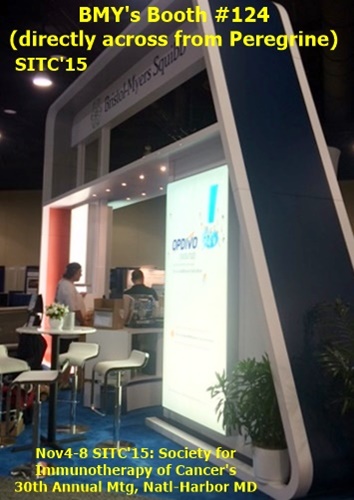
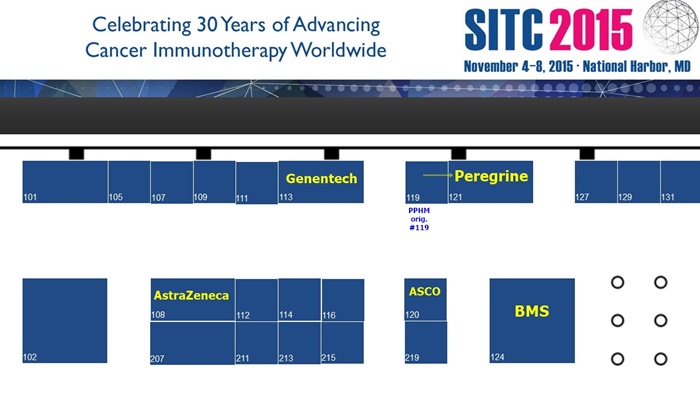
EXHIBITOR: Peregrine Pharm. - booth #121 (directly across from #120/ASCO & BMY/124; AstraZeneca/108 & DNA/113 are close by)
...Floorplan: http://www.eventscribe.com/2015/sitc/exhibitors/index.asp
- - - - - - - -
Track: “Optimizing Combination Immunotherapy”
11-7-15/Sat./12:45-2:00pm
PPHM#1: Poster P358, “Targeting Phosphatidylserine Synergizes with Immune Checkpoint Blockade by Inducing De Novo Tumor Specific Immunity”
Presenting Author: Xianming Huang, PhD (UTSW-MC/Dallas)
Xianming Huang 1, Jian Gong 2, Dan Ye 1, Van Nguyen 2, Michael Gray 2, Steven King 2, Jeff Hutchins 2, Rolf Brekken 1, Bruce Freimark 2
...1 UTSW-MC/Dallas
...2 Peregrine Pharmaceuticals, Tustin CA
Direct Link: http://bit.ly/1LS4VYk
http://www.immunotherapyofcancer.org/content/pdf/2051-1426-3-S2-P358.pdf
BACKGROUND: Extensive studies have demonstrated that the inside-out membrane phospholipid phosphatidylserine (PS) actively drives global immunosuppression in the tumor microenvironment and is a major contributor to tumor resistance to immune checkpoint blockade. We have shown that PS targeting antibodies can re-program the tumor microenvironment from immunosuppressive to immune potentiating by reducing the number of myeloid-derived suppressor cells (MDSCs), repolarizing tumor associated macrophages from M2 to M1 and by promoting the maturation of dendritic cells. We have found that PS targeting antibodies synergize with and significantly enhance the therapeutic efficacy of immune checkpoint blockade in multiple tumor models. In the present study, we examined the effect of combination of a PS targeting antibody and anti-PD-1 or anti-CTLA-4 on tumor-specific CD8 T cell immunity.
METHODS: B16 tumor-bearing mice were treated weekly i.p. at 5 mg/kg with each antibody or combination. Splenocytes were harvested after three treatments. The number of tumor-specific IFNg-producing splenocytes was evaluated by ELISPOT in the presence or absence of irradiated B16 tumor cells. Tumors were harvested and single cell suspensions were obtained and immune profiled by FACS.
RESULTS:
In the absence of B16 tumor cell stimulation, the combination of ch1N11 and anti-PD-1 resulted in the highest number of IFNg Elispots (109+/-25), significantly better than anti-CTLA-4 (29.4±4, p < 0.005), ch1N11 (16.6+/-3.2, p < 0.001), anti-PD-1 (41.6+/-5.5, p < 0.001), and ch1N11+anti-CTLA4 (73.6+/-13.9, p < 0.05); in addition, the combination of ch1N11 and anti-CTLA-4 was significantly better than anti-CTLA-4 alone (29.4+/-4.2, p < 0.01), indicating that there were significantly more functional T cells in the spleens of mice treated with combination therapy. Importantly, stimulation with irradiated B16 tumor cells resulted in robust induction of IFNg production from splenocytes harvested from mice treated with ch1N11 and anti-PD-1. Tumor cell stimulation resulted in a >2-fold increase in IFNg Elispots (198+/- 39 vs 70+/-5, p < 0.01), which was also 13-fold higher than that of control group (15+/-2.1, p < 0.001).
These data demonstrate that combination treatment induced significantly more tumor specific T cells. FACS analysis of tumor infiltrating lymphocytes (TILs) indicated that combination of antibody-mediated blockade of PS and PD1 significantly enhanced effector function of tumor infiltrating CD8+ T cells, as demonstrated by significant increases in TILs producing IFN-g, TNFa, IL-2, granzyme B, and Ki-67.
CONCLUSIONS:
PS targeting antibodies synergize with immune checkpoint blockade to induce strong tumor specific CD8 T cell immunity.
- - - - - - - -
Track: “Optimizing Combination Immunotherapy”
11-7-15/Sat./12:45-2:00pm
PPHM#2: Poster P357, “Targeting of Phosphatidylserine by Monoclonal Antibodies Augments the Activity of Paclitaxel & anti-pd1/pd-L1 Therapy in the Murine Breast Model E0771”
Presenting Author: Michael Gray, PhD (Sr.Scientist, Peregrine Pharmaceuticals)
Michael Gray 1, Jian Gong 1, Van Nguyen 1, Takuya Osada 2, Zachary Hartman 2, Jeff Hutchins 1, Bruce Freimark 1, Kim Lyerly** 2
...1=Peregrine Pharmaceuticals, Tustin CA
...2=Duke University, Durham, NC - **Dr. Kim Lyerly: http://surgery.duke.edu/faculty/details/0117267 (Professor of Surgery, Assistant Professor in Immunology, Associate Professor of Pathology)
http://www.immunotherapyofcancer.org/content/pdf/2051-1426-3-S2-P357.pdf
INTRODUCTION: The phospholipid lipid phosphatidylserine (PS) normally resides in the inner plasma membrane leaflet in most mammalian cells, including tumor and tumor associated vascular cells. Inducers of cellular stress, such as hypoxia and oxygen radicals encountered in tumors, and treatments by cytotoxic therapies promote PS relocation to the outer leaf of the plasma membrane. In tumors this re-localization allows PS recognition by a number of receptors on myeloid and lymphoid cells in the microenvironment, promoting tumor growth and metastatic disease through the development of an immunosuppressive environment. Currently the PS-targeting antibody bavituximab is being used to treat patients with solid tumors in multiple late-stage clinical trials. Bavituximab’s anti-tumor properties are attributed in part through alleviating PS- receptor mediated immunosuppression and assisting in generating an Fc-FcR mediated pro-inflammatory response.
METHODS: Immune competent mice with E0771 induced tumors were administered either paclitaxel, or anti-PD-1/PD-L1 single agent therapy, or in triple combination with PS targeting antibody (ch1N11) to evaluate the efficacy of PS & PD-1/PD-L1 immune checkpoint inhibitors blockade in combination with cytotoxic chemotherapeutics. The levels of PS and PD-L1 expression were also evaluated on E0771 tumor cells following in vitro treatment via FACS analysis.
RESULTS: Preliminary results in multiple studies demonstrated differential sensitivity to either paclitaxel, or anti- PD-1/PD-L1 single agent therapy while inclusion of ch1N11 triple combination significantly enhanced anti-tumor efficacy over either single agent therapy. Also, FACs analysis demonstrated induction of PS & PD-L1 levels on E0771 cells following in vitro treatment with paclitaxel, suggesting that combining paclitaxel with PS and PD-1 targeting antibodies will have greater anti-tumor activity in triple combination treatments. No in vivo adverse effects were observed in animals given repeated doses of single or triple combinations.
CONCLUSION: These results support combination blockade of PS & PD-1/PD-L1 with paclitaxel to treat breast cancer.


- - - -
SITC 2014: 3 Peregrine posters on preclin. Bavi+aCTLA4/aPD1 combo data (Hutchins Freimark Brekken Huang etal), and 1 poster by UTSW's Dr. Adam Yopp on the Bavi+Sorafenib/LIVER Ph2 IST: http://tinyurl.com/pchzr6h
icon url

cjgaddy

11/05/15 9:48 AM

#241573 RE: cjgaddy #232486

Pitter-Patter, SITC'15, Nov4-8 2015 – just having a little fun this morning before heading out…


SITC’15(Nov4-8): Peregrine-Exhibiting; 2 Posters(UTSW/DUKE/PPHM), “Optimizing Combination Immunotherapy” by UTSW's X.Huang/Rolf Brekken/etal, DUKE's Dr.Kim Lyerly/etal, PPHM Scientists…
[Note: Duke's Dr. Kim Lyerly is the senior author of Poster P357]

Nov4-8 2015: “(SITC) Society for Immunotherapy of Cancer 30th Annual Meeting”, Natl-Harbor MD
”The premier destination for scientific exchange, education, and networking in the Cancer Immunotherapy Field”
SITC = The Society for Immunotherapy of Cancer http://www.sitcancer.org
SITC 2015 Meeting: http://www.sitcancer.org/2015
EXHIBITOR: Peregrine Pharm. - booth #121 (directly across from #120/ASCO & BMY/124; AstraZeneca/108 & DNA/113 are close by)
...Floorplan: http://www.eventscribe.com/2015/sitc/exhibitors/index.asp
- - - - - - - -
Track: “Optimizing Combination Immunotherapy”
11-7-15/Sat./12:45-2:00pm
PPHM#1: Poster P358, “Targeting Phosphatidylserine Synergizes with Immune Checkpoint Blockade by Inducing De Novo Tumor Specific Immunity”
Presenting Author: Xianming Huang, PhD (UTSW-MC/Dallas)
Xianming Huang 1, Jian Gong 2, Dan Ye 1, Van Nguyen 2, Michael Gray 2, Steven King 2, Jeff Hutchins 2, Rolf Brekken 1, Bruce Freimark 2
...1 UTSW-MC/Dallas
...2 Peregrine Pharmaceuticals, Tustin CA
Direct Link: http://bit.ly/1LS4VYk
http://www.immunotherapyofcancer.org/content/pdf/2051-1426-3-S2-P358.pdf
BACKGROUND: Extensive studies have demonstrated that the inside-out membrane phospholipid phosphatidylserine (PS) actively drives global immunosuppression in the tumor microenvironment and is a major contributor to tumor resistance to immune checkpoint blockade. We have shown that PS targeting antibodies can re-program the tumor microenvironment from immunosuppressive to immune potentiating by reducing the number of myeloid-derived suppressor cells (MDSCs), repolarizing tumor associated macrophages from M2 to M1 and by promoting the maturation of dendritic cells. We have found that PS targeting antibodies synergize with and significantly enhance the therapeutic efficacy of immune checkpoint blockade in multiple tumor models. In the present study, we examined the effect of combination of a PS targeting antibody and anti-PD-1 or anti-CTLA-4 on tumor-specific CD8 T cell immunity.
METHODS: B16 tumor-bearing mice were treated weekly i.p. at 5 mg/kg with each antibody or combination. Splenocytes were harvested after three treatments. The number of tumor-specific IFNg-producing splenocytes was evaluated by ELISPOT in the presence or absence of irradiated B16 tumor cells. Tumors were harvested and single cell suspensions were obtained and immune profiled by FACS.
RESULTS:
In the absence of B16 tumor cell stimulation, the combination of ch1N11 and anti-PD-1 resulted in the highest number of IFNg Elispots (109+/-25), significantly better than anti-CTLA-4 (29.4±4, p < 0.005), ch1N11 (16.6+/-3.2, p < 0.001), anti-PD-1 (41.6+/-5.5, p < 0.001), and ch1N11+anti-CTLA4 (73.6+/-13.9, p < 0.05); in addition, the combination of ch1N11 and anti-CTLA-4 was significantly better than anti-CTLA-4 alone (29.4+/-4.2, p < 0.01), indicating that there were significantly more functional T cells in the spleens of mice treated with combination therapy. Importantly, stimulation with irradiated B16 tumor cells resulted in robust induction of IFNg production from splenocytes harvested from mice treated with ch1N11 and anti-PD-1. Tumor cell stimulation resulted in a >2-fold increase in IFNg Elispots (198+/- 39 vs 70+/-5, p < 0.01), which was also 13-fold higher than that of control group (15+/-2.1, p < 0.001).
These data demonstrate that combination treatment induced significantly more tumor specific T cells. FACS analysis of tumor infiltrating lymphocytes (TILs) indicated that combination of antibody-mediated blockade of PS and PD1 significantly enhanced effector function of tumor infiltrating CD8+ T cells, as demonstrated by significant increases in TILs producing IFN-g, TNFa, IL-2, granzyme B, and Ki-67.
CONCLUSIONS:
PS targeting antibodies synergize with immune checkpoint blockade to induce strong tumor specific CD8 T cell immunity.
- - - - - - - -
Track: “Optimizing Combination Immunotherapy”
11-7-15/Sat./12:45-2:00pm
PPHM#2: Poster P357, “Targeting of Phosphatidylserine by Monoclonal Antibodies Augments the Activity of Paclitaxel & anti-pd1/pd-L1 Therapy in the Murine Breast Model E0771”
Presenting Author: Michael Gray, PhD (Sr.Scientist, Peregrine Pharmaceuticals)
Michael Gray 1, Jian Gong 1, Van Nguyen 1, Takuya Osada 2, Zachary Hartman 2, Jeff Hutchins 1, Bruce Freimark 1, Kim Lyerly** 2
...1=Peregrine Pharmaceuticals, Tustin CA
...2=Duke University, Durham, NC - **Dr. Kim Lyerly: http://surgery.duke.edu/faculty/details/0117267 (Professor of Surgery, Assistant Professor in Immunology, Associate Professor of Pathology)
http://www.immunotherapyofcancer.org/content/pdf/2051-1426-3-S2-P357.pdf
INTRODUCTION: The phospholipid lipid phosphatidylserine (PS) normally resides in the inner plasma membrane leaflet in most mammalian cells, including tumor and tumor associated vascular cells. Inducers of cellular stress, such as hypoxia and oxygen radicals encountered in tumors, and treatments by cytotoxic therapies promote PS relocation to the outer leaf of the plasma membrane. In tumors this re-localization allows PS recognition by a number of receptors on myeloid and lymphoid cells in the microenvironment, promoting tumor growth and metastatic disease through the development of an immunosuppressive environment. Currently the PS-targeting antibody bavituximab is being used to treat patients with solid tumors in multiple late-stage clinical trials. Bavituximab’s anti-tumor properties are attributed in part through alleviating PS- receptor mediated immunosuppression and assisting in generating an Fc-FcR mediated pro-inflammatory response.
METHODS: Immune competent mice with E0771 induced tumors were administered either paclitaxel, or anti-PD-1/PD-L1 single agent therapy, or in triple combination with PS targeting antibody (ch1N11) to evaluate the efficacy of PS & PD-1/PD-L1 immune checkpoint inhibitors blockade in combination with cytotoxic chemotherapeutics. The levels of PS and PD-L1 expression were also evaluated on E0771 tumor cells following in vitro treatment via FACS analysis.
RESULTS: Preliminary results in multiple studies demonstrated differential sensitivity to either paclitaxel, or anti- PD-1/PD-L1 single agent therapy while inclusion of ch1N11 triple combination significantly enhanced anti-tumor efficacy over either single agent therapy. Also, FACs analysis demonstrated induction of PS & PD-L1 levels on E0771 cells following in vitro treatment with paclitaxel, suggesting that combining paclitaxel with PS and PD-1 targeting antibodies will have greater anti-tumor activity in triple combination treatments. No in vivo adverse effects were observed in animals given repeated doses of single or triple combinations.
CONCLUSION: These results support combination blockade of PS & PD-1/PD-L1 with paclitaxel to treat breast cancer.

= = = = = = = = = = = = = = = = = = = = = = = = = =
10-15-15: Peregrine & AstraZeneca Expand Collab. w/Ph2/2ndLine-NSCLC Trial, Bavi+durvalumab(MEDI4736), squamous or non-squamous… http://tinyurl.com/q79bkam
10-15-15: AstraZeneca and Peregrine Pharmaceuticals Expand Ongoing Immuno-Oncology Collaboration to Include Phase II Lung Cancer Combination Clinical Trial
Global, Randomized Phase II Trial to Evaluate Immunotherapy Combination of Peregrine's PS-Targeting Bavituximab and AstraZeneca's PD-L1 Inhibitor Durvalumab (MEDI4736) in Previously Treated NSCLC
http://ir.peregrineinc.com/releasedetail.cfm?ReleaseID=936766
TUSTIN, Oct. 15, 2015: Peregrine Pharmaceuticals, Inc. (NASDAQ:PPHM/PPHMP), a biopharmaceutical company focused on developing therapeutics to stimulate the body's immune system to fight cancer, today announced that it has expanded its ongoing cancer immunotherapy clinical collaboration with AstraZeneca to include a second, later-stage trial. The companies will now also evaluate the immunotherapy combination of Peregrine's phosphatidylserine (PS)-targeted immune-activator, bavituximab, and AstraZeneca's anti-PD-L1 immune checkpoint inhibitor, durvalumab (MEDI4736), in a global Phase II study in patients with previously treated squamous or non-squamous non-small cell lung cancer (NSCLC). The randomized Phase II trial will be conducted by Peregrine. . .
ABOUT BAVITUXIMAB: A TARGETED INVESTIGATIONAL IMMUNOTHERAPY
Bavituximab is an investigational chimeric monoclonal antibody that targets phosphatidylserine (PS). Signals from PS inhibit the ability of immune cells to recognize and fight tumors. Bavituximab, the lead compound in Peregrine's immuno-oncology development program, blocks PS to remove this immunosuppressive signal and sends an alternate immune activating signal. Targeting PS with bavituximab has been shown to shift the functions of immune cells in tumors, resulting in robust anti-tumor immune responses.
ABOUT DURVALUMAB (MEDI4736)
Durvalumab is an investigational human monoclonal antibody directed against programmed cell death ligand 1 (PD-L1). Signals from PD-L1 help tumors avoid detection by the immune system. Durvalumab blocks these signals, countering the tumor's immune-evading tactics. Durvalumab is being developed, alongside other immunotherapies, to empower the patient's immune system and attack the cancer.

= = = = = = = = = = = = = = = = = = = = = =
8-24-15: AstraZeneca & Peregrine Collaborate on Bavi+Durvalumab Ph1/1B Trial for “multiple solid tumors”…
Durvalumab=MEDI4736, an anti-PD-L1 immune checkpoint inhibitor.
AZN’s Head/I-O(Robert Iannone): “…Our partnership with Peregrine provides the opportunity to explore an exciting, novel combination that could deliver important clinical benefit to patients across a range of cancers."
8-24-15: AstraZeneca and Peregrine Pharmaceuticals to Collaborate on Immuno-Oncology Combination Clinical Trial
• Collaboration to Focus on Cancer Immunotherapy Combination of Peregrine's PS-Targeting Bavituximab and AstraZeneca's PD-L1 Inhibitor MEDI4736
http://ir.peregrineinc.com/releasedetail.cfm?ReleaseID=928488
TUSTIN, Aug. 24, 2015: AstraZeneca (NYSE:AZN) and Peregrine Pharmaceuticals, Inc. (NASDAQ:PPHM/PPHMP), a biopharmaceutical company focused on developing therapeutics to stimulate the body's immune system to fight cancer, today announced that they have entered into a cancer immunotherapy clinical trial collaboration. The collaboration will evaluate Peregrine's investigational phosphatidylserine (PS)-signaling pathway inhibitor, bavituximab, in combination with AstraZeneca's investigational anti-PD-L1 immune checkpoint inhibitor, durvalumab (MEDI4736). The planned Phase I/Ib trial will evaluate the safety and efficacy of bavituximab in combination with durvalumab in multiple solid tumors.
icon url

cjgaddy

11/05/15 4:22 PM

#241644 RE: cjgaddy #232486

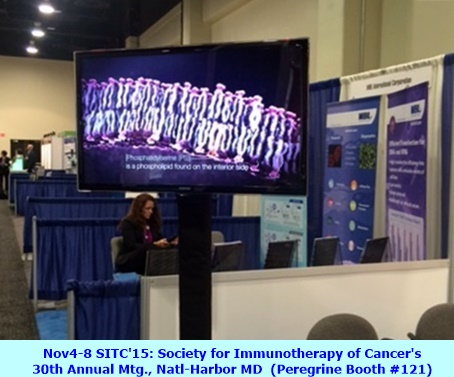
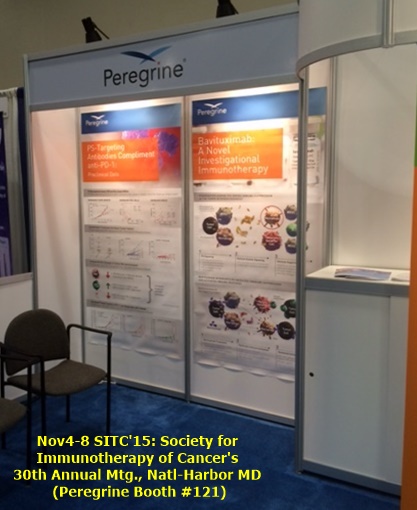
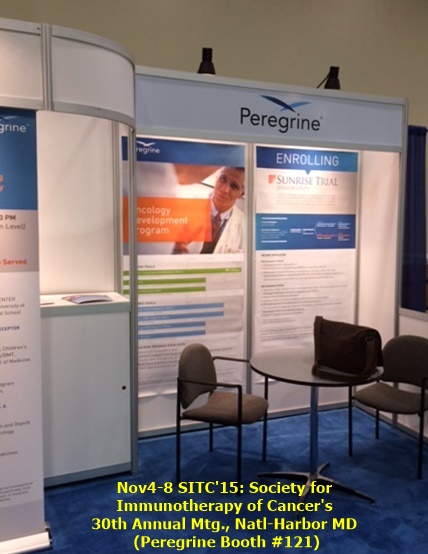
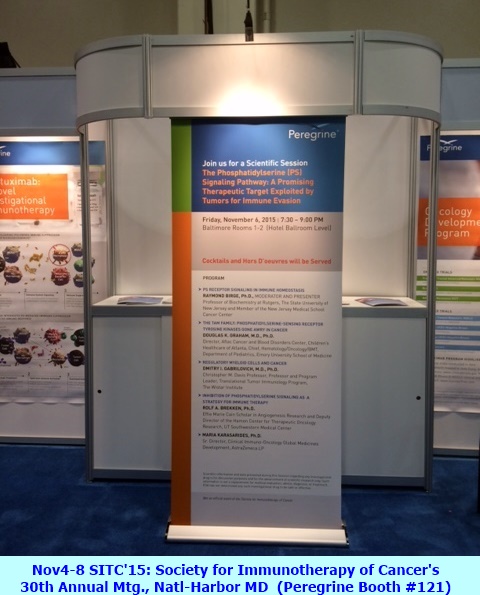
Pics of PPHM's SITC'15 Booth #121 (Nov4-8 2015) - directly across from #120/ASCO & BMY/124; AstraZeneca/108 & DNA/113 are close by...

Nov4-8 2015: “(SITC) Society for Immunotherapy of Cancer 30th Annual Meeting”, Natl-Harbor MD
”The premier destination for scientific exchange, education, and networking in the Cancer Immunotherapy Field”
SITC = The Society for Immunotherapy of Cancer http://www.sitcancer.org
SITC 2015 Meeting: http://www.sitcancer.org/2015

SITC'15 PPHM's Booth #121...
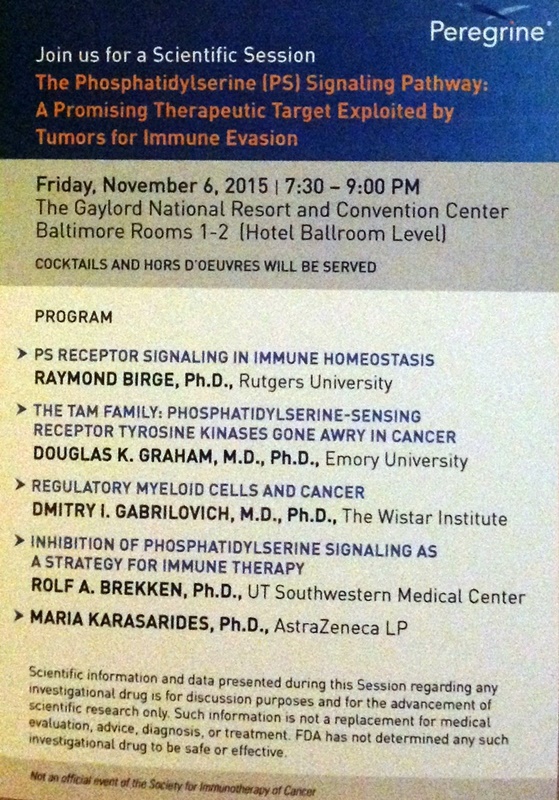
NOTE: Join us for a Scientific Session - FRI Nov6 2015 7:30-9:00pm
“The PS Signaling Pathway: A Promising
Therapeutic Target Exploited by
Tumors for Immune Evasion”

PGM:
* Raymond Birge (PhD, Rutgers) http://birgelab.org
* Douglas Graham (MD, PhD, Emory) http://choa.org/Childrens-Hospital-Services/Cancer-and-Blood-Disorders/Meet-the-Team/Physicians-and-Researchers/Douglas-Graham
* Dmitry Gabrilovich (MD, PhD, Wistar Inst.) http://www.wistar.org/our-science/scientists/dmitry-gabrilovich-md-phd
* Rolf Brekken (PhD, UTSW/Dallas) http://www.utsouthwestern.edu/labs/brekken
* Maria Karasarides (PhD, AstraZeneca - Sr. Director, ImmunoOncology, Global Medicines Dev.) http://www.linkedin.com/pub/maria-karasarides-ph-d/6/769/136


= = = = = = = = = = = = = = = = = =
SITC’15(Nov4-8): Peregrine-Exhibiting; 2 Posters(UTSW/DUKE/PPHM), “Optimizing Combination Immunotherapy” by UTSW's X.Huang/Rolf Brekken/etal, DUKE's Dr.Kim Lyerly/etal, PPHM Scientists…
[Note: Duke's Dr. Kim Lyerly is the senior author of Poster P357]
Nov4-8 2015: “(SITC) Society for Immunotherapy of Cancer 30th Annual Meeting”, Natl-Harbor MD
”The premier destination for scientific exchange, education, and networking in the Cancer Immunotherapy Field”
SITC = The Society for Immunotherapy of Cancer http://www.sitcancer.org
SITC 2015 Meeting: http://www.sitcancer.org/2015
EXHIBITOR: Peregrine Pharm. - booth #121 (directly across from #120/ASCO & BMY/124; AstraZeneca/108 & DNA/113 are close by)
...Floorplan: http://www.eventscribe.com/2015/sitc/exhibitors/index.asp
- - - - - - - -
Track: “Optimizing Combination Immunotherapy”
11-7-15/Sat./12:45-2:00pm
PPHM#1: Poster P358, “Targeting Phosphatidylserine Synergizes with Immune Checkpoint Blockade by Inducing De Novo Tumor Specific Immunity”
Presenting Author: Xianming Huang, PhD (UTSW-MC/Dallas)
Xianming Huang 1, Jian Gong 2, Dan Ye 1, Van Nguyen 2, Michael Gray 2, Steven King 2, Jeff Hutchins 2, Rolf Brekken 1, Bruce Freimark 2
...1 UTSW-MC/Dallas
...2 Peregrine Pharmaceuticals, Tustin CA
Direct Link: http://bit.ly/1LS4VYk
http://www.immunotherapyofcancer.org/content/pdf/2051-1426-3-S2-P358.pdf
BACKGROUND: Extensive studies have demonstrated that the inside-out membrane phospholipid phosphatidylserine (PS) actively drives global immunosuppression in the tumor microenvironment and is a major contributor to tumor resistance to immune checkpoint blockade. We have shown that PS targeting antibodies can re-program the tumor microenvironment from immunosuppressive to immune potentiating by reducing the number of myeloid-derived suppressor cells (MDSCs), repolarizing tumor associated macrophages from M2 to M1 and by promoting the maturation of dendritic cells. We have found that PS targeting antibodies synergize with and significantly enhance the therapeutic efficacy of immune checkpoint blockade in multiple tumor models. In the present study, we examined the effect of combination of a PS targeting antibody and anti-PD-1 or anti-CTLA-4 on tumor-specific CD8 T cell immunity.
METHODS: B16 tumor-bearing mice were treated weekly i.p. at 5 mg/kg with each antibody or combination. Splenocytes were harvested after three treatments. The number of tumor-specific IFNg-producing splenocytes was evaluated by ELISPOT in the presence or absence of irradiated B16 tumor cells. Tumors were harvested and single cell suspensions were obtained and immune profiled by FACS.
RESULTS:
In the absence of B16 tumor cell stimulation, the combination of ch1N11 and anti-PD-1 resulted in the highest number of IFNg Elispots (109+/-25), significantly better than anti-CTLA-4 (29.4±4, p < 0.005), ch1N11 (16.6+/-3.2, p < 0.001), anti-PD-1 (41.6+/-5.5, p < 0.001), and ch1N11+anti-CTLA4 (73.6+/-13.9, p < 0.05); in addition, the combination of ch1N11 and anti-CTLA-4 was significantly better than anti-CTLA-4 alone (29.4+/-4.2, p < 0.01), indicating that there were significantly more functional T cells in the spleens of mice treated with combination therapy. Importantly, stimulation with irradiated B16 tumor cells resulted in robust induction of IFNg production from splenocytes harvested from mice treated with ch1N11 and anti-PD-1. Tumor cell stimulation resulted in a >2-fold increase in IFNg Elispots (198+/- 39 vs 70+/-5, p < 0.01), which was also 13-fold higher than that of control group (15+/-2.1, p < 0.001).
These data demonstrate that combination treatment induced significantly more tumor specific T cells. FACS analysis of tumor infiltrating lymphocytes (TILs) indicated that combination of antibody-mediated blockade of PS and PD1 significantly enhanced effector function of tumor infiltrating CD8+ T cells, as demonstrated by significant increases in TILs producing IFN-g, TNFa, IL-2, granzyme B, and Ki-67.
CONCLUSIONS:
PS targeting antibodies synergize with immune checkpoint blockade to induce strong tumor specific CD8 T cell immunity.
- - - - - - - -
Track: “Optimizing Combination Immunotherapy”
11-7-15/Sat./12:45-2:00pm
PPHM#2: Poster P357, “Targeting of Phosphatidylserine by Monoclonal Antibodies Augments the Activity of Paclitaxel & anti-pd1/pd-L1 Therapy in the Murine Breast Model E0771”
Presenting Author: Michael Gray, PhD (Sr.Scientist, Peregrine Pharmaceuticals)
Michael Gray 1, Jian Gong 1, Van Nguyen 1, Takuya Osada 2, Zachary Hartman 2, Jeff Hutchins 1, Bruce Freimark 1, Kim Lyerly** 2
...1=Peregrine Pharmaceuticals, Tustin CA
...2=Duke University, Durham, NC - **Dr. Kim Lyerly: http://surgery.duke.edu/faculty/details/0117267 (Professor of Surgery, Assistant Professor in Immunology, Associate Professor of Pathology)
http://www.immunotherapyofcancer.org/content/pdf/2051-1426-3-S2-P357.pdf
INTRODUCTION: The phospholipid lipid phosphatidylserine (PS) normally resides in the inner plasma membrane leaflet in most mammalian cells, including tumor and tumor associated vascular cells. Inducers of cellular stress, such as hypoxia and oxygen radicals encountered in tumors, and treatments by cytotoxic therapies promote PS relocation to the outer leaf of the plasma membrane. In tumors this re-localization allows PS recognition by a number of receptors on myeloid and lymphoid cells in the microenvironment, promoting tumor growth and metastatic disease through the development of an immunosuppressive environment. Currently the PS-targeting antibody bavituximab is being used to treat patients with solid tumors in multiple late-stage clinical trials. Bavituximab’s anti-tumor properties are attributed in part through alleviating PS- receptor mediated immunosuppression and assisting in generating an Fc-FcR mediated pro-inflammatory response.
METHODS: Immune competent mice with E0771 induced tumors were administered either paclitaxel, or anti-PD-1/PD-L1 single agent therapy, or in triple combination with PS targeting antibody (ch1N11) to evaluate the efficacy of PS & PD-1/PD-L1 immune checkpoint inhibitors blockade in combination with cytotoxic chemotherapeutics. The levels of PS and PD-L1 expression were also evaluated on E0771 tumor cells following in vitro treatment via FACS analysis.
RESULTS: Preliminary results in multiple studies demonstrated differential sensitivity to either paclitaxel, or anti- PD-1/PD-L1 single agent therapy while inclusion of ch1N11 triple combination significantly enhanced anti-tumor efficacy over either single agent therapy. Also, FACs analysis demonstrated induction of PS & PD-L1 levels on E0771 cells following in vitro treatment with paclitaxel, suggesting that combining paclitaxel with PS and PD-1 targeting antibodies will have greater anti-tumor activity in triple combination treatments. No in vivo adverse effects were observed in animals given repeated doses of single or triple combinations.
CONCLUSION: These results support combination blockade of PS & PD-1/PD-L1 with paclitaxel to treat breast cancer.

= = = = = = = = = = = = = = = = = = = = = = = = = =
10-15-15: Peregrine & AstraZeneca Expand Collab. w/Ph2/2ndLine-NSCLC Trial, Bavi+durvalumab(MEDI4736), squamous or non-squamous… http://tinyurl.com/q79bkam
10-15-15: AstraZeneca and Peregrine Pharmaceuticals Expand Ongoing Immuno-Oncology Collaboration to Include Phase II Lung Cancer Combination Clinical Trial
Global, Randomized Phase II Trial to Evaluate Immunotherapy Combination of Peregrine's PS-Targeting Bavituximab and AstraZeneca's PD-L1 Inhibitor Durvalumab (MEDI4736) in Previously Treated NSCLC
http://ir.peregrineinc.com/releasedetail.cfm?ReleaseID=936766
TUSTIN, Oct. 15, 2015: Peregrine Pharmaceuticals, Inc. (NASDAQ:PPHM/PPHMP), a biopharmaceutical company focused on developing therapeutics to stimulate the body's immune system to fight cancer, today announced that it has expanded its ongoing cancer immunotherapy clinical collaboration with AstraZeneca to include a second, later-stage trial. The companies will now also evaluate the immunotherapy combination of Peregrine's phosphatidylserine (PS)-targeted immune-activator, bavituximab, and AstraZeneca's anti-PD-L1 immune checkpoint inhibitor, durvalumab (MEDI4736), in a global Phase II study in patients with previously treated squamous or non-squamous non-small cell lung cancer (NSCLC). The randomized Phase II trial will be conducted by Peregrine. . .
ABOUT BAVITUXIMAB: A TARGETED INVESTIGATIONAL IMMUNOTHERAPY
Bavituximab is an investigational chimeric monoclonal antibody that targets phosphatidylserine (PS). Signals from PS inhibit the ability of immune cells to recognize and fight tumors. Bavituximab, the lead compound in Peregrine's immuno-oncology development program, blocks PS to remove this immunosuppressive signal and sends an alternate immune activating signal. Targeting PS with bavituximab has been shown to shift the functions of immune cells in tumors, resulting in robust anti-tumor immune responses.
ABOUT DURVALUMAB (MEDI4736)
Durvalumab is an investigational human monoclonal antibody directed against programmed cell death ligand 1 (PD-L1). Signals from PD-L1 help tumors avoid detection by the immune system. Durvalumab blocks these signals, countering the tumor's immune-evading tactics. Durvalumab is being developed, alongside other immunotherapies, to empower the patient's immune system and attack the cancer.

= = = = = = = = = = = = = = = = = = = = = =
8-24-15: AstraZeneca & Peregrine Collaborate on Bavi+Durvalumab Ph1/1B Trial for “multiple solid tumors”…
Durvalumab=MEDI4736, an anti-PD-L1 immune checkpoint inhibitor.
AZN’s Head/I-O(Robert Iannone): “…Our partnership with Peregrine provides the opportunity to explore an exciting, novel combination that could deliver important clinical benefit to patients across a range of cancers."
8-24-15: AstraZeneca and Peregrine Pharmaceuticals to Collaborate on Immuno-Oncology Combination Clinical Trial
• Collaboration to Focus on Cancer Immunotherapy Combination of Peregrine's PS-Targeting Bavituximab and AstraZeneca's PD-L1 Inhibitor MEDI4736
http://ir.peregrineinc.com/releasedetail.cfm?ReleaseID=928488
TUSTIN, Aug. 24, 2015: AstraZeneca (NYSE:AZN) and Peregrine Pharmaceuticals, Inc. (NASDAQ:PPHM/PPHMP), a biopharmaceutical company focused on developing therapeutics to stimulate the body's immune system to fight cancer, today announced that they have entered into a cancer immunotherapy clinical trial collaboration. The collaboration will evaluate Peregrine's investigational phosphatidylserine (PS)-signaling pathway inhibitor, bavituximab, in combination with AstraZeneca's investigational anti-PD-L1 immune checkpoint inhibitor, durvalumab (MEDI4736). The planned Phase I/Ib trial will evaluate the safety and efficacy of bavituximab in combination with durvalumab in multiple solid tumors.
icon url

cjgaddy

11/09/15 9:27 AM

#242093 RE: cjgaddy #232486

11-9-15/PR/SITC'15: New Bavi PreclinData (add: Duke & Immunotherapist/Dr.Bernard.Fox)

11-9-15: New Preclinical Data Presented at SITC Annual Meeting Highlight Bavituximab's Enhanced Anti-Tumor Activity When Combined With Checkpoint Inhibitors in Breast Cancer and Melanoma
* Bavituximab in Combination with Anti-PD-1 in Breast Cancer Studies Showed a Statistically Significant Improvement in Overall Survival as Compared to Subjects Receiving Anti-PD-1 Therapy Alone
* New Custom-Designed Immuno-Profiling Clinical Test Provides Further Evidence of Bavituxmab's Immune Modulating Mechanism of Action in the Tumor Microenvironment
http://ir.peregrineinc.com/releasedetail.cfm?ReleaseID=941520

TUSTIN, Nov. 9, 2015: Peregrine Pharmaceuticals, Inc. (NASDAQ:PPHM, PPHMP), a biopharmaceutical company focused on developing therapeutics to stimulate the body's immune system to fight cancer, today announced results from multiple new preclinical studies demonstrating enhanced anti-tumor activity and immune activation for combinations of a preclinical bavituximab equivalent and checkpoint inhibitors such as anti-PD-1 and anti-CTLA-4 in preclinical models of breast cancer and melanoma. Additionally, the company announced preliminary results for a new clinical test specifically designed to illustrate how bavituximab, the company's investigational phosphatidylserine (PS)-signaling pathway inhibitor, modulates immune responses in the tumor microenvironment. Results from these studies were presented at the 2015 annual meeting of the Society for Immunotherapy of Cancer (SITC), which was held in National Harbor, MD, on November 4 - 8, 2015.

"The positive data presented at SITC with regard to combinations of bavituximab and checkpoint inhibitors further support our belief that bavituximab has the potential to be a critical component of innovative combination cancer immunotherapies," said Jeff T. Hutchins, VP of Preclinical Development of Peregrine. "Particularly exciting is the new data in animal models of breast cancer which showed that a significantly greater number of subjects demonstrated anti-tumor activity when treated with the combination of bavituximab and anti-PD-1 as compared to treatment with anti-PD-1 alone. Additionally, combination treatment led to prolonged protection for animals as evidenced by their lack of new tumor development when later re-challenged with the same tumors."

Bavituximab is an investigational immunotherapy designed to assist the body's immune system by targeting and modulating the activity of phosphatidylserine (PS), a highly immune-suppressive signaling molecule expressed broadly on the surface of cells in the tumor microenvironment. Peregrine's PS signaling pathway inhibitor candidates, including bavituximab, reverse the immunosuppressive environment that many tumors establish in order to proliferate, while also fighting cancer by activating immune cells that target and fight cancer. The preclinical equivalent of bavituximab, ch1N11, is used in animal model studies as a guide for clinical development.

BREAST CANCER
Researchers from Duke University and Peregrine evaluated the combination of ch1N11 (preclinical bavituximab equivalent) and anti-PD-1 therapy versus anti-PD-1 stand-alone therapy in well-characterized murine breast cancers, including the triple negative breast cancer (TNBC) model E0771. Study data showed that the combination therapy significantly enhanced overall survival (p=0.0016) and was capable of mediating complete tumor regressions in a greater number of subjects compared to single agent treatments (60% vs. 20%). Data also demonstrated that animals receiving combination treatment had significant increases in tumor associated indicators of immune system activation, including CD45+, CD8+ and CD3+ T-cells. Importantly, the combination treatment led to a prolonged anti-tumor immune response which protected the animals against a re-challenge with the same tumor. This sustained anti-tumor response suggests the potential of the combination therapy to trigger immune system memory and support adaptive immune responses against reemerging disease in breast cancers. All study animals experienced no signs of adverse effects following repeated doses of all therapeutic agents.

MELANOMA
In follow-on work, researchers from the University of Texas Southwestern and Peregrine evaluated combinations of ch1N11 and checkpoint inhibitors (anti-PD-1 or anti-CTLA-4) versus each agent as a stand-alone therapy in common models of melanoma (B16F10 and K1735). Data showed that the combinations of ch1N11 with either anti-PD-1 or anti-CTLA-4 led to significantly greater levels of tumor infiltrating CD8+ T cells than any of the three agents alone. Additionally, findings demonstrated that the combination therapies were more effective at shifting the tumor microenvironment from immunosuppressive to immune active than the single agents, as shown by greater increases in the ratio of T effector cells to T regulatory cells, reactivation of tumor infiltrating T cells and restoration of the effector function of the tumor infiltrating T cells. This activity was more pronounced for the ch1N11/anti-PD-1 combination than for the ch1N11/anti-CTLA-4 combination. Based on these data, study investigators concluded that ch1N11 synergizes with checkpoint inhibitors to induce strong tumor specific CD8 T cell immunity.

"There is an extensive and growing collection of data that demonstrates that phosphatidylserine directly triggers broad immunosuppression in the tumor microenvironment and contributes to resistance to checkpoint inhibitor therapy. By targeting and blocking PS, bavituximab appears able to shift the tumor environment from immunosuppressive to immune active and, in turn, enhance the anti-tumor activity of checkpoint inhibitors such as anti-PD-1 and anti-CTLA4," said Bruce Freimark, Ph.D., Director of Pre-Clinical Oncology of Peregrine. "This latest data in well validated models of multiple tumor types further support our belief that bavituximab may be able to play an essential role in combination immuno-oncology treatment regimens. With this in mind, we are committed to evaluating the agent's potential in combination with a range of cancer therapies against various cancer types."

IMMUNOPROFILING
Researchers presented preliminary results for a new custom assay designed to provide detailed profiles of immune activity in patient tumors. The Opal 6-plex quantitative immunofluorescence (IF) assay is specifically designed to measure the level and type of lymphocytes, myeloid and dendritic cell subsets found within the tumor microenvironment. This information is important as it can be used to correlate immune response parameters with bavituximab treatment outcome and patient survival.

Presented results demonstrated that the Opal assay could reliably detect, measure and phenotype lymphocytes and monocytes present in tumor tissues from rectal adenocarcinoma, hepatocellular carcinoma and advanced melanoma patients treated with bavituximab combination therapies. Importantly, the findings were able to show changes in key indicators of immune activation, including CD8+, CD4+ and regulatory T-cells, as well as myeloid and dendritic cells, in the tumor microenvironment following bavituximab treatment. The ability of this new assay to accurately measure specific immune responses is expected to provide important additional information to assist in Peregrine's ongoing development efforts for bavituximab. This will be particularly valuable as the company works to better elucidate the connection between the drug candidate's impact on immunomodulation and patient response to treatment.

"We are very pleased with the performance of the Opal assay, particularly its ability to compare the interaction of up to 6 phenotypic and functional markers on a single slide of tissue. The power and prognostic value of such immune activity assessments in the area of cancer was initially established by the Immunoscore [ http://www.immunoscore.org ], and we believe the Opal assay represents an important evolution of that work," said Bernard A. Fox, Ph.D., Harder Family Endowed Chair for Cancer Research, Member and Chief, Molecular and Tumor Immunology, Earle A. Chiles Research Institute, Providence Cancer Center; a world-renowned translational cancer immunotherapist; a founding member of the Immunoscore steering committee [ http://www.ohsu.edu/xd/education/schools/school-of-medicine/academic-programs/graduate-studies/faculty/grad-studies-faculty.cfm?facultyid=104 ]. "I am looking forward to continued collaboration with Peregrine to further optimize and validate this assay to improve our understanding of immune infiltrate in tumors thereby facilitating the rational design and use of bavituximab in combination with novel and standard therapies."

ABOUT BAVITUXIMAB: A TARGETED INVESTIGATIONAL IMMUNOTHERAPY
Bavituximab is an investigational chimeric monoclonal antibody that targets phosphatidylserine (PS). Signals from PS inhibit the ability of immune cells to recognize and fight tumors. Bavituximab, the lead compound in Peregrine's immuno-oncology development program, blocks PS to remove this immunosuppressive signal and sends an alternate immune activating signal. PS targeting antibodies have been shown to shift the functions of immune cells in tumors, resulting in robust anti-tumor immune responses.

ABOUT PEREGRINE PHARMACEUTICALS, INC.
Peregrine Pharmaceuticals, Inc. is a biopharmaceutical company with a pipeline of novel drug candidates in clinical trials focused on the treatment of cancer. The company's lead immunotherapy candidate, bavituximab, is in Phase III development for the treatment of second-line non-small lung cancer (the "SUNRISE trial") along with several investigator-sponsored trials evaluating other treatment combinations and additional oncology indications. Peregrine also has in-house cGMP manufacturing capabilities through its wholly-owned subsidiary Avid Bioservices, Inc. ( http://www.avidbio.com ), which provides development and biomanufacturing services for both Peregrine and third-party customers. For more information, please visit http://www.peregrineinc.com .
Safe Harbor *snip*
iImmunoscore is a registered trademark of Institut National de la Santé et de la Recherche Médicale (INSERM)
Contacts:
Jay Carlson Peregrine Pharmaceuticals, Inc. (800) 987-8256 info@peregrineinc.com
Stephanie Diaz (Investors) Vida Strategic Partners 415-675-7401 sdiaz@vidasp.com
Tim Brons (Media) Vida Strategic Partners 415-675-7402 tbrons@vidasp.com

= = = = = = = = = = = = = = = = = = = = = = = =
Nov4-8 2015: “(SITC) Society for Immunotherapy of Cancer 30th Annual Meeting”, Natl-Harbor MD
”The premier destination for scientific exchange, education, and networking in the Cancer Immunotherapy Field”
SITC = The Society for Immunotherapy of Cancer http://www.sitcancer.org
SITC 2015 Meeting: http://www.sitcancer.org/2015

EXHIBITOR: Peregrine Pharm. - booth #121 (directly across from #120/ASCO & BMY/124; AstraZeneca/108 & DNA/113 are close by)
...Floorplan: http://www.eventscribe.com/2015/sitc/exhibitors/index.asp
Pics of PPHM's SITC'15 Booth #121 (Nov4-8 2015) - directly across from #120/ASCO & BMY/124; AstraZeneca/108 & DNA/113 are close by...
SITC'15 PPHM's Booth #121...
NOTE: Join us for a Scientific Session - FRI Nov6 2015 7:30-9:00pm
“The PS Signaling Pathway: A Promising
Therapeutic Target Exploited by
Tumors for Immune Evasion”

PGM:
* Raymond Birge (PhD, Rutgers) http://birgelab.org
* Douglas Graham (MD, PhD, Emory) http://choa.org/Childrens-Hospital-Services/Cancer-and-Blood-Disorders/Meet-the-Team/Physicians-and-Researchers/Douglas-Graham
* Dmitry Gabrilovich (MD, PhD, Wistar Inst.) http://www.wistar.org/our-science/scientists/dmitry-gabrilovich-md-phd
* Rolf Brekken (PhD, UTSW/Dallas) http://www.utsouthwestern.edu/labs/brekken
* Maria Karasarides (PhD, AstraZeneca - Sr. Director, ImmunoOncology, Global Medicines Dev.) http://www.linkedin.com/pub/maria-karasarides-ph-d/6/769/136
...Brochure handout (not sure if exactly it): http://www.personalizedmedonc.com/article/phosphatidylserine-an-immune-modulating-checkpoint-ushers-in-the-next-wave-of-immuno-oncology-targets/
- - - - - - - -
SITC'15 Track: “Optimizing Combination Immunotherapy”
11-7-15/Sat./12:45-2:00pm
PPHM#1: Poster P357, “Targeting of Phosphatidylserine by Monoclonal Antibodies Augments the Activity of Paclitaxel & anti-pd1/pd-L1 Therapy in the Murine Breast Model E0771”
Presenting Author: Michael Gray, PhD (Sr.Scientist, Peregrine Pharmaceuticals)
Michael Gray 1, Jian Gong 1, Van Nguyen 1, Takuya Osada 2, Zachary Hartman 2, Jeff Hutchins 1, Bruce Freimark 1, Kim (Herbert K.) Lyerly** 2
...1=Peregrine Pharmaceuticals, Tustin CA
...2=Duke University, Durham, NC
**Dr. Herbert Kim Lyerly: http://surgery.duke.edu/faculty/details/0117267 (Professor of Surgery, Assistant Professor in Immunology, Associate Professor of Pathology, Duke Univ. MC)
The other 2 Duke co-author scientists:
* Dr. Takuya Osada (MD/PhD – Duke Cancer Inst. - Hematology, Oncology, Clinical Immunology http://www.researchgate.net/profile/Takuya_Osada2 )
* Dr. Zachary Hartman (PhD) – Duke MC, Section of Applied Therapeutics http://surgery.duke.edu/faculty/details/0281172 ”My group is also involved in strategies to modulate the immune response to tumors, which involves the use of novel immunotherapeutic strategies & dev. of vaccines to specific oncogenic targets.”
http://www.immunotherapyofcancer.org/content/pdf/2051-1426-3-S2-P357.pdf
POSTER P357 IMAGE (PDF): http://www.peregrineinc.com/images/stories/pdfs/sitc_2015_breast_gray.pdf
ABSTRACT INTRO:
The phospholipid lipid phosphatidylserine (PS) normally resides in the inner plasma membrane leaflet in most mammalian cells, including tumor and tumor associated vascular cells. Inducers of cellular stress, such as hypoxia and oxygen radicals encountered in tumors, and treatments by cytotoxic therapies promote PS relocation to the outer leaf of the plasma membrane. In tumors this re-localization allows PS recognition by a number of receptors on myeloid and lymphoid cells in the microenvironment, promoting tumor growth and metastatic disease through the development of an immunosuppressive environment. Currently the PS-targeting antibody bavituximab is being used to treat patients with solid tumors in multiple late-stage clinical trials. Bavituximab’s anti-tumor properties are attributed in part through alleviating PS- receptor mediated immunosuppression and assisting in generating an Fc-FcR mediated pro-inflammatory response.
METHODS: Immune competent mice with E0771 induced tumors were administered either paclitaxel, or anti-PD-1/PD-L1 single agent therapy, or in triple combination with PS targeting antibody (ch1N11) to evaluate the efficacy of PS & PD-1/PD-L1 immune checkpoint inhibitors blockade in combination with cytotoxic chemotherapeutics. The levels of PS and PD-L1 expression were also evaluated on E0771 tumor cells following in vitro treatment via FACS analysis.
RESULTS: Preliminary results in multiple studies demonstrated differential sensitivity to either paclitaxel, or anti- PD-1/PD-L1 single agent therapy while inclusion of ch1N11 triple combination significantly enhanced anti-tumor efficacy over either single agent therapy. Also, FACs analysis demonstrated induction of PS & PD-L1 levels on E0771 cells following in vitro treatment with paclitaxel, suggesting that combining paclitaxel with PS and PD-1 targeting antibodies will have greater anti-tumor activity in triple combination treatments. No in vivo adverse effects were observed in animals given repeated doses of single or triple combinations.
CONCLUSION: These results support combination blockade of PS & PD-1/PD-L1 with paclitaxel to treat breast cancer.
- - - - - - - - - -
SITC'15 Track: “Optimizing Combination Immunotherapy”
11-7-15/Sat./12:45-2:00pm
PPHM#2: Poster P358, “Targeting Phosphatidylserine Synergizes with Immune Checkpoint Blockade by Inducing De Novo Tumor Specific Immunity”
Presenting Author: Xianming Huang, PhD (UTSW-MC/Dallas)
Xianming Huang 1, Jian Gong 2, Dan Ye 1, Van Nguyen 2, Michael Gray 2, Steven King 2, Jeff Hutchins 2, Rolf Brekken 1, Bruce Freimark 2
...1 UTSW-MC/Dallas
...2 Peregrine Pharmaceuticals, Tustin CA
Direct Link: http://bit.ly/1LS4VYk
POSTER P358 IMAGE (PDF): http://www.immunotherapyofcancer.org/content/pdf/2051-1426-3-S2-P358.pdf
BACKGROUND: Extensive studies have demonstrated that the inside-out membrane phospholipid phosphatidylserine (PS) actively drives global immunosuppression in the tumor microenvironment and is a major contributor to tumor resistance to immune checkpoint blockade. We have shown that PS targeting antibodies can re-program the tumor microenvironment from immunosuppressive to immune potentiating by reducing the number of myeloid-derived suppressor cells (MDSCs), repolarizing tumor associated macrophages from M2 to M1 and by promoting the maturation of dendritic cells. We have found that PS targeting antibodies synergize with and significantly enhance the therapeutic efficacy of immune checkpoint blockade in multiple tumor models. In the present study, we examined the effect of combination of a PS targeting antibody and anti-PD-1 or anti-CTLA-4 on tumor-specific CD8 T cell immunity.
METHODS: B16 tumor-bearing mice were treated weekly i.p. at 5 mg/kg with each antibody or combination. Splenocytes were harvested after three treatments. The number of tumor-specific IFNg-producing splenocytes was evaluated by ELISPOT in the presence or absence of irradiated B16 tumor cells. Tumors were harvested and single cell suspensions were obtained and immune profiled by FACS.
RESULTS:
In the absence of B16 tumor cell stimulation, the combination of ch1N11 and anti-PD-1 resulted in the highest number of IFNg Elispots (109+/-25), significantly better than anti-CTLA-4 (29.4±4, p < 0.005), ch1N11 (16.6+/-3.2, p < 0.001), anti-PD-1 (41.6+/-5.5, p < 0.001), and ch1N11+anti-CTLA4 (73.6+/-13.9, p < 0.05); in addition, the combination of ch1N11 and anti-CTLA-4 was significantly better than anti-CTLA-4 alone (29.4+/-4.2, p < 0.01), indicating that there were significantly more functional T cells in the spleens of mice treated with combination therapy. Importantly, stimulation with irradiated B16 tumor cells resulted in robust induction of IFNg production from splenocytes harvested from mice treated with ch1N11 and anti-PD-1. Tumor cell stimulation resulted in a >2-fold increase in IFNg Elispots (198+/- 39 vs 70+/-5, p < 0.01), which was also 13-fold higher than that of control group (15+/-2.1, p < 0.001).
These data demonstrate that combination treatment induced significantly more tumor specific T cells. FACS analysis of tumor infiltrating lymphocytes (TILs) indicated that combination of antibody-mediated blockade of PS and PD1 significantly enhanced effector function of tumor infiltrating CD8+ T cells, as demonstrated by significant increases in TILs producing IFN-g, TNFa, IL-2, granzyme B, and Ki-67.
CONCLUSIONS:
PS targeting antibodies synergize with immune checkpoint blockade to induce strong tumor specific CD8 T cell immunity.
- - - - - - - -


11-6-15 7:30-9pm “Sci.Session” Detail:


= = = = = = = = = = = = = = = = = = = = = = = = = =
10-15-15: Peregrine & AstraZeneca Expand Collab. w/Ph2/2ndLine-NSCLC Trial, Bavi+durvalumab(MEDI4736), squamous or non-squamous… http://tinyurl.com/q79bkam
10-15-15: AstraZeneca and Peregrine Pharmaceuticals Expand Ongoing Immuno-Oncology Collaboration to Include Phase II Lung Cancer Combination Clinical Trial
Global, Randomized Phase II Trial to Evaluate Immunotherapy Combination of Peregrine's PS-Targeting Bavituximab and AstraZeneca's PD-L1 Inhibitor Durvalumab (MEDI4736) in Previously Treated NSCLC
http://ir.peregrineinc.com/releasedetail.cfm?ReleaseID=936766
TUSTIN, Oct. 15, 2015: Peregrine Pharmaceuticals, Inc. (NASDAQ:PPHM/PPHMP), a biopharmaceutical company focused on developing therapeutics to stimulate the body's immune system to fight cancer, today announced that it has expanded its ongoing cancer immunotherapy clinical collaboration with AstraZeneca to include a second, later-stage trial. The companies will now also evaluate the immunotherapy combination of Peregrine's phosphatidylserine (PS)-targeted immune-activator, bavituximab, and AstraZeneca's anti-PD-L1 immune checkpoint inhibitor, durvalumab (MEDI4736), in a global Phase II study in patients with previously treated squamous or non-squamous non-small cell lung cancer (NSCLC). The randomized Phase II trial will be conducted by Peregrine. . .
ABOUT BAVITUXIMAB: A TARGETED INVESTIGATIONAL IMMUNOTHERAPY
Bavituximab is an investigational chimeric monoclonal antibody that targets phosphatidylserine (PS). Signals from PS inhibit the ability of immune cells to recognize and fight tumors. Bavituximab, the lead compound in Peregrine's immuno-oncology development program, blocks PS to remove this immunosuppressive signal and sends an alternate immune activating signal. Targeting PS with bavituximab has been shown to shift the functions of immune cells in tumors, resulting in robust anti-tumor immune responses.
ABOUT DURVALUMAB (MEDI4736)
Durvalumab is an investigational human monoclonal antibody directed against programmed cell death ligand 1 (PD-L1). Signals from PD-L1 help tumors avoid detection by the immune system. Durvalumab blocks these signals, countering the tumor's immune-evading tactics. Durvalumab is being developed, alongside other immunotherapies, to empower the patient's immune system and attack the cancer.
= = = = = = = = = = = = = = = = = = = = = =
8-24-15: AstraZeneca & Peregrine Collaborate on Bavi+Durvalumab Ph1/1B Trial for “multiple solid tumors”…
Durvalumab=MEDI4736, an anti-PD-L1 immune checkpoint inhibitor.
AZN’s Head/I-O(Robert Iannone): “…Our partnership with Peregrine provides the opportunity to explore an exciting, novel combination that could deliver important clinical benefit to patients across a range of cancers."
8-24-15: AstraZeneca and Peregrine Pharmaceuticals to Collaborate on Immuno-Oncology Combination Clinical Trial
• Collaboration to Focus on Cancer Immunotherapy Combination of Peregrine's PS-Targeting Bavituximab and AstraZeneca's PD-L1 Inhibitor MEDI4736
http://ir.peregrineinc.com/releasedetail.cfm?ReleaseID=928488
TUSTIN, Aug. 24, 2015: AstraZeneca (NYSE:AZN) and Peregrine Pharmaceuticals, Inc. (NASDAQ:PPHM/PPHMP), a biopharmaceutical company focused on developing therapeutics to stimulate the body's immune system to fight cancer, today announced that they have entered into a cancer immunotherapy clinical trial collaboration. The collaboration will evaluate Peregrine's investigational phosphatidylserine (PS)-signaling pathway inhibitor, bavituximab, in combination with AstraZeneca's investigational anti-PD-L1 immune checkpoint inhibitor, durvalumab (MEDI4736). The planned Phase I/Ib trial will evaluate the safety and efficacy of bavituximab in combination with durvalumab in multiple solid tumors.

= = = = = = = = = = = = = =SITC'15 ATTENDEE REPORTS:
By Aikifredicist 11-6-15 #241864: I'm just back from an excellent Peregrine sponsored seminar featuring Raymond Birge, Douglas Graham, Dmitry Gabrilovich and Rolf Brekken. Maria Karasarides of AZ had short comments during the discussion. Talked to Steve King, Carlton Johnson, Bruce Freimark and others from Peregrine. I'm sure North will have a summary soon. (I also spoke with North and his wife). The session was well attended and I was plied with free food! North caught Maria from AZ after the close and was having a good discussion with here when I left to head home for supper.

By North40000 11-7-15 #241915 & FU's: The better half and I will consult on respective memories and impressions of last evening. A preliminary warning: much of what we saw and heard was obviously aimed at attendees of SITC, not mere uneducated mortals like us. Specifics like numerous slides and speech were filled with jargon, words, letters, numbers, symbols, and were delivered in time limited span, mostly beyond the skim-reading capability, not to mention comprehension of others besides other experts. … At last count, 4 SHs managed to attend the Friday evening seminar program - 2 of us found the following 10-12pg. brochure, dated Sept.2015, at the PPHM SITC booth, a link to which had been difficult for me to find. As far as I know, it has not been posted here to date by others: http://www.personalizedmedonc.com/article/phosphatidylserine-an-immune-modulating-checkpoint-ushers-in-the-next-wave-of-immuno-oncology-targets ...I confirmed with Jay[IR] that the slide decks of the Friday evening "Scientific Session" presentations would not be made available via PPHM. What may be available via individual contacts with presenters is a question to which I know no answer. You will recall I had no success in receiving presenter slide decks from the AANS BMY sponsored evening seminar in May 2015 that my wife & I attended. BMY personnel had promised I would receive them. Without the slides and accompanying transcript from past Friday evening, I would have great difficulty describing with any degree of accuracy or completeness what was said or what was shown on slides. The presenters had relatively little time to present a great deal of information - each talked fast with insufficient use of microphone available to them, and the slides flipped by too quickly for me to assimilate. I mentioned that in my preliminary warning comment earlier yesterday. My wife, an MD with no particular immunology or immunotherapy education of recent vintage, told me she understood ~10% of the entirety of what was said & illustrated Friday evening. Dr. Gabrilovich was particularly challenging to hear and understand because of his Russian accent. In person, he looks far less "fierce" than his photo seems to suggest. I did mention to Dr. Birge [Irish name, I found] that each speaker "talked faster than I could hear" - he commented that was a good observation that he would try to keep in mind the next time. Under the time constraints imposed Friday evening, that will be difficult, IMO. I agree that Dr. Brekken was easiest to understand. AZN's Dr. Karasarides made no formal presentation, but was invited on stage later for the Q&A session of other presenters. I have little or nothing to add to aikfrecist's comments from yesterday.
- - - -
SITC 2014: 3 Peregrine posters on preclin. Bavi+aCTLA4/aPD1 combo data (Hutchins Freimark Brekken Huang etal), and 1 poster by UTSW's Dr. Adam Yopp on the Bavi+Sorafenib/LIVER Ph2 IST: http://tinyurl.com/pchzr6h
icon url

biopharm

06/29/16 5:59 PM

#267535 RE: cjgaddy #232486

..Dr. Hutchins' presentation highlighted key findings from several recent bavituximab-focused studies including:
• The potential of bavituximab to shift the tumor microenvironment from immuno-suppressive in which tumors evade immune detection to a state of immune activation in which the immune system recognizes and fights the tumor. Presented findings demonstrate that bavituximab-like antibodies significantly increase the prevalence of tumor infiltrating CD8+ T-cells and immune-activating cytokines, while decreasing macrophages and myeloid cells that allow the tumor to evade immune detection. This elucidation and confirmation of bavituximab's mechanism of action highlights the potential of bavituximab to enhance the anti-tumor effects of both chemotherapy and immune checkpoint inhibitors.
..
..


The data continues to show that Bavituximab or as it states => Bavituximab-like antibodies are required and will make whomever jumps first onto combo trials/data will make it very difficult for others to pass them by...


---------------------------------------------


Anti-PD-L1 immunotherapy may achieve a response in patients with microsatellite-stable metastatic colorectal cancer if combined with a MEK inhibitor, according to phase I data presented at the ESMO 18th World Congress of Gastrointestinal Cancer in Barcelona, Spain.

June 29, 2016


"So far, immunotherapy has only shown activity in patients with microsatellite instability-high colorectal cancer, which is only 5% of the population," says the study's (1) principal investigator Dr Johanna Bendell, from the Sarah Cannon Research Institute and Tennessee Oncology, in Nashville, Tennessee.
..
..

Preclinical studies have suggested that a MEK inhibitor can make a tumor more responsive to immunotherapy by increasing the number of active immune cells -- such as CD8+ cells -- in the tumor, and increasing the expression of factors that cause the immune system to be more active.
..
..
https://www.sciencedaily.com/releases/2016/06/160629105936.htm


----------------------------

I imagine that many of the NCCN member institutions are aware of this already...

https://www.nccn.org/clinical_trials/member_institutions.aspx