Turkey Riot: Deputy minister accused foreigners and Jewish Diaspora for Turkish unrest / Breaking News
02 July, 2013 | 16:36
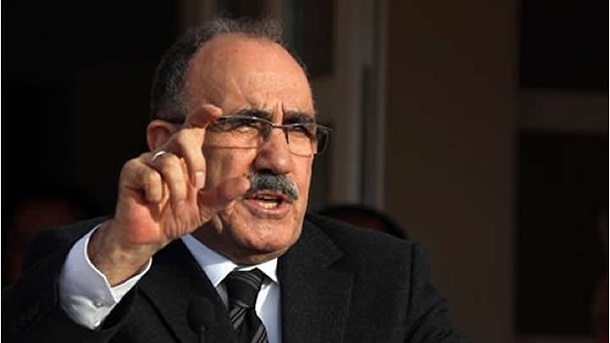
Foreign powers and the Jewish diaspora have triggered the recent unrest in Turkey, Deputy Prime Minister Besir Atalay has said adding that the international media had also played a key role in “the conspiracy”.
Foreign powers and the Jewish diaspora have triggered and fomented the unrest in Turkey, Deputy Prime Minister Besir Atalay said Monday in the Central Anatolian province of Kirikkale.
He also said Monday that the international media had played a key role in “the conspiracy,” adding that “they bought it and started broadcasting immediately.” The nationwide protests, which began on May 31, were triggered when police cracked down on activists staging a sit-in demonstration to save Gezi Park, located near Istanbul’s iconic Taksim Square.
Atalay also said the international media had played a key role in “the conspiracy”. “The ones trying to block the way of Great Turkey will not succeed,” he said.
“There are some circles that are jealous of Turkey’s growth,” Atalay said. “They are all uniting, on one side the Jewish diaspora. You saw the foreign media’s attitude during the Gezi Park incidents; they bought it and started broadcasting immediately, without doing an evaluation of the [case].”
The Gezi protests began on May 31, triggered by Istanbul’s plans to remove Gezi Park, which lies next to the iconic Taksim Square, to build a replica of Ottoman artillery barracks and a mall.
The demonstrations quickly morphed into nationwide protests against the government in response to the heavy-handed tactics used by police to disperse protesters. Four people were killed and some 7,000 injured in 20 days of unrest, statistics released by the Turkish Medical Association indicated.
A sit-in by peaceful protesters soon turned into mass protests across the country with nearly two million people taking part and 79 of Turkey’s 81 cities seeing unrest, according to interior ministry estimates.
Well Egypt tried democratic elections and when the mob didn't like the outcome, they handed over power to the military. One winner here could be Al Quada.
OOPS!ElBaradei 'tipped' as Egypt PM.. not confirmed ..
Date July 7, 2013 - 10:06AM
ElBaradei, the former head of the UN nuclear watchdog, is tipped to be named Egypt's interim Prime Minister. Photo: Getty
Nobel Peace laureate Mohamed ElBaradei is among those being considered as premier to lead Egypt out of its crisis, the presidency says, after bloodshed followed the ouster of the country's first freely elected head of state.
Earlier reports had said that ElBaradei had been officially confirmed but this was later denied.
The Tamarod movement, which engineered mass protests culminating in the overthrow of Islamist president Mohamed Morsi on Wednesday, said ElBaradei had been appointed after talks with Egypt's new caretaker leader.
State news agency MENA and other official sources confirmed the appointment, but a presidential aide said later that a prime minister had yet to be named, while adding ElBaradei "is the logical choice". Advertisement
A source close to the negotiations said different camps that agreed to the military's roadmap for a political transition were still trying to convince the Salafist Al-Nour Party to back ElBaradei.
The initial reports of ElBaradei's appointment had been greeted with cheers in Cairo's Tahrir Square and Ittihadiya presidential palace, where opponents of Morsi set off firecrackers, frantically waved Egyptian flags and honked car horns.
They came as the Muslim Brotherhood staged a new show of force to demand the military restore Morsi, after dozens of people died and hundreds more were injured in 24 hours of violence.
Tamarod, which has called for demonstrations on Sunday to counter the Islamists, had nominated ElBaradei to represent it in negotiations with the military.
ElBaradei, now 71, won the Nobel Peace Prize in 2005 for his work as the head of the International Atomic Energy Agency.
He returned to Egypt in 2010 and became a prominent opponent of veteran strongman Hosni Mubarak in the lead-up to the 2011 uprising that overthrew him.
Aya Hosni, a member of Tamarod's central committee, said that "the interim president and Tamarod had agreed on Mohamed ElBaradei's nomination as prime minister".
The appointment came as an Islamist protest to demand the reinstatement of Morsi petered out at nightfall, following 24 hours of ferocious violence that killed 37 people and injured more than 1,400.
Tears flowed freely as thousands of Morsi supporters mourned four members of the movement killed during protests the Brotherhood called to reject the coup.
Morsi, who has been in detention since overnight on Wednesday, had issued a defiant call for his supporters to protect his elected "legitimacy", in a recorded speech aired hours after his removal.
Saturday's funerals follow shooting between soldiers and Morsi supporters outside the Republican Guard headquarters on Friday that MENA said killed four demonstrators.
Meanwhile, influential Qatar-based Muslim cleric Yusuf al-Qaradawi, who was born in Egypt, issued a fatwa urging Egyptians to support Morsi.
Friday's violence erupted despite talk of peaceful protests.
President Barack Obama meanwhile insisted the United States was "not aligned" with any political party or group in Egypt following Morsi's ouster.
Obama, who spoke with members of his National Security Council via conference call about the situation in Egypt, "condemned the ongoing violence across Egypt and expressed concern over the continued political polarization," according to a White House statement.
"The United States categorically rejects the false claims propagated by some in Egypt that we are working with specific political parties or movements to dictate how Egypt's transition should proceed," it said.
"We remain committed to the Egyptian people and their aspirations for democracy, economy opportunity, and dignity. But the future path of Egypt can only be determined by the Egyptian people."
The United States also echoed UN chief Ban Ki-moon in calling for a peaceful end to the crisis.
"We call on all Egyptian leaders to condemn the use of force and to prevent further violence among their supporters," said the State Department.
Egypt crisis: What next for the Muslim Brotherhood?
By Ahmed Maher BBC Arabic, Cairo
Just a few days ago, senior Muslim Brotherhood leaders were frequent speakers on Egyptian TV talk shows and radio stations. Now journalists and media people can hardly find any of them.
They are either in custody or have gone into hiding, as the arrest campaign by the military and police is widening by the day.
Prosecutors have already started questioning some of the detainees on charges of inciting the murder of protesters opposing ousted President Mohammed Morsi in recent clashes near Cairo University.
It is a serious setback to the group's well-organised hierarchy, says Mostafa al-Khatib, editor of the Justice and Development newspaper, the mouthpiece of the Brotherhood.
"Arrest warrants go non-stop," he said.
"The Mubarak-era oppressive tactics are back once again in a more ferocious form. They are arresting anyone carrying the group's identification cards."
------- "Because we represent an ideology - we are not just a group of people." Mostafa al-Khatib Editor of pro-Muslim Brotherhood newspaper -------
No existential threat
On 30 June, millions of Egyptians poured into the streets of Cairo and many other cities to demand the resignation of Mr Morsi, whom they accuse of failing to address the country's worsening economic and social problems.
They once again converged on Tahrir square, the same place that witnessed massive demonstrations in 2011 that removed former long-time President Hosni Mubarak.
Backed by widespread popular support, the military stepped in to topple Mr Morsi, Egypt's first democratically elected leader.
Expecting arrest at any time, Mr Khatib says the crackdown does not, however, pose an existential threat to the group.
"Because we represent an ideology. We are not just a group of people."
Founded in 1928 by Hassan al-Banna, the Muslim Brotherhood is the country's largest and oldest Islamist organisation.
The Muslim Brotherhood was founded by Hassan al-Banna
The movement's ideology has evolved from "daawa" - or preaching for good morals and Islamic teachings - into a belief based on political Islam.
One of the group's stated aims is to create a state ruled by Islamic law, or sharia. Its most famous slogan is: "Islam is the solution".
The group was subject to oppression under successive military rulers from the 1950s, until they made big parliamentary and presidential wins after the 2011 revolution.
For many years, its leaders were forced to go underground. They are likely to do the same again now.
"If the Egyptians accept the military coup and its moves - which I'm sure proud and free Egyptians wouldn't - the Muslim Brotherhood might have to go underground again, as it would face more oppressive acts," said Mr Khatib.
'Jihad and martyrdom'
He has been among thousands taking part in an open sit-in outside a mosque in east Cairo that has become a rallying point for the supporters of Mr Morsi.
They say they will not end their protest unless Mr Morsi is reinstated as the country's first democratically elected civilian president.
The generals say they were morally bound to intervene to prevent the country from spiralling into civil war, as Mr Morsi had proved to be a divisive leader who pitted Egyptians against one another.
Supporters of Mr Morsi have vowed to stay on the street until he is reinstated
The military handed power immediately to the head of the Supreme Constitutional Court, Adly Mansour. He was sworn in 4 July as interim president setting the stage for presidential elections.
The National Salvation Front (NSF), a coalition of leftist and liberal parties that is the main opposition force against Mr Morsi, justifies the crackdown.
"The country is going through exceptional circumstances and legal procedures have been followed in these arrests," said NSF spokesman Khalid Dawood.
He added that the Muslim Brotherhood leaders have incited violence "by calling for jihad and martyrdom after the removal of the president".
Time for change?
The rhetoric used by Muslim Brotherhood members and clerics in recent month has alarmed many Egyptians, including some of those who brought Mr Morsi to power.
"The group has not lived up to the people's expectations and alienated many of the Egyptians by their power-grabbing approach and turning a blind eye to the rise of hardliners, who jumped on its cloak in an atmosphere of free politics," said Hosameldin Elsayed, author of several books on political Islam.
Mr Elsayed believes that the Brotherhood has committed a series of strategic mistakes that triggered a military-backed public uprising and the removal of Mr Morsi after just one year in office.
To survive, Mr Elsayed adds, the Brotherhood needs a radical transformation.
"The young generation has lost faith in the group's leaders, who have become synonymous with failure," he notes.
"The young should take over and adopt a heard-headed approach. The group under the current leaders is rushing to its own death."


 Market Data
  Markets


 AI
AI