Yes .. Karzai has been talking to militants since at least April 2007..
Since late 2001 Karzai has been trying for peace in his country, going as far as pardoning militants that lay down weapons and join the rebuilding process. However, his offers were not accepted by the militant groups. In April 2007, Karzai acknowledged that he spoke to some militants about trying to bring peace in Afghanistan. He noted that the Afghan militants are always welcome in the country, although foreign insurgents are not. In September 2007, Karzai again offered talks with militant fighters after a security scare forced him to end a commemoration speech. Karzai left the event and was taken back to his palace, where he was due to meet visiting Latvian President Valdis Zatlers. After the meeting the pair held a joint news conference, at which Karzai called for talks with his Taliban foes. "We don't have any formal negotiations with the Taliban. They don't have an address. Who do we talk to?" Karzai told reporters. He further stated: "If I can have a place where to send somebody to talk to, an authority that publicly says it is the Taliban authority, I will do it."
================ .. at the very end of Bush days .. Obama became president-elect November 4 2008 ..
Bush Administration to Talk With Taliban?
By JONATHAN KARL (@jonkarl) and LUIS MARTINEZ (@LMartinezABC) WASHINGTON, Oct. 28, 2008
As the Bush administration reviews its strategy in Afghanistan, there is an emerging consensus that the way forward should include reaching out to supporters of the Taliban, and possibly even elements of the Taliban itself.
Several U.S. officials confirmed a report today in the Wall Street Journal that the White House is actively considering taking part in talks with tribal leaders in Afghanistan and Pakistan who are associated with the Taliban.
Officials said, however, that these talks would be led by either Afghanistan or Pakistan, or both. The United States would play a secondary, supportive role, the officials said.
"Part of the calculus of any way forward will have to include reconciliation with some current antagonists in Afghanistan," one senior military official said.
Earlier this month, Gen. David Petraeus, the former top commander of U.S. forces in Iraq -- who, on Friday takes over as the commander of CENTCOM, which directs U.S. military operations in the Middle East and southwest Asia -- said talking to insurgent groups in Iraq was critical to bringing down the violence there.
"I do think you have to talk to enemies," Petraeus said on Oct. 8 in a speech at the Heritage Foundation in Washington. "I mean, what we did do in Iraq ultimately was sit down with some of those that were shooting at us." The idea, officials explained, is to negotiate from a position of strength, supporting talks with those willing to renounce violence and hunting down those who don't.
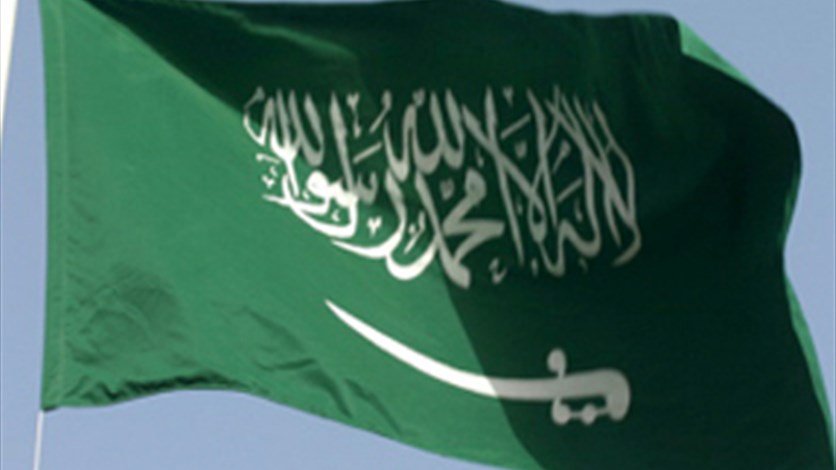
Afghan Taliban deny plans for Saudi peace talks 01-02-2012 12:46
The Afghan Taliban said on Wednesday that the hardline Islamist movement had no plans to hold preliminary peace talks with Afghanistan's government in Saudi Arabia.
"We see Saudi Arabia with respect, because it is the center of Islam. However, as it was reported in media that the representatives of the Islamic Emirate will meet with the Afghan government delegation, that is not true," Taliban spokesman Zabihullah Mujahid said in a statement, using the term the insurgency uses to describe itself.
Sources in the Saudi government told Reuters this week that the Kingdom was reluctant to host Taliban-Afghan government peace talks, reportedly planned for this year, unless the Islamist movement renounced ties to Al Qaeda.
Isn't this just like him?__Afghan chief Karzai arises as obstacle to U.S. talks with Taliban
Afghan President Hamid Karzai has repeatedly tried to thwart the most focused U.S. effort yet to bring the insurgents to the bargaining table, observers say.
Afghan President Hamid Karzai attends the opening session of the parliament last month in Kabul. (Shah Marai, AFP/Getty Images / February 7, 2012)
By Laura King, February 7, 2012, 3:57 p.m.
Reporting from Kabul, Afghanistan—
On the face of it, President Hamid Karzai has every motive to do all he can to bring about talks with the Taliban. Instead, the Afghan leader is emerging as a prime impediment to urgent U.S. efforts to jump-start negotiations with the insurgents.
Since the start of his second term in office, Karzai has repeatedly declared that his top priority is finding a political settlement to the bloody Afghan conflict and bringing the "disaffected brothers" back into the social and political fold.
Karzai's self-interest is at stake. NATO's military clock is ticking down, accelerated by the United States' recently announced push to wind down its combat role next year. And without Western backing, the Afghan leader is well aware that his own survival — political, and perhaps literal — could be in doubt.
Yet Karzai has repeatedly tried to thwart the most focused American effort yet to bring the insurgents to the bargaining table, launching a series of actions that appear to be almost deliberate provocations aimed at the United States, diplomats, analysts and observers say.
Before the Taliban movement last month announced its intention to open an office in the Persian Gulf state of Qatar to facilitate an "understanding" with the U.S.-led coalition, Karzai had worked assiduously behind the scenes to scuttle any such contacts. He loudly objected to the prospective locale, and recalledAfghanistan's ambassador to Qatar, complaining that his administration had been left out of the loop in key discussions.
Under heavy U.S. pressure, Karzai grudgingly agreed to the Qatar arrangement. But within weeks, presidential aides disclosed that the Afghan leader was seeking to set up parallel meetings with the insurgents, in Saudi Arabia. The Taliban issued an unusually specific denial that it intended to talk in Saudi Arabia with the Karzai government, which it routinely mocks as a "puppet regime."
Last week, Karzai enlisted the support of visiting Pakistani Foreign Minister Hina Rabbani Khar, who declared at a news conference that Pakistan would support an Afghan-led peace process, an implicit warning against too much U.S. control over the direction of the prospective talks in Qatar.
The moves leave the United States and its allies in the awkward position of publicly proclaiming that any peace process must be "Afghan-owned" and "Afghan-led," even as the Karzai administration is dismissed by the Taliban as irrelevant and continues to be a problematic partner to the West.
Many observers see the Afghan leader's role as a potential spoiler as far outweighing any other influence he wields.
"I think President Karzai is completely cut off from the process," said Haroun Mir, an analyst at the Afghanistan Center for Research and Policy Studies.
Part of the president's aggrieved stance regarding contacts in Qatar can be traced to the spectacular failure of more than a year of high-profile efforts on his own part to open a channel to the insurgents.
In 2010, Karzai set up a body known as the High Peace Council and declared it the clearinghouse for any contacts with the Taliban. In September last year, an assassin posing as a Taliban peace envoy killed the council's head, former President Burhanuddin Rabbani, with a bomb hidden in his turban.
In the wake of that debacle, Karzai found himself under fire from political rivals who had all along objected to any rapprochement with the insurgents, particularly stalwarts of the staunchly anti-Taliban Northern Alliance, dominated by ethnic Tajiks.
Even while the North Atlantic Treaty Organization force tries to present at least the appearance of unity among the Afghan government and its Western allies, the mercurial president tends to react sharply to any perceived heavy-handedness on the part of the U.S.-led coalition, particularly when actions by the NATO force result in Afghan deaths.
The United Nations said Saturday that civilian deaths last year hit a record high for the 10-year war. Although most of the fatalities were blamed on insurgents, Karzai has repeatedly said the Western military must be held to a higher standard.
The president does not hesitate to push back against his Western patrons. Late last year, Karzai publicly laid down seemingly untenable conditions for a long-term American presence in Afghanistan, including an end to the U.S.-led nighttime raids that have decimated the Taliban field command structure, and a demand that American troops be subject to Afghan law in the event of alleged wrongdoing, a deal-breaker in efforts to strike a similar accord in Iraq.
Last month, the president railed against foreign efforts to turn Afghanistan into a laboratory for what he called "political experimentation," while some of his aides sought to stoke fear that the West might agree to an effective partitioning of the country to placate the Taliban. U.S. Ambassador Ryan Crocker was forced to deny the existence of any such plan.
More recently, Karzai set a deadline of this week for turning over suspected insurgents captured by the U.S.-led military coalition to Afghan authorities, and the transfer of the main U.S.-overseen detention center to full Afghan control. Although the transfer of control had been envisioned for sometime this year, the president's timeline appeared to catch the Americans by surprise, and rights groups said detainees might be subject to abuse in Afghan hands.
In the eyes of many Western diplomats, Karzai's greatest contribution to the peace process would be an indirect one: cleaning up endemic corruption within his government. The Taliban movement has long capitalized on his failure to do so.
The insurgents firmly believe that an image of incorruptibility is one of their greatest assets in the struggle for public support, according to a classified military report leaked last week, which was based on interviews with thousands of captured Taliban fighters. Popular anger against the Karzai government, the thinking goes, will help the Taliban move to the political forefront once the West has pulled out.
Another crucial factor is the stance that Pakistan will take on any peace talks. Because most of the movement's leadership is based on its soil, the Islamabad government could block Taliban representatives from leaving the country, or arrest senior Taliban figures seeking to negotiate with the West. That happened in 2010, when Pakistan detained top Taliban military commander Mullah Abdul Ghani Baradar, who was said to have been making peace overtures at the time.
In the face of considerable mutual mistrust, the Taliban and U.S. officials have both indicated that any talks in Qatar are likely to be preceded by reciprocal confidence-building steps, including a prisoner exchange and perhaps some limited truces in parts of the country, but Karzai has made it clear that he expects to sign off personally on any such measures.
The insurgency, meanwhile, is giving little sign it will dial back the fighting even once any talks are underway. Asked about American plans to move next year from a combat role to a training and advisory one, Taliban spokesman Qari Yousaf Ahmadi was uncompromising.
"As long as they are here," he said, "our jihad goes on."


 Market Data
  Markets


 AI
AI