News Focus
News Focus
icon url

PegnVA

05/02/11 7:11 PM

#138801 RE: StephanieVanbryce #138800

What the hell did our previous admin think when this HUGE high-walled compound was being built? Bush checked out long before his 2nd term was over - he was over his head, and he KNEW it.
icon url

DesertDrifter

05/02/11 7:15 PM

#138802 RE: StephanieVanbryce #138800

I think we should just leave Pakistan in our rear-view mirror and use the action to finally leave Afghanistan to its tribal morons.

And hopefully pull the troops from iraq in its slipstream. Use the trillion dollar peace dividend to fix up our infrastructure, and back off the imperial forces, we only need about a quarter of what we have to protect us.

Obama now has the political capital to squeeze the military a bit more. And maybe even keep the republicans from taking away baby formula from the poor.
icon url

F6

07/06/11 12:55 AM

#146358 RE: StephanieVanbryce #138800

Pakistan’s Spies Tied to Slaying of a Journalist


A vigil in Islamabad in June for Saleem Shahzad, who wrote scathing reports about the infiltration of militants in the army.
Anjum Naveed/Associated Press


Saleem Shahzad was a contributor to Asia Times Online.
Adnkronos Agency, via Associated Press


Relatives and journalists carried the coffin of Mr. Shahzad after it arrived in Karachi on June 1. The ISI, the nation's top spy agency, had denied accusations that it was responsible for his death.
Asif Hassan/Agence France-Presse — Getty Images


By JANE PERLEZ and ERIC SCHMITT
Published: July 4, 2011

ISLAMABAD, Pakistan — Obama administration officials believe that Pakistan [ http://topics.nytimes.com/top/news/international/countriesandterritories/pakistan/index.html ]’s powerful spy agency ordered the killing of a Pakistani journalist who had written scathing reports about the infiltration of militants in the country’s military, according to American officials.

New classified intelligence obtained before the May 29 disappearance of the journalist, Saleem Shahzad, 40, from the capital, Islamabad, and after the discovery of his mortally wounded body, showed that senior officials of the spy agency, the Directorate for Inter-Services Intelligence [ http://topics.nytimes.com/top/reference/timestopics/organizations/i/interservices_intelligence/index.html ], directed the attack on him in an effort to silence criticism, two senior administration officials said.

The intelligence, which several administration officials said they believed was reliable and conclusive, showed that the actions of the ISI, as it is known, were “barbaric and unacceptable,” one of the officials said. They would not disclose further details about the intelligence.

But the disclosure of the information in itself could further aggravate the badly fractured relationship between the United States and Pakistan, which worsened significantly with the American commando raid [ http://www.nytimes.com/2011/05/03/world/asia/03intel.html ] two months ago that killed Osama bin Laden in a Pakistan safehouse and deeply embarrassed [ http://www.nytimes.com/2011/05/03/world/asia/03pakistan.html ] the Pakistani government, military and intelligence hierarchy. Obama administration officials will deliberate in the coming days how to present the information about Mr. Shahzad to the Pakistani government, an administration official said.

The disclosure of the intelligence was made in answer to questions about the possibility of its existence, and was reluctantly confirmed by the two officials. “There is a lot of high-level concern about the murder; no one is too busy not to look at this,” said one.

A third senior American official said there was enough other intelligence and indicators immediately after Mr. Shahzad’s death for the Americans to conclude that the ISI had ordered him killed.

“Every indication is that this was a deliberate, targeted killing that was most likely meant to send shock waves through Pakistan’s journalist community and civil society,” said the official, who like others spoke on the condition of anonymity because of the delicate nature of the information.

A spokesman for the Pakistan intelligence agency said in Islamabad on Monday night that “I am not commenting on this.” George Little, a spokesman for the Central Intelligence Agency, declined to comment.

In a statement the day after Mr. Shahzad’s waterlogged body was retrieved from a canal 60 miles from Islamabad, the ISI publicly denied accusations [ http://www.nytimes.com/2011/06/02/world/asia/02islamabad.html ] in the Pakistani news media that it had been responsible, calling them “totally unfounded.”

The ISI said the journalist’s death was “unfortunate and tragic,” and should not be “used to target and malign the country’s security agency.”

The killing of Mr. Shahzad, a contributor to the Web site Asia Times Online [ http://www.atimes.com/ ], aroused an immediate furor in the freewheeling news media in Pakistan.

Mr. Shahzad was the 37th journalist killed in Pakistan since the 9/11 attacks, according to the Committee to Protect Journalists.

Pakistan’s civilian government, under pressure from the media, established a commission headed by a Supreme Court justice to investigate Mr. Shahzad’s death. The findings are scheduled to be released early next month.

Mr. Shahzad suffered 17 lacerated wounds delivered by a blunt instrument, a ruptured liver and two broken ribs, said Dr. Mohammed Farrukh Kamal, one of the three physicians who conducted the post-mortem.

The anger over Mr. Shahzad’s death followed unprecedented questioning in the media about the professionalism of the army and the ISI, a military-controlled spy agency, in the aftermath of the Bin Laden raid.

Since that initial volley of questioning, the ISI has mounted a steady counter-campaign. Senior ISI officials have called and visited journalists, warning them to douse their criticisms and rally around the theme of a united country, according to three journalists who declined to be named for fear of reprisals.

Mr. Shahzad, who wrote articles over the last several years that illuminated the relationship between the militants and the military, was abducted from the capital three days after publication of his article [below] that said Al Qaeda was responsible for an audacious 16-hour commando attack [ http://www.nytimes.com/2011/05/23/world/asia/23pakistan.html (Shahzad's article re that attack, apparently his second last, at http://www.atimes.com/atimes/South_Asia/ME24Df02.html )] on Pakistan’s main naval base in Karachi on May 22.

The attack was a reprisal for the navy’s arresting up to 10 naval personnel who had belonged to a Qaeda cell, Mr. Shahzad said.

The article, published by Asia Times Online, detailed how the attackers were guided by maps and logistical information provided from personnel inside the base.

Particularly embarrassing for the military, Mr. Shahzad described negotiations before the raid between the navy and a Qaeda representative, Abdul Samad Mansoor. The navy refused to release the detainees, Mr. Shahzad wrote. The Pakistani military maintains that it does not negotiate with militants.

Mr. Shahzad prided himself on staying out of the mainstream press, preferring, he wrote in a preface to his recently published book, “Inside Al Qaeda and the Taliban,” to challenge the “conventional wisdom.”

He had submitted articles to Asia Times Online, which claims 150,000 readers, since 2001, when he was a reporter in Karachi uncovering corruption in the public utility, the editor of the Web site, Tony Allison, said.

He broke into the limelight two years ago with an interview with Ilyas Kashmiri, a highly trained Pakistani militant allied to Al Qaeda. Mr. Kashmiri is believed to have been killed in a drone attack [ http://www.nytimes.com/2011/06/05/world/asia/05kashmiri.html (also {linked in} http://investorshub.advfn.com/boards/read_msg.aspx?message_id=63896408 )] in early June.

According to associates, Mr. Shahzad cultivated contacts inside the military and the intelligence agency and members of militant groups, some from his student days in Jamaat Islami, a religious political party.

Some of his stories were threaded with embellishments. Soon after the Bin Laden raid, Mr. Shahzad wrote that Gen. David H. Petraeus visited the chief of the Pakistani Army, Gen. Ashfaq Parvez Kayani, and informed him, an account the White House strongly disputes. Pakistani journalists questioned the authenticity of some of Mr. Shahzad’s reporting: whether those doubts arose from professional jealousy or were well founded was never clear.

But the ISI had been interested in Mr. Shahzad for some time. In an e-mail written to Ali Dayan Hasan, the head of Human Rights Watch in Pakistan, which Mr. Shahzad instructed Mr. Hasan to release if something happened to him, Mr. Shahzad gave details of an Oct. 17 meeting at ISI headquarters, where two senior officials in the press section wanted to discuss an article he had written about the release of an interrogated Afghan Taliban commander, Abdul Ghani Baradar.

At the end, Mr. Shahzad said, he had been given what Mr. Hasan said he understood to be a veiled death threat from the head of the press section, Rear Adm. Adnan Nazir. “We have recently arrested a terrorist and recovered a lot of data, diaries and other material during the interrogation,” Mr. Shahzad quoted Admiral Nazir saying. “The terrorist had a list with him. If I find your name in the list, I will certainly let you know.”

In its statement after the death of Mr. Shahzad, the ISI said the agency notifies “institutions and individuals alike of any threat warning received about them.” There were no “veiled or unveiled threats” in the e-mail, the ISI said.

Hameed Haroon, the publisher of Dawn, an English-language newspaper and the head of the newspaper publishers’ association in Pakistan, said that the journalist had confided to him that “he had received death threats from various officers of the ISI on at least three occasions in the past five years.”

It was possible that Mr. Shahzad had become too cavalier, said Ayesha Siddiqa, a Pakistani columnist and author.

“The rules of the game are not completely well defined,” she said. “Sometimes friendly elements cross an imaginary threshold and it is felt they must be taught a lesson.”

The efforts by the ISI to constrain the Pakistani news media have, to a degree, worked in recent days. The virulent criticism after Mr. Shahzad’s death has tempered a bit.

A Pakistani reporter, Waqar Kiani, who works for the British newspaper The Guardian, was beaten in the capital after Mr. Shahzad’s death with wooden batons and a rubber whip, by men who said: “You want to be a hero. We’ll make you a hero,” the newspaper reported. Mr. Kiani had just published an account [ http://www.guardian.co.uk/world/2011/jun/19/guardian-journalist-beaten-pakistan ] of his abduction two years earlier at the hands of intelligence agents.

Jane Perlez reported from Islamabad, Pakistan, and Eric Schmitt from Washington. Mark Mazzetti contributed reporting from Washington.

*

Related

Pakistani Military Still Cultivates Militant Groups, a Former Fighter Says (July 4, 2011)
http://www.nytimes.com/2011/07/04/world/asia/04pakistan.html

*

© 2011 The New York Times Company

http://www.nytimes.com/2011/07/05/world/asia/05pakistan.html [ http://www.nytimes.com/2011/07/05/world/asia/05pakistan.html?pagewanted=all ] [comments at http://community.nytimes.com/comments/www.nytimes.com/2011/07/05/world/asia/05pakistan.html ]


===


Al-Qaeda had warned of Pakistan strike

AN ASIA TIMES ONLINE EXCLUSIVE
By Syed Saleem Shahzad
May 27, 2011

This is the first article in a two-part report.

ISLAMABAD - Al-Qaeda carried out the brazen attack on PNS Mehran naval air station in Karachi on May 22 after talks failed between the navy and al-Qaeda over the release of naval officials arrested on suspicion of al-Qaeda links, an Asia Times Online investigation reveals.

Pakistani security forces battled for 15 hours to clear the naval base after it had been stormed by a handful of well-armed militants.

At least 10 people were killed and two United States-made P3-C Orion surveillance and anti-submarine aircraft worth US$36 million each were destroyed before some of the attackers escaped through a cordon of thousands of armed forces.

An official statement placed the number of militants at six, with four killed and two escaping. Unofficial sources, though, claim there were 10 militants with six getting free. Asia Times Online contacts confirm that the attackers were from Ilyas Kashmiri's 313 Brigade, the operational arm of al-Qaeda.

Three attacks on navy buses in which at least nine people were killed last month were warning shots for navy officials to accept al-Qaeda's demands over the detained suspects.

The May 2 killing in Pakistan of Osama bin Laden spurred al-Qaeda groups into developing a consensus for the attack in Karachi, in part as revenge for the death of their leader and also to deal a blow to Pakistan's surveillance capacity against the Indian navy.

The deeper underlying motive, though, was a reaction to massive internal crackdowns on al-Qaeda affiliates within the navy.

Volcano of militancy

Several weeks ago, naval intelligence traced an al-Qaeda cell operating inside several navy bases in Karachi, the country's largest city and key port.

"Islamic sentiments are common in the armed forces," a senior navy official told Asia Times Online on the condition of anonymity as he is not authorized to speak to the media.

"We never felt threatened by that. All armed forces around the world, whether American, British or Indian, take some inspiration from religion to motivate their cadre against the enemy. Pakistan came into existence on the two-nation theory that Hindus and Muslims are two separate nations and therefore no one can separate Islam and Islamic sentiment from the armed forces of Pakistan," the official said.

"Nonetheless, we observed an uneasy grouping on different naval bases in Karachi. While nobody can obstruct armed forces personnel for rendering religious rituals or studying Islam, the grouping [we observed] was against the discipline of the armed forces. That was the beginning of an intelligence operation in the navy to check for unscrupulous activities."

The official explained the grouping was against the leadership of the armed forces and opposed to its nexus with the United States against Islamic militancy. When some messages were intercepted hinting at attacks on visiting American officials, intelligence had good reason to take action and after careful evaluation at least 10 people - mostly from the lower cadre - were arrested in a series of operations.

"That was the beginning of huge trouble," the official said.

Those arrested were held in a naval intelligence office behind the chief minister's residence in Karachi, but before proper interrogation could begin, the in-charge of the investigation received direct threats from militants who made it clear they knew where the men were being detained.

The detainees were promptly moved to a safer location, but the threats continued. Officials involved in the case believe the militants feared interrogation would lead to the arrest of more of their loyalists in the navy. The militants therefore made it clear that if those detained were not released, naval installations would be attacked.

It was clear the militants were receiving good inside information as they always knew where the suspects were being detained, indicating sizeable al-Qaeda infiltration within the navy's ranks. A senior-level naval conference was called at which an intelligence official insisted that the matter be handled with great care, otherwise the consequences could be disastrous. Everybody present agreed, and it was decided to open a line of communication with al-Qaeda.

Abdul Samad Mansoori, a former student union activist and now part of 313 brigade, who originally hailed from Karachi but now lives in the North Waziristan tribal area was approached and talks begun. Al-Qaeda demanded the immediate release of the officials without further interrogation. This was rejected.

The detainees were allowed to speak to their families and were well treated, but officials were desperate to interrogate them fully to get an idea of the strength of al-Qaeda's penetration. The militants were told that once interrogation was completed, the men would be discharged from the service and freed.

Al-Qaeda rejected these terms and expressed its displeasure with the attacks on the navy buses in April.

These incidents pointed to more than the one al-Qaeda cell intelligence had tracked in the navy. The fear now was that if the problem was not addressed, North Atlantic Treaty Organization (NATO) supply lines could face a new threat. NATO convoys are routinely attacked once they begin the journey from Karachi to Afghanistan; now they could be at risk in Karachi port. Americans who often visit naval facilities in the city would also be in danger.

Therefore, another crackdown was conducted and more people were arrested. Those seized had different ethnic backgrounds. One naval commando came from South Waziristan's Mehsud tribe and was believed to have received direct instructions from Hakeemullah Mehsud, the chief of the Tehrik-e-Taliban Pakistan (Pakistan Taliban). Others were from Punjab province and Karachi, the capital of Sindh province.

After Bin Laden was killed by American Navy Seals in Abbottabad, 60 kilometers north of Islamabad, militants decided the time was ripe for major action.

Within a week, insiders at PNS Mehran provided maps, pictures of different exit and entry routes taken in daylight and at night, the location of hangers and details of likely reaction from external security forces.

As a result, the militants were able to enter the heavily guarded facility where one group targeted the aircraft, a second group took on the first strike force and a third finally escaped with the others providing covering fire. Those who stayed behind were killed.

Next: Recruitment and training of militants

Syed Saleem Shahzad is Asia Times Online's Pakistan Bureau Chief and author of Inside al-Qaeda and the Taliban: Beyond Bin Laden and 9/11 [ http://www.plutobooks.com/display.asp?K=9780745331010 ] published by Pluto Press, UK. He can be reached at saleem_shahzad2002@yahoo.com

Copyright 2011 Asia Times Online (Holdings) Ltd.

http://www.atimes.com/atimes/South_Asia/ME27Df06.html


===


(linked in):

http://investorshub.advfn.com/boards/read_msg.aspx?message_id=63440280 and preceding (and any future following)

http://investorshub.advfn.com/boards/read_msg.aspx?message_id=64247525 (and any future following)

http://investorshub.advfn.com/boards/read_msg.aspx?message_id=64292738 and following

http://investorshub.advfn.com/boards/read_msg.aspx?message_id=64570674 (and any future following)

http://investorshub.advfn.com/boards/read_msg.aspx?message_id=64900694 and preceding


icon url

F6

03/18/12 3:09 AM

#170735 RE: StephanieVanbryce #138800

The bin Laden plot to kill President Obama


The long-hunted al-Qaeda leader and chief architect of the Sept. 11, 2001, terrorist attacks on the United States was killed by U.S. forces May 1 in a surgical raid.
View Photo Gallery — ?http://www.washingtonpost.com/world/osama-bin-ladens-hideout-raided-in-pakistan/2011/05/02/AFmxZ7YF_gallery.html


By David Ignatius, Published: March 16, 2012

Before his death, Osama bin Laden [ http://www.washingtonpost.com/national/osama-bin-laden-killed-in-us-raid-buried-at-sea/2011/05/02/AFx0yAZF_story.html ] boldly commanded his network to organize special cells in Afghanistan and Pakistan to attack the aircraft of President Obama and Gen. David H. Petraeus.

“The reason for concentrating on them,” the al-Qaeda leader explained to his top lieutenant, “is that Obama is the head of infidelity and killing him automatically will make [Vice President] Biden take over the presidency. .?.?. Biden is totally unprepared for that post, which will lead the U.S. into a crisis. As for Petraeus, he is the man of the hour .?.?. and killing him would alter the war’s path” in Afghanistan.

The scheme is described in one of the documents taken from bin Laden’s compound [ http://www.washingtonpost.com/world/national-security/al-qaeda-data-yields-details-of-planned-plots/2011/05/05/AFFQ3L2F_story.html ] by U.S. forces on May 2, the night he was killed. I was given an exclusive look at some of these remarkable documents by a senior administration official. They have been declassified and will be available soon to the public in their original Arabic texts and translations.

The man bin Laden hoped would carry out the attacks on Obama and Petraeus was the Pakistani terrorist Ilyas Kashmiri [ http://www.washingtonpost.com/opinions/10-years-after-911-al-qaeda-is-down-but-not-out/2011/08/23/gIQARQ3tZJ_story.html ]. “Please ask brother Ilyas to send me the steps he has taken into that work,” bin Laden wrote to his top lieutenant, Atiyah Abd al-Rahman. A month after bin Laden’s death, Kashmiri was killed in a U.S. drone attack.

The plot to target Obama was probably bluster, since al-Qaeda apparently lacked the weapons to shoot down U.S. aircraft. But it’s a chilling reminder that even when he was embattled and in hiding, bin Laden still dreamed of pulling off another spectacular terror attack against the United States.

The terrorist leader urged in a 48-page directive to Atiyah to focus “every effort that could be spent on attacks in America,” instead of operations within Muslim nations. He told Atiyah to “ask the brothers in all regions if they have a brother .?.?. who can operate in the U.S. [He should be able to] live there, or it should be easy for him to travel there.”

U.S. analysts don’t see evidence that these plots have materialized. “The organization lacks the ability to plan, organize and execute complex, catastrophic attacks, but the threat persists,” says a senior administration analyst who has carefully reviewed the documents.

The bin Laden who emerges from these communications is a terrorist CEO in an isolated compound, brooding that his organization has ruined its reputation by killing too many Muslims in its jihad against America. He writes of the many departed “brothers” who have been lost to U.S. drone attacks. But he’s far from the battlefield himself in his hideout in Abbottabad, Pakistan [ http://www.washingtonpost.com/blogs/blogpost/post/osama-bin-ladens-compound-after-attack-in-abbottabad-video/2011/05/02/AF3FcSYF_blog.html ], where he seems to spend considerable time watching television.

The garbled syntax of bin Laden’s communications may result from their being dictated to several of his wives, according to the U.S. analyst. And his rambling laundry list of recommendations illustrates the problems of communicating with subordinates when it could take several months to receive an answer. The al-Qaeda leader had a “great fear of irrelevance,” the analyst believes.

Because of constant harassment and communications difficulties in Pakistan’s tribal areas, bin Laden encouraged al-Qaeda leaders to leave north and south Waziristan for more distant and remote locations.

Bin Laden had an unlikely managerial focus, for such a notorious terrorist. He discusses the need for “deputy emirs” and “acting emirs” to run regional operations when the local boss is away, and he suggests that emirs should serve two-year terms and write an “annual report to be sent to the central group detailing the local situation.” He allowed a relatively frank exchange with his subordinates, who voiced criticisms about the organization’s errors.

Though open to internal debate, bin Laden and his aides had rigid views about Muslim theology. Atiyah sent his leader a strident letter in June 2009 detailing what he saw as doctrinal errors among other jihadists.

Bin Laden’s biggest concern was al-Qaeda’s media image among Muslims. He worried that it was so tarnished that, in a draft letter probably intended for Atiyah, he argued that the organization should find a new name.

The al-Qaeda brand had become a problem, bin Laden explained, because Obama administration officials “have largely stopped using the phrase ‘the war on terror’ in the context of not wanting to provoke Muslims,” and instead promoted a war against al-Qaeda. The organization’s full name was “Qaeda al-Jihad,” bin Laden noted, but in its shorthand version, “this name reduces the feeling of Muslims that we belong to them.” He proposed 10 alternatives “that would not easily be shortened to a word that does not represent us.” His first recommendation was “Taifat al-tawhid wal-jihad,” or Monotheism and Jihad Group.

Bin Laden ruminated about “mistakes” and “miscalculations” by affiliates in Iraq and elsewhere that had killed Muslims, even in mosques. He told Atiyah to warn every emir, or regional leader, to avoid these “unnecessary civilian casualties,” which were hurting the organization.

“Making these mistakes is a great issue,” he stressed, arguing that spilling “Muslim blood” had resulted in “the alienation of most of the nation [of Islam] from the [Mujaheddin].” Local al-Qaeda leaders should “apologize and be held responsible for what happened.”

Bin Laden also criticized subordinates for linking their operations to local grievances rather than the overarching Muslim cause of Palestine. He chided his affiliate in Yemen for saying an operation was a response to U.S. bombing there. He even scolded the organizers of the spectacular December 2009 suicide attack on the CIA base in Khost [ http://www.washingtonpost.com/local/reconstructing-the-cia-bombing-in-khost-afghanistan/2012/01/27/gIQAwUkOWQ_graphic.html ], Afghanistan, for describing it as revenge for the killing of Pakistani Taliban leader Baitullah Mehsud. “It was necessary to discuss Palestine first,” lectured bin Laden.

Bin Laden’s focus on attacking the U.S. homeland led to sharp disagreements with his deputy, Ayman al-Zawahiri, who favored easier and more opportunistic attacks on U.S. forces in Iraq, Afghanistan and other areas.

Bin Laden told Atiyah that al-Qaeda’s best chance for establishing an Islamic state was Yemen, which he described as the “launching point” for attacks on the Persian Gulf oil states. “Control of these nations means control of the world,” he wrote. But he worried that the push in Yemen would come too soon, and he advised his colleagues to wait three years, if necessary, before making a decisive move. By fighting too hard in Syria in the early 1980s, he noted, the Muslim Brotherhood “lost a generation of men.”

Bin Laden and his aides hoped for big terrorist operations to commemorate the 10th anniversary of Sept. 11, 2001. They also had elaborate media plans. Adam Gadahn, a U.S.-born media adviser, even discussed in a message to his boss what would be the best television outlets for a bin Laden anniversary video.

“It should be sent for example to ABC, CBS, NBC, and CNN and maybe PBS and VOA. As for Fox News let her die in her anger,” Gadahn wrote. At another point, he said of the networks: “From a professional point of view, they are all on one level — except [Fox News] channel, which falls into the abyss as you know, and lacks objectivity, too.”

What an unintended boost for Fox, which can now boast that it is al-Qaeda’s least favorite network.

davidignatius@washpost.com

*

More on Leon Panetta and Afghanistan:

Pentagon says Afghan security breach was more serious than expected
http://www.washingtonpost.com/world/national-security/pentagon-afghan-security-breach-was-more-serious-than-reported/2012/03/15/gIQAIoNVES_story.html

Video: Panetta meets with Afghan President Hamid Karzai
http://www.washingtonpost.com/world/national-security/sec-panetta-meets-with-president-karzai-in-afghanistan-037/2012/03/15/gIQAolZuDS_video.html

More on the hunt for bin Laden from PostOpinions:

David Ignatius: How the U.S. found and finished bin Laden
http://www.washingtonpost.com/opinions/how-the-us-found-and-finished-bin-laden/2011/05/02/AFXO8jZF_story.html

David Ignatius: What did Pakistan know about bin Laden?
http://www.washingtonpost.com/opinions/what-did-pakistan-know-about-bin-laden/2012/02/16/gIQAccLhKR_story.html

The Post’s View: A strike that took years of painstaking work
http://www.washingtonpost.com/opinions/possible-consequences-of-the-bin-laden-coup/2011/05/02/AFjeWxbF_story.html

*

© 2012 The Washington Post

http://www.washingtonpost.com/opinions/the-bin-laden-plot-to-kill-president-obama/2012/03/16/gIQAwN5RGS_story.html [with (over 5,000) comments]


===


Bin Laden's final days -- big plans, deep fears

Video [embedded]

Bergen: bin Laden 'focused' on Obama

By Peter Bergen, CNN National Security Analyst
updated 7:27 PM EDT, Fri March 16, 2012

Editor's note: Peter Bergen, CNN's national security analyst, is a director at the New America Foundation. His book "Manhunt: The Ten-Year Search for Bin Laden; From 9/11 to Abbottabad" will be published on May 1.

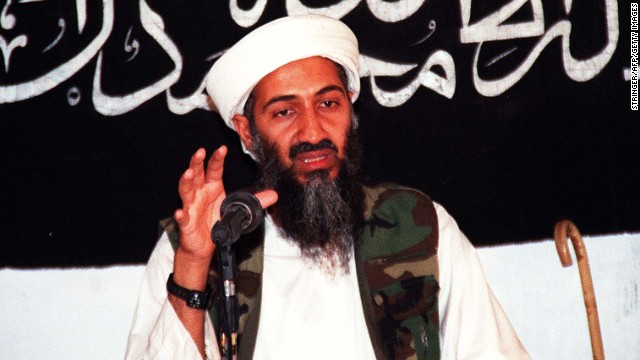
Washington (CNN) -- Tapping away at his computer in the study of the suburban compound in Abbottabad, Pakistan, that he called home for the last years of his life, Osama bin Laden wrote memos urging his followers to continue to try to attack the United States, suggesting, for instance, they mount assassination attempts against President Obama and Gen. David Petraeus.

While he urged his organization on to attack America, bin Laden was also keenly aware that al Qaeda was in deep trouble because of the campaign of CIA drone strikes in Pakistan and also because the brutal tactics of his followers had alienated many Muslims.

According to senior Obama administration officials who have reviewed the "treasure trove" of the thousands of documents that were picked up by the U.S. Navy SEALs from bin Laden's compound in Abbottabad, the leaders of al Qaeda understood that the group they led was "beleaguered." CNN was given a briefing this week by senior administration officials who have been analyzing the documents.

Bin Laden wrote a 48-page memo to a deputy in October 2010 that surveyed the state of his organization. He was particularly concerned that al Qaeda's longtime sanctuary in Waziristan in Pakistan's tribal areas was now too dangerous because of the campaign of American drone strikes there that had picked off many of his key lieutenants.

According to a count by the New America Foundation, the CIA launched a record number of 118 strikes into the tribal regions during 2010, the year bin Laden wrote this memo.

Bin Laden advised his followers not to move around the tribal regions except on overcast days when America's all-seeing satellites and drones would not have as good coverage of the area.

He also urged his followers to depart the tribal regions for the remote Afghan provinces of Ghazni, Zabul and, in particular, Kunar, pointing out that the high mountains and dense forests of Kunar provided especially good protection from prying American eyes.

Bin Laden fretted about his 20-year-old son, Hamza, who had recently been released from house arrest in Iran, instructing his deputy to tell his son to move out of Waziristan. He also provided elaborate instructions about how Hamza might evade the surveillance of the American drones in the tribal regions by meeting members of al Qaeda inside a particular tunnel on the road between the western Pakistani town of Kohat and the city of Peshawar.

During his final days, bin Laden's world was filled with paranoia. He instructed that Hamza should throw out anything he had taken with him from Iran as it might contain some kind of tracking device, and that he should avoid the company of a man who might have ties to the Pakistani intelligence services.

Bin Laden also reminded his deputies that all internal communications should be made by letter rather than by phone or the Internet.

As a result, according to administration officials, bin Laden had to wait for responses to his queries to his deputies that could sometimes take up to two or three months to be delivered -- surely not an efficient way to run any organization.

Bin Laden also advised his lieutenants that when they kidnapped someone they should take many precautions during the negotiating process and also throw away any bags that contained ransom money because they might also contain a tracking device.

The spectacular set of self-inflicted mistakes made by al Qaeda's affiliate in Iraq weighed heavily on the minds of bin Laden and his top advisers. Privately, they criticized the brutal tactics of al Qaeda in Iraq, which had provoked a tribal uprising against al Qaeda that had dealt a large blow to the group's position in Iraq from 2006 onward.

Until the end, bin Laden remained fixated on attacking the United States, prodding his deputy to "nominate one of the qualified brothers to be responsible for a large operation in the U.S."

According to administration officials, bin Laden's number two, Ayman al-Zawahiri, pushed back, telling bin Laden it was much more realistic to attack American soldiers in Afghanistan than American civilians in the United States.

Bin Laden did urge his followers to scope out opportunities to attack President Obama or Petraeus while they were in Afghanistan. At the time, Petraeus was the commanding general of NATO soldiers in Afghanistan.

Bin Laden noted snidely that killing Obama would pave the way for Vice President Joe Biden to assume the presidency. The al Qaeda leader said Biden was "totally unprepared" for the job.

Above all, bin Laden constantly fretted about his media image, pointing out to his deputies that "a huge part of the battle is in the media."

For the 10th anniversary of the 9/11 attacks, bin Laden wanted his media team to emphasize particularly that the wars in Afghanistan and Iraq were one of the main reasons for the financial crisis in the United States. (Bin Laden bought his compound in Abbottabad with cash, so presumably he didn't quite understand the dimensions of the subprime mortgage debacle.)

One of his media advisers, who U.S. officials believe to be the American al Qaeda recruit Adam Gadahn, suggested bin Laden take advantage of the 9/11 anniversary in 2011 to record a 'high definition' videotape message that could be given to all the major American news networks, except to Fox News, which Gadahn said "lacks neutrality." It doesn't appear that bin Laden made such a tape.

Administration officials say it is strange that in all the documents recovered at the bin Laden compound there is no mention at all of al Qaeda's plot to use liquid explosives to bring down as many as seven American, British and Canadian passenger planes flying from Heathrow Airport in 2006. If this plot had succeeded it might have rivaled 9/11 as a spectacular attack.

Bin Laden moved into his Abbottabad compound either at the end of 2005 or sometime in 2006 and an administration official says that, perhaps, information about the Heathrow plot "got lost in the move."

© 2012 Cable News Network. Turner Broadcasting System, Inc.

http://www.cnn.com/2012/03/16/opinion/bergen-bin-laden-final-writings/index.html [with comments]


===


(linked in) http://investorshub.advfn.com/boards/read_msg.aspx?message_id=71444907 and preceding and following