









Sunday, March 18, 2012 3:09:02 AM
The bin Laden plot to kill President Obama

The long-hunted al-Qaeda leader and chief architect of the Sept. 11, 2001, terrorist attacks on the United States was killed by U.S. forces May 1 in a surgical raid.
View Photo Gallery — ?http://www.washingtonpost.com/world/osama-bin-ladens-hideout-raided-in-pakistan/2011/05/02/AFmxZ7YF_gallery.html
By David Ignatius, Published: March 16, 2012
Before his death, Osama bin Laden [ http://www.washingtonpost.com/national/osama-bin-laden-killed-in-us-raid-buried-at-sea/2011/05/02/AFx0yAZF_story.html ] boldly commanded his network to organize special cells in Afghanistan and Pakistan to attack the aircraft of President Obama and Gen. David H. Petraeus.
“The reason for concentrating on them,” the al-Qaeda leader explained to his top lieutenant, “is that Obama is the head of infidelity and killing him automatically will make [Vice President] Biden take over the presidency. .?.?. Biden is totally unprepared for that post, which will lead the U.S. into a crisis. As for Petraeus, he is the man of the hour .?.?. and killing him would alter the war’s path” in Afghanistan.
The scheme is described in one of the documents taken from bin Laden’s compound [ http://www.washingtonpost.com/world/national-security/al-qaeda-data-yields-details-of-planned-plots/2011/05/05/AFFQ3L2F_story.html ] by U.S. forces on May 2, the night he was killed. I was given an exclusive look at some of these remarkable documents by a senior administration official. They have been declassified and will be available soon to the public in their original Arabic texts and translations.
The man bin Laden hoped would carry out the attacks on Obama and Petraeus was the Pakistani terrorist Ilyas Kashmiri [ http://www.washingtonpost.com/opinions/10-years-after-911-al-qaeda-is-down-but-not-out/2011/08/23/gIQARQ3tZJ_story.html ]. “Please ask brother Ilyas to send me the steps he has taken into that work,” bin Laden wrote to his top lieutenant, Atiyah Abd al-Rahman. A month after bin Laden’s death, Kashmiri was killed in a U.S. drone attack.
The plot to target Obama was probably bluster, since al-Qaeda apparently lacked the weapons to shoot down U.S. aircraft. But it’s a chilling reminder that even when he was embattled and in hiding, bin Laden still dreamed of pulling off another spectacular terror attack against the United States.
The terrorist leader urged in a 48-page directive to Atiyah to focus “every effort that could be spent on attacks in America,” instead of operations within Muslim nations. He told Atiyah to “ask the brothers in all regions if they have a brother .?.?. who can operate in the U.S. [He should be able to] live there, or it should be easy for him to travel there.”
U.S. analysts don’t see evidence that these plots have materialized. “The organization lacks the ability to plan, organize and execute complex, catastrophic attacks, but the threat persists,” says a senior administration analyst who has carefully reviewed the documents.
The bin Laden who emerges from these communications is a terrorist CEO in an isolated compound, brooding that his organization has ruined its reputation by killing too many Muslims in its jihad against America. He writes of the many departed “brothers” who have been lost to U.S. drone attacks. But he’s far from the battlefield himself in his hideout in Abbottabad, Pakistan [ http://www.washingtonpost.com/blogs/blogpost/post/osama-bin-ladens-compound-after-attack-in-abbottabad-video/2011/05/02/AF3FcSYF_blog.html ], where he seems to spend considerable time watching television.
The garbled syntax of bin Laden’s communications may result from their being dictated to several of his wives, according to the U.S. analyst. And his rambling laundry list of recommendations illustrates the problems of communicating with subordinates when it could take several months to receive an answer. The al-Qaeda leader had a “great fear of irrelevance,” the analyst believes.
Because of constant harassment and communications difficulties in Pakistan’s tribal areas, bin Laden encouraged al-Qaeda leaders to leave north and south Waziristan for more distant and remote locations.
Bin Laden had an unlikely managerial focus, for such a notorious terrorist. He discusses the need for “deputy emirs” and “acting emirs” to run regional operations when the local boss is away, and he suggests that emirs should serve two-year terms and write an “annual report to be sent to the central group detailing the local situation.” He allowed a relatively frank exchange with his subordinates, who voiced criticisms about the organization’s errors.
Though open to internal debate, bin Laden and his aides had rigid views about Muslim theology. Atiyah sent his leader a strident letter in June 2009 detailing what he saw as doctrinal errors among other jihadists.
Bin Laden’s biggest concern was al-Qaeda’s media image among Muslims. He worried that it was so tarnished that, in a draft letter probably intended for Atiyah, he argued that the organization should find a new name.
The al-Qaeda brand had become a problem, bin Laden explained, because Obama administration officials “have largely stopped using the phrase ‘the war on terror’ in the context of not wanting to provoke Muslims,” and instead promoted a war against al-Qaeda. The organization’s full name was “Qaeda al-Jihad,” bin Laden noted, but in its shorthand version, “this name reduces the feeling of Muslims that we belong to them.” He proposed 10 alternatives “that would not easily be shortened to a word that does not represent us.” His first recommendation was “Taifat al-tawhid wal-jihad,” or Monotheism and Jihad Group.
Bin Laden ruminated about “mistakes” and “miscalculations” by affiliates in Iraq and elsewhere that had killed Muslims, even in mosques. He told Atiyah to warn every emir, or regional leader, to avoid these “unnecessary civilian casualties,” which were hurting the organization.
“Making these mistakes is a great issue,” he stressed, arguing that spilling “Muslim blood” had resulted in “the alienation of most of the nation [of Islam] from the [Mujaheddin].” Local al-Qaeda leaders should “apologize and be held responsible for what happened.”
Bin Laden also criticized subordinates for linking their operations to local grievances rather than the overarching Muslim cause of Palestine. He chided his affiliate in Yemen for saying an operation was a response to U.S. bombing there. He even scolded the organizers of the spectacular December 2009 suicide attack on the CIA base in Khost [ http://www.washingtonpost.com/local/reconstructing-the-cia-bombing-in-khost-afghanistan/2012/01/27/gIQAwUkOWQ_graphic.html ], Afghanistan, for describing it as revenge for the killing of Pakistani Taliban leader Baitullah Mehsud. “It was necessary to discuss Palestine first,” lectured bin Laden.
Bin Laden’s focus on attacking the U.S. homeland led to sharp disagreements with his deputy, Ayman al-Zawahiri, who favored easier and more opportunistic attacks on U.S. forces in Iraq, Afghanistan and other areas.
Bin Laden told Atiyah that al-Qaeda’s best chance for establishing an Islamic state was Yemen, which he described as the “launching point” for attacks on the Persian Gulf oil states. “Control of these nations means control of the world,” he wrote. But he worried that the push in Yemen would come too soon, and he advised his colleagues to wait three years, if necessary, before making a decisive move. By fighting too hard in Syria in the early 1980s, he noted, the Muslim Brotherhood “lost a generation of men.”
Bin Laden and his aides hoped for big terrorist operations to commemorate the 10th anniversary of Sept. 11, 2001. They also had elaborate media plans. Adam Gadahn, a U.S.-born media adviser, even discussed in a message to his boss what would be the best television outlets for a bin Laden anniversary video.
“It should be sent for example to ABC, CBS, NBC, and CNN and maybe PBS and VOA. As for Fox News let her die in her anger,” Gadahn wrote. At another point, he said of the networks: “From a professional point of view, they are all on one level — except [Fox News] channel, which falls into the abyss as you know, and lacks objectivity, too.”
What an unintended boost for Fox, which can now boast that it is al-Qaeda’s least favorite network.
davidignatius@washpost.com
*
More on Leon Panetta and Afghanistan:
Pentagon says Afghan security breach was more serious than expected
http://www.washingtonpost.com/world/national-security/pentagon-afghan-security-breach-was-more-serious-than-reported/2012/03/15/gIQAIoNVES_story.html
Video: Panetta meets with Afghan President Hamid Karzai
http://www.washingtonpost.com/world/national-security/sec-panetta-meets-with-president-karzai-in-afghanistan-037/2012/03/15/gIQAolZuDS_video.html
More on the hunt for bin Laden from PostOpinions:
David Ignatius: How the U.S. found and finished bin Laden
http://www.washingtonpost.com/opinions/how-the-us-found-and-finished-bin-laden/2011/05/02/AFXO8jZF_story.html
David Ignatius: What did Pakistan know about bin Laden?
http://www.washingtonpost.com/opinions/what-did-pakistan-know-about-bin-laden/2012/02/16/gIQAccLhKR_story.html
The Post’s View: A strike that took years of painstaking work
http://www.washingtonpost.com/opinions/possible-consequences-of-the-bin-laden-coup/2011/05/02/AFjeWxbF_story.html
*
© 2012 The Washington Post
http://www.washingtonpost.com/opinions/the-bin-laden-plot-to-kill-president-obama/2012/03/16/gIQAwN5RGS_story.html [with (over 5,000) comments]
===
Bin Laden's final days -- big plans, deep fears
Video [embedded]
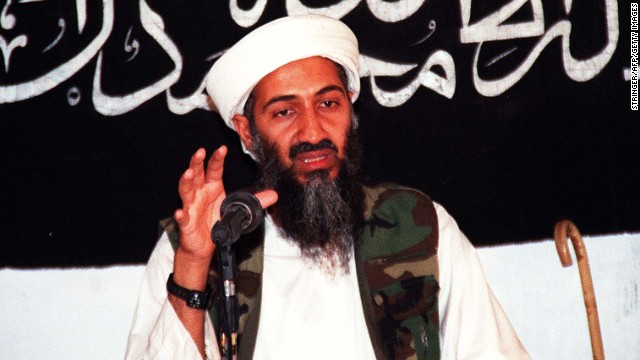
Bergen: bin Laden 'focused' on Obama
By Peter Bergen, CNN National Security Analyst
updated 7:27 PM EDT, Fri March 16, 2012
Editor's note: Peter Bergen, CNN's national security analyst, is a director at the New America Foundation. His book "Manhunt: The Ten-Year Search for Bin Laden; From 9/11 to Abbottabad" will be published on May 1.
Washington (CNN) -- Tapping away at his computer in the study of the suburban compound in Abbottabad, Pakistan, that he called home for the last years of his life, Osama bin Laden wrote memos urging his followers to continue to try to attack the United States, suggesting, for instance, they mount assassination attempts against President Obama and Gen. David Petraeus.
While he urged his organization on to attack America, bin Laden was also keenly aware that al Qaeda was in deep trouble because of the campaign of CIA drone strikes in Pakistan and also because the brutal tactics of his followers had alienated many Muslims.
According to senior Obama administration officials who have reviewed the "treasure trove" of the thousands of documents that were picked up by the U.S. Navy SEALs from bin Laden's compound in Abbottabad, the leaders of al Qaeda understood that the group they led was "beleaguered." CNN was given a briefing this week by senior administration officials who have been analyzing the documents.
Bin Laden wrote a 48-page memo to a deputy in October 2010 that surveyed the state of his organization. He was particularly concerned that al Qaeda's longtime sanctuary in Waziristan in Pakistan's tribal areas was now too dangerous because of the campaign of American drone strikes there that had picked off many of his key lieutenants.
According to a count by the New America Foundation, the CIA launched a record number of 118 strikes into the tribal regions during 2010, the year bin Laden wrote this memo.
Bin Laden advised his followers not to move around the tribal regions except on overcast days when America's all-seeing satellites and drones would not have as good coverage of the area.
He also urged his followers to depart the tribal regions for the remote Afghan provinces of Ghazni, Zabul and, in particular, Kunar, pointing out that the high mountains and dense forests of Kunar provided especially good protection from prying American eyes.
Bin Laden fretted about his 20-year-old son, Hamza, who had recently been released from house arrest in Iran, instructing his deputy to tell his son to move out of Waziristan. He also provided elaborate instructions about how Hamza might evade the surveillance of the American drones in the tribal regions by meeting members of al Qaeda inside a particular tunnel on the road between the western Pakistani town of Kohat and the city of Peshawar.
During his final days, bin Laden's world was filled with paranoia. He instructed that Hamza should throw out anything he had taken with him from Iran as it might contain some kind of tracking device, and that he should avoid the company of a man who might have ties to the Pakistani intelligence services.
Bin Laden also reminded his deputies that all internal communications should be made by letter rather than by phone or the Internet.
As a result, according to administration officials, bin Laden had to wait for responses to his queries to his deputies that could sometimes take up to two or three months to be delivered -- surely not an efficient way to run any organization.
Bin Laden also advised his lieutenants that when they kidnapped someone they should take many precautions during the negotiating process and also throw away any bags that contained ransom money because they might also contain a tracking device.
The spectacular set of self-inflicted mistakes made by al Qaeda's affiliate in Iraq weighed heavily on the minds of bin Laden and his top advisers. Privately, they criticized the brutal tactics of al Qaeda in Iraq, which had provoked a tribal uprising against al Qaeda that had dealt a large blow to the group's position in Iraq from 2006 onward.
Until the end, bin Laden remained fixated on attacking the United States, prodding his deputy to "nominate one of the qualified brothers to be responsible for a large operation in the U.S."
According to administration officials, bin Laden's number two, Ayman al-Zawahiri, pushed back, telling bin Laden it was much more realistic to attack American soldiers in Afghanistan than American civilians in the United States.
Bin Laden did urge his followers to scope out opportunities to attack President Obama or Petraeus while they were in Afghanistan. At the time, Petraeus was the commanding general of NATO soldiers in Afghanistan.
Bin Laden noted snidely that killing Obama would pave the way for Vice President Joe Biden to assume the presidency. The al Qaeda leader said Biden was "totally unprepared" for the job.
Above all, bin Laden constantly fretted about his media image, pointing out to his deputies that "a huge part of the battle is in the media."
For the 10th anniversary of the 9/11 attacks, bin Laden wanted his media team to emphasize particularly that the wars in Afghanistan and Iraq were one of the main reasons for the financial crisis in the United States. (Bin Laden bought his compound in Abbottabad with cash, so presumably he didn't quite understand the dimensions of the subprime mortgage debacle.)
One of his media advisers, who U.S. officials believe to be the American al Qaeda recruit Adam Gadahn, suggested bin Laden take advantage of the 9/11 anniversary in 2011 to record a 'high definition' videotape message that could be given to all the major American news networks, except to Fox News, which Gadahn said "lacks neutrality." It doesn't appear that bin Laden made such a tape.
Administration officials say it is strange that in all the documents recovered at the bin Laden compound there is no mention at all of al Qaeda's plot to use liquid explosives to bring down as many as seven American, British and Canadian passenger planes flying from Heathrow Airport in 2006. If this plot had succeeded it might have rivaled 9/11 as a spectacular attack.
Bin Laden moved into his Abbottabad compound either at the end of 2005 or sometime in 2006 and an administration official says that, perhaps, information about the Heathrow plot "got lost in the move."
© 2012 Cable News Network. Turner Broadcasting System, Inc.
http://www.cnn.com/2012/03/16/opinion/bergen-bin-laden-final-writings/index.html [with comments]
===
(linked in) http://investorshub.advfn.com/boards/read_msg.aspx?message_id=71444907 and preceding and following

The long-hunted al-Qaeda leader and chief architect of the Sept. 11, 2001, terrorist attacks on the United States was killed by U.S. forces May 1 in a surgical raid.
View Photo Gallery — ?http://www.washingtonpost.com/world/osama-bin-ladens-hideout-raided-in-pakistan/2011/05/02/AFmxZ7YF_gallery.html
By David Ignatius, Published: March 16, 2012
Before his death, Osama bin Laden [ http://www.washingtonpost.com/national/osama-bin-laden-killed-in-us-raid-buried-at-sea/2011/05/02/AFx0yAZF_story.html ] boldly commanded his network to organize special cells in Afghanistan and Pakistan to attack the aircraft of President Obama and Gen. David H. Petraeus.
“The reason for concentrating on them,” the al-Qaeda leader explained to his top lieutenant, “is that Obama is the head of infidelity and killing him automatically will make [Vice President] Biden take over the presidency. .?.?. Biden is totally unprepared for that post, which will lead the U.S. into a crisis. As for Petraeus, he is the man of the hour .?.?. and killing him would alter the war’s path” in Afghanistan.
The scheme is described in one of the documents taken from bin Laden’s compound [ http://www.washingtonpost.com/world/national-security/al-qaeda-data-yields-details-of-planned-plots/2011/05/05/AFFQ3L2F_story.html ] by U.S. forces on May 2, the night he was killed. I was given an exclusive look at some of these remarkable documents by a senior administration official. They have been declassified and will be available soon to the public in their original Arabic texts and translations.
The man bin Laden hoped would carry out the attacks on Obama and Petraeus was the Pakistani terrorist Ilyas Kashmiri [ http://www.washingtonpost.com/opinions/10-years-after-911-al-qaeda-is-down-but-not-out/2011/08/23/gIQARQ3tZJ_story.html ]. “Please ask brother Ilyas to send me the steps he has taken into that work,” bin Laden wrote to his top lieutenant, Atiyah Abd al-Rahman. A month after bin Laden’s death, Kashmiri was killed in a U.S. drone attack.
The plot to target Obama was probably bluster, since al-Qaeda apparently lacked the weapons to shoot down U.S. aircraft. But it’s a chilling reminder that even when he was embattled and in hiding, bin Laden still dreamed of pulling off another spectacular terror attack against the United States.
The terrorist leader urged in a 48-page directive to Atiyah to focus “every effort that could be spent on attacks in America,” instead of operations within Muslim nations. He told Atiyah to “ask the brothers in all regions if they have a brother .?.?. who can operate in the U.S. [He should be able to] live there, or it should be easy for him to travel there.”
U.S. analysts don’t see evidence that these plots have materialized. “The organization lacks the ability to plan, organize and execute complex, catastrophic attacks, but the threat persists,” says a senior administration analyst who has carefully reviewed the documents.
The bin Laden who emerges from these communications is a terrorist CEO in an isolated compound, brooding that his organization has ruined its reputation by killing too many Muslims in its jihad against America. He writes of the many departed “brothers” who have been lost to U.S. drone attacks. But he’s far from the battlefield himself in his hideout in Abbottabad, Pakistan [ http://www.washingtonpost.com/blogs/blogpost/post/osama-bin-ladens-compound-after-attack-in-abbottabad-video/2011/05/02/AF3FcSYF_blog.html ], where he seems to spend considerable time watching television.
The garbled syntax of bin Laden’s communications may result from their being dictated to several of his wives, according to the U.S. analyst. And his rambling laundry list of recommendations illustrates the problems of communicating with subordinates when it could take several months to receive an answer. The al-Qaeda leader had a “great fear of irrelevance,” the analyst believes.
Because of constant harassment and communications difficulties in Pakistan’s tribal areas, bin Laden encouraged al-Qaeda leaders to leave north and south Waziristan for more distant and remote locations.
Bin Laden had an unlikely managerial focus, for such a notorious terrorist. He discusses the need for “deputy emirs” and “acting emirs” to run regional operations when the local boss is away, and he suggests that emirs should serve two-year terms and write an “annual report to be sent to the central group detailing the local situation.” He allowed a relatively frank exchange with his subordinates, who voiced criticisms about the organization’s errors.
Though open to internal debate, bin Laden and his aides had rigid views about Muslim theology. Atiyah sent his leader a strident letter in June 2009 detailing what he saw as doctrinal errors among other jihadists.
Bin Laden’s biggest concern was al-Qaeda’s media image among Muslims. He worried that it was so tarnished that, in a draft letter probably intended for Atiyah, he argued that the organization should find a new name.
The al-Qaeda brand had become a problem, bin Laden explained, because Obama administration officials “have largely stopped using the phrase ‘the war on terror’ in the context of not wanting to provoke Muslims,” and instead promoted a war against al-Qaeda. The organization’s full name was “Qaeda al-Jihad,” bin Laden noted, but in its shorthand version, “this name reduces the feeling of Muslims that we belong to them.” He proposed 10 alternatives “that would not easily be shortened to a word that does not represent us.” His first recommendation was “Taifat al-tawhid wal-jihad,” or Monotheism and Jihad Group.
Bin Laden ruminated about “mistakes” and “miscalculations” by affiliates in Iraq and elsewhere that had killed Muslims, even in mosques. He told Atiyah to warn every emir, or regional leader, to avoid these “unnecessary civilian casualties,” which were hurting the organization.
“Making these mistakes is a great issue,” he stressed, arguing that spilling “Muslim blood” had resulted in “the alienation of most of the nation [of Islam] from the [Mujaheddin].” Local al-Qaeda leaders should “apologize and be held responsible for what happened.”
Bin Laden also criticized subordinates for linking their operations to local grievances rather than the overarching Muslim cause of Palestine. He chided his affiliate in Yemen for saying an operation was a response to U.S. bombing there. He even scolded the organizers of the spectacular December 2009 suicide attack on the CIA base in Khost [ http://www.washingtonpost.com/local/reconstructing-the-cia-bombing-in-khost-afghanistan/2012/01/27/gIQAwUkOWQ_graphic.html ], Afghanistan, for describing it as revenge for the killing of Pakistani Taliban leader Baitullah Mehsud. “It was necessary to discuss Palestine first,” lectured bin Laden.
Bin Laden’s focus on attacking the U.S. homeland led to sharp disagreements with his deputy, Ayman al-Zawahiri, who favored easier and more opportunistic attacks on U.S. forces in Iraq, Afghanistan and other areas.
Bin Laden told Atiyah that al-Qaeda’s best chance for establishing an Islamic state was Yemen, which he described as the “launching point” for attacks on the Persian Gulf oil states. “Control of these nations means control of the world,” he wrote. But he worried that the push in Yemen would come too soon, and he advised his colleagues to wait three years, if necessary, before making a decisive move. By fighting too hard in Syria in the early 1980s, he noted, the Muslim Brotherhood “lost a generation of men.”
Bin Laden and his aides hoped for big terrorist operations to commemorate the 10th anniversary of Sept. 11, 2001. They also had elaborate media plans. Adam Gadahn, a U.S.-born media adviser, even discussed in a message to his boss what would be the best television outlets for a bin Laden anniversary video.
“It should be sent for example to ABC, CBS, NBC, and CNN and maybe PBS and VOA. As for Fox News let her die in her anger,” Gadahn wrote. At another point, he said of the networks: “From a professional point of view, they are all on one level — except [Fox News] channel, which falls into the abyss as you know, and lacks objectivity, too.”
What an unintended boost for Fox, which can now boast that it is al-Qaeda’s least favorite network.
davidignatius@washpost.com
*
More on Leon Panetta and Afghanistan:
Pentagon says Afghan security breach was more serious than expected
http://www.washingtonpost.com/world/national-security/pentagon-afghan-security-breach-was-more-serious-than-reported/2012/03/15/gIQAIoNVES_story.html
Video: Panetta meets with Afghan President Hamid Karzai
http://www.washingtonpost.com/world/national-security/sec-panetta-meets-with-president-karzai-in-afghanistan-037/2012/03/15/gIQAolZuDS_video.html
More on the hunt for bin Laden from PostOpinions:
David Ignatius: How the U.S. found and finished bin Laden
http://www.washingtonpost.com/opinions/how-the-us-found-and-finished-bin-laden/2011/05/02/AFXO8jZF_story.html
David Ignatius: What did Pakistan know about bin Laden?
http://www.washingtonpost.com/opinions/what-did-pakistan-know-about-bin-laden/2012/02/16/gIQAccLhKR_story.html
The Post’s View: A strike that took years of painstaking work
http://www.washingtonpost.com/opinions/possible-consequences-of-the-bin-laden-coup/2011/05/02/AFjeWxbF_story.html
*
© 2012 The Washington Post
http://www.washingtonpost.com/opinions/the-bin-laden-plot-to-kill-president-obama/2012/03/16/gIQAwN5RGS_story.html [with (over 5,000) comments]
===
Bin Laden's final days -- big plans, deep fears
Video [embedded]
Bergen: bin Laden 'focused' on Obama
By Peter Bergen, CNN National Security Analyst
updated 7:27 PM EDT, Fri March 16, 2012
Editor's note: Peter Bergen, CNN's national security analyst, is a director at the New America Foundation. His book "Manhunt: The Ten-Year Search for Bin Laden; From 9/11 to Abbottabad" will be published on May 1.
Washington (CNN) -- Tapping away at his computer in the study of the suburban compound in Abbottabad, Pakistan, that he called home for the last years of his life, Osama bin Laden wrote memos urging his followers to continue to try to attack the United States, suggesting, for instance, they mount assassination attempts against President Obama and Gen. David Petraeus.
While he urged his organization on to attack America, bin Laden was also keenly aware that al Qaeda was in deep trouble because of the campaign of CIA drone strikes in Pakistan and also because the brutal tactics of his followers had alienated many Muslims.
According to senior Obama administration officials who have reviewed the "treasure trove" of the thousands of documents that were picked up by the U.S. Navy SEALs from bin Laden's compound in Abbottabad, the leaders of al Qaeda understood that the group they led was "beleaguered." CNN was given a briefing this week by senior administration officials who have been analyzing the documents.
Bin Laden wrote a 48-page memo to a deputy in October 2010 that surveyed the state of his organization. He was particularly concerned that al Qaeda's longtime sanctuary in Waziristan in Pakistan's tribal areas was now too dangerous because of the campaign of American drone strikes there that had picked off many of his key lieutenants.
According to a count by the New America Foundation, the CIA launched a record number of 118 strikes into the tribal regions during 2010, the year bin Laden wrote this memo.
Bin Laden advised his followers not to move around the tribal regions except on overcast days when America's all-seeing satellites and drones would not have as good coverage of the area.
He also urged his followers to depart the tribal regions for the remote Afghan provinces of Ghazni, Zabul and, in particular, Kunar, pointing out that the high mountains and dense forests of Kunar provided especially good protection from prying American eyes.
Bin Laden fretted about his 20-year-old son, Hamza, who had recently been released from house arrest in Iran, instructing his deputy to tell his son to move out of Waziristan. He also provided elaborate instructions about how Hamza might evade the surveillance of the American drones in the tribal regions by meeting members of al Qaeda inside a particular tunnel on the road between the western Pakistani town of Kohat and the city of Peshawar.
During his final days, bin Laden's world was filled with paranoia. He instructed that Hamza should throw out anything he had taken with him from Iran as it might contain some kind of tracking device, and that he should avoid the company of a man who might have ties to the Pakistani intelligence services.
Bin Laden also reminded his deputies that all internal communications should be made by letter rather than by phone or the Internet.
As a result, according to administration officials, bin Laden had to wait for responses to his queries to his deputies that could sometimes take up to two or three months to be delivered -- surely not an efficient way to run any organization.
Bin Laden also advised his lieutenants that when they kidnapped someone they should take many precautions during the negotiating process and also throw away any bags that contained ransom money because they might also contain a tracking device.
The spectacular set of self-inflicted mistakes made by al Qaeda's affiliate in Iraq weighed heavily on the minds of bin Laden and his top advisers. Privately, they criticized the brutal tactics of al Qaeda in Iraq, which had provoked a tribal uprising against al Qaeda that had dealt a large blow to the group's position in Iraq from 2006 onward.
Until the end, bin Laden remained fixated on attacking the United States, prodding his deputy to "nominate one of the qualified brothers to be responsible for a large operation in the U.S."
According to administration officials, bin Laden's number two, Ayman al-Zawahiri, pushed back, telling bin Laden it was much more realistic to attack American soldiers in Afghanistan than American civilians in the United States.
Bin Laden did urge his followers to scope out opportunities to attack President Obama or Petraeus while they were in Afghanistan. At the time, Petraeus was the commanding general of NATO soldiers in Afghanistan.
Bin Laden noted snidely that killing Obama would pave the way for Vice President Joe Biden to assume the presidency. The al Qaeda leader said Biden was "totally unprepared" for the job.
Above all, bin Laden constantly fretted about his media image, pointing out to his deputies that "a huge part of the battle is in the media."
For the 10th anniversary of the 9/11 attacks, bin Laden wanted his media team to emphasize particularly that the wars in Afghanistan and Iraq were one of the main reasons for the financial crisis in the United States. (Bin Laden bought his compound in Abbottabad with cash, so presumably he didn't quite understand the dimensions of the subprime mortgage debacle.)
One of his media advisers, who U.S. officials believe to be the American al Qaeda recruit Adam Gadahn, suggested bin Laden take advantage of the 9/11 anniversary in 2011 to record a 'high definition' videotape message that could be given to all the major American news networks, except to Fox News, which Gadahn said "lacks neutrality." It doesn't appear that bin Laden made such a tape.
Administration officials say it is strange that in all the documents recovered at the bin Laden compound there is no mention at all of al Qaeda's plot to use liquid explosives to bring down as many as seven American, British and Canadian passenger planes flying from Heathrow Airport in 2006. If this plot had succeeded it might have rivaled 9/11 as a spectacular attack.
Bin Laden moved into his Abbottabad compound either at the end of 2005 or sometime in 2006 and an administration official says that, perhaps, information about the Heathrow plot "got lost in the move."
© 2012 Cable News Network. Turner Broadcasting System, Inc.
http://www.cnn.com/2012/03/16/opinion/bergen-bin-laden-final-writings/index.html [with comments]
===
(linked in) http://investorshub.advfn.com/boards/read_msg.aspx?message_id=71444907 and preceding and following

Greensburg, KS - 5/4/07
"Eternal vigilance is the price of Liberty."
from John Philpot Curran, Speech
upon the Right of Election, 1790
F6
Discover What Traders Are Watching
Explore small cap ideas before they hit the headlines.



