News Focus
News Focus
icon url

pro_se

10/01/10 6:57 PM

#110083 RE: fuagf #110082

I did not know that rat bastard is a U.S. citizen.
icon url

fuagf

10/09/10 8:00 PM

#111097 RE: fuagf #110082

Book: Inside The Secret World Of Rupert Murdoch
By Michael Wolff | smh.com.au | 13 December

In the Weekend Edition of the SMH October 9-10 there is a Memoir .. "Falling out with Rupert", curiously i
cannot find it, it is an edited extract from Man Bites Murdoch by Bruce Guthrie .. thought this may be it, but no.


Rupert Murdoch is portrayed as a doting father
but a ruthless, pragmatic businessman

Rupert Murdoch gave some 50 hours of interviews to the Vanity Fair media columnist Michael Wolff for The Man Who Owns the News and went so far as to encourage and cajole his family, his executives - even his mother, the formidable Dame Elisabeth - to co-operate and open up to the author.

The question is: why?

Wolff told me during his sojourn in Australia to interview Dame Elisabeth and some of the siblings that none of the News Corporation executives he had interviewed understood Murdoch's rationale for wanting to expose himself and his family to the scrutiny of an author he barely knew and seemingly on the basis of one slightly flattering article in Vanity Fair.

Wolff mused that Murdoch's son-in-law, the publicist Matthew Freud, whom he describes in the book "as a man of unspeakable craftiness" and "lounge-lizard smoothness", was pressuring him to do a book so as to burnish the "Murdoch brand and legacy" after the deal that delivered the media mogul the long-coveted Wall Street Journal.

Certainly it is not the first time Murdoch has felt the need to have a third party document a sort of triumphalism he occasionally feels when once again he has proved the naysayers wrong and pulled off yet another deal against all odds.

He did it in 1993 when, having escaped bankruptcy by the skin of his teeth and come back in an aggressive, expansive mode, he gave William Shawcross unfettered access to write a definitive biography, simply titled Murdoch. In 2000 it was the American business journalist Wendi Goldman Rohm who was given Murdoch's blessing to produce an eminently forgettable tome, The Murdoch Mission: The Digital Transformation Of A Media Empire, which painted the tycoon as a digital svengali who would single-handedly lead the world's media into the 21st century. Interestingly, Wolff notes, for someone supposedly leading the charge to the digital future "Murdoch, at 77, can't use a computer, doesn't get email, can't get his cell phone to work properly, can't even imagine changing the variables on a spread sheet".

But if Murdoch was looking to Wolff to burnish his brand, then he must surely regret having exposed himself and those around him to such an acerbic and fearless interrogation that flatters few - with the possible exception of the heir-apparent, James Murdoch, and the "forgotten daughter", Prue.

The News Corporation executives are written off as a B-team of "not the brightest light bulbs" who seek to ingratiate themselves by deferring to anything the boss might want, "never questioning, just doing".

Lachlan Murdoch, perhaps the most unco-operative and suspicious of Wolff's interviewees, comes in for particular and probably unfair treatment. Wolff writes that Murdoch's two most senior lieutenants, chief operating officer Peter Chernin and Fox News chief Roger Ailes, found the one-time heir to the throne "callow, insubstantial and, ironically, un-Murdoch-like". The two men gleefully boasted about having pushed him out of the family business.

Wolff is both charmed by Murdoch's self-effacing manner and good humour and mesmerised by the way in which he seemingly exercises absolute control over his empire and the opportunistic nature of his corporate strategy. Yet at the same time, the author is repelled by the predatory nature of his business dealings - ruthless, cold-hearted and utterly pragmatic.

The thread of the book is the inside story of Murdoch's $US5.2 billion ($8 billion) acquisition of Dow Jones & Co, the owner of The Wall Street Journal, from the Bancroft family and how he and his minions schemed to drive a wedge between the family members who had previously said they would never sell to Murdoch. That insight alone into the inner workings of a business deal in New York makes the book a worthy read.

But between tales of big-deal machinations and revealing interviews with the various Murdoch siblings - Prue, Elisabeth, Lachlan and James - the intriguing part of the book is Wolff's attempts to psychoanalyse his subject and determine "what makes Murdoch run". It is a task made difficult by the fact that Murdoch finds it impossible to talk about his own motivations. "He's not good at explaining himself and gets annoyed and frustrated when he's asked to do so," Wolff writes. For Murdoch, the past is the past; there are no regrets, no looking back; it is all about the future, the next deal, the next trophy for the corporate wall.

As a result, we are left with the author's musings about the Murdoch legacy, his dynastic ambitions and whether the vision for a global media company has never been more than just gut-instinct opportunism.

Central to the narrative is Wolff's view that Murdoch is changing - becoming more liberal

COMMENT .. hmmm, that is at odds with the article which eludes me ..

- and that his "life is now largely spent around people for whom Fox News is a vulgarity and a joke". The catalyst for this, Wolff argues, is Murdoch's marriage in 1999 to his third wife, Wendi Deng, 38 years his junior. "Of all the office affairs in history, Murdoch's may be the biggest cliche, both silly and sweet. This monster, this control freak, this cold bastard, is as blissfully helpless in the face of a determined woman of lowly rank as any lonely, erotically deprived, death-fearing man would be."

Wolff provides plenty of juicy titbits, from Murdoch dying his hair ("obviously and vainly orange - or, occasionally, aubergine") over the bathroom sink to Wendi's IVF treatment, the $US44 million New York penthouse, the sibling rivalry and the fact that Murdoch is, according to one of his executives, a classic "two-pot screamer".

Given the breadth and depth of Wolff's access, this is an important book and certainly the most pertinent and revealing portrait of the most politically powerful media tycoon in the world. It is certainly an accurate portrayal of Murdoch the businessman, capturing him at his pragmatic, devious, deal-making best. But it sheds little light on the private Murdoch who, besides being disarmingly charming, is a doting father and warm, compassionate, generous and loyal to those who serve him.

When the collective Murdoch families gather for Dame Elisabeth's 100th birthday celebrations at Cruden Farm near Melbourne next year, the book should make for some lively discussion. That in itself, might make for a fascinating follow-up. I am just not sure that Wolff will be among the invitees.

Reviewed by Bruce Dover - a former News Corporation senior executive and author of Rupert's Adventures In China (2008).
http://thebigchair.com.au/news/radar/rupert-murdoch

Ok .. try searching .. "Former editor Bruce Guthrie gives a rare insight into
the behind-the scenes machinations of the Murdoch global media empire" .. more on track ..

When Rupert comes to town
October 9, 2010


Former Herald Sun Editor Bruce Guthrie after winning his court case. Photo: Joe Armao

HUGE doors, as wide as they are tall and painted a glistening gold, greet you on the 13th floor of the Herald & Weekly Times tower on Southbank. It's not the sort of decor you expect from the people's paper, the Herald Sun, bought by more than 500,000 a day and read by almost three times that many across Victoria.

The eastern and northern sides of the executive floor are home to HWT's most powerful players, the managing director and the chair of HWT respectively. Between their offices is another, right on the corner. It is the best office in the whole place, but, it is vacant for most of the year, in a constant state of readiness in case The Great Man should drop in. It is Rupert Murdoch's office and on this day, October 27, 2008, he is in town. Consequently, everyone is on edge.

Managing director Peter Blunden, who imagines himself the most influential man in Melbourne, has come to work especially early this day. So has Rupert's sister, Janet Calvert-Jones, HWT chair. The volatile Blunden was my immediate predecessor as editor-in-chief of the Herald Sun and then became my boss. He couldn't really decide whether he liked the job or not.
Advertisement: Story continues below

As the world financial crisis gripped, robbing the Herald Sun and the Sunday Herald Sun of crucial circulation and advertising revenue, the increasingly vexed Blunden had been heard to say more than once: ''This f---ing job is doing my head in.'' Worse, he would often append some derisory comment about the latest directives from News's head office, such as: ''You won't believe what those c---- in Sydney have done today.'' These outbursts were one part pressure-valve, one part bonding ritual. But they did nothing to engender confidence.

Despite Blunden's reputation as a gifted tabloid editor, I had actually inherited several problems at the Herald Sun: it was losing circulation and readership, and its website was growing more slowly than most. By 2008, I had slowed the paper's sales decline, significantly boosted readership and jump-started our website. It seemed pretty clear I would be at the paper for at least five years.

Midway through morning news conference on October 27, I had been summoned to the 13th floor for a meeting with Rupert Murdoch. These meetings between proprietor and editor were legendary, often humbling and sometimes career-ending. If he was unhappy with my performance on the Herald Sun, this is where I would find out - I would get a bollocking. When I arrived at the conference room, I was surprised to find it wouldn't be a one-on-one. Blunden was there, that day's edition close by. Murdoch arrived last, and in a discursive mood. He spoke in generalities about the state of the business, and expressed a kind of calm resignation about the circulation challenges facing News titles around the world.

Eventually Murdoch picked up a copy of the day's paper.

I tensed.

''Well, Bruce,'' Murdoch said. ''The whole town would have been talking about your page one today. It was very good; just what we need.''

Page one that day featured a whopping great mulloway that a professional fisherman had caught on our behalf in the Yarra as part of a series we had done on the health of the river, and our page one lead reported that bullying and violence were growing in state schools. Both had been hand-picked.

''Thank you, Rupert,'' I said. ''We're trying every day to give the readers stories they won't be able to get anywhere else. It seems to be working. The worst thing that can happen to a daily newspaper is that it becomes a discretionary spend.''

''Yes, yes,'' agreed Murdoch. ''People have to feel they must buy it every day.''

As the meeting wound down I felt uplifted. I now appeared to have Rupert's imprimatur, and that left me pretty much untouchable. How was I to know that sometime that week, perhaps on the very day that he had applauded my performance, Murdoch would sign off on my dismissal, plunging me into a professional crisis? I hadn't factored in his ruthlessness but it should have been clear from our final exchange.

''How is The Age faring these days?'' asked Murdoch.

The general consensus was that we were in a very strong position, prompting the observation that Melbourne could be a one-newspaper town in five years.

Murdoch squared his jaw and looked at us. ''That,'' he said through gritted teeth, ''has to be our goal.''

Straight after my session with Rupert there was a lunch in the HWT dining room. As is usual at such gatherings, Murdoch is afforded such respect that the atmosphere winds up being quite stilted. The most significant moment for me occurred before the lunch got under way.

During my 22 months in the job, Janet Calvert-Jones had been a largely benign presence; we had never had a single one-on-one meeting. That said, she had made it known recently she was unhappy with our reporting on her good friend Christine Nixon, the Victorian police commissioner, caught junketing with Qantas - or, at least, I had been led to believe she was unhappy.

Calvert-Jones had the endearing habit of giving me a peck on the cheek whenever I met her. But at the Monday lunch with her brother she didn't move from her spot as I arrived in the dining room to join the pre-meal drinks. So I advanced on her and planted a kiss on her cheek. I have to admit, looking back, she didn't seem entirely comfortable with this. She may have even shrunk back; certainly there was no warmth in her greeting that day. As the lunch got under way, I was sufficiently troubled by her reaction to reflect on the Nixon coverage. It was fresh in all our minds as we had splashed with it just four days earlier, on October 23, 2008.

Around 12.45pm on the day of publication, Blunden called by my office. ''Janet's upset about our coverage of Christine Nixon this morning,'' Blunden said. It was the only time during my editorship that any concerns she may have had about my performance or the paper's editorial positions had been brought to my attention, hence I regarded it as enormously significant. Blunden said she felt we had gone too hard on Nixon and her husband, who were entitled to take the trip.

''They're mates,'' said Blunden.

I was brought out of my lunchtime reverie when Murdoch unexpectedly made an observation about Nixon: ''I gather the police commissioner has been in trouble.''

''She got into strife for taking a free trip with Qantas that she probably shouldn't have taken,'' I said, adding: ''But basically she's done an OK job over a long time. The good judges reckon she'll give it away in April when her contract is up'' - which she subsequently did.

My comments were as much a peace offering to Calvert-Jones, who sat at her brother's side, as anything else. Murdoch merely nodded and moved on. I was troubled that he had obviously been briefed on the story and quickly concluded it must have come up in discussions with his sister or in briefings by Blunden.

Four days later it came up again when, en route to Sydney, Blunden raised it anew. ''Not sure we did the right thing with Christine Nixon,'' said Blunden, apropos of nothing. Blunden's reference to Nixon was especially perverse because in between the Monday lunch with Murdoch and the Friday discussion with Blunden, Nixon had made a public statement that she had decided to pay for her fare.

Days later I bumped into Michael Wilkins, editorial manager at News's Sydney headquarters, and his wife, at the Melbourne Cup. Rupert had flown out of the country 48 hours earlier and, as usual, around News the death watch had started.

''Heard any rumours from Rupert's visit?'' Wilkins asked.

''No, not a thing,'' I replied.

''The only one I've heard,'' said Wilkins, ''is that Phil Gardner's got some big new gig.''

''Really?'' I said. I hadn't heard anything.

The following Monday, after a two-week run of accomplishments, I was again summoned to the 13th floor. This time I was to see News Limited chief executive and chairman John Hartigan, who'd taken up residence in Calvert-Jones's office.

I had no idea why I was there.

''It's good to see you, John,'' I said. ''I didn't know you were in town.''

''I had to come to town to have a conversation neither of us is going to enjoy,'' he said.

Much of journalism is about taking the room temperature, knowing when to press and when to withdraw. With that one utterance, the temperature in Calvert-Jones's office plummeted to sub-zero.

''Is there a problem?'' I asked in a voice that had suddenly grown thin.

''Yes,'' said Hartigan, his own voice a little thin too. ''We are going to make a change.''

''To what?''

''Editor-in-chief.''

With that, the floor dropped away.

This is an edited extract from Man Bites Murdoch, by Bruce Guthrie (MUP), RRP $49.99, to be released on Wednesday.
http://www.smh.com.au/national/when-rupert-comes-to-town-20101008-16c1j.html?from=watoday_ft

Shucks, it didn't have the bit from the one i am looking at re the ethical environment of the Murdoch psyche ..

Here is part of it .. [...] "For Murdoch's 1988 editorial gabfest at aspen .. We were being like generals from some all-conquering army .. speakers included ... ex president Richard Nixon, ... Paul Volker ... By the end of the first day, attendees were muttering there was too little discussion of newspapers and far too much about geopolitics, most of it reflecting Rupert's peculiarly right-wing view of the world ... Sunday promised much. First up was Tom Petrie, veteran new editor of The Sun in London. H is presentation was wildly entertaining, with it's stories of chequebook journalism, general skulduggery and ultimately, "heavy lifting" of rival papers stories if The Sun were unable to match them.

For anyone who too journalism seriously it was appalling. ... "Tom," I said. Do you have any ethical framework at all at the London Sun? ... The place simply erupted. "Ethics? At The Sun? You've got to be joking," sh outed one of the execs from the London broadsheets. ... derision, raucous laughter and general hysteria .. Eric Beecher would later gleefully report that the proprietor [Murdoch] had turned red when i first asked the question and blue when i repeated it .. [Petrie said he couldn't hear it the first time, then again after the 2nd time .. he finally said] .. "To tell you the truth, we don't rally have any ethical framework at all" ... But we better get one, because if we don 't Maggie Thatcher will give us one".

So that's some of the bit i couldn't find and wanted to say .. hope all are having a nice day, blue and breezy down here .. 11am .. porridge time ..
icon url

fuagf

05/02/13 6:48 AM

#203286 RE: fuagf #110082

Murdoch

Sun 05 May 2013, 8:30pm

[ very short video inside ]

Murdoch is a landmark two-part documentary series which tells the inside story of one of the most powerful and controversial media moguls on the planet.

"A story of love, scandal, money and reputation."

Friends, rivals, colleagues past and present – and the odd former Prime Minister – reveal how Rupert Murdoch built his global empire, starting with a single newspaper in 1950s Australia.

Murdoch tells of his ruthless expansion and deal-making: the billions he made – and lost, the reputations he built – and destroyed, in his never-ending quest to become the undisputed king of newspapers, Hollywood films and global television.

The series also casts a light on the private Murdoch; his relationships, marriages, king-making, strengths and very human flaws – and most recently his struggle to redeem himself and his company after the phone hacking scandal tore through the heart of his empire.

[ embedded automatically changing photo slide show ]

Part 1: Sunday May 5 at 8:30pm on SBS ONE

The first episode of Murdoch charts the evolution of a mogul. Murdoch had a cosseted education at his elite Australian boarding school and then under the romantic spires of Oxford University in England. The unexpected death of his father deprived him of what he saw as his birthright – the Herald and Weekly Times Group – the newspaper empire his father had built up, but did not actually own. Murdoch was determined never to work for anyone else – and to build his own print empire. He launched himself into the wild world of Australian newspapers – first in Adelaide, then in Sydney. He gave as good as he got - and survived.

In 1964, he launched Australia’s first national newspaper The Australian, and politicians sat up and took notice. Restless, he tackled the UK – and the British establishment, where he was dubbed ‘The Dirty Digger’ after the salacious scandals in his tabloids. Ostracised from polite society, Murdoch took his family across the Atlantic, where he launched his tabloids on an unsuspecting American public. He spent millions building a newspaper empire and used it to promote his political favorites to election victories. Mogul status was truly assured when he gave up his Australian citizenship and bought the 20th Century Fox movie studio in Hollywood during the 80s boom years.

Murdoch further charts the rise of Murdoch the 'Political Powerbroker'. He got his first taste of power in 1972, when he used his newspapers to help elect Gough Whitlam, the first Australian Labor Prime Minister for 23 years, only to turn violently against him three years later.

In the US, he threw his backing behind Ronald Reagan, but in the UK he found his ideological soul-mate in Prime Minister Margaret Thatcher, who in the 1980s was quick to lend her support – and her police forces – when Britain’s print unions raged on the streets when his new technology threatened their livelihoods. After tackling the print unions in the UK, he returned to Australia to achieve a dream he had nurtured for more than 30 years – finally snatching the Herald and Weekly Times Group and bringing it back into the family fold.

There seemed no stopping the upstart ‘outsider’ and his all-powerful News Corporation. Until one project, more ambitious and costly than any before, sent him to the brink of financial ruin.

Part 2: Sunday May 12 at 8:30pm on SBS ONE

Even his closest advisers doubted him, yet Rupert Murdoch was so convinced that his British satellite pay – TV channel ‘Sky’, would be a roaring success. He revealed to advisors that he bet his entire company on making it work. But it drove him into billions of debt and he very nearly lost his entire empire. Only after a year of begging the banks, did Rupert Murdoch’s News Corporation come back from the brink of collapse.

Buoyed by the success of sports on Sky, he went to war with his big Australian rival – Kerry Packer – and tried to set up a rival Super-League. Years of trading insults and millions of dollars later, the two giants of Australian media were forced to call a truce. Undaunted, Murdoch, the 24/7 workaholic mogul, to the despair of his wife, spent the rest of the 90s spending more of his millions. He tried – and failed – to conquer China, misjudging and insulting the Communist leadership along the way. Western democracies appeared more welcoming. Political leaders in Australia and Britain fell over themselves to court him, desperate for his front page support come election day. Occupants of the White House paid close attention to his provocative right-wing Fox News, while he thrilled viewers with the edgy Simpsons cartoon phenomenon and wowed them with dizzying – and lucrative – sports coverage.

His third wife, nearly half his age, has given him a new lease of life – and two young daughters. But can even he survive the bombshell of the UK phone hacking scandal that has derailed his company – and his succession plans?

http://www.sbs.com.au/documentary/program/1212

.. should be a good one for any interested .. if you are able to get it .. a couple of entrees ..

Rupert Murdoch - Breaking the Spell (Documentary)


"For decades one man has wielded extraordinary power in Britain." .. "Murdoch had had this
complete control of the parliament, the government, and even, i'm sorry to say, the police"

Murdoch Reporters’ Phone-Hacking Was Endemic, Victimized Hundreds
http://investorshub.advfn.com/boards/read_msg.aspx?message_id=54033869

John Pilger - Breaking the Mirror: The Murdoch Effect (1998)


See also:

Capitalism is killing our morals, our future
http://investorshub.advfn.com/boards/read_msg.aspx?message_id=87480172

Everything you POST is a MURDOCH lie..wsj, the blade, wnd, fox and If I missed anything .. THAT TOO.
http://investorshub.advfn.com/boards/read_msg.aspx?message_id=56530179&txt2find=murdoch

Lies, Damned Lies, and Rupert Murdoch
http://investorshub.advfn.com/boards/read_msg.aspx?message_id=52385930


icon url

fuagf

05/12/13 11:40 PM

#204016 RE: fuagf #110082

[ LOL ] Dear Australia, Take Him Back

By Michaelangelo Price


Rupert Murdoch

Rupert Murdoch .. http://en.wikipedia.org/wiki/Rupert_murdoch .. dumped you for a tax break.

That’s right. Now, he claims to be an American. Clearly, he thinks so little of Australia that he’s willing to dilute his citizenship to your great country.

With money enough to live in great luxury any place in the world, he lives here, in the United States, instead of there, in Australia. Why?

Because he likes our country better than he likes your country. Nyah, nyah, nyah…

Y’see, Murdoch is neither rich enough nor powerful enough. Not yet. He has this desperate need for more money and more power. You can understand that, can’t you? Of course you can.

Sure, he owns really big, expensive properties in Australia, but owning really big, expensive properties someplace, anyplace, does not mean those places are in your country. Your country is where you establish your headquarters and home and involve yourself in local/national politics. That’s your country.

The United States is where Rupert Murdoch has established his main headquarters and home and involves himself in local/national politics. Here, in our country. Not your country. Nyah, nya…oops, already did that.

Most people with dual citizenship have little choice. They have to earn enough money take care of their families by doing whatever it takes, and sometimes it actually does require dual citizenship. But with Rupert’s millions, there’s only one reason to become an American citizen, and that’s because he loves America more than he loves Australia.

So do we. That’s why we wish he’d get the hell out of our country, out of our politics, and out of our lives.

Love to Shiela and the kids,

P.S.: And he can take that overfed slob of a traitor, Roger Ailes, with him.


Michaelangelo Price
http://www.laprogressive.com/author/michaelangelo-price/

Mike Price is a long-time newspaper columnist, talk show host, and screenwriter who
appears as a standup comedy headliner for top clubs and casinos across the country.

http://www.laprogressive.com/dear-australia/

.. embedded video "does not exist" .. weird phrase that .. would anyone say Ronald Reagan does
not exist? .. i mean there must be someone who had seen that video and had memories of it .. haha ..

------ .. no, i don't know if this is the same Mike Price ..

icon url

fuagf

03/23/22 5:55 PM

#407101 RE: fuagf #110082

60 year US embargo - LIFE IN CUBA TODAY

"Murdoch is a scoundrel of the lowest order. .. Think of it. .. He jumped on the Obama bandwagon cuz Obama
was virtually a lay down misere. .. Now he slimes back to his cold heart extremist, conservative roots, in
encouraging dangerous, inflammatory right wing lies. .. He doesn't care. Anything to make a buck.
[...]
Figuring out how News Corp. arrives at its taxes is difficult because of the sheer sprawl and complexity of the company. That may be, as some analysts have suggested, the very reason for the company's convoluted structure. News Corp.'s organizational chart consists of no less than 789 business units incorporated in 52 countries, including Mauritius, Fiji and even Cuba. A simple one-line listing for each operation requires 10 pages of small type in News Corp.'s annual report.
"

There is no U.S. embargo on Saudi Arabia and other brutal, non-democratic
countries. Isn't 60 years a long enough sentence for the Cuban people?


Biz Evde Yokuz·Cuba

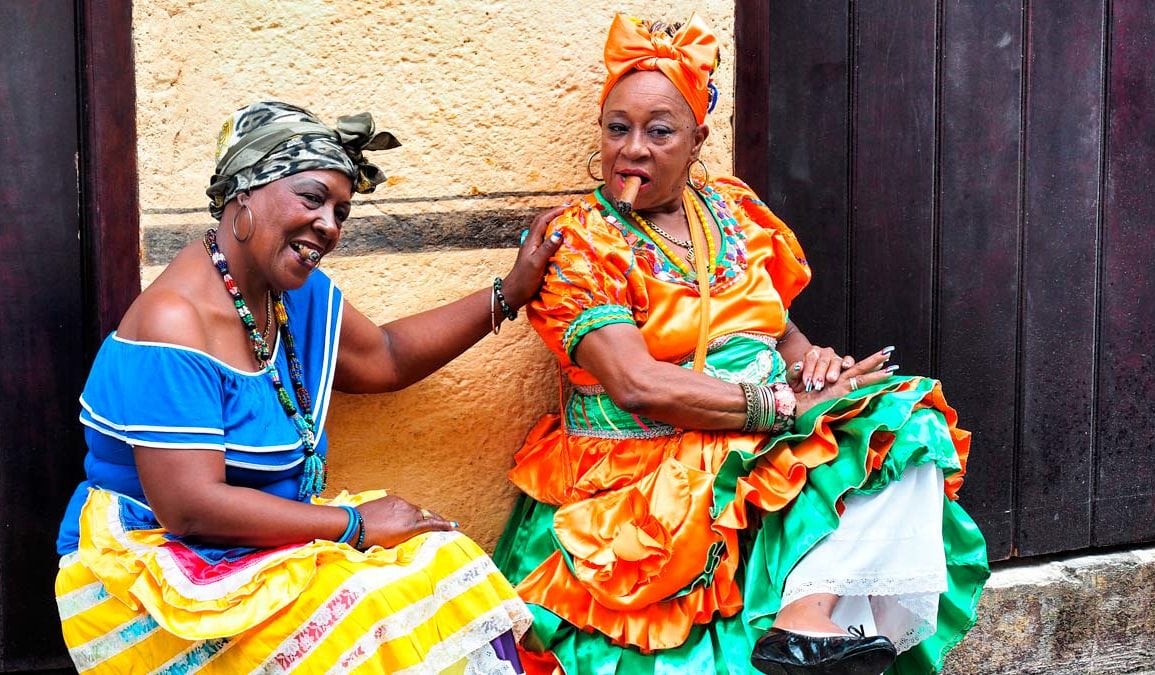
Most people travel to the Caribbean for a beach vacation, but Cuba has a totally different allure. The legends of Fidel and Che, Cuba’s communist order, the American embargo and the country’s isolation have turned Cuba today into a tourist magnet. People mostly come here to experience the Cuban way of life and to witness the history writing of Cuba. And sure, the dazzling beaches are the cherry on top.

So, it was the long pages of complaints about traveling around Cuba on the internet that really surprised me. People intentionally choose to experience Cuba for its differences, but also complain about it? Did they have a different expectation of Cuba?

It seemed to me that people didn’t have a realistic idea of what life in Cuba is like. So here, I want to address that. Like most things in life, there are two sides to a coin. Cuba has great beauty to offer, but it also has its downsides. It is neither the fairyland of happy dancing people as it is sometimes portrayed, nor is it a dark place where people are left to starve to death as others might try to frame it.

I have tried to represent the situation in Cuba as objectively as I can, based both on my observations and research. Not everything written here is the absolute truth, and there could be other, opposing observations for sure. If you have similar or differing viewpoints and information, we would love for you to contribute to this post by writing in the comments below.

Note: If you are reading this to prepare for your trip to Cuba, I would recommend two of our other blog posts just for that. Don’t plan anything without reading them, or you could wind up disappointed.

CUBA TRAVEL TIPS & BUDGET INFORMATION
https://www.bizevdeyokuz.com/en/cuba-travel-tips/

THINGS TO DO IN CUBA & IDEAL ITINERARY
https://www.bizevdeyokuz.com/en/places-to-visit-in-cuba-itinerary/

Let’s begin with one of the most debated questions we’ve seen.

Do Cubans today live in poverty?


The monthly wages would seem to suggest so. A translator makes $20 a month, and a doctor makes $30 a month. A 1.5-liter bottle of water costs $2, sometimes $1. It’s an inevitable fact of life in Cuba that most things are out of reach of the locals. But let’s stop here for a moment. Before we move on, we should make sure that we are on the same page in defining poverty.

What exactly does “poverty” mean? There are several definitions of poverty. UNESCO’s defines “absolute poverty .. http://www.unesco.org/new/en/social-and-human-sciences/themes/international-migration/glossary/poverty/ ” as difficulty obtaining basic needs such as fuel, medicine, clothes, water, food and rent. Cubans have houses and are given a ration every month that covers 40% of food products.

Conditions in Cuba today

Access to education and medical services is universal. Because the weather is hot, they don’t need fuel to keep themselves warm. The state also provides a subsidy for citizens to buy staples such as eggs, sugar and rice. The constitution ensures everyone has access to music and art, and going to see concerts or plays is either free or very cheap.

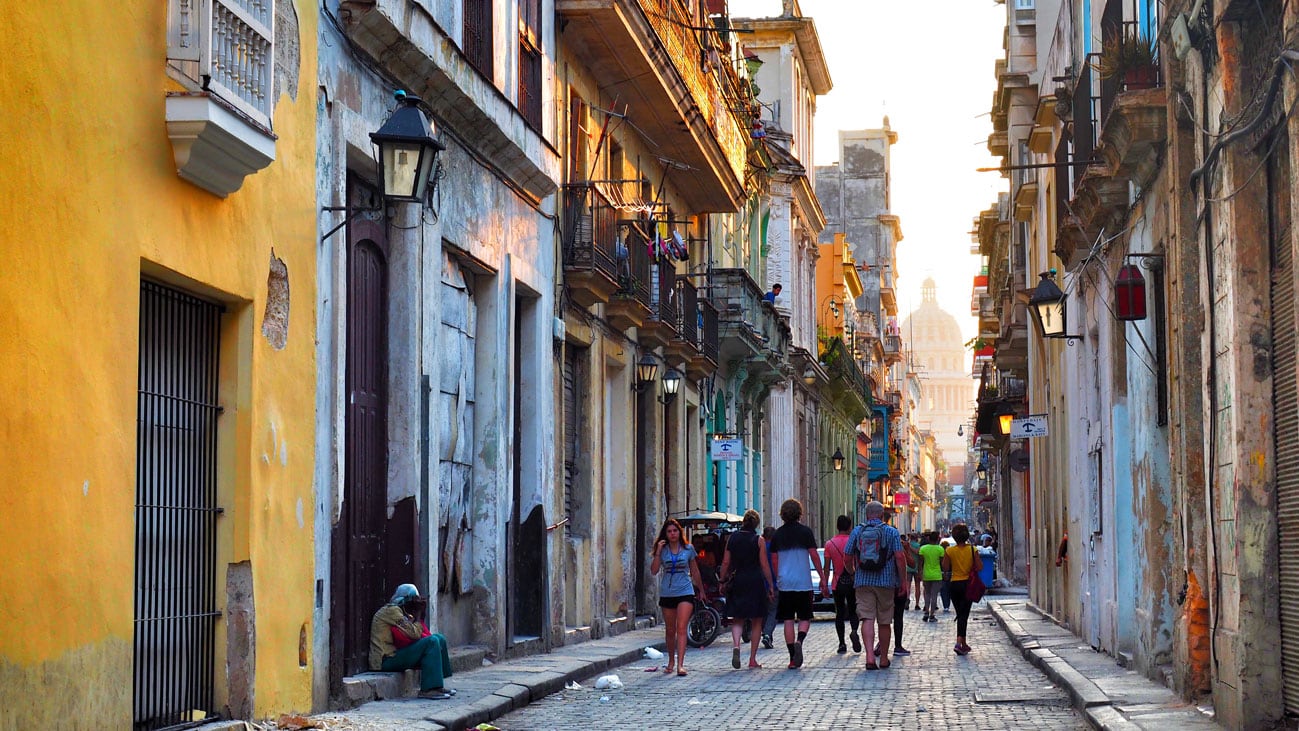
While Cuba doesn’t quite fit in with UNESCO’s definition of “poverty,” it doesn’t mean that the conditions of the country are ideal. Life in Cuba is expensive, and people are always looking for a way to make extra money. The houses are in a dilapidated state and the furniture inside is at least 30-40 years old.

The fact that possessions have to be shared with the state doesn’t help. For instance, you are a farmer, and you have 3-5 cows. You don’t have anything to eat, and you want to slaughter one of your livestock for food. However, according to the regime, you can’t because you would need the state’s permission as they have ownership rights over your animal.

The economy in Cuba today


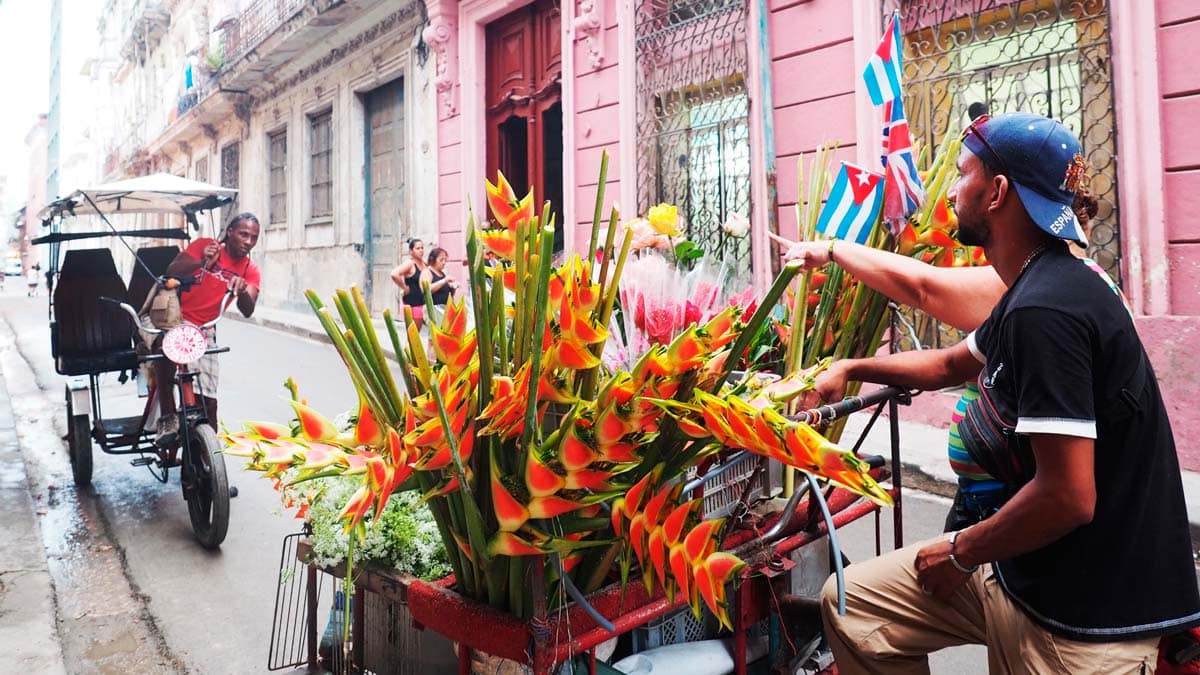
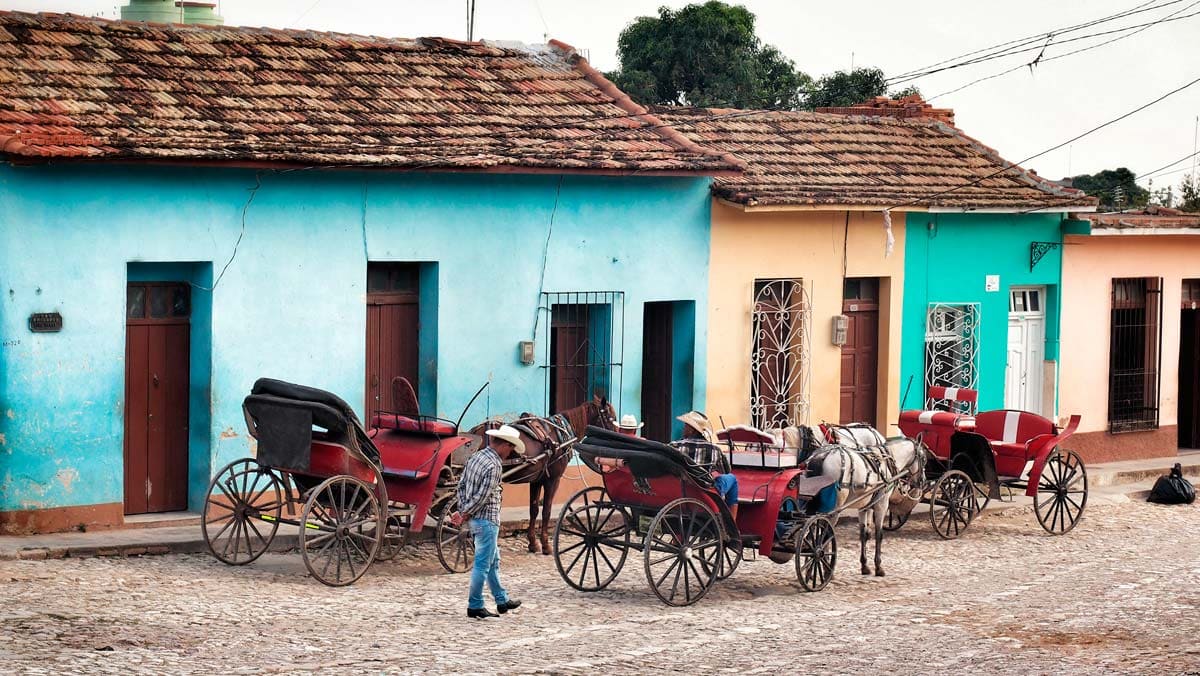
In Cuba today, especially outside big cities, people often use horse buggies to get around.

Cuba today has two official currencies – CUC used by tourists and Peso used by locals. 1 CUC equals 25 Pesos. The dependency of the locals on state subsidies for their basic needs has created an alternate economy, resulting in the need to have another currency for foreigners. As an example, a tourist at a store would be charged 2 CUC for water, while a local would get it for 15 Pesos, around 0.6 CUC.

A lot of people have turned their houses into homestays because it allows them to make a Cuban doctor’s monthly wage in a single night. This has changed not only day-to-day life in Cuba, but also has caused skilled workers such as nurses, doctors and teachers to leave their professions to pick up tourism. Some work two jobs. Don’t be surprised if your taxi driver turns out to be a doctor.

Before the revolution, Cuba Ranked 5th Per Capita GDP In The Northern Hemisphere


Seeing Cuba today, it’s hard to believe that life in Cuba used to be that good, but it’s true. Before the revolution, Cuba’s economy was doing really well. When America banned alcohol in the 1920s, Cuba became the supergiant’s “sin island” and attracted hordes of tourists and investment. However, this wealth was not dispersed equally.

The American mafia and their Cuba partners began making more and more money from its various business ventures, such as casinos, nightclubs, brothels and hotels. The growing discontent with this inequality was the thing that ignited the Cuban revolution. If you’d like to learn more about the revolution and what took place, then you should check out: The Cuban Revolution – Fidel Castro, Che Guevara and Communism.

[...]

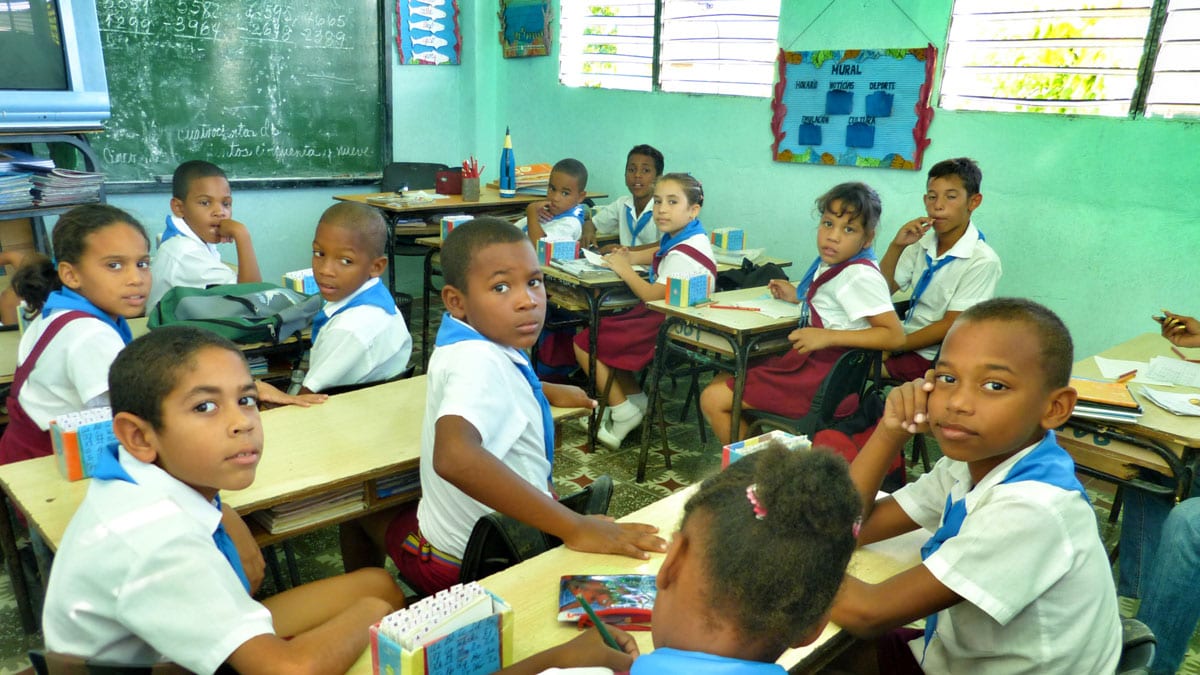
Cuba’s Education System


Photo: Flickr / Brainbitch

Here we’ll talk about one of the two most acclaimed achievements in Cuba today: education (the other is health care). It is one thing that has really affected life in Cuba overall. Cuba allocates 10% of its budget to education. Here is a summary of some of the advancements Cuba has made in education:

1. Before the revolution, Cuba’s literacy rate hovered somewhere between 36%-42%. It’s 99.8% in Cuba today, which is higher than Spain’s at 98.1%.

2. We are not talking about only literacy rates either. In a 1998 report by UNESCO, Cuban students scored an average of 350 points on a performance test, 100 points higher than the average score in all of Latin America. And this test was done during a time that corresponded with a bleak economic outlook in Cuba.

3. Students in Cuba today not only learn how to read and write, but also take creative classes in primary schools, such as theater and salsa.

4. There is one teacher for every 12 students.

5. Education is free. The government helps students by paying for their uniforms, but the students have to buy their own books.

6. The government has made sure an equal ratio of boys and girls attend school and ensured children in rural areas are also included.

7. Education is mandatory for children ages 6-16.

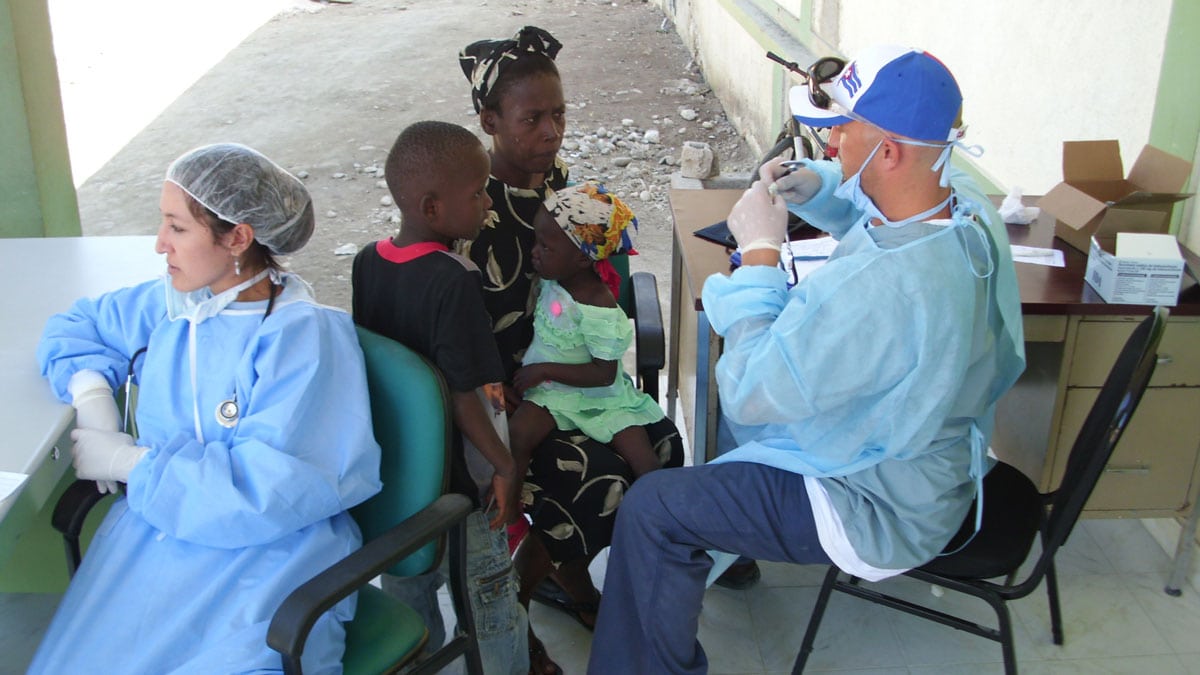
Medicine in Cuba


Photo: Flickr / Peoples World

Like education, health care is also free of charge. It’s hard to understand whether or not the health care system is good or not as there are diametrically opposed comments on this topic. Some say that Cuba’s health care system is more advanced than other countries, while others say the state of the hospitals in the country is poor.

Cuba is able to train doctors really well. In Cuba today, there are 627 doctors and 94 dentists per 100,000 people. Compare this to America, which has 225 doctors and 54 dentists per 100,000 people. However, another problem is the lack of infrastructure and medicine, which is largely due to the American embargo.

Cuban hospitals now have treatments for some specific illness like lung cancer. A lot of people from all around the world come to Cuba for treatment.

33 Comments

RB says:
12 March 2022 at 22:02

I was born in Cuba and left with my family when I was 13 years old. My family applied to leave Cuba when I was 10 years old. The same day my family applied to leave both my were fired from their jobs. That evening around 7pm the comité de defensa de la revolución CDR gathered all our neighbors in front of our house and threw eggs and garbage in front of our house for over an hour they called us traitors and insults and threats. The next day at school I was harassed by school administrators and from that day to the day we left (three years) I was constantly harassed by neighbors and school administrators and school mates.

Cuba would be the last place I would consider visiting. The communist government will treat you nicely as long as they have something to gain from you but if you think differently them they they will try to destroy you.

In what other country in the world would a government sponsored group treat a 10 year old like that, and for three long years? They are no different then the nazis. In fact, the Cuban security apparatus was organized and trained by the East German Stasi, which was the former gestapo in Germany. Stop being apologists for the Cuban system. There’s a reason why entire families try to flee Cuba using inner tubes and risk dying in the Florida straits.

Ruben says:
2 September 2021 at 06:01

There is no absolute truth.
Are you prepared for a trip to Cuba today? It doesn’t matter how many times you have been to Cuba, you never feel the true suffering of the people unless you are in their shoes. I only know Cubans are tired of this political system and they want change, freedom of speech and justice for all.

Jeroen Kant says:
15 July 2021 at 07:34

It’s amazing how people can visit a country run by a totalitarian regime. You stay in fancy resorts, sipping your Pina Coladas,eating lobsters and taking instagram photos (which basically are out of reach for the average Cuban) and somehow are able to say with a straight face that people are “happy” and it’s not that bad, as money is not that important….in my dictionary this is shear hypocrisy. It doesn’t matter how many times you have been to Cuba, you will never feel the true suffering of the proletariat because you can do things which are totally out of reach for the workers of the country. Imagine things are turned around and tourists coming to visit your country and are able to do and eat things which you can’t do………

Jerome camarda says:
9 May 2021 at 20:50

I travel in Cuba, Varadero and other places… Life seems ok to me. We are the ones that should question ourselves and the life we live in our countries.

Stella Miller says:
5 April 2021 at 06:24

Hi, my husband and I visited Cuba in 2017 and loved our time there. We stayed in a Casa Particular in old Havana and I spent a great deal of time on our balcony smiling and exchanging “ Ola’s“ with the locals and generally just watching Cuban life go by. Our hosts bent over backwards to to make our stay delightful and although they spoke very little English we were made to feel most welcome. We did have Guide and each day we were out and about with her. She was an architect working as a tour guide as there was not much work available in her field. Her married brother was a surgeon and her Mother a retired doctor and all lived together. Not sure whether she was truthful ( I’d like to think so) but she appeared to be happy with her life in Cuba . My overall impression was that we saw contentment with the system and much happiness on a day to day basis as we engaged with the locals on our evening forays around Old Havana and watched families spill out onto the streets each night to play board games and listen to music. I have no doubt that there are difficulties with day to day supplies we are accustomed to but maybe we could learn a lesson here that excess is just as damaging. I have just finished reading two fictional books by Chanel Cleeton, “When We Left Cuba” and “Next Year In Havana” which are based around the Revolution and current times and have found some wonderful memories of our trip as well as a further understanding of the difficulties Cuba has faced over the centuries being such a strategic island in the Caribbean. Would highly recommend visiting Cuba and experiencing a wonderful and colourful country.

Biz Evde Yokuz says:
6 April 2021 at 22:17

Hey Stella,
I think those who have some connection to the tourism industry are more content with their lives as even a day’s tip is usually the equivalent of a month’s salary. Makes a huge difference. However, I would also like to think that people are happy.

Jorge Lopez says:
20 December 2020 at 23:48

As a Cuban that left the Island in 1965 the island was in very good shape. The Casinos were the best thing that ever happened to Cuba. The only problem was Fulgencio Batista he was a dictator and abused his power. That made Castro fitting for change. Everyone helped Castro because they were tired of all the abuse of Batista. About the food; if you go to Havana you will not find food and if you live in Havana good lock standing in line sometimes the night before just to buy chicken wings. I think the Cubans are tired of this political system and want big change Democratic government and freedom of speech and liberty and justice for all.

Biz Evde Yokuz says:
29 December 2020 at 20:34

Thank you Jorge for the input.

Lynne says:
7 October 2020 at 00:15

People who think Cuba is exceptionally poor have obviously never traveled much. The “poverty” I saw in Cuba was no match for what I’ve seen in Nicaragua, India or even some parts of the U.S. Attempting to create a better life for every citizen of Cuba was no easy task; especially for a bunch of revolutionaries who knew how to fight but were not trained in how to create (or recreate) all the necessary infrastructures that make up a country’s entire system. Cuba’s revolution, in historical term, is very recent. In this sense, we’re discussing a very new country. I have met Cubans within their own country, as well as in the U.S., Canada, Spain (where I now live) and Great Britain. Not one of them had a bad thing to say about their country; at the same time, they recognized the difficulties and struggles faced by such a new and growing country. Kudos to the Cubans! It should also be recognized that much of the economic disaster in Cuba was very deliberately brought about by the actions of the U.S. government. Let’s not forget that it was the U.S. government’s past sabotaging of Cuba’s vital sugar crop that forced Castro to accept help from the Soviets (who did a mighty good job of seducing Fidel!) in the first place. The U.S. government has a lot to answer for and it’s history in the Latin American countries was (and probably continues to be) utterly deplorable.

https://www.bizevdeyokuz.com/en/life-in-cuba-today/

See also:

The Right and Wrong of the Monroe Doctrine
https://investorshub.advfn.com/boards/read_msg.aspx?message_id=168159272