



 AI
AI








Wednesday, March 23, 2022 5:55:24 PM
60 year US embargo - LIFE IN CUBA TODAY
"Murdoch is a scoundrel of the lowest order. .. Think of it. .. He jumped on the Obama bandwagon cuz Obama
was virtually a lay down misere. .. Now he slimes back to his cold heart extremist, conservative roots, in
encouraging dangerous, inflammatory right wing lies. .. He doesn't care. Anything to make a buck.
[...]
Figuring out how News Corp. arrives at its taxes is difficult because of the sheer sprawl and complexity of the company. That may be, as some analysts have suggested, the very reason for the company's convoluted structure. News Corp.'s organizational chart consists of no less than 789 business units incorporated in 52 countries, including Mauritius, Fiji and even Cuba. A simple one-line listing for each operation requires 10 pages of small type in News Corp.'s annual report."
There is no U.S. embargo on Saudi Arabia and other brutal, non-democratic
countries. Isn't 60 years a long enough sentence for the Cuban people?
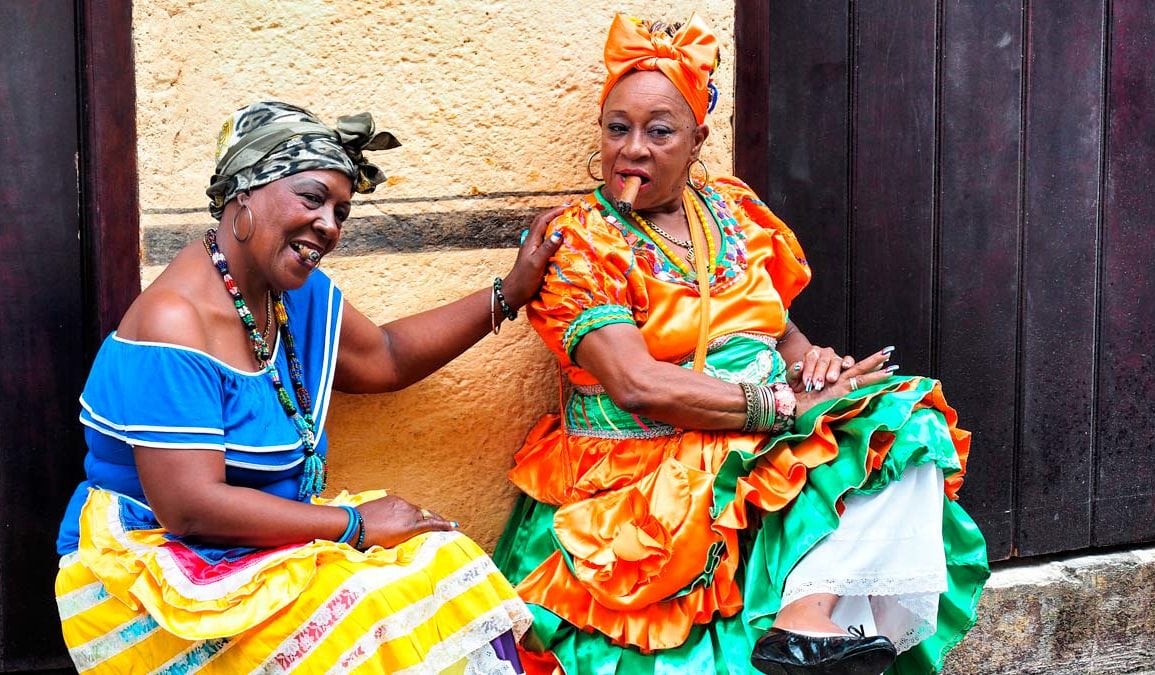
Biz Evde Yokuz·Cuba
Most people travel to the Caribbean for a beach vacation, but Cuba has a totally different allure. The legends of Fidel and Che, Cuba’s communist order, the American embargo and the country’s isolation have turned Cuba today into a tourist magnet. People mostly come here to experience the Cuban way of life and to witness the history writing of Cuba. And sure, the dazzling beaches are the cherry on top.
So, it was the long pages of complaints about traveling around Cuba on the internet that really surprised me. People intentionally choose to experience Cuba for its differences, but also complain about it? Did they have a different expectation of Cuba?
It seemed to me that people didn’t have a realistic idea of what life in Cuba is like. So here, I want to address that. Like most things in life, there are two sides to a coin. Cuba has great beauty to offer, but it also has its downsides. It is neither the fairyland of happy dancing people as it is sometimes portrayed, nor is it a dark place where people are left to starve to death as others might try to frame it.
I have tried to represent the situation in Cuba as objectively as I can, based both on my observations and research. Not everything written here is the absolute truth, and there could be other, opposing observations for sure. If you have similar or differing viewpoints and information, we would love for you to contribute to this post by writing in the comments below.
Note: If you are reading this to prepare for your trip to Cuba, I would recommend two of our other blog posts just for that. Don’t plan anything without reading them, or you could wind up disappointed.
CUBA TRAVEL TIPS & BUDGET INFORMATION
https://www.bizevdeyokuz.com/en/cuba-travel-tips/
THINGS TO DO IN CUBA & IDEAL ITINERARY
https://www.bizevdeyokuz.com/en/places-to-visit-in-cuba-itinerary/
Let’s begin with one of the most debated questions we’ve seen.
Do Cubans today live in poverty?
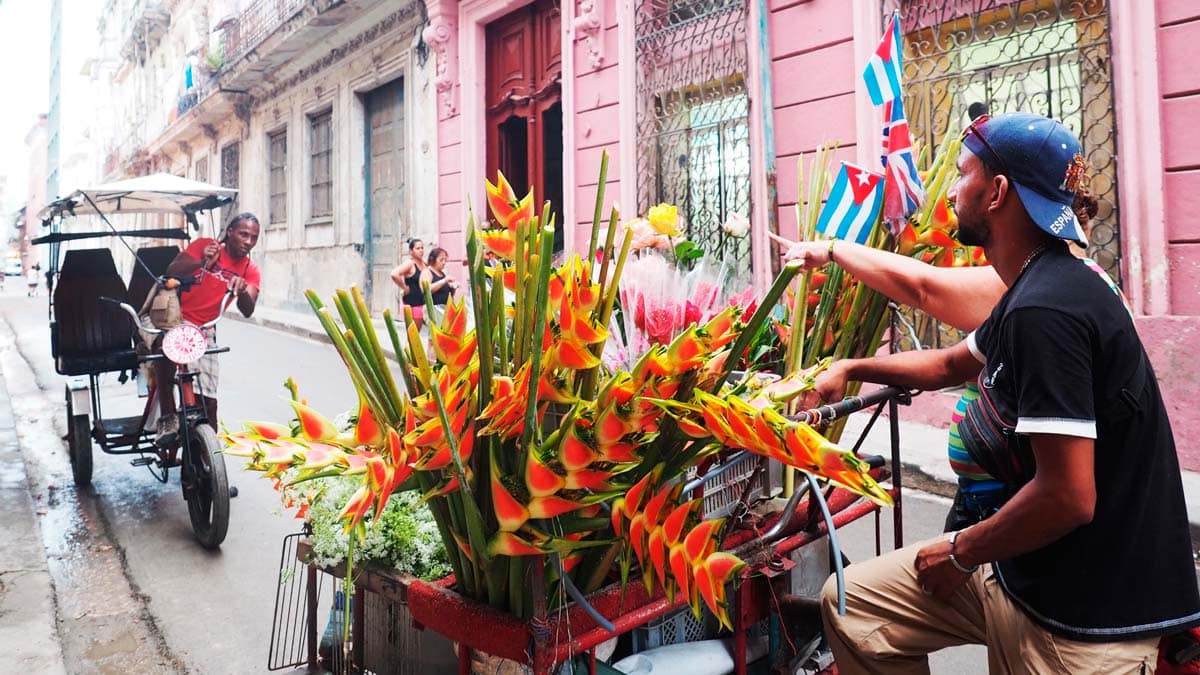
The monthly wages would seem to suggest so. A translator makes $20 a month, and a doctor makes $30 a month. A 1.5-liter bottle of water costs $2, sometimes $1. It’s an inevitable fact of life in Cuba that most things are out of reach of the locals. But let’s stop here for a moment. Before we move on, we should make sure that we are on the same page in defining poverty.
What exactly does “poverty” mean? There are several definitions of poverty. UNESCO’s defines “absolute poverty .. http://www.unesco.org/new/en/social-and-human-sciences/themes/international-migration/glossary/poverty/ ” as difficulty obtaining basic needs such as fuel, medicine, clothes, water, food and rent. Cubans have houses and are given a ration every month that covers 40% of food products.
Conditions in Cuba today
Access to education and medical services is universal. Because the weather is hot, they don’t need fuel to keep themselves warm. The state also provides a subsidy for citizens to buy staples such as eggs, sugar and rice. The constitution ensures everyone has access to music and art, and going to see concerts or plays is either free or very cheap.
While Cuba doesn’t quite fit in with UNESCO’s definition of “poverty,” it doesn’t mean that the conditions of the country are ideal. Life in Cuba is expensive, and people are always looking for a way to make extra money. The houses are in a dilapidated state and the furniture inside is at least 30-40 years old.
The fact that possessions have to be shared with the state doesn’t help. For instance, you are a farmer, and you have 3-5 cows. You don’t have anything to eat, and you want to slaughter one of your livestock for food. However, according to the regime, you can’t because you would need the state’s permission as they have ownership rights over your animal.
The economy in Cuba today
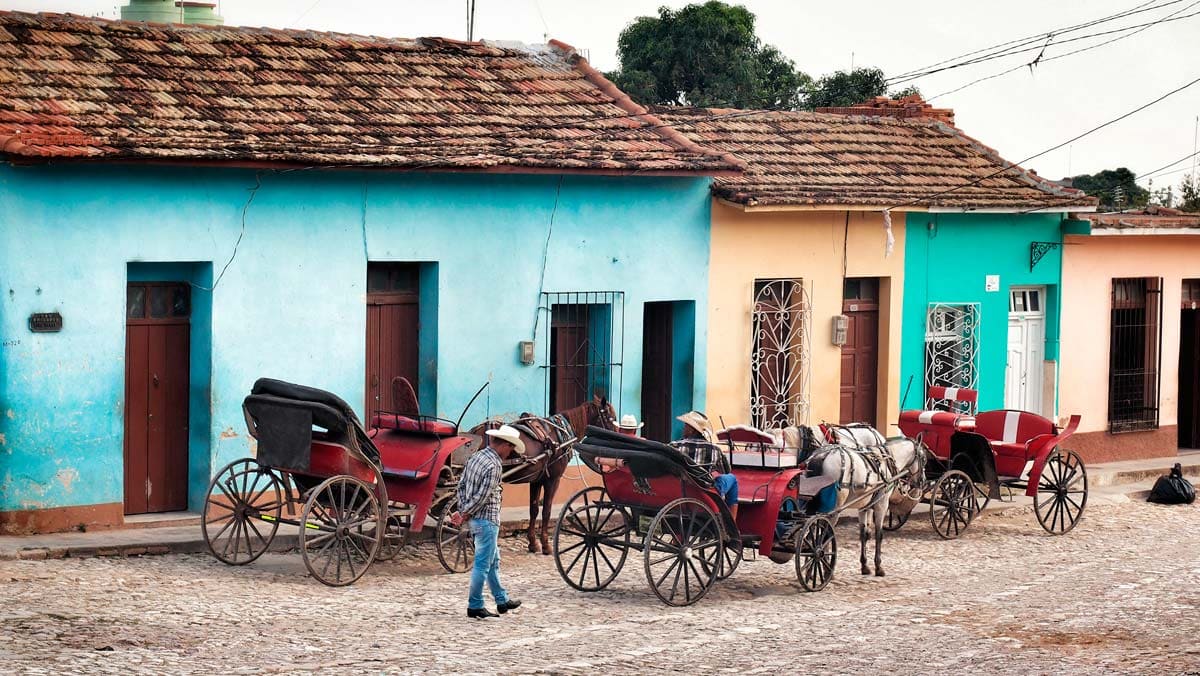
In Cuba today, especially outside big cities, people often use horse buggies to get around.
Cuba today has two official currencies – CUC used by tourists and Peso used by locals. 1 CUC equals 25 Pesos. The dependency of the locals on state subsidies for their basic needs has created an alternate economy, resulting in the need to have another currency for foreigners. As an example, a tourist at a store would be charged 2 CUC for water, while a local would get it for 15 Pesos, around 0.6 CUC.
A lot of people have turned their houses into homestays because it allows them to make a Cuban doctor’s monthly wage in a single night. This has changed not only day-to-day life in Cuba, but also has caused skilled workers such as nurses, doctors and teachers to leave their professions to pick up tourism. Some work two jobs. Don’t be surprised if your taxi driver turns out to be a doctor.
Before the revolution, Cuba Ranked 5th Per Capita GDP In The Northern Hemisphere
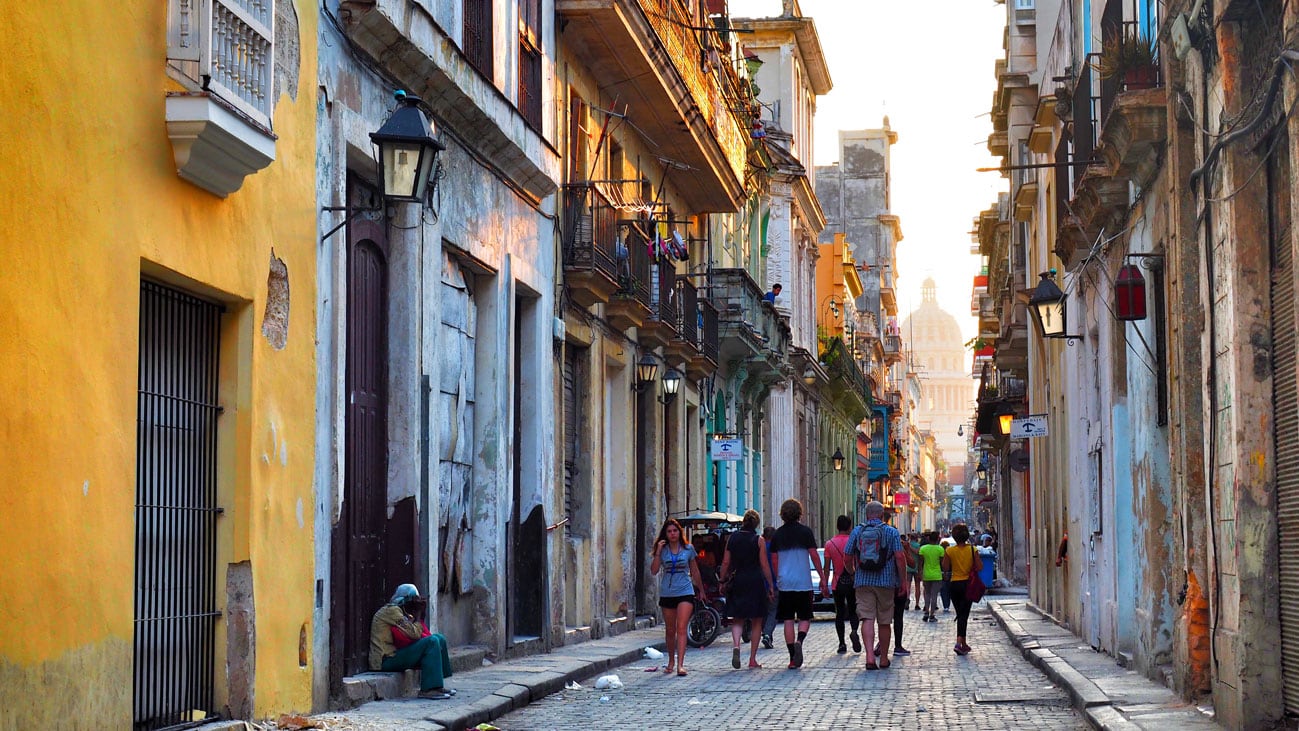
Seeing Cuba today, it’s hard to believe that life in Cuba used to be that good, but it’s true. Before the revolution, Cuba’s economy was doing really well. When America banned alcohol in the 1920s, Cuba became the supergiant’s “sin island” and attracted hordes of tourists and investment. However, this wealth was not dispersed equally.
The American mafia and their Cuba partners began making more and more money from its various business ventures, such as casinos, nightclubs, brothels and hotels. The growing discontent with this inequality was the thing that ignited the Cuban revolution. If you’d like to learn more about the revolution and what took place, then you should check out: The Cuban Revolution – Fidel Castro, Che Guevara and Communism.
[...]
Cuba’s Education System
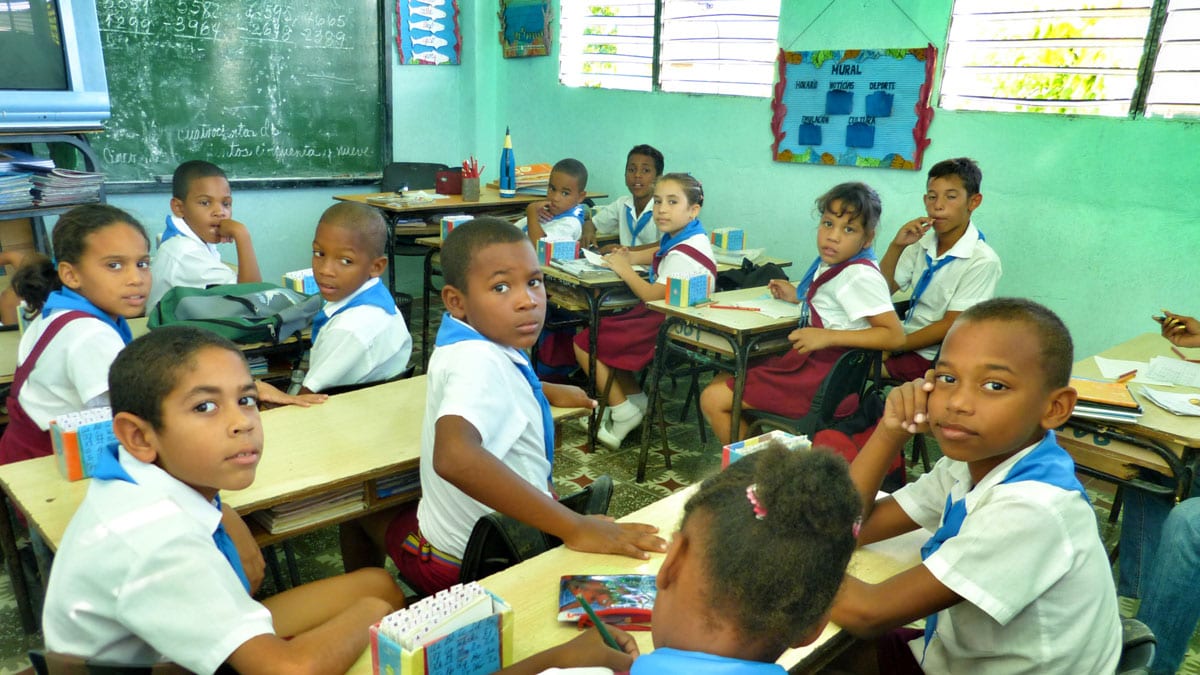
Photo: Flickr / Brainbitch
Here we’ll talk about one of the two most acclaimed achievements in Cuba today: education (the other is health care). It is one thing that has really affected life in Cuba overall. Cuba allocates 10% of its budget to education. Here is a summary of some of the advancements Cuba has made in education:
1. Before the revolution, Cuba’s literacy rate hovered somewhere between 36%-42%. It’s 99.8% in Cuba today, which is higher than Spain’s at 98.1%.
2. We are not talking about only literacy rates either. In a 1998 report by UNESCO, Cuban students scored an average of 350 points on a performance test, 100 points higher than the average score in all of Latin America. And this test was done during a time that corresponded with a bleak economic outlook in Cuba.
3. Students in Cuba today not only learn how to read and write, but also take creative classes in primary schools, such as theater and salsa.
4. There is one teacher for every 12 students.
5. Education is free. The government helps students by paying for their uniforms, but the students have to buy their own books.
6. The government has made sure an equal ratio of boys and girls attend school and ensured children in rural areas are also included.
7. Education is mandatory for children ages 6-16.
Medicine in Cuba
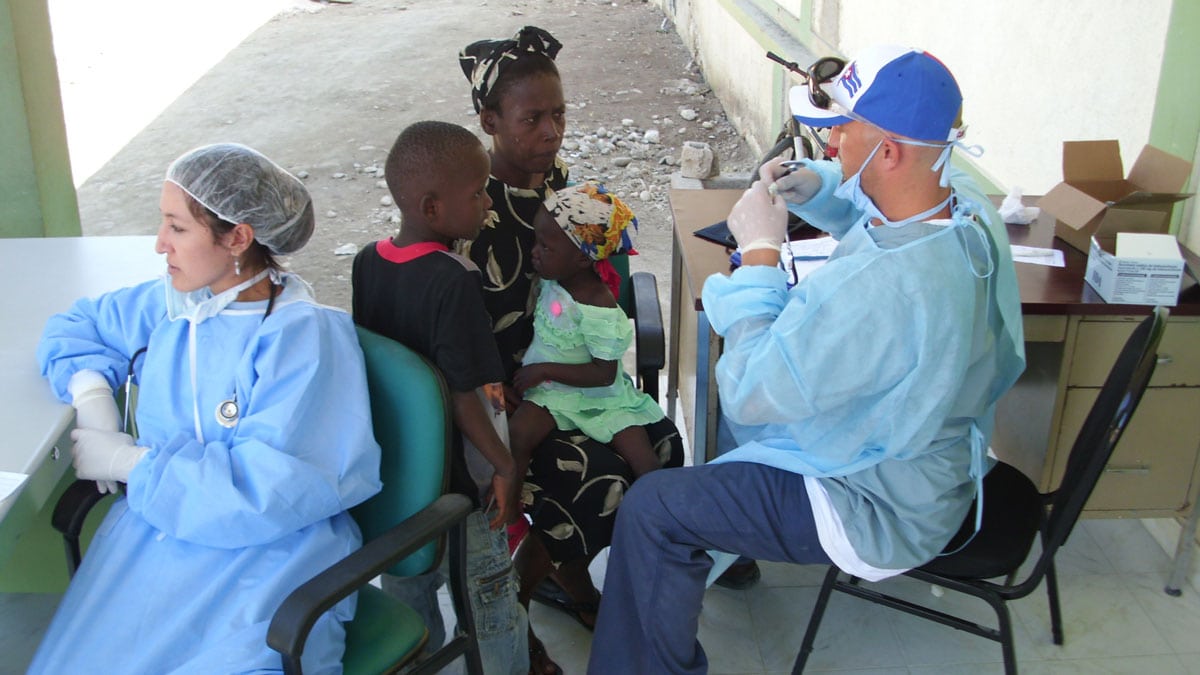
Photo: Flickr / Peoples World
Like education, health care is also free of charge. It’s hard to understand whether or not the health care system is good or not as there are diametrically opposed comments on this topic. Some say that Cuba’s health care system is more advanced than other countries, while others say the state of the hospitals in the country is poor.
Cuba is able to train doctors really well. In Cuba today, there are 627 doctors and 94 dentists per 100,000 people. Compare this to America, which has 225 doctors and 54 dentists per 100,000 people. However, another problem is the lack of infrastructure and medicine, which is largely due to the American embargo.
Cuban hospitals now have treatments for some specific illness like lung cancer. A lot of people from all around the world come to Cuba for treatment.
33 Comments
RB says:
12 March 2022 at 22:02
I was born in Cuba and left with my family when I was 13 years old. My family applied to leave Cuba when I was 10 years old. The same day my family applied to leave both my were fired from their jobs. That evening around 7pm the comité de defensa de la revolución CDR gathered all our neighbors in front of our house and threw eggs and garbage in front of our house for over an hour they called us traitors and insults and threats. The next day at school I was harassed by school administrators and from that day to the day we left (three years) I was constantly harassed by neighbors and school administrators and school mates.
Cuba would be the last place I would consider visiting. The communist government will treat you nicely as long as they have something to gain from you but if you think differently them they they will try to destroy you.
In what other country in the world would a government sponsored group treat a 10 year old like that, and for three long years? They are no different then the nazis. In fact, the Cuban security apparatus was organized and trained by the East German Stasi, which was the former gestapo in Germany. Stop being apologists for the Cuban system. There’s a reason why entire families try to flee Cuba using inner tubes and risk dying in the Florida straits.
Ruben says:
2 September 2021 at 06:01
There is no absolute truth.
Are you prepared for a trip to Cuba today? It doesn’t matter how many times you have been to Cuba, you never feel the true suffering of the people unless you are in their shoes. I only know Cubans are tired of this political system and they want change, freedom of speech and justice for all.
Jeroen Kant says:
15 July 2021 at 07:34
It’s amazing how people can visit a country run by a totalitarian regime. You stay in fancy resorts, sipping your Pina Coladas,eating lobsters and taking instagram photos (which basically are out of reach for the average Cuban) and somehow are able to say with a straight face that people are “happy” and it’s not that bad, as money is not that important….in my dictionary this is shear hypocrisy. It doesn’t matter how many times you have been to Cuba, you will never feel the true suffering of the proletariat because you can do things which are totally out of reach for the workers of the country. Imagine things are turned around and tourists coming to visit your country and are able to do and eat things which you can’t do………
Jerome camarda says:
9 May 2021 at 20:50
I travel in Cuba, Varadero and other places… Life seems ok to me. We are the ones that should question ourselves and the life we live in our countries.
Stella Miller says:
5 April 2021 at 06:24
Hi, my husband and I visited Cuba in 2017 and loved our time there. We stayed in a Casa Particular in old Havana and I spent a great deal of time on our balcony smiling and exchanging “ Ola’s“ with the locals and generally just watching Cuban life go by. Our hosts bent over backwards to to make our stay delightful and although they spoke very little English we were made to feel most welcome. We did have Guide and each day we were out and about with her. She was an architect working as a tour guide as there was not much work available in her field. Her married brother was a surgeon and her Mother a retired doctor and all lived together. Not sure whether she was truthful ( I’d like to think so) but she appeared to be happy with her life in Cuba . My overall impression was that we saw contentment with the system and much happiness on a day to day basis as we engaged with the locals on our evening forays around Old Havana and watched families spill out onto the streets each night to play board games and listen to music. I have no doubt that there are difficulties with day to day supplies we are accustomed to but maybe we could learn a lesson here that excess is just as damaging. I have just finished reading two fictional books by Chanel Cleeton, “When We Left Cuba” and “Next Year In Havana” which are based around the Revolution and current times and have found some wonderful memories of our trip as well as a further understanding of the difficulties Cuba has faced over the centuries being such a strategic island in the Caribbean. Would highly recommend visiting Cuba and experiencing a wonderful and colourful country.
Biz Evde Yokuz says:
6 April 2021 at 22:17
Hey Stella,
I think those who have some connection to the tourism industry are more content with their lives as even a day’s tip is usually the equivalent of a month’s salary. Makes a huge difference. However, I would also like to think that people are happy.
Jorge Lopez says:
20 December 2020 at 23:48
As a Cuban that left the Island in 1965 the island was in very good shape. The Casinos were the best thing that ever happened to Cuba. The only problem was Fulgencio Batista he was a dictator and abused his power. That made Castro fitting for change. Everyone helped Castro because they were tired of all the abuse of Batista. About the food; if you go to Havana you will not find food and if you live in Havana good lock standing in line sometimes the night before just to buy chicken wings. I think the Cubans are tired of this political system and want big change Democratic government and freedom of speech and liberty and justice for all.
Biz Evde Yokuz says:
29 December 2020 at 20:34
Thank you Jorge for the input.
Lynne says:
7 October 2020 at 00:15
People who think Cuba is exceptionally poor have obviously never traveled much. The “poverty” I saw in Cuba was no match for what I’ve seen in Nicaragua, India or even some parts of the U.S. Attempting to create a better life for every citizen of Cuba was no easy task; especially for a bunch of revolutionaries who knew how to fight but were not trained in how to create (or recreate) all the necessary infrastructures that make up a country’s entire system. Cuba’s revolution, in historical term, is very recent. In this sense, we’re discussing a very new country. I have met Cubans within their own country, as well as in the U.S., Canada, Spain (where I now live) and Great Britain. Not one of them had a bad thing to say about their country; at the same time, they recognized the difficulties and struggles faced by such a new and growing country. Kudos to the Cubans! It should also be recognized that much of the economic disaster in Cuba was very deliberately brought about by the actions of the U.S. government. Let’s not forget that it was the U.S. government’s past sabotaging of Cuba’s vital sugar crop that forced Castro to accept help from the Soviets (who did a mighty good job of seducing Fidel!) in the first place. The U.S. government has a lot to answer for and it’s history in the Latin American countries was (and probably continues to be) utterly deplorable.
https://www.bizevdeyokuz.com/en/life-in-cuba-today/
See also:
The Right and Wrong of the Monroe Doctrine
https://investorshub.advfn.com/boards/read_msg.aspx?message_id=168159272
"Murdoch is a scoundrel of the lowest order. .. Think of it. .. He jumped on the Obama bandwagon cuz Obama
was virtually a lay down misere. .. Now he slimes back to his cold heart extremist, conservative roots, in
encouraging dangerous, inflammatory right wing lies. .. He doesn't care. Anything to make a buck.
[...]
Figuring out how News Corp. arrives at its taxes is difficult because of the sheer sprawl and complexity of the company. That may be, as some analysts have suggested, the very reason for the company's convoluted structure. News Corp.'s organizational chart consists of no less than 789 business units incorporated in 52 countries, including Mauritius, Fiji and even Cuba. A simple one-line listing for each operation requires 10 pages of small type in News Corp.'s annual report."
There is no U.S. embargo on Saudi Arabia and other brutal, non-democratic
countries. Isn't 60 years a long enough sentence for the Cuban people?
Biz Evde Yokuz·Cuba
Most people travel to the Caribbean for a beach vacation, but Cuba has a totally different allure. The legends of Fidel and Che, Cuba’s communist order, the American embargo and the country’s isolation have turned Cuba today into a tourist magnet. People mostly come here to experience the Cuban way of life and to witness the history writing of Cuba. And sure, the dazzling beaches are the cherry on top.
So, it was the long pages of complaints about traveling around Cuba on the internet that really surprised me. People intentionally choose to experience Cuba for its differences, but also complain about it? Did they have a different expectation of Cuba?
It seemed to me that people didn’t have a realistic idea of what life in Cuba is like. So here, I want to address that. Like most things in life, there are two sides to a coin. Cuba has great beauty to offer, but it also has its downsides. It is neither the fairyland of happy dancing people as it is sometimes portrayed, nor is it a dark place where people are left to starve to death as others might try to frame it.
I have tried to represent the situation in Cuba as objectively as I can, based both on my observations and research. Not everything written here is the absolute truth, and there could be other, opposing observations for sure. If you have similar or differing viewpoints and information, we would love for you to contribute to this post by writing in the comments below.
Note: If you are reading this to prepare for your trip to Cuba, I would recommend two of our other blog posts just for that. Don’t plan anything without reading them, or you could wind up disappointed.
CUBA TRAVEL TIPS & BUDGET INFORMATION
https://www.bizevdeyokuz.com/en/cuba-travel-tips/
THINGS TO DO IN CUBA & IDEAL ITINERARY
https://www.bizevdeyokuz.com/en/places-to-visit-in-cuba-itinerary/
Let’s begin with one of the most debated questions we’ve seen.
Do Cubans today live in poverty?
The monthly wages would seem to suggest so. A translator makes $20 a month, and a doctor makes $30 a month. A 1.5-liter bottle of water costs $2, sometimes $1. It’s an inevitable fact of life in Cuba that most things are out of reach of the locals. But let’s stop here for a moment. Before we move on, we should make sure that we are on the same page in defining poverty.
What exactly does “poverty” mean? There are several definitions of poverty. UNESCO’s defines “absolute poverty .. http://www.unesco.org/new/en/social-and-human-sciences/themes/international-migration/glossary/poverty/ ” as difficulty obtaining basic needs such as fuel, medicine, clothes, water, food and rent. Cubans have houses and are given a ration every month that covers 40% of food products.
Conditions in Cuba today
Access to education and medical services is universal. Because the weather is hot, they don’t need fuel to keep themselves warm. The state also provides a subsidy for citizens to buy staples such as eggs, sugar and rice. The constitution ensures everyone has access to music and art, and going to see concerts or plays is either free or very cheap.
While Cuba doesn’t quite fit in with UNESCO’s definition of “poverty,” it doesn’t mean that the conditions of the country are ideal. Life in Cuba is expensive, and people are always looking for a way to make extra money. The houses are in a dilapidated state and the furniture inside is at least 30-40 years old.
The fact that possessions have to be shared with the state doesn’t help. For instance, you are a farmer, and you have 3-5 cows. You don’t have anything to eat, and you want to slaughter one of your livestock for food. However, according to the regime, you can’t because you would need the state’s permission as they have ownership rights over your animal.
The economy in Cuba today
In Cuba today, especially outside big cities, people often use horse buggies to get around.
Cuba today has two official currencies – CUC used by tourists and Peso used by locals. 1 CUC equals 25 Pesos. The dependency of the locals on state subsidies for their basic needs has created an alternate economy, resulting in the need to have another currency for foreigners. As an example, a tourist at a store would be charged 2 CUC for water, while a local would get it for 15 Pesos, around 0.6 CUC.
A lot of people have turned their houses into homestays because it allows them to make a Cuban doctor’s monthly wage in a single night. This has changed not only day-to-day life in Cuba, but also has caused skilled workers such as nurses, doctors and teachers to leave their professions to pick up tourism. Some work two jobs. Don’t be surprised if your taxi driver turns out to be a doctor.
Before the revolution, Cuba Ranked 5th Per Capita GDP In The Northern Hemisphere
Seeing Cuba today, it’s hard to believe that life in Cuba used to be that good, but it’s true. Before the revolution, Cuba’s economy was doing really well. When America banned alcohol in the 1920s, Cuba became the supergiant’s “sin island” and attracted hordes of tourists and investment. However, this wealth was not dispersed equally.
The American mafia and their Cuba partners began making more and more money from its various business ventures, such as casinos, nightclubs, brothels and hotels. The growing discontent with this inequality was the thing that ignited the Cuban revolution. If you’d like to learn more about the revolution and what took place, then you should check out: The Cuban Revolution – Fidel Castro, Che Guevara and Communism.
[...]
Cuba’s Education System
Photo: Flickr / Brainbitch
Here we’ll talk about one of the two most acclaimed achievements in Cuba today: education (the other is health care). It is one thing that has really affected life in Cuba overall. Cuba allocates 10% of its budget to education. Here is a summary of some of the advancements Cuba has made in education:
1. Before the revolution, Cuba’s literacy rate hovered somewhere between 36%-42%. It’s 99.8% in Cuba today, which is higher than Spain’s at 98.1%.
2. We are not talking about only literacy rates either. In a 1998 report by UNESCO, Cuban students scored an average of 350 points on a performance test, 100 points higher than the average score in all of Latin America. And this test was done during a time that corresponded with a bleak economic outlook in Cuba.
3. Students in Cuba today not only learn how to read and write, but also take creative classes in primary schools, such as theater and salsa.
4. There is one teacher for every 12 students.
5. Education is free. The government helps students by paying for their uniforms, but the students have to buy their own books.
6. The government has made sure an equal ratio of boys and girls attend school and ensured children in rural areas are also included.
7. Education is mandatory for children ages 6-16.
Medicine in Cuba
Photo: Flickr / Peoples World
Like education, health care is also free of charge. It’s hard to understand whether or not the health care system is good or not as there are diametrically opposed comments on this topic. Some say that Cuba’s health care system is more advanced than other countries, while others say the state of the hospitals in the country is poor.
Cuba is able to train doctors really well. In Cuba today, there are 627 doctors and 94 dentists per 100,000 people. Compare this to America, which has 225 doctors and 54 dentists per 100,000 people. However, another problem is the lack of infrastructure and medicine, which is largely due to the American embargo.
Cuban hospitals now have treatments for some specific illness like lung cancer. A lot of people from all around the world come to Cuba for treatment.
33 Comments
RB says:
12 March 2022 at 22:02
I was born in Cuba and left with my family when I was 13 years old. My family applied to leave Cuba when I was 10 years old. The same day my family applied to leave both my were fired from their jobs. That evening around 7pm the comité de defensa de la revolución CDR gathered all our neighbors in front of our house and threw eggs and garbage in front of our house for over an hour they called us traitors and insults and threats. The next day at school I was harassed by school administrators and from that day to the day we left (three years) I was constantly harassed by neighbors and school administrators and school mates.
Cuba would be the last place I would consider visiting. The communist government will treat you nicely as long as they have something to gain from you but if you think differently them they they will try to destroy you.
In what other country in the world would a government sponsored group treat a 10 year old like that, and for three long years? They are no different then the nazis. In fact, the Cuban security apparatus was organized and trained by the East German Stasi, which was the former gestapo in Germany. Stop being apologists for the Cuban system. There’s a reason why entire families try to flee Cuba using inner tubes and risk dying in the Florida straits.
Ruben says:
2 September 2021 at 06:01
There is no absolute truth.
Are you prepared for a trip to Cuba today? It doesn’t matter how many times you have been to Cuba, you never feel the true suffering of the people unless you are in their shoes. I only know Cubans are tired of this political system and they want change, freedom of speech and justice for all.
Jeroen Kant says:
15 July 2021 at 07:34
It’s amazing how people can visit a country run by a totalitarian regime. You stay in fancy resorts, sipping your Pina Coladas,eating lobsters and taking instagram photos (which basically are out of reach for the average Cuban) and somehow are able to say with a straight face that people are “happy” and it’s not that bad, as money is not that important….in my dictionary this is shear hypocrisy. It doesn’t matter how many times you have been to Cuba, you will never feel the true suffering of the proletariat because you can do things which are totally out of reach for the workers of the country. Imagine things are turned around and tourists coming to visit your country and are able to do and eat things which you can’t do………
Jerome camarda says:
9 May 2021 at 20:50
I travel in Cuba, Varadero and other places… Life seems ok to me. We are the ones that should question ourselves and the life we live in our countries.
Stella Miller says:
5 April 2021 at 06:24
Hi, my husband and I visited Cuba in 2017 and loved our time there. We stayed in a Casa Particular in old Havana and I spent a great deal of time on our balcony smiling and exchanging “ Ola’s“ with the locals and generally just watching Cuban life go by. Our hosts bent over backwards to to make our stay delightful and although they spoke very little English we were made to feel most welcome. We did have Guide and each day we were out and about with her. She was an architect working as a tour guide as there was not much work available in her field. Her married brother was a surgeon and her Mother a retired doctor and all lived together. Not sure whether she was truthful ( I’d like to think so) but she appeared to be happy with her life in Cuba . My overall impression was that we saw contentment with the system and much happiness on a day to day basis as we engaged with the locals on our evening forays around Old Havana and watched families spill out onto the streets each night to play board games and listen to music. I have no doubt that there are difficulties with day to day supplies we are accustomed to but maybe we could learn a lesson here that excess is just as damaging. I have just finished reading two fictional books by Chanel Cleeton, “When We Left Cuba” and “Next Year In Havana” which are based around the Revolution and current times and have found some wonderful memories of our trip as well as a further understanding of the difficulties Cuba has faced over the centuries being such a strategic island in the Caribbean. Would highly recommend visiting Cuba and experiencing a wonderful and colourful country.
Biz Evde Yokuz says:
6 April 2021 at 22:17
Hey Stella,
I think those who have some connection to the tourism industry are more content with their lives as even a day’s tip is usually the equivalent of a month’s salary. Makes a huge difference. However, I would also like to think that people are happy.
Jorge Lopez says:
20 December 2020 at 23:48
As a Cuban that left the Island in 1965 the island was in very good shape. The Casinos were the best thing that ever happened to Cuba. The only problem was Fulgencio Batista he was a dictator and abused his power. That made Castro fitting for change. Everyone helped Castro because they were tired of all the abuse of Batista. About the food; if you go to Havana you will not find food and if you live in Havana good lock standing in line sometimes the night before just to buy chicken wings. I think the Cubans are tired of this political system and want big change Democratic government and freedom of speech and liberty and justice for all.
Biz Evde Yokuz says:
29 December 2020 at 20:34
Thank you Jorge for the input.
Lynne says:
7 October 2020 at 00:15
People who think Cuba is exceptionally poor have obviously never traveled much. The “poverty” I saw in Cuba was no match for what I’ve seen in Nicaragua, India or even some parts of the U.S. Attempting to create a better life for every citizen of Cuba was no easy task; especially for a bunch of revolutionaries who knew how to fight but were not trained in how to create (or recreate) all the necessary infrastructures that make up a country’s entire system. Cuba’s revolution, in historical term, is very recent. In this sense, we’re discussing a very new country. I have met Cubans within their own country, as well as in the U.S., Canada, Spain (where I now live) and Great Britain. Not one of them had a bad thing to say about their country; at the same time, they recognized the difficulties and struggles faced by such a new and growing country. Kudos to the Cubans! It should also be recognized that much of the economic disaster in Cuba was very deliberately brought about by the actions of the U.S. government. Let’s not forget that it was the U.S. government’s past sabotaging of Cuba’s vital sugar crop that forced Castro to accept help from the Soviets (who did a mighty good job of seducing Fidel!) in the first place. The U.S. government has a lot to answer for and it’s history in the Latin American countries was (and probably continues to be) utterly deplorable.
https://www.bizevdeyokuz.com/en/life-in-cuba-today/
See also:
The Right and Wrong of the Monroe Doctrine
https://investorshub.advfn.com/boards/read_msg.aspx?message_id=168159272
It was Plato who said, “He, O men, is the wisest, who like Socrates, knows that his wisdom is in truth worth nothing”
Discover What Traders Are Watching
Explore small cap ideas before they hit the headlines.



