In Quiet Switzerland, Outspoken Rapper Takes On the Far Right
Seb Agnetti/Universal Music Switzerland “I just felt there had to be some reaction,” the rapper Stress said of his political songs. ..
By MICHAEL KIMMELMAN Published: May 27, 2009
ZURICH — A version of the culture wars, albeit a Swiss version, has been unfolding here beyond the boxes of geraniums and shops hawking $10,000 watches.
Christoph Blocher with “The Woodcutter” by the Swiss painter Ferdinand Hodler, at his office in Bern, Switzerland, in 2006.
Switzerland’s leading rapper, Stress, has come out with a new album, “Kings, Pawns and Bishops.” After provoking a minor scandal a few years ago with a song whose title had an expletive before the name of Christoph Blocher, the leader of the ultranationalist Swiss People’s Party, the country’s most popular party, Stress dishes out some more of the same this time.
In person a cordial 30-year-old immigrant from Estonia (born Andres Andrekson), Stress was raised by his mother in Lausanne and is married to a former Miss Switzerland. After college, he worked at Procter & Gamble on the Swiss Mr. Clean account. His last album went double platinum here, which for a nation of 7.6 million, culturally split among German, French and Italian speakers, meant sales topped 85,000.
Mr. Blocher, a chemicals tycoon, himself descended from Swabian immigrants from Germany (not that he makes a point of it), was until the end of 2007 the country’s justice minister. Now 68, he rose to political power as leader of the Swiss People’s Party: demonizing immigrants (in a country whose population is 20 percent foreigners, mostly Western Europeans), bashing the European Union, trumpeting privatization, lowering taxes and advocating traditional values.
The program resonated with big money and rural voters. The Swiss People’s Party won 29 percent in the last election, the highest percentage of any party, and about as high as any far-right party in Western Europe has won.
Culture has played its role. Mr. Blocher used his own collection of works by 19th-century painters like Albert Anker and Ferdinand Hodler in shows he organized to illustrate what he has said represent wholesome Swiss ideals: women in the home, farmers milking cows, a nation historically separated from outsiders by more than just mountains.
It was after Mr. Blocher’s party helped to defeat a 2004 referendum that would have made it easier for the children and grandchildren of immigrants to obtain Swiss passports that Stress wrote his song about Mr. Blocher. “There is no cursing in it,” he was keen to point out over lunch the other day. Members of Mr. Blocher’s party naturally accused the rapper of provoking a fuss to sell records, which it did. “But the song really was about telling young people, after the referendum failed, that we shouldn’t think we can’t make a difference,” Stress said. “The referendum failed because young people didn’t vote for it.”
Stress wasn’t the only Swiss artist to attack Mr. Blocher and the Swiss People’s Party. The artist Thomas Hirschhorn designed a multimedia exhibition at the Swiss Cultural Center in Paris. “Blocher is not a dictator,” Mr. Hirschhorn allowed at the time. “But he legitimizes Swiss xenophobia, isolationism, nationalism.” Infuriated conservatives slashed $1.1 million from the $38.9 million annual budget for the government-financed foundation that runs the center. A committee to promote folk music and more traditional Swiss arts, the kinds Mr. Blocher likes, was devised.
The response belonged to a broader cultural agenda by the People’s Party. “We call it the Americanization of Swiss politics,” explained Pascal Sciarini, who runs the political science department at the University of Geneva. “Crime has remained the same in recent years, but Blocher and his allies cultivate a sense of insecurity by running a permanent political campaign, particularly against immigrants, and this resonates with Swiss people who fear change and find comfort in traditional 19th-century values.”
Jérôme Meizoz, a political researcher at the University of Lausanne, elaborated. “Culture is not the major part of the People’s Party platform. But it’s been useful in spreading the view that the left controls the arts and the universities, so that there needs to be a counter model, more American, with private foundations, not public subsidies, except, of course, for exhibitions featuring nationalistic painters like the ones Blocher collects and concerts of yodeling or Glockenspiel.”
Stress laughed at that remark, when it was later recounted. “Blocher’s Switzerland is people in the mountains making cheese,” he said. “But you also have a Switzerland where people struggle to make ends meet. His party doesn’t represent the Switzerland where I grew up, which is made up of people who came to build the country, literally to build its buildings and streets. The Swiss People’s Party campaigns by using Osama bin Laden in posters about the threat of immigration. For me this is just unfair.”
He added: “Swiss people are not used to speaking their minds. The left wing parties haven’t wanted to lower themselves by reacting to Blocher’s tactics. So I just felt there had to be some reaction.”
Yuval and Shantala Dishon, a husband-and-wife duo, run a street theater company called Zanco in Geneva. Zanco staged its own protest, after a different referendum making it especially tough to gain asylum here passed with 68 percent of the vote in 2006. The company put on a show that toured the city’s public schools and neighborhoods. It told the story of a village that closed its doors to a foreigner and ended up never even learning who he was.
“Being politically outspoken is not usual for the cultural community here, we’re a quiet country, but some things need to be said,” Mr. Dishon said. “For more than 400 years, this city has been at least 30 percent foreigners. We live on a street called Swiss Village. Back in 1896 there was a fair here and bits of Swiss architecture from different cantons were combined to make houses on our street that supposedly represented Swiss culture. It’s the same thing Blocher’s party is doing by saying that Swiss flag tossing and the Alpenhorn represent the real Switzerland.”
Shantala Dishon pointed out a People’s Party poster in which native-born Swiss were white sheep, kicking a black sheep off the country’s flag. (The United Nations condemned it as racist.) The party also showed Swiss leftists as red rats, eating public money.
“Blocher’s party claimed the black sheep did not represent black people, but then it also put out an advertisement with black hands trying to grab a Swiss passport,” she noted. “It was in code, but in a code everyone could understand.”
Mr. Sciarini, the political scientist, went a bit further. “The party plays with the red line of racism without crossing it,” he said, “which means that no leader of the party is publicly racist but there’s still a strong message conveyed.”
Mr. Blocher declined a request to talk. Shunning the Swiss governing principle of collegiality and consensus as justice minister, he was kicked off the federal council by fellow parliamentarians, replaced by another member of his own party. Even so, his tough-on-crime, immigrants-out, traditional-values platform is still popular, notwithstanding that the Swiss economy and the overall low level of crime here, unlike in other parts of Europe, remain relatively stable. “It’s all a question of perception and political marketing,” is how Mr. Sciarini put it.
On one track, “The Fear of the Other,” from his new album, Stress asks, “Why do we let politicians manipulate our fears?” He began a song on his previous album, “Renaissance,” in German, pretending to telephone Mr. Blocher’s party headquarters, asking to speak with the former minister, “my friend.” Then he switches to French:
My Switzerland sees its future in multiculturalism.
My Switzerland doesn’t see mosques and minarets as a threat.
My Switzerland is open, pro-European
And she doesn’t make a fuss about granting citizenship to foreigners.
For Switzerland, that’s down and dirty political rap.
“No more talk — action,” Stress declared on the same song with Gries and Bligg, two German-speaking Swiss hip-hop stars, who went on to implore young people to vote. Stress included them to make sure his message crossed the country’s biggest language barrier.
This being Switzerland, the rappers added, “even if it means we have to be controversial.”
Land clearances turned up the heat on Australian climate 16 May 2009
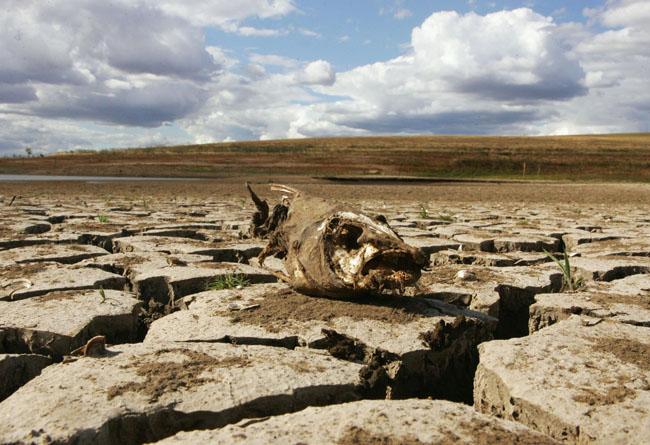
DEFORESTATION by European settlers may be to blame for making Australia's drought longer, hotter and dryer than it would be otherwise.
The "big dry", Australia's 11-year drought, has been blamed on greenhouse gases and natural variability. To see if deforestation played a part, Clive McAlpine of the University of Queensland in Brisbane and colleagues used a climate model to simulate Australian conditions from the 1950s to 2003. They then compared the impact of today's fragmented vegetation, obtained from satellite images, with that of 1788, prior to European settlement.
Over much of south-east Australia, where the drought has hit hardest, less that 10 per cent of the original vegetation remains. The team's model showed that this land clearance has increased the length of droughts in the area by one to two weeks per year. In years of extreme drought, the loss of vegetation caused the number of days above 35 °C to increase by six to 18 days, and the number of dry days to increase by five to 15 days (Geophysical Research Letters, in press).
"Land clearing may be having a similar impact on the drought as greenhouse gases," says McAlpine. Reforestation could minimise future droughts, he adds.
Posted Sun Aug 16, 2009 9:10am AEST Updated Sun Aug 16, 2009 10:24am AEST
Bill split: the Government says it doesn't want renewable energy targets held up in the Senate. (Library of Congress)
The Federal Government will amend its renewable energy plan to break the Senate deadlock.
The Opposition parties want to support the 20 per cent renewable energy target, but say they can not because the Government linked the legislation to the contentious emissions trading scheme.
The Greens and the Opposition have both put forward amendments that would split the bills.
Deputy Prime Minister Julia Gillard told Channel Nine they had been brought forward together in the first place because of their "integrated compensation package".
"This isn't the best way to do it ... [but] faced with the obstruction of the Liberal Party in the Senate we will take some interim steps, make some amendments to the renewable energy target legislation so it can come into effect," she said.
She said the best way for tackling climate change is for the Liberal Party to "stop getting in the way" and allow both policies through.
"But we are in a world of Liberal obstruction because of their divisions, so we are safeguarding our renewable energy target legislation so it can come into effect even if the Liberal Party continues to block the carbon pollution reduction scheme," she said.
Opposition Leader Malcolm Turnbull had not been able to exercise any leadership on behalf of the Liberal Party, which thought the easy political position was to obstruct the government's legislation, Ms Gillard said.
"Of course, that is the worst position for the nation," he said.
"Mr Turnbull is presiding over a rabble under the banner of the Liberal Party.
"His political party straddles those from people who deny the science of climate change, who simply don't think it's happening, through to people who do believe that the Liberal Party should support the Government's legislation."
The assisting Minister for Climate Change, Greg Combet, has told Channel 10 the Government does not want the renewable energy target held up in the Senate.
"What we're concerned to do is to ensure that the renewable energy legislation can get through Parliament, because that's going to unlock a lot of investment in renewable energy sources like solar power, or wind power or geothermal energy," he said.
'Purely politics'
But the Federal Opposition says the Government's decision shows its original position was more about playing politics.
Liberal frontbencher Christopher Pyne has told ABC1's Insiders program the Government only linked the schemes to try and force the emissions trading scheme through the Senate.
"What the Government wanted last Thursday was the beginning of a trigger for an election - it was purely politics," he said.
"That's why the Renewable Energy Target bill never needed to be part of that emissions trading scheme bill, and it's of no surprise to me at all that they will decouple that bill." http://www.abc.net.au/news/stories/2009/08/16/2657157.htm


 Market Data
  Markets


 AI
AI