News Focus
News Focus
icon url

zab

06/25/22 7:36 PM

#417867 RE: hap0206 #417861

Amazing how you want every American to imagine how to interpret the constitution, the bill of rights, dismiss everything, go to the 10th amendment and say that's explains it. Life in America is not like that, you just took away my right to interpret my rights, once again you are infringing on my freedom. Even worse, you skipped everything before you used the 10th to explain yourself. You disregarded my right to my life, my liberty, and my happiness.
icon url

fuagf

06/25/22 11:04 PM

#417881 RE: hap0206 #417861

hap, One from 2009 - Rally 'Round the "True Constitution" .. not.

"ab, it is precisely the constitution that undercut Roe

The Tenth Amendment says that the Federal Government only has those powers delegated in the
Constitution. If it isn't listed, it belongs to the states or to the people.Feb 15, 2022 geez hap
"

Didn't realize you are a tenther. I can't find an article citing the 10th as an important factor in the repeal decision. Would appreciate you posting it if you have one.

So different decisions 1973 and 2022. The Tenth Amendment hasn't changed. So why the different decisions? Little has significantly changed in the law between then and now. Since the constitution is the same, must the difference decisions fall into different interpretation of the constitution by the court. So in the makeup of the court. in your mind what are the clear-cut differences in the makeup of the court which could account for the different interpretations of the constitution by the court of 1973 and the court of 2022?


F6 .. Rally 'Round the "True Constitution" .. not ..

Convinced that the 10th Amendment of the Constitution prohibits
spending programs and regulations? Conservatives have a movement for you.

Ian Millhiser .. August 25, 2009


Rep. Michele Bachmann, R-Minn., speaks at the Republican National Convention in St. Paul, Minn., Tuesday, Sept. 2, 2008. (AP Photo/Ron Edmonds)

Almost a year after she called for an investigation to discover which members of Congress are "anti-American," Minnesota's nuttiest lawmaker is back. In a recent appearance with Fox's Sean Hannity, Republican Rep. Michele Bachmann accused her colleagues of "forg[etting] what the Constitution says" because they are poised to pass comprehensive health-care reform. Not to be outdone, Sen. Jim DeMint of South Carolina told right-wing activists on a conference call last Thursday that health reform violates the 10th Amendment; he also called on state legislators and governors to "champion individual freedom" by resisting the bill. Two Florida lawmakers beat DeMint to the punch, having already introduced legislation to block health reform from taking effect in their state.

These efforts are all part of a movement whose members are convinced that the 10th Amendment of the Constitution prohibits spending programs and regulations disfavored by conservatives. Indeed, while "birther" conspiracy theorists dominate the airwaves with tales of a mystical Kenyan baby smuggled into Hawaii just days after his birth, these "tenther" constitutionalists offer a theory that is no less radical but infinitely more dangerous.

Tentherism, in a nutshell, proclaims that New Deal-era reformers led an unlawful coup against the "True Constitution," exploiting Depression-born desperation to expand the federal government's powers beyond recognition. Under the tenther constitution, Barack Obama's health-care reform is forbidden, as is Medicare, Medicaid, and Social Security. The federal minimum wage is a crime against state sovereignty; the federal ban on workplace discrimination and whites-only lunch counters is an unlawful encroachment on local businesses.

Tenthers divine all this from the brief language of the 10th Amendment, which provides that "the powers not delegated to the United States by the Constitution, nor prohibited by it to the States, are reserved to the States respectively, or to the people." In layman's terms, this simply means that the Constitution contains an itemized list of federal powers -- such as the power to regulate interstate commerce or establish post offices or make war on foreign nations -- and anything not contained in that list is beyond Congress' authority.

The tenther constitution, however, reads each of these powers very narrowly -- too narrowly, it turns out, to permit much of the progress of the last century. As the nation emerges from the worst economic downturn in three generations, the tenthers would strip away the very reforms and economic regulations that beat back the Great Depression, and they would hamstring any attempt to enact new progressive legislation.

Such retreat to fringe constitutional theories is one of the right's favorite tactics during times of historic upheaval. The right-wing South justified both secession and the Civil War on the theory that the Constitution is nothing more than a pact between sovereigns that each state is free to leave at will. In the immediate wake of Brown v. Board of Education, 19 senators and 77 representatives endorsed a "Southern Manifesto," proclaiming -- in words echoed by modern-day tenthers -- that Brown "encroach[es] on the rights reserved to the States" because the "Constitution does not mention education." President Franklin Delano Roosevelt spent much of his first term combating a tenther majority on the Supreme Court, which routinely struck down substantial portions of the New Deal.

But Roosevelt's black-robed adversaries are unlike modern-day tenthers in two respects. Although the Supreme Court was dominated by tenthers for much of the early part of this century, Roosevelt had a powerful populist movement on his side. He won his landside re-election victory in 1936 in no small part by campaigning against the tenthers on the Court, and he used his second Inaugural Address to chide these justices, warning them that "the Constitution of 1787 did not make our democracy impotent." With a powerful and popular president lined up against them, the Court's tenther coalition broke, and America's economic policy has rested almost exclusively in elected officials' hands ever since.

Today, however, the tenthers tap into the same populist outrage that inspired a generation of working-class religious conservatives to enthusiastically vote against their own interests. Fox News star Glenn Beck exhorts his audience to "be a constitutional watchdog for America" by lining up against health-care reform, cap-and-trade legislation, and the stimulus package. Gov. Rick Perry of Texas, who enthusiastically backed a tenther "state sovereignty resolution," told a right-wing radio host that he is "willing and ready for the fight if this administration continues to try to force their very expansive government philosophy down our collective throats." Tenther-inspired claims that federal spending violates the Constitution are so common at "tea party" protests that it is impossible to tell where the tenthers end and the tea baggers begin.

In other words, it is all but certain that tenthers will play a significant role in selecting the GOP's presidential nominee in 2012. And if that nominee wins, the tenthers could even come to dominate the administration in the same way that the religious right set its hooks into George W. Bush.

Additionally, while the Depression-era justices provided much of the movement's intellectual framework, today's tenthers are extreme even by 1930s standards. The Constitution gives Congress the power "to lay and collect taxes, duties, imposts and excises, to pay the debts and provide for the common defense and general welfare of the United States," thus empowering the federal government to levy taxes and leverage these revenues to benefit the American people. =Tenthers, however, insist that these words don't actually mean what they say, claiming that spending on things like health care, education, and Social Security is simply not allowed.

Their basis for ignoring the plain language of the Constitution is a statement by James Madison that federal spending is only really permitted when it advances one of Congress' other enumerated powers, such as by building a post office or funding a war. Since the words "health care" do not appear in the Constitution, there can't be any federal power to pay for health care, and the uninsured can eat cake.

Although tenthers are correct that Madison did make such a statement, his views hardly reflect the founding generation's consensus. Alexander Hamilton, the nation's first Treasury secretary and a co-author of Madison's Federalist Papers, emphatically rejected Madison's claim that the words "provide for the … general welfare of the United States" have any kind of secret meaning. Moreover, it is not even clear that Madison still believed that the Constitution requires a decoder ring when he was elected to the White House. Justice Joseph Story, whom President Madison appointed to the Supreme Court, was a Hamiltonian.

If anything, the tenthers' invocation of Madison reflects the danger inherent in any appeal to the founding generation. Early American politics were at least as contentious as our own, and the framers debated the Constitution's meaning with just as much zeal and uncertainty as we bring to such arguments today. Indeed, the framers' many conflicting statements offer such a rich menu of viewpoints that it is possible to find a quotation to support nearly any political agenda.

More important, there is something fundamentally authoritarian about the tenther constitution. Social Security, Medicare, and health-care reform are all wildly popular, yet the tenther constitution would shackle our democracy and forbid Congress from enacting the same policies that the American people elected them to advance. After years of raging against mythical judges who "legislate from the bench," tenther conservatives now demand a constitution that will not let anyone legislate at all.

http://www.prospect.org/cs/articles?article=rally_round_the_true_constitution

https://investorshub.advfn.com/boards/read_msg.aspx?message_id=41899243
icon url

fuagf

06/26/22 2:50 AM

#417889 RE: hap0206 #417861

hap, Constitutional Myth #7: The 10th Amendment Protects 'States' Rights'

By Garrett Epps
July 12, 2011

Today's "Tenthers" seem to be yearning for the good old Articles of Confederation,
not this newfangled left-wing Madison thing


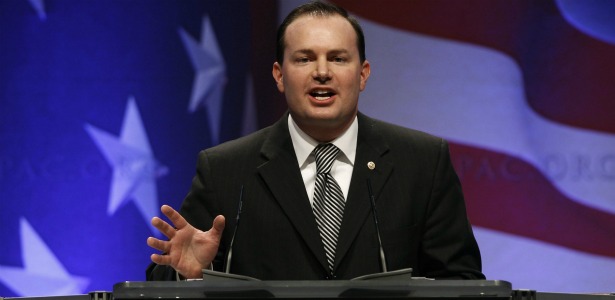
Not long before he was sworn in as a new member of the Senate, Tea Party favorite Mike Lee gave a speech .. http://www.huffingtonpost.com/2011/01/14/mike-lee-child-labor-laws_n_809100.html .. in Draper, Utah, about the horrors of federal legislation in the Progressive Era.

--
Congress decided it wanted to prohibit [child labor], so it passed a law--no more child labor. The Supreme Court heard a challenge to that and the Supreme Court decided a case in 1918 calledHammer v. Dagenhart.In that case, the Supreme Court acknowledged something very interesting -- that, as reprehensible as child labor is, and as much as it ought to be abandoned -- that's something that has to be done by state legislators, not by Members of Congress. [...]

This may sound harsh, but it was designed to be that way. It was designed to be a little bit harsh. Not because we like harshness for the sake of harshness, but because we like a clean division of power, so that everybody understands whose job it is to regulate what.

Now, we got rid of child labor, notwithstanding this case. So the entire world did not implode as a result of that ruling.
--

Lee did not mention a couple of things. The first is that the law did not say "no more child labor." What the Keating-Owen Child Labor Act of 1916 said was in fact very respectful of the Constitution's grant to the Congress of the power to "regulate commerce with foreign nations, and among the several states, and with the Indian tribes." It forbade businesses to "ship or deliver for shipment in interstate or foreign commerce, any article or commodity" produced with child labor. And the Keating-Owen Act was not the product of a spoiled Congress whimsically banning child labor; it was the culmination of decades of sustained, informed national demand by the people -- sovereigns in our system -- that American commerce be cleansed of this barbaric relic of the past.

The best way to read the Tenth Amendment we actually have is that its words mean what they say, and not what they
don't say. The Constitution grants Congress all the implied powers "necessary and proper" to using its enumerated powers.


Second, the only reason "we got rid of child labor, notwithstanding this case," was that the Supreme Court in 1938 -- after two needless decades of what Justice Holmes correctly called "ruined lives" -- overruled Hammer v. Dagenhart and held that the federal government can forbid child labor as part of its power over commerce. Had it not done so, it's pretty clear that children in (you fill in the state) would be suffocating in mines today.

More - https://www.theatlantic.com/national/archive/2011/07/constitutional-myth-7-the-10th-amendment-protects-states-rights/241671/