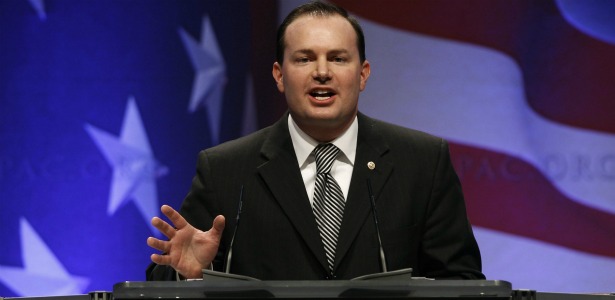
-- Congress decided it wanted to prohibit [child labor], so it passed a law--no more child labor. The Supreme Court heard a challenge to that and the Supreme Court decided a case in 1918 calledHammer v. Dagenhart.In that case, the Supreme Court acknowledged something very interesting -- that, as reprehensible as child labor is, and as much as it ought to be abandoned -- that's something that has to be done by state legislators, not by Members of Congress. [...]
This may sound harsh, but it was designed to be that way. It was designed to be a little bit harsh. Not because we like harshness for the sake of harshness, but because we like a clean division of power, so that everybody understands whose job it is to regulate what.
Now, we got rid of child labor, notwithstanding this case. So the entire world did not implode as a result of that ruling. --
Lee did not mention a couple of things. The first is that the law did not say "no more child labor." What the Keating-Owen Child Labor Act of 1916 said was in fact very respectful of the Constitution's grant to the Congress of the power to "regulate commerce with foreign nations, and among the several states, and with the Indian tribes." It forbade businesses to "ship or deliver for shipment in interstate or foreign commerce, any article or commodity" produced with child labor. And the Keating-Owen Act was not the product of a spoiled Congress whimsically banning child labor; it was the culmination of decades of sustained, informed national demand by the people -- sovereigns in our system -- that American commerce be cleansed of this barbaric relic of the past.
The best way to read the Tenth Amendment we actually have is that its words mean what they say, and not what they don't say. The Constitution grants Congress all the implied powers "necessary and proper" to using its enumerated powers.
Second, the only reason "we got rid of child labor, notwithstanding this case," was that the Supreme Court in 1938 -- after two needless decades of what Justice Holmes correctly called "ruined lives" -- overruled Hammer v. Dagenhart and held that the federal government can forbid child labor as part of its power over commerce. Had it not done so, it's pretty clear that children in (you fill in the state) would be suffocating in mines today.


 Market Data
  Markets


 AI
AI