News Focus
News Focus
icon url

fuagf

02/16/21 2:56 AM

#365334 RE: fuagf #364675

COVID-19 Vaccine Fact Vs. Fiction: An Expert Weighs in on Common Fears

"More than 85 poor countries will not have widespread access to coronavirus vaccines before 2023"

Clearly and simply written. Easy to read, Good for young, with a bit of help.
Good for all. Hope some get something from it you weren't sure of before.


By Nina Bai January 27, 2021


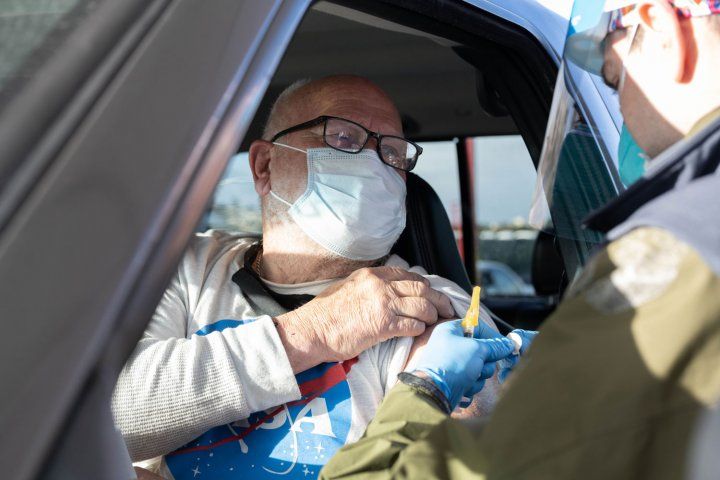
Mel Hirschkorn Sr. (left) receives his first dose of the Moderna COVID-19 vaccine from UCSF
nurse Patrick Sorensen, RN, at a vaccination drive-through at City College San Francisco.
Photo by Susan Merrell

As global COVID-19 cases top 100 million, health experts are emphasizing the urgency of vaccinating as many people as possible to stop the spread. More circulating virus means the more likelihood of mutations, and some new variants .. news://419561 .. already appear to be more contagious – making vaccination even more of a race against time.

But with vaccines developed at unprecedented speed and a virus still revealing its ways, people understandably have many questions about the new vaccines.

We posed the most common COVID-19 vaccine quandaries to Bryn Boslett .. https://profiles.ucsf.edu/bryn.boslett , MD, an infectious disease expert who is leading the vaccination effort at UC San Francisco. She explains why mRNA vaccines won’t affect your DNA, which allergies pose a risk, what 95 percent efficacy really means, and more.

Do the mRNA vaccines change your DNA?

Both the Pfizer and Moderna vaccines are mRNA vaccines, which means they contain messenger ribonucleic acid. “It’s basically a piece of material that contains instructions,” said Boslett. “Once it’s injected, it’s taken up by your cells, but it never enters the cell nucleus where all of your DNA exists within your cells.” The mRNA contains instructions for your cells to make spike proteins that match the ones found on the surface of the SARS-CoV-2 virus, which causes COVID-19. When your cells present these spike proteins on their surface, your body recognizes them as foreign and develops an immune response, including antibodies specific to the spike protein.


“The mRNA is a just temporary message,” said Boslett. “After the spike protein gets made, your body destroys the mRNA so it doesn’t stick around in the body. It doesn’t mix with any genetic code. It doesn’t go into your DNA. I’m not at all worried about there being any kind of damage to a person’s DNA from these vaccines.”

VERDICT: No.

--------------------

Is immunity from the vaccine stronger than natural immunity from infection?

“The first time your body sees the spike protein, it activates some immune system cells to begin to recognize and develop antibodies against that protein,” said Boslett. The response may be similar whether that first encounter is from infection with the virus or from the first dose of the vaccine.

Studies of the mRNA vaccines suggest that one dose may offer between 50 to 80 percent protection against symptomatic COVID-19, though more data is needed, said Boslett. “We know you get some amount of protection after one dose of the vaccine or after infection with the virus, but we don’t know in either case how long that protection lasts,” she said. Some cases of reinfection have been reported after three to six months, so the protection from one dose of the vaccine also may wane in that timeframe.

“However, when you get the second dose of the vaccine, you’re further training your immune system,” said Boslett. “You’re strengthening that response from the antibody-producing B cells and you’re also activating T memory cells that stick around for much longer.” Getting both doses of the vaccine means your body is shown this spike protein multiple times in a short duration. “So that immune response might be bigger, better and longer lasting than just getting the infection one time,” she said.

Because the booster effect is so important, Boslett adds that this is why people who have had COVID-19 are still recommended to get the vaccine.

VERDICT: Probably.

--------------------

Did the vaccine clinical trials skip steps to be completed faster?

Vaccine trials often take years because not only do they need to recruit a lot of participants to be able to evaluate safety and efficacy, they then need to wait for natural infections to take place. The COVID-19 vaccine trials have moved along faster thanks to extra financial support from the government and other funding sources, and the high prevalence of the virus in the community, said Boslett. “They didn’t skip any steps.”

More than 40,000 people were enrolled in the Pfizer vaccine trials, and more than 30,000 in the Moderna vaccine trials. “That’s a lot of people, but if the virus were rare, that still wouldn’t be enough people,” said Boslett. “But because the virus is running so rampant throughout the U.S. and other places in the world, this was actually a good number of people to show a difference between the vaccinated and unvaccinated groups.”

The mRNA technology, which has undergone years of study for other potential vaccines, was another time-saver. Compared to vaccines that use live viruses, mRNA vaccines are relatively easy to manufacture. “Virus is actually hard to grow,” said Boslett. “The fact that this wasn’t a live vaccine allowed the manufacturing to be a little bit simpler.”

VERDICT: No.

--------------------

Was vaccine efficacy only measured in symptomatic COVID-19?

The reported efficacy rates of 94 or 95 percent are for symptomatic disease only. Because the clinical trials for Pfizer and Moderna did not require regular testing for COVID-19, they were not a good indication of how well the vaccine protects against asymptomatic disease (which account for some 40 percent of cases).


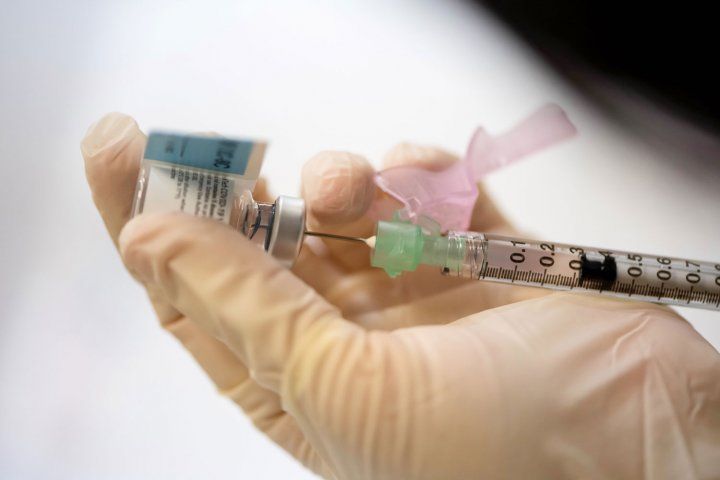
A dose of the Pfizer-BioNTech COVID-19 vaccine is prepared before it’s administered minutes
later at the vaccine clinic at the Parnassus Heights campus. Photo by Susan Merrell

Limited data suggest the vaccines can prevent some asymptomatic infections. In the Moderna study, participants were tested just prior to receiving each dose. “There was a reduction in asymptomatic infection in the vaccine versus the placebo group, which gives us hope. Otherwise, researchers only found out that a participant got an infection if the person developed symptoms and then tested positive,” said Boslett. “We know the vaccine really reduces incidents of symptomatic disease, but we don’t know how it impacts the incidents of asymptomatic disease.”

Researchers should know the answer in a couple of months. “I think that logically speaking it should prevent or at least reduce asymptomatic disease,” said Boslett. “Most other vaccines do prevent both symptomatic and asymptomatic carriage and transmission, but until we prove it, we don’t want to assume anything.”

VERDICT: Yes.

--------------------

Can the vaccine give you COVID-19?

Some vaccines, such as the measles or oral polio vaccines, contain a weakened form of the live virus, and in very rare cases these can cause disease. “But this isn’t one of those,” said Boslett. “The mRNA vaccines just contain a message that encodes the spike protein. It is not a live virus, so there’s no chance that the vaccine can give you COVID.”

Some people may feel symptoms such as fever or muscle aches after the vaccines, but those are due to your body’s immune response, not an infection. “That is actually not a bad thing because that means that your body is producing an inflammatory response to the vaccine, which is what we want.”

VERDICT: No.

--------------------

If I have allergies, can I still take the vaccine?

You can safely take the vaccine with most allergies. “People who have allergies to food, pets, insect bites, latex, oral medications, environmental allergens, or even a family history of anaphylaxis do not have to avoid the vaccines,” said Boslett. According to the Centers for Disease Control and Prevention .. https://cutt.ly/4k1SBK2 (CDC), people with these allergies have a low risk of having anaphylaxis (a severe, potentially life-threatening allergic reaction) in response to the COVID-19 vaccines and should still be vaccinated.


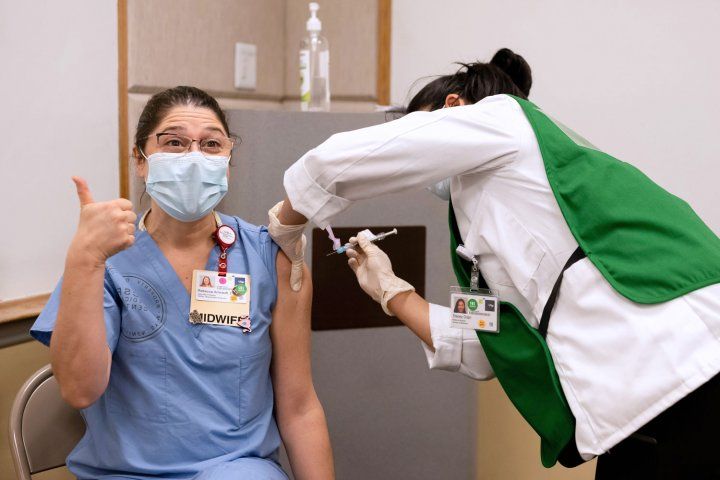
Rebecca Amirault (left), CNM, a UCSF professor and certified nurse midwife, celebrates receiving a
COVID-19 vaccination from medical student Stacey Dojiri at the UCSF Parnassus Heights campus.
Photo by Susan Merrell

If you’ve had a history of anaphylaxis to a non-COVID vaccine, then you may be at a slightly higher risk. “For those folks, it’s not necessary that you avoid the vaccine, but you might think twice about getting the vaccine right now. If you do get it, you want to wait at least 30 minutes for observation to see if you develop any type of response,” said Boslett.

If you’ve had a history of anaphylaxis to any components of the COVID vaccines .. https://cutt.ly/yk1Ddr7 , then you should not get the vaccine. If you experience a severe allergic reaction to the first dose of the vaccine, it’s recommended that you do not get the second dose.

“Less than a hundred out of the millions of people who have gotten the COVID-19 vaccines so far have had severe allergic reactions, so a severe allergic reaction is a rare event overall,” said Boslett.

VERDICT: Probably.

--------------------

If I’m pregnant or breastfeeding, can I still take the vaccine?

“I would say it’s a very personal decision and should be something that every woman discusses with her medical team,” said Boslett. The American College of Obstetrics .. https://www.acog.org/en/Advocacy/Advocacy%20and%20COVID-19/COVID-19%20Vaccines%20and%20Pregnancy .. and Gynecology, the Society of Maternal Fetal Medicine .. https://s3.amazonaws.com/cdn.smfm.org/media/2591/SMFM_Vaccine_Statement_12-1-20_(final).pdf , and the CDC .. https://www.cdc.gov/coronavirus/2019-ncov/vaccines/recommendations/pregnancy.html .. have said that pregnant and breastfeeding women should be offered the vaccine when eligible.

“There’s no clear plausible reason to think that the vaccine would harm a fetus or a baby who’s breastfeeding in any way,” said Boslett. “This is not a live virus vaccine, and the mRNA is likely going to stay right in the arm where it’s injected and get taken up by the cells there. The mRNA is quickly degraded by the body after it does its job. We do not believe that the mRNA or spike protein will travel to the developing fetus or cause harm.”

A reasonable concern might be fever and other immune system reactions to the vaccine. “We know that in some cases, if a woman develops a high fever very early on in pregnancy, there have been some concerns historically over the contribution of fever to neural tube defects, but the evidence isn’t clear,” said Boslett. She recommends that if a woman develops fever after the vaccine, she should take Tylenol. “It’s not a reason to not get the vaccine, because if you think about it, if you get COVID, you may develop a fever and all kinds of other terrible immune responses. The vaccine is really protecting women against much more severe outcomes from COVID.”

It’s possible that women who are recently vaccinated may be able to pass some protective antibodies to the fetus through the placenta or to their baby through breastmilk, said Boslett. There is even ongoing research into extracting IgA antibodies from breastmilk to use for COVID-19 prevention in adults.

VERDICT: Yes.

--------------------

Can you still transmit the coronavirus after vaccination?

This is another question that researchers are still investigating, said Boslett. “It’s possible that you could get the vaccine, have an immune response, but maybe not enough of an immune response to prevent asymptomatic infection, and still transmit the virus.”


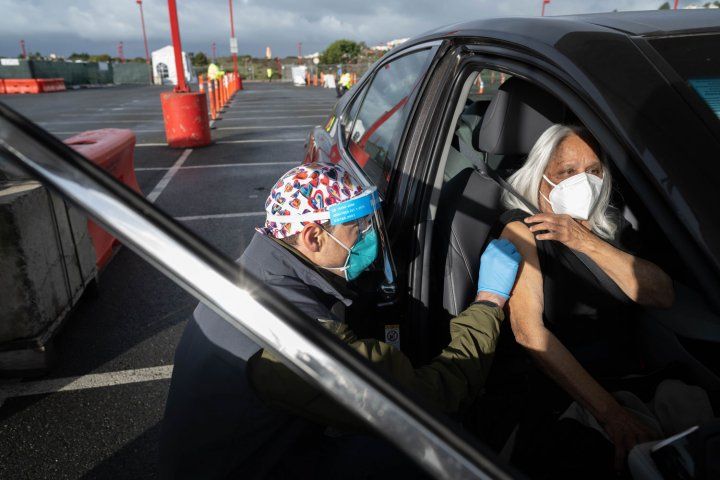
Dipti Sil (right) receives her first dose of the Moderna COVID-19 vaccine from UCSF nurse Patrick
Sorensen, RN, at a vaccination drive-through for San Francisco residents age 75 and older.
Photo by Susan Merrell

Until proven otherwise, people should consider asymptomatic infections and transmission to be a possibility. “There’s a concern that people could get the vaccine and feel like they are safe, but they could be actually infected with the virus and carry it in their nasal passages and in their airways. And because they’re feeling safe, they might be less cautious and actually spread the disease,” said Boslett. With this in mind, health officials are urging everyone, even people who have received the vaccination, to continue to wear masks, stay six feet apart from people not in their own household and to wash their hands frequently.

The vaccines’ ability to prevent symptomatic disease is excellent, and will go a long way in preventing serious illness, hospitalizations and deaths. “But it’s not perfect,” said Boslett. “There were still a few people who, after two doses of vaccine, got infections. Whether that’s because their bodies just didn’t mount an appropriate immune response or something else, we don’t know.”

VERDICT: Maybe.

--------------------

Will we need new vaccines if the virus continues to mutate?

“The amount of changes that we’re seeing in the coronavirus is not an overwhelming number of changes, but we do have these other variants coming out in the U.K. and in South Africa,” said Boslett. “At some point, could the number of mutations on the spike protein end up overwhelming what the vaccine can cover? I think that is possible.”

Whether we’ll need a new vaccine every year depends on how quickly we can get the pandemic under control. The likelihood of mutations depends on how much virus is circulating, said Boslett. “When there’s lots and lots of virus out there, that enables it to be inside of humans and make all kinds of little errors in its reproduction, and some of those mutations may end up helping the virus to spread.”

It’s also uncertain how long immunity from the COVID-19 vaccine will last. We need a flu vaccine every year not only because the flu virus mutates quickly but also because the antibody response wanes over time, according to Boslett.

The good news is that mRNA vaccines are relatively easy to adjust to target a new variant. (Moderna is already developing a new form of its vaccine aimed at the variant in South Africa, which could be given as a booster shot.) “I think that can be done in just two or three months,” said Boslett. “But how often we’re going to have to do that, I think remains to be seen.”

VERDICT: Maybe

https://www.ucsf.edu/news/2021/01/419691/covid-19-vaccine-fact-vs-fiction-expert-weighs-common-fears

icon url

fuagf

02/19/21 6:03 PM

#365701 RE: fuagf #364675

Joe Biden to pledge $US4 billion for WHO's COVAX global vaccine effort

"More than 85 poor countries will not have widespread access to coronavirus vaccines before 2023
"Most poor nations 'will take until 2024 to achieve mass Covid-19 immunisation'"
"

Posted Yesterday at 11:14am


Billions in US funding will be distributed over the next two years. (Reuters: Carlos Barria)

The US government will pledge $US4 billion ($5.2 billion) to a vaccination program for developing countries at the G7 global economic summit later today, in the hope that other countries will follow suit and contribute additional funds, United States officials say.

Key points:

* COVAX is an initiative by the WHO to improve global access to vaccines

* Donald Trump declined to participate in the COVAX initiative because of its ties to WHO

* There are calls for the Biden administration to distribute US-manufactured vaccine supplies overseas

At a meeting of the Group of Seven nations, a summit for the world's largest economies, the White House will announce plans to immediately grant $US2 billion ($2.6 billion) to the international COVAX program.

COVAX aims to ensure a fair supply of coronavirus vaccines around the world.

The US will supply the remaining $US2 billion over the next two years as other nations fulfill their own pledges, the officials said.

The total $US4 billion in US funding was approved by Congress in December.

US President Joe Biden will also encourage G7 partners to make good on their pledges to COVAX in his first big presidential moment on the global stage.

Former US president Donald Trump declined to participate in the COVAX initiative because of its ties to the World Health Organization.

Mr Trump accused the United Nations-based agency of covering up China's mistakes in handling the virus at the start of the public health crisis.

Mr Trump pulled the US out of the WHO, but Mr Biden moved quickly to rejoin it after his inauguration last month.

The US is committed to working through COVAX to ensure "equitable distribution of vaccines and funding globally," White House press secretary Jen Psaki said.

COVAX misses roll-out goal


There are calls for an allocation of national vaccine supplies to be given to developing countries. (AP: Ng Han Guan)

It remains to be seen how G7 allies will receive the US move, given that the US refused to take part in the initiative under Mr Trump.

There are also growing calls for the Biden administration to distribute some US-manufactured vaccine supplies overseas.

In an interview with Britain's Financial Times, French President Emmanuel Macron called on the US and European nations to allocate up to 5 per cent of current vaccine supplies to developing countries — the kind of vaccine diplomacy that China and Russia have begun deploying.

Earlier this week UN Secretary-General Antonio Guterres sharply criticised the " wildly uneven and unfair" distribution of COVID-19 vaccines, noting 10 countries had administered 75 per cent of all vaccinations worldwide.

Last month Canadian Prime Minister Justin Trudeau spoke to Mr Biden and raised the prospect of Canada getting its hands on US-made doses of the Pfizer vaccine, according to a senior Canadian government official quoted by the Associated Press news agency.


The WHO says COVAX needs $US5 billion to roll out its program in 2021. (Reuters: Mohammed Salem)

Canada has been getting all its Pfizer doses from Belgium and has experienced disruptions in supply.

But Mr Biden, who announced last week that the US will have enough supply of the vaccine by the end of the summer to inoculate 300 million people, remains focused for now on making sure every American is inoculated, administration officials have said.

In his first national security memorandum last month, the President called for his administration to develop a framework to donate surplus vaccines once there is a sufficient supply in the US

The COVAX program has already missed its own goal of beginning coronavirus vaccinations in developing countries at the same time as shots are rolled out in rich countries.

The WHO says COVAX needs $US5 billion to roll out its program in 2021.

AP/Reuters

https://www.abc.net.au/news/2021-02-19/joe-biden-us-pledge-billions-who-covax-vaccine-efforts/13171336
icon url

fuagf

03/20/21 11:21 PM

#367956 RE: fuagf #364675

Vaccinating the Philippines could take two years. Health workers fear it will be a hotbed of variants by then

More than 85 poor countries will not have widespread access to coronavirus vaccines before 2023
"Most poor nations 'will take until 2024 to achieve mass Covid-19 immunisation'"


By South-East Asia correspondent Anne Barker

Posted 7h ago, updated 2h ago


Dr Genalyne Maroon-Berzabal, a paediatrician in Manila, was anxious to get her vaccine. (ABC News: Jayson Pajarillo)

As a frontline health worker, Dr Genalyne Maroon-Berzabal has witnessed firsthand the latest surge in COVID-19 infections in the Philippines.

The young doctor runs a paediatric clinic in Manila but, when the pandemic hit a year ago, she began working with coronavirus patients at a government hospital in the city, where case numbers are skyrocketing.

"The past few days, hospital admissions are climbing," she said.

"Some of the hospitals are at full capacity."

After an anxious wait, Dr Maroon-Berzabal finally received her COVID-19 vaccine, which she hopes will protect her as she fights the new surge in cases.

But she is one of the lucky ones. The slow delivery and rollout of vaccines across the Philippines means many other health workers have to wait weeks or months for their turns.

So far the country has received barely enough vaccines for 1 per cent of the population. At the current rate, the nation won't be vaccinated until 2023.


So far the Philippines has received enough vaccine for 1 per cent of its population.
Dr Genalyne Maroon-Berzabal was one of the lucky ones.
(Supplied: Genalyne Maroon-Berzabal)

"The supply is extremely small, we all need to vaccinate as soon as possible to save our lives," Dr Maroon-Berzabal said.

And as the Philippines launches its mass immunisation program, there are worrying signs that several new and faster-spreading strains of the virus are fuelling a huge new wave of infections.

In the past month, the Philippines has recorded hundreds of cases of the B.1.1.7 variant first detected in the UK, and 152 cases of the B.1.351 strain discovered in South Africa.

"There's a new monster again," Philippines President Rodrigo Duterte warned of the UK variant.

"I pray to God really that this won't be more dangerous, more toxic than the original COVID."

Just last week, the country confirmed its first case of the P.1 Brazil variant.

------
[Insert: Will Delaying Vaccine Doses Cause a Coronavirus Escape Mutant?
[...]
Crucially, virologists and immunologists don’t yet know exactly what sort of environment would be most likely to prompt a SARS-CoV-2 escape variant to evolve—in other words, what level of suboptimal immune response equates to the highest risk of the virus evolving a successful escape variant. There are thousands of SARS-CoV-2 variants .. https://www.cogconsortium.uk/news_item/update-on-new-sars-cov-2-variant-and-how-cog-uk-tracks-emerging-mutations/ .. known to be in circulation around the world, but just a few of them are thought to be noticeably more transmissible .. https://www.the-scientist.com/multimedia/side-by-side-comparisons-of-important-sars-cov-2-variants-68388 . They could be thought of as partial escape variants, suggests Meyer, because they are less susceptible to neutralization by antibodies but are not thought to evade the broader immune response. Nobody knows what conditions allowed for the emergence of these variants in the first place.
P - Past vaccine escape mutants
P - In general, vaccine resistance among pathogens is rare. Famously, vaccines have succeeded in keeping the highly infectious measles virus at bay since the inoculations were first introduced in the 1960s. And Meyer notes that, while influenza viruses are known to mutate rapidly, their many variants are not generally thought to have evolved as a result of vaccination programs.
https://investorshub.advfn.com/boards/read_msg.aspx?message_id=162636730]

------

Scientists believe they have now discovered a Philippines strain, known as P3 .. https://www.medrxiv.org/content/10.1101/2021.03.03.21252812v2 , in the Central Visayas region.

The new local variant has been "linked to possible increased transmissibility and immune escape in some studies," according to the UP Philippine Genome Centre .. https://pgc.up.edu.ph/sars-cov-2-bulletin-no-7/ .

It is a stark example of the dangers that lower-income nations face, well behind in the global vaccine queue but still vulnerable to the ravages of more infectious strains.

Daily known new cases since 100th case

Coronavirus cases in the Philippines have soared to 656,056, and almost 13,000 deaths — the second-highest death toll in South-East Asia.

The past few days alone have seen an additional 20,000 new cases.

If tougher measures are not introduced to curtail the spread, health researchers are now warning that these more-infectious strains of COVID-19 could see daily infections across the country double to 11,000 by the end of March.

'It's spreading'

Dr Guido David, from the OCTA Research group at the University of the Philippines, said the virus reproduction number — or the number of people infected by a single COVID-19 patient — has risen to 2.03.

At that rate, the virus would spread exponentially if measures were not implemented to bring it down.

Read more about coronavirus:

* All Australians over 70 can now book a COVID vaccine
https://www.abc.net.au/news/2021-03-11/who-declared-coronavirus-a-pandemic-one-year-ago/13236894

* Fears of a "catastrophe" as PNG struggles to cope with rising CIVD cases
https://www.abc.net.au/news/2021-03-11/png-catastrophe-coronavirus-health-system-vaccine-covid-19/13239246

The worst outbreak has been in the capital region, including Manila which, with 13 million people, is the most densely populated city in the world.


The worst outbreak in the Philippines is occurring in Manila, the most densely populated city in the world.
(Reuters: Lisa Marie David)

Government authorities have blamed public complacency towards safety measures for the surge in COVID-19 cases.

But critics have blamed the government for failing to do more to contain the pandemic, while also relaxing restrictions to allow people to go out or back to work in an attempt to revive the economy.


Dr David said the new, faster-spreading strains of the virus are also a major factor.

"It's spreading more quickly," he said.

-
"We're also seeing an increase in the number of paediatric cases, of children being infected
with these new variants. This is not something that we saw previously."
-

He said health workers are seeing infections rip through entire families.

"We're not necessarily seeing an increase in the severity of the infection ... the number of severe and critical cases. But what we are seeing is that there are more infections, especially with children," he said.


Florentino Jadion must drive a taxi to keep his family afloat, but he's terrified of bringing home COVID-19 and
spreading it to his children. (ABC News: Jayson Pajarillo)

The surge in family infections is a worry for Manila taxi driver Florentino Jadion, who has five children, one of them with serious health issues.

He currently works around 15 hours a day to provide for his wife and children and worries he could catch the virus and bring it home.

"No matter how careful I am, I could get it from my passengers when I handle their payments or money," Mr Jadion said.

"That is why I want to be vaccinated immediately for my safety and for my family."

Filipinos are desperate for the vaccine

The growing crisis only underlines the shortage of vaccines in the Philippines. It is one of the last countries in South-East Asia to begin inoculating its population.


The Philippines currently only has enough vaccine supplies for 1 per cent of its population. (Reuters: Lisa Marie David)

A national vaccination program officially began on March 1, but the Philippines still has only a tiny fraction of the 150 million or more doses needed to achieve herd immunity by the end of the year, in a country of 108 million people.

The Philippines has so far received only 1.1 million doses, including 600,000 doses of the Sinovac vaccine donated from China, and 525,600 doses of AstraZeneca under the COVAX program, designed to ensure poorer countries have access to vaccines.

Deliveries of the Pfizer, Moderna and Novavax vaccines are on order, but could take months to arrive in the country.

Read more about COVID-19 vaccines:

* The 'concerning' divide in Australians' attitudes to vaccines
https://www.abc.net.au/news/2021-03-05/australia-covid-vaccine-survey/13203170

* Pausing AstraZeneca rollout an "overreaction", experts say
https://www.abc.net.au/news/2021-03-12/why-the-eu-has-halted-astrazeneca-rollout-due-to-blood-clots/13241462

* Tracking Australia's COVID vaccine rollout
https://www.abc.net.au/news/2021-03-02/charting-australias-covid-vaccine-rollout/13197518

Philippine authorities have struggled to conclude deals with numerous other vaccine makers in the face of competition from richer nations.

"Some of the wealthier nations get first priority," Dr David said.

"Some countries have secured more than what they need. And right now the Philippines definitely has not secured enough for our needs."

The surge in infections, along with the slow rollout of vaccines, has sparked fears of another prolonged lockdown as the only way to contain the latest outbreak.

Another lockdown strikes fear in Filipinos

The Philippines already endured one of the world's longest and hardest lockdowns last year when the pandemic first began .. https://www.abc.net.au/news/2020-04-29/philippines-social-volcano-threatening-to-erupt-amid-covid-19/12193188 , forcing people to stay at home for months, closing shops and businesses and restricting foreign travel.

[That would account for their relatively low number of deaths. Relative to Trump's America, for one.]


The Philippines government says a wider, stricter lockdown may be enforced if cases keep creeping up.
(AP: Aaron Favila)

Last week, authorities imposed a new ban on foreigners and some citizens entering the country until late April. Several villages in the capital region have gone into lockdown, while others have imposed a nightly curfew to last two weeks.

The government this week warned a wider lockdown cannot be ruled out despite the impact it would have on the lives of Filipinos.

The Philippines economy suffered a record downturn in 2020 because of the pandemic.

Zaldy Mundero, 58, has relied on his jeepney, a typical open-style bus in Manila, to make a living for the past two decades.

In good times he used to earn a decent living. But the harsh lockdown last year meant he was effectively banned from taking passengers for at least four months and he struggled to survive.


Zaldy Mundero fears the virus, but says another tough lockdown could leave him and his family destitute.
(ABC News: Jayson Pajarillo)

A second lockdown, he says, would be devastating.

"It was difficult to find work, or food for me and my children," he said.

-
"Sometimes I had to borrow money from my cousin. I would ask for money to buy food. If
another lockdown happens, we won't have anything more to eat."
-

https://www.abc.net.au/news/2021-03-21/philippines-fears-third-wave-of-coronavirus-as-vaccine-stalls/13250372
icon url

fuagf

09/20/21 1:22 AM

#385997 RE: fuagf #364675

Rich Countries Worry About Booster Shots. They Should Be Worried About Africa.

"More than 85 poor countries will not have widespread access to coronavirus vaccines before 2023
"Most poor nations 'will take until 2024 to achieve mass Covid-19 immunisation'"
"

Sept. 19, 2021


Illustration by The New York Times; photograph by Yulia Reznikov/mikroman6, via Getty Images

By Matshidiso Moeti

Dr. Moeti, a physician and public-health specialist, is the World Health Organization’s regional director for Africa.

As the rich world rolls out Covid-19 booster shots, hundreds of millions of Africans remain dangerously exposed, still awaiting their first vaccine dose. This not only adds to the litany of harsh disparities we’ve seen around this virus, but it is also a scandalous injury to global solidarity and vaccine equity.

While early data on waning immunity .. https://www.theatlantic.com/science/archive/2021/09/waning-immunity-not-crisis-right-now/619965/ .. is emerging around some vaccines, there’s no conclusive evidence .. https://www.nytimes.com/2021/08/30/briefing/vaccine-immunity-booster-shots.html .. to justify giving boosters to fit, healthy people .. https://www.who.int/news-room/news-updates . Third doses should be given only to the small number of people facing a high risk of severe illness and death .. https://www.who.int/news-room/news-updates , despite being fully vaccinated, including those with compromised immune systems. Boosters for the healthy are, effectively, a hopeful “why not.” Political decisions are getting ahead of science, diverting doses and leaving Africans with few options.

Giving healthy people boosters now is similar to sending a generous educational grant to a billionaire while others are scraping together their college tuition.

While Africa has weathered the Covid-19 pandemic better than many people expected, we are seeing each wave drive harder and faster. The third wave has been the worst yet .. https://www.nytimes.com/2021/07/08/world/africa-coronavirus-cases-who.html , and it is putting a strain on already stretched and fragile health .. https://allafrica.com/stories/202009300108.html .. systems. While weekly new cases are subsiding, they remain high, and the pace of the descent is excruciatingly slow .. https://www.afro.who.int/news/covid-19-variants-prolong-africas-pandemic-wave . The continent just passed eight million reported cases .. https://www.afro.who.int/news/africa-faces-470-million-covid-19-vaccine-shortfall-2021 , and it urgently needs vaccines to blunt the impact of a fourth wave.

Even before vaccines were approved, rich countries bought up far more doses than they needed .. https://www.nytimes.com/2020/12/15/us/coronavirus-vaccine-doses-reserved.html , shunting others to the back of the line. Nine months after the arrival of the first vaccine, just 20 percent of people in low- and lower-middle-income countries have received a first dose .. https://www.who.int/news/item/08-09-2021-joint-covax-statement-on-supply-forecast-for-2021-and-early-2022 .. — compared with 80 percent in many high- and upper-middle-income countries.

Perhaps no group of countries has been hit harder by this vaccine hoarding than the countries of Africa. Shipments ground to a near halt for months, as promised supplies dried up .. https://www.afro.who.int/news/africa-faces-470-million-covid-19-vaccine-shortfall-2021 ,, because of global shortages and export bans. Today, just 51 million people .. https://bit.ly/3xuF60l — or 3.6 percent — of Africa’s population are fully vaccinated, compared with over 60 percent in the United Kingdom .. https://www.nytimes.com/interactive/2021/world/united-kingdom-covid-cases.html .. and the European Union .. https://vaccinetracker.ecdc.europa.eu/public/extensions/COVID-19/vaccine-tracker.html#uptake-tab .. and almost 55 percent in the United States .. https://ourworldindata.org/covid-vaccinations .

Shipments are picking up, and we are grateful for the international solidarity and leadership shown by the United States .. https://www.whitehouse.gov/briefing-room/statements-releases/2021/08/03/fact-sheet-president-biden-announces-major-milestone-in-administrations-global-vaccination-efforts-more-than-100-million-u-s-covid-19-vaccine-doses-donated-and-shipped-abroad/ .. and other partners in sharing millions of doses, including through Covax, which works for the fair distribution of vaccines globally.

Some estimates indicate that even if rich countries do approve booster shots, they will still have more than one billion excess doses .. https://www.nytimes.com/2021/09/14/opinion/vaccine-covid-pandemic-covax.html .. by the end of 2021. But that does not mean those doses will be shared or will reach those who need them in time. Just 15 percent of the more than one billion doses .. https://www.who.int/director-general/speeches/detail/who-director-general-s-opening-remarks-at-the-media-briefing-on-covid-19---8-september-2021 .. pledged by high-income countries have arrived in Africa so far. Wealthy countries must let go of reserved doses and cede their place in the queue, allowing Covax and the African Union to buy the vaccines the continent seeks and stands ready to finance.

Export restrictions, production constraints and delays in regulatory approvals led Covax to slash its delivery forecast for this year .. https://www.gavi.org/vaccineswork/covax-forecast-vaccine-supply .. by about 25 percent. Other pledges may not be fulfilled before the middle of next year .. https://apnews.com/article/europe-business-health-coronavirus-pandemic-covid-19-pandemic-77ad14e702a28e2d2195bc7ecd19f4a3 . Africa and other parts of the world need these vaccines. Now.

Governments, of course, have a duty to their own people, but giving boosters to fully vaccinated individuals goes against rich countries’ own interests. Countries with low vaccination rates could act as variant incubators, increasing the risk that more dangerous variants will emerge and enter international travel networks.

We have already seen the havoc caused by the Delta variant. Now present in 180 countries, this highly transmissible variant is leading to rising deaths in many rich nations .. https://www.washingtonpost.com/health/2021/09/03/delta-deaths-us-fourth-wave/ . It is also complicating Africa’s response to the pandemic, driving new flare-ups .. https://www.nytimes.com/2021/07/15/world/africa-million-cases.html .. and keeping new case numbers high.

Reports of millions of doses being wasted .. https://www.nbcnews.com/news/us-news/america-has-wasted-least-15-million-covid-vaccine-doses-march-n1278211 .. or discarded in rich countries are heartbreaking. Like so many other people I know here in the Republic of Congo and back home in Botswana, I have lost friends and colleagues to Covid-19. Every single one of those wasted doses could have saved a life in Africa.

The travesty of vaccine inequity is set to hit low-income countries economically, too. Global economic losses .. https://www.eiu.com/n/campaigns/how-much-will-vaccine-inequity-cost/ .. due to delayed vaccinations may, according to one estimate, run into the trillions of dollars in the coming years if low- and middle-income countries cannot quickly vaccinate most of their people. The International Monetary Fund recently cited access to vaccines as the “principal fault line” along which the global economic recovery is diverging .. https://www.imf.org/en/Publications/WEO/Issues/2021/07/27/world-economic-outlook-update-july-2021 . If vaccine inequity persists, growth rates in poorer countries may not return to prepandemic levels until 2024.

In order to help countries fully vaccinate 40 percent of their people, the World Health Organization has called for a moratorium on booster shots .. https://www.who.int/director-general/speeches/detail/who-director-general-s-opening-remarks-at-the-media-briefing-on-covid-19---8-september-2021 .. for fit, healthy people until the end of December.

Despite all of this, at least 13 countries are already giving or plan to give boosters, and several more are considering it. If all high- and upper-middle-income countries were to give boosters to everyone age 50 and over, nearly one billion vaccine doses would be needed annually, according to a W.H.O. analysis. With two-dose vaccines, that’s enough to vaccinate nearly 40 percent of Africa’s population — the global year-end target set by the W.H.O. .. https://www.who.int/director-general/speeches/detail/director-general-s-opening-remarks-at-the-world-health-assembly---24-may-2021 .. in May 2021.

The W.H.O. is working with national regulators around the world to gather data on boosters. Only a coordinated research effort will help us understand how much additional protection they provide.

So we’re not saying “never.” But now is not the time to give boosters to fully vaccinated people with fully functioning immune systems.

We don’t know yet how much boosters might help protect people, but we do know that their deployment will hurt the prospects of many in Africa.

The people facing the most risk must be vaccinated first. Wherever they are.

More on Covid-19

Opinion | Aaron E. Carroll
The U.S. Needs to Stop the Confusion Over Booster Shots Sept. 17, 2021
https://www.nytimes.com/2021/09/17/opinion/us-covid-vaccine-boosters.html

Opinion | Tony Blair, John Bell and David B. Agus
We Need to Start Traveling Again. Here’s How. Sept. 1, 2021
https://www.nytimes.com/2021/09/01/opinion/covid-travel.html

Opinion | Mark Zandi
Delta Tells the Economy, Not So Fast Sept. 15, 2021
https://www.nytimes.com/2021/09/15/opinion/delta-covid-economy.html

Dr. Matshidiso Moeti (@MoetiTshidi) is the W.H.O. regional director for Africa. She previously worked with the United Nations
program on H.I.V. and AIDS and with Botswana’s Ministry of Health as a clinician and public health specialist.

https://www.nytimes.com/2021/09/19/opinion/covid-vaccine-booster-shots-africa.html