Netanyahu takes office in deal that could see West Bank annexation
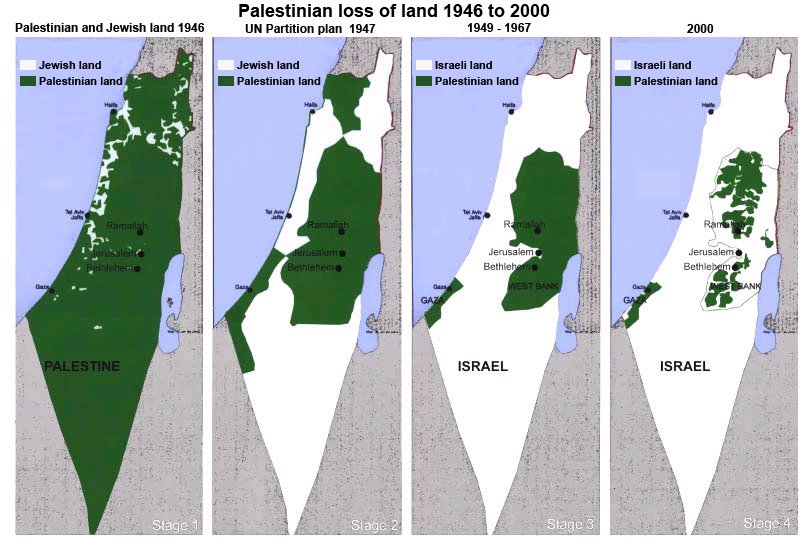
"Israel's Netanyahu, Gantz fail to reach unity deal, deadlock persists "Israel’s opposition leader fails to form coalition government "Netanyahu vows to begin annexing West Bank settlements "Landgrab continues - Israel plans to entrench annexation of East Jerusalem: Report""" "
Inexorably the path to a mammothly unjust one-state sitution grinds on.
Rival Benny Gantz to take over as PM of Israeli unity government after 18 months
Oliver Holmes in Jerusalem
Mon 18 May 2020 01.30 AEST Last modified on Mon 18 May 2020 02.50 AEST
Benjamin Netanyahu during his swearing-in ceremony at the Knesset in Jerusalem on 17 May. Photograph: Adina Valman/EPA
Benjamin Netanyahu .. https://www.theguardian.com/world/benjamin-netanyahu .. has been sworn in as Israel’s prime minister, heading a unity government in which he will rotate the leadership with his former rival, Benny Gantz, in a deal that could see the annexation of large parts of the West Bank.
The US plan .. https://www.theguardian.com/world/2020/jan/28/donald-trump-middle-east-peace-plan-israel-netanyahu-palestinians , pre-emptively rejected by Palestinian leaders, gives Israel full military control over Palestinians, much of their land and all of Jerusalem and Israeli settlements. Palestinians are provided with the option of economic incentives, land swaps and the prospect of some form of self-rule, but with significant caveats.
Speaking at the Knesset on Sunday ahead of being sworn in, Netanyahu said he would extend Israeli sovereignty over settlements in the occupied West Bank, calling it “another glorious chapter in the history of Zionism”.
To accommodate a broad coalition of divergent parties, the unity deal envisions a huge 36-minister cabinet.
Netanyahu, currently the interim leader, will remain in the role for 18 months before handing over to Gantz, a former army chief, for the remainder of a three-year term. Before taking the higher office, Gantz will be defence minister.
Facing the coronavirus pandemic, the two leaders agreed to form what they called an “emergency government” to steer the country through the crisis and its devastating economic fallout.
In his address to the Knesset on Sunday, Gantz announced “the biggest political crisis in Israel’s history” was over.
However, in the process of forming the coalition, Gantz saw his Blue and White party split apart, with resentment that its figurehead, who entered politics two years ago primarily on the promise to oust Netanyahu, had agreed to prop him up instead.
Gantz’s former running mate, now the head of the opposition, Yair Lapid, said the new government was the “largest, most bloated, most wasteful” in Israeli history.
The unity deal was largely seen as a career-saver for Netanyahu. Israel’s longest-serving leader is a deeply divisive figure in Israel .. https://www.theguardian.com/world/israel .. and faces three damning criminal corruption cases, with hearings scheduled to begin later this month.
Under the coalition agreement, Netanyahu will have extra legal protections, meaning he will not have to resign as a public official despite the charges against him, which he denies.
Allies in his Likud party retain significant power. Yariv Levin, one of Netanyahu’s closest supporters, will be the new parliament speaker. Gideon Saar, who failed to replace Netanyahu in a December as Likud leader, was not given a ministerial post.
Following an EU foreign ministers’ meeting on Friday, Josep Borrell, the EU foreign policy chief, said the bloc would use “all our diplomatic capacities” to block Israel from unilaterally annexing land. Some EU countries have pushed for either economic sanctions or the recognition of a Palestinian state, but the body is divided.
In the Middle East, the response has been less muted. The king of Jordan, a country that has a peace treaty with Israel, warned his neighbour on Friday.
“If Israel really annexed the West Bank in July, it would lead to a massive conflict with the Hashemite Kingdom of Jordan,” King Abdullah II said in an interview with the German magazine Der Spiegel.
“I don’t want to make threats and create an atmosphere of loggerheads, but we are considering all options,” he said.
It’s too late for a two-state solution in Israel-Palestine January 7, 2016 6.15am EST Author Padraig O'Malley John Joseph Moakley Distinguished Professor of Peace and Reconciliation, University of Massachusetts Boston https://investorshub.advfn.com/boards/read_msg.aspx?message_id=119715629
"Israel's Netanyahu, Gantz fail to reach unity deal, deadlock persists "Israel’s opposition leader fails to form coalition government "Netanyahu vows to begin annexing West Bank settlements "Landgrab continues - Israel plans to entrench annexation of East Jerusalem: Report""""
Prime Minister Benjamin Netanyahu of Israel is standing trial on corruption charges. Here’s a look at the context of the trial, the main charges and the political ramifications.
Prime Minister Benjamin Netanyahu at his office in Jerusalem on Monday . Pool photo by Menahem Kahana
Mr. Netanyahu is accused of accepting gifts from Arnon Milchan in exchange for political favors. Mr. Milchan denies any wrongdoing and is not on trial. Kevin Winter/Getty Images
What is Case 1000?
The indictment accuses Mr. Netanyahu of accepting nearly $300,000 in gifts, including cigars and Champagne, from 2007 to 2016 from two businessmen: the Hollywood producer Arnon Milchan and the Australian billionaire James Packer.
In return, prosecutors say, the prime minister acted on Mr. Milchan’s behalf, including by pressuring the finance ministry to double the duration of a tax exemption for expatriate Israelis like Mr. Milchan after they return to the country from abroad.
The indictment alleges that Mr. Netanyahu also lobbied the American government to help Mr. Milchan renew his American visa, and assisted with a merger deal involving a television channel owned in part by Mr. Milchan.
There is no accusation that Mr. Packer received anything in return for his gifts.
Like Mr. Netanyahu, Mr. Milchan and Mr. Packer deny wrongdoing, and the two men are not on trial. Mr. Netanyahu’s wife, Sara, is also said to have received gifts, but is not a defendant in the trial.
Arnon Mozes, the publisher of Yediot Aharonot, is also on trial. Reuters
What is Case 2000?
Mr. Netanyahu is alleged to have discussed a quid pro quo arrangement in 2014 with Arnon Mozes, the publisher of Yediot Aharonot, one of Israel’s leading newspapers.
Under the deal as described in the charges, Mr. Netanyahu was meant to receive supportive coverage from the paper. In exchange, Mr. Netanyahu is accused of agreeing to consider enacting legislation that would curb the strength of Israel Hayom, a rival newspaper that was owned by Sheldon Adelson .. https://www.nytimes.com/2021/01/12/business/sheldon-adelson-dead.html , a supporter of Mr. Netanyahu. But Mr. Netanyahu is not accused of following through on that promise.
Mr. Mozes, also on trial, denies wrongdoing.
Shaul Elovitch in court in 2018. Jack Guez/Agence France-Presse — Getty Images
What is Case 4000?
From 2012 to 2017, Shaul Elovitch, a telecom mogul, and his wife, Iris, are accused of granting favors to Mr. Netanyahu and his family in the hope that Mr. Netanyahu would not obstruct the Elovitches’ business interests.
In particular, Mr. Elovitch is alleged to have repeatedly allowed Mr. Netanyahu and his family to shape the coverage of his news website, Walla. In return, Mr. Elovitch hoped the prime minister would do nothing to disrupt his various business interests, including allowing the smooth passage of a complex merger between the telecom company he formerly owned, Bezeq, and his satellite television provider, Yes.
The Elovitches are also on trial and deny wrongdoing.
Why hasn’t Mr. Netanyahu resigned?
Mr. Netanyahu is not legally obliged to step down. Though other government ministers must resign if charged, prime ministers can remain in office until they are convicted.
When one of Mr. Netanyahu’s predecessors, Ehud Olmert .. https://www.nytimes.com/topic/person/ehud-olmert , was accused of corruption in 2008, Mr. Netanyahu helped prompt Mr. Olmert’s resignation, arguing that Mr. Olmert would be too distracted to do his job properly.
But a decade later, Mr. Netanyahu has refused to follow his own advice, becoming the first Israeli leader to face trial while still in office.
He says he will leave office only through the ballot box, arguing that the charges against him are trumped up, and fostered by unelected bureaucrats seeking to force him out of office against the will of the electorate.
Mr. Netanyahu, right, with his lawyer at the Jerusalem district court on Monday. Pool photo by Reuven Castro
How long will the case last? How many years does Mr. Netanyahu face?
If convicted, Mr. Netanyahu could be sentenced to several years in jail — but the judges will not reach a verdict for months, or even years. The trial has already been delayed several times by coronavirus restrictions, and even once the pandemic subsides, the court will not meet every day.
Judges are currently considering a request from Mr. Netanyahu’s lawyers to delay the hearing of prosecution witnesses until after the election.
How will the trial affect the election?
Many analysts don’t expect the trial to significantly affect voting patterns in the election. The allegations against Mr. Netanyahu have been a part of public discourse for so long that many Israelis formed fixed opinions about them even before the trial began.
The trial has nevertheless caused a split in Mr. Netanyahu’s party, Likud.
One of his former allies, Gideon Saar .. https://www.nytimes.com/2020/12/23/world/middleeast/23israel-netanyahu-election.html , has formed his own breakaway group, New Hope, and seeks to attract Likud voters who have grown uncomfortable with Mr. Netanyahu’s personal behavior. But Mr. Saar trails Mr. Netanyahu in the polls, and appears to be eating into the vote shares of other anti-Netanyahu parties, making it harder for Mr. Saar to form a governing coalition.
David Halbfinger and Gabby Sobelman contributed reporting.


 Market Data
  Markets


 AI
AI