U.S. cardinal steps down amid widening sex abuse scandal
"Archbishop Philip Wilson sentenced for concealing child sex abuse"
By Philip Pullella, Reuters * July 29, 2018
IMAGE
1 / 4
FILE - In this Wednesday, March 4, 2015, file photo, Cardinal Theodore Edgar McCarrick speaks during a memorial service in South Bend, Ind. McCarrick has been removed from public ministry since June 20, 2018, pending an investigation into allegations of sexual abuse. (Robert Franklin/South Bend Tribune via AP, Pool, File)
By Philip Pullella
VATICAN CITY (Reuters) - Pope Francis on Saturday accepted the resignation of Cardinal Theodore McCarrick, one of the U.S. Catholic Church's most prominent figures, who has been at the center of a widening sexual abuse scandal.
McCarrick, 88, the former archbishop of Washington, D.C., is the first cardinal in living memory to lose his red hat and title. Other cardinals who have been disciplined in sexual abuse scandals kept their membership in the College of Cardinals and their honorific "your eminence".
The allegations against McCarrick, which first surfaced publicly last month, came with Francis facing an image crisis on a second front, in Chile, where a growing abuse scandal has enveloped the Church.
A Vatican statement said the pope, acting only hours after McCarrick offered his resignation on Friday night, ordered his suspension from the exercise of any public ministry. This means he remains a priest but will be allowed to say Mass only in private.
Francis also ordered McCarrick to go into seclusion "for a life of prayer and penance until the accusations made against him are examined in a regular canonical trial".
The Vatican said the pope wanted to send a strong message that high rank would no longer be a shield.
"The important point is that McCarrick is no longer a cardinal. What this means is that, no matter how important your position, no matter how prestigious, when it comes to sex abuse you're going to be held accountable. That is the message being sent today," spokesman Greg Burke told Reuters Television.
McCarrick's sudden fall from grace stunned the American Church because he was a widely respected leader for decades and a confidant of popes and presidents.
Last month, American Church officials said allegations that he sexually abused a 16-year-old boy almost 50 years ago were credible and substantiated..
Since then, another minor has come forward with allegations that McCarrick abused him when he was 11 years old, and several men have come forward to allege that McCarrick forced them to sleep with him at a beach house in New Jersey when they were adult seminarians studying for the priesthood.
NO RECOLLECTION
McCarrick has said that he had "absolutely no recollection" of the alleged abuse of the teenager 50 years ago but has not commented on the other allegations.
The New York Times reported last week that two dioceses in New Jersey, where McCarrick served as bishop before being promoted to Washington in 2000, had reached financial settlements in 2005 and 2007 with men who said they were abused by McCarrick as adults decades ago.
Some U.S. Catholics have said the Vatican should send an inspector to the United States to determine who in the U.S. Church hierarchy knew of the alleged incidents and why McCarrick's rise was not impeded.
"The Vatican must investigate and publish its conclusions regarding McCarrick's advancement and very successful career," said Terence McKiernan, president of BishopAccountability.org, a U.S.-based group that tracks abuse cases.
"The officials responsible must be identified and disciplined, and the investigative file must be made public," McKiernan said in a statement.
In 2013, Cardinal Keith O'Brien of Scotland recused himself from participating in the conclave that elected Francis after he was caught up in a sexual abuse scandal involving seminarians. He later renounced rights and privileges of being a cardinal but kept his red hat and title until his death earlier this year.
The last person to resign from the College of Cardinals is believed to be French theologian Louis Billot, who left over a disagreement with Pope Pius XI in 1927, according to the U.S. newspaper, National Catholic Reporter.
Related Video: Cardinal McCarrick Suspended From Public Duties
(Reporting by Philip Pullella; Editing by Andrew Bolton and Kevin Liffey)
Irish abuse survivor wants an action plan from the pope, not an apology
"Archbishop Philip Wilson sentenced for concealing child sex abuse "Archbishop of Adelaide Philip Wilson found guilty of covering up child sexual abuse""
Inés San Martín Aug 21, 2018 ROME BUREAU CHIEF
Irish abuse survivor Marie Collins after speaking with Crux in Dublin on August 19, 2018, ahead of the World Meeting of Families. (Crux/Inés San Martín.)
DUBLIN - As Pope Francis heads to Dublin this coming weekend to close a World Meeting of Families that begins Wednesday, much of the attention has been on how he’ll tackle the clerical sexual abuse crisis, which has scarred the local Church here arguably like nowhere else in the world.
Some abuse survivors even called for Pope Francis not to come to Ireland Aug. 25-26, and several boycott initiatives have hit social media in recent weeks.
Yet Marie Collins, an abuse survivor who played a key role in uncovering predator priests by pushing for the 2009 Murphy Report, says that “I don’t object to the visit,” nor does she question those who, having held on to their faith, want to attend the papal events.
She did say, however, that she’ll be paying careful attention to what the pope has to say.
“I do feel that as a country that has been devastated over the last 20 years by revelations about clerical sexual abuse, it’s extremely important that when he comes here, of all places, he doesn’t ignore the issue,” Collins told Crux on Sunday.
The pope’s motive for coming to Ireland is the World Meeting of Families, and Collins argues that nowhere does this crisis hit as close to home as in families.
“It would be appropriate that while he’s here talking to families from all parts of the world, he addressed the issue,” she said, adding that she doesn’t want “a lot more apologies,” but to know what Francis “is going to do and how soon he’s going to do it.”
Crux spoke with Collins in Dublin, ahead of the World Meeting of Families, where she will be on a panel on safeguarding children that should have been moderated by American Cardinal Sean O’Malley of Boston, but last week he pulled out to address allegations of abuse in his own diocesan seminary.
The conversation took place before Francis issued a 2,000-word letter to the People of God on the abuse crisis. The following combines remarks Collins made in an interview for the Crux site, and also for “The Crux of the Matter” program on the Catholic Channel Sirius XM 129 that airs Mondays at 1:00 p.m. Eastern Time.
Crux: Many Catholic families would like to trust the institution again. Is there something that Pope Francis can say or do to help?
Collins: I don’t know. I reflect that position, because that is really where I am. I haven’t lost my faith and my belief in God and the basic teachings of the Catholic Church, but I have no faith in the institutional hierarchical Church. And that’s where a lot of people are.
I think that to restore faith, trust and respect, he has to show that there’s no place in the Church for members of the hierarchy who in any way facilitate or enable for abuse to happen. Because as long as that goes on, and those men who allow abuse are facilitated to remain within the Church or in positions of leadership within the Church, respect will not be restored.
The only thing that will restore respect is to see those men properly dealt with by the Church in an open and clear manner, and to have consequences for their actions that are strong and public. They need to prove that the Church is serious in cutting [abuse] out of the Church.
Without airbrushing the Church’s responsibility, how important is it for society at large to demand civil authorities to act?
Irish PM tells pope action must follow words on tackling abuse
August 25, 2018 / 10:48 PM / Updated 12 hours ago Reuters Staff 1 Min Read
DUBLIN (Reuters) - Prime Minister Leo Varadkar used the first papal visit to Ireland in 39 years to tell Pope Francis that the wounds of clerical child abuse that stained the Irish state were still open and action needed to follow words to deal with the issue.
Pope Francis is greeted by Taoiseach Leo Varadkar at Dublin Castle during his visit to Dublin, Ireland, August 25, 2018. REUTERS/Stefano Rellandini
“Magdalene Laundries, Mother and Baby Homes, industrial schools, illegal adoptions and clerical child abuse are stains on our state, our society and also the Catholic Church. Wounds are still open and there is much to be done to bring about justice and truth and healing for victims and survivors,” Varadkar told a state reception attended by the pope.
“Holy Father, I ask that you use your office and influence to ensure this is done here in Ireland and across the world ... We must now ensure that from words flow actions.”
Pope in Ireland: Francis Meets Church Abuse Victims
By THE NEW YORK TIMES UPDATED 11:08 AM
[...]
Francis, who last week lamented that “we showed no care for the little ones; we abandoned them,” met with abuse survivors in Ireland, but there was no mention of the topic in his official public schedule for the trip.
[...]
In the first speech of his visit, the pope acknowledged “the abuse of young people by members of the church” and the church’s failure to “address these repugnant crimes.”
He gave no hint of the kind of new measures that victims have demanded in response to the scandals, and praised the steps taken by his predecessor, Pope Benedict XVI, to prevent the abuses from being repeated. Many abuse survivors have described the church’s actions as inadequate.
Clergy will face up to three years in prison in Victoria for failing to report abuse revealed in the confessional, with the Andrews Government promising to change laws if it wins the November election.
Key points:
* Clergy members who learn about child abuse in the confessional will face up to three years prison, under changes proposed by the Andrews Government
* Priests and clergy members are currently exempt from mandatory reporting laws
* The Coalition committed committed to changing the law last month
Premier Daniel Andrews, a Catholic, personally informed the new Melbourne Archbishop Peter Comensoli in recent weeks of Labor's position.
Minister for Children Jenny Mikakos told the ABC that Labor would end the "special treatment" for religious groups to exempt them from mandatory reporting in the confessional.
She said the safety and protection of children had to be the priority.
"We've heard perpetrators disclosing their guilt of committing child abuse offences during a confession and there were absolutely no consequences," Ms Mikakos said.
She said Labor would change the Children, Youth and Families Act to make it mandatory to report information about child abuse or harm disclosed during confession to child protection authorities.
"The safety of children is our highest priority and our biggest responsibility — people in religious ministry are not exempt from this,'' Ms Mikakos said.
"There is no excuse for anyone who works with kids to not report abuse."
Currently teachers, school principals, doctors, nurses and police officers who believe a child is being abused or harmed are required to report to authorities and failing to do so is a criminal offence.
In the coming months Labor will also extend mandatory reporting laws to include psychologists, school counsellors and professionals in youth justice, early childhood and out-of-home care sectors, fulfilling royal commission recommendations.
Priests will also have to report any abuse revealed, regardless of where the information is gathered.
"We are ending the special treatment that applies to ministers of religion, we are going to make sure that ministers of religion in the future are subject to mandatory reporting laws,'' Ms Mikakos said.
Photo: Chrissie Foster, a tireless advocate for survivors of sexual abuse at the hands of the Catholic Church. (ABC News: Danielle Bonica)
Labor will also amend the Crime Act to remove the exemption for religious confessionals.
Two of Chrissie Foster's daughters were abused by a Catholic priest and the tireless and fierce advocate said she was "over the moon" about the change.
"It shouldn't be there in the first place, this is a foreign state's law overriding our civil law, which is there to protect children, it shouldn't have any say at all," she said.
Ms Foster also said it was an important step to take power away from the church.
She pointed to the case of a Queensland priest who had confessed more than 1,000 times to dozens of priests about his abuse of children.
"They all said to him, in the face to face confessions, to go home and pray. There was no telling him to get some help or hand himself in,'' Ms Foster said.
The Andrews Government was criticised earlier this year when it did not automatically adopt the commission's recommendation to crackdown on the confessional.
Labor said it was looking at a national approach but it never ruled out acting independently.
Photo: Melbourne Archbishop Peter Comensoli addressed the Melbourne Press Cub on August 30, 2018. (ABC News: Dylan Anderson)
Archbishop Comensoli told the ABC that the church welcomed the extension of mandatory reporting to priests, but maintained the seal of confessional could not be broken.
"The keeping of the seal in fact might in real ways enhance the safety of children not put them at further risk," he said.
He explained that this was because of the anonymity the confessional offered to children.
"The breaking of the seal is not likely to lead to child safety, it's more symbolic than a practical solution," he said.
Last month, Nationals leader Peter Walsh said the Coalition would change the law if it won the election.
"Most of the people in the street, people that would be standing around talking about these issues, they believe the rights of children, the protection of children, should be sacrosanct," Mr Walsh said in August.
Australian archbishop cleared of child sex abuse cover-up
"Archbishop Philip Wilson sentenced for concealing child sex abuse"
The Associated Press
December 06, 2018 07:56 AM, Updated December 06, 2018 07:57 AM
FILE - In this May 22, 2018, file image made from video, former Adelaide Archbishop Philip Wilson heads to Newcastle Local Court, north of Sydney. Australia's appeal court on Thursday, Dec. 6, 2018, overturned a conviction against the most senior Roman Catholic cleric ever found guilty of covering up child sex abuse. New South Wales state District Court Judge Roy Ellis upheld Wilson's appeal against his May conviction in a lower court for concealing the sexual abuse of two altar boys by a pedophile priest in the 1970s. (Australian Broadcasting Corporation via AP, File) AP
NEWCASTLE, Australia
An Australian appeal court on Thursday overturned a conviction against the most senior Roman Catholic cleric ever found guilty of covering up child sex abuse.
New South Wales state District Court Judge Roy Ellis upheld former Adelaide Archbishop Philip Wilson's appeal of his May conviction in a lower court for concealing the sexual abuse of two altar boys by a pedophile priest in the 1970s. Ellis found there was reasonable doubt that the 68-year-old cleric had committed the crime, which is punishable by up to two years in prison.
Wilson has served almost four months of a year-long home detention sentence at his sister's house outside Newcastle. He was to become eligible for parole after serving six months.
Wilson was allowed to watch the decision via a video link from a remote location so he could avoid media cameras at the Newcastle court.
Wilson has always maintained his innocence and after his conviction had initially refused calls for his resignation until he had exhausted his appeal options. But he quit in July after then-Prime Minister Malcolm Turnbull called on the Vatican to act.
Administrator Delegate of the Adelaide Archdiocese Philip Marshall — Wilson's replacement — said the church noted the judgment and welcomed the conclusion of a process that had been long and painful for all concerned.
"We now need to consider the ramifications of this outcome," Marshall said in a statement.
"The survivors of child sexual abuse and their families are in our thoughts and prayers, and the archdiocese remains committed to providing the safest possible environments for children and vulnerable people in our care," he added.
The prosecution said Wilson was told by two altar boys in 1976 that they had been abused by pedophile priest James Fletcher but did nothing about it. It was alleged he subsequently failed to go to the police after Fletcher was arrested in 2004 for abusing another boy.
One of the two altar boy victims, Peter Creigh, was in tears after the judge's decision. He was too upset to comment outside court. Creigh has previously agreed to be identified in the media as a victim of child sex abuse.
Another of Fletcher's victims who was not involved in the charge against Wilson, Peter Gogarty, said the Catholic Church had shown no genuine contrition for the abuse of children by clerics.
"I'm very disappointed as you'd expect. I'm disappointed at a personal level ... but more importantly, I'm very disappointed for the other people, good, honest, reliable people," Gogarty told reporters outside court, referring to witnesses in the trial.
Newcastle Magistrate Robert Stone "found them all very credible and very honest and those people have stood up to the might and the money of the Catholic Church and they've been deeply hurt by this decision. So, I feel terribly for them," Gogarty added.
In May, Stone rejected the evidence of Wilson, who is suffering from the early stages of Alzheimer's disease, that he could not remember the altar boys telling him of the abuse.
Fletcher was convicted in 2004 of sexually abusing another boy and died of a stroke in prison in 2006.
The defense lawyers had argued Wilson was not guilty because the evidence was circumstantial and there was no evidence to prove beyond a reasonable doubt the clergyman was told about the abuse, believed it was true or remembered being told about it.
During Wilson's two-day appeal last week, prosecutor Helen Roberts urged Ellis to consider how the magistrate had the benefit of watching both Wilson and Creigh — the main witness — during the trial. The magistrate had raised doubts about the cleric's credibility before finding him guilty.
Stone found Creigh had been a genuine and truthful witness who had no motive to make up the conversation he said he had with Wilson in 1976.
But Ellis repeatedly stated during the appeal that Wilson was an intelligent, articulate man who appeared to be doing his best to answer questions put to him during the trial.
Ellis said he was not bound by the magistrate's conclusion that many of Wilson's answers were "dissembling and contrived."
When sentencing Wilson to home detention, Stone said the cleric had shown no remorse or contrition for the cover-up and his primary motive had been to protect the Catholic Church.
Canada confronts its dark history of abuse in residential schools
"Archbishop Philip Wilson sentenced for concealing child sex abuse "Archbishop of Adelaide Philip Wilson found guilty of covering up child sexual abuse" "
Australia and Canada, two with a history of guilt of white man's institutional racism, and child sexual abuse. Not God's plan. Just some of ours.
Landmark report reveals school system’s brutal attempt to assimilate thousands of native children for more than a century and gives voice to survivors
Mali Ilse Paquin in Montreal
Sat 6 Jun 2015 22.00 AEST Last modified on Sun 7 Jun 2015 02.32 AEST
Residential School survivor Lorna Standingready, left, is comforted during the Truth and Reconciliation Commission of Canada closing ceremony in Ottawa earlier this week. Photograph: Blair Gable/Reuters
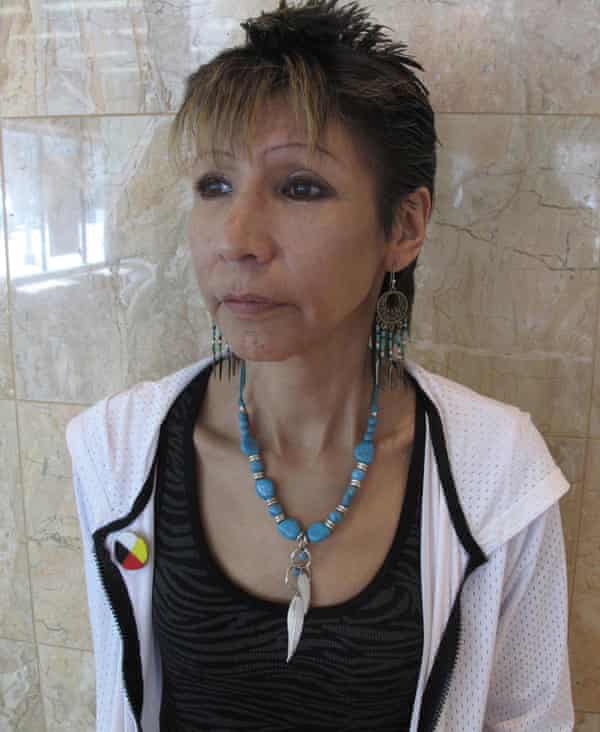
Sue Caribou contracts pneumonia once a year, like clockwork. The recurring illness stems from her childhood years at one of Canada’s horrific residential schools. “I was thrown into a cold shower every night, sometimes after being raped”, the frail 50-year-old indigenous mother of six said, matter-of-factly.
Caribou was snatched from her parents’ house in 1972 by the state-funded, church-run Indian Residential School system that brutally attempted to assimilate native children for over a century. She was only seven years old. “We had to stand like soldiers while singing the national anthem, otherwise, we would be beaten up”, she recalled.
Caribou said Catholic missionaries physically and sexually abused her until 1979 at the Guy Hill institution, in the east of the province of Manitoba. She said she was called a “dog”, was forced to eat rotten vegetables and was forbidden to speak her native language of Cree.
“I vowed to myself that if I ever get out alive of that horrible place, I would speak up and fight for our rights”, she said.
Sue Caribou said Catholic missionaries abused her until 1979 at the Guy Hill institution.
Her voice and that of 150,000 other residential school pupils was finally heard across the nation this week as Canada faced one of the darkest chapters in its history. The head of the Truth and Reconciliation Commission (TRC), set up to examine the school system’s legacy, did not mince his words when he unveiled his landmark report. “Canada clearly participated in a period of cultural genocide”, declared Justice Murray Sinclair .. https://www.theguardian.com/world/2015/jun/02/canada-indigenous-schools-cultural-genocide-report .. to cries and applause of survivors in Ottawa. Although prime minister Stephen Harper apologised for the school system in 2008 .. https://www.theguardian.com/world/2008/jun/12/canada.usa .. (as did the Roman Catholic Church in 2009), his government has always denied that it was a form of genocide.
Many survivors who gathered in Ottawa felt empowered for the first time in their life after hearing findings of the six-year-long commission.
“It feels like our story is validated at last and is out there for the world to see”, said a tearful 58 year-old Cindy Tom-Lindley, who is executive director of the Indian Residential School Survivor Society in British Columbia. “We were too scared as children to speak out. So to give our testimonies to the commission was liberating and emotional.”
As many as 6,000 children died in residential institutions, which ran from 1876 to 1996.
The accurate figure could be much higher however, since the government stopped recording aboriginal students’ deaths in 1920 in light of the alarming statistics. Caribou believes that dozens of pupils perished at the institution where she was detained. “Remains were found all over the fields. But numbers do not reflect the reality. Many of my friends committed suicide after their release”, said Caribou, who said she was frustrated that an inquiry did not take place twenty years ago, after the last of the residential schools closed
Justice Sinclair, who was the second aboriginal judge to be appointed in Canada .. https://www.theguardian.com/world/canada .. in 1988, made clear the connection between residential schools and the social ills plaguing the First Nations today, namely unemployment, domestic violence, the over-representation of aboriginal children in foster care and the high homicide rate of indigenous women.
“I didn’t learn anything at the Guy Hill school except the “Our Father” prayer and the national anthem”, said Caribou. “My children taught me how to read and write. I’ve been a housekeeper all my life because of my lack of education and poor health”.
The hopeful mood among survivors in the capital was met with silence by the government, despite urgent calls to act on the commission’s 94 recommendations. Prime Minister Harper did not utter a word while he attended the emotional closing ceremony of the TRC on Thursday, nor did he announce any measures that would further reconciliation for survivors and close the economic gap between First Nations and non-aboriginal Canadians.
Since coming into power in 2006, the Conservative government has repeatedly rejected some long-standing demands by First Nations, such as holding a national enquiry on the missing and murdered aboriginal women, a measure also recommended by Justice Sinclair.
A group of female students and a nun pose in a classroom at Cross Lake Indian Residential School in Cross Lake, Manitoba in February 1940. Photograph: Reuters
“If Stephen Harper’s apology for residential schools is not followed by actions, it will prove to be meaningless”, warned Perry Bellegarde, Chief of the Assembly of First Nations.
Bellegarde said Harper should move quickly on certain policy proposals, such as promoting the use of native languages and introducing aboriginal rights in the school curriculums across the nation. Bellegarde also stressed that more funding is desperately needed for equal education on reserves, where the government spends 3,000 dollars less per student than the national average.
The upcoming federal elections this October might still turn the tide in favour of the First Nations. Leaders of the two opposition parties – the New Democratic Party and the Liberal Party – have both promised to act on key policies if elected on October 19. There has been growing support in the general population for aboriginal requests, with three quarters of Canadians in favour of a public enquiry on violence against indigenous women .. http://www.cbc.ca/news/politics/murdered-aboriginal-women-what-to-know-about-a-national-public-inquiry-1.2748983 .. who are four times more at risk of being murdered .. http://www.amnesty.ca/our-work/campaigns/no-more-stolen-sisters . NDP’s Thomas Mulcair has pledged that he would set up one within days of being elected.
Tom-Lindley hopes that the awareness and political pressure on the Harper government will continue to grow until Election Day.
“Canadians are starting to get the message that this is not only an aboriginal issue, it concerns everyone. We have found our voice and we will not keep quiet anymore.”