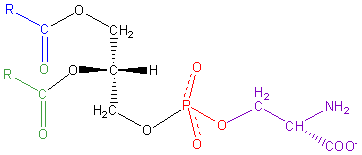
vinmantoo, it doesn't matter that a singled out drugs that addresses one specific PS receptor shows some (limited) clinical improvement.
You need to bind them ALL (10+ receptor types) together and the only way to do that in a synchronised way is capping Phosphotidylserine (PS) and not mixing 10+ drugs to block Tim1, Tim3, Tim4, Axl, Mer, Tyro-3, CD300a, RAGE, BAI-1, Stabilin etc. (more details here).
The PS from APPOPTIC cells is NEGLIGIBLE compared to the PS exposed due to other therapy damage (CHEMO, RADIO, etc). Furthermore only vascular endothelial cells count (not all others including lymphomatic endothelial cells) because blood only gets in contact with the vascular type and all drugs and immune cells we are talking about here are in the blood environment. The life span of endothelian cells (time from being created till the apoptotic cycle starts) is months to years.
Furthermore addressing the PS receptors has ALSO the problem that ALL Immune Cells draw of from the drugs used an not only those at the tumour site. An MDSC or Macrophage in the blood vessels of your feet will bind the substances as well as those near your, say, lung cancer tumour site.
But the Immune cells have a MUCH BIGGER disadvantage that I didn't bring up yet, but since you want to go in detail lets do it. They suffer from the relative motion laws. A molecule in the blood stream that needs to bind a receptor of a moving immune cell in that same bloodstream can only do that in its close proximity. To come closer to other more distant (and we are talking millimetres here when we say distant) both need to have a different speed from that of the bloodstream.
To my knowledge there is NO FORCE present that only act on a single type of the particles/molecules that can change their relative speed. The pump is the heart and it circulates the blood and everything that floats in it at the SAME speed.
As for:
As far as PS, it is exposed on tumors cell, and on apoptotic cells. The latter providing a sink to draw off and reduced the Bavi that might be therapeutic. Estimates for PS exposure on Jurkat cells are 600,000 per cell, and can reach 25 million. Estimates are that there 1are 10,000 PD1 receptors on T-cells. If the same number of inhibitory ligands and receptors are expressed on tumor cells, you get a sense of what Bavi isn't the target of choice. If there were 10 or 12 different inhibitory receptors or ligands on a tumor cell, that adds up to about 100,000 receptors/ligands. Let's use the lower estimate of 1 million PS molecules exposed per tumor cell. Even if you could put enough Bavi in patients to bind 70% of the PS om each tumors cell, and I doubt you could even come close, there would still be 300,000 free PS per tumors cell. That is 3x the number of inhibitory receptors/ligands expressed per tumor cell. You have way more PS than needed to bind the entire bank of 10-12 different inhibitory receptors/ligands.
This is not how it works. If you bind some (called a critical mass) of PS the molecule itself PREVENTS other PS to be reached (it is kind of like a mushroom forming an umbrella (here is a movie showing it : for PS specifically. That means that PS that is NOT BOUND by bavituximab can ALSO not bind to PS receptors on immune cells. Bavituximab is a quite large molecule.
Another flaw in what you present is that NOT ALL PS exposes during the apoptosis, only that of the cells lining the blood vessels. So if Bavi binds those it kind of forms a shield or membrane type effect prevent/obstructing immume cells to approach to allow their PS receptors to bind. Last but not least we are talking about a charged particle here as biopharm has explained in many of his past posts. That makes bavituximab spread better on the surface of the cell, a mechanism on which PS receptor binding strategies cannot count. And since phosphatidylserine is a relatively SMALL molecule (see below) it easily fits between PS receptor blockers.
This is a link to my post from more than a year ago it explains why Bavi likely isn't a good anti-cancer target when I tried to explain to CP why he was wrong.
CP wrote this following
Quote: The PS exposes ONLY at damages cells and the PS receptors of 1 single immune cell is IRRELEVANT because there are already more then 10 well know PS receptors over the different cells.
You'dd need a 10-12 component combination to address and dose them all.
I responded with the following but I made a few changes today to correct typos and added a few words for more clarity.
The data for antibodies against a single type of receptor or a single ligand is very clear. These immune modulators show clinical efficacy in many different tumors as a single agent, and the FDA has approved then. In stark contrast, Bavi has failed not only as a single agent, but in combination with chemo. The evidence is piling up against your contention that you need to simultaneously hit all receptors. The next step is to combining immune modulators so that you hit both the receptor and ligand of one type (anti-PD-L1 and anti-PD-1), or different immune cells, such as a combinations that release inhibition to both T-cells ad macrophages. If you notice, nobody is rushing in to pay or make a deal with PPHM to use their Bavi antibody.
As far as PS, it is exposed on tumors cell, and on apoptotic cells. The latter providing a sink to draw off and reduce the Bavi that might be therapeutic. Estimates for PS exposure on Jurkat cells are 600,000 per cell, and this can reach 25 million. Estimates are that there are only 10,000 PD1 receptors on T-cells. If the same number of inhibitory ligands and receptors are expressed on tumor cells, you get a sense of why Bavi isn't the target of choice. If there were 10 or 12 different inhibitory receptors or ligands on a tumor cell, that adds up to about 100,000 receptors/ligands. Let's use the lower estimate of 1 million PS molecules exposed per tumor cell. Even if you could put enough Bavi in patients to bind 70% of the PS on each tumor cell, and I doubt you could even come close, there would still be 300,000 free PS per tumors cell. That is 3x the total number of inhibitory receptors/ligands expressed per tumor cell. You have way more PS than needed to bind the entire bank of 10-12 different inhibitory receptors/ligands.


 Market Data
  Markets


 AI
AI