News Focus
News Focus
icon url

Protector

01/16/16 12:19 PM

#249423 RE: cjgaddy #249414

cj, thanks. I think you'll have to update this one several times in the coming years as PPHM continues to expand on collaborations and partnerships.
icon url

cjgaddy

01/16/16 12:43 PM

#249428 RE: cjgaddy #249414

TRIPLE-NEGATIVE BREAST CANCER: ER- PR- HER2-

“Your pathology report may say that the breast cancer cells tested negative for estrogen receptors (ER-), progesterone receptors (PR-), and HER2 (HER2-). Testing negative for all 3 means the cancer is triple-negative [“TNBC”]. These negative results mean that the growth of the cancer is not supported by the hormones estrogen & progesterone, nor by the presence of too many HER2 receptors. Therefore, TNBC cancer does not respond to hormonal therapy (such as tamoxifen or aromatase inhibitors) nor therapies that target HER2 receptors, such as Herceptin (trastuzumab). However, other medicines can be used to treat TNBC. About 10-20% of breast cancers are found to be Triple-Negative.
For doctors & researchers, there is intense interest in finding new medications that can treat this kind of breast cancer. Early studies are trying to find out whether certain medications can interfere with the processes that cause TNBC to grow.” http://www.breastcancer.org/symptoms/diagnosis/trip_neg

= = = = = = = = = = = = = = = = = = = = = = = = = =
1-11-16 PR, “Peregrine Provides Update on Planned Expansion of Bavi Clinical Pgm in Lung, Breast and Other Cancers”… http://tinyurl.com/zhdy37a
PLANNED TRIALS...
#4. Phase II Trial in Early Stage TNBC in Combination with Chemotherapy
Peregrine is planning to initiate a Phase II trial of bavituximab in combination with neoadjuvant chemotherapy in early stage TNBC. The primary endpoint of this study is to determine the pathologic complete response rate (pCR), an accepted surrogate endpoint in early stage TNBC. The concept for this neoadjuvant setting trial, which will be conducted at a few select U.S. sites, originated from Peregrine's ongoing collaboration with Memorial Sloan Kettering Cancer Center (MSKCC). The company has filed a study protocol to its existing bavituximab IND application in the U.S. and is currently working to open clinical trial sites, including one that will be led by David B. Page, M.D., at the Providence Cancer Center in Oregon. http://tinyurl.com/zhdy37a
- - - - - - - -DR. DAVID PAGE: note his prior work with Dr. Jedd Wolchok, chief of Mem.Sloan's Melanoma & Immunotherapeutics Service who “investigates novel approaches for cancer immunotherapy and mechanisms of tumor cell–immune cell interactions”… http://www.bcrfcure.org/researchers/david-page

5-29-15: Peregrine/MSKCC Collab. Announced: http://tinyurl.com/zkvebh6
“The studies at MSK will be performed under the direction of Taha Merghoub, PhD, [ http://www.mskcc.org/research-areas/labs/members/taha-merghoub-01 ] Associate Attending Biologist, Melanoma and Immunotherapeutics Service, Ludwig Collaborative and the Swim Across America Laboratory, a part of the laboratory of Jedd D. Wolchok, MD, PhD [ http://www.mskcc.org/research-areas/labs/jedd-wolchok ], a leader in the field of cancer immunotherapy. Dr. Wolchok serves as the Chief, Melanoma and Immunotherapeutics Service, Lloyd J. Old Chair for Clinical Investigation as well as an Associate Director of the Ludwig Center for Cancer Immunotherapy at MSK.”

"The phosphatidylserine (PS) signaling pathway is a very interesting target for modulating the immune system's response to cancer. We look forward to exploring the potential of PS-targeting agents alone and with other immune modulators that may lead to novel advances in cancer therapy," said Dr. Jedd Wolchok (MSKCC).

"A key focus of the Wolchok Lab's research is studying novel immunotherapy combinations that work together to enable the immune system to recognize and destroy cancer. This collaboration will allow us to focus on the role and contribution of PS blockade therapy in determining which combination of the current and next generation of immune modulators is likely to increase the extent and amplitude of anti-tumor response. This important pre-clinical and translational work will potentially guide the design of the next generation of clinical studies with bavituximab," said Dr. Taha Merghoub (MSKCC).
icon url

biopharm

01/17/16 8:18 AM

#249447 RE: cjgaddy #249414

Nice summary CJ! I hope there is the equivalent to NCCN in Europe for the next collaboration.
icon url

cjgaddy

01/18/16 3:37 PM

#249506 RE: cjgaddy #249414

The upcoming Triple-/MBC Trial (MSKCC/Collab.) @ProvidenceCC = SUNRISE/Ph.3 Site too...

1-11-16 PR, “Peregrine Provides Update on Planned Expansion of Bavi Clinical Pgm in Lung, Breast and Other Cancers”… http://tinyurl.com/zhdy37a
PLANNED TRIALS...
#4. Phase II Trial in Early Stage TNBC in Combination with Chemotherapy
Peregrine is planning to initiate a Phase II trial of bavituximab in combination with neoadjuvant chemotherapy in early stage TNBC. The primary endpoint of this study is to determine the pathologic complete response rate (pCR), an accepted surrogate endpoint in early stage TNBC. The concept for this neoadjuvant setting trial, which will be conducted at a few select U.S. sites, originated from Peregrine's ongoing collaboration with Memorial Sloan Kettering Cancer Center (MSKCC). The company has filed a study protocol to its existing bavituximab IND application in the U.S. and is currently working to open clinical trial sites, including one that will be led by David B. Page, MD, at the Providence Cancer Center in Oregon [ http://oregon.providence.org/our-services/p/providence-cancer-center => http://oregon.providence.org/clinical-trials ].
...Note: ProvidenceCC is a Ph.3 SUNRISE site, PI=Rachel Sanborn MD, Dir./ThoracicONCO http://cancergrace.org/faculty/rachel-sanborn-md
Dr. Sanborn's Conflicts of interest: DNA, AZN
- - - - - - - -
Note DR. DAVID PAGE's prior work with Dr. Jedd Wolchok, chief of Mem.Sloan's Melanoma & Immunotherapeutics Service who “investigates novel approaches for cancer immunotherapy and mechanisms of tumor cell–immune cell interactions”… http://www.bcrfcure.org/researchers/david-page

5-29-15/PR re: MSKCC/Peregrine Collab… http://tinyurl.com/zkvebh6
"The phosphatidylserine (PS) signaling pathway is a very interesting target for modulating the immune system's response to cancer. We look forward to exploring the potential of PS-targeting agents alone and with other immune modulators that may lead to novel advances in cancer therapy," said Dr. Jedd Wolchok.

The studies at MSK will be performed under the direction of Taha Merghoub, PhD, [ http://www.mskcc.org/research-areas/labs/members/taha-merghoub-01 ] Associate Attending Biologist, Melanoma and Immunotherapeutics Service, Ludwig Collaborative and the Swim Across America Laboratory, a part of the laboratory of Jedd D. Wolchok, MD, PhD [ http://www.mskcc.org/research-areas/labs/jedd-wolchok ], a leader in the field of cancer immunotherapy. Dr. Wolchok serves as the Chief, Melanoma and Immunotherapeutics Service, Lloyd J. Old Chair for Clinical Investigation as well as an Associate Director of the Ludwig Center for Cancer Immunotherapy at MSK.

"The phosphatidylserine (PS) signaling pathway is a very interesting target for modulating the immune system's response to cancer. We look forward to exploring the potential of PS-targeting agents alone and with other immune modulators that may lead to novel advances in cancer therapy," said Dr. Jedd Wolchok.

"A key focus of the WOLCHOK LAB's research is studying novel immunotherapy combinations that work together to enable the immune system to recognize and destroy cancer. This collaboration will allow us to focus on the role and contribution of PS blockade therapy in determining which combination of the current and next generation of immune modulators is likely to increase the extent and amplitude of anti-tumor response. This important pre-clinical and translational work will potentially guide the design of the next generation of clinical studies with bavituximab," said Dr. Merghoub.

= = = = = = = = = = = = = = = = = = = = = = = = = = = =
1-16-16: Summary of Peregrine's New Collab's: Mem.Sloan-Kettering, AstraZeneca, NCCN http://tinyurl.com/zkvebh6
I. Memorial Sloan Kettering (MSKCC) – 5-2015/Investigate Novel PS-Targeting Immunotherapy Combos
II. AstraZeneca (Bavi+Durvalumab) - 8-2015/multiple solid tumors, 10-2015/expanded to NSCLC
III. Natl-Comprehensive-Cancer-Network (NCCN) – 1-2016/$2mm grant to NCCN's Oncology Res. Pgm (ORP), “26 of the world's leading cancer centers”
icon url

cjgaddy

01/24/16 11:36 AM

#250233 RE: cjgaddy #249414

Jan25/Dr.Hutchins, Jan26/Dr.Freimark “Immunotherapy World” & ”Combinatorial Immunotherapies”

1-20-16/PR: PEREGRINE PHARMACEUTICALS TO PRESENT AT TWO UPCOMING CANCER IMMUNOTHERAPY CONFERENCES http://ir.peregrineinc.com/releasedetail.cfm?ReleaseID=950909

= = = = = = = = = = = = = = = = = = = = = = = = = = = = = = =
PPHM's Jeff Hutchins(VP/PreClinRes) speaking 1-25-16 at Immunotherapy World Conf. (WashDC). “750 deal-makers will gather to discuss the direction, future and value of cell, gene and immunotherapy portfolios.”
Jan25-27 2016: “Phacilitate's Immunotherapy World Conf.”, WashDC
http://www.immunotherapyforum.com/Content/Conference
“After years of posting impressive clinical results and pushing analyst projections to greater and greater heights, immuno-oncology has solidified its status as the most exciting development in cancer treatment for a long time. Now that checkpoint inhibitors have uncloaked cancer cells, drug developers are investigating dozens of immune drug cocktails (everything from CAR-T to antibodies, vaccines and other cellular therapies) to find well-tolerated treatments which could become the first-in-line to fight cancer in patients. We have all heard of the stunning breakthroughs at ASCO'15. BMS’ Opdivo + Yervoy study which lead to a 58% shrinkage of tumors and a PFS superiority of 8.6mos. against monotherapies in patients with melanoma. AstraZeneca’s own PD-L1 (MEDI4736/durvalumab) [see 10-15-15 AZN/PPHM Collab. Expansion: http://tinyurl.com/q79bkam ] and CTLA-4 (Tremelimumab) inhibitor combination, which demonstrated an ORR of 27% in the treatment of NSCLC… On Jan25-27 2016, 750 deal-makers will gather in the Grand Hyatt Hotel to discuss the direction, future and value of cell, gene and immunotherapy portfolios.”
1-24-16 Agenda Update due to storm – everything moved back ~30mins: http://www.immunotherapyforum.com/files/new_immunotherapy_agenda.pdf
---------
Jan25(Day1): Focus Session1, “Cellular Cancer Immunotherapy: Optimizing Combination Therapy Development Strategy”
3:15pm: Chair's intro, David Lebwohl, NOVARTIS
3:20: Michael Hanna, VACCINOGEN, “The Provocative Issues of Tumor Heterogeneity on Active Specific Immunotherapy...”
3:35: Laura Benjamin, ELI LILLY, “Challenges/Opportunities for Translational Science to Guide Angiogenesis/Combos w/Immunotherapy”
3:50: Taylor Schreiber, HEAT BIOLOGICS, “Dual-Acting Immunotherapy with ComPACT - Vaccination & Co-Stimulation...”
-------
1-25-16 4:05-4:20pm: Jeff T. Hutchins (PEREGRINE'S VP/PreClinRes), “Combination Immunotherapies - Opening the Gate: Increasing Tumor Infiltrating Activated T-cells to Optimize and Expand the Benefits of Immune Checkpoint Therapies”
* Analyzing complimentary mechanisms in therapeutics and building solid partnerships
* Utilizing scientifically-driven data to build a product value story
* Demonstrating how a product fits within a treatment in combination(s) and against competitive therapies
-------
4:20pm: Robert Preti, PCT(CALADRIUS), “What Does Commercialization Look Like?”

- - - - - - - - - - - - - - - -From PPHM's 1-20-16 PR: http://tinyurl.com/z65avfw
“In his talk, Dr. Hutchins will discuss strategies for expanding the therapeutic benefit seen with immuno-oncology monotherapies to a broader range of patients using combination treatment approaches. Specifically, he will highlight the strategy of leveraging treatments capable of increasing the number & activity of T-cells in the tumor microenvironment to optimize the therapeutic benefit of immune checkpoint inhibitors such as anti-PD-1/anti-PDL-1 agents. Dr. Hutchins will draw on the company's experience in working with preclinical equivalents of bavituximab, Peregrine's lead investigational phosphatidylserine (PS)-targeting immunotherapy candidate. PS-targeting antibodies have been shown to shift the immunosuppressive functions of immune cells in tumors, resulting in anti-tumor immune responses. Peregrine has generated results from multiple preclinical & clinical-translational studies demonstrating enhanced anti-tumor activity and immune activation when combining equivalent PS-targeting antibodies with conventional chemotherapy or checkpoint inhibitors such as anti-PD-1 agents.”

= = = = = = = = = = = = = = = = = = = = = = = = = = = = = = =
Bruce Freimark (Dir/PreClin-Oncology) speaking 1-26-16 at GTCbio's Novel-Immunotherapeutics-Summit, SanDiego
Jan25-26 2016: “GTCbio's Novel Immunotherapeutics Summit”, San Diego
https://www.gtcbio.com/conferences/immunotherapeutics-summit-overview
GTC = Global Technology Community https://www.gtcbio.com/about-us
4 Sub-Conferences, including: 8TH IMMUNOTHERAPEUTICS & IMMUNOMONITORING
1-26-15: SESSION: ”Combinatorial Immunotherapies” - Moderator: Bruce Freimark, Peregrine Pharm.
4 Speakers:
*9:35am “DNA Vaccines with T-Cell Checkpoint Blockade”, Douglas McNeel, UNIV./WISCONSIN
*10:00am “Blockade of Phosphatidylserine Enhances the Anti-Tumor Activity of Targeted Therapy & Immune Checkpoint Inhibitors by Reducing Immunosuppressive Cells in the Tumor Microenvironment”, Bruce Freimark (Res.Dir./Preclin.Oncology), PEREGRINE PHARMACEUTICALS
Abstract: The underlying cause for the failure of immune checkpoint blockade is persistent, multifocal immune suppression in the tumor microenvironment. This is due to the absence of pre-existing antitumor Teff because of the action of immune checkpoints that induce immunosuppressive cytokines and recruit tumor infiltrating myeloid-derived suppressor cells (MDSCs), regulatory T cells (Treg), and M2 macrophages. Phosphatidylserine (PS) is segregated to the inner leaflet of the plasma membrane but becomes externalized to the outer leaflet in tumor cells where it contributes as an upstream checkpoint inhibitor to an immunosuppressive environment. Antibody blockade of PS reprograms the immune cells in the tumor microenvironment to support immune activation. Antibody-mediated PS blockade reduces the levels of MDSCs, TGF-beta, and IL-10 and increases the levels of TNF-alpha and IL-12. PS blockade also re-polarizes tumor-associated M2 macrophages to a M1 phenotype which promotes the maturation of dendritic cells and induces of adaptive T-cell responses. PS targeting antibodies enhance the anti-tumor activity of anti-CTLA-4 and anti-PD-1 antibodies in models of melanoma and breast cancer and correlates with an increase in the infiltration of activated T cells and the induction of adaptive immunity. In summary, PS blockade in combination with targeted therapy and other immune checkpoint inhibitors promotes a localized, anti-tumor response and represents a promising strategy to enhance cancer immunotherapy.
*10:25am “Cancer Vaccines in the Era of Checkpoint Blockade”, Willem Overwijk, MD.ANDERSON
*11:20am “Myeloid-Derived IL-10 & PD-1 Create a Vicious Immune...”, Keith Knutson, MAYO CLINIC

- - - - - - - - - - - - - - - -From PPHM's 1-20-16 PR: http://tinyurl.com/z65avfw
“Dr. Freimark will highlight data showing that blocking PS signaling in combination with immune checkpoint inhibitors promotes a localized, anti-tumor response. He will share research findings demonstrating that PS-targeting antibodies enhance the anti-tumor activity of anti-CTLA-4 & anti-PD-1 antibodies in models of melanoma & breast cancer and correlate with an increase in the infiltration of activated T-cells and the induction of adaptive immunity. Both [Dr.Hutchins/1-25-16 & Dr.Freimank/1-26-16] presentations will also highlight key recent research findings showing that PS-signaling pathway inhibitors demonstrate multiple signs of immune activation in low or negative PD-L1 tumors. This suggests that PS-targeting antibodies have the potential to show a clinical benefit in patients with low PD-L1 levels and who do not generally benefit from checkpoint treatment alone. The potential for bavituximab to improve the clinical outcome of checkpoint inhibitors will be evaluated as part of Peregrine's ongoing clinical research collaboration with AstraZeneca. To this end, a global Phase II study of bavituximab in combination with AstraZeneca's durvalumab, an anti-PD-L1 immune checkpoint inhibitor, in patients with previously treated squamous or non-squamous NSCLC is expected to begin during Q1/2016.”

= = = = = = = = = = = = = = = = = = = = = = = = = = = = = = =
Jan26-28 2016: “20th Symposium on the Interface of Regulatory & Analytical Sciences for Biotechnology Health Products”, WashDC
http://www.casss.org/?WCBP1600
CASSS = Calif. Separation Science Society (“the detailed study & controlled separation of mixtures - also referred to as “chromatography”. Major advances in separation science have enabled biologists, chemists, pharmacists and environmentalists to make breakthroughs of their own. Genomics, drug discovery, DNA fingerprinting, and ultra-trace residue analysis, for instance, would not be possible without recourse to the findings generated by separation science.
Visit Avid at table #20.

= = = = = = = = = = = = = = =
I. Memorial Sloan Kettering (MSKCC) – 5-2015/Investigate Novel PS-Targeting Immunotherapy Combos
II. AstraZeneca (Bavi+Durvalumab) - 8-2015/multiple solid tumors, 10-2015/expanded to NSCLC
III. Natl-Comprehensive-Cancer-Network (NCCN) – 1-2016/$2mm grant to NCCN's Oncology Res. Pgm (ORP), “26 of the world's leading cancer centers”
...??Cancer Moonshot 2020 http://www.cancermoonshot2020.org – see S.King's 1-14-16 EP-Vantage comments: http://tinyurl.com/z59pc6a
icon url

cjgaddy

01/27/16 10:05 AM

#250543 RE: cjgaddy #249414

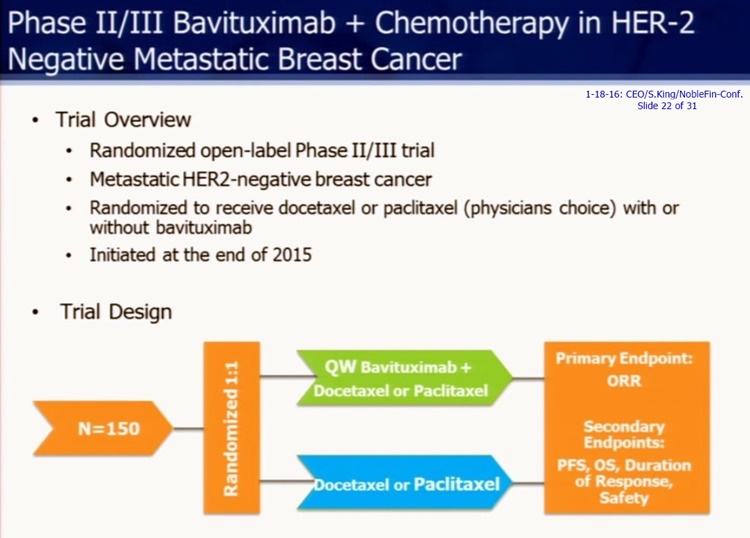
CEO Steve King's 1-18-16 presentation @Noble-Financial's Investor Conf. - 21min. video replay and 31 slides captured...

Jan17-20 2016: NobleCon12 - Noble Financial's 12th Annual Emerging Growth Investor Conf., Port St. Lucie, FL
1-18-16/SK: “Delivering Innovative & Exceptional Biopharmaceutical Products to Improve Patient Lives”
REPLAY/21min. Video & 31 Slides (CEO Steve King): http://tinyurl.com/jr4vr36


SKing/8:50 Slide16 (1-18-16): “Unblinding at 80% of Events”


= = = = = = = = = = = = = = = = = = = = = = = = = = =
1-11-16/PR: Update on 4 New Bavi Clinical Trials (Lung/AZN, Breast/1Co./1MSKCC, Other Cancers/AZN). SUNRISE estimates: Interim1=Early'16, Interim2=Mid'16, FinalUnblinding=End'16… http://tinyurl.com/zhdy37a

1-6-16: Peregrine enters into Research Collab. with Natl-Comprehensive-Cancer-Network (NCCN) http://tinyurl.com/zmxtpsb
...$2mm res. grant to NCCN's Oncology Res. Pgm (ORP), will “significantly expand our clinical evaluation of Bavi and augment Peregrine's IST pgm at 26 of the world's leading cancer centers”.

12-10-15 Qtly. Conf. Call (King/Shan/Worsley/Garnick/Lytle) Transcript http://tinyurl.com/jkp885g
...CEO SK: “Although our SUNRISE enrollment milestone has been reached, we have no intention of slowing down, quite the opposite. We are aggressively moving to initiate new clinical trials [Lung, Breast, Mult-Types] that will allow us to build the most robust oncology business possible… With each of these studies our goal is the same - we are committed to identifying key indications, patient populations, and therapeutics that can benefit from combination treatment with bavituximab. From what we have seen to-date, the opportunity appears vast and we are hard at work converting the most promising prospects into true value.”

10-15-15 Peregrine's ASM: ATTENDEE Reports & Link to SK's 18min/16slide webcast: http://tinyurl.com/o6z4bm4

10-15-15: Peregrine & AstraZeneca Expand Collab. w/Ph2/2ndLine-NSCLC Trial, Bavi+durvalumab(MEDI4736), squamous or non-squamous. http://tinyurl.com/q79bkam

9-9-15 Qtly. Conf. Call (King/Shan/Worsley/Lytle) Transcript http://tinyurl.com/ph22vdn
...CEO S.King: “The Memorial Sloan Kettering & AstraZeneca collaborations are an important part of our announced plans to expand our bavituximab clinical pgm.”

8-24-15: AstraZeneca & Peregrine Collaborate on Bavi+Durvalumab Ph1/1B Trial for “multiple solid tumors” http://tinyurl.com/owlxpsf
...Durvalumab=MEDI4736(anti-PD-L1 immune checkpoint inhibitor). AZN’s Head/I-O(Robert Iannone): “Our partnership with Peregrine provides the opportunity to explore an exciting, novel combination that could deliver important clinical benefit to patients across a range of cancers."
7-14-15 Qtly. Conf. Call (King/Shan/Hutchins/Lytle) Transcript http://tinyurl.com/nw2v5u6
...CEO S.King: “We recently entered into collaboration with investigators at Memorial Sloan Kettering Cancer Ctr to continue expanding on this important work, as well as to explore other potential applications of bavituximab and other agents that target PS-signaling pathway.”
5-29-15: Peregrine & Sloan Kettering Enter Collab. to “Investigate Novel PS-Targeting Immunotherapy Combos” http://tinyurl.com/qxu4w2x

= = = = = = = = = = = = = = = = =RECALL:
12-10-15 Qtly. Conf. Call (King/Shan/Worsley/Garnick/Lytle) Transcript http://tinyurl.com/jkp885g
Q&A:
3. Rahul Jasuja - Noble Life Science Partners http://noblelsp.com/research
RJ: ”In planning your combination studies going forward, we are looking at PD-L1 low tumors because they are likely to be non-responsive to anti-PD-1's, like in Keytruda & Opdivo. Is that the only the rational, or is it also likely that PD-L1 low tumors also more responsive to bavituximab?”
Steve King: That’s what we want to show out in some of these studies we’re starting. We’re not planning on selecting for PD-L1 neg. patients in the Phase II study or the initial combination of bavi with chemo & durvalumab, but rather taking all-comers and then doing subset analysis and determining which patient populations we’re having the biggest impact in. Because, based on our translational data that’s been presented this year at ESMO & SITC'15 [11-9-15/SITC: http://tinyurl.com/pbof95w ], we’ve shown that we can take PD-L1 neg. tumors and actually elicit an immune response in those tumors. That’s the reason that we think that we have the potential to turn those into better responders on a PD-1 or PD-L1 therapy. As I mentioned during the prepared remarks it’s basically, “use bavi to get the immune response going and then use durvalumab to keep it going.” That's the reason there is a great scientific rationale right now for why we may have the biggest impact in those patients who don’t do well, because the delta between how they would normally do and how they might do with bavituximab may be the largest. We’re going to have some great insight into that from the studies we’re planning on running and the ability to go in and do subset analysis. Joe, do you want to add any more to that?
Joe Shan: I was going to use the word delta, but you beat me to it. I think in the PD-L1 neg. patient you have more opportunities to demonstrate the delta.
RJ: ”One of the concepts that’s evolving pretty rapidly is that you’ve got the TILs- & TILs+, and TILs+ are responding to PD-1 checkpoint immunotherapy. So is it fair to say, or is it an extrapolation, that PD-L1 positive tumors are more likely the ones that are TILs+? And in your case are you also seeing that TILs- tumors are probably the ones that are going to respond to chemo combination therapy better than the other ones that are the non-responders in combination with PS you can make them responders.”
Steve King: That’s certainly what our evidence has shown so far. The general assumption is that TILs- or TILs/Low tumors the ones that have low levels of the need for PD-L1, right, that’s really meant to stop an ongoing immune response. I think that’s generally true. Now it gets a little bit more complex because you’ve got Tregs and all kinds of T-cells present inside the tumor, so it also depends on the particular makeup. What we know is that when you get bavituximab, we seem to see a nice change in the levels of MDSCs (Myeloid-Derived Suppressor Cells) who are really the cell type that’s responsible for controlling the immune response in the tumor. It's been shown that patients with high levels of MDSCs have very poor prognosis. So as much as probably getting new TILs into the tumors is important, it’s probably more important to change the makeup of those cells into a more productive immune response positive phenotype. That’s exactly what we see with when you get bavituximab treatment; when we take a look a look at our translational data it shows an increase in CD4+ T-Cells and an increase in CD8+ T-Cells along with the changes in the suppressive cells types and the expression of immuno-suppressor cytokines, in which both decrease after treatment. So, it’s a matter of getting everything moving in the right direction. Again this is the role we think PS plays, by blocking it and activating an immune response, we're able to turn that around.
RJ: ”That does make sense. I think you’re looking at patient selection as being helpful in defining the population as well as the data you showedat SITC'15 [11-9-15/Duke's Herbert K. Lyerly http://tinyurl.com/pbof95w ], where you talked about immuno-profiling and looking at response to bavituximab, those are very interesting datasets. The other question I have is, there are a couple of trials running that are ISTs [at UTSW] - one of them is bavi in combination with Yervoy(ipilimumab) in melanoma, and the other one is a rectal cancer IST. Any updates on those?”
Steve King: The Rectal adenocarcinoma, we expect to have some data coming up this year from that study. As in any IST, it’s always a bit difficult, we do whatever we can to encourage them. But we do expect data to be becoming out of that study in 2016, which I think will be a real positive because in that study we did have the opportunity to collect pre- and post-treatment biopsies - #1, so we can see what happens following bavituximab treatment, but also that was a combination with radiation which we expect to be a very strong inducer of tumor antigens, which can then be taking advantage of by bavituximab treatment to make CD8+ T-Cells or killer T-Cells. For the Melanoma study, obviously the since that investigator (UTSW) started this study the SOC has changed pretty substantially. So right now, we're trying to work with that investigator, as well as some others, to probably change the profile of that study or start a new multi-center study in which we can then look at little bit more closely at what is the current SOC and make sure it’s an attractive trial for patients. As the treatment options for patient’s change, you need to be able to change with it and luckily it's a small IST trial and we may have an opportunity here to run a trial that I think would be very attractive for patients and will allow us to answer some key questions, because that was really the point of that study was to answer some of the key questions of combining with Yervoy. In addition, we’re starting the combination of durvalumab [AZN collab.] in multiple solid tumor types after the beginning of the year, so one way or another we’ll have lots of information coming from those studies.
RJ: ”Any updates any more color or comments on the collaboration with Sloan Kettering and Jed Wolchok on combination approaches - any data coming that way in the next few months?”
Steve King: That's an ongoing process. We’re very actively working with them to study a new combinations, looking for potential and different indications as well as those different combinations. We fully expect that it will be a fruitful collaboration; there will be a lots of data coming from that that we’ll see a very scientific meetings coming up. We already see a lot of data coming out of all for other collaborators nad we’ve had examples of presentations in multiple conferences this year. It always takes a while for them to get started, but then once they are going you tend to have a lot of data that continuously comes through them because the all the systems are up and running.
RJ:”Great. Thank you and congratulations on the healthy revenues at Avid.”
icon url

cjgaddy

04/19/16 9:24 AM

#262258 RE: cjgaddy #249414

4-18-16: CEO Steve King Quoted in BioProcessIntl Report on Cancer Immunotherapies (12pg. Report by Angelo DePalma, PhD)...

4-18-16: “Cancer Immunotherapies: Fulfilling the Promise of Protein & Cell Therapies”
by Angelo DePalma, PhD...
http://www.bioprocessintl.com/manufacturing/cell-therapies/cancer-immunotherapies-fulfilling-the-promise-of-protein-and-cell-therapies
PDF(12pgs): http://www.bioprocessintl.com/wp-content/uploads/2016/04/SpecRPT-Immunotherapy.pdf


With few exceptions, both small-molecule and biological cancer treatments have contributed only incrementally towards achieving long-term responses or outright cures. In this regard, emerging cell- and protein-based cancer immunotherapies represent game-changing strategies for treating even refractory cancer. With long-term responses now possible, medical science may be on the verge of delivering on the long-unfulfilled promise of making cancer a manageable disease. But impediments to commercializing cancer immunotherapies are substantial. Producing cell-based treatments entails substantial hands-on manipulation and perfecting the logistics of harvesting and expanding therapeutic cells and delivering them to patients. Given the handling requirements and high cost of goods (CoG) for cell-based immunotherapies, reimbursement considerations will force developers to demonstrate indisputable value. Those developing immunotherapies based on monoclonal antibodies (MAbs) will experience fewer such issues thanks to platform manufacturing technologies, but even they are likely to be priced to perfection.

Issues In Protein Immunotherapy - ”Immunotherapy Squared” Bavituximab, a monoclonal antibody from Peregrine Pharmaceuticals (Tustin, CA), is a classic protein immunotherapy targeting phosphatidylserine (PS), a novel immune system checkpoint. PS exists on the inside membrane layer of every cell, but it externalizes when cells die. “In circulation, PS signals the immune system to engulf dying cells,” explains Steve King, Peregrine’s CEO. PS also limits the immune response. As tumors proliferate, they often outgrow their blood supply so that many cells die, sending more PS into circulation. Tumors also release microparticles containing PS, ultimately suppressing immune response to the tumor by keeping the host’s immune system busy fighting particles and dead cells.

Peregrine’s collaboration with AstraZeneca for clinical development could be described as “immunotherapy squared.” Bavituximab’s presumed mode of action is to block immunosuppression while activating a tumor-killing T-cell immune response. AstraZeneca’s investigational anti-PD-L1 immune checkpoint inhibitor, durvalumab, targets the programmed cell death ligand PD-L1, which helps tumors go undetected by the immune system. Both companies believe that combining the enhanced T-cell–mediated antitumor activity with a checkpoint inhibitor will extend the ability of tumor-specific T-cells to attack cancerous cells.

Like many small biopharmaceutical companies with a promising pipeline product, Peregrine chooses to emphasize clinical development over manufacturing or process development, confident that if bavituximab succeeds in the clinic, then CoG issues will resolve themselves. “Our process flexibility assures that we could duplicate the entire facility and all its infrastructure in an open warehouse space almost anywhere,” Steve King affirms. “We built the current facility with the idea of supporting production lots early in commercialization. At that point you have substantial revenue, so all your manufacturing avenues open up. And the risk of sticking with the same systems, at the same scale, from a comparability standpoint is negligible.”

Downstream operations could very well become a bottleneck. Peregrine has learned through its contract manufacturing business, Avid Bioservices, that high yields — even from 1,000-L or 2,000-L bioreactors — impose operational & financial pressures on downstream processing and purification. Protein A affinity chromatography columns, for example, begin at about $1mm for resin alone and go up from there. “That’s a big investment for a small-to-midsized company,” King admits. Peregrine is handling such challenges through a hybrid approach of maintaining a revenue-generating mfg. business that mitigates the cost of preparing for commercialization of its own products. “Not many companies have that flexibility.”

Blocking the Immunity Blockers: In November 2015, Faron Pharmaceuticals (Turku, Finland). . . Read the rest of this 12-pg. Special Report in the eBook – Just fill out the form to view and download it.
ANGELO DEPALMA: PhD in organic chemistry from the SUNY/Stony Brook, freelance writer - was a chemist 1st at Brookhaven National Laboratory and then at Schering-Plough. For over 25yrs, has written for dozens of technical online & print publications, as well as product & service companies in biotechnology, bioprocessing, pharmaceutical chemistry, pharmaceutical development, drug discovery, and laboratory instrumentation.
icon url

cjgaddy

04/21/16 3:53 PM

#262490 RE: cjgaddy #249414

4-20-16/AACR'16 & 4-4-16/Cancer-Immunology-Res.(AACR) article, both describing preclin. data showing that Bavi combination I-O treatment (w/anti-PD-1 & anti-CTLA-4) “induces a shift in the tumor microenvironment from immunosuppressive to immune active” in Triple- Breast Cancer & Melanoma. 4-20-16 PR references a “planned clinical trial of bavituximab in combination with AstraZeneca's durvalumab under a clinical collaboration”. The AACR'16 poster #5116 (PPHM/U.Cal-Irvine) PDF now on Peregrine's website: http://www.peregrineinc.com/images/stories/pdfs/aacr-2016-gray.pdf

4-20-16/AACR'16 PR: Preclinical Data Presented at American Association for Cancer Research (AACR) Annual Meeting Demonstrate Enhanced Therapeutic Benefit of Combining a PS-Targeting Antibody With Anti-PD-1 Therapy in Models of Triple Negative Breast Cancer (TNBC)
* Statistically Significant Improvement in Overall Survival for Combination as Compared to Anti-PD-1 Therapy Alone in TNBC Models; Combination Also Protects Against Re-Challenge With TNBC Tumor Cells
* Novel Genetic Analysis Technology Further Validates Immune Modulating Mechanism of Bavituximab and Anti-PD-1 Combination; Supports Clinical Evaluation of Bavituximab and I-O Agent Combinations
http://ir.peregrineinc.com/releasedetail.cfm?ReleaseID=965932

TUSTIN, April 20, 2016: Peregrine Pharmaceuticals, Inc. (NASDAQ: PPHM, PPHMP), a biopharmaceutical company focused on developing therapeutics to stimulate the body's immune system to fight cancer, today announced the presentation of preclinical study data demonstrating enhanced anti-tumor activity and immune activation for a combination of the preclinical bavituximab equivalent (ch1N11) and anti-PD-1 therapy in models of breast cancer including triple negative breast cancer (TNBC). Additionally, new analysis conducted using the nCounter ® PanCancer Immune Profiling Panel from NanoString Technologies ® further validated previously reported findings showing that the combination treatment induced a shift in the tumor microenvironment from immunosuppressive to immune active. This was evidenced by a distinct change in immune cell phenotypes, as well as an increase in immune activating cytokines and decrease in immunosuppressive cytokines. These study results, which were presented at the 2016 American Association for Cancer Research (AACR 2016) Annual Meeting, provide further support for Peregrine's strategy of evaluating bavituximab in combination with a range of novel immuno-oncology (I-O) agents for the treatment of various cancers.

"These presented study results, particularly the significant increase in overall survival and immunity to tumor re-challenge seen with the treatment combination as compared to anti-PD-1 therapy alone, continue to strengthen our collection of translational and preclinical data supporting the potential for bavituximab to enhance the therapeutic impact of I-O agents in the treatment of cancer. In doing so, these data provide further rationale for our clinical strategy focused on studying bavituximab in combination with I-O agents targeting the PD-1/PD-L1 pathway in a range of cancers," stated Jeff T. Hutchins, Ph.D., Peregrine's VP, Preclinical Research. "With a wealth of supportive research in hand, we look forward to the continued advancement of our clinical collaborations with AstraZeneca, the National Comprehensive Cancer Network [NCCN] and Memorial Sloan Kettering Cancer Center, to further evaluate the therapeutic potential of bavituximab with novel I-O agent combinations."

Bavituximab is an investigational immunotherapy designed to assist the body's immune system by targeting and modulating the activity of phosphatidylserine (PS), a highly immune-suppressive signaling molecule expressed broadly on the surface of cells in the tumor microenvironment. Peregrine's PS signaling pathway inhibitor candidates, including bavituximab, reverse the immunosuppressive environment that many tumors establish in order to proliferate, while also activating immune cells that target and fight cancer. The preclinical equivalent of bavituximab, ch1N11, is used in animal model studies as a guide for clinical development.

As part of the study that was presented at AACR [Poster #5116 PPHM/Friemark, U.Cal-Irvine/CW-Hughes http://www.peregrineinc.com/images/stories/pdfs/aacr-2016-gray.pdf ], researchers evaluated the combination of ch1N11 and anti-PD-1 therapy versus anti-PD-1 stand-alone therapy in two well-characterized murine models of TNBC (EMT-6 and E0771). Study data showed that the combination therapy significantly enhanced overall survival (p=0.0155) and was capable of mediating complete tumor regressions in a greater number of subjects compared to single agent treatments (60% vs. 20%). Data also demonstrated that animals receiving combination treatment had significant increases in tumor associated indicators of immune system activation, including CD45+, CD8+ and CD3+ T-cells. Importantly, the combination treatment led to a prolonged anti-tumor immune response which protected the animals that achieved a complete tumor regression against a re-challenge with the same E0771 TNBC model tumor cells. This sustained anti-tumor response demonstrates the ability of the combination treatment to trigger immune system memory and support adaptive immune responses against reemerging disease in this TNBC model. All study animals experienced no signs of adverse effects or weight loss following repeated doses of all therapeutic agents.

About Bavituximab: A Targeted Investigational Immunotherapy
Bavituximab is an investigational chimeric monoclonal antibody that targets phosphatidylserine (PS). Signals from PS inhibit the ability of immune cells to recognize and fight tumors. Bavituximab is believed to override PS mediated immunosuppressive signaling by blocking the engagement of PS with its receptors as well as by sending an alternate immune activating signal. PS targeting antibodies have been shown to shift the functions of immune cells in tumors, resulting in multiple signs of immune activation and anti-tumor immune responses.

About Peregrine Pharmaceuticals, Inc.
Peregrine Pharmaceuticals, Inc. is a biopharmaceutical company developing therapeutics to stimulate the body's immune system to fight cancer. The company is focused on evaluating its lead immunotherapy candidate, bavituximab, in combination with a range of novel immuno-oncology (I-O) agents for the treatment of various cancers. One specific component of this I-O combination strategy includes a planned clinical trial of bavituximab in combination with durvalumab, AstraZeneca's investigational anti-PD-L1 immune checkpoint inhibitor, under a clinical collaboration.

In addition to its drug development programs, Peregrine also has in-house cGMP manufacturing capabilities through its wholly-owned subsidiary Avid Bioservices, Inc. ( http://www.avidbio.com ), which provides development and biomanufacturing services for both Peregrine and third-party customers. For more information, please visit http://www.peregrineinc.com .
Safe Harbor *snip*
Jay Carlson, Peregrine Pharmaceuticals, Inc., 800-987-8256 info@peregrineinc.com
Stephanie Diaz (Investors), Vida Strategic Partners, 415-675-7401 sdiaz@vidasp.com
Tim Brons (Media), Vida Strategic Partners, 415-675-7402 tbrons@vidasp.com

Apr17-20 2016: AACR 2016, New Orleans
http://www.aacr.org/Meetings/Pages/MeetingDetail.aspx?EventItemID=63
Abstracts: http://www.aacr.org/Meetings/Pages/MeetingDetail.aspx?EventItemID=63&DetailItemID=363
4-20-16/Wed. 7:30-11am, Session: IMMUNOMODULATION & IMMUNOTHERAPY
#5116: “Phosphatidylserine-Targeting Antibodies Augment Anti-Tumor Activity of PD-1 Antibodies and Alter Immuno-Profiles in Murine Triple Negative Breast Cancers”
Michael J. Gray 1, Jian Gong 1, Ryan N. Parks 1, Michaela M.S. Hatch 2, Van Nguyen 1, Christopher C.W. Hughes 2, Jeff T. Hutchins 1, Bruce D. Freimark 1
1=Peregrine Pharmaceuticals; 2=Univ. of Calif./Irvine
ABSTRACT: Current treatments for triple negative breast cancers rely primarily upon surgical intervention and chemotherapy. Unfortunately, chemotherapies have the propensity to help establish an immunosuppressive condition in part though exposure of phosphatidylserine (PS) in the tumor microenvironment. We demonstrate that treatment of the murine triple negative breast cancer E0771 using a PS-targeting antibody inhibits in vivo growth, and significantly enhances the anti-tumor activity of antibodies directed to the checkpoint inhibitor PD-1. Combinational treatment by antibodies targeting PS & PD-1 increased the number of tumor infiltrating lymphocytes (TILs) to a greater extent than observed with single-arm therapies. Furthermore, combination of PS & PD-1 targeting antibodies provides a distinct survival advantage over treatment by either agent alone, which correlates with an increase in complete tumor regression and the onset of a durable immune mediated response capable of rejecting a secondary challenge by the same tumor. Finally, immune-profiling analysis of tumor RNA using Nanostring revealed that the combination antibody therapy enhanced immune regulatory pathways including MHC class I/II expression, antigen processing and presentation, and leukocyte and macrophage functions. Combined, our data suggest that in triple negative breast cancers antibody therapy blocking PS-associated immunosuppression may further enhance immunotherapies directed at immune checkpoint inhibitors, including those targeting the PDL-1/PD-1 axis.
Poster #5116 PDF: http://www.peregrineinc.com/images/stories/pdfs/aacr-2016-gray.pdf
- - - - - - - - -
Peregrine Exhibiting at Booth #2318 (across from MDAnderson #2312)
http://www.aacr.org/Documents/16AM_Exhibits_ListasofApr4.pdf (see rt.side bottom)


= = = = = = = = = = = = = = = = = = = = = = =
4-4-16/Cancer-Immunology-Res.(AACR) article, “PS Blockade Enhances Antitumor Responses to CTLA-4 & PD-1 Antibodies in Melanoma” - Xianming Huang(UTSW/Brekken Lab), Bruce Freimark, Rolf Brekken(UTSW), 9 others…

4-4-16: “Antibody-Mediated Phosphatidylserine Blockade Enhances the Antitumor Responses to CTLA-4 & PD-1 Antibodies in Melanoma”
Cancer Research Institute Journal (AACR) – Rec.10-2-15, Rev.12-29-15, Acc.1-20-16, PubOnline=4-4-16
http://cancerimmunolres.aacrjournals.org/content/early/2016/04/02/2326-6066.CIR-15-0250.abstract
FULL(32pgs): http://cancerimmunolres.aacrjournals.org/content/early/2016/04/02/2326-6066.CIR-15-0250.full.pdf
Bruce D Freimark 1, Jian Gong 1, Dan Ye 2, Michael J. Gray 3, Van Nguyen 1, Shen Yin 1, Michaela M.S. Hatch 4, Christopher C W Hughes(PPHM SAB) 4, Alan J Schroit(PPHM SAB) 5, Jeff T Hutchins 1, Rolf A Brekken(PPHM SAB) 2, Xianming Huang 2
1 Preclinical Research, Peregrine Pharmaceuticals, Inc.
2 Hamon Ctr for Therapeutic Oncology Res., Depts of Surgery/Pharmacology, UTSW-MC/Dallas
3 Preclinical Research, Peregrine Pharmaceuticals
4 Molecular Biology & Biochemistry, Univ. of California, Irvine
5 Simmons Cancer Center, UTSW/Dallas
ABSTRACT
In tumor bearing animals, the membrane phospholipid phosphatidylserine (PS) suppresses immune responses, suggesting that PS signaling could counteract the antitumor effect of antibody-driven immune checkpoint blockade. Here we show that treating melanoma-bearing mice with a PS-targeting antibody enhances the antitumor activity of downstream checkpoint inhibition. Combining PS-targeting antibodies with CTLA-4 or PD-1 blockade resulted in significantly greater inhibition of tumor growth than did single agent therapy. Moreover, combination therapy enhanced CD4+ and CD8+ tumor-infiltrating lymphocyte numbers; elevated the fraction of cells expressing the pro-inflammatory cytokines IL2, IFNy, and TNFa; and increased the ratio of CD8 T cells to myeloid-derived suppressor cells and regulatory T cells in tumors. Similar changes in immune cell profiles were observed in splenocytes. Taken together, these data show that antibody-mediated PS blockade enhances the antitumor efficacy of immune checkpoint inhibition.
. . .
IN SUMMARY(Pg.17): In summary, we have shown that PS-targeting antibodies improve the efficacy of anti-CTLA-4 or anti-PD-1 therapy in murine models of melanoma, suggesting that these combinations have the potential to improve outcome in patients with advanced stage melanoma. Bavituximab, a chimeric PS-targeting antibody, is currently being evaluated in late-stage clinical trials for the treatment of cancer patients with solid tumors (46,54) and strong antitumor activity has been demonstrated in melanoma clinical trials using checkpoint inhibitor antibodies targeting CTLA-4 (10), PD-1 (12,13), and PD-L1 (55). It is increasingly apparent that successful immunotherapy requires tumor cell killing, induction of pro-inflammatory immune responses and concomitant reduction of immunosuppressive signals leading to increased tumor infiltration by activated T cells. Based on the distinct mechanism of action and multiple points of blockade, PS-targeting antibodies such as bavituximab may enhance the anti-tumor responses of immune checkpoint inhibitors by further blocking suppressive signals in the tumor microenvironment.

= = = = = = = = = = = = = = = = = = = = =
BAVI MOA 1-18-16: CEO Steve King explains PPHM's direct PS-Targeting advantage vs. the “individual-receptors” PS-binding approach of others like: Axl Mer TIM-3 RAGE Tyro3 GAS6 CD300a BAI1 MFG-E8 etc. http://tinyurl.com/h2h87mc

2-2016: Rutgers' Dr. Raymond Birge's relationship with Peregrine & UTSW's Dr. Rolf Brekken and his 2-26-16 article, ”Phosphatidylserine is a Global Immunosuppressive Signal in Efferocytosis, Infectious Disease, and Cancer” http://tinyurl.com/z5d9qt9

11-9-15 SITC'15: New Bavi+Checkpoint Inhibitors preclin. data (UTSW/DUKE's Herbert K. Lyerly) http://tinyurl.com/pbof95w
...Also, collab. with Dr. Bernard Fox (Immunotherapist/Earle A. Chiles Res.Inst.) on new Immuno-Profiling Clinical Test (Opal 6-plex quantitative IF Assay), PPHM roundtable with Raymond Birge (Rutgers), Douglas Graham (Emory), Dmitry Gabrilovich (Wistar), Rolf Brekken (UTSW), Maria Karasarides (AstraZeneca) - ”Combining Bavi w/anti-PD-1 significantly enhanced O/S… significant incr. CD45+, CD8+ and CD3+ T-cells… led a prolonged anti-tumor immune response which protected the animals against a re-challenge w/same tumor.”
BAVI MOA 8-26-15: Jeff Hutchins(VP/PreClin-Res) ImVacS’15 Talk – 29pg. Slideshow http://tinyurl.com/qz64pzg
“Expansion & Activation of T Cells via the Targeting of the Immunosuppressive Ligand PS: Combination Strategy with Conventional, Targeted, and Checkpoint Inhibitor Therapy”

5-31-15: ASCO’15 Roundtable (webcast), “Raising the Immuno-Oncology Bar” - 7 panel members, incl. 3 Sloan Kettering researchers http://tinyurl.com/qxu4w2x

BAVI MOA 3-25-15: PPHM/VP Dr. Jeff Hutchins’ presentation at "Immune Checkpoint Inhibitors Conf.", Boston - PDF(34 Slides): http://tinyurl.com/ooxkhq7

BAVI MOA 2-9-15: PPHM's Dr. Bruce Freimark’s presentation at KEYSTONE "Tumor Immunology Meeting", Banff/CN – PR & Slides: http://tinyurl.com/q6cx4w6

BAVI MOA 12-12-14 San Antomio Breast Cancer Symposium, Dr. Bruce Freimark, Bavi+anti-PD-1 vs. Breast Cancer http://tinyurl.com/p5ng6vs