



 AI
AI








Monday, October 09, 2023 8:38:01 PM
To link - Australia now in El Niño climate pattern, increasing bushfire risk, BOM says
"Summer Heat Waves Killed 61,000 in Europe Last Year, Study Says"
BoM warns it’s likely ‘this summer will be hotter than average and certainly hotter than the last three years’
* The BoM has finally declared an El Niño. What does it mean – and why did it take so long?
Donna Lu and Graham Readfearn
Tue 19 Sep 2023 15.40 AEST
[...]
Worst risk since black summer’: NSW south coast fire danger upgraded to ‘catastrophic’
[...]
Spring heatwave for eastern Australia ‘a heads-up’ of what’s to come, meteorologists say
[...]
The Victorian capital is forecast to clock eight days of 20C [68F] or warmer, beating the previous record of seven such days set in 1907 and 1987. Sydney’s five days of
28C [82.4F] or hotter weather would break the current record of four such days set in 1928, Domensino said. Canberra is expected to match its record of six days of 23C or warmer.
https://www.theguardian.com/australia-news/2023/sep/14/spring-heatwave-for-eastern-australia-a-heads-up-of-whats-to-come-bom-says
Avg. Sept. about 70F. Tomorrow forecast 93. Will be third day in row over 90F.
https://investorshub.advfn.com/boards/read_msg.aspx?message_id=172849196
And to add from within (the low F*g bowels of the dank, yet hottest unholiest of unholy hells) your bottom
"SEARCH: Absolutely Gobsmackingly Bananas
https://www.bing.com/news/search?q=Absolutely+Gobsmackingly+Bananas&qpvt=absolutely+gobsmackingly+bananas&FORM=EWRE"
LOLOL that does lllook and fffeel hot .. link - September shatters heat record, shocking even climate scientists
By Laura Chung
October 6, 2023 — 11.57am
With three graphs
Global temperature heat records have tumbled this year and September was no different, prompting leading climate scientists to describe the increases as “gobsmackingly bananas” and “Unnerving. Bewildering. Flabbergasting. Disquieting. Shocking. Mind-boggling”.
The United Nations’ chief climate body, the Copernicus Climate Change Service, has released data showing September was 0.93 degrees warmer than the 1991–2020 monthly average global temperature of 15.45 degrees.
This is a staggering 0.5 degrees warmer than the previous record, set in September 2020.
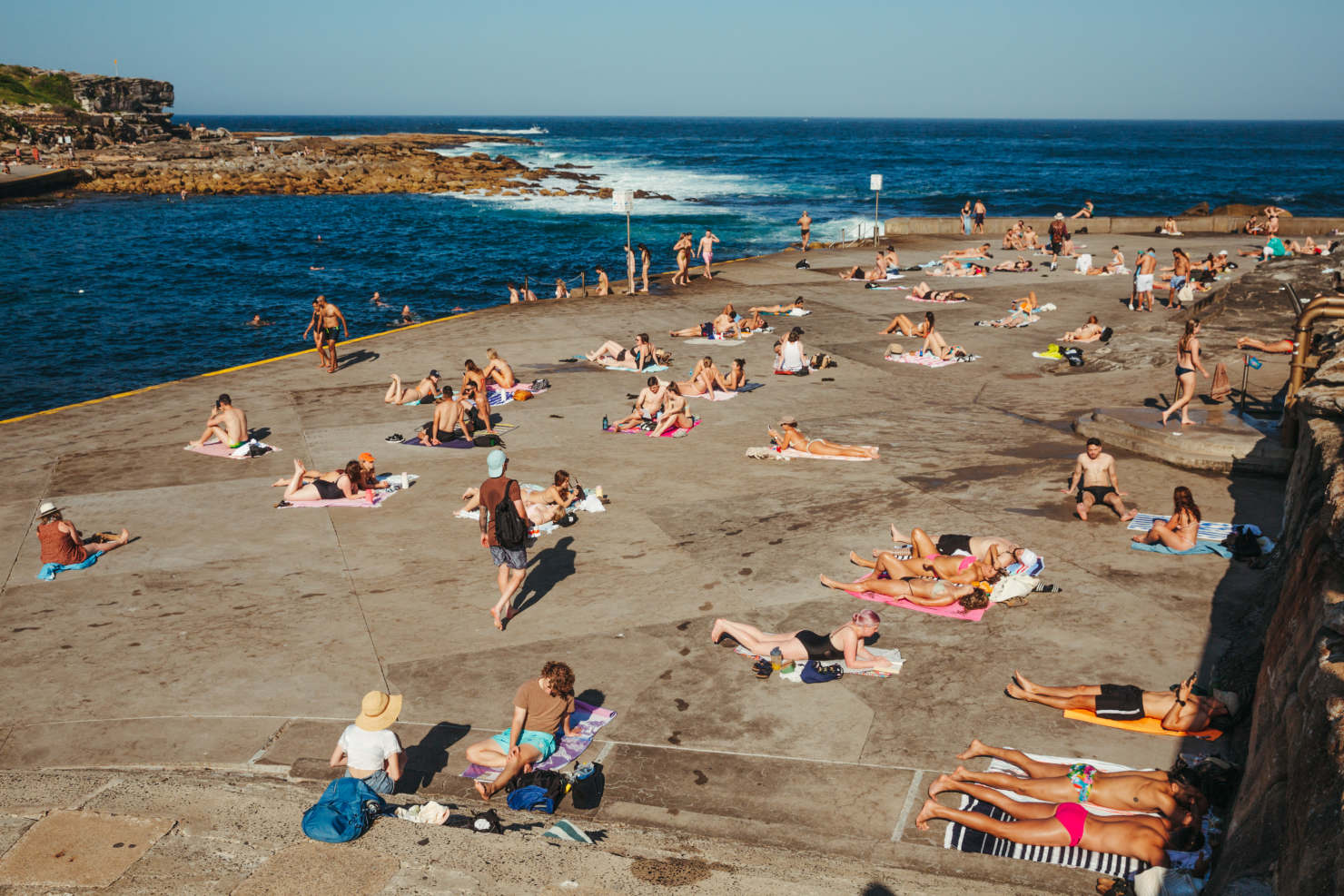
Sydney broke the month’s 23-year record on September 19.Credit: Dion Georgopoulos
The data also shows the first nine months of this year were 0.05 degrees warmer than the first nine months of 2016, the hottest year on record.
That year, the Great Barrier Reef experienced some of its worst coral bleaching and global temperatures soared during an El Nino event, which makes the weather hotter and drier.
Already this year June, July and August have been the hottest-ever consecutive months globally.
[Interactive compilation of line graphs showing sea surface temperatures]
https://climate.copernicus.eu/surface-air-temperature-september-2023
Californian climate scientist Zeke Hausfather, who specialises in temperature records, posted on social media that the data was “absolutely gobsmackingly bananas”.
He added that the warm temperature was a combination of the rapid transition from wetter La Nina conditions over three years, as well as global warming led by greenhouse gas emissions.
Ed Hawkins, professor of climate science at the University of Reading, summarised the data as ..
Column graph showing September global air surface temperature anomalies
https://climate.copernicus.eu/surface-air-temperature-september-2023
Antarctica’s sea ice coverage also remains at a record low for this time of the year, about 9 per cent below the monthly average.
[Antarctic sea ice reaches an early winter record low in June 2023
https://investorshub.advfn.com/boards/read_msg.aspx?message_id=172503546]
With less sea ice, oceans will absorb more heat, further warming oceans. This can have longer-term impacts on future sea ice cycles. With less sea ice, the atmosphere and our oceans are also likely to warm up.
That’s because the sea ice helps reflect the heat from our oceans. Without it, oceans will absorb the heat, leading to increasing temperatures, prompting sea ice melt and leading to rising sea levels.
This can have severe impacts on the ecosystems that rely on Antarctic sea ice – like the krill population which migrating whales rely on for food, or penguins who rely on sea ice for breeding .. https://www.smh.com.au/link/follow-20170101-p5dykw .
[Line graph showing Antarctica sea ice extent]
https://nsidc.org/arcticseaicenews/charctic-interactive-sea-ice-graph/
Climate Council research director Dr Simon Bradshaw said the data had many on edge about what the near future could hold.
Related Article
Explainer
Extreme weather .. https://www.smh.com.au/topic/extreme-weather-5wx
It’s official. An El Nino has been declared. What does that mean?
https://www.smh.com.au/national/it-s-official-an-el-nino-has-been-declared-what-does-that-mean-20230828-p5e030.html
“We are seeing records not just broken, but broken by big margins. This is deeply unsettling. One thing is clear - we must massively pick up the pace of action,” he said.
“It is dumbfounding that we are still approving new coal and gas projects in Australia while the planet faces an escalating climate crisis. Every new fossil fuel development increases the danger to all of us.”
https://www.smh.com.au/environment/weather/september-shatters-heat-record-shocking-even-climate-scientists-20231005-p5e9x5.html
"Summer Heat Waves Killed 61,000 in Europe Last Year, Study Says"
BoM warns it’s likely ‘this summer will be hotter than average and certainly hotter than the last three years’
* The BoM has finally declared an El Niño. What does it mean – and why did it take so long?
Donna Lu and Graham Readfearn
Tue 19 Sep 2023 15.40 AEST
[...]
Worst risk since black summer’: NSW south coast fire danger upgraded to ‘catastrophic’
[...]
Spring heatwave for eastern Australia ‘a heads-up’ of what’s to come, meteorologists say
[...]
The Victorian capital is forecast to clock eight days of 20C [68F] or warmer, beating the previous record of seven such days set in 1907 and 1987. Sydney’s five days of
28C [82.4F] or hotter weather would break the current record of four such days set in 1928, Domensino said. Canberra is expected to match its record of six days of 23C or warmer.
https://www.theguardian.com/australia-news/2023/sep/14/spring-heatwave-for-eastern-australia-a-heads-up-of-whats-to-come-bom-says
Avg. Sept. about 70F. Tomorrow forecast 93. Will be third day in row over 90F.
https://investorshub.advfn.com/boards/read_msg.aspx?message_id=172849196
And to add from within (the low F*g bowels of the dank, yet hottest unholiest of
 unholy hells) your bottom
 "SEARCH: Absolutely Gobsmackingly Bananas
https://www.bing.com/news/search?q=Absolutely+Gobsmackingly+Bananas&qpvt=absolutely+gobsmackingly+bananas&FORM=EWRE"
LOLOL that does lllook and fffeel hot .. link - September shatters heat record, shocking even climate scientists
By Laura Chung
October 6, 2023 — 11.57am
With three graphs
Global temperature heat records have tumbled this year and September was no different, prompting leading climate scientists to describe the increases as “gobsmackingly bananas” and “Unnerving. Bewildering. Flabbergasting. Disquieting. Shocking. Mind-boggling”.
The United Nations’ chief climate body, the Copernicus Climate Change Service, has released data showing September was 0.93 degrees warmer than the 1991–2020 monthly average global temperature of 15.45 degrees.
This is a staggering 0.5 degrees warmer than the previous record, set in September 2020.
Sydney broke the month’s 23-year record on September 19.Credit: Dion Georgopoulos
The data also shows the first nine months of this year were 0.05 degrees warmer than the first nine months of 2016, the hottest year on record.
That year, the Great Barrier Reef experienced some of its worst coral bleaching and global temperatures soared during an El Nino event, which makes the weather hotter and drier.
Already this year June, July and August have been the hottest-ever consecutive months globally.
[Interactive compilation of line graphs showing sea surface temperatures]
https://climate.copernicus.eu/surface-air-temperature-september-2023
Californian climate scientist Zeke Hausfather, who specialises in temperature records, posted on social media that the data was “absolutely gobsmackingly bananas”.
He added that the warm temperature was a combination of the rapid transition from wetter La Nina conditions over three years, as well as global warming led by greenhouse gas emissions.
Ed Hawkins, professor of climate science at the University of Reading, summarised the data as ..
.. : “Surprising. Astounding. Staggering. Unnerving. Bewildering. Flabbergasting. Disquieting. Gobsmacking. Shocking. Mind boggling”.Surprising. Astounding. Staggering. Unnerving. Bewildering. Flabbergasting. Disquieting. Gobsmacking. Shocking. Mind boggling. pic.twitter.com/hNtARXD20F
— Ed Hawkins (@ed_hawkins) October 5, 2023
Column graph showing September global air surface temperature anomalies
https://climate.copernicus.eu/surface-air-temperature-september-2023
Antarctica’s sea ice coverage also remains at a record low for this time of the year, about 9 per cent below the monthly average.
[Antarctic sea ice reaches an early winter record low in June 2023
https://investorshub.advfn.com/boards/read_msg.aspx?message_id=172503546]
With less sea ice, oceans will absorb more heat, further warming oceans. This can have longer-term impacts on future sea ice cycles. With less sea ice, the atmosphere and our oceans are also likely to warm up.
That’s because the sea ice helps reflect the heat from our oceans. Without it, oceans will absorb the heat, leading to increasing temperatures, prompting sea ice melt and leading to rising sea levels.
This can have severe impacts on the ecosystems that rely on Antarctic sea ice – like the krill population which migrating whales rely on for food, or penguins who rely on sea ice for breeding .. https://www.smh.com.au/link/follow-20170101-p5dykw .
[Line graph showing Antarctica sea ice extent]
https://nsidc.org/arcticseaicenews/charctic-interactive-sea-ice-graph/
Climate Council research director Dr Simon Bradshaw said the data had many on edge about what the near future could hold.
Related Article
Explainer
Extreme weather .. https://www.smh.com.au/topic/extreme-weather-5wx
It’s official. An El Nino has been declared. What does that mean?
https://www.smh.com.au/national/it-s-official-an-el-nino-has-been-declared-what-does-that-mean-20230828-p5e030.html
“We are seeing records not just broken, but broken by big margins. This is deeply unsettling. One thing is clear - we must massively pick up the pace of action,” he said.
“It is dumbfounding that we are still approving new coal and gas projects in Australia while the planet faces an escalating climate crisis. Every new fossil fuel development increases the danger to all of us.”
https://www.smh.com.au/environment/weather/september-shatters-heat-record-shocking-even-climate-scientists-20231005-p5e9x5.html
It was Plato who said, “He, O men, is the wisest, who like Socrates, knows that his wisdom is in truth worth nothing”
Discover What Traders Are Watching
Explore small cap ideas before they hit the headlines.



