



 AI
AI






| Followers | 0 |
| Posts | 148553 |
| Boards Moderated | 7 |
| Alias Born | 03/10/2004 |
Friday, May 26, 2023 3:03:16 PM
Gold Mid-Tiers’ Q1’23 Fundamentals
By: Adam Hamilton | May 26, 2023
The biggest gold-stock gains during major gold uplegs are achieved by mid-tier and junior miners. These smaller producers in the sweet spot for upside potential just finished reporting their latest quarterlies last week. They generally enjoyed solid operational and financial results in Q1’23, which is bullish for their outlook. How they are faring fundamentally affects their coming trajectory as gold resumes powering higher.
The leading mid-tier gold-stock benchmark is the GDXJ VanEck Junior Gold Miners ETF. With $4.0b in net assets this week, it remains the second-largest gold-stock ETF after its big brother GDX. That is dominated by far-larger major gold miners, although there is much overlap between these ETFs’ holdings. Still misleadingly named, GDXJ is overwhelmingly a mid-tier gold-stock ETF with little weighting allocated to juniors.
Gold-stock tiers are defined by miners’ annual production rates in ounces of gold. Small juniors have little sub-300k outputs, medium mid-tiers run 300k to 1,000k, large majors yield over 1,000k, and huge super-majors operate at vast scales exceeding 2,000k. Translated into quarterly terms, those thresholds shake out under 75k, 75k to 250k, 250k+, and 500k+. Only two of GDXJ’s 25 biggest holdings are true juniors.
That means they produce less than 75k ounces per quarter, and that gold output generates over half their quarterly revenues. That excludes primary silver miners producing byproduct gold, and the royalty and streaming companies that buy future gold output for big upfront payments used to finance mine builds. While we’ve traded countless great juniors over the decades, mid-tiers are really in the sweet spot for upside.
These gold miners dominating GDXJ offer a unique mix of sizable diversified production, excellent output-growth potential, and smaller market capitalizations ideal for outsized gains. Mid-tiers are less risky than juniors, while amplifying gold uplegs much more than majors. Our newsletter trading books are filled with both fundamentally-superior mid-tiers and juniors, smaller gold miners which we’ve long specialized in at Zeal.
GDXJ has performed well during gold’s latest upleg, which powered up 26.3% at best over 7.2 months into early May. GDXJ enjoyed a parallel 66.9% upleg over most of that span into mid-April, making for modest 2.5x upside leverage to gold. Mid-tier gold-stock gains usually start out slow early in gold uplegs before accelerating dramatically into their climaxes, when mounting greed fuels big momentum-chasing buying.
GDXJ has suffered a sizable 15.5% selloff in recent weeks, paralleling gold’s healthy 4.5% pullback. That was driven by gold-futures selling spawned by a surging US dollar. All that recent weakness has really ramped bearish psychology, rebalancing sentiment. But all that should soon pass, with the US dollar’s bear rally failing. Then gold-futures speculators will flock back, driving gold and thus gold stocks much higher.
For 28 quarters in a row now, I’ve painstakingly analyzed the latest operational and financial results from GDXJ’s 25-largest component stocks. Mostly mid-tiers, they now account for 64.5% of this ETF’s total weighting. While digging through quarterlies is a ton of work, understanding smaller gold miners’ latest fundamentals really cuts through the obscuring sentiment fogs shrouding this sector. This research is essential.
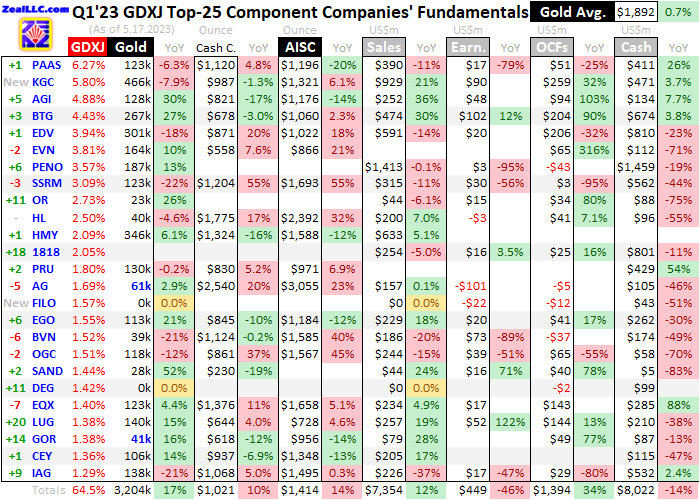
This table summarizes the GDXJ top 25’s operational and financial highlights during Q1’23. These gold miners’ stock symbols aren’t all US listings, and are preceded by their rankings changes within GDXJ over this past year. The shuffling in their ETF weightings reflects shifting market caps, which reveal both outperformers and underperformers since Q1’22. Those symbols are followed by their current GDXJ weightings.
Next comes these gold miners’ Q1’23 production in ounces, along with their year-over-year changes from the comparable Q1’22. Output is the lifeblood of this industry, with investors generally prizing production growth above everything else. After are the costs of wresting that gold from the bowels of the earth in per-ounce terms, both cash costs and all-in sustaining costs. The latter help illuminate miners’ profitability.
That’s followed by a bunch of hard accounting data reported to securities regulators, quarterly revenues, earnings, operating cash flows, and resulting cash treasuries. Blank data fields mean companies hadn’t disclosed that particular data as of the middle of this week. The annual changes aren’t included if they would be misleading, like comparing negative numbers or data shifting from positive to negative or vice-versa.
The mid-tier gold miners’ overall Q1’23 performance proved solid. But some big GDXJ composition changes complicate comparable analysis. During this past year a large super-major was added in, along with a second junior explorer with no production. A handful of extreme outliers also skewed production costs higher. But after adjusting for these distortions, the smaller gold miners generally fared well last quarter.
VanEck pioneered gold-stock ETFs when it launched GDX way back in May 2006. GDXJ was born a bit later in November 2009. Still the two largest sector ETFs by far, these have long been great benchmarks and trading vehicles. With their holdings market-capitalization-weighted and always in flux, they are way superior to the preceding largely-static gold-stock indexes. But serious overlap still hobbles their potential.
With the same company operating both GDX and GDXJ, there’s no reason their holdings shouldn’t be mutually-exclusive. All the super-majors and majors should only be in GDX, while all the mid-tiers and juniors alone populate GDXJ. These gold-stock ETFs would trade differently then, dramatically boosting their utility and appeal for both speculators and investors. That’s never been the case and certainly isn’t today.
Of these GDXJ-top-25 stocks, fully 14 are also GDX-top-25 components! Just four are only found in GDXJ. These mostly-mid-tier gold miners weighing in at 64.5% of GDXJ also account for 27.4% of GDX. And those total percentages rise if the rest of these ETFs’ holdings below the top 25 are included. So GDXJ essentially slices out about a quarter of GDX then expands those gold stocks’ weightings near two-thirds.
That’s still good, as GDX’s super-majors and majors excluded are mostly deadweight dragging down its performance. For many years they’ve failed to grow their production from the vast scales they operate at. And their far-larger market caps saddle them with stock-price inertia causing them to lag gold uplegs. The GDXJ top 25 are clustered between GDX’s 12th to 35th weightings, eliminating the long-struggling majors...
* * *
Read Full Story »»»
 DiscoverGold
By: Adam Hamilton | May 26, 2023
The biggest gold-stock gains during major gold uplegs are achieved by mid-tier and junior miners. These smaller producers in the sweet spot for upside potential just finished reporting their latest quarterlies last week. They generally enjoyed solid operational and financial results in Q1’23, which is bullish for their outlook. How they are faring fundamentally affects their coming trajectory as gold resumes powering higher.
The leading mid-tier gold-stock benchmark is the GDXJ VanEck Junior Gold Miners ETF. With $4.0b in net assets this week, it remains the second-largest gold-stock ETF after its big brother GDX. That is dominated by far-larger major gold miners, although there is much overlap between these ETFs’ holdings. Still misleadingly named, GDXJ is overwhelmingly a mid-tier gold-stock ETF with little weighting allocated to juniors.
Gold-stock tiers are defined by miners’ annual production rates in ounces of gold. Small juniors have little sub-300k outputs, medium mid-tiers run 300k to 1,000k, large majors yield over 1,000k, and huge super-majors operate at vast scales exceeding 2,000k. Translated into quarterly terms, those thresholds shake out under 75k, 75k to 250k, 250k+, and 500k+. Only two of GDXJ’s 25 biggest holdings are true juniors.
That means they produce less than 75k ounces per quarter, and that gold output generates over half their quarterly revenues. That excludes primary silver miners producing byproduct gold, and the royalty and streaming companies that buy future gold output for big upfront payments used to finance mine builds. While we’ve traded countless great juniors over the decades, mid-tiers are really in the sweet spot for upside.
These gold miners dominating GDXJ offer a unique mix of sizable diversified production, excellent output-growth potential, and smaller market capitalizations ideal for outsized gains. Mid-tiers are less risky than juniors, while amplifying gold uplegs much more than majors. Our newsletter trading books are filled with both fundamentally-superior mid-tiers and juniors, smaller gold miners which we’ve long specialized in at Zeal.
GDXJ has performed well during gold’s latest upleg, which powered up 26.3% at best over 7.2 months into early May. GDXJ enjoyed a parallel 66.9% upleg over most of that span into mid-April, making for modest 2.5x upside leverage to gold. Mid-tier gold-stock gains usually start out slow early in gold uplegs before accelerating dramatically into their climaxes, when mounting greed fuels big momentum-chasing buying.
GDXJ has suffered a sizable 15.5% selloff in recent weeks, paralleling gold’s healthy 4.5% pullback. That was driven by gold-futures selling spawned by a surging US dollar. All that recent weakness has really ramped bearish psychology, rebalancing sentiment. But all that should soon pass, with the US dollar’s bear rally failing. Then gold-futures speculators will flock back, driving gold and thus gold stocks much higher.
For 28 quarters in a row now, I’ve painstakingly analyzed the latest operational and financial results from GDXJ’s 25-largest component stocks. Mostly mid-tiers, they now account for 64.5% of this ETF’s total weighting. While digging through quarterlies is a ton of work, understanding smaller gold miners’ latest fundamentals really cuts through the obscuring sentiment fogs shrouding this sector. This research is essential.
This table summarizes the GDXJ top 25’s operational and financial highlights during Q1’23. These gold miners’ stock symbols aren’t all US listings, and are preceded by their rankings changes within GDXJ over this past year. The shuffling in their ETF weightings reflects shifting market caps, which reveal both outperformers and underperformers since Q1’22. Those symbols are followed by their current GDXJ weightings.
Next comes these gold miners’ Q1’23 production in ounces, along with their year-over-year changes from the comparable Q1’22. Output is the lifeblood of this industry, with investors generally prizing production growth above everything else. After are the costs of wresting that gold from the bowels of the earth in per-ounce terms, both cash costs and all-in sustaining costs. The latter help illuminate miners’ profitability.
That’s followed by a bunch of hard accounting data reported to securities regulators, quarterly revenues, earnings, operating cash flows, and resulting cash treasuries. Blank data fields mean companies hadn’t disclosed that particular data as of the middle of this week. The annual changes aren’t included if they would be misleading, like comparing negative numbers or data shifting from positive to negative or vice-versa.
The mid-tier gold miners’ overall Q1’23 performance proved solid. But some big GDXJ composition changes complicate comparable analysis. During this past year a large super-major was added in, along with a second junior explorer with no production. A handful of extreme outliers also skewed production costs higher. But after adjusting for these distortions, the smaller gold miners generally fared well last quarter.
VanEck pioneered gold-stock ETFs when it launched GDX way back in May 2006. GDXJ was born a bit later in November 2009. Still the two largest sector ETFs by far, these have long been great benchmarks and trading vehicles. With their holdings market-capitalization-weighted and always in flux, they are way superior to the preceding largely-static gold-stock indexes. But serious overlap still hobbles their potential.
With the same company operating both GDX and GDXJ, there’s no reason their holdings shouldn’t be mutually-exclusive. All the super-majors and majors should only be in GDX, while all the mid-tiers and juniors alone populate GDXJ. These gold-stock ETFs would trade differently then, dramatically boosting their utility and appeal for both speculators and investors. That’s never been the case and certainly isn’t today.
Of these GDXJ-top-25 stocks, fully 14 are also GDX-top-25 components! Just four are only found in GDXJ. These mostly-mid-tier gold miners weighing in at 64.5% of GDXJ also account for 27.4% of GDX. And those total percentages rise if the rest of these ETFs’ holdings below the top 25 are included. So GDXJ essentially slices out about a quarter of GDX then expands those gold stocks’ weightings near two-thirds.
That’s still good, as GDX’s super-majors and majors excluded are mostly deadweight dragging down its performance. For many years they’ve failed to grow their production from the vast scales they operate at. And their far-larger market caps saddle them with stock-price inertia causing them to lag gold uplegs. The GDXJ top 25 are clustered between GDX’s 12th to 35th weightings, eliminating the long-struggling majors...
* * *
Read Full Story »»»
 DiscoverGold
Information posted to this board is not meant to suggest any specific action, but to point out the technical signs that can help our readers make their own specific decisions. Caveat emptor!
• DiscoverGold
Recent GDX News
- Precious metals shares climb as U.S. tariffs extend to certain gold bars • IH Market News • 08/08/2025 01:45:14 PM



