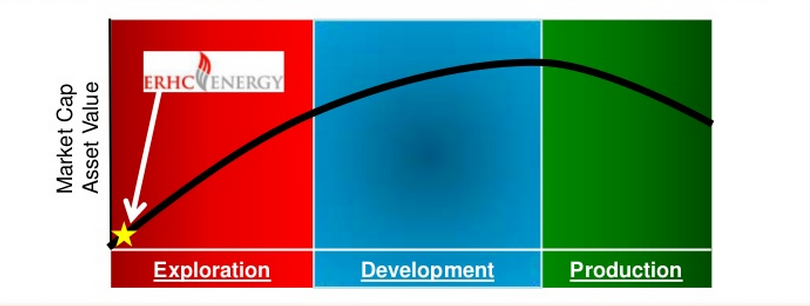
There are indeed existing gravity and magnetic studies on the ERHE Kenya block 11A. Both the Aero study done by Camac and the previous ground gravity study done by Amoco. Amoco also did some reconnaissance seismic.
Both are valuable as the Amoco study identified clear rift basins extending into the south-west of the block, and the Camec study identified basins throughout the north of the block.
The gravity data is coarse grid, which is why there is a need for more refined and targeted work, thus the first year exploration will conservatively be limited to a targeted gravity study. But this could of course accelerate to seismic should a farm-in occur.
There is also some seismic from the 80's by Amoco, as well as the Kenya Rift International Seismic Project (KRISP), it is older technology, quite thin and noisy due to the scattering effect of the volcanics of the region (igneous extrusive) but it and other research is sufficient to identify good reservoir rock and a potential 5,000 meter thick sedimentation fill adequate to provide the petroleum charge. (Maturation, migration, timing, and trapping must of course all be identified and confirmed)
The gravity data also has challenges and limitations, again due to the local geology.
So more refined studies are definitely needed, using more up to date technology and concentrated targeting following the leads of the earlier work. Not only the data itself, but more current modelling software in this rapidly evolving science. There is also the advantage of additional wells and seismic and gravity studies being done in area blocks, but most importantly, actual drilling and direct sampling of the geology for correlation of the regional geology.
The major Ngamia-1 discovery by Tullow was of course, the game changer in Kenya, with oil similar to Tullow's elephant discovery in Uganda being found. With early estimates suggesting Ngamia may be even larger.
Tullow used their theory of analogous geology to open yet another major oil basin hundreds of miles from their Uganda discovery. Drilling a different part of the geology than was tried by earlier operators. Tullow, Marathon, and Total, are all either actively exploring, eager to explore, or with proven discoveries essentially surrounding the ERHE block. With the 6 billion barrel fields of South Sudan also in trend with block 11A.
Chad is another story, also needing studies, but with a higher probability of success due to being right adjacent to known working petroleum basins and working systems and oil discoveries. But likely smaller reservoir targets than what may be possible in the Kenya block, as the Kenya block has an intersection of two prolific and proven geological rift plays with billion barrel discoveries.
Both have the advantage of likely pipelines. In Kenya, proposed to run right through the ERHE block 11A with the existing petroleum discoveries in Sudan providing strong motivation for the norther extension past Ngamia-1, and in Chad a proposed extension of the existing Chad-Cameroon pipeline planned to run right along the border with ERHE's southern block.
Good to have you back on the ERHE board spp119! I hope you stay and poke around a bit more.


 Market Data
  Markets


 AI
AI