Fighters of the hard-line Salafi group Ansar Dine in August. The group has controlled Timbuktu and much of northern Mali since a coup d’état and a successful revolt against the central authority in March.
By ADAM NOSSITER and ERIC SCHMITT Published: January 11, 2013
BAMAKO, Mali — The international standoff with Islamists controlling northern Mali took a decisive turn on Friday, as French forces engaged in an intense battle to beat back an aggressive militant push into the center of the country.
Responding to an urgent plea for help from the Malian government, French troops carried out airstrikes against Islamist fighters, blunting an advance by hundreds of heavily armed extremists, according to French officials and Gen. Carter F. Ham, the top American military commander in Africa. One French helicopter had apparently been downed in the fighting, he said.
The Pentagon is now weighing a broad range of options to support the French effort, including enhanced intelligence-sharing and logistics support, but it is not considering sending American troops, General Ham said.
The sudden introduction of Western troops upends months of tortured debate over how — and when — foreign nations should confront the Islamist seizure of northern Mali. The Obama administration and governments around world have long been alarmed that a vast territory roughly twice the size of Germany could so easily fall into the hands of extremists, calling it a safe haven where terrorists were building their ranks and seeking to extend their influence throughout the region and beyond.
Yet for months, the Islamists have appeared increasingly unshakable in their stronghold, carrying out public amputations, whippings and stonings as the weak Malian army retreated south and African nations debated how to find money and soldiers to recapture the territory.
All of that changed this week, when the Islamists suddenly charged southward with a force of 800 to 900 fighters in 50 to 200 vehicles, taking over a frontier town that had been the de facto line of government control, according to General Ham and a Western diplomat. Worried that there was little to stop the militants from storming ever further into Mali, France .. http://topics.nytimes.com/top/news/international/countriesandterritories/france/index.html?inline=nyt-geo .. — for the second time in less than two years — intervened with guns and bombs into a former African colony rent by turmoil.
“Some planes came and bombed some civilians,” he said. “A woman was killed. It’s a well-known scenario. There wasn’t even combat. Planes bombed a mosque. That’s it.”
Mr. Boumana called the intervention illegal, saying the French had “come to support a bunch of murderers. That’s France, and that’s the West. We are not surprised.”
Malian officials in the capital, Bamako, called the French military strike a welcome shift in the standoff.
“It was evident that the Malian Army would never have been able to handle this,” said Tiébilé Dramé, a leading opposition politician. “The French intervention goes beyond what was hoped for. No one was expecting things would go this quickly. France had said it wouldn’t intervene, and Malians were hoping for a rapid intervention.”
Why the Islamists provoked a military strike by capturing the village of Konna on Thursday, a possible prelude to attacking bigger towns on their way to the capital, more than 300 miles away, remained unclear. They were not facing a military intervention for many months, and even then it was not expected to include Western forces.
“Was this a move by A.Q.I.M. toward Bamako? Were they making a move to simply strengthen negotiating position, to gain a little more territory?” General Ham said. “The real question is, now what?” he said, adding that discussions were now under way among Washington, Paris and African governments in the region.
The big prize the Islamists evidently sought — capturing the major Malian government airfield nearby in Sévaré, which is vital for any military intervention in the north of Mali — seemed to be outside their grasp on Friday.
But while senior Malian officers heralded their new military “partners on the ground,” some warned that the Islamists remained strong and could still press forward. “It’s temporary,” said one officer, who was not authorized to speak publicly. “They have the means to advance.”
Holding off the Islamists, moreover, is a far cry from retaking the north. While tens of thousands of civilians have fled the area, many others remain in the ancient city of Timbuktu and other towns under Islamist control, leaving them highly vulnerable in the event urban warfare breaks out.
Beyond that, extremists in the north, who finance themselves in part by kidnapping and ransoming foreigners, are still holding more than a dozen hostages and have sometimes threatened to kill them if an attack takes place.
Still, Western and Malian officials said the French assault had changed the dynamic of the conflict, accelerating plans for a broader military strategy.
“What’s sure now is that things will not happen as we thought they would a month ago,” said a Western diplomat, who was not authorized to speak publicly. “We’ve told Ecowas countries to accelerate preparations to send troops,” he added, referring to the 15-member Economic Community of West African States .. http://www.ecowas.int/ , which has agreed to provide an intervention force.
France has a long history of expeditionary military actions in its former African colonies. Mr. Hollande had said that France would not send troops into combat in Mali until Friday, when it seemed that the government in Bamako might collapse. But the French had positioned military contingents near Mali, with deployments in Senegal, Burkina Faso and the Ivory Coast, for example. There were also persistent reports that French special forces were in Mali.
Under Mr. Hollande’s predecessor, Nicolas Sarkozy, France also carried out airstrikes to dislodge Ivory Coast’s strongman, Laurent Gbagbo, in 2011, bringing a quick end to a bloody four-month civil war precipitated by Mr. Gbagbo’s refusal to leave office after an electoral defeat.
Adam Nossiter reported from Bamako and Eric Schmitt from Niamey, Niger. Rick Gladstone contributed reporting from New York, and Scott Sayare from Paris.
A version of this article appeared in print on January 12, 2013, on page A1 of the New York edition with the headline: France Battling Islamists in Mali .
"The third tier incorporates more than a dozen allied groups that remain formally independent but work with al Qaeda on operations when their interests converge. One example is Pakistan's Tehrik-i-Taliban, which, though focused on South Asia, has been involved in terrorist plots overseas, notably the failed 2010 attack in Times Square. Al Qaeda has assisted in several Tehrik-i-Taliban-led attacks, including the May 2011 siege of the Pakistan Navy's Mehran naval base in Karachi. In Nigeria, the Salafi group Boko Haram has emerged as an increasingly deadly threat -- most spectacularly killing more than 200 people in January -- and has also developed relations with al Qaeda. Since 2009, according to U.S. government officials in the region, Boko Haram operatives have traveled to Mali to train with members of al Qaeda in the Islamic Maghreb in explosives manufacturing and suicide attacks."
======
Study: Muslim extremists not looking for world domination
ASU researchers highlight one effort to counter a video by al Qaeda's leader Ayman al-Zawahiri as a better approach to fighting extremist rhetoric
By Adam Levine - July 10th, 2012 12:01 AM ET
Muslim extremists are more concerned with defending against foreign intrusion than foisting Islam on the world, according to a new study of extremist texts. The study suggests that a Western approach of claiming extremists are seeking world domination is misdirected, and instead should seek to counteract claims of victimhood.
"Continued claims to the contrary, by both official and unofficial sources, only play into a 'clash of civilizations' narrative that benefits the extremist cause. These claims also undermine the credibility of Western voices, because the audience knows that extremist arguments are really about victimage and deliverance," write the researchers, Jeffry Halverson, R. Bennett Furlow and Steven Corman.
The analysis by Arizona State University's Center for Strategic Communication looked at how the Quran was used in 2,000 propoganda items from 1998 to 2011, though the majority were from post-2007, that emanated mostly from the Middle East and North Africa. Among the groups analyzed were al Qaeda and al Shabaab, as well as anonymous postings online.
One result that surprised the researchers, the "near absence" of citations from one of the most extreme passages, the "Verse of Swords," that encourages "all-out war against world domination."
"Widely regarded as the most militant or violent passage of the Quran, it is treated as a divine call for offensive warfare on a global scale," the researchers wrote. "It is also regarded as a verse which supersedes over 100 other verses of the Quran that counsel patience, tolerance and forgiveness."
The study concludes that extremists, at least based on how they quote from the Quran, do not reflect "an aggressive offensive foe seeking domination and conquest of unbelievers, as is commonly assumed. Instead they deal with themes of victimization, dishonor and retribution."
"The verses frequently utilized by extremists from this surah address subjects such as enduring hardships and the importance of fighting against the unjust unbelievers who oppress men, women and children," the researchers wrote about the most cited chapter (called a "surah").
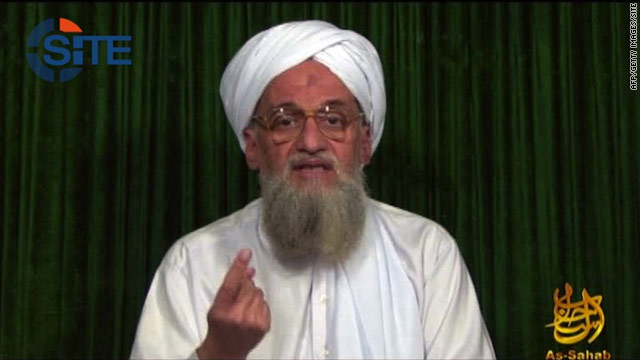
The insights led the researchers to suggest alternative approaches to counteracting the extremist messages, rather than focusing on the fear factor. The Arizona group cites a recent effort by the State Department to counteract al Qaeda leader Ayman al-Zawahiri, who said in a 2011 video that "there is no hope to remove the corrupt regimes in Muslim countries except by force. And there is no chance to bring change through peaceful action." The State Department Digital Outreach Team posted a video intercutting that video, which included Zawahiri daring someone to find a single example to prove Zawahiri wrong, with video of Arab Spring protesters in Egypt.
Halverson, Bennett and Corman also suggest undermining the "champion" image aspired to by extremists.
Extremists use a "deliverance narrative to position themselves as the champion that can deliver the community from evil," the researchers wrote. "However, as we have argued elsewhere, extremists do little that is champion-like. They have not unseated any apostate rulers, and their victims are overwhelmingly likely to be Muslims."
The study cites data from the West Point Combating Terrorism Center that estimated al Qaeda militants were 38 times more likely to kill a Muslim than a Westerner, based on data from 2006 to 2008.
If we had not invaded Iraq? ... the memory of reading of the ordinary Saudi family man who said he went to fight in Iraq because of the invasion always comes into my head at times like this .. i can't think how this mess will ever end with us creating more terrorists every hour ..
Backward? Forward? .. no idea, yet for awhile now (yet again, as do so many of us) i've been wondering why Boko Haram's brutality was not getting the same media attention as ISIS' was .. me too, i've been distracted .. of more strategic importance? .. closer to home? .. not Europe but Africa 'only'? .. trade route proximity? .. a battle for natural resources? .. yup, some possible reasons immediately to mind .. then yesterday ..
haven't read it all, even yet .. too sickening .. what is the best response? .. to not intervene, then what? .. ISIS Syria/Iraq .. or to intervene Iraq/Libya/Syria (somewhat) .. Boko Haram Nigeria and? elsewhere .. not a real good outcome anywhere .. yup, the Iraq invasion still reverberates as a clarion cry among ugly extremists sowing so destruction death and fear in so many countries today .. if to intervene .. how and how much? has been the basis of chat chat, and of too much political blame game for too long .. and will continue to be for, yeah, unfortunately years .. lol, :( .. this is a babble rant, i know .. there are no easy answers, nor simple solutions .. maybe some point to start is to look at the success? .. or not? of President Bush's 2007 AFRICOM creation of .. one position back then ..
AFRICOM: AFRICOM: Wrong for Liberia, Disastrous for Africa By Ezekiel Pajibo and Emira Woods. Edited by John Feffer, July 26, 2007
Just two months after U.S. aerial bombardments began in Somalia, the Bush administration solidified its militaristic engagement with Africa. In February 2007, the Department of Defense announced the creation of a new U.S. Africa Command infrastructure, code name AFRICOM, to “coordinate all U.S. military and security interests throughout the continent.” http://investorshub.advfn.com/boards/read_msg.aspx?message_id=59092358
.. a John Perkins interview is still available at the Democracy Now link in that one .. so what around 2007 and since .. Mali is one ..
Leaders of Mali’s Military Coup Seem to Have Uncertain Grasp on Power
Reuters
A day after a military coup in Mali, an acute gas shortage meant long lines and high prices at the pump on Friday in the capital, Bamako, while the junta faced international condemnation.
By ADAM NOSSITER Published: March 23, 2012
DAKAR, Senegal — Mali’s military coup leaders struggled on three fronts Friday, as international condemnation mounted, an insurrection by nomadic tribesmen in the north gained ground and the junta was forced to condemn looting by its own troops in the capital, Bamako.
A day after overthrowing the country’s elected president and arresting his ministers, the military men who have seized power — led by Capt. Amadou Haya Sanogo, who received extensive training in the United States between 2004 and 2010 — appeared to have an uncertain grasp on power in what had hitherto been one of Africa’s most stable democracies. .. more .. http://www.nytimes.com/2012/03/24/world/africa/in-mali-coup-leaders-seem-to-have-uncertain-grasp-on-power.html?_r=0
.. still past ..
Mali’s Atrocities Began When It Lost Its Democracy
By LANDRY SIGNÉ Published: January 14, 2013 .. bits ..
IN 2005, after the world failed to prevent mass atrocities in Rwanda, the Balkans and Darfur, the United Nations declared that nations had a responsibility to protect populations everywhere from genocide, war crimes and crimes against humanity.
It is a fine idea, but not easy to implement, especially in Africa. There, frail democracies too often fall victim to corruption, social division, greed and dictatorship. So there, especially, the world needs to add another “responsibility to protect” — a duty of democratic nations to safeguard popular rule in neighboring lands. Too often, a failure of democracy is what starts a country down the road to atrocities.
(Page 2 of 2)
In fact, Mali is not the first African country in which a failure to protect the constitutional order or quickly restore an overthrown democracy opened a path for grave atrocities. In Kenya, a disputed election in 2007 was followed by violence in which more than 1,000 people were reported to have died and 500,000 others were displaced. In Guinea, a coup in 2009 was followed by the killing of more than 150 opponents of the junta. In Ivory Coast, Laurent Gbagbo refused to relinquish the presidency in 2010 after losing an election; mass atrocities followed. It took a civil war to dislodge him the following spring. Finally, late in 2011, he was turned over to the International Criminal Court to be tried for crimes against humanity.
.. AFRICOM 7 years later .. well that's short term i guess .. democracy creation and defense is seen by many as simply a cover for more of the same Western imperialism .. and used by the worst Islamist extremists to justify the perpetration of their sheer evil .. yet, to do nothing is no alternative .. to today .. Libya .. France to contain, but not to intervene as that is an international responsibility .. http://www.aljazeera.com/news/middleeast/2015/01/france-ready-bomb-rebels-libya-border-20151651130155365.html .. Nigeria ..
UPDATE 3-West African leaders mull new force to fight Boko Haram insurgents
Fri Jan 16, 2015 11:19pm GMT
(Recasts after interview with Mahama)
By Matthew Mpoke Bigg and Kwasi Kpodo
ACCRA Jan 16 (Reuters) - West African leaders will seek authority next week from the African Union to create a multi-national force to fight Nigeria's Boko Haram Islamist insurgents, Ghanaian President John Mahama told Reuters on Friday.
Any such force would represent the most robust international response yet to the militants who have killed thousands over the last year in their campaign for an Islamic caliphate and have also launched cross border attacks into Niger and Cameroon.
Boko Haram is seen as the most serious security threat to Nigeria, Africa's most populous country and its biggest energy producer, but Mahama said the group and militants in Somalia, Kenya, Mali and elsewhere posed a wider risk.
"Terrorism is like a cancer and if we don't deal with it it will keep going. It threatens everybody in the sub region. When it comes to terrorism nobody is too far or too near," he said.
It will take months before an African Union force could be set up and key issues such as who would command it, the location of its headquarters and its financing remain undecided, he said.
Once set up, however, the African Union could ultimately seek a United Nations Security Council mandate to take over the force as happened in Sudan's Darfur region, he said.
Mahama was speaking as current chair of West African regional bloc ECOWAS, which has been accused of not doing enough to combat Boko Haram.
"Nigeria is taking military action and Cameroon is fighting Boko Haram, but I think we are increasingly getting to the point where probably a regional or a multinational force is coming into consideration," he said earlier.
In a further blow, Boko Haram militants seized the military base and town of Baga, in Nigeria on the shores of Lake Chad, on Jan. 3. Baga was the headquarters of a planned force to fight the insurgents with troops from Nigeria, Chad, Niger and Cameroon, although that initiative stalled.
The insurgency stirred international outrage when militants seized more than 200 school girls in Chibok, northeastern Nigeria, the epicentre of the violence, last April.
France must do more to help countries fight Boko Haram, President Francois Hollande told an annual conference of French and foreign ambassadors in Paris.
"Today, Cameroon, Niger, Chad and Benin are threatened and this situation means the international community must take appropriate action and can't let this be," he said.
France said last month it would help coordinate a regional task force against Boko Haram given signs of mistrust among West African neighbours.
Cameroon President Paul Biya this month appealed for military help against Boko Haram. On Friday, U.S. Ambassador Michael Stephen Hoza said Washington would help train Cameroon's soldiers and offered equipment for the fight.
Russian Ambassador Nikolay Ratsiborinski said Moscow would supply equipment, training and arms to Cameroon and provide humanitarian assistance. (Additional reporting by John Irish in Paris and Tansa Musa in Yaounde; Writing by Matthew Mpoke Bigg; Editing by Bernard Orr)
Manhunt for ISIS suspects as dozens arrested in Europe CBS/APJanuary 16, 2015, 4:36 AM Last Updated Jan 16, 2015 3:57 PM EST
VERVIERS, Belgium -- Intelligence sources told CBS News on Friday that a manhunt was underway in Belgium for three individuals believed to have been trained by the Islamic State of Iraq and Syria in Syria, as dozens of suspects were rounded up in that country and two others following the deadly attacks in Paris last week. .. http://www.cbsnews.com/news/terror-raids-france-belgium-germany-sweep-up-more-than-a-dozen/
.. then there is this ..
The presidents of Niger, Mali and Senegal last week marched alongside more than a million French citizens to show solidarity with the victims of the Paris bloodshed, which began with a shooting attack on Charlie Hebdo's Paris office.
.. chuckle/shrug .. excuse the somewhat unfocused, confused and shaky rant .. nothing much of so much importance is easy .. lol .. gotta stop somewhere .. click ..


 Market Data
  Markets


 AI
AI