Milly Dowler phone hacking: Politicians hit out over revelations
Tom Watson says NoW may have misled select committee while Lord Prescott calls for block on News Corp's BSkyB bid
Milly Dowler was killed in March 2002. It has been revealed that her voicemail was hacked by the News of the World
Hélène Mulholland and James Robinson Monday 4 July 2011 18.41 BST
A Labour MP has hit out at the News of the World for being involved in a "despicable and evil act" and called on the prime minister to act over the hacking of the phone of murdered schoolgirl Milly Dowler following her disappearance in March 2002.
Tom Watson informed MPs of the revelation, published on the Guardian website on Monday afternoon, which he said would not only shock parents "to the very core", but also "strongly suggests" that parliament was misled.
Later Watson said: "Surely now we should hear from David Cameron and Ed Miliband. It's utterly disgraceful that they've let this scandal run on for as long as it has. No more cowardice - we want action."
Former deputy prime minister Lord Prescott said on Twitter that he will write to culture secretary Jeremy Hunt demanding that he block News Corp's bid to take full control of pay-TV company BSkyB following the revelations about Dowler.
He tweeted: "The hacking of Milly Dowler's phone by Murdoch's News of the World proves once and for all he is not a fit and proper person to own BSkyB."
Detectives from Scotland Yard's new inquiry into phone hacking by newspapers, Operation Weeting, are believed to have found evidence of the targeting of the Dowlers in a collection of 11,000 pages of notes kept by Glenn Mulcaire, the private investigator jailed for phone hacking on behalf of the News of the World.
In a point of order, Watson referred to an inquiry into press standards conducted by the Department for Culture, Media and Sport (DCMS) select committee last year and asked the Speaker, John Bercow, how the Commons could address the matter.
Watson, a former minister, said: "In the last few minutes, it has just been revealed by the Guardian newspaper that Milly Dowler's phone was hacked by private investigators working for News of the World.
"The company [the News of the World] subsequently revealed the information to the Surrey police who were investigating the matter. As well as being a despicable and evil act that will shock parents up and down the land to the very core, it also strongly suggests that parliament was misled in the press standards inquiry held by the select committee in 2010."
The Speaker said he had only learned of the revelation from Watson himself five minutes before and suggested that the MP should "take it up" with the DCMS committee if he believed MPs were either misled or misinformed.
He went on: "In view of the gravity of the issue he has raised – with the details of which I was not previously familiar – I can say only it will have been heard by ministers on the Treasury [government] bench and if they judge in the circumstances that some sort of public response is desirable, as they might, I hope that response will be made on the floor of the House of Commons before it is made anywhere else."
Milly Dowler, then aged 13, disappeared on her way home in Walton-on-Thames, Surrey on 21 March 2002. Last month, Levi Bellfield was jailed for life for her murder.
Her family's lawyer issued a statement on Monday afternoon in which he described the News of the World's activities as "heinous" and "despicable".
Milly Dowler phone hacking: former editor in spotlight
Police investigation turns to events on Rebekah Brooks' watch to find out who at News International knew about abuses
Milly Dowler's phone was hacked while Rebekah Brooks was still News of the World editor.
Nick Davies Monday 4 July 2011 19.41 BST
The disclosure that Milly Dowler's voicemail was hacked may refocus scrutiny on the chief executive of News International, Rebekah Brooks.
Most of the evidence that officers of the Yard's Operation Weeting are studying deals with the News of the World's activity during 2005 and 2006, by which time Brooks had left the paper to edit the Sun. But the Dowler episode happened on her watch – and it is not the only incident that has made her a person of interest for the inquiry.
One of Brooks's first acts on taking over as editor of the News of the World in 2000 was to bring back Greg Miskiw from New York, where he had just arrived as US correspondent, to appoint him as her assistant editor in charge of news. It was Miskiw who then hired a full-time private investigator, Glenn Mulcaire, who proceeded to steal confidential data and hack voicemail in order to provide stories for the paper.
Miskiw was subsequently questioned by police about allegations that he used other contacts to purchase information from the police national computer and to pay cash bribes direct to employees of mobile phone companies. Miskiw was not charged with any offence.
While Brooks was in the editor's chair, the News of the World regularly hired Steve Whittamore, the Hampshire private investigator who ran a network of specialists who stole confidential information from British Telecom, mobile phone companies and the DVLA.
Records published by the Information Commissioner's Office show that 23 journalists from the News of the World hired Whittamore a total of 228 times (including for the purchase of addresses and ex-directory numbers relating to Milly Dowler's disappearance.)
Also during Brooks's editorship, a former detective, who had been forced out of the Metropolitan police after a corruption inquiry, carried cash bribes to serving police officers on behalf of the paper, according to journalists who worked there at the time. In evidence to a Commons select committee, in March 2003, just after she left the News of the World, Brooks said: "We have paid the police for information in the past." She has since written to the committee to say she knows of no specific example.
Journalists who worked at the News of the World say that their use of private investigators was routine, open and officially sanctioned. The former showbusiness reporter, Sean Hoare, who worked there under Brooks, last year told the New York Times that he was actively encouraged to hack into voicemail by her deputy, Andy Coulson.
The Guardian has seen invoices submitted by Whittamore which explicitly record apparently illegal acts. One of Brooks's assistant editors, Paul McMullan, told the Guardian last year that he personally had commissioned several hundred acts that could be regarded as unlawful and that senior editors were aware of this.
Scotland Yard will want to establish whether, as an editor, Brooks approved the use of her budget for illegal ends; and whether she knowingly published stories that had been obtained by unlawful means. In addition, she is one of the 23 journalists named in Whittamore's records, allegedly for commissioning access to confidential data from a mobile phone company. Police will want to know whether this happened and, if so, whether it was lawful.
The truth may lie in the evidence now available to Scotland Yard: 11,000 pages of notes seized from Mulcaire; call data provided by mobile phone inquiries during the first inquiry into Mulcaire in 2006; an archive of email which News International handed to police; and material seized recently from three senior NoW journalists who have been arrested.
Evgeny Lebedev: Press complaints commission is not fit for purpose
Publisher critical of watchdog's handling of phone-hacking affair and says newspapers should work together to uphold standards
Evgeny Lebedev described the phone hacking affair as 'one of the biggest scandals in public life for decades'.
Dan Sabbagh Monday 4 July 2011 20.15 BST
Evgeny Lebedev, the eldest son of the owner of the Independent and the Evening Standard, believes the Press Complaints Commission has not shown itself "fit for purpose" during the phone-hacking affair and that he and other newspapers should get together to propose regulatory and legal reform. The 31-year-old son of Alexander Writing in the Guardian today, Lebedev – who manages his father's newspapers day to day – describes the hacking affair as "one of the biggest scandals in public life for decades". He argued that the Metropolitan police also had questions to answer for the way it has investigated the affair.
Asked whether the PCC was "fit for purpose", he said: "Its recent conduct is not proof of that."
He also noted that the Metropolitan police commissioner, Sir Paul Stephenson, "recently said he would rather his men were investigating more serious crimes like robbery", and asked: "But isn't the theft of private information still theft?"
Last week Lebedev, who has recently taken British citizenship, made Chris Blackhurst the editor of the Independent. Blackhurst takes over from the long-serving Simon Kelner, who had been editor or editor-in-chief of the Independent for 13 years.
However, if Lebedev was critical of newspapers involved in hacking – he chose not to name the News of the World – he defended the tabloid media in their battles against the use of privacy injunctions by celebrities to conceal their identity, even if he "despaired" of the "sensationalism" of the news stories concerned.
"If red-top values are the price we pay for an open society," Lebedev said, "then I would rather that, with all the attendant controversy and prurience, over the closed minds bred by a less free press."
He added: "As a British-Russian son of an ex-KGB officer, I feel strongly that one of the best measures of a strong healthy society is its view of free speech." Twitter and Facebook, Lebedev argued, made "the idea of a privacy law … impracticable and naive". This was demonstrated by the Ryan Giggs affair, which saw him repeatedly named on social media sites even though he had won injunctions preventing his name appearing in newspapers.
Lebedev also argued that it was right that the public should be allowed to know about an alleged affair conducted by the former chief executive of the Royal Bank of Scotland, Sir Fred Goodwin, when he ran the bank – even though Goodwin initially tried to use an injunction to keep his name out of the public domain.
The combination of the PCC's performance over phone hacking and the privacy injunction crisis meant that it was necessary to ensure that "our laws catch up with the digital revolution and that our journalists uphold the highest standards".
In the light of such issues, Lebedev said he "would like to take steps with other newspaper proprietors over the coming months to see if we can collectively improve things", although he was deliberately vague on what exactly might be reformed.
With phone hacking, and social media, we must work together to uphold the highest ethical standards
Metropolitan Police commissioner Sir Paul Stephenson recently said he would rather his men were ...... tackling robberies than investigating phone hacking.
Evgeny Lebedev Monday 4 July 2011 19.15 BST
Imagine if, over the past two decades or so, a particularly persistent burglar had made it his business to target the properties of the rich and famous. Imagine that he went after celebrities – pop stars, actresses, footballers – and found that he was getting away with it. What's more, the police hadn't a clue what he was doing.
So he expanded his ambitions and went thieving from members of the royal family, the governor of the Bank of England, terrorist informers and even those who pass the laws he was breaking: members of parliament. Flushed with success, he targeted backbenchers, then ministers, and even – most brazen of all – the prime minister. And imagine he then found that, far from acting swiftly to capture, arrest and charge him, the Metropolitan police force (who knew something about his activities) initially stood idly by as his list of victims grew and grew.
What's the difference between this and the phone-hacking scandal that has engulfed some of Britain's leading media companies? The phone-hacking scandal isn't hypothetical.
We don't yet know for certain the full extent of it. Some of those alleging their phones were hacked may not be victims after all. But it seems certain that many of them were – that the same media companies targeted them.
This is one of the biggest scandals in public life for decades, and yet our response has been weak. The police have been slow to react, which may be linked to their close ties with those media companies. Sir Paul Stephenson, the commissioner of the Metropolitan police, recently said he would rather his men were investigating more serious crimes like robbery. But isn't the theft of private information still theft?
And if the Press Complaints Commission is fit for purpose, its recent conduct is not proof of that.
That is all the more regrettable for coming at a time when the proper conduct of the media is under great pressure from advances in technology, and the distinction between what is in the public interest, and what is of interest to the public, is getting harder to make.
On the latter – what is of interest to the public – the case of Fred Goodwin is instructive. The Royal Bank of Scotland boss is alleged to have had an affair before the bank's collapse. Is it right that the public should know of his affair, given its liabilities for his errors? My answer is yes.
On the former – what is in the public interest – social media companies like Twitter and Facebook have changed the media landscape permanently, and for the better. Journalism is more open and collaborative than ever. Consumers of media are participating in a conversation, not listening to a lecture. But a consequence of this is the anarchic flow of information, and the difficulty of legislating effectively on it.
But laws mean nothing if they are not enforced. It is nonsensical to pass laws without genuine efforts to tackle the behaviour they prohibit. And so while with phone hacking the problem was not one of having the wrong laws in place but rather failing to apply those laws properly, so in the age of social media the idea of a privacy law is both impracticable and naive.
As a result of all this there have been times over the past year when I have opened red-top newspapers and despaired of their sensationalism. But if red-top values are the price we pay for an open society, I would rather that – with all the attendant controversy and prurience – over the closed minds bred by a less free press.
As the British-Russian son of a former KGB officer, I feel strongly that one of the best measures of a strong, healthy society is its view of free speech, and a free press is the greatest champion of free speech.
And that is why, incidentally, I would like to take steps with other newspaper proprietors over the coming months to see if we can collectively improve things.
Working with other owners, we can ensure that the regulations we have in place are more effective, that our laws catch up with the digital revolution, and that our journalists uphold the highest standards in ethical journalism. Nothing less than the reputation of Britain's media is at stake.
• Evgeny Lebedev will be speaking about free speech at an IndependentVoices 5x15 event in London on Tuesday 5 July.
Milly Dowler phone hacking: Family shocked by NoW revelations
Sally and Bob Dowler's lawyer spoke of the distress the pair felt upon hearing that their daughter's voicemails were hacked into
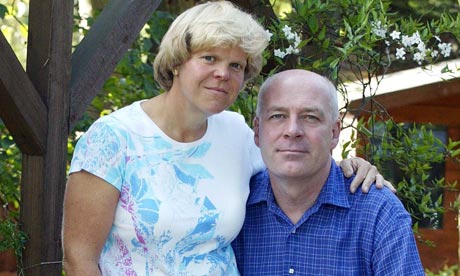
Milly Dowler phone hacking: The parents of Milly were shocked by the NoW revelations, according to their lawyer.
James Robinson Monday 4 July 2011 21.36 BST
The reaction of Milly Dowler's family to the revelation that the News of the World hacked into messages left on her phone was one of shock and disgust, their lawyer, Mark Lewis, said. "Sally and Bob Dowler have been through so much grief and trauma without further distressing revelations to them regarding the loss of their daughter," Lewis said.
"It is distress heaped upon tragedy to learn that the News of the World had no humanity at such a terrible time. The fact that they were prepared to act in such a heinous way that could have jeopardised the police investigation and give them false hope is despicable."
The parents, pictured above speaking after Levi Bellfield was convicted of their daughter's murder, are seeking damages from the paper, Lewis added. More than 30 people who have been shown evidence by the Met that suggests they were victims of hacking are already suing the title's owner, News Group, for breach of privacy.
Lewis also said it should be asked who at the News of the World thought it was appropriate to issue instructions to the private investigator Glenn Mulcaire to hack into Milly's phone and how Mulcaire thought it was acceptable to carry out those orders.
"You have to ask the question who was at the News of the World thinking it was appropriate to try and hack into the phone of a missing young girl?" Lewis said. "Both of them should have had [the] common decency and moral right to turn round and say no."
Lewis said Dowler's parents were contacted by Scotland Yard officers about the allegations in April, a month before Levi Bellfield went on trial for her murder. They had told them: "Glenn Mulcaire, on behalf of the News of the World, was hacking into Milly Dowler's phone while she was a missing person."
Phone-hacking: Colin Stagg targeted by News of the World
Man wrongly accused of murdering Rachel Nickell in 2003 says he will fight back aggressively through courts
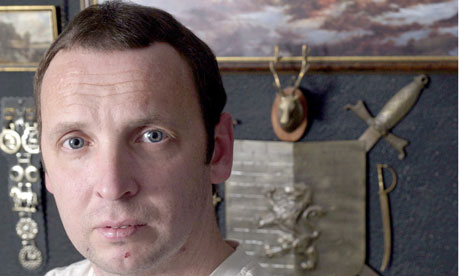
Colin Stagg, who was cleared of the murder of Rachel Nickell on Wimbledon common, has been told that he was likely to have been a victim of phone hacking by the News of the World.
James Robinson Tuesday 5 July 2011
Colin Stagg, the man who was wrongly accused of the 1992 murder of Rachel Nickell on Wimbledon Common, has been told by police he was a victim of phone hacking by the News of the World.
Stagg said that he "felt sick and angry" when he was informed by the Metropolitan police that he had been targeted by the newspaper.
The 48-year-old's solicitor, Alex Tribick, a partner at W H Matthews & Co, said his client would be meeting Scotland Yard shortly to see the evidence they hold.
It is likely that the Met found Stagg's phone number and personal details among documents seized from Glenn Mulcaire, the private investigator used by the paper, during a 2006 raid on his home in south London.
Detectives working at Operation Weeting, the Met's new investigation into phone hacking are going through the process of alerting everyone whose personal details were recorded by Mulcaire. There are likely to be more than 3,000 victims.
Stagg was arrested and charged with Nickell's murder in 2003 and acquitted the following year.
He told London's Evening Standard: "I felt sick and angry when the police first contacted me about suspected hacking. It was this kind of media behaviour that made me a pariah in the public's mind."
Stag added: "I endured years of abuse because the press thought there was open season on me – and I didn't have the means to fight back. Now I do. I have instructed my solicitor to pursue this aggressively, through the courts if necessary."
Stagg has been told the hacking claims date from 2000, six years after he was acquitted. He later received £706,000 compensation after the police operation. Stagg was the subject of intense media interest around the time of his arrest and for many years –even after he was cleared of the crime.
Robert Napper, a convicted murderer, admitted three years ago that he had carried out the killing of Nickell.


 Market Data
  Markets


 AI
AI