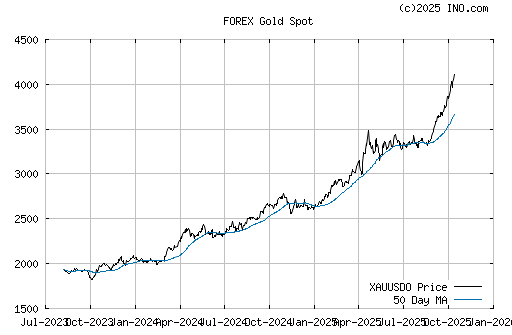
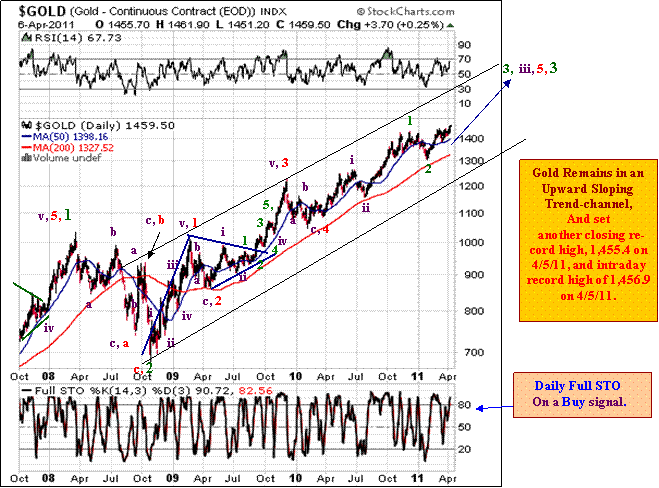
Nice time to buy here :-) bottom fishing Au safety bargain :-)
RE: CQR VALUATION: the Gold former production properties in Zimbabwe fair market valuation should alone be higher than CQR total Market Cap: 13,016,882 million
E.g., Beehive and Babs Gold Mines, Midlands Goldfield Project Overview
The Babs & Beehive Mines are former gold production properties situated respectively about 10km north and 30km northwest of Kwe Kwe.
The mines were developed by African Gold PLC of London between 1997 and 1998 at a cost of approximately $4.5 million and operated for nine months before being placed on care and maintenance in early 1999 as a result of falling gold prices and increasing costs in Zimbabwean currency.
The inferred mineral resource for both mines is 360,000 tonnes at a grade of 5.7g m/t gold.
A further open pit potential of 400,000 tonnes of low grade mineralisation may be amenable to heap leach gold extraction.
The mines are considered to have excellent upside for additional reserves to be delineated following completion of drilling and underground development programmes.
As part of the acquisition Conquest acquired a 300 tonne per day processing plant located at the Beehive mine site which was constructed in 1998.
The Piper Moss Mine is a former gold production property situated just 3km north of and in a similar geological setting to the Globe & Phoenix Mine, the second largest gold producer in Zimbabwe's history (over 2.3 million ounces gold).
The Moss vein from which mostof the past production of 163,200 ounces (520,000 tonnes at 10.8 g m/t gold) was derived can be traced for over 1,200 metres and is up to 2m wide inplaces.
The deposit was formerly accessed on 14 levels by two shafts and byover 10,670 metres of lateral development.
Other production came fromthe Sinola and Spur veins.
Several other mineralized structures occur parallel to the Moss vein and contain ore grade values.
The New Reef isup to 1.5m thick and contains ore grade gold values (average 19.9gm/t).
Potential exists for further gold reserves tobe delineated within the Moss vein system as well as in parallel andcross-cutting veins.
Over 30 present and past producting gold mines are located within 10 km radius of the property.
Conquest has identified a number of other gold procuction properties in the immediate area for acquisition.
Conquest plans to evaluate the potential to retreat approximately 500,000 tonnes of tailings and other surface stockpiles on the property by a vat leaching process and will undertake a comprehensive reevaluation of the primary gold potential through surface and underground exploration.
The above Gold Mines should be restarted by CQR with todays Gold price above $1,400.- per ounce a.s.a.p.!!! Its a shame that they haven't been restarted yet?
Who Would Sell Gold Or Silver Now? Jeff Berwick, The Dollar Vigilante 7 April 2011 Mainstream media, the majority of the public and value investors all believe that the precious metals are in a bubble. But that is because they do not understand the foundations underpinning a move into hard assets.
In this regard there are two camps:
The camp who believes that we live in a grand new world where governments can centrally plan economies better than the free market itself and where acceptance of government-sponsored, unbacked fiat paper monies is just a normal, unquestioned part of life.
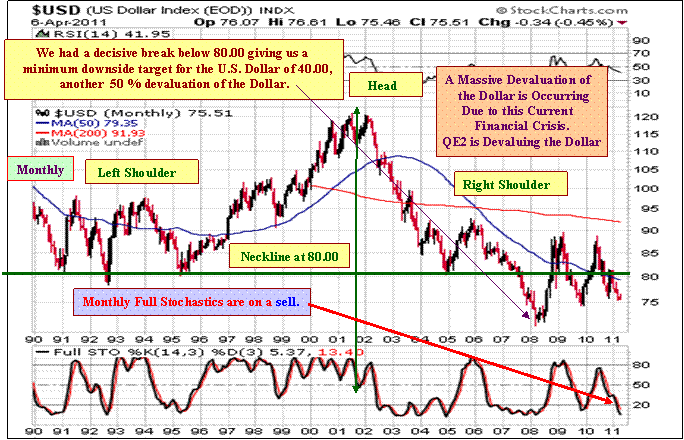
The camp who sees central banks as being artificial and dangerous and who are quite surprised that this era of unbacked fiat currencies has lasted this long (nearly 40 years since the "Nixon Shock" on August 15, 1971)
Those in Camp #1 will never buy precious metals until it is already too late and the fiat currencies have all collapsed.
Those in Camp #2 will never sell their precious metals until they see an indication that the unpayable debts and deficits of the majority of western nations have reached a resolution - either by default (bankruptcy of the nations) or by hyperinflation (bankruptcy of the currency).
Which brings about an interesting state of affairs. Unlike any and every other bubble in the history of mankind, the holders of precious metals will not sell their holdings for fiat currency, at any price.
They may sell their precious metals to buy another asset which they deem as being undervalued in terms of gold or silver - which may mean they sell their precious metals, briefly, for fiat currency but then quickly sell that fiat currency in favor of another asset.
But for those who own precious metals for safety and/or profit against the assured demise of the global financial system there is no price at which they would sell their precious metals in favor of fiat currency.
Of course if someone offered you $10,000 per ounce today for your gold you would be crazy not to accept it. However, most holders of gold would sell at $10,000 and then immediately sell the fiat currency and repurchase the gold at the current market price near $1,400 to buy even more gold.
However, the great majority of people who hold precious metals as a hedge against the destruction of the US dollar reserve based financial system will never sell their precious metals, at market price, until they see a resolution of the debts of the western nations.
GOLD/SILVER SHORTAGES
This amazing scenario is playing out as we speak.
Reports have been coming in from all corners of the world over the last few months stating shortages in physical gold and silver bullion.
The operating capacity of domestic gold refineries in India have reached very low levels due to scarcity of scrap. Currently domestic gold refineries are operating between 25-30% of their installed capacity as against 35-40% around the same time last year. According to Ajay Mitra of the India and Middle East office of the World Gold Council, "Used gold sales have declined steadily in the last one year as consumers are holding jewellery in anticipation of higher prices."
They aren't so much anticipating "higher prices" of gold & silver as they are anticipating "lower prices" in their fiat currency. Until there is any indication that the ongoing, systematic destruction of fiat currencies worldwide will cease then there is no reason for anyone to sell their precious metals in favor of holding the fiat currencies.
Canada's biggest bullion bank, ScotiaMocatta "sold out" of all its silver coins and bars in January. They have apparently sourced some new supply of silver coins but as of the time of writing they still show 100 oz. Silver Bars as being "sold out".
Eric Sprott, one of the smartest men in the precious metals business stated that he expects gold to hit $2,150 and silver to hit $50 this year citing extreme shortages and great challenges to secure 15 million ounces of silver for his fund. He stated that "no supply exists in volume except from the margin of immediate producer output".
MOVE INTO BULLION AND PRODUCERS THIS YEAR
Up until this year it has been relatively safe to "play" in things such as gold/silver ETFs, futures and other "paper" assets. TDV believes that 2011 will be the last year in which it is still relatively easy to find and purchase gold/silver bullion and that those who have not yet begun to do so consider making this move immediately.
TDV issued a Special Report to subscribers entitled "How to Own Gold" on November 8, 2010 which includes more specific details on how and why to move into bullion products.
As well, as Eric Sprott pointed out above, one of the only liquid sources of gold and silver bullion now and in the future may be actual producers. The TDV Portfolio available to subscribers contains numerous large, mid and small cap producers. These equities may rise exponentially if it becomes clearer to the public that they are one of the only sources of accessible bullion available on the market.
Remember to diversify geographically to reduce political risk. We attempt to include miners from different parts of the world as part of this strategy.
Red Lake Gold Mine Mother - Goldcorp makes welcome to CQRLF newborn Au-baby :-) will she help the Au-golden-baby to grow into the Mother Au-lode :-) history tells CQRLF -
He Struck Gold on the Net (Really) By: Linda TischlerMay 31, 2002 Rob McEwen owned an underperforming gold mine in northwestern Ontario, and he needed new ideas about where to dig. So he broke new ground -- and made data on the mine available online to anyone who wanted to help. Eureka! The Internet gold rush was on.
In January 1848, a work crew at John Sutter's mill, near Sacramento, California, came across a few select nuggets of gold. Before long, a half-million prospectors arrived there seeking instant riches. The gold rush was on. Some 153 years later, another gold rush broke out at an old mine called Red Lake, in northwestern Ontario. This time, the fortune hunters wielded geological-modeling software and database mining tools rather than picks and shovels. The big winners were from Australia. And they had never even seen the mine.
Rob McEwen, chairman and CEO of Goldcorp Inc., based in Toronto, had triggered the gold rush by issuing an extraordinary challenge to the world's geologists: We'll show you all of our data on the Red Lake mine online if you tell us where we're likely to find the next 6 million ounces of gold. The prize: a total of $575,000, with a top award of $105,000.
The mining community was flabbergasted. "We've seen very large data sets from government surveys online," says Nick Archibald, managing director of Fractal Graphics, the winning organization from West Perth, Australia. "But for a company to post that information and say, 'Here I am, warts and all,' is quite unusual indeed."
McEwen knew that the contest, which he called the Goldcorp Challenge, entailed big risks. For one thing, it exposed the company to a hostile-takeover bid. But the risks of continuing to do things the old way were even greater. "Mining is one of humanity's oldest industrial pursuits," McEwen says. "This is old old economy. But a mineral discovery is like a technological discovery. There's the same rapid creation of wealth as rising expectations improve profitability. If we could find gold faster, we could really improve the value of the company."
McEwen, a small, soft-spoken man with a neatly trimmed mustache and meticulous tailoring, had one big advantage over his slow-footed competitors: He wasn't a miner, he didn't think like a miner, and he wasn't constrained by a miner's conventional wisdom. As a young man, he went to work for Merrill Lynch, following his father into the investment business. But his father also had a fascination with gold, and McEwen grew up hearing tales of miners, prospectors, and grubstakes at the dinner table. Soon he was bitten by the gold bug too, and he hammered out a template of what he thought a 21st-century gold-mining company should look like. In 1989, he saw his chance. He stepped into a takeover battle as a white knight and emerged as majority owner of an old and underperforming mine in Ontario.
It was hardly a dream come true. The gold market was depressed. The mine's operating costs were high. The miners went on strike. McEwen even got a death threat. But the new owner knew that the mine had potential. "The Red Lake gold district had 2 operating gold mines and 13 former mines that had produced more than 18 million ounces combined," he says. "The mine next door had produced about 10 million ounces. Ours had produced only 3 million."
McEwen believed that the high-grade ore that ran through the neighboring mine was present in parts of the 55,000-acre Red Lake stake -- if only he could find it. His strategy began to take shape at a seminar at MIT in 1999. Company presidents from around the world had come there to learn about advances in information technology. Eventually, the group's attention turned to the Linux operating system and the open-source revolution. "I said, 'Open-source code! That's what I want!' " McEwen recalls.
His reasoning: If he could attract the attention of world-class talent to the problem of finding more gold in Red Lake, just as Linux managed to attract world-class programmers to the cause of better software, he could tap into thousands of minds that he wouldn't normally have access to. He could also speed up exploration and improve his odds of discovery.
At first, Goldcorp's geologists were appalled at the idea of exposing their super-secret data to the world. "This is a very conservative, very private industry," says Dr. James M. Franklin, former chief geoscientist for the Geological Survey of Canada and a judge in the Goldcorp Challenge. "Confidentiality and secrecy about reserves and exploration have been its watchwords. This was a totally unconventional thing to do."
But in March 2000, at an industry meeting, McEwen unveiled the Goldcorp Challenge. The external response was immediate. More than 1,400 scientists, engineers, and geologists from 50 countries downloaded the company's data and started their virtual exploration. When the entries started coming in, the panel of five judges was astonished by the creativity of the submissions. The top winner was a collaboration by two groups in Australia: Fractal Graphics, in West Perth, and Taylor Wall & Associates, in Queensland, which together had developed a powerful 3-D graphical depiction of the mine. 12next ›last http://www.fastcompany.com/magazine/59/mcewen.html
He Struck Gold on the Net (Really) By: Linda TischlerMay 31, 2002 Rob McEwen owned an underperforming gold mine in northwestern Ontario, and he needed new ideas about where to dig. So he broke new ground -- and made data on the mine available online to anyone who wanted to help. Eureka! The Internet gold rush was on.
For McEwen, the contest itself was a gold mine. "We have drilled four of the winners' top five targets and have hit on all four," he says. "But what's really important is that from a remote site, the winners were able to analyze a database and generate targets without ever visiting the property. It's clear that this is part of the future."
Between the new high-grade discoveries and the mine's modernized facilities, Red Lake is finally performing along the lines that McEwen had envisioned. In 1996, Red Lake was producing at an annual rate of 53,000 ounces at $360 an ounce. By 2001, the mine was producing 504,000 ounces at $59 an ounce. On the open market, gold currently trades for about $307 an ounce. The grade of the ore at McEwen's mine is extraordinarily high, confirming his suspicion that the vein that ran through the neighboring mine continues through Red Lake.
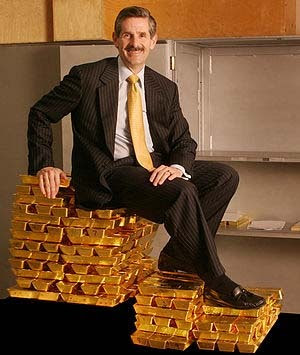
For McEwen, whose passion for gold is evident from the 82-pound sample rock containing 300 ounces of gold that he displays in his office and the dazzling gold, diamond, and lapis wedding ring that he sports on his finger, it doesn't get much better than this. "When you first pick up a piece of gold and hold it in your hand, when you feel the weight and see the luster, you feel like this is something special," McEwen says. "It's different than mining coal."
Contact Rob McEwen by email (rrmcewen@attglobal.net). To learn more about all of the Fast 50 winners, click here. Sidebar: Nuggets of Wisdom
Red Lake, Ontario and West Perth, Australia are at opposite ends of the earth. But that didn't stop Nick Archibald and his team of geologists at Fractal Graphics, an Australian geoscience consulting firm, from thinking that they could find gold in Canada.
First-place winners of the 2001 Goldcorp Challenge, Archibald and his mates shared a grand prize of $105,000 for their presentation detailing likely targets for finding gold. "I'd never been to the mine," Archibald says. "I'd never even been to Canada."
But when he learned of the contest, Archibald recognized an opportunity for his company, which specializes in the production of 3-D models of mines. The prize money was appealing, but Archibald knew that winning would give a boost to his own hopes for expansion funds as well. "Our industry has been going through a hard time," he says. "We had been trying to raise venture capital. Any positive news could only be a big help for us."
Although the prize money, which Archibald's team shared with Taylor Wall & Associates, barely covered the cost of the project, the publicity has boosted the firm's business. "It would have taken us years to get the recognition in North America that this project gave us overnight," he says.
More important, Archibald adds, the Challenge has opened the industry's eyes to a new way of doing exploration. "This has been a big change for mining," he says. "This has been like a beacon in a sea of darkness."
Red Lake Gold Mine
RED LAKE
The Red Lake Gold Mine is composed of two operating complexes: the Red Lake Complex and the Campbell Complex.
Red Lake Gold mine is Canada’s largest gold mine, and in 2009 produced 623,000 ounces at a cash cost of $288/oz.
It is also one of the world’s richest gold mines and lowest cost producers.


 Market Data
  Markets


 AI
AI