<< Eric, it will certainly be interesting to see how this all plays out. How much rein will MS allow Nokia to play with the software, how much say MS will have in approving any major change in chipsets, how much they will allow other WP7 vendors to have the same freedom. >>
I personally think it will be extremely interesting (exciting even), but at the moment I would not venture even a guess on how it will play out. There is simply not enough detail available to begin to hazard a guess, but it's one hell of an ecosystem play.
I would guess that Nokia will have reasonably substantial influence on Win Phone 8 software development and I also expect that other vendors will have less ... but that's a personal expectation, and certainly not a given. Nokia is most likely not going to field product 1 and a range of product to quickly follow for the better part of a year. I'm guessing they'll enter with Win Phone 8, not 7. In the interim Softie (and Nokia) need other vendors to press forward and bring evolving Win Phone product to market.
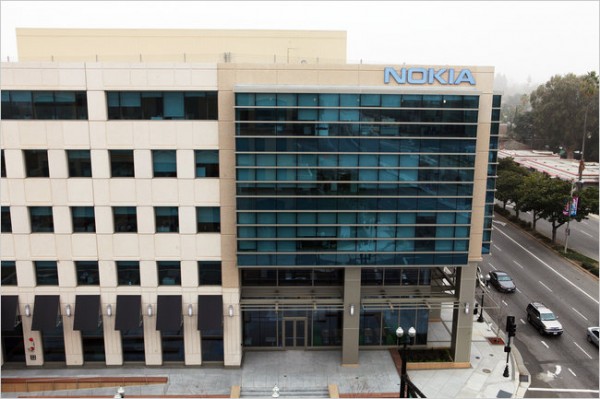
Why such lack of detail? For one thing, Nokia and Softie don't even have a finalized agreement in place. They have a terms sheet, and a lot of water needs to flow under the dam before the agreement is finalized. Somewhere I heard (and darned if I can remember where I heard it or whether the source was somewhat credible, although I think I thought it was) that the 2 companies expected to have the formal agreement finalized and signed within 90 days. -- mot 2 weeks or even 2 months. I don't really see it happening too much quicker. Compromises will need to be reached (they will) and the legal staffs, not just management, will be plenty busy. In the interim we'll hear a rumor a day (an AROD) while the limos pull in an out of the MS Redmond campus and Nokia's new Silicon Valley headquarters in downtown Sunnyvale ...
Your nicely firm Nokia namesake will likely be deeply involved in the negotiation and he's no stranger to such discussions ....
So will this 39 year old Brit (Louise Pertland) who became Nokia CLO in 2008 and a member of Nokia's Leadership team (formerly the Group Executive Board) last week. She serves as vice chair of the International Bar Association, Corporate Counsel Forum, is a qualified and active Solicitor in England and Wales as well as a licensed attorney and an active member of the New York Bar ...
<< Will Nokia play nicely with MS ?? I know Elop will, but will those in the trenches ?? >>
Why wouldn't they? Firm but nice. Both sides bring a lot to the table and are looking for a win-win. I would anticipate one side playing as nicely (and firmly) as the other. The trenches on either side probably won't hold much sway ... best not hold much sway or they'll need to find another trench. Steve and Stephen are committed to making this work and the fact that they have worked closely with each other for the last few years almost insures it, I would think.
Out of curiosity how do you know Stephen will? <ggg>
<< ST/Ericsson in only one of the many that will now be trying to bring the WP7 ecostructure a viable option to Q >>
For sure. Many, many, Qualcomm is, however, nicely positioned as silicon supply for Windows Phone expands which it was bound to be with or without Nokia in the picture although Nokia certainly enables that expansion. A single source of supply simply would not hack it for Microsoft beyond getting initial Win Phone 7 production relatively quickly out the door by having a single reference platform. Two potential Win Phone silicon suppliers with strong ties to Nokia (and Microsoft in the latter case) that I particularly wonder about are Broadcom and Renesas. Strategy Analytics wrote last week ...
"As for chipset vendors, last week we wrote that Qualcomm could be a prime beneficiary from this deal. We believe Nokia will add Qualcomm, Broadcom, ST-Ericsson, Renesas and Intel to its Windows Phone supplier list. We will know more on these questions as it unfolds.".
No mention of TI. I wouldn't necessarily rule 'em out. MediaTek? I don't see them as a potential supplier to Nokia and they have their own problems of late, but they could be in play with Softie. Time will tell.
Here's PR from Renesas about their (non-integrated) LTE Triple-Mode Modem Platform, the SP2531 ...
The platform is Renesas Mobile’s first modem product integrating technologies from Renesas Electronics and the latest generation of the advanced modem technology developed by the former Nokia Corporation’s Wireless Modem team ... The LTE triple-mode modem platform is targeted at the convergence market which demands high performance, high levels of integration and a power efficient implementation covering such key use cases as browsing and streaming. It also supports TD-LTE and FDD-LTE cat 3 (100Mbps downlink (DL) / 50Mbps uplink (UL)) along with HSPA+ features such as DC-HSDPA cat 24 and HSUPA cat 7 giving 3G data rates of 42Mbps (DL) /11.5Mbps (UL) respectively with global coverage through its unique RF design. The LTE triple-mode modem platform comes with extensive support for all the major mobile OS’s including Android, MeeGo and Symbian as well as Linux and Windows Mobile on PCs allowing easy integration as an embedded modem, including standalone, or a companion to an applications processor in a high-end smartphones or tablet devices. ... The triple-mode modem platform will be available for sampling in March 2011 as a reference design and comes complete with consulting services to enable rapid time to production. Mass production is expected to be in late 2011.
That's about all I know or can even reasonably speculate on. As usual its darned hard to keep track of all the happenings at GSMA's MWC.
Did we see a QCOM decade closing high today? Finest kind, as Captain Hawkeye Pierce, MD, from Crabapple Cove, Maine, and as portrayed originally by Donald Sutherland from Elop's country of origin and citizenship was fond of saying. Hats off to PJ, who was the subject of much distracting whining, moaning, and groaning on our various Qualcomm boards for some time. Heck, we were in a global recession, and like many others in mobile wireless. Qualcomm was impacted severely.
Elop on MS and Nokia and other OEMs playing with Win Phone Software
Rich,
You may have already seen this Forbes piece. I hadn't when I responded to your question, but Elops provides insight ...
<< How much rein will MS allow Nokia to play with the software, how much say MS will have in approving any major change in chipsets, how much they will allow other WP7 vendors to have the same freedom. >>
>> Nokia CEO Offers Glimpse of Future Windows Phone Strategy
Elizabeth Woyke Forbes | Mobilized February. 18, 2011
One of the lingering questions from Nokia’s recent decision to partner with Microsoft on smartphones is just how much control the handset maker will have over these future devices. To date, Microsoft has set specific guidelines for the manufacturers that license its Windows Phone 7 operating system. Those rules span everything from the type of mobile processor that goes into Windows Phone 7 phones to the degree to which device makers can alter the stock Windows Phone 7 software.
Manufacturers including HTC and Samsung have said they do not mind following Microsoft’s instructions. But they note that the approach differs from that of, say, Google, which is less strict about how companies use its Android mobile platform.
Nokia’s decision to tie a significant part of its future to Windows Phone 7 thus prompts several questions: Does Nokia think it can be successful within the current Windows Phone 7 framework? Will the Windows Phone 7 guidelines not apply to Nokia? Now that Windows Phone 7 has been in the market for several months, does Microsoft plan to revise its rules for all its partners?
In the week since Nokia announced its news, Nokia Chief Executive Stephen Elop has offered a few clues about how the company will work with Microsoft on smartphones. It appears that Microsoft plans to relax some Windows Phone guidelines for all licensees, allowing greater choice over mobile processors and other components. That change should make Windows Phone devices more affordable, broadening the potential Windows Phone audience.
Nokia may be able to push other Windows Phone changes, as well. In an interview Elop conducted with a small group of U.S. reporters — including Forbes — earlier this week, at the Mobile World Congress trade show, he described a particularly close relationship between the two companies.
Elop revealed, for instance, that engineers from the two companies have been working together for some time already, in places like Reykjavik, which is located about halfway between Nokia’s Espoo, Finland and Microsoft’s Redmond, Wash. headquarters.
At the same time, Elop remained respectful of Microsoft’s right to direct Windows Phone development. While Elop indicated that Nokia would modify the software, perhaps in areas like photography and mapping, where Nokia has historically been strong, he also hinted that the company would not apply the type of software overlays that HTC, Motorola and Samsung have used to customize their Android devices. Developing a software “skin” could introduce unnecessary complexity to the Windows Phone ecosystem, said Elop.
The other reason not to embellish Windows Phone is speed, the importance of which Elop has stressed in every conversation he’s had about Nokia’s decision. Creating skins takes time; something that Nokia, which badly wants to release a Windows Phone by the end of the year, does not have.
Here is Elop in his own words:
On the ways in which Nokia and Microsoft are already working together: One of the most important things that needed to happen [for the Nokia/Microsoft deal] was the belief that our engineers could work together and believe in each other. We brought in a small number of engineers, including some senior Symbian leaders, and put them in a room [with Microsoft engineers] without supervision. You can’t build products unless you have a group of people that can sit in a room and love each other. …It doesn’t matter how I feel…I’m not the one building products day-to-day.
How the two companies will collaborate on Windows Phone: What we’re doing with Microsoft…is unique. There are joint assets we are contributing to Windows Phone…we are building ecosystems. This mutual dependency creates a balance that will result in a hugely positive user experience. It’s different from Microsoft having a version of software that just shows up, which we drop on devices. We will be involved in every step of the Windows Phone development process, contributing to it. It’s quite different from the typical [equipment manufacturer] model…we’re doing things on a unique basis.
Whether Nokia will customize Windows Phone with software “skins”: We want to be thoughtful about not creating an arbitrary forking of the Windows Phone user experience. If we skin Windows Phone and an app won’t work on it, that’s a problem. We will be very thoughtful about this. You see skins going on with Android, but my sense is that Google will tighten the degree to which people can do that.There are things Nokia could do with photography or the phone’s camera that could show an experience far richer and more complete than what anyone else has [on Windows Phone today]. Maybe if you take a picture of an ad, you get a discount. …But it has to be within the framework of Windows Phone.
How modifying Windows Phone could affect release times: Nokia historically did very precise hardware [modifications] like making its chips just a bit different from the competition’s. Some of that [modification] is still advantageous, but a lot of it slows you down. We could do a skin user interface but that could also delay the release of a phone. The pressure is on in terms of time to market and building this ecosystem. If we’re going to make changes that are special to Nokia, they will be the right things to do. …We will talk very carefully about [the modifications] to make sure they’re worth the price.
Whether other Windows Phone manufacturers will have access to the software/ modifications Nokia creates: Nokia will have some exclusive differentiated capabilities. Maybe something related to maps. [That said] we believe our most important competitor is not Samsung, Dell or HTC. It is Android and Google. Nokia will do what we can do to complete and strengthen the Windows Phone ecosystem. We’re assuming that success in the Windows Phone ecosystem will attract more competition. If we’re really successful, we will end up being more concerned about competition within Windows Phone, but we’re not [concerned about that] yet.
How Windows Phone could be more profitable than Android: Even if a company today is making money with Android…they well-understand that the risk of commoditization is high. As that commoditization sets in, margins will come under increasing pressure. We’re joining the Windows Phone ecosystem because we can deliver a differentiated experience [with Windows Phone]. And the margins…can be higher.
How Nokia will help consumers transition from Symbian to Windows Phone: We will make a path forward [from Symbian] to Windows Phone. [Elop went on to describe a scenario that involved allowing users to transfer data from Symbian phones to Windows Phone handsets, once they're ready.] ###


 Market Data
  Markets


 AI
AI