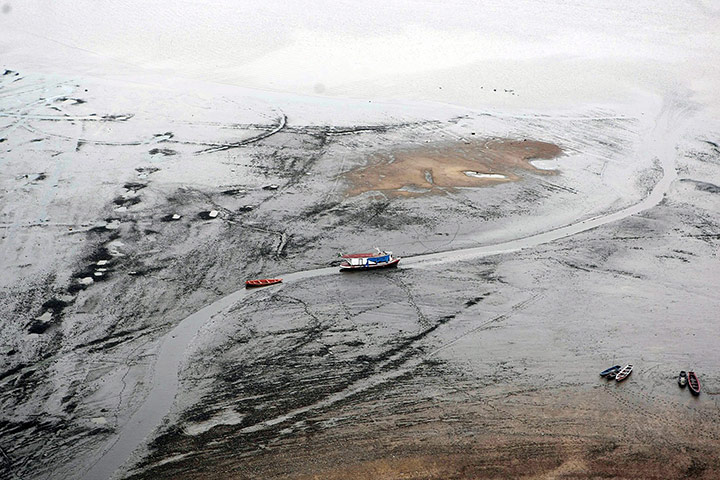
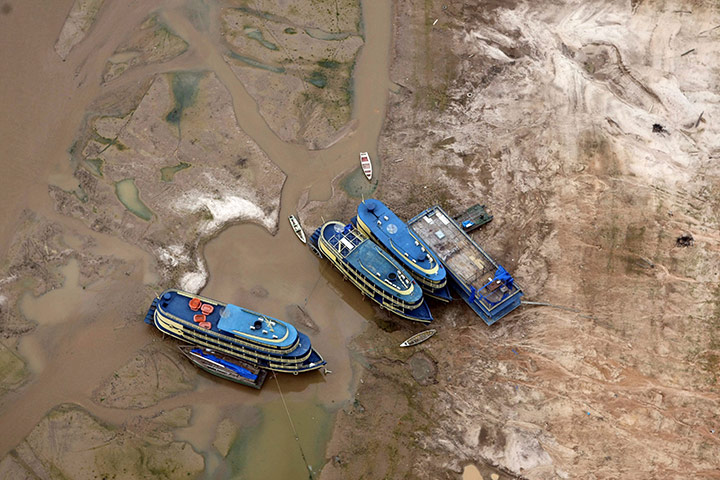
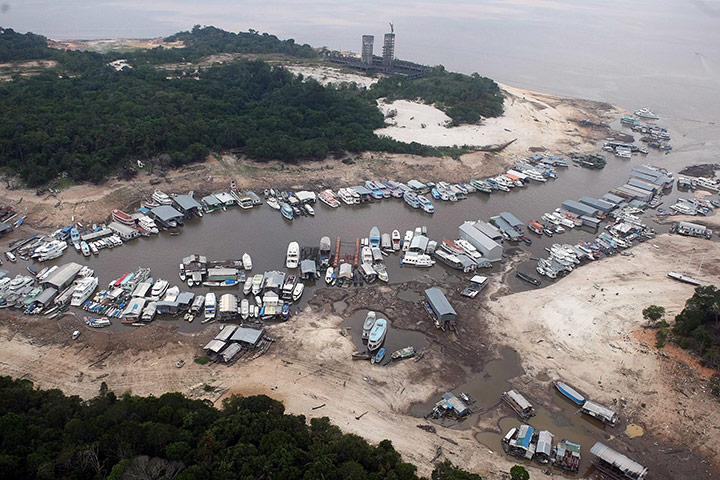
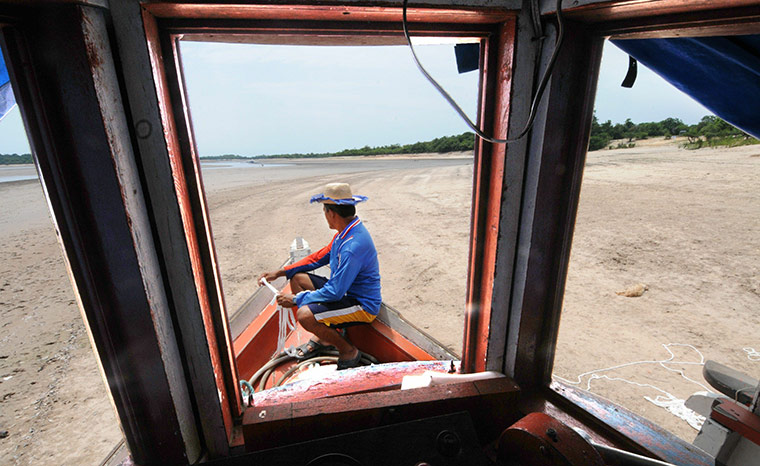
Drought brings Amazon tributary to lowest level in a century
Meteorologists and activists divided on causes of drought with some pointing to climate change as a factor
* Tom Phillips in Rio de Janeiro * guardian.co.uk, Tuesday 26 October 2010 04.25 BST
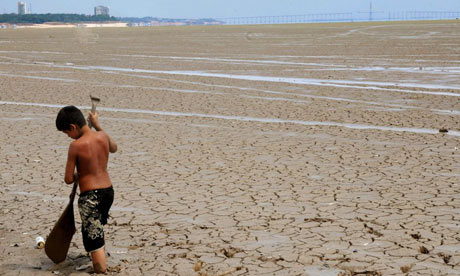
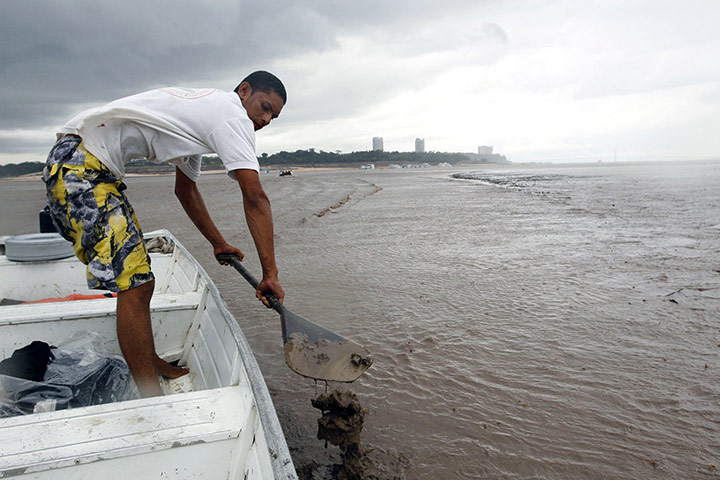
Drought in northern Amazon region A child plays with a paddle on the dried bed of the Rio Negro in northern Brazil. Photograph: Euzivaldo Queiroz/AFP/Getty Images
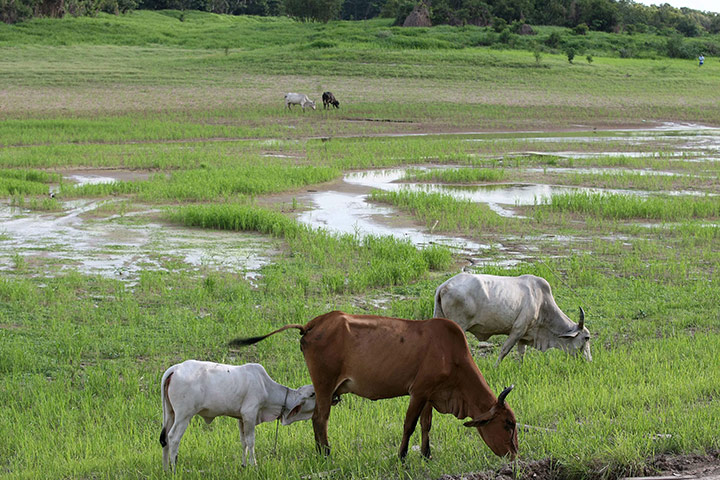
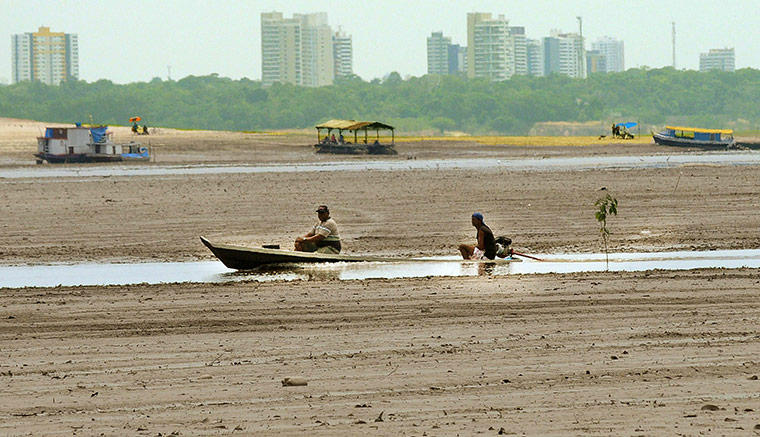
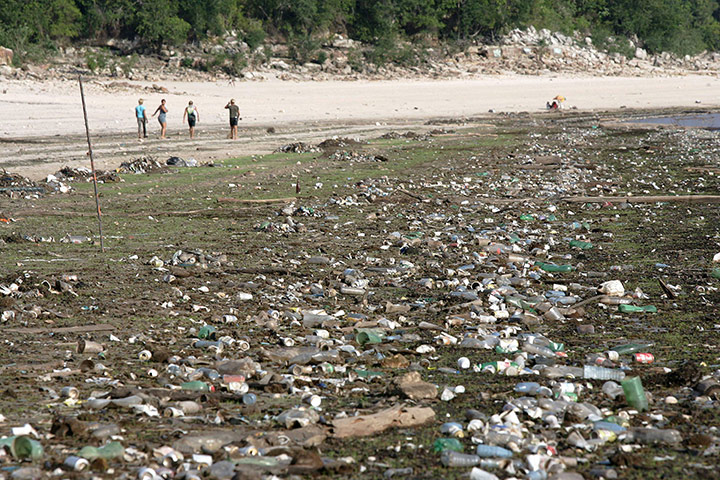
One of the most important tributaries of the Amazon river has fallen to its lowest level in over a century, following a fierce drought that has isolated tens of thousands of rainforest inhabitants and raised concerns about the possible impact of climate change on the region. .. .. continued ..
Posted: Matthew Grace on Feb 21 | Indigenous & Culture, Law & Justice
The Amazonian Pacahuara tribe, whose traditional lands in the Pando department have been ceded to the Mabet timber company, is at risk of extinction, according to the Valle Press agency.
The small tribe, consisting of only five families, doesn’t have legal recognition to the land, which it tried to obtain from the Cobija civil court in 2009. A judge ruled in October of that year that the Pacahuara lacked “prefectural recognition,” and it didn’t have rights to the territory occupied by Mabet, in the Federico Román province of Pando department.
The publication Sol de Pando reports that the Pacahuara tribe is opting for “ethnic suicide,” in which the women of the tribe decide not to have children so that offspring won’t have to live without homes or rights to their traditional lands.
Assembly member Bienvenido Zacu (MAS) has demanded that a commission be formed to investigate the plight of the Pacahuara.
Johann Hari: A fight for the Amazon that should inspire the world [...] The indigenous people are weak. They have no guns. They barely have electricity [...] Earlier this year, Peru's right-wing President, Alan Garcia, sold the rights to explore, log and drill 70 per cent of his country's swathe of the Amazon to a slew of international oil companies. [...]
But the indigenous people have seen what has happened elsewhere in the Amazon when the oil companies arrive. Occidental Petroleum are facing charges in US courts of dumping an estimated nine billion barrels of toxic waste in the regions of the Amazon where they operated from 1972 to 2000. Andres Sandi Mucushua, the spiritual leader of the area known to the oil companies as Block (12A)B, said in 2007: "My people are sick and dying because of Oxy. The water in our streams is not fit to drink and we can no longer eat the fish in our rivers or the animals in our forests." The company denies liability, saying they are "aware of no credible data of negative community health impacts". [...]
Garcia's plan was to turn the Amazon from the planet's air con into its fireplace.
Why is he doing this? He was responding to intense pressure from the US, whose new Free Trade Pact requires this "opening up", and from the International Monetary Fund, paid for by our taxes. In Peru, it has also been alleged that the ruling party, APRA, is motivated by oil bribes. Some of Garcia's associates have been caught on tape talking about how to sell off the Amazon to their cronies. The head of the parliamentary committee investigating the affair, Rep. Daniel Abugattas, says: "The government has been giving away our natural resources to the lowest bidders. This has not benefited Peru, but the administration's friends."
So the indigenous peoples acted in their own self-defence, and ours. Using their own bodies and weapons made from wood, they blockaded the rivers and roads to stop the oil companies getting anything in or out. They captured two valves of Peru's sole pipeline between the country's gas field and the coast, [...] Garcia responded by sending in the military. He declared a "state of emergency" in the Amazon, suspending almost all constitutional rights. Army helicopters opened fire on the protesters with live ammunition and stun-grenades. More than a dozen were killed. But the indigenous peoples did not run away. [...]
And then something extraordinary happened. The indigenous peoples won. The Peruvian Congress repealed the laws that allowed oil company drilling, by a margin of 82 votes to 12. Garcia was forced to apologise for his "serious errors and exaggerations". The protesters have celebrated and returned to their homes deep in the Amazon.
June 4, 2010 ... for many years, indigenous people from a formerly pristine region of the Amazon rainforest in Ecuador have been trying to get relief from an American company, Texaco (which later merged with Chevron), for what has been described as the largest oil-related environmental catastrophe ever. .. http://investorshub.advfn.com/boards/read_msg.aspx?message_id=50944741&txt2find=amazon


 Market Data
  Markets


 AI
AI