News Focus
News Focus
icon url

Amaunet

05/30/04 7:16 PM

#670 RE: Amaunet #669

Kurdish Separatists End Ceasefire in Turkey, Foreigners Warned

Could be another reason why Bush, who is to visit Turkey, wants bases in Turkey. Although in Turkey the turkey probably will not serve turkey to Turkey. Okay, so it's hot here.
#msg-3208349


Kurdish separatists end ceasefire, warn foreigners to avoid Turkey

Posted: 29 May 2004 2322 hrs


ANKARA : Kurdish rebels said they were ending a five-year unilateral ceasefire and warned tourists and foreigner investors to stay away from Turkey, just a month before it was set to host US President George W. Bush at a major NATO summit.

"Our commitment to the ceasefire will cease to exist from June 1," KONGRA-GEL, the successor to the outlawed separatist Kurdistan Workers' Party (PKK), said in a statement carried on the website of the German-based pro-Kurdish Mesopotamia news agency on Saturday.

About 37,000 people have died in unrest since rebels took up arms in 1983 in their quest for an ethnic homeland in Turkey's mainly Kurdish southeast.

KONGRA-GEL said the ceasefire it has observed since September 1999 had become meangingless because of what it called "annihilation operations" by Turkish security forces against its fighters in the past three months, the report said.

The revival of the Kurdish insurgency and the potential tough response from Turkish forces could damage Ankara's chances to join the European Union.

Turkey, a formal EU candidate since 1999, is eagerly waiting for the green light to begin membership talks with the bloc when EU leaders meet in December to assess the country's progress in democracy and human rights.

"Tourists should not choose Turkey," the KONGGRA-GEL statement added.

"We appeal to people wanting to invest in Turkey not to come here and choose to invest in a conflict zone. Otherwise we will not be responsible for the damage."

"We will engage in various types of activities targeting Turkish forces," it said.

The statement was released after a recent flare-up of violence and as Turkey prepares to host President Bush and other leaders at the NATO summit in Istanbul on June 28-29.

"Twenty-six people, both rebels and members of the security forces, have been killed in the past two months. This points to an increase," said Selahattin Demirtas, head of the local branch of the Turkish Human Rights Association in Diyarbakir in the southeast.

Demirtas linked the increased fighting to the war in neighbouring Iraq. Up to 5,000 Kurdish rebels from Turkey are believed to be in hiding in mountainous northern Iraq's Kurdish area since pulling out of Turkish territory in 1999.

"The United States wants KONGRA-GEL militants to leave Iraq. They come to Turkey and clashes erupt," Demirtas said.

The United States, a key Turkish ally, considers KONGRA-GEL a terrorist organization and last year reached agreement with Ankara on an "action plan," including military measures, against the group.

Turkey has since complained of US reluctance to purge northern Iraq of the rebels.

Washington is keen to prevent Turkey, a key NATO ally, from intervening in its southern neighbour as the US-led coalition tries to stabilize the restive country.

PKK violence abated after their leader Abdullah Ocalan was captured in 1999 and the group said it would lay down its arms in favor of a peaceful resolution.

But the rebels continued attacking government targets, though less frequently.

The PKK has several times changed names and is now known as KONGRA-GEL. Its reincarnations have also been put on the list of terrorist organizations by both the United States and the EU.

Turkish officials had categorically rejected the rebels' 1999 truce.

But Ankara has since then made some concessions towards its Kurdish population, who make up some 20 percent of the 70-million-strong population.

It has allowed private institutions to teach the Kurdish language and permitted limited Kurdish-language broadcasts in a bid to boost its chances of joining the EU.

The EU had condemned Turkey's handling of Kurds in the 1980s and 1990s, accusing authorities there of torture and other abuse.

There was no immediate reaction from Turkish officials Saturday to the reported end to the ceasefire.

- AFP


http://www.channelnewsasia.com/stories/afp_world/view/87512/1/.html turkey


icon url

Amaunet

06/01/04 9:05 AM

#680 RE: Amaunet #669

The United States has demanded that Turkey should make some facilitation for bases in Incirlik town of southern Adana province and central Konya province.
#msg-3208349

Recently the United States withheld criticism of Pakistan despite leaks of nuclear secrets to Libya and other countries, so long as US troops could launch a search for Osama bin Laden in the Islamic state, said a report released Sunday.

"It's a quid pro quo," a former senior intelligence official told New Yorker reporter Seymour Hersh.

"We're going to get our troops inside Pakistan in return for not forcing (Pakistani leader Pervez) Musharraf to deal with (Pakistan's nuclear research director Abdul Qadeer) Khan," who admitted sharing nuclear secrets with US foes Iran, Libya and North Korea. - WASHINGTON (AFP) Feb 29, 2004
http://www.spacewar.com/2004/040229190439.q5jl04vh.html

Now Bush is DEMANDING that Turkey should make some facilitation for bases in Incirlik town of southern Adana province and central Konya province. Basbug hinted that Washington was taking pulse related with establishment of three new sea bases in the Black Sea.

In an opportune moment the West's spies have stumbled upon a missed Libya nuke shipment from Turkey.

Given Bush’s previous blackmail of Pakistan, who leaked nuclear secrets to Libya and Pakistan's nuclear research director Abdul Qadeer) Khan," who admitted sharing nuclear secrets with US foes Iran, Libya and North Korea, in order to get U.S. troops inside Pakistan, this administration could blackmail Turkey for the nuke shipment to Libya in order to get American bases in Turkey.


West's Spies Missed Libya Nuke Shipment from Turkey
Sat May 29, 2004 12:58 PM ET

By Louis Charbonneau
VIENNA (Reuters) - As U.S., British and U.N. experts were busy disarming Libya, a shipment of nuclear bomb-related machinery from Turkey slipped past Western intelligence agencies into Libya in March, an atomic expert said on Saturday.

Libya, which swiftly disclosed the shipment, has also denied purchasing nuclear materials from North Korea, casting doubt on news reports Pyongyang secretly provided Tripoli with uranium, diplomats close to the United Nations said.

David Albright, a former U.N. weapons inspector and president of a U.S.-based security think-tank, told Reuters this was a shining example of the "failure of export controls" that enabled the creation of an illicit nuclear market.

In a report issued on Friday and obtained by Reuters, the International Atomic Energy Agency (IAEA) said:

"One shipment of (centrifuge) components actually arrived in Libya in March 2004, having escaped the attention of the (Western) state authorities that had seized the cargo ship BBC China in October 2003."

"These components that arrived in March were assembled in Turkey and sent to Libya via Dubai," the atomic energy expert, who is familiar with the IAEA investigation and its new Libya report, told Reuters.

There was no suggestion that Libya, which has been cooperating with U.N. inspectors, tried to hide the shipment. The IAEA said: "Libya notified the agency of the arrival of this container and it has since been shipped out of the country."

The work of dismantling Tripoli's atom bomb program by U.S. and British experts in Libya was underway in March. But the experts missed the shipment's arrival, diplomats said.

A diplomat from an IAEA board member country said there may be more such orders made before Libya renounced its nuclear, chemical and biological weapons programs in December that have yet to reach Tripoli.

U.S. and British intelligence officials arranged the seizure in Italy of the BBC China while carrying centrifuge components made in Malaysia to Libya via Dubai in the United Arab Emirates.

Turkey was first named as a player in a nuclear black market linked to the father of Pakistan's nuclear weapons program, Abdul Qadeer Khan, in a Malaysian police report based on testimony of Buhary Syed Abu Tahir, a Sri Lankan businessman.

There were two Turkish men named in the police report. One had worked for the German engineering firm Siemens .

Malaysian authorities said on Friday they had arrested Tahir. Washington said this was a key step in shutting down Khan's network which stretched from Europe to Africa and across the Middle East to Asia.

NO TRADE WITH NORTH KOREA

Separately, Western diplomats close to the IAEA said Libya denied purchasing 1.6 tonnes of uranium hexafluoride (UF6) from North Korea, which would have indicated the communist state was selling nuclear material directly to states hungry for a bomb.

UF6, a solid at room temperature, becomes a gas when heated and can then be fed into gas centrifuges that enrich uranium for use as fuel for atomic power plants or in weapons.

"Libya has denied buying anything directly from North Korea," one of the diplomats told Reuters.

News reports about Libya's alleged direct trade with North Korea said the IAEA had "strong evidence" for this claim based on interviews with members of Khan's black market.

But diplomats said the IAEA has no strong evidence, only second-hand testimony of persons interviewed by Pakistani authorities given to the U.N. by Pakistan. The IAEA is taking this information seriously but has no way of confirming it.

The diplomats said that the Libyans have generally been cooperative and are considered trustworthy.

But these diplomats and the atomic expert said that even if North Korea did not sell it directly to Libya, this did not mean the uranium did not originate in North Korea.

They said it was possible the Pakistanis acted as middlemen, buying the uranium from Pyongyang and reselling it to Libya.

The Malaysian police report, released in February, said the UF6 "was sent by air from Pakistan to Libya."


© Copyright Reuters 2004. All rights reserved. Any copying, re-publication or re-distribution of Reuters content or of any content used on this site, including by framing or similar means, is expressly prohibited without prior written consent of Reuters.

http://www.reuters.com/newsArticle.jhtml?type=worldNews&storyID=5293689


icon url

Amaunet

06/02/04 10:54 AM

#693 RE: Amaunet #669

Iran says it's building radar-evading missile; details not disclosed
Updated at 22:27 on June 1, 2004, EST.

TEHRAN, Iran (AP) - Iran is producing its first stealth missile, a rocket that can evade electronic detection, the Iranian Defence Ministry said Tuesday.

The missile, named Kowsar after a river in paradise, will be capable of hitting ships and aircraft, Defence Ministry spokesman Mohammad Reza Imani told The Associated Press. He refused to give the missile's range or provide other details. Features of the Kowsar, such as its guidance and positioning systems, are currently on show at an exhibition in Tehran that is open only to select government officials.

Iranian state television announced the Kowsar on Tuesday while screening pictures of a missile flying through the air.

Iran manufactures various missiles, chief among them the Shahab-3 whose range of 1,300 kilometres makes it capable of reaching Israel.

Iran also produces tanks, armoured personnel carriers, and a fighter plane.

The Kowsar River is mentioned in the Qur'an, Islam's holy book.

In February, Iran's defence minister announced a production line of the Kowsar missile had been opened, but did not mention any stealth capabilities, according to an English translation of a Iranian news report that was provided to The Associated Press.

The Feb. 16 report, on Iran's Network 1, quoted Defence Minister Ali Shamkhani as saying the new missile was a short-range naval missile designed to be fired from speedboats, helicopters or coastal launchers. The report says the missile uses an image system to lock on to targets, according to the translation.

http://www3.cjad.com/content/cp_article.asp?id=/global_feeds/canadianpress/worldnews/w0601101A.htm


icon url

Amaunet

06/24/04 8:29 PM

#873 RE: Amaunet #669

Look at Bush’s plans. This is a much bigger war he wants. So far his shortsighted polices have resulted in an increase in terrorism. Things are about to get a whole lot worse for this country. Do you think he requests these facilities for Iraq? Violence will reign supreme as the world scrambles to stop this rogue nation, this United States. He is pushing too hard, there will be a response.

#msg-3414370
#msg-3396325

-Am

Cumhuriyet: HERE IS THE LIST OF BUSH
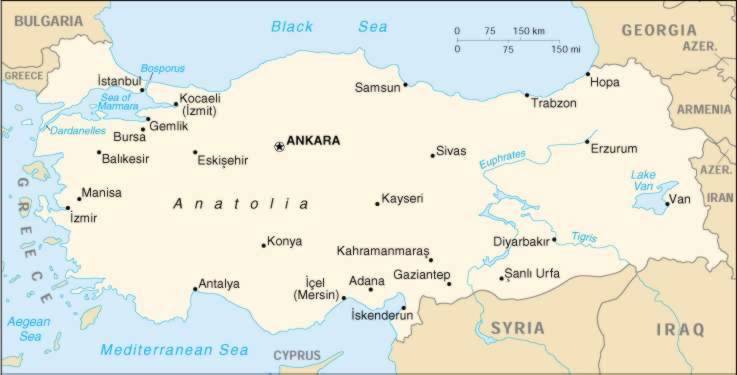
In talks between Turkish and U.S. officials which continued for a long time, U.S. said they wanted to make use of almost all strategic facilities of Turkey. It was reported that Bush will bring onto agenda establishment of land base in Thrace, and naval bases in Iskenderun, Trabzon and Samsun. U.S. President will propose deployment of 18,000 soldiers to six places on Mardin-Batman-Silopi line and want the soldiers to come and go for the operations outside Turkey without giving notice. Bush will ask for Incirlik to be broadened or turning of Batman Airport into a base. Bush will also ask for permission for use of Sabiha Gokcen Airport. U.S. President will ask Turkey to grant passages to U.S. ships from the straits without notice.

http://www.turkishnewsline.com/turk_basini.php?tarih_turk=1088110800


icon url

Amaunet

06/25/04 10:50 AM

#875 RE: Amaunet #669

Israel and Iran chart collision course
By Kaveh L Afrasiabi

The United States and its European allies may be self-indulging in a Wilsonian "greater Middle East" project or discourse frowned on by the region's politicians and intellectuals, yet there is little doubt about the operation of Israeli power well beyond her tiny borders pushing for a "greater Israel".

This much can be surmised by studying Israel's foreign policy toward Central Asia and the Caucasus since the Soviet Union's breakup, which, in tandem with Turkey, has allowed Israel to launch its own version of "sphere of influence" politics in what the late Israeli prime minister Izhak Rabin termed as "the new Middle East"; this concept has been viewed rather favorably by Israeli pundits since it implies the region's jailbreak from the Arab-dominated sub-system.

Thus, it is hardly surprising that, per a report in the latest issue of the New Yorker, Israel is actively involved in supporting the Iraqi Kurds, who are fast sowing the seeds of their independence, albeit often under the convenient guise of a new Iraqi federalism. According to the article by veteran writer Seymour Hersh, who has aptly unearthed the secrets of Israel's nuclearization, not to mention the Abu Ghraib prison torture fiasco, Israel's secret service, Mossad, is engaged in covert operations among Iranian and Syrian Kurds, in addition to training Iraqi Kurd commandos and setting up the latter as a counterweight to Shi'ite militias.

Raising the ire of Turkey, whose government has criticized Israel's iron fist approach toward the Palestinians, the government of Israel has reportedly denied the allegations in Hersh's article. In Hersh's "Plan B", Israel's rationale has been described as purely a response to the fear of militant Shi'ism emanating from Iran, and the US's inability to contain this threat.

Maybe so, but what Hersh has missed is the economic dimension of Israel's push for a Kurdish state or, at the least, a largely autonomous Kurdish region in Iraq which could realize the long sought-after dream of an oil pipeline from Mosul to Haifa, echoing the statement last March in the Israeli paper, Haaretz, by Minister for National Infrastructures Joseph Paritzky, that such a pipeline would diversify Israel's sources of energy and lessen its dependence on expensive Russian oil. The fact that this pipeline would have to travel through the "weak" and compliant state of Jordan does not seem, at least from the prism of Israel's national (security) interests to be an insurmountable problem.

Unfortunately, Hersh appears all too willing in his article to adopt Israel's stated rationalization, ie, fear of Shi'ite radicalism, without probing either the geoeconomic factors or Israel's growing ambitious foreign policy casting a wider and wider net just as this "regional superpower" grows in military and economic might in a rather stagnant region. Equally absent in Hersh's piece is any reference to Israel's direct assistance to American counter-insurgency operations, which has been the subject of investigative journalism by various European newspapers such as the Guardian in the United Kingdom.

Regardless of the Israeli government's official denial, Hersh's story is bound to reverberate throughout the Middle East and fuel the fire of conspiracy theorists who depict a "proxy war" by the US, articulated by a largely Jewish group of Washington policymakers known as "neo-conservatives", in the interest of Israel. In turn, such news makes it even harder for the US to win the legitimacy battle in Iraq as well in the entire Arab world.

Still, it is noteworthy that in light of the Sunni-Shi'ite divisions, Israel's self-portrayal as a deterrent force against Iran-led Shi'ite insurgency may strike a harmonious cord with some Sunnis, but it is doubtful that with growing Shi'ite-Sunni cooperation against the US occupation, Israel's strategy may find too many admirers either in Iraq or elsewhere in the Muslim world. Rather, news of Israel's clandestine operations in Kurdish Iraq, fomenting Kurdish irredentism, will likely cause an anti-Israel backlash, including in Turkey, which must reckon with its own volatile Islamists.

Nonetheless, strategically speaking, any immediate or short-term harm to Israel's strategic alliance with Turkey may be worth the long-term dividend of a divided Iraq light years removed from menacing Israel again and, what is more, featuring a pro-Israel Kurdish enclave mirror imaging pro-Iran warlords in Afghanistan. Whether or not Israel can then utilize its "Kurdish stick" for a quid pro quo with Iran vis-a-vis the Hizbollah in Lebanon or Hamas and Jihad in the occupied territories remains to be seen. For the moment, however, in terms of regional balance of power, the post-invasion opening of Iraq to foreign influence has seemingly set up a new, and dangerous, chapter in Israel-Iran rivalry that in all likelihood will permeate Iraq and the "new Middle East" indefinitely.

This, in turn, raises serious questions about the nature and intent of the "Greater Middle East" project about to be discussed at the upcoming North Atlantic Treaty Organization meeting in Istanbul. The diplomatic niceties of this benign discourse aside, which components have yet to be disentangled clearly, the facts on the ground, such as the clashing interests of two regional powers and their multidimensional games of strategy spanning the entire region, need to be explicitly addressed, otherwise the said project will hardly influence beyond the summit's talking shops and change the security calculus of the Middle East.

Part of the problem right now is the discursive battle over Middle East cartography and the lingering indecision of whether or not the idea of "greater" Middle East should require re-mapping the region inclusive of the newly-independent Central Asia Caucasus? Or is it simply a matter of socio-political progress and democratization? And, indeed, how are the local actors expected to trust the noble intentions behind this "soft power" approach by Washington barely disguising its current basking in the unipolarist exercise of its giant military power?

After half a century of playing "subordinate sub-system" in the Cold War's architecture, the Middle East is today at the nodal point of contradictory cross-currents where the forces of progress, development, peace and stability compete with the forces of stagnation, irredentism, and conflict. With the momentum for a Kurdish state gaining daily, it may be the fulfillment of the Kurdish dream, and simultaneously a nightmare for Iraq's neighbors with a Kurdish population, but in the larger scheme of things, it heralds a new chapter in inter-regional competition by two diametrically-opposed religious states, one Jewish the other Shi'ite.

Kaveh L Afrasiabi, PhD, is the author of After Khomeini: New Directions in Iran's Foreign Policy (Westview Press) and "Iran's Foreign Policy Since 9/11", Brown's Journal of World Affairs, co-authored with former deputy foreign minister Abbas Maleki, No 2, 2003.

(Copyright 2004 Asia Times Online Ltd. All rights reserved. Please contact content@atimes.com for information on our sales and syndication policies.)


http://www.atimes.com/atimes/Middle_East/FF26Ak01.html


Reference:
Thursday, April 17 2003 @ 08:58 AM Central Daylight Time

Istanbul, TURKEY, April 17, 2003 - Israel has made an offer to Turkish contacting firms to reactivate the Mosul-Haifa pipeline, which has been closed for the last 55 years. Not only the Israeli government but also Israeli firms have reportedly approached Turkish companies for an oil pipeline that would provide transportation of 5 million barrels of oil from northern Iraq to the Israeli port of Haifa.

Turkish Contractors Union Chairman Nihat Ozdemir confirmed the offers from Israel and noted that a considerable part of the Baku-Tbilisi-Ceyhan oil pipeline construction had been carried out by Turkish firms. Pointing out that Turkish construction firms had important experience in the subject of international oil transportation, Ozdemir said that it was "normal" that Turkish firms had been chosen to rebuild the pipeline.

U*censored* Sanli / Istanbul / TURKEY
http://www.turks.us/article.php?story=20030417085823208


icon url

Amaunet

04/10/05 11:20 AM

#3271 RE: Amaunet #669

Incirlik becomes logistical, potential “operations” to the East.

Incirlik is associated with an attack on Iran.

Incirlik was built in 1954 in Turkey's Adana province on the eastern Mediterranean coast.


Incirlik, Turkey: Launchpad to points East?
3/25/2005

The huge NATO airbase complex at Incirlik, Turkey, played a key role in the Cold War, in the Persian Gulf War, and in enforcing the northern “no-fly zone” against Saddam.

Now it’s being prepared to provide logistical support for potential “operations” to the east. The article says Afghanistan and Iraq. But other nations may read this quote from Defense News in different ways– peacekeeping requires logistical support (eg, the UN faces a huge logistics burden when it deploys 10,000 peacekeepers to Sudan later this year). Iran will read it as a building military threat. Kyrgyzstan may see it as either a peacekeeping lifeline– or the launchpad for western troops. Syria is only “slightly east” of Adana (more south, actually).

What the report means is that Turkey and the US are preparing “operational options.” It also says the contretemps –wrought by Turkey’s refusal to allow US troops to base out of Turkey in the March 2003 attack on Saddam– is now history.

Here’s the report from Defense News (March 24), by Umit Enginsoy:

Turkey is planning to accept very soon a U.S. request to use the critical air base at Incirlik in southern Turkey as a logistical hub for operations east of the country, a Turkish official said late March 23.

I expect a Turkish government decision on Incirlik very soon. I don t know exactly when, but very soon, said Murat Mercan, deputy chairman of Turkey s ruling party. He spoke at a panel of the American Enterprise Institute, a conservative think tank in Washington.

Mercan did not elaborate, but other Turkish officials in Washington said that Ankara was preparing to accept Incirlik s use as a logistical hub for U.S. missions in Iraq and Afghanistan…

…Incirlik s future has been under discussion between Ankara and Washington since early last year. Ankara earlier rejected informal U.S. requests to deploy two Germany-based squadrons of F-16 fighters to Incirlik and to conduct training flights for U.S. fighters in central Turkey.

Built in 1954 in Turkey's Adana province on the eastern Mediterranean coast, Incirlik has been hosting U.S. military aircraft for nearly five decades. But after Turkey refused to allow U.S. forces to deploy on its soil for use in the March 2003 invasion of Iraq, the U.S. military removed its fighter jets.

http://66.102.7.104/search?q=cache:nIN-2zyJVRMJ:austinbay.net/blog/index.php%3Fp%3D182++Incirlik+att....


US's Incirlik in Turkey is preparing for new era
Evren Deger
The New Anatolian / ANKARA

Govt has yet give its official response to the US request to use Incirlik as a logistic base for operations against Afghanistan and Iraq but preparation for the airbase's new era are already underway

Turkey has yet to convey its official response for the request of its close ally, the U.S., to use Incirlik Airbase for logistical purposes during its operations against Afghanistan and Iraq, but preparations for the airbase's new era are already in progress.

Sources told The New Anatolian that although the General Staff office has some reservations, it has submitted a positive response to the government.

It's known that in the wake of a series of talks, the government adopted the idea of allowing the U.S. to use Incirlik as a logistical base. But this view has yet to be officially voiced.

Despite all, the U.S. has already started preparations for Incirlik's new future.

Maintenance of the main runway, ruined due to the base's heavy schedule, is to be carried out between April 29 and May 13.

Meanwhile, the barracks, built instead of a tent city, is also undergoing maintenance. In addition to all this, an aircraft hangar is being kept on alert for a possible troop transfer. The hangar can hold around 1,000 soldiers. There's also international call and Internet access from the hangar.

Debate is on

The government is reportedly waiting for April 24 to make its final decision on the Incirlik Airbase. Although this was denied by the government sources, it's been claimed that the government is holding this card against the possibility official recognition of the so-called Armenian genocide.

On the other side of the coin, uncertainty about the details continues.

It's claimed that government will allow the U.S. to use Incirlik as a logistical base through a secret resolution dated June 23, 2003, while others insist that the Defense and Economic Cooperation Agreement, dated 1980, allows the government to give permission to the United States.

Legal experts had been saying that the agreement was signed as part of a NATO agreement and does not allow the government to let foreign troops on Turkish soil.

Ammunition depot

If the government allows Incirlik to be used as a logistical base, the Adana Airbase will turn into a ammunition depot.

In addition to food, supplies, etc. there would be various kinds of ammunition in the base. Bombs, tank shells, and different kinds of rockets would be brought to Incirlik for their transfer to Afghanistan and Iraq.

The New Anatolian
2005-04-09 18:44:38

http://www.turkishweekly.net/news.php?id=7718


Reference:

Hürriyet: UNITED STATES WANTS INCIRLIK BASE
Turkish Deputy Chief of General Staff Ilker Basbug announced that the United States demanded that Turkey should make some facilitation for bases in Incirlik town of southern Adana province and central Konya province. Basbug hinted that Washington was taking pulse related with establishment of three new sea bases in the Black Sea. Replying to questions of reporters, Basbug said, "we have received some request from the United States. We are working on them." Basbug noted that there was no need for a parliamentary decision to meet some of these demands within the scope of Defense and Economic Cooperation Agreement (DECA). Turkish Prime Minister Recep Tayyip Erdogan said that he had not received any demand for Incirlik base.
http://www.turkishnewsline.com/turk_basini.php?tarih_turk=1085691600


Cumhuriyet: HERE IS THE LIST OF BUSH
In talks between Turkish and U.S. officials which continued for a long time, U.S. said they wanted to make use of almost all strategic facilities of Turkey. It was reported that Bush will bring onto agenda establishment of land base in Thrace, and naval bases in Iskenderun, Trabzon and Samsun. U.S. President will propose deployment of 18,000 soldiers to six places on Mardin-Batman-Silopi line and want the soldiers to come and go for the operations outside Turkey without giving notice. Bush will ask for Incirlik to be broadened or turning of Batman Airport into a base. Bush will also ask for permission for use of Sabiha Gokcen Airport. U.S. President will ask Turkey to grant passages to U.S. ships from the straits without notice.
http://www.turkishnewsline.com/turk_basini.php?tarih_turk=1088110800

If an operation is launched against Iran after Iraq, demands relating to Incirlik might make Turkish-U. S. relations undergo a tough test one more time. I hope the "hawks" act more prudently towards Iran.
January 29, 2005
http://66.102.7.104/search?q=cache:hZcjFmwSEHMJ:zaman.com/%3Fbl%3Dcolumnists%26trh%3D20050321%26hn%3....