To link -- Bird flu in America made Australian news again yesterday -- How scared should we be of bird flu? [...] Though the current strain of the bird flu currently poses a low risk to humans, the Centers for Disease Control and Prevention wants to study the outbreak. Many farmers, however, don’t want the federal government on their property. And some state officials are pushing back — the Texas Department of State Health Services, where the bird flu was first detected, says they haven’t invited the CDC down because they haven’t found a dairy farmer who wants these officials on their land. [...] One of the biggest concerns is how much the federal government doesn’t know about the virus that’s spreading through U.S. dairy herds, with one confirmed human case in a Texas dairy worker. It’s a new situation that federal officials are still trying to figure out, and they’re struggling to gather key information about the virus and whether it’s likely to spread to more humans. [...] We’ve heard from some state officials who are concerned that the Agriculture Department is not getting enough say in the process of tracking the outbreaks on farms, as the CDC and White House increase their oversight of the federal response. So there are intra-government tensions playing out as well.
But in red states in particular, there is generally a deep mistrust of federal health officials among elected officials and farmers — including in Texas, which is the epicenter of the current outbreak.
Texas Agriculture Commissioner Sid Miller called the CDC proposal “overreach” and said it should “back off.”
The former rodeo cowboy is a possible pick to lead the USDA ..
** Who is Brooke Rollins? What to know about Trump’s pick to lead USDA
The conservative lawyer is CEO of right-wing think tank America First Policy Institute, which is poised to exert enormous influence in the president-elect’s second term.
Published Nov. 25, 2024 Sarah Zimmerman Editor
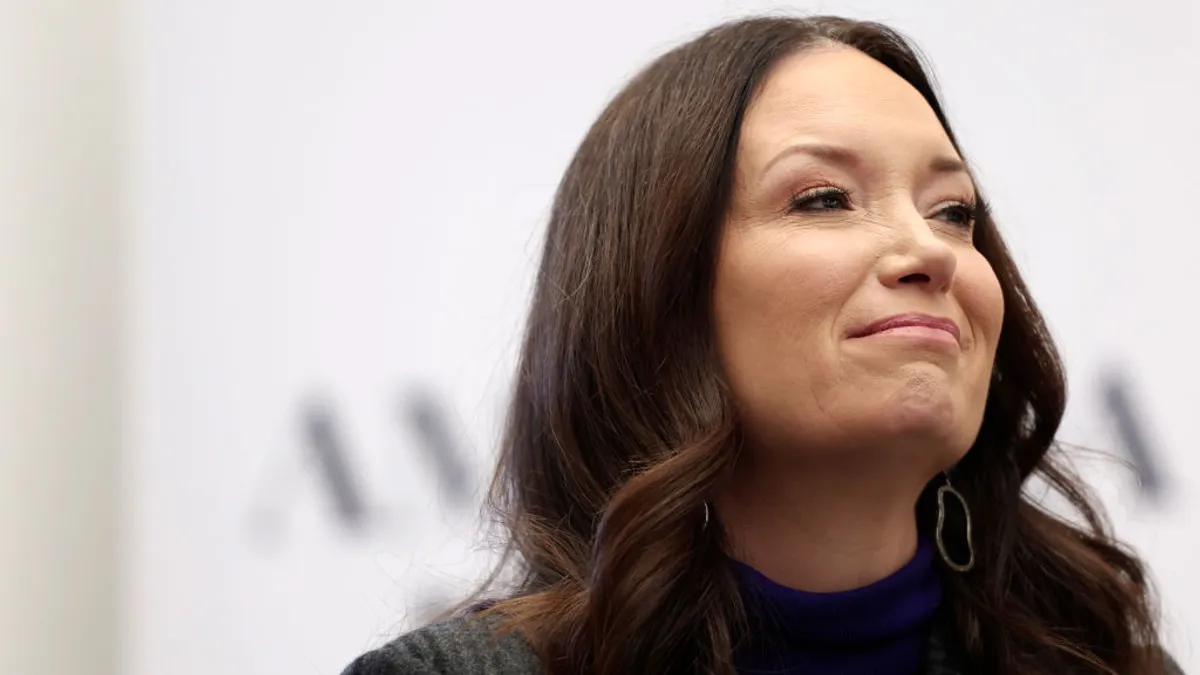
Brooke Rollins, the president and CEO of the America First Policy Institute speaks during an event on education at the institute on January 28, 2022 in Washington, DC. President-elect Donald Trump has named Rollins to lead the U.S. Department of Agriculture. Anna Moneymaker via Getty Images
President-elect Donald Trump named Brooke Rollins to be secretary of the U.S. Department of Agriculture.
Rollins, a Texas native, is president and CEO of the America First Policy Institute, a conservative think tank launched in 2021 to promote Trump’s economic policies. A conservative lawyer, Rollins also served as acting director of the White House’s Domestic Policy Council at the end of Trump’s first term.
If confirmed, Rollins would oversee a sprawling department that influences nearly every part of the food and agriculture industry, from trade policy to food safety. She would also be responsible for administering the Supplemental Nutrition Assistance Program, the nation’s largest anti-hunger program.
“As our next Secretary of Agriculture, Brooke will spearhead the effort to protect American Farmers, who are truly the backbone of our Country,” Trump said in a statement.
Rollins is a graduate of Texas A&M University, where she received an undergraduate degree in agricultural leadership and development. She has also been involved with Future Farmers of America and 4H, with the statement saying she guides “her four kids in their show cattle careers.”
“It will be the honor of my life to fight for America’s farmers and our Nation’s agricultural communities,” Rollins wrote on X, formerly known as Twitter, adding in all caps: “Who’s ready to make agriculture great again?”
Farm groups gave somewhat of a muted endorsement of Rollins, with multiple organizations saying “strong leadership” will be needed to address challenges facing agriculture. The American Farm Bureau Federation said Rollins has a “good relationship” with the Texas Farm Bureau, something the national group hopes “to build on” if she’s confirmed.
“We’re encouraged by her statement that she’d ‘fight for America’s farmers and our nation’s agricultural communities,’” AFBF President Zippy Duvall said in a statement. “Effective leadership at USDA is more important than ever as farmers and ranchers face a struggling agricultural economy.”
Progressive groups, however, have panned Rollins’ lack of experience in agriculture, with the Union of Concerned Scientists saying she “appears to have no agricultural policy track record to comment on.”
“This appears to be another example of President-elect Trump doling out cabinet appointments for loyalty rather than expertise,” Karen Perry Stillerman, deputy director of UCS’ Food and Environment Program, said in a statement. “Our nation’s farmers, food workers, consumers and the public servants at the USDA deserve a secretary who knows and cares about the challenges they face.”
Agriculture Secretary was among the last Trump cabinet positions to be filled, and the pick ends weeks of speculation among powerful agricultural groups. Multiple news organizations had reported Trump was also considering former Georgia Sen. Kelly Loeffler, who briefly served on the Senate Agriculture Committee.
The choice of Rollins instead gives another boost to the AFPI, which has quickly positioned itself to become one of the most influential groups in Trump’s second term. In addition to Rollins, Trump chose AFPI chairwoman and former professional wrestling mogul Linda McMahon to be education secretary.
Still, Rollins is somewhat controversial among Trump’s most right-wing backers, who see her as part of the Republican party’s “old guard” dedicated to preserving free trade and business-friendly policies, according to Politico and other news organizations. Rollins was first considered to be the president-elect’s chief of staff, which eventually went to Trump campaign chair Susie Wiles.
RFK Jr. may soon become health secretary, but Louisiana and other states are already passing anti-vaccine laws
"First case of commercial bird flu is a ‘serious threat’ to ag industry"
By Jennifer Herricks | December 19, 2024
Demonstrators listen as Robert F. Kennedy Jr. speaks on a screen during an anti-vaccine mandate rally in 2022. Credit: Eric Lee/Bloomberg via Getty Images.
The anti-vaccine movement, long a coalition that existed on the political fringes, is witnessing a remarkable inflection point. First, pandemic-era anxiety gave activists, along with other science denying contrarians, a platform to elevate their complaints about vaccines and make them more mainstream. Now, after anti-vaccine groups have reaped a windfall of funding and attention, President-elect Donald Trump is nominating movement leaders to top positions in important federal public health agencies like the Department of Health and Human Services, the National Institutes of Health, and the Centers for Disease Control and Prevention.
Should the anti-vaccine activist Robert F. Kennedy Jr. be confirmed as health secretary, he’ll be able to exert influence over federal funding, regulation, research priorities, and guidance related to vaccines. Some of Kennedy’s stated ambitions would have direct impact on the states, but changing federal policy can take considerable time. States, on the other hand, can move more rapidly, and state-level anti-vaccine activists have recently been growing more successful in shaping policy in legislatures, governors’ mansions, and even state and local health departments. They’ve benefited from the money and attention Kennedy and his allies raked in nationally during the pandemic. What used to be a fringe movement now has a platform that could smooth the path for ongoing efforts to limit access to or reduce support for vaccines nationally and at the state level. And the movement has resulted in legislative successes at the state level, most notably in more conservative states like Louisiana, likely due to the increasing politicization of public health.
How it happened. Many state-level anti-vaccine groups first gained steam as part of a backlash to a California bill to tighten vaccine requirement–passed in response to a large measles outbreak in 2014. New groups in Texas and Louisiana initially took mostly defensive actions as they tried to push back against laws strengthening public health; since the pandemic, however, state groups have largely been on the offense. Many public health experts once thought a COVID vaccine would lead to a greater share of the public understanding and valuing vaccines. Unfortunately, the pandemic vaccination campaign seemed to be the moment that anti-vaccine activists were waiting for. Groups and activists quickly began spreading misinformation, sowing distrust in the vaccine even before it became available.
National and state anti-vaccine groups recycled scare tactics they had used less successfully against other vaccinations, trying to convince people that the vaccine would negatively impact fertility, a conspiracy theory that was commonly bandied against the human papilloma virus (HPV) vaccine, which is effective in preventing virus-related cancers. Activists added new and exotic conspiracy theories, too, like claiming that vaccines contain microchips.
For national organizations, including Kennedy’s Children’s Health Defense, stoking anti-vaccine fervor brought in tens of millions of dollars in 2022 alone. And state-level anti-vaccine organizations across the country likely benefited from this financial influx. In the states, legislation around vaccines went from 116 bills introduced nationwide in 2019 to 1,500 in 2022, the vast majority being anti-vaccine.
A case study. Perhaps nowhere better exemplifies the anti-vaccine drift in the states better than Louisiana, a state which once boasted one of the highest rates of vaccinated school children. Support for vaccines among state leaders was strong, even in 2022, when 39 anti-vaccine bills were introduced in the legislature. Thirty-eight of those bills were struck down in Louisiana’s Republican-majority legislature. The one that passed and went to the governor, which criminalized asking about someone’s vaccination status, was vetoed.
But in 2023, voters installed a new Republican governor, Jeff Landry, and some new legislators with less favorable views toward school and other vaccines than the previous set of officials. In the last legislative session, this group introduced 20 pieces of anti-vaccine legislation and passed seven. And the shift in policy and messaging around vaccinations is showing up in vaccination rates.
During the 2011-2012 school year, 98 percent of Louisiana kindergartners were up to date on the vaccine for measles, mumps, and rubella. But during the last school year (2023-2024), only 92 percent of kindergarteners were. While 92 percent seems like a lot, experts say a 95 percent immunity threshold is necessary to prevent the kind of spread that can result in a measles outbreak. Only 86 percent of kindergartners are up to date on all of the vaccinations required for kindergarten, which collectively protect against 10 infectious diseases–diseases that can lead to cancer, paralysis, deafness, brain injury, and death.
Residents and legislators looking for informed opinions or guidance on vaccines from the state’s leading health officials will no longer find it. Landry has appointed a state surgeon general and deputy surgeon general who, during legislative testimony, promote false notions, saying, for instance, that COVID vaccines pose more risk to children than the disease itself. In fact, nearly 2,000 of children in the United States died of COVID-19, and nearly 10,000 have been diagnosed with a long-term complication of COVID infections called multi-system inflammatory syndrome in children. The vaccines, on the other hand, have an extremely high safety profile in children .. https://pmc.ncbi.nlm.nih.gov/articles/PMC10468817/#R4 .., and carry a very small risk of severe reaction, including myocarditis in some adolescents. However, vaccine-induced myocarditis has been shown to be less severe .. https://www.cidrap.umn.edu/covid-19/myocarditis-complications-more-common-after-covid-infection-vaccination-18-month-data .. than covid infection-induced myocarditis. The Louisiana officials have also spoken in support of the long-debunked conspiracy theory that contends, falsely, that childhood vaccines cause autism.
During the 2024 legislative session, the anti-vaccine group Health Freedom Louisiana received a return on investment after supporting several local candidates in recent elections, notching significant policy wins. Landry signed bills into law that failed to progress in earlier years. For example, the state is now prohibited from requiring COVID vaccination for school entry, even though most schools didn’t require it, anyway.
This new law sets a precedent. Anti-vaccine activists, including in Louisiana, are very good about attending legislative sessions on vaccines, and some state lawmakers have been parroting activists’ misleading talking points that the COVID vaccine doesn’t prevent infection or transmission. (The shots reduce both and greatly reduce the severity of symptoms.) Anti-vaccine activists are already using the deceptive justifications that proved so successful during the debate over the COVID bill to lobby against other vaccines, too, ones that prevent polio, pertussis (whooping cough), and other serious diseases. No intervention works 100 percent of the time, but some vaccines come close. Three doses of polio vaccine are 99 to 100 percent effective at preventing “paralytic polio.”
Another new law in Louisiana prohibits schools from discriminating against students based on vaccination status. The bill doesn’t actually change the way schools operate on a daily basis and won’t prevent schools from requiring unvaccinated students to stay home if an outbreak occurs, but anti-vaccine activists have already said that their goal is to “fix” the law so schools cannot tell unvaccinated students to stay home.
What happens now? The trend already evident in Louisiana is likely to continue in other states in 2025.
As Kennedy seeks Senate approval to become a cabinet secretary, he has been downplaying his long-standing anti-vaccine activism. But a long trail of evidence refutes this view of the nominee. News broke last week that a lawyer working with Kennedy has filed petitions to the US Food and Drug Administration to revoke approval of 13 routine childhood vaccines. And Kennedy’s actions have been directly linked to a large measles outbreak in Samoa. If senators confirm him as health secretary, they’ll be sending a permissive signal to states where anti-vaccine activists have already had legislative successes. Should Kennedy be able to stop the federal government from recommending a vaccine, how will state officials, already antagonistic towards vaccines, react?
Historically, the pro-vaccine community has been a silent majority. With Trump nominating candidates for health-related positions who don’t accept long-standing, proven tenets of public health, the necessity of speaking out about the public health gains afforded by immunizations has never been more evident. More scientists, public health professionals and health care workers are stepping outside of their academic and clinical duties so that everyday people understand their critical work. And more parents, teachers, grandparents, and other advocates for child health are organizing, sharing their stories and concerns with their elected officials, and vocally supporting immunizations and public health. As the anti-vaccine movement makes news through Kennedy’s elevation, new activists are organizing .. https://www.statnews.com/2024/11/22/vaccine-advocacy-safe-communities-coalition-rfk-jr/ .. to counter it. Let’s hope that the counter-movement becomes a vocal counterpoint to anti-vaccine activism.


 Market Data
  Markets


 AI
AI