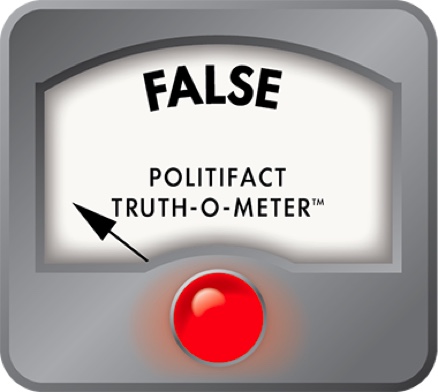
Here's what you would have done if YOU were not asleep at the keyboard. Ask yourself 'what was Biden taking credit for RE insulin prices?' And remember this as you wipe that ill-informed smug off your face and kiss Biden's intent goodbye.
Biden proposed expanding this benefit to all insulin patients, and he’s made that point a staple of his campaign appearances.
“I’m determined to make that apply to every American, not just seniors, in the second term,”
Trump Is Wrong in Claiming Full Credit for Lowering Insulin Prices
By Jacob Gardenswartz July 18, 2024
“Low INSULIN PRICING was gotten for millions of Americans by me, and the Trump Administration, not by Crooked Joe Biden. He had NOTHING to do with it.”
Former President Donald Trump in a Truth Social post, June 8
Former President Donald Trump has repeatedly claimed that he — and not President Joe Biden — deserves credit for lowering older Americans’ prescription drug prices, specifically for insulin.
In a June 8 post on Truth Social, the former president’s social platform, Trump wrote: “Low INSULIN PRICING was gotten for millions of Americans by me, and the Trump Administration, not by Crooked Joe Biden. He had NOTHING to do with it.”
Trump again claimed sole credit for lowering insulin prices during the June 27 presidential debate in Atlanta. After Biden touted the $35 monthly out-of-pocket cap for Medicare patients mandated by the Inflation Reduction Act, Trump responded: “I’m the one that got the insulin down for the seniors. I took care of the seniors.”
It’s not just the former president making such claims. Fox News anchor John Roberts and former Arkansas Gov. Mike Huckabee, a Republican, both have said the Biden administration is wrong to take credit for lowering insulin costs.
Because drug prices and Medicare will likely be issues in the presidential campaign, we dug into the facts surrounding those claims.
The Trump Administration’s Program
Trump is correct that his administration enacted a program to lower insulin costs for some patients on Medicare.
In July 2020, Trump signed an executive order establishing the “Part D Senior Savings Model,” a temporary, voluntary program run by the Centers for Medicare & Medicaid Services that let some Medicare Part D prescription drug plans cap monthly out-of-pocket insulin copay costs at $35 or less. It covered at least one insulin product of each dosage and type.
The program began Jan. 1, 2021, and ran through Dec. 31, 2023. In 2022, the Trump-era program included a total of 2,159 Medicare drug plans, and CMS estimated that more than 800,000 Medicare beneficiaries who use insulin could have benefited from it that year.
The Department of Health and Human Services has estimated that more than 1.5 million Medicare beneficiaries paid more than $35 a month for insulin in 2020, before Trump’s program took effect. An analysis by the Rand Corp., a nonpartisan think tank, showed the program reduced participants’ out-of-pocket insulin costs by $198 to $441 per year on average, depending on their Medicare plan.
The Inflation Reduction Act Provisions
The Inflation Reduction Act, which Congress passed and Biden signed into law in August 2022, included an insulin provision that went further than Trump’s voluntary initiative.
The act did cap out-of-pocket costs of insulin for Medicare patients at $35 per month. But whereas the Trump program applied only to certain Medicare Part D plans, the act mandated that all Medicare drug programs cap out-of-pocket insulin costs — including those in what’s known as Medicare Part B, which pays for medical equipment such as insulin pumps. The act’s insulin provisions took effect Jan. 1, 2023, for Part D plans and July 1 of that year for Part B.
The act also mandated that the out-of-pocket price cap apply to all insulin products a given Medicare plan covers, not just a subset.
Taken together, those provisions mean a far greater number of Medicare beneficiaries stand to benefit from the act’s insulin provisions — including people receiving insulin via a pump, who were left out of the Trump-era program.
CMS estimates that more than 3.3 million Medicare beneficiaries use one or more of the common forms of insulin. Although some of those people were likely already paying less than $35 per month for their medications, the Inflation Reduction Act benefited far more than the 800,000 patients affected by Trump’s program.
“It’s likely a larger population than under the Trump administration’s model,” said Juliette Cubanski, deputy director of the Program on Medicare Policy at KFF, a health information nonprofit that includes KFF Health News.
“The Trump administration did establish this voluntary model, and one perhaps could view that as some precedent for what we saw in the Inflation Reduction Act,” Cubanski added. “But I think it’s inaccurate to state that President Biden had nothing to do with enabling millions of Americans to benefit from lower insulin copayments.”
Preliminary research shows the Inflation Reduction Act’s insulin provisions had a greater average financial benefit than those in Trump’s program. Insulin-using older Americans were estimated to save an annual average of $501 per person, HHS figures show.
The Inflation Reduction Act has also had an impact beyond Medicare. After the law passed, some pharmaceutical companies — including Eli Lilly and Co., Novo Nordisk, Sanofi, and Civica Rx — self-imposed price caps for all insured insulin users, not just Medicare patients. During his 2023 State of the Union address, Biden proposed expanding this benefit to all insulin patients, and he’s made that point a staple of his campaign appearances.
“I’m determined to make that apply to every American, not just seniors, in the second term,” he said at a campaign event in May in Philadelphia.


 Market Data
  Markets


 AI
AI