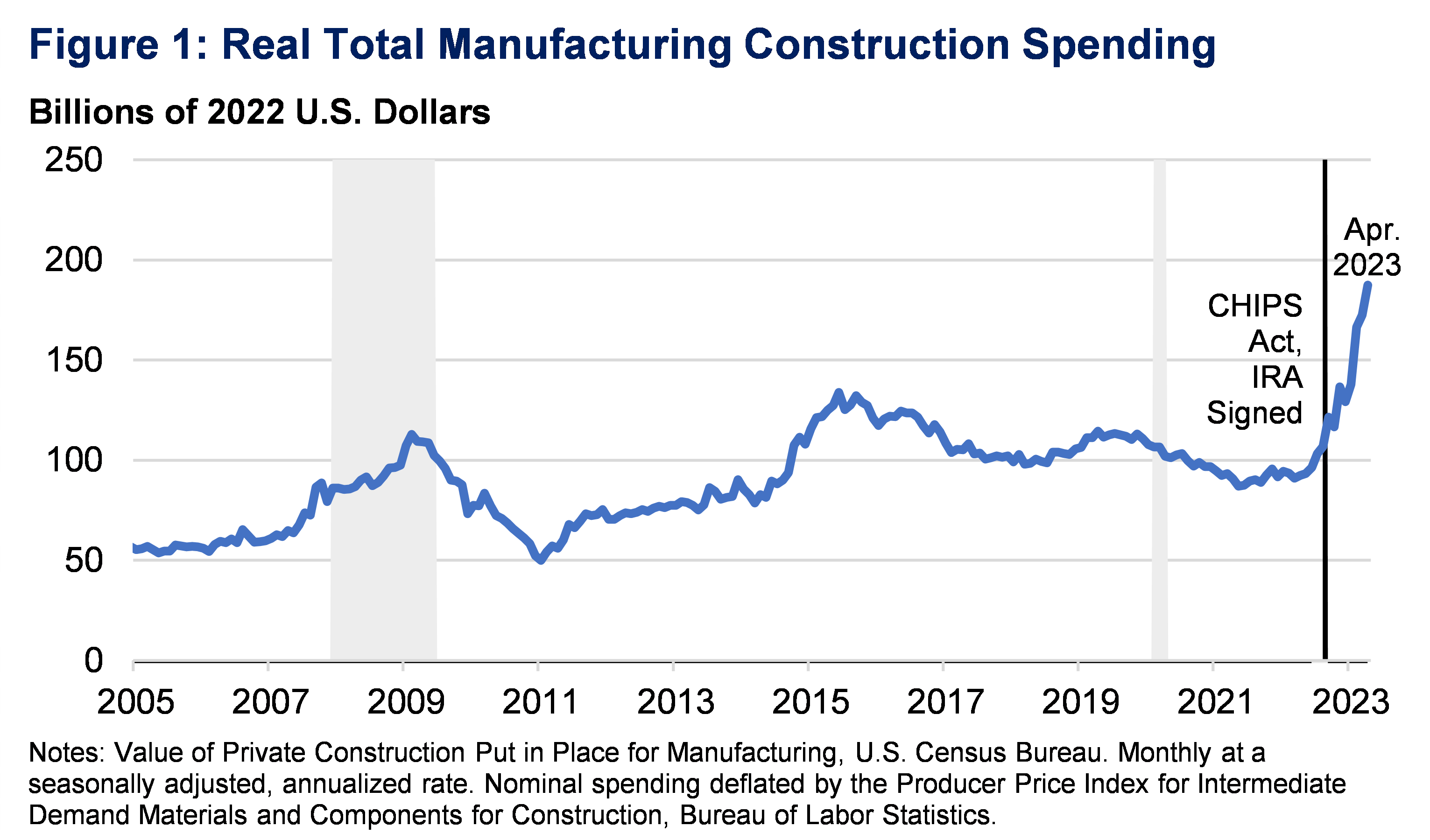
If there is not an increase in actual manufacturing in 2025-26(substantial in late 2025 into 26), then we know it's wasteful spending.
tell that to the thousands of people who are now working double shifts to keep up with the demands. I know you'd like to place this into your libertarian argument but the facts are people are working at higher levels than ever were realized before the last administration tried to pull an end run around the people that are the backbone of this country.
I don't think you'll see elon musk in the lab, much less pushing a shovel with the people he walked over to provide him his wealth.. We all didn't have fathers that owned emerald mines or pushed blood diamonds out the back of the shaft..
Then and Now: US Manufacturing Under The Trump and Biden-Harris Administrations
August 20, 2024
The U.S. middle class was built by the manufacturing sector. In decades past, a job in manufacturing meant high wages and job security. Unfortunately, offshoring, bad trade agreements, a massive effort by employers to break unions and thwart union organizing, and poor industrial policy led to a decline in U.S. manufacturing from which the nation is still recovering.
Numerous studies have found that the decline in U.S. manufacturing has exacerbated income inequality. Laid-off manufacturing workers have been forced to compete for lower-paying service sector jobs, putting downward pressure on middle-class wages across the economy. And, this decline has contributed to racial inequality, as workers of color have endured some of the biggest manufacturing job losses. Black manufacturing employment has fallen more than 30% since the late 1990s. If we grow clean manufacturing in an equitable way—like the manufacturing investments in the Inflation Reduction Act signed into law by the Biden-Harris administration—it can help to reverse these trends as part of a strategy to build a more just economy.
Thankfully, due to shifts in the nation’s industrial policy, we have been seeing signs of life in the last few years. We are making things in the United States again. As of May 2024, there are nearly 13 million manufacturing workers in the United States.
Additionally, wages in the manufacturing sector are relatively high, with average hourly earnings in the sector at $33.83 as of May 2024. In addition, the vast majority of manufacturing workers—91%—were eligible for health insurance. Investment in the manufacturing sector isn’t just vital to revive the middle class, it’s a critical component to the nation’s efforts to drive down pollution.
The industrial sector represents a large and growing share of pollution with far less progress made than in many other sectors, specifically in greenhouse gas (GHG) emissions reduction. Industrial sector emissions now account for nearly one-third of GHG emissions in the United States and industry is on a path to becoming the highest emitting sector in the United States by the early 2030s.
Under current policy, industrial emissions are projected to increase by 12% from current levels by 2035. Addressing this situation requires simultaneous investment in clean tech manufacturing and in innovations to drive down industrial emissions from manufacturing facilities. Yet, policy measures and investments to meaningfully reduce industrial emissions and produce more of the nuts and bolts of the clean economy were sparse, until recently.
Total Manufacturing Jobs (in Thousands) 2010-2024
More than 200,000 manufacturing jobs were lost during Trump’s single term. Even before the COVID-19 pandemic manufacturing job growth had all but plateaued under the Trump administration.
Since President Joe Biden and Vice President Kamala Harris took office in January 2021, more than 775,000 manufacturing jobs have been added to the economy. The growth is expected to continue, with the Biden-Harris Inflation Reduction Act estimated to create 336,000 manufacturing jobs a year until 2035.
Taking a critical look at the industrial policies of the current Biden-Harris administration and the former Trump administration, we see a dramatic shift. On several points—including job creation, investment in manufacturing, investment in cleaning up industrial emissions, and domestic momentum in growing industries—we see that the Biden-Harris administration outperformed the Trump administration.


 Market Data
  Markets


 AI
AI