News Focus
News Focus
icon url

arizona1

12/18/23 1:32 AM

#456898 RE: fuagf #456896

Netanyahu doesn’t give a rip about Biden. He’ll do whatever he wants; and that’s to exterminate every single Palestinian in Gaza. The only difference between Netanyahu and Hitler is the ovens.
icon url

fuagf

12/23/23 8:03 PM

#457321 RE: fuagf #456896

Pentagon Releases First-Ever Policy on Civilian Harm Reduction

"Grading Biden on the Israel-Hamas War"

Marc Garlasco
Friday, December 22, 2023, 4:55 PM

What’s in the groundbreaking new policy on civilian harm mitigation and response?


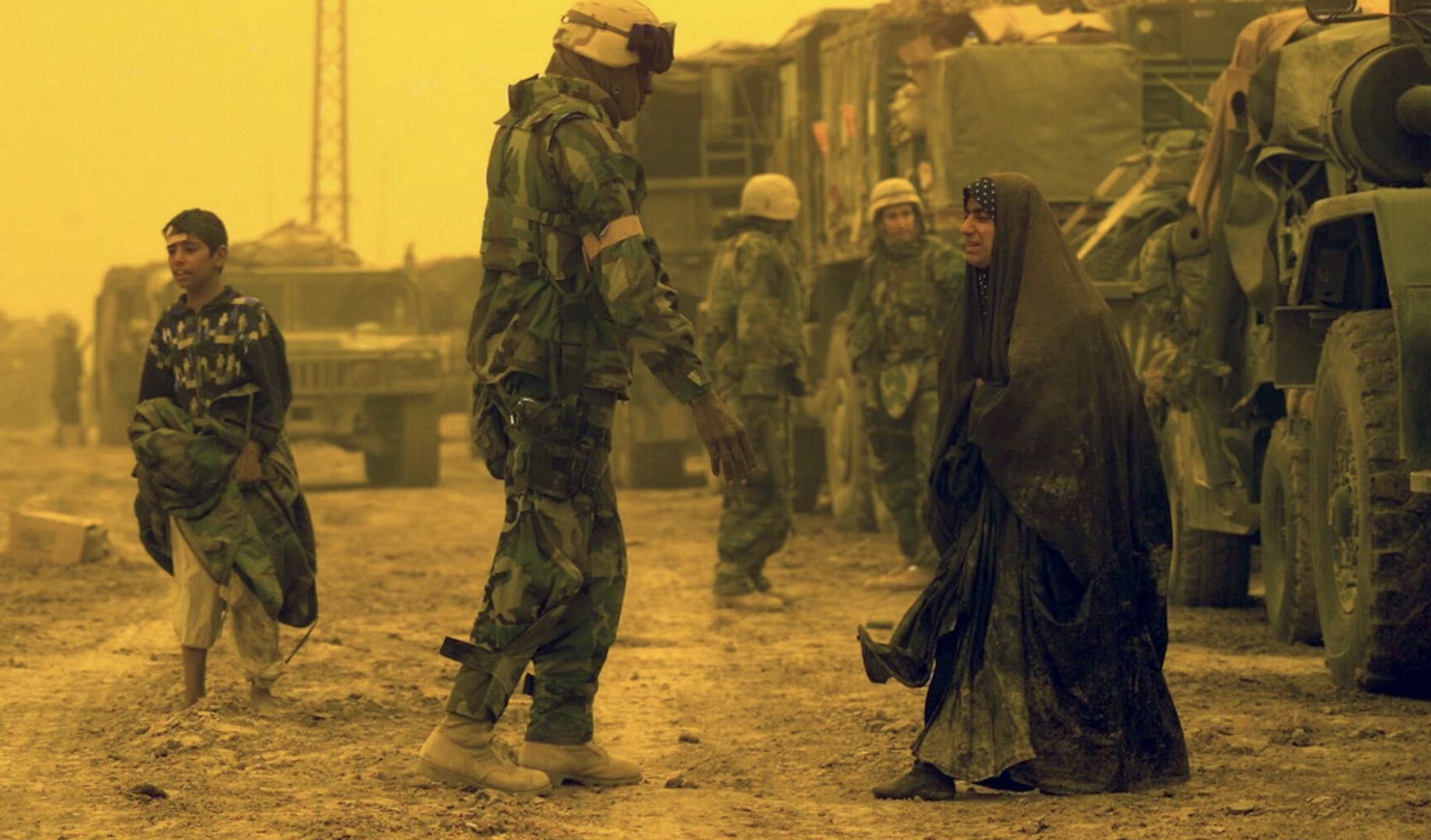
A Marine helps a displaced Iraqi civilian caught in a firefight north of An Nasiriyah, Iraq, March 2003. (The U.S. National Archives / USMC Photo by CPL Mace M. Gratz, http://tinyurl.com/56udmv3a; Public Domain)

Marc Garlasco @marcgarlasco

Published by The Lawfare Institute
in Cooperation With Brookings

For the first time in its history, the U.S. military has an official policy that standardizes how the Defense Department mitigates civilian harm and responds to it when it happens.

On Dec. 21 the Pentagon quietly released the “Department of Defense Instruction (DOD-I) on Civilian Harm Mitigation and Response .. https://www.esd.whs.mil/Portals/54/Documents/DD/issuances/dodi/300017p.pdf ” along with a website .. https://policy.defense.gov/OUSDP-Offices/Civilian-Harm-Mitigation-and-Response/ .. dedicated to CHMR. The policy assigns responsibility for the 2022 .. https://www.lawfaremedia.org/article/defense-department-finally-prioritizes-civilians-conflict .. Action Plan mandated by the 2019 National Defense Authorization Act (NDAA), and the requirements called for in the new policy have been funded by Congress. How did this policy develop? Why was it needed, and what does it do? And, just how big a deal is this?

Civilian Harm Mitigation and Response is a systematic and focused approach to identifying and reducing risks to civilians from military operations to the maximum extent feasible and proactively responding when harm does occur. That’s the textbook definition, but in practice it involves much more. For CHMR, the devil is in the details—and the DOD-I is full of details.

In 2007, General Dan K. McNeill, then Commander of the International Security Assistance Force in Afghanistan, realized he had a problem https://civiliansinconflict.org/publications/research/civilian-harm-tracking-analysis-isaf-efforts-afghanistan/ . With wars raging in Afghanistan and Iraq, American forces in both countries were killing civilians by the hundreds, destroying homes and infrastructure, and driving many to join insurgencies in the process. In an attempt to better understand the scale of civilian casualties, McNeill asked his subordinates how many civilians his soldiers had killed, but they couldn’t tell him—they weren’t counting.

[Insert: Kudos to McNeil. And to the others who cared enough to do something about the problem. Noted we have trolls here who see civilian casualties as just part of war. Is good to see people high in the military and in other positions of influence with more empathy for the plight of innocent civilians caught in the calamity of war.]

McNeill’s query prompted the U.S. military to begin to collect data on civilian casualties, and then used those numbers to understand how and why civilians were dying in U.S. operations. That data informed changes to aspects of U.S. operations such as airstrikes, checkpoint procedures, and improved rules of engagement.

Within two years, civilian deaths from airstrikes decreased 70 percent. That was the start of what we now know as CHMR. Despite this early success, and many lessons learned ever since, the U.S. were slow to standardize these best practices.For example, while some combatant commands worked directly with nonprofit organizations like Airwars to get better data on when civilians were harmed in operations they simultaneously reduced the number of people .. https://www.latimes.com/world/middleeast/la-fg-coalition-airstrikes-2017-story.html .. working directly on civilian casualty (CIVCAS) reduction from a dozen to only two. With such uneven progress, Congress decided to step in.

The 2019 NDAA .. https://civiliansinconflict.org/blog/ndaa/ .. instituted far-reaching requirements on the Defense Department, including on reporting, oversight on arms transfers, and the creation of a civilian harm policy, but the Trump administration largely ignored it.

Things came to a head in 2021, during the first year of the Biden administration. The Pentagon was slowly putting together a plan on civilian harm, but an outside event gave the project an added urgency. On Aug. 29, 2021 a U.S. airstrike in Kabul killed an aid worker and his family. The after action investigations lasted through December .. https://www.nytimes.com/2021/12/13/us/politics/afghanistan-drone-strike.html , and by January 2022, Secretary Austin took decisive action, directing .. https://media.defense.gov/2022/Jan/27/2002928875/-1/-1/1/DEPARTMENT%20OF%20DEFENSE%20RELEASES%20MEMORANDUM%20ON%20IMPROVING%20CIVILIAN%20HARM%20MITIGATION%20AND%20RESPONSE.PDF .. the Defense Department to create a plan to “improve our ability to mitigate and respond to civilian harm and to institutionalize these improvements.” The secretary gave his organization 90 days to do this. Unfortunately, the Pentagon didn’t act quite as decisively as Austin. Almost two years later, we finally have the policy.

Just to recap the timeline, in January 2022 the defense secretary told the Pentagon to create a plan to better protect civilians. That plan came out in August 2022, but the instruction that turns that plan into implementable policy came out yesterday.

The policy itself is broken up into five sections: responsibilities, mitigation, investigations, response, and the creation of a new center. The first section assigning who does what—the responsibilities—is the most important part. While hiring has been ongoing since the plan came out a year ago there have been many unknowns regarding which elements are responsible for which parts of the plan—who conducts investigations, who checks on allies, who trains soldiers, and the like.

There are a few notable elements either not seen in the original plan or that are now far more detailed. The first is the responsibility of allies and partners. On this point, the policy comes at an awkward time. The U.S. military has issued guidance on how to protect civilians during operations just as its close ally Israel has reportedly killed thousands of Palestinians with American bombs .. https://www.nytimes.com/2023/12/21/world/middleeast/gaza-death-toll-palestinians.html#:~:text=Gaza%20Deaths%20Surpass%20Any%20Arab,since%20the%201982%20Lebanon%20invasion .

[The Israeli Army Has Dropped the Restraint in Gaza, and the Data Shows Unprecedented Killing
https://www.haaretz.com/israel-news/2023-12-09/ty-article-magazine/.highlight/the-israeli-army-has-dropped-the-restraint-in-gaza-and-data-shows-unprecedented-killing/0000018c-4cca-db23-ad9f-6cdae8ad0000?dicbo=v2-bs32BUv&utm_source=traffic.outbrain.com&utm_medium=referrer&utm_campaign=outbrain_organic
.. and ..
Israel-Hamas war live: Gaza becoming a ‘graveyard for children’, UN chief says; 10,000 Palestinians killed, says Gaza health ministry
https://investorshub.advfn.com/boards/read_msg.aspx?message_id=173165637]


The policy requires the combatant commands conduct “civilian harm baseline assessments of allies and partners (CBAPs).” These assessments will look at compliance with the law in past operations and whether the partner force has proper harm mitigation in place. The CBAP will then be used by the Defense Security Cooperation Agency (DSCA)—the part of Defense Department responsible for arms transfers—to determine what needs to be done to bring any delinquent partners up to standard and provide them with those capabilities, training, etc. This is an additive policy, and while it doesn’t envision halting arms sales, it is possible that the State Department could use the CBAPs in its own arms sales determinations. The DSCA also trains allies and partners, and considering how NATO, the UN, and others are adopting CHMR, they will be busy.

The policy also goes far beyond the original plan in leveraging new technologies to better characterize the civilian environment. The U.S. military and intelligence community spends a lot of resources on understanding the enemy and how to kill them, but almost none on understanding the civilian populations and how to protect them. The new policy intends to change that. The civilian environment will become a part of the joint targeting process, so a commander will have more information before committing to a strike. That doesn’t mean the military can’t use force, just that when it does it will have a better understanding of the effects of that use of force. All of this will be managed by a new data management system to ensure information doesn’t fall through the cracks, as it has in the past. For example, a 2017 bombing of a mosque in Syria I investigated for the UN killed over 40 civilians, and CENTCOM later admitted one part of the targeting cell knew .. https://www.justsecurity.org/45213/syria-commission-inquiry/ .. the building was a mosque, but another part didn’t.

The new policy also provides direction on weapons, including weapon selection (use precision-guided weapons, use weapons that can self-destruct in case civilians are nearby, develop weapons with scalable yields so you can lower the blast radius when civilians are near) as well as weapon development. The latter provides guidance on the development of more low collateral damage weapons. One such example is the GBU-39 Focused Lethality Munition, which can destroy a room in a building without harming anyone in other rooms. The policy contains much more guidance on training and responsibilities, but these archaic directives are as necessary as they are bland.

The section on mitigation may seem lean in comparison to responsibilities, but for those who have worked targeting before (I was Chief of High Value Targeting in the Pentagon in 2003) there is a lot here. It notes the need for mitigation efforts during both deliberate and dynamic targeting, for example. Deliberate targeting is when the military has time to plan out a strike, while dynamic is when targets of opportunity arise during the heat of battle and is therefore far more dangerous to the population, leading to more civilian casualties. This recognition will help the military put more resources into solving some of the vexing problems of civilian protection in a complex battlefield. It also provides more instructions on how to operate in partnered operations, such as sharing information to make sure both U.S. and partner forces have the best view of the operational environment. The U.S. isn’t just worried about how its own forces protect civilians—if American forces protect civilians, but our allies don’t, we have failed.

The section on investigations takes leaps forward in making sure claims of harm are not routinely ignored, establishing a “more likely than not” standard when determining if an incident happened, which can then lead to an investigation. As the advocacy group Airwars noted .. https://twitter.com/airwars/status/1738225369709486247 , “This is a significant step forward - and a marked difference in approach to its allies, such as the Brits.” Importantly, the policy standardizes the calculation of casualty ranges and encourages the use of non-Defense Department sources. One of the areas NGOs have been most critical of in Pentagon post-strike investigations is the use of classified information as the sole source of information used to investigate civilian harm. Now aspects of civil society, including the press and NGOs have been recognized as critical information sources.

The policy also extends harm to objects, not just people—a groundbreaking development. This means a destroyed home, for example, may also be considered within the civilian harm review. Investigations now also have important limitations, specifically on who conducts the investigation. To date, investigations have often been conducted by the unit involved in the event, but no longer. The policy creates civilian harm assessment cells (CHACs), but the assessors can’t be part of the unit being investigated. It also provides clear guidance on the expertise these certified CHACs must have, including intelligence, joint fires, and language specialists. Though this seems logical it took two decades of questionable investigations to make it happen.

The response section has grown out of real world failure. For example, the U.S. sets aside some $3 million annually to provide funds for those harmed by U.S. actions. For example, in 2021 not a dollar was spent— though two dozen cases were reported in the U.S. military’s own annual report .. https://www.warren.senate.gov/oversight/letters/warren-khanna-urge-defense-secretary-to-review-dods-significant-undercounting-of-civilian-casualties .. on civilian casualties. But response is more than money, as the policy provides something victims and their advocates have long sought—acknowledgement. Throughout my career investigating civilian harm, most people I spoke to simply wanted to have their harm recognized and to understand what happened and why. In Libya in 2011, while working for the UN, I investigated a man who lost his family to a U.S. bomb. I later learned the bomb guidance tore off mid-flight. Though his family was killed by an American strike, they weren’t targeted. He kept asking me why no officials would explain to him how his family was killed. This will hopefully now change. The policy sets forth various types of condolences, as each region in which the U.S. military operates may have different societal norms requiring tailored responses. But for the first time the policy provides the U.S. military with clear response options.

Finally, the policy creates the Civilian Protection Center of Excellence (COE)—a one-stop-shop for best practices and lessons learned. It exists to support the operational commands with “reach-back, deployable expertise.” The action plan allowed the COE to begin hiring ahead of the publication of the DOD-I, and I met them in their offices in Crystal City, just down the road from the Pentagon. It’s an impressive collection of military servicemembers and civilians with real expertise taken from various disciplines and specialties, including the International Committee of the Red Cross and NGOs. Despite this promising start, the Pentagon’s hiring procedures have been heavily criticized. While the COE has been able to hire from outside the military, the combatant commands, intelligence community, and other elements are restricted to hiring only current Defense Department employees. This is terribly short-sighted. The policy recognizes the need for non-Defense Department data. If the Pentagon has been at the core of the problem of civilian harm, how can they solve it with insular hiring? This is one area that desperately needs to be changed.

The plan isn’t perfect. It has many more “shalls” than “musts,” giving more leeway to commanders than the NGO community will likely think healthy. The DOD-I’s definition of civilian harm is also hackneyed: “Civilian casualties and damage to or destruction of civilian objects (which do not constitute military objectives under the law of war) resulting from military operations. As a matter of Defense Department policy, other adverse effects on the civilian population and the personnel, organizations, resources, infrastructure, essential services, and systems on which civilian life depends resulting from military operations are also considered in CHMR efforts to the extent practicable. These other adverse effects do not include mere inconveniences.”

The “other adverse effects” is like lipstick applied by a lawyer to the proverbial pig. I daresay other adverse effects are probably bad enough for those experiencing them and needn’t be diminished. While it is great to see the inclusion of the various systems life depends on, the report is full of the qualifier, “to the extent practicable.” This does little more than weaken the standards the policy enacts.

This civilian harm policy will surely be a significant part of Secretary Austin’s legacy. He took the unusual step to sign the policy himself, something usually handled at a lower level, as he had taken personal ownership of the issue. In the grand scheme of things, this policy has far more good in it than deficiencies. It is groundbreaking. The U.S. is the first military to ever enact a policy aimed at uniformly instructing its forces to use a standard of civilian protection higher than the law calls for. If enacted properly this policy will save lives and lead to better operational outcomes for the military.

Marc Garlasco is the military advisor at PAX and a consultant for the Pentagon's Civilian Harm Mitigation and Response Action Plan.
He is also a trainer at the Institute for International Criminal Investigations where he is currently training Ukrainian war crimes teams.

https://www.lawfaremedia.org/article/pentagon-releases-first-ever-policy-on-civilian-harm-reduction
icon url

fuagf

12/27/23 8:37 PM

#457613 RE: fuagf #456896

Service to Israel Tugs at Identity of Arab Citizens

"Grading Biden on the Israel-Hamas War"

11 years old, but guessing relevant sentiments wouldn't have changed much.

By Jodi Rudoren

July 12, 2012

NAZARETH, Israel — Three young Palestinian women sat on the floor at a summer camp this week surrounded by Legos and 3-year-olds. As the toddlers played, the women taught them the color of each block, repeating the words in Arabic, azrak for blue or akhdar for green.

But the seemingly simple scene here in the Galilee was actually caught up in some of the most contentious issues confronting Israeli society: How do Arabs reconcile their identity as citizens of a Jewish state? What is the appropriate role for a growing Arab minority in a state determined to be democratic and Jewish?

The young women are volunteers in Israel’s national service program, an alternative to the military that comes with the same financial benefits and similar advantages for future education and employment. That program is now the focus of a searing national debate .. http://www.nytimes.com/2012/07/06/world/middleeast/national-identity-at-heart-of-debate-on-israeli-military-service.html .. over plans to draw up a law that will no longer exempt categories of citizens. Some Arab-Israeli leaders see the young women’s service as a betrayal of their national struggle, and call them traitors.

“I will not deny or forget my identity,” said one of the counselors, Nagham Ma’abuk, 19, who grew up in Nazareth, a northern city known as the Arab capital of Israel. “But this can help me in the future. We need to live together in coexistence. You can’t determine equality according to what’s convenient for you.”

With a looming Aug. 1 deadline to rewrite a law invalidated by the Supreme Court that exempted thousands of yeshiva students from the draft, Israel’s government and populace have been in turmoil for weeks over how to integrate the country’s minority populations into the military and civilian service programs.

While most of the attention has been focused on how many ultra-Orthodox men should be drafted, the parallel issue of Arab service has revived the raw, decades-old conundrum of what it means to be both Arab and Israeli — citizens of a state whose defining philosophy most find alienating at best, often considered enemies within, with a list of complaints about discrimination in employment, education and housing.

This state of affairs cannot continue, some argue. “The 1948 paradigm is collapsing,” said Elie Rekhess, a historian of Arab-Jewish relations who retired from Tel Aviv University and is now co-chairman of the Middle East Forum at Northwestern University. “It’s not that every Arab wakes up in the morning and says, ‘Oh, which part of the hyphenated identity will I be identifying with today?’ But as far as leadership is concerned, they are challenged by the contradictions and the impossibility of this situation of being Arabs in a Jewish state.”


An instructor led an Arab youth drum corps on Wednesday in Haifa, Israel. The volunteer leaders are not connected with Israel’s national
service program. Rina Castelnuovo for The New York Times

When modern Israel was created 64 years ago, its Declaration of Independence promised “complete equality of social and political rights to all its inhabitants,” and in 1952 citizenship was granted to about 150,000 Palestinians living within its borders. Today, 1.6 million Arabs live in Israel, making up about 20 percent of the population, with an average income less than two-thirds that of Jewish residents, according to statistics compiled by Professor Rekhess, and a poverty rate nearly three times as high.

The conundrum over national service is hardly the first such identity crisis. Many Arab citizens observe Israel’s Independence Day by mourning what they call the Naqba — the catastrophe. They attend separate schools, where last month many protested a new curriculum focusing on Menachem Begin and David Ben-Gurion. Even the nomenclature has caused disputes: After decades of calling themselves Israeli Arabs, which in Hebrew sounds like Arabs who belong to Israel, most now prefer Palestinian citizens of Israel.

A dozen of Parliament’s 120 members are Arab. So is one of the 15 Supreme Court justices. His recent refusal to sing the national anthem .. http://www.haaretz.com/news/national/arab-justice-s-refusal-to-sing-israel-s-national-anthem-sparks-furor-among-right-wing-mks-1.415560 , which refers to the “yearning of the Jewish soul,” caused much soul-searching. When a Bedouin professor was chosen last month as the first non-Jewish president of a college, some on campus questioned how he could uphold its tradition of contributions to the state.

Ehab Helo, a 25-year-old architecture student, confronted a personal version of the problem two years ago when he designed a minimalist chair that won a student contest, but refused to compete internationally under the Israeli flag with its Star of David.

“I said to them, ‘This is the Jewish flag, not the Israeli flag,’ ” Mr. Helo recalled as he sat at a cafe on Ben-Gurion Street in Haifa. “I am angry that I didn’t have the opportunity to be in Italy in a bigger competition; I’m also happy that I said no to be who I am.”

The current focus is on national service, with a proposal expected to be submitted to the cabinet by Sunday .. http://www.nytimes.com/2012/07/09/world/middleeast/netanyahu-vows-change-in-israel-draft-exemptions.html .. that includes a goal of doubling by 2016 the 2,400 Arabs now participating — still a small fraction of the 30,000 eligible each year. (Palestinians have never been required to serve in Israel’s military, though about 250 were enlisted last year. The Druse, another Arab minority, are subject to the draft, while the Bedouin, who are also exempt, tend to join in greater numbers.)

[ Insert: Thousands of ultra-Orthodox Jews volunteer for Israeli military
Oct 25, 2023 6:39 PM EST
[...]Historically, few ultra-Orthodox Jews have served in the Israeli army, a fact that has sparked resentment and contributed
to recent anti-government protests. But in the two weeks since the Hamas attack on civilians in southern Israel, more
than 2,000 young men from this religious community have volunteered to serve. Leila Molana-Allen reports.
https://www.pbs.org/newshour/show/thousands-of-ultra-orthodox-jews-volunteer-for-israeli-military
... and ...
Arab citizens are not required to serve in the Israeli military, and, outside the Bedouin community, very few (around
120 a year) volunteer.[75] Until 2000, each year between 5–10% of the Bedouin population of draft age
volunteered for the Israeli army, and Bedouin were well known for their unique status as volunteers.
https://en.wikipedia.org/wiki/Arab_citizens_of_Israel#Military_conscription ]


Many who support expanding or even requiring service by Arabs note that about three-quarters of current Arab volunteers serve in Arab community institutions like the Nazareth summer camp. Like soldiers, they receive small monthly stipends and a lump sum upon completion that can be used for education, weddings, mortgages or business development.

Prof. Sammy Smooha of Haifa University, who has studied the issue for years, said support for national service had dropped among Palestinian citizens, even as participation had increased tenfold since 2005-6. Forty percent of Arab youths said last year that they would be willing to serve, down from 53 percent in 2009, and 62 percent of the Arab public backed the program, down from 78 percent in 2007.


Reem Haddad, an Arab in Israel’s national service, is a medical receptionist in Haifa. She gets a stipend and, later, a lump sum.
Rina Castelnuovo for The New York Times

“You have to compare it with blacks in the U.S. during World War II,” Professor Smooha said. “Why did they want to serve? Because they identified themselves with the state and they saw this as a vehicle to change their status. The Arab leaders do not see it this way. They see it as a means of repression of Arabs in Israel.”

A leading Arab community group recently had a poster contest opposing the program. Entries included a large soiled foot captioned, “National Service: A Dirty Business,” and a headless woman in an Army uniform over the slogan, “Civilian Service: The Way to Erase Identity.”

Hanin Zoabi, a Parliament member from Nazareth, called the proposal to expand service “a trap.”

“In order for us to get our natural right, we have to be loyal to the country,” she said in an interview. “They are talking about dividing the burden. All the country’s burdens are on my back. Six million Jews are living on my land. We ask Israel to withdraw the definition of a Jewish state, and maybe then it will turn into a democratic country.”

In Wadi Nisnas, a Haifa neighborhood — where a sign for Hadad Street notes, in Hebrew, that it is home to Israel’s oldest Arab families — four teenagers training a makeshift summer camp marching band on Wednesday pronounced themselves “against, against, against and against” national service for Arabs.

“It’s against our people,” said Rozeen Kanboura, 18, who works at a McDonald’s. “We are betraying our homeland, our origins, our history.”

Ayan Abunasra, articulate beyond her 13 years, said, “I don’t feel part of this country.”

“Put yourself in our place,” she said. “You’re going to serve a country that occupied your land and your great-grandparents died because of it?”

Moments later, she and the others stood in front of two lines of children, 15 of them with red drums around their waists, one little girl holding a pink stuffed bunny. A Palestinian flag flew from an apartment overhead.

They are volunteers, just like Ms. Ma’abuk in Nazareth — only with no connection to the state, and none of its attendant pluses and minuses.

Reem Makhoul contributed reporting from Nazareth and Haifa, Israel, and Myra Noveck from Jerusalem.

https://www.nytimes.com/2012/07/13/world/middleeast/service-to-israel-tugs-at-arab-citizens-identity.html?hpw
icon url

fuagf

12/31/23 9:09 PM

#457855 RE: fuagf #456896

The U.S. and Israel: An Embrace Shows Signs of Strain After Oct. 7

"Grading Biden on the Israel-Hamas War
[...]One question is what more could Biden do which could change Netanyahu's behavior and which wouldn't endanger more Biden votes elsewhere.
That is the question they could pose to the people of Michigan. Then, of course, talk it through. It's a terribly rotten kettle of fish.
[...]Uncertainties abound—hardly an unusual state of affairs in the middle of a major Middle East conflict. Yet despite all of the criticism and the grim death toll among Palestinians and Israelis, and given the constraints and things beyond his control, Biden has fared pretty well so far in preserving U.S. interests and preventing matters from getting worse. For a crisis with so many moving parts, that is no small achievement.
"

No other episode in the past half-century has tested the relationship between the United States
and Israel in such an intense and consequential way as the Israel-Hamas war of 2023.


President Biden has pressed Prime Minister Benjamin Netanyahu to scale back the war to a surgical operation relying more on special forces raids than wide-scale bombing. Kenny Holston/The New York Times

By Peter Baker, Edward Wong, Julian E. Barnes and Isabel Kershner
Reporting from Washington and Jerusalem and in some cases traveling with
President Biden and Secretary of State Antony J. Blinken to the region.

Dec. 31, 2023Updated 3:57 p.m. ET

All links

President Biden was getting ready to leave the White House for an audacious flight to Israel to demonstrate solidarity after the Oct. 7 terrorist attack when suddenly the trip seemed to be falling apart before it even began.

An explosion at a Gaza hospital had reportedly killed or wounded hundreds, the Palestinians were blaming Israel, and Arab leaders were refusing to meet with Mr. Biden when he arrived in the region. The president summoned advisers to the Treaty Room on the second floor of the White House family quarters to answer the question: Should he still go?

A robust debate broke out between his national security and political advisers. Some in the room urged Mr. Biden to scrap the trip. It was not clear what could be accomplished. It might not even be safe. What if Hamas launched rockets at Ben-Gurion International Airport when Air Force One approached? Where would the president land then?


The site of the Ahli Arab Hospital in Gaza City after an explosion in October. Shadi Al-Tabatibi/Agence France-Presse — Getty Images

Others argued that he needed to go anyway. He had already announced the visit. They should not lurch from one decision to another. And preliminary U.S. intelligence indicated that Israel was not responsible for the hospital explosion.

Finally, Mr. Biden weighed in. “I’ve got to go,” he said. “I’ve got to see these guys face to face.”

That decision, perhaps more than any other, would come to define Mr. Biden’s approach to what has become the most divisive foreign policy crisis of his presidency. He had to go. He had to see them face to face. With that, he effectively took ownership of the war that would follow in all its overpowering brutality, managing it personally at great political risk to himself at home and abroad.

No other episode in the past half-century has tested the ties between the United States and Israel in such an intense and consequential way. The complicated diplomacy .. https://www.nytimes.com/2023/10/20/us/politics/biden-israel-hezbollah-war.html .. between Washington and Jerusalem since Hamas terrorists killed 1,200 people and seized 240 hostages has played out across both governments, in direct interactions between the leaders and intense back and forth between military and intelligence agencies.


Mr. Biden and Mr. Netanyahu talking in Israel on Oct. 18. Kenny Holston/The New York Times

The resolve of that dramatic presidential trip to Israel has given way to frustrating phone calls, sharp public comments and exhausting marathon meetings. The relationship has grown increasingly fraught as Mr. Biden has involved himself more intensely in the conflict than almost any other issue in three years in office. The president and his team have intervened time and again to steer Israel away from what they consider the excesses of its retaliation only to have the Israelis defy them at critical moments.

Mr. Biden has seen growing internal resistance .. https://www.nytimes.com/2023/11/14/us/politics/israel-biden-letter-gaza-cease-fire.html .. to his backing of Israel, including multiple dissent cables from State Department diplomats. In November, more than 500 political appointees and staff members representing some 40 government agencies sent a letter to Mr. Biden protesting his support of Israel’s war in Gaza. Congressional Democrats have been pressing him to curb Israel’s assault, and the United States has found itself at odds with other countries at the United Nations.

The friction appears to be coming to a head as the new year arrives. The Biden team recognizes that its challenge is not just Prime Minister Benjamin Netanyahu, since Israelis across the board support the military operation that according to the Gaza Health Ministry has killed more than 20,000 people. But there is no serious discussion inside the administration of a meaningful change in policy, like cutting off the arms supply to Israel. Instead, Mr. Biden remains determined to navigate the crisis within the crisis by using the credibility he earned through steadfast support of Israel to shape its next chapter, although it is unclear how much leverage that gives him.


Ron Dermer, Israel’s minister of strategic affairs, in Washington last week. Andrew Caballero-Reynolds/Agence France-Presse — Getty Images

During a tense conversation a week ago, Mr. Biden pressed Mr. Netanyahu to scale back the war to a surgical operation relying more on special forces raids targeting Hamas leaders and tunnels than wide-scale bombing. The Israeli leader then sent his right-hand adviser, Ron Dermer, to Washington for what ended up being a nearly four-hour meeting at the White House the day after Christmas, where he assured Secretary of State Antony J. Blinken and Jake Sullivan, the national security adviser, that Israel would soon shift to the targeted phase that Mr. Biden has been urging.

The first signs of such a shift could be seen in the coming weeks as Israeli forces wrap up operations in northern Gaza and begin withdrawing many troops from that area, Mr. Dermer told them. But he did not give a firm timetable, and the Americans pressed him to begin the transition sooner rather than later. Mr. Blinken plans to head back to Israel in early January, when Israeli officials hope to give him a decision on next steps

At the same time, Mr. Biden’s team has been quietly working to negotiate a new hostage deal. William J. Burns, the C.I.A. director, met with his Israeli counterpart and Qatar’s prime minister .. https://www.nytimes.com/2023/12/18/world/middleeast/cia-director-burns-israel-hostages-hamas-gaza-prisoners.html .. in Warsaw earlier in December to advance a proposal for a seven-day halt to the fighting in exchange for the release of another 35 to 40 people seized on Oct. 7, including civilian women, badly wounded men and other men over 60 years old.


Mr. Biden has relied on officials including Secretary of State Antony J. Blinken, center, and Jake Sullivan, the national security adviser, right,
as he responds to the war. Kenny Holston/The New York Times

And there are even quieter efforts underway to negotiate through intermediaries an arrangement with Hezbollah .. https://www.nytimes.com/2023/12/22/world/middleeast/israel-hamas-lebanon-hezbollah-talks.html .. to pull back from the area near Lebanon’s border with Israel, preventing the eruption of a wider war in the region and allowing tens of thousands of Israelis who have fled their homes to return.

This account of the relationship between the United States and Israel over the past 12 weeks is based on multiple interviews and trips to the region with key American and Israeli officials, who spoke on the condition of anonymity to share details of internal conversations and deliberations. It is a complicated story where officials on both sides say public assumptions do not always match the private reality.

Fears of a Wider War

The first week after the attack was the most volatile and dangerous. Mr. Biden’s biggest fear, according to advisers, was an expanded war in which Iran would empower proxies in addition to Hamas to attack Israel, or Israel would launch a pre-emptive war against such forces.


A group of rockets fired by Palestinian militants from Gaza City in October. Samar Abu Elouf for The New York Times

As he learned about the attack on Oct. 7, Mr. Biden conducted three conference calls and three in-person meetings with his national security team, delivered a statement to the media and made separate calls to Mr. Sullivan; Jon Finer, his deputy national security adviser; Mr. Netanyahu; King Abdullah II of Jordan; Vice President Kamala Harris; Defense Secretary Lloyd J. Austin III; and two congressional Democrats who were in Israel, Senator Cory Booker of New Jersey and Representative Dan Goldman of New York.

He would go on to send a steady procession of officials to the region. Mr. Blinken has made three trips to the area with five stops in Israel, once even joining a meeting of Israel’s war cabinet. Others who have traveled to the region include Ms. Harris; Mr. Austin; Mr. Burns; Mr. Sullivan; Brett McGurk, the president’s Middle East coordinator; Avril D. Haines, the director of national intelligence; Gen. Michael E. Kurilla, the head of U.S. Central Command; and Lt. Gen. James Glynn, who led Special Forces against the Islamic State.

Mr. Biden has now spoken directly with Mr. Netanyahu 14 times, in addition to calling the leaders of Egypt, Saudi Arabia, Qatar, the United Arab Emirates and Oman, as well as Pope Francis. Every presidential call with Mr. Netanyahu typically involves a preliminary meeting with Mr. Biden’s advisers and a debriefing afterward. Mr. Dermer then often calls Mr. Sullivan for another hourlong discussion.

On Oct. 11, Mr. Biden made an urgent call to Mr. Netanyahu. The Israelis had gotten vague intelligence that Hezbollah was about to launch a major strike against Israel, and the Israelis, pushed by Defense Minister Yoav Gallant, were preparing to strike first. The Americans got wind of the situation but believed the intelligence was not so clear.


The Israeli defense minister, Yoav Gallant, and Lloyd J. Austin III, the U.S. defense secretary, met in Tel Aviv in December.
Phil Stewart/Reuters

Joined by Mr. Blinken and Mr. Sullivan, Mr. Biden spoke with Mr. Netanyahu and other Israeli officials to press them not to attack. If you do this, the Americans argued, you will guarantee the very thing we think we can prevent and deter. The Israelis agreed to back down. Mr. Biden, who had already sent one carrier group to the eastern Mediterranean to deter Hezbollah from joining the fray, sent a second one .. https://www.nytimes.com/2023/10/15/us/politics/us-military-israel-gaza.html .

American officials began racing to Israel, first Mr. Blinken, then Mr. Austin. On Oct. 13, Mr. Austin privately warned Mr. Gallant that the Israelis needed to establish humanitarian corridors and a defined set of rules to protect Palestinian cities, citing America’s experiences with urban warfare in Iraq.

Mr. Blinken spent a week traveling around the region .. https://www.nytimes.com/2023/10/16/us/politics/blinken-us-israel-gaza.html , briefing the president each day by secure line. On one day alone, he conducted nine hours of talks with the Israelis, and at one point was forced to evacuate during a rocket attack to an underground bunker .. https://www.nytimes.com/2023/10/16/us/politics/blinken-us-israel-gaza.html .. six floors beneath the surface. Mr. Blinken and his aides sat in one room while Mr. Netanyahu and his war cabinet sat in another. Mr. Netanyahu shuttled back and forth between the rooms, listening to American proposals and bringing them back to his team. He agreed to let humanitarian aid into Gaza as a condition for Mr. Biden visiting.

Mr. Biden’s advisers and allies said his personal involvement has averted a broader war and influenced Israel’s approach, even if not as much as he would hope.


Senator Chris Coons, Democrat of Delaware, said Mr. Biden’s involvement has “had some impact.” Valerie Plesch for The New York Times

“He’s had some impact,” said Senator Chris Coons, a Democrat from Delaware and a member of the Foreign Relations Committee. “He’s been able to move their decisions. But he has embraced Israel in this moment of intense pressure following a terrorist attack because he sees this moment in a regional context and is trying to achieve peace in a regional way.”

While Israeli officials bristle at the constraints Mr. Biden has tried to impose on them, they recognize that he is the most important ally they have amid rising global criticism and understand that he is the only thing stopping the United Nations from imposing sanctions.

“We are deeply appreciative of the support of the Biden administration to Israel in this war and in these difficult days,” said Michael Herzog, the Israeli ambassador to Washington. “We have a very close and productive dialogue between our two governments as regards this war.”

‘Weeks, Not Months’

The Americans were not impressed with the original Israeli plan for a ground invasion of Gaza and sought to temper it. But the Israelis ultimately unleashed more firepower on Gaza than even the Biden team expected, with deadly results. Pictures of dead Palestinians outraged not only many in Mr. Biden’s own party but in his own administration and even his own White House.


Mr. Blinken and Mohammed bin Abdulrahman bin Jassim Al Thani, center, the Qatari prime minister, attended a meeting in Doha in October.
Jacquelyn Martin/Associated Press

Mr. Biden kept up a steady stream of phone calls to Mr. Netanyahu, pushing to minimize civilian casualties. Qatar, the Persian Gulf emirate that is friendly with both the United States and Hamas, secretly told Mr. Blinken when he visited on Oct. 13 .. https://www.nytimes.com/2023/10/16/us/politics/blinken-us-israel-gaza.html .. that Hamas was ready to offer a hostage release for some sort of cease-fire or pause. Mr. Biden assigned a small circle .. https://www.nytimes.com/2023/11/22/us/politics/hostages-biden.html .. of officials to clandestinely negotiate what ultimately became a one-week pause in fighting in exchange for more than 100 captives.

Mr. Biden kept calling and calling. When he was in his limousine, known as “the Beast,” heading to an unrelated event, the president would pick up the phone to check on the latest. When his meeting in November with China’s president, Xi Jinping .. https://www.nytimes.com/2023/11/10/us/politics/biden-xi-meeting.html , in California broke for lunch, he huddled with Mr. Sullivan to ask for updates in the hostage talks. The four hours he spent with Mr. Xi that day was the most waking time Mr. Biden had spent to that point out of touch with the Middle East.

The pressure-cooker intensity has taxed even a team already tested by the U.S. withdrawal from Afghanistan and Russia’s invasion of Ukraine. Mr. Sullivan has talked about being focused hour by hour on the war and losing sleep over what unexpected events might come next. Mr. Finer came up with a stock answer to the question of whether he was getting any sleep at all. “Yes,” he would say, “almost every day.”


The Israeli military in December escorted international journalists on a tour of what it said was the largest Hamas tunnel it had discovered to date. Tamir Kalifa for The New York Times

When the weeklong pause ended and Israeli bombs began falling again, the Americans once more urged restraint. But Mr. Biden’s advisers were sympathetic to the Israelis, who were discovering a network of Hamas-built tunnels even more extensive than imagined — essentially multistory buildings some hundreds of feet underground, requiring massive bombardment to damage or destroy. The Israelis referred to the catacomb of tunnels as “the Kingdom.”

The sharpest dispute between Washington and Jerusalem centered on the “day after” question — what to do in Gaza after the war ends. Mr. Netanyahu has resisted Mr. Biden’s suggestions that a “revitalized” Palestinian Authority .. https://www.nytimes.com/2023/11/24/world/middleeast/palestinian-authority-gaza-war.html , which is based in the West Bank, run a post-Hamas Gaza to be followed eventually by establishment of a Palestinian state.

Mr. Netanyahu focused especially on the failure of Palestinian Authority leaders to denounce the Oct. 7 attack, worried that granting them a future role would be seen as weakness by his right-wing coalition. Shortly before Mr. Blinken arrived for his fifth visit, Israeli media reported that Mr. Netanyahu had told allies he was the only thing standing between them and Mr. Biden’s two-state solution.


Portraits of Israeli hostages held in Gaza since the Oct. 7 attack posted in Tel Aviv. Ahmad Gharabli/Agence France-Presse — Getty Images

During meetings in Jerusalem on Nov. 30, Mr. Blinken privately told the Israeli war cabinet that it had “weeks, not months,” to wrap up combat operations at the current level of intensity, a comment later leaked to Israeli media .. https://www.timesofisrael.com/blinken-said-to-warn-war-cabinet-it-may-not-have-months-to-topple-hamas/#:~:text=US%20Secretary%20of%20State%20Antony%20Blinken%20warned%20Israel%27s%20war%20cabinet,fighting%2C%20an%20Israeli%20official%20said. .. and confirmed in recent days by U.S. officials. A defiant Mr. Netanyahu said publicly after Mr. Blinken left that “we will continue the war until we achieve all its goals.” Mr. Austin the same day warned in a speech in California that Israel could “replace a tactical victory with a strategic defeat .. https://www.defense.gov/News/Speeches/Speech/Article/3604755/a-time-for-american-leadership-remarks-by-secretary-of-defense-lloyd-j-austin-i/ ” if it drove Palestinian civilians into the arms of Hamas.

Mr. Biden remained committed to Israel. When Israeli officials made an urgent plea for more tank ammunition, prompting a U.S. government process that would typically take months, the Biden administration cleared it almost immediately. At 11 p.m. on Dec. 8, the State Department notified Congress that it would bypass congressional processes .. https://www.nytimes.com/2023/12/09/world/middleeast/us-israel-tanks-ammunition.html .. to send 13,000 rounds to Israel, infuriating some Democratic lawmakers. As of mid-December, the United States had also shipped about 20,000 air-to-ground munitions to Israel, according to internal U.S. government reports.

But the president was growing frustrated, too. During a fund-raiser on Dec. 12, he warned that Israel risked losing international support “by the indiscriminate bombing that takes place .. https://www.nytimes.com/2023/12/13/world/middleeast/us-criticizes-israel-for-indiscriminate-bombing-in-gaza.html .” It was not a scripted comment and sent aides scrambling to explain, but it pleased some administration officials who believed Mr. Biden had been too reluctant to publicly criticize Israel.


Avril D. Haines, the director of national intelligence, and William J. Burns, the C.I.A. director, are among the U.S. officials who have traveled
to the Middle East since the Oct. 7 attack. Drew Angerer/Getty Images

At the president’s direction, Mr. Burns, the C.I.A. director, embarked on a mission to broker the release of more hostages, including a handful of Americans still being held. His meeting in Warsaw on Dec. 18 en route back from a trip to Ukraine was the product of weeks of intense calls with David Barnea, the director of Israel’s Mossad spy agency, and Mohammed bin Abdulrahman bin Jassim Al Thani, the Qatari prime minister. Mr. Burns sometimes spoke with Mr. Barnea three times a day and just as often with Qatari officials.

But the proposal Mr. Burns and Mr. Barnea offered the Qataris in Warsaw has yet to lead to a deal. For Hamas, the price seems to have gone up. American officials believe Hamas does not want to release more hostages for a temporary pause but instead is holding out for a permanent cease-fire. Israeli officials have told American counterparts that one reason they publicly resist pressure to ease their military campaign is to maintain pressure on Hamas to release hostages.

‘A Pipe Dream’

The recent conversations between Mr. Biden and Mr. Netanyahu have grown more strained. Every call is tense and sometimes sharp, officials say, but at the same time matter of fact. Difficult but constructive is the phrase often used. The tone described by insiders has been along the lines of, “Look, man, you’ve got to do more about this or take this more seriously.” The two men have known each other for decades and are not truly friends, but understand each other’s politics and their mutual dependence at this point.


A Palestinian man cried over the loss of one of his relatives after an Israeli bombing near their house. Yousef Masoud for The New York Times

The Americans recognize that Israelis remain so traumatized by Oct. 7 that there is nearly universal support across the political spectrum for the toughest action against Hamas and little concern about possible consequences. And strategically, Israel does not mind too much if the rest of the world thinks it is willing to go overboard with overwhelming force. It survived the half-century since its 1973 war with its Arab neighbors by fostering the image of invincibility, an image shattered on Oct. 7. Israeli leaders want to reestablish the deterrence that was lost.

As for Mr. Biden’s team, the real debate is about the language to use and how hard to push, but no one inside is really pressing for a dramatic policy shift like suspending weapons supplies to Israel — if for no other reason than they understand the president is not willing to do so.


Mr. Blinken met with Mahmoud Abbas, the president of the Palestinian Authority, in November. Pool photo by Saul Loeb

The administration’s message has four parts: Israel has a right to self-defense, Hamas must be removed as a threat, humanitarian aid needs to be increased and civilian casualties should be minimized. While some officials emphasize the latter points, the president in public has typically stressed the first ones.

Mr. Biden got on the phone with Mr. Netanyahu on Saturday, Dec. 23, to urge Israel to pivot away from intense military action toward a more targeted approach of raids against specific locations. But Mr. Netanyahu and other Israeli leaders continued to push back publicly. Two days later, Mr. Netanyahu published an opinion essay in The Wall Street Journal dismissing the notion that the Palestinian Authority could demilitarize Gaza as “a pipe dream.”

For Israeli officials, there is pressure to reassure their public that they are not backing off. But there are hints that Mr. Netanyahu could ultimately accept a role for a reformed Palestinian Authority in Gaza, recognizing there needs to be a Palestinian administration of sorts even as they hope to persuade Gulf Arab states to pay for reconstruction.


Israeli soldiers firing 155-millimeter artillery shells near the Gaza border last month. Abir Sultan/EPA, via Shutterstock

[Insert: I hope Israeli leaders are well aware that -- Also, the merciless shelling does not only hurt Palestinians.
[...]...The gun crews were being hurt by their own weapons.
More than half the Marines in the battery had eventually received diagnoses of traumatic brain injuries, according to a briefing prepared for Marine Corps headquarters. The report warned that the experience in Syria showed that firing a high number of rounds, day after day, could incapacitate crews “faster than combat replacements can be trained to replace them.
P - The military did not seem to be taking the threat seriously, the briefing cautioned: Safety training — both for gun crews and medical personnel — was so deficient, it said, that the risks of repeated blast exposure “are seemingly ignored.”
https://investorshub.advfn.com/boards/read_msg.aspx?message_id=173367797]


For all the disagreement, there is no serious discussion within the Biden administration about cutting Israel off or putting conditions on security aid. On Friday, three days after the Dermer meeting, the State Department agreed to send $147.5 million in 155-millimeter artillery shells and related equipment, invoking emergency rules to bypass congressional review a second time .. https://www.nytimes.com/2023/12/30/world/middleeast/biden-us-israel-weapons-sale.html .. and again angering Democratic lawmakers.

To the extent that Mr. Netanyahu’s resistance to American entreaties is performative politics for a domestic audience, it also has a time limit, according to Martin S. Indyk, a former two-time American ambassador to Israel.

“It’s a case of steady insistence that Bibi come around,” he said, referring to Mr. Netanyahu by his nickname. “That’s what we’re witnessing. I’m quite confident in predicting that Bibi will do so in the new year. He just has to figure out a way of explaining to his coalition partners that while it might look like he’s giving into Biden, he’s not really doing so. There will be a lot of winking going on.

Michael B. Oren, a former Israeli ambassador to Washington, noted that despite the tension, Mr. Biden has not used the two most obvious tools available to him to force Israel’s hand, namely the flow of U.S. arms to Israel and the U.S. veto at the U.N. Security Council that protects Israel from international sanctions — at least not yet.

Given that, Mr. Oren said, Israel appreciates Mr. Biden’s support and does not want to alienate him. The Oct. 7 attack undercut Israel’s longstanding mantra that it would defend itself by itself. “That meant whether we liked it or not, we were dependent on the United States,” he said. “And that meant they have a say in things.”


Mr. Biden has seen growing internal resistance to his backing of Israel. Erin Schaff/The New York Times

Reporting was contributed by Helene Cooper, Eric Schmitt and Michael Crowley from Washington, and Ronen Bergman from Tel Aviv.

Peter Baker is the chief White House correspondent for The Times. He has covered the last five presidents and sometimes writes analytical pieces that place presidents and their administrations in a larger context and historical framework. More about Peter Baker

Edward Wong is a diplomatic correspondent who has reported for The Times for more than 24 years from New York, Baghdad, Beijing and Washington. He was on a team of Pulitzer Prize finalists for Iraq War coverage. More about Edward Wong

Julian E. Barnes covers the U.S. intelligence agencies and international security matters for The Times. He has written about security issues for more than two decades. More about Julian E. Barnes

Isabel Kershner, a correspondent in Jerusalem, has been reporting on Israeli and Palestinian politics since 1990. Her latest book is “The Land of Hope and Fear: Israel’s Battle for its Inner Soul.” More about Isabel Kershner

Our Coverage of the Israel-Hamas War

* A Traumatic Event: Across religious and political divides, Israelis are starting to come to terms with what the Hamas-led terrorist attack on Oct. 7 meant for Israel as a state, for Israelis as a society, and for its citizens as individuals.

* Death Toll in Gaza: The number of Gaza residents reported killed during Israel’s war in the territory has surpassed the toll for any other Arab conflict with Israel in more than 40 years. Most experts say the figure is most likely an undercount.

* Keeping a Low Profile: The war in Gaza has thrust the Houthis, a Yemeni militia, into the global spotlight. As the group creates chaos in the Red Sea by firing missiles toward Israel, Saudi Arabia would rather watch from the sidelines.

* West Bank Raids: Since the Hamas-led Oct. 7 attacks on Israel, the Jenin neighborhood of the Israeli-occupied West Bank has been a focal point of what Israeli officials describe as counterterrorism operations.

* A Subdued Christmas: The war in Gaza has prompted the West Bank city of Bethlehem, which is traditionally seen as the birthplace of Jesus, to tone down its celebrations for the holiday.

https://www.nytimes.com/2023/12/31/us/politics/us-israel-hamas-war.html
icon url

fuagf

03/03/24 1:47 AM

#464280 RE: fuagf #456896

Biden has been bad for Palestinians. Trump would be worse.

"Grading Biden on the Israel-Hamas War"

Related: Surely all those young voters, and good on them for feeling disappointed in Biden's Israel position, will by the time they vote understand that without any doubt the guy who moved the American embassy to Jerusalem, and gave a thumbs up to West Bank settlements, and drafted a peace plan without any Palestinian input would be far worse for the Palestinians than Biden ever could be.
https://investorshub.advfn.com/boards/read_msg.aspx?message_id=173960478

On Israel, the two are not the same.

By Zack Beauchamp@zackbeauchampzack@vox.com Feb 27, 2024, 8:00am EST


A sign outside an Israeli settlement in the Golan Heights named “Trump Heights,” photographed in 2019. Amir Levy/Getty Images

Zack Beauchamp is a senior correspondent at Vox, where he covers ideology and challenges to democracy, both at home and abroad.
Before coming to Vox in 2014, he edited TP Ideas, a section of Think Progress devoted to the ideas shaping our political world.


Too many more links to count.

During the war in Gaza, President Joe Biden has taken a consistently pro-Israel line. He traveled to Israel after the October 7 attack, provided the Israel Defense Forces (IDF) with huge quantities of munitions, refused to publicly call for an indefinite ceasefire, and vetoed UN resolutions it opposed. This all reflects the president’s strongly held personal beliefs on the need to support the Jewish state and the idea that public support for Israel gives America greater behind-the-scenes leverage.

For those who wish Washington would put more pressure on Jerusalem to stop the killing, this raises a fundamental question: Would President Donald Trump .. https://www.vox.com/donald-trump .. have done anything differently?

The answer is almost certainly yes. Biden has put only inconsistent pressure on Israel; Trump would have put none.

Everything we know about the former president, from his extensive policy record on the Israeli-Palestinian conflict .. https://www.vox.com/2018/11/20/18079996/israel-palestine-conflict-guide-explainer .. to his top advisers’ statements on the war, suggests he would have no qualms about aligning himself completely with Israel’s far-right government. While Biden has pushed Israel behind the scenes on issues like food and medical aid to civilians — with some limited success — it’s hard to imagine Trump even lifting a finger in defense of Gazan civilians whom he wants to ban from entering the United States .. https://www.nytimes.com/2023/10/16/us/politics/trump-gaza-refugees-travel-ban.html .

The Israeli right understands this and pines for Trump. In an early February interview with the Wall Street Journal, National Security Minister Itamar Ben-Gvir made his views quite clear.

“Instead of giving us his full backing, Biden is busy with giving humanitarian aid and fuel [to Gaza], which
goes to Hamas,” Ben-Gvir said. “If Trump was in power, the U.S. conduct would be completely different.”


Expert observers have a similar take. In a recent New Republic essay lambasting Biden’s Gaza policy, two former high-level officials — American David Rothkopf and Israeli Alon Pinkas — argue that the difference between him and Trump is still massive.

Whatever our critique of the Biden administration’s Israel-Gaza policy to date, the only hope of undoing recent mistakes and achieving positive results lies with maintaining America’s current leadership,” they argue. “Donald Trump, as we have both written elsewhere, would be many times worse, many times more accommodating to the extremist elements in Netanyahu’s government.”

This is not meant as a bank-shot defense of Biden. The current president should not be judged by the standards of his predecessor; there’s far more he could have done, and could still do, to help pull Israel’s government off its deadly and self-destructive path.

But with one of these two men almost certain to be inaugurated next January, it’s worth being clear-eyed about their actual policy differences. And the truth is this: Biden is a traditional pro-Israel American centrist, while Trump has openly and publicly aligned himself with the Israeli right wing. Those are two very different worldviews that would yield very different policies.

In fact, they already have.

“The most pro-Israel president ever”

Donald Trump loves deals — and an Israeli-Palestinian peace agreement would be “the deal of the century,” as he’s fond of saying. Early in his administration, it seemed like that might cause him to climb down from the hardline pro-Israel positions he had outlined on the campaign trail. After all, you can’t get to a deal if you’re only talking to one side.

But getting Palestinians to the table would have required a more even-handed policy than what Trump — the self-described most pro-Israel president ever .. https://www.washingtonpost.com/politics/isreal-new-ambassador-united-states/2021/01/23/a9d76aec-5d0a-11eb-a976-bad6431e03e2_story.html — pursued. There is a reason Israeli Prime Minister Benjamin Netanyahu all-but-openly campaigned for Trump against Biden in 2020 .. https://www.theguardian.com/us-news/2020/oct/29/israeli-zeal-for-second-trump-term-matched-by-palestinian-enmity . American policy in the Trump administration .. https://www.vox.com/trump-administration .. was a laundry list of gifts to the Israeli right:

* Drafting a “peace plan” with zero Palestinian input that would have, if implemented, actually ended the possibility for a real Palestinian state.

* Cutting Palestinians out of the negotiations over the so-called Abraham Accords, realizing the longstanding Israeli goal of severing diplomatic progress with Arab states from progress towards a sovereign Palestine.

* Recognizing Israeli sovereignty over the Golan Heights, disputed territory with Syria taken during the 1967 Six-Day War.

* Shutting off funding for the UN’s agency for Palestinian refugees (which Biden almost immediately restored and then temporarily suspended again amid a scandal about its employees participating in October 7).

* Abandoning the decades-old US position that West Bank settlements are a key barrier to a peace agreement and eliminating longstanding restrictions on spending US taxpayer dollars in them.

---
[Insert:
Fact is Jewish settlements in the West Bank have been built on private
Palestinian land for decades. On stolen land. What more do you need.
Israeli settlement
https://investorshub.advfn.com/boards/read_msg.aspx?message_id=173505208

‘A new Nakba’: settler violence forces Palestinians out of West Bank villages
https://investorshub.advfn.com/boards/read_msg.aspx?message_id=173846843

‘Unsafe in own home’: Israeli settlers spread terror in South Hebron Hills
https://investorshub.advfn.com/boards/read_msg.aspx?message_id=173557366]

---

* Moving the American Embassy in Israel to Jerusalem while closing the US mission to Palestine in the same city.

These are not “normal” positions, the sort you expect any president to take given the bipartisan pro-Israel consensus in American politics. Many of them were directly at odds with the longstanding bipartisan consensus in US policymaking, one which attempted to balance support for Israel with trying to maintain the US position as a potential mediator in credible peace talks. The Biden team has largely tried to return to this traditional position where it could, even as it worked to deprioritize Middle East diplomacy prior to October 7.

This track record gives us suggests that Trump does not approach Israel like other issues. Neither his dealmaker bravado nor his transactional approach to other alliances like NATO tempered his hardline support for Netanyahu and the Israeli right while in office. To make the case that he would have handled the Gaza war differently, one would need to show some reason to believe Trump would break with his established pattern.

And there isn’t one.

Why Trump’s Gaza policy would (still) be more hawkish than Biden’s

Trump’s Israel-Palestine policy, per accounts like this one from the Washington Post’s Isaac Stanley-Becker .. https://www.washingtonpost.com/politics/2024/02/10/trump-israel-gaza-war/ , was largely the product of delegation. Uninterested in the details, he outsourced policy formulation to aides. While Trump has said relatively little about the Gaza war since October 7, these influential aides have been quite vocal. And they have attacked Biden from the right.

Chief among these deputies was son-in-law Jared Kushner. In a public appearance at Harvard in February, he expressed outright opposition .. https://www.washingtonpost.com/politics/2024/02/10/trump-israel-gaza-war/ .. to Biden’s current push for a Palestinian state as part of any postwar settlement.

“Giving them a Palestinian state is basically a reinforcement of, ‘We’re going to reward you for bad actions,’” Kushner said. “You have to show terrorists that they will not be tolerated, that we will take strong action.”

Trump’s ambassador to Israel, noted hardliner David Friedman, went even further — accusing the Biden team of “hampering the war effort” by pressuring Israel to limit the civilian casualty toll of its bombing campaign. “At no time [while I was ambassador] did the United States put any handcuffs or limitations on Israel’s ability to respond,” he added in an interview with Israel’s Channel 12 news station.

And Jason Greenblatt, Trump’s special envoy for Middle East policy, blasted the Biden administration's decision to impose sanctions on violent West Bank settlers as “wrong and deceptive.” He also claimed to be “shocked that the State Department was investigating the possibility of declaring an independent Palestinian state,” a decision he termed “terribly harmful and dangerous.”

The key decision-makers in the last Trump administration have repudiated the handful of Biden decisions that peace advocates can actually approve of: his quiet pressure on Israel to limit harm to civilians, his diplomacy aimed at improving the postwar future, and his willingness to put sanctions on Israeli settlers.

By contrast, Trump’s advisers have praised the elements of Biden’s policy that his left-wing critics most reject: the president’s public and full-throated support for the Israeli war effort.


US President Joe Biden and Israeli President Isaac Herzog pose for a picture with children waving the American and Israeli flags upon his arrival to the presidential residence in Jerusalem on July 14, 2022. Maya Alleruzzo/Pool/AFP/Getty Images

“While I have been, and remain, deeply critical of the Biden Administration, the moral, tactical, diplomatic and military support that it has provided Israel over the past few days has been exceptional,” Friedman wrote on October 12. “As one living in Jerusalem with children who are Israeli citizens, I am deeply grateful. I pray that American support continues in the difficult days ahead.”

There is no sign that Trump plans to pick a different kind of adviser or reject his previous positions. When Trump made one stray negative comment about Netanyahu in October, seemingly a product of sour grapes about the Israeli prime minister recognizing Biden’s 2020 victory, the former president walked back his criticism the next day .. https://apnews.com/article/trump-netanyahu-israel-2024-primary-criticism-7fb4181b664bb28408ff92b8e5565ced .

Again: Biden’s position over the course of this war is entirely fair game for criticism. Palestinians feel betrayed by him, as do many Arab and Muslim American voters, and it’s hard to fault them for that.

Biden has, for example, built up a huge reservoir of goodwill among Israelis, to the point where he’s actually more popular there than both Trump and Netanyahu. Yet several experts have told me that he’s bafflingly unwilling to cash in this support, to tell Israelis the truth about their government’s horrific mismanagement of the war .. https://www.vox.com/24055522/israel-hamas-gaza-war-strategy-netanyahu-strategy-morality .. and to put pressure for a just and swift resolution.

But it’s one thing to say Biden is falling short, and another thing entirely to say he’s not meaningfully different than Trump would have been. Every piece of evidence we have suggests he would be — and that this difference could matter a great deal to the future of America’s approach to the Israeli-Palestinian conflict.

https://www.vox.com/policy/24072983/biden-trump-palestinians-israel-gaza-policy-different