If all those, and others, do the right thing by speaking out until November it may just be enough to sway another three million. Take the popular vote edge to some 5.7 million. That would be enough.
ONENOTTURNED - Putin Says U.S. Is in ‘Deep Internal Crisis’
"The long list of Trump administration officials turned critics"
The Russian leader described an America poisoned by racism and violence and paralyzed by the refusal of President Trump’s opponents to accept the 2016 election results.
President Vladimir V. Putin at a ceremony in Moscow on Friday.Credit...Mikhail Klimentyev/Sputnik, via Reuters Andrew Higgins
By Andrew Higgins
June 14, 2020
MOSCOW — President Vladimir V. Putin of Russia on Sunday described the United States as a country gripped by a “deep internal crisis” and attributed it to what he said was a refusal by opponents of President Trump to accept his “obvious” 2016 election victory and his legitimacy as leader.
Speaking in his first interview since the coronavirus pandemic hit Russia hard three months ago and forced him to take shelter at his country residence [beats a bunker] .. https://www.nytimes.com/2020/04/30/world/europe/russia-putin-coronavirus.html , Mr. Putin also pointed to the racial tensions that have put cities across the United States on edge.
Russia and before that the Soviet Union, he said, always had “lots of sympathy for the fight of African-Americans for their natural rights.” But, Mr. Putin said, when protests “turn into mayhem and pogroms, I see nothing good for the country.”
He described the pulling down of statues as “undoubtedly a destructive phenomenon” and claimed that protests had at times been infected by “radical nationalism and extremism.”
While insisting that he wanted to be “very careful” in his comments on events in the United States, Mr. Putin has often been accused of trying to sow American division, and appeared to be using the interview .. https://www.vesti.ru/doc.html?id=3273314# .. to do so again, taking a swipe at America’s handling of the coronavirus under Mr. Trump.
Mr. Putin, too, has come under pointed criticism over his response to the pandemic.
With his approval ratings at their lowest level since he came to power 20 years ago, has been eager to declare victory over the coronavirus so that health concerns don’t again disrupt nationwide military parades .. https://www.nytimes.com/2020/06/12/world/europe/coronavirus-putin-parades-military.html , now scheduled for June 24, and a referendum, postponed until July 1, on constitutional changes that would allow him to stay in office until 2036.
Mr. Putin also used the interview to take aim at opponents of Mr. Trump who have accused the Kremlin of tilting the 2016 election in his favor, something Moscow has repeatedly denied doing. American intelligence agencies, in a joint assessment .. https://www.nytimes.com/interactive/2018/07/16/us/elections/russian-interference-statements-comments.html .. of suspected Russian meddling in the 2016 vote, concluded in January 2018 that “Vladimir Putin ordered an influence campaign in 2016 aimed at the U.S. presidential election.”
America’s “longstanding” problem with racism, Mr. Putin said, had aggravated a deep crisis of legitimacy that “we have been observing for a long time.” Instead of accepting that Mr. Trump “obviously won in an absolutely democratic way,” supporters of Hillary Clinton “came up with all sorts of fables to cast doubt on his legitimacy,” he said.
Mr. Putin’s comments were broadcast Sunday evening on state television after a weekly television news digest that gave a picture of relentless mayhem on American streets. The host, Dmitri Kiselyov, suggested that the United States today resembles the Soviet Union as it stumbled toward collapse at the end of 1991.
“This is their perestroika,” said Vladimir Solovyov, the host of a Sunday night talk show, referring to the chaotic process of reform that Mikhail S. Gorbachev began in the mid-1980s. His goal was to revive the Soviet Union, but it ultimately led to its destruction.
Contrasting Russia’s response to the pandemic with that of the United States, Mr. Putin said, “We are exiting the coronavirus situation steadily, with minimal losses, God willing, but in the States it isn’t happening like this.”
Russia, with around 9,000 new infections reported daily, is the third-hardest-hit country after the United States and Brazil. It has repeatedly declared that it has the virus under control, despite evidence that it is still spreading fast in some areas and persistent questions about its unusually low official death toll. Moscow last week began lifting lockdown restrictions that had been among the most stringent in the world.
Russia’s handling of the coronavirus, he said, has proved the importance of having a “single team” in control of the country instead of a fragmented system, as in the United States. There, he said, governors are free to tell the president to “get lost,” and “partisan interests are put above the interests of the whole society and the interests of the people.”
Andrew Higgins is the Moscow bureau chief. He was on the team awarded the 2017 Pulitzer Prize in International Reporting, and led a team that won the same prize in 1999 while he was Moscow bureau chief for The Wall Street Journal.
WTF is "woke"? - The Strange Liberal Backlash to Woke Culture
"The long list of Trump administration officials turned critics"
Illustration by Tim Robinson
Why Meghan Daum, Bret Easton Ellis, and Wesley Yang reject social justice movements on the left
Ryu Spaeth / November 25, 2019
There is a certain kind of liberally inclined writer who sees Donald Trump’s America as a nation in crisis. At every turn, in every tweet, she is confronted by the signs of an ongoing catastrophe, from which it may be too late to escape. An ugly, vicious intolerance spread on social media; the collapse of norms once considered sacred; a crass narrow-mindedness surreally celebrated by some of this country’s most powerful institutions—these are all elements in the gathering storm of a new, distinctly American fascism. The twist is that this crisis has its source, she contends, not in the person of Trump, but in his frothing-mouthed opposition: the left.
That, roughly speaking, is the thesis of a group of writers who, since Trump’s election in 2016, have chastised the left for its supposedly histrionic excesses. Their enemies extend well beyond the hashtag resistance, and their fire is aimed, like a Catherine wheel, in all directions, hitting social justice warriors, elite universities, millennials, #MeToo, pussy hat–wearing women, and columnists at Teen Vogue. Everyone from Ta-Nehisi Coates down to random Facebook commenters is taken to task, which makes for a sprawling, hard-to-define target. These writers might call their bugbear “woke culture”: a kind of vigilance against misogyny, racism, and other forms of inequality expressed in art, entertainment, and everyday life.
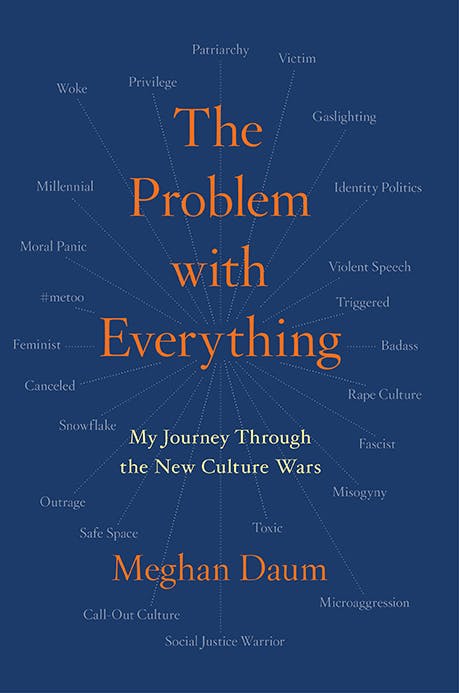
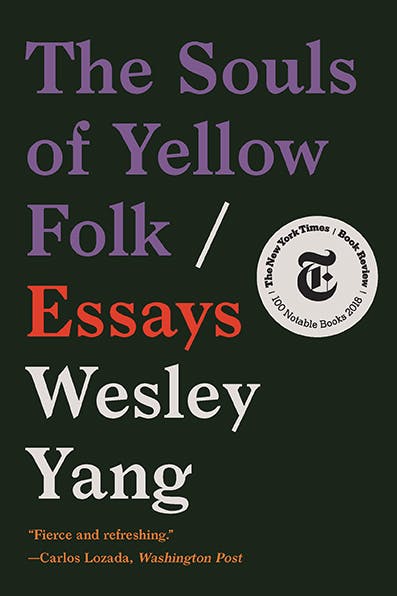
The title of Meghan Daum’s new book—The Problem With Everything .. https://www.simonandschuster.com/books/The-Problem-with-Everything/Meghan-Daum/9781982129330 —conveys just how far she believes the woke left has overstepped. Its publication follows similar works of polemic recently by the novelist Bret Easton Ellis (White .. https://www.penguinrandomhouse.com/books/605004/white-by-bret-easton-ellis/ ) and the journalist and essayist Wesley Yang (The Souls of Yellow Folk .. https://wwnorton.com/books/The-Souls-of-Yellow-Folk/ ). Together they constitute a school of thought of sorts, distinct from the usual howling condemnations of wokeness from the right. These three writers, after all, don’t fit the profile (straight, white, male, conservative) of the average anti-P.C. crusader. Daum insists that she is a feminist; Ellis for a long time struggled with his public identity as a gay man; and Yang made his name as an astute chronicler of Asian American life. Yet, in styles ranging from anxious foreboding to visceral contempt, they each oppose what is at its heart a movement for equality.
At their worst, these writers’ critiques of contemporary culture suffer from the flaw Lionel Trilling once found .. https://www.dissentmagazine.org/article/against-the-neoconservatives-the-debris-of-ideas .. in conservatism: that it does not express itself in ideas, but in “irritable mental gestures which seek to resemble ideas.” At their best, they offer a rousing defense of individuality and the right to express oneself, no matter what society might demand. It is a liberal vision, but a cramped one, emphasizing one sort of freedom over all others: the freedom to be wrong, to be offensive, to be exempt from any obligation to anyone else.
--------------------
I should note at the outset that I am not unsympathetic to the concerns of these liberal (or liberal-ish) writers, although none of them shows a particularly firm grasp of the thing they are rejecting or its history. The writer Kashana Cauley has traced .. https://believermag.com/word-woke/ .. the use of the term “woke” to unionized black workers in the midcentury and to the civil rights movement. In her childhood in the 1990s, wokeness was “a command to keep ourselves informed about anti-blackness, and to fight it.” The last five years have seen more and more people take up this mantle, as Black Lives Matter called for sustained protest against systemic racism, and the election of Trump laid bare the depth of the white patriarchy’s enduring power. To be woke in 2019 is, in part, to be a critic; whether recognizing .. https://www.thelist.com/79978/misogynistic-90s-tv-moments-thatll-make-cringe-today/ .. the subtle sexism in a TV show or celebrating .. https://www.flavorwire.com/404594/10-great-music-videos-with-a-political-message .. the political messaging in a music video, it is a form of close reading that has always been aligned with activism.
THE PROBLEM WITH EVERYTHING: MY JOURNEY THROUGH THE NEW CULTURE WARS by Meghan Daum Gallery Books, 256 pp., $26.00
Young people tend to be more attuned to this discourse than their parents. For those who aren’t squarely of the millennial generation, it can be difficult to adjust to the postures and reflexes of woke culture, particularly as it is voiced on social media. As in so many debates over identity, the stakes are high, and a lot is seen to rest on each judgment. There are good opinions (as evidenced by thousands of retweets) and bad ones (the dreaded ratio .. https://www.merriam-webster.com/words-at-play/words-were-watching-ratio-ratioed-ratioing ). An ill-advised op-ed by a famous New York Times columnist can be the subject of swarming condemnation, which very often will include suggestions that the columnist be fired or otherwise “canceled.” Even a poorly worded tweet by a random person with a dozen followers can invite a furious response, since it could exemplify a widespread prejudice.
WHITE by Bret Easton Ellis Knopf, 272 pp., $25.95
The inspiration for Bret Easton Ellis’s White was his gut response to the Trump resistance specifically and woke culture more broadly. “Somewhere in the last few years—and I can’t pinpoint exactly when,” he writes in the book’s introduction, “a vague yet almost overwhelming and irrational annoyance started tearing through me.” Ellis objects not only to the discourse, however, but also to the whole notion .. https://www.bookforum.com/print/2601/bret-easton-ellis-rages-against-the-decline-of-american-culture-20825 .. that young people have any grounds to complain. He cannot fathom why so many people, including his millennial boyfriend, are so worked up over Trump’s election. After all, he notes, Trump described Mexican immigrants as rapists “only once.” Why can’t the kids stop whining? “The legions of the disappointed had failed to get over the outcome of the election, failed to move on,” he writes, “and at times it became appalling, almost unbearable, that there were no signs of accepting one of life’s simple if brutal truths: you win some, you lose some.”
THE SOULS OF YELLOW FOLK: ESSAYS by Wesley Yang W.W. Norton & Company, 256 pp., $24.95
Is it even worth pointing out that this is something only a wealthy white person would say? That there are children in cages or that newly emboldened white supremacists have taken to the streets of American cities does not seem to have left much of an impression on Bret Easton Ellis. Indeed, in his telling, the most pernicious consequence of Trump’s otherwise inconsequential election is that it gave woke culture the license to run riot. “Everyone has to be the same” now, Ellis grumbles; everyone is forced to applaud the same politically correct television shows and cheer for the same politically correct heroes. “And if you refuse to join the chorus of approval you will be tagged a racist or a misogynist.” A pampered generation raised on victimhood—“Generation Wuss,” Ellis calls it, in contrast to his own hard-bitten Generation X—has exploited Trump’s rise to impose its sniveling paradigm on everyone else. “When did people start identifying so relentlessly with victims,” he asks, “and when did the victim’s worldview become the lens through which we began to look at everything?”
The irony of White is that it is a book-length exercise in playing the victim. It is Ellis who, in his skirmishes with the social media thought police, claims to have been condemned by “a new fascism” that “willingly censored people and punished voices, obstructed opinions and blocked viewpoints.” It is Ellis who says he has been “subjected to an ever-widening social and professional fatwa” because he refuses to recognize “how hateful and dangerous Donald Trump is.” (He doesn’t, however, give many examples of actually losing out on opportunities because of his opinions, and he continues to write screenplays and books, including this one, published by the venerable Alfred A. Knopf.) It is Ellis who believes he has been left behind by liberalism, once it “hardened into a warped authoritarian moral superiority movement.”
It is difficult to engage these broadsides in any serious way, because Ellis does so little work to back them up. Everything that he throws at his opponents can easily be flung back at him. Do social justice warriors act as if they are morally superior? Maybe, but Ellis himself claims to be taking a brave stand against “stamping out passion and silencing the individual,” in what reads very much like a morally superior position. Is woke culture rigidly incapable of brooking dissenting opinion? Perhaps, but Ellis spends an entire book refusing to consider any opinion that might make him question his own. Are millennials thin-skinned? Ellis is so upset about being called a sexist and a ninny online that he has written tens of thousands of aggrieved words about it. And has the resistance to Trump really descended into a “childlike fascism”? Ellis defends the supporters .. https://www.vox.com/culture/2019/4/16/18410541/bret-easton-ellis-white-review .. of Trump’s hateful and, yes, fascistic presidency, by citing the First Amendment: “As a writer I have to believe in free speech no matter what,” he declares, retreating from the muddy waters of the world into the safety of principle.
Toward the end of White, Ellis wonders what Patrick Bateman—the sociopathic financier in American Psycho, who represents the morally decrepit core of capitalism in the Reagan years—would be doing today. He has trouble envisioning Bateman’s life beyond his ’80s heyday, a failure that suggests some overlap between the author and his most famous character: They share a coldness that once read as cool. But White shows that coldness can be as banal as it is outrageous. One can imagine an elderly Bateman in the austere luxury of his Manhattan apartment, his impassive face bathed in the greenish glow of a smartphone, sending his empty thoughts about pop music and Hollywood and politics into the ether.
--------------------
Meghan Daum has a lot in common with Ellis. Both are proud members of Gen X, a cohort they revere for its purported toughness and love of irony. Both are inordinately pleased with the names they have bestowed on their weak-kneed, irony-hating millennial counterparts: The “wokescenti” is Daum’s portmanteau version of “Generation Wuss.” Both are driven to distraction by the Trump resistance, suffocating under its heavy atmosphere of urgency. And both like to shore up their positions by trotting out arguments from Joan Didion, who, they seem to hope, will lend their screeds a patina of legitimacy.
Before Daum came out as a loud opponent of woke culture, she was best known for sprightly personal essays .. https://www.newyorker.com/magazine/1999/10/18/my-misspent-youth .. that spoke to the concerns of modern feminists—about her struggles with debt as a young woman, for example, or her decision not to have children. She now cuts a rather different figure, positioning herself as a critic of feminism from within, tracking all the ways it has gone off the rails since Trump’s election, with its “silly memes and shallow expressions of badassedness.” Unlike Ellis, she at least pays lip service to the notion that Trump poses a threat both to women and to others. “I get that these are bad times,” she writes in The Problem With Everything. “Very, very, very bad times.” But her heart just isn’t in it. Her real beef is not with oppression or inequality, but with millennials who have framed “Trumpism as a moral emergency that required an all-hands-on-deck, no-deviation-from-the-narrative approach to cultural and political thought.”
Indeed, this could be fodder for an excellent, Salvador .. https://www.penguinrandomhouse.com/books/40768/salvador-by-joan-didion/ -esque examination of political culture in a time of crisis. But no matter how many times Daum invokes the spirit of Didion (Daum and Ellis are both specifically enamored with Didion’s 1972 takedown of feminism, “The Women’s Movement”), she has nothing of Didion’s dispassionate precision. What we get instead are hopped-up rants against pussy hats cut with rueful digressions about menopause and marriage, like a dismal cross between a Bari Weiss op-ed and Nora Ephron’s I Feel Bad About My Neck.
There are so many potential angles of attack on this deeply silly book that it is hard to know which to choose. There is her attempt to both-sides[Trumpishy, for sure.] the issue of toxic masculinity by invoking “toxic femininity .. https://medium.com/@mdaum213/metoo-will-not-survive-unless-we-recognize-toxic-femininity-6e82704ee616 ,” citing the “remarkable number of men” who have reported to her of being approached “often wordlessly” by women for sexual encounters, including “unsolicited hand jobs.” (I find it odd, to say the least, that I have never heard similar reports.)[Nor have i been lucky enough to be approached like that.] Or there is Daum’s investigation into an allegation of sexual misconduct at the University of Iowa (she is skeptical of claims .. https://www.latimes.com/opinion/op-ed/la-oe-daum-rape-stanford-turner-20160609-snap-story.html .. of a campus rape culture), in which she interviews, and is highly sympathetic to, the accused, but fails even to make contact with the accuser. “I hate that I can’t get her side of the story,” she lamely concludes. Or there is her habit of brushing aside the major claims of the #MeToo movement—about the pernicious effects of the patriarchy, the systemic nature of sexism, etc.—with personal anecdotes. Her argument usually boils down to this: Meghan Daum herself was not directly disadvantaged by systems of oppression, and therefore she has trouble believing they exist.
Daum’s obsession with pussy hats nicely distills the utter confusion and point-missing that are hallmarks of this book. If you have forgotten them (and I nearly had), pussy hats were worn .. https://newrepublic.com/article/140026/voices-womens-march-washington .. by women during the Women’s March protests that took place in cities across the country the day after Trump’s inauguration in January 2017. They were meant to convey solidarity against a president who had bragged about grabbing women “by the pussy,” as were signs and T-shirts that read “Pussy Grabs Back.” The hats were not the most sophisticated political statement; they were, the younger generation might say, a little basic. But Daum loathes them with a passion that far exceeds their significance. She suggests that women should have worn a uniform of “smart-looking blazers” instead. She grinds her teeth over the “nasty woman” shirts and the march’s vibe of raucous defiance. She worries that the resistance has squandered an opportunity to appeal to a broader base, including people who may have gone over to the “dark side.”
In her characteristically sloppy fashion, she does not say who those people might be, but she does drop one telling detail: She did not attend any of the marches herself. Some on-the-ground reporting might have helped her analysis. I was at the main march in Washington, D.C., as it happens, and my recollection of the pussy hats is that they were worn by women of all ages, but were particularly favored by a certain kind of middle-aged woman: happy to be there, yet mad as hell at the political situation; defeated but proud to march with her daughters; and very definitely including Generation X, which would seem to contradict Daum’s entire premise that coddled millennials have undermined the feminist project with their crude hashtags and embarrassing outfits.
There is a broader lesson, too, in Daum’s myopic focus on these protesters and their ugly hats. While she wrings her hands .. https://www.buzzfeednews.com/article/elisabethdonnelly/meghan-daum-book-the-problem-with-everything-metoo-feminism .. over random Facebook comments and other ephemera, she refuses to engage seriously with the substantive arguments that have been made on behalf of #MeToo. She name-checks #MeToo skeptics such as Bari Weiss and Caitlin Flanagan, but makes no mention of the movement’s pioneers and stoutest defenders—no Rebecca Solnit or Rebecca Traister or Tarana Burke. Astonishingly for a book about feminism in 2019, she fails to discuss in any depth the examples of Harvey Weinstein or Charlie Rose or Les Moonves or even Donald Trump, all of whom have been accused of using their power to abuse women for decades without repercussions. To read her book, you would not think that the problem is the men who have long degraded women, but the women who have finally dared to speak up about it. There is one chapter about her friend’s account of showing up to work at an investment bank in the 1990s to find that some man had jerked off on her desk out of spite; the title of the chapter is “Just Switch Chairs and Move On.”
---------------------
If Ellis and Daum constitute the crude id of the backlash to woke culture, then Wesley Yang could be considered its more sophisticated ego. One of the more eloquent writers on male Asian American identity, he is best known for two groundbreaking essays, both collected along with other essays and magazine profiles in The Souls of Yellow Folk. These pieces—“The Face of Seung-Hui Cho” in 2008 and “Paper Tigers” in 2011—fulfilled a central promise .. https://nplusonemag.com/issue-6/essays/face-seung-hui-cho/ .. of the left’s new identity politics: making visible those who had been rendered invisible by the predominant culture.
In both, Yang speaks from the tormented perspective of one of the overlooked. Despite outward signs of assimilation and success, Asian Americans, he writes in “Paper Tigers .. http://nymag.com/news/features/asian-americans-2011-5/ ,” are considered “a mass of stifled, repressed, abused, conformist quasi-robots who simply do not matter, socially or culturally.” The men, in particular, are sexually undesirable, powerless, and emotionally crippled by a servile subculture that is obsessed with academic success, with math and violin lessons—with a soulless, by-the-numbers kind of American dream. The proof lies in both anecdote and data: the painfully maladroit men who confide in Yang that they cannot live comfortably in their own skin, the way whites do; the ranks of exquisitely credentialed Asian Americans who fill the middle tiers of this country’s most profitable companies, but rarely make it to the top.
There is something extreme in Yang’s characterization of the Asian American’s plight, a bottomless self-loathing that is as repellent as it is fascinating. But for the most part it rings true, showing the ways in which a racially divided culture’s values—about beauty, success, merit—are internalized by the minority and become the warped reflection by which he deems himself hideous, unlovable, alien.
Which is all to say that Yang makes for a curious critic of woke culture. He has been knocked .. https://jezebel.com/the-familiar-defiance-of-wesley-yang-1832874054 .. for focusing so intently on the Asian American man’s sexual woes, and there are parts of The Souls of Yellow Folk that treat women as ciphers, as merely the measure by which these sex-starved men—who perhaps would now be described as “incels”—hope to gain their redemption. (The essay “Game Theory,” first published in n+1 in 2008, is an empathetic treatment of the world of pickup artists and their bible, The Game.) Yang seems to see these criticisms as part of an overcorrection for the misogyny and sexism in American life that he explicitly recognizes—as a misguided attack on masculinity itself, just as campaigns against racism, he believes, have morphed into a zero-sum war on whiteness.
There is a point in The Souls of Yellow Folk where you can see Yang poised uneasily on the fence. In “We Out Here,” originally published by Harper’s in 2016, he marvels at the sea change that has occurred in minority politics: Campus activists, he writes .. https://harpers.org/archive/2016/03/we-out-here/ , had given “voice to an aspiration that people of my generation and older, who had grown up more isolated in a whiter America, had not thought could be expressed as a collective demand rather than as an individual wish.” And yet he cannot quite get on board: The idea that we really can be equal “still seems to me an impossible wish, and, like all impossible wishes, one that is charged with authoritarian potential.”
The book concludes with a couple of essays that explore this potential. Here we see all the anti-woke tropes .. https://www.tabletmag.com/jewish-news-and-politics/250053/is-it-ok-to-be-white .. prevalent in Daum and Ellis: that the left’s obsession with white male supremacy comes from a deranged campus politics and social media, not the election of Trump; that an illiberal liberalism is using its “administrative and disciplinary power to delegitimize, stigmatize, disqualify, surveil, forbid, shame, and punish holders of contrary views.” It is perhaps no coincidence, though it is a shame nevertheless, that Yang’s normally lucid prose gives way in these later essays to a hectoring tone, full of opaque jargon.
Yang is primarily concerned with the way woke culture clashes with a “liberal individualist emphasis on laws and rights.”The Souls of Yellow Folk shows that the brilliant, sometimes maddening individual has long been Yang’s cynosure, even in the magazine profiles that seemingly have little to do with yellow folk at all. The tragedy of the hacker-turned-martyr .. http://nymag.com/news/features/aaron-swartz-2013-2/ .. Aaron Swartz is that he dared to be iconoclastic in “a world whose irrational power must sometimes simply be endured”; the historian Tony Judt is approvingly quoted as saying the intellectual’s primary duty is to dissent, “above all, from the consensus of their own community.” The individual, in the form of Yang himself, is the hero of “Paper Tigers”—the person who becomes a writer so he can be “his own law”; who rejects both the fetters of a self-destructive Asian American culture and a hegemonic white culture that demands his fealty; who is determined to express his “obdurate singularity at any cost.”
I can recognize the appeal of this creed. Yet where does it leave everyone else? To repurpose a criticism of V.S. Naipaul .. https://nplusonemag.com/issue-17/the-intellectual-situation/world-lite/ , the implication of Wesley Yang’s work is that the only way to transcend America’s various racial traps is to become Wesley Yang.
--------------------
Literature, whether in the essay or in fiction, has long been a battleground between the individual and the community. The truth is a constant negotiation between what the individual thinks and feels and what the rest of the world thinks and feels; this negotiation is particularly amenable to a form that both elucidates the individual’s viewpoint and seeks to make it universal. The individual and the world, the world and the individual—they feed off and inform each other. Think of the moment in Pride and Prejudice when Elizabeth Bennet realizes she has been utterly wrong about Mr. Darcy all along. It is not just that she was wrong about the world beyond her narrow perception, but also about her own ability to discern the truth: “Till this moment, I never knew myself,” she says.
Some 200 years later, the narrator in Ben Lerner’s novel 10:04 .. https://newrepublic.com/article/119005/ben-lerners-1004-review-repetition-and-autobiography-fiction .. offers an updated version of this negotiation, when he describes a receptionist he finds attractive: “She was not unusually beautiful, but her proportions, visible through her black pantsuit even while she sat, were consistent with normative male fantasy.” It is a funny line, the neurotic writing professor diagnosing his own horniness as if it were a malady, but also a tad disturbing. The critics of woke culture might say that this character is exhibiting a kind of internalized wokeness—adopting the politically correct lessons of gender relations so blindly that he can’t trust his own desires. Does he know himself? Or does he only know what academia and elite discourse and social media have taught him?
If there is a proper balance between individual truth and worldly truth, it would be hard to locate it with any precision. The claims that woke culture has gone “too far” at the expense of freedom of thought, however, strike me as overblown, not least because Ellis, Daum, and Yang possess powerful platforms to say whatever they want. While woke culture surely has its flaws, as any political movement does, it has not destroyed masculinity or irony as we know it—not if the involuntary flutters of Lerner’s hyper-aware narrator are to be believed.
The foot-stamping insistence on individual rights obliterates what should be a tension between those rights and the well-being of the community as a whole. This is all the more relevant at a time when the political implications of unbridled individualism, represented by capitalism’s self-made man, have never been clearer. There must be a way to express oneself while also ensuring that others aren’t silenced, oppressed, and forgotten. There must be a way to protect the individual while addressing dire problems that can only be fixed collectively, from environmental collapse to systemic racism and sexism. To err on the side of solidarity, even against one’s strongest emotions, is not to sacrifice our individual humanity. It is to accept what Elizabeth Bennet finally learned: that the truth will set you free.
Ryu Spaeth @RyuSpaeth
Ryu Spaeth is the features editor of The New Republic. He also edits Critical Mass.
Can liberalism and its gatekeepers survive the seismic changes in our society?
Brigid Delaney
There is a revolution of ideas under way where those who believe in an intellectual landscape free and open to debate feel they are being challenged
@BrigidWD
Sun 12 Jul 2020 03.30 AEST
Writer Wesley Yang has described it as the “successor ideology” to liberalism. Yang sees the promise and the purity of woke culture – that we can move from the “individual wish to the collective demand.”
The psychologist who coined the phrase ‘Great Resignation’ reveals how he saw it coming and where he sees it going. ‘Who we are as an employee and as a worker is very central to who we are.’
"The long list of Trump administration officials turned critics"
Juliana Kaplan Oct. 2, 2021, 10:30 AM
Anthony Klotz. Mays Business School
* Anthony Klotz, a psychologist and professor at Texas A&M, came up with the term “Great Resignation.”
* He told Insider that events like the pandemic make people step back and rethink their lives.
* In some cases, that can cause people to change up careers – and companies will have to adjust.
“I don’t know why I used the word ‘great’ and called it ‘the Great Resignation,'” he told Insider of his interview with Bloomberg, but said he had been using that phrase at home, when he was talking to his wife about what would happen to workers.
Klotz, an associate professor of management at May Business School at Texas A&M University, said he anticipated that it would be a huge resignation wave based on a few different things. First, not a lot of people quit their jobs during the pandemic; in August, Glassdoor economist Daniel Zhao told Insider .. https://www.businessinsider.com.au/37-million-more-people-would-quit-jobs-if-no-pandemic-2021-8 .. that there were still 3.7 million “missing quits.” That basically means that, if not for the pandemic, 3.7 million more people would have quit their jobs by then.
So, probably a lot of people who wanted to quit just hadn’t yet; as Klotz anticipated, a rush of quits might be making up that deficit. Burnout, too, is weighing on many, especially in service jobs. Workers in the service industry have been leaving en masse, prompting employers to hike wages, benefits, and get rid of tips .. https://www.businessinsider.com.au/service-workers-resignations-bring-up-wages-end-tipping-nyt-2021-9 .
He was right: In July, the last month for which the Bureau of Labor Statistics published data, 3.98 million workers quit; that’s slightly lower than the record-smashing 3.99 million quits in April.
The profound element to the Great Resignation
It’s more than just “missing quits,” though. It’s an understatement to say that the past 18 months have changed how some people think about life, work, and what they want out of both.
“Especially in the United States, who we are as an employee and as a worker is very central to who we are as people,” Klotz said. But whether you were yanked from the office, or laid off, or experiencing burnout, you may have felt more removed from work – and able to try out “other elements” of life more.
“From organizational research, we know that when human beings come into contact with death and illness in their lives, it causes them to take a step back and ask existential questions,” Klotz said. “Like, what gives me purpose and happiness in life, and does that match up with how I’m spending my right now? So, in many cases, those reflections will lead to life pivots.”
This should create a moment of reflection for employers, according to Klotz.
“I think we are entering a period of time where companies are trying to figure out, ‘Who are we in this new world of work? What kind of schedule do we want to give our employees?'” Klotz said.
But one lingering question is how long the Great Resignation will stick around, or if it will ever end.
“Is this just a permanently raised rate of resignation? Or is it an inflection point, and we get back to normal?” Klotz said. “I think a lot of that’s going to depend on what we learn about who is quitting, why they are quitting, and how companies respond.”
He added: “One hopefully silver lining of this horrible pandemic would be if the world of work transitioned to a more healthy, sustainable place for employee wellbeing.”
Let's see if Volker is right again. Volker says Russian invasion won't end with negotiations
"The long list of Trump administration officials turned critics [...] Former US Special Representative for Ukraine Kurt Volker Volker told BBC News in his first television interview since the Senate impeachment trial he thought "it was a mistake" for Trump to try and withhold aid from Ukraine for political reasons."
By Joseph Choi - 03/06/22 11:54 AM EST
VIDEO
Kurt Volker, former U.S. envoy to Ukraine, said on Sunday that the Russian invasion will not end through negotiations, adding that Russian President Vladimir Putin is "bent" on destroying the country.
"Face the Nation" host Margaret Brennan asked Volker on CBS if he could see any countries being able to negotiate an end to Russia's attack on Ukraine.
"Not at all. No, we have to understand that Putin is bent on a military victory. He wants to destroy Ukraine, decapitate the leadership. He doesn't care about how many casualties this causes, what happens to the civilian population. This is a messianic mission that he is on. This is why he has to be stopped," said Volker.
Volker also called for the U.S. to provide A-10 aircraft to Ukraine, noting that Ukrainian pilots are trained to use the jets.
Brennan noted that numerous other nations including France, Germany and Israel have attempted to diplomatically stop the war, and asked Volker who would be able to bring about an end.
"Ukrainian people can do this," Volker said. "Ukrainian people are there, they are determined, they are fighting. We are fortunate that we don't have to be in a position of fighting Putin or trying to stop him. The Ukrainian people are ready to do this. And that's why it's critical that we give them every bit of support and assistance we can.