Preclin. Anti-PS work w/collab’s MemSloan,Duke,MDA,Rutgers,Wistar,ImmunoVaccine…
AACR’17: 4-3-17 #1651 - Session: TUMOR MICROENVIRONMENT & CHECKPOINTS http://tinyurl.com/z47hb2s MemSloan Jedd Wolchok Lab+PPHM(2nd known study): “Targeting Phosphatidylserine in Combination with Adoptive T Cell Transfer Eliminates Advanced Tumors without Off-Target Toxicities in a Melanoma Preclinical Model” Lead author: Dr. Taha Merghoub (Co-Dir., Ludwig Collaborative Lab at MSK), Co-author Jedd Wolchok, PPHM & MSKCC scientists. ( http://www.mskcc.org/research-areas/labs/jedd-wolchok ) NOTE: “Adoptive Cell Transfer (ACT)” is the transfer of cells into a patient. The cells may have originated from the patient or from another individual. The cells are most commonly derived from the immune system, with the goal of improving immune functionality and characteristics. In cancer immunotherapy, T cells are extracted from the patient, genetically modified and cultured in vitro and returned to the same patient. AACR’17: http://tinyurl.com/jxfm3hb
AACR’17: 4-4-17 #3657 - Session: BITES BISPECIFICS & CHECKPOINTS ”Phosphatidylserine-Targeting Antibodies Enhance Anti-Tumor Activity of a Tumor Vaccine in a HPV-Induced Tumor Model” => Genevieve Weir 1, Tara Quinton 1, Jeff Hutchins 2, Bruce Freimark 2, Marianne Stanford (VP/Res., Immunovaccine Inc.) 1=Immunovaccine, Inc., Halifax, NS, Canada [ https://www.imvaccine.com ]; 2=Peregrine Pharmaceuticals [Note: POSSIBLE GENESIS OF IMMUNOVACCINE COLLAB??? 11-9-15 SITC'15: ”Combining Bavi w/anti-PD-1 significantly enhanced O/S… significant incr. CD45+, CD8+ and CD3+ T-cells… led a prolonged anti-tumor immune response which protected the animals against a re-challenge w/same tumor.” http://tinyurl.com/pbof95w ]
BAVI MOA: 2-9-17/AACR article (Rutgers’ Dr. Raymond Birge, PPHM, Advanced Proteome Therapeutics, etal): “PS Sensing by TAM Receptors (Tyro3, Axl, Mertk)...” http://tinyurl.com/gna9q4v …”These data provide a rationale that PS-targeting, anti-TAM receptor, and anti-PD-L1 based therapeutics will have merit as combinatorial checkpoint inhibitors. Implications: Many tumor cells are known to up-regulate the immune checkpoint inhibitor PD-L1. This study demonstrates a role for PS and TAM receptors in the regulation of PD-L1 on breast cancers cells.”
BAVI MOA: 1-30-17 Mol.Cancer article: MDA/UTSW/Brekken/etal, “PreClin. Eval of DNX2401+FhuBAVI(1N11) for Pancreatic Cancer” http://tinyurl.com/hov4hfb ...Combo Delta-24-RGD + FhuBAVI “significantly inhibited tumor growth; further enhanced its anticancer activity; warrants further clinical evaluation...”
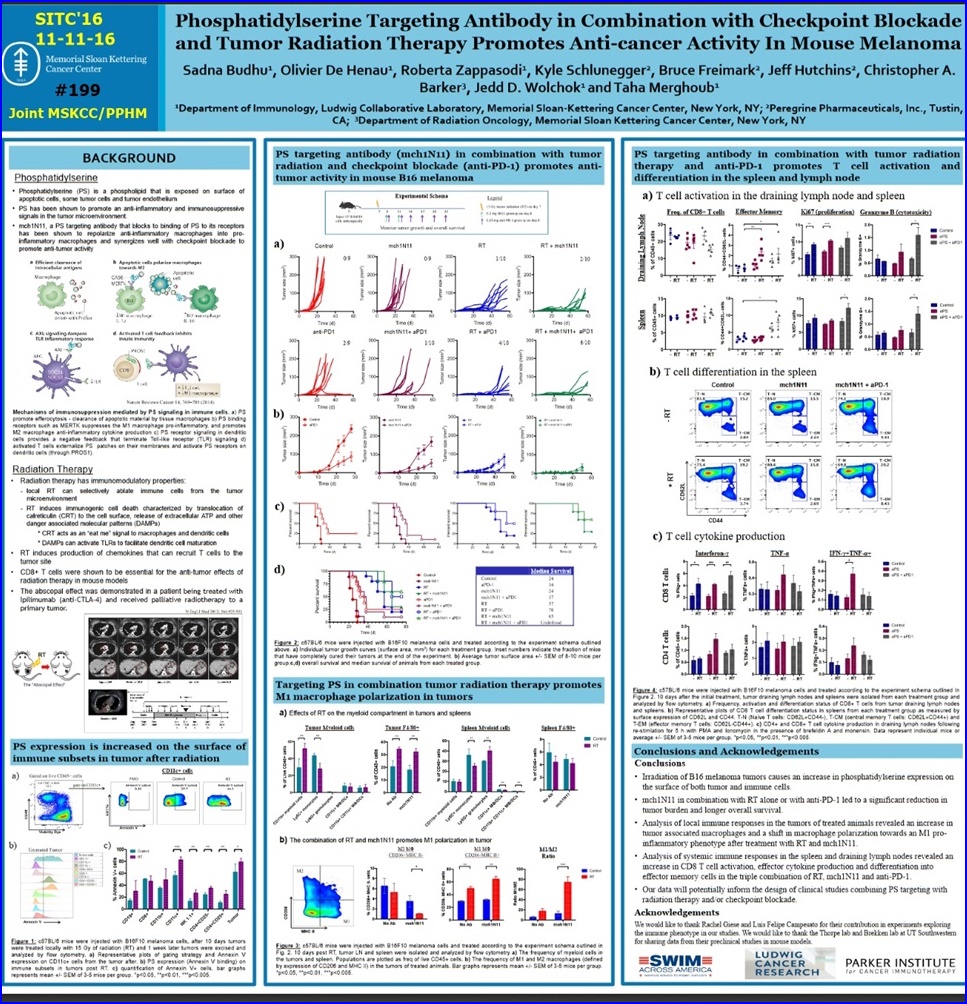
BAVI MOA 11-14-16: SITC’16: Joint Memorial Sloan Kettering (Wolchok Lab) & PPHM poster on Triple Combo Rad+Bavi+aPD1 vs. Melanoma http://tinyurl.com/js3fca4 ...MSK’s Dr. Jedd Wolchok states, ”Based on these study results, we believe that the targeting of PS is having meaningful activity within the tumor microenvironment in the B16 melanoma model. It appears that this activity creates a more immune active environment in which other treatments, including radiation, are able to have a greater anti-tumor impact."
BAVI MOA 10-22-16: Duke’s Herbert K. Lyerly (w/PPHM) poster on AntiPS/TNBC data at AACR’s Tumor Immunotherapy Conf./Boston http://tinyurl.com/zzryfok ...”Title: ‘Modulating The Tumor Microenvironment to Enhance Cancer Immunotherapy by Inducing Phosphatidylserine Expression on the Tumor Surface”’… Data showed that a combination of anti-PS & anti-PD-L1 therapies, with or without paclitaxel, led to greater anti-tumor responses than any of the treatments administered as single agents or dual treatment combinations w/paclitaxel, in the E0771 murine model of TNBC.”
BAVI MOA 9-27-16 AACR-CRI/Dr. Michael Gray (PPHM): Preclin. Triple-Combo Bavi+PD1+LAG3 TNBC data in TNBC (80% Compl. Regression, Stat-Sig. Incr. in Key Tumor Fighting Immune Cells) http://tinyurl.com/zy9yv78
BAVI MOA 7-27-16 Shaul/Brekken/Thorpe/etal PLOS ONE article: Fhu/Bavi vs. APS-related Pregnancy Complications & Thrombosis http://tinyurl.com/jlhrdg2 ...”The potential clinical impact of 1N11 (Fhu Bavi) in patients with APS is substantial. Spring-boarding from the present discovery of 1N11 as a highly-effective, mechanism-based treatment for APS in a comprehensive series of mouse models of APS-related disorders, clinical studies of 1N11 now warrant consideration.”
BAVI MOA 5-11-16 Breast Cancer Res. article, B.Freimark/CW.Hughes(UCal-Irvine)-et-al, “PS-Targeting/Bavi Combo w/Anti-PD1/PDL1 in Triple.Neg-MBC” http://tinyurl.com/zxu882y ...”our observations demonstrate that including PS-targeting antibodies such as bavituximab can enhance the anti-tumor activity of anti-PD-1/PD-L1 treatments, not only by increasing TIL responses but also by inhibiting cytokines stimulated by single-agent anti-PD-1 therapy that serve to suppress the immune response & promote tumor progression.”
BAVI MOA 4-20-16/AACR'16 & 4-4-16/Cancer-Immunology-Res.(AACR) article (PPHM/Friemark, U.Cal-Irvine/CW-Hughes - preclin. data: Bavi combo w/anti-PD-1/anti-CTLA-4 “induces a shift in tumor microenvironment from immunosuppressive to immune active” http://tinyurl.com/jyox458
BAVI MOA 1-18-16: CEO Steve King explains PPHM's direct PS-Targeting advantage vs. the “individual-receptors” PS-binding approach of others like: Axl Mer TIM-3 RAGE Tyro3 GAS6 CD300a BAI1 MFG-E8 etc. http://tinyurl.com/h2h87mc
2-2016: Rutgers' Dr. Raymond Birge's relationship with Peregrine & UTSW's Dr. Rolf Brekken and his 2-26-16 article, ”Phosphatidylserine is a Global Immunosuppressive Signal in Efferocytosis, Infectious Disease, and Cancer” http://tinyurl.com/z5d9qt9
11-9-15 SITC'15: New Bavi+Checkpoint Inhibitors preclin. data (UTSW/DUKE's Herbert K. Lyerly) http://tinyurl.com/pbof95w ...Also, collab. with Dr. Bernard Fox (Immunotherapist/Earle A. Chiles Res.Inst.) on new Immuno-Profiling Clinical Test (Opal 6-plex quantitative IF Assay), PPHM roundtable with Raymond Birge (Rutgers), Douglas Graham (Emory), Dmitry Gabrilovich (Wistar), Rolf Brekken (UTSW), Maria Karasarides (AstraZeneca) - ”Combining Bavi w/anti-PD-1 significantly enhanced O/S… significant incr. CD45+, CD8+ and CD3+ T-cells… led a prolonged anti-tumor immune response which protected the animals against a re-challenge w/same tumor.”
5-29-15: Peregrine & Sloan Kettering Enter Collab. to “Investigate Novel PS-Targeting Immunotherapy Combos” http://tinyurl.com/o3k9ux8 ...Dr. Wolchok states, ”The phosphatidylserine (PS) signaling pathway is a very interesting target for modulating the immune system's response to cancer. We look forward to exploring the potential of PS-targeting agents alone and with other immune modulators that may lead to novel advances in cancer therapy.” . . . .
Preclin. Anti-PS work w/collab’s MemSloan,Duke,MDA,Rutgers,Wistar,ImmunoVaccine… (updated with further info. on the new PPHM+MemSloan/Wolchok “PS-Targeting + Adoptive T Cell Transfer (ACT)” study revealed by the AACR’17 abstracts).
= = = = = = = = = = = = = = = = = = = = = = = = = = AACR’17: 4-3-17 #1651 - Session: TUMOR MICROENVIRONMENT & CHECKPOINTS http://tinyurl.com/z47hb2s MemSloan Jedd Wolchok Lab+PPHM(2nd known study - revealed by AACR’17 Abstract): “Targeting Phosphatidylserine in Combination with Adoptive T Cell Transfer (ACT)Eliminates Advanced Tumors without Off-Target Toxicities in a Melanoma Preclinical Model” Lead author: Dr. Taha Merghoub (Co-Dir., Ludwig Collaborative Lab at MSK), Co-author Jedd Wolchok, PPHM & MSKCC scientists. ( http://www.mskcc.org/research-areas/labs/jedd-wolchok ) NOTES: “Adoptive Cell Transfer (ACT)” is the transfer of cells into a patient. The cells may have originated from the patient or from another individual. The cells are most commonly derived from the immune system, with the goal of improving immune functionality and characteristics. In cancer immunotherapy, T cells are extracted from the patient, genetically modified and cultured in vitro and returned to the same patient. ----- **From 3-2014 Immunotherapy article: “Cancer immunotherapy, particularly adoptive cell transfer (ACT), has shown great promise in the treatment of patients with late-stage disease, including those who are refractory to std. Therapies” https://www.ncbi.nlm.nih.gov/pmc/articles/PMC4372895 ----- **Through the support from SEAN PARKER, Stand Up To Cancer (SU2C) and the Cancer Research Institute (CRI) formed an Immunology Research Dream Team dedicated to cancer immunology: “Immunologic Checkpoint Blockade & Adoptive Cell Transfer in Cancer Therapy.” The Immunotherapy Dream Team is focused on 2 approaches for this translational cancer research project, which will unite laboratory & clinical efforts towards the immunological treatment, control, and prevention of cancer. The 1st is investigating blockades (by inhibitory molecules called “checkpoints”) of T lymphocytes’ inhibitory receptors, which block immune responses; and the use of antibodies to remove the checkpoints, once again allowing white blood cells called T lymphocytes to kill the cancer cells. Second, the Immunotherapy Dream Team is pursuing multiple Adoptive Cell Transfer (ACT) approaches, which increase immunity.” DREAM TEAM LEADERSHIP: 10 scientists, incl. MSKCC’s Jedd D. Wolchok & Michel Sadelain. http://parker.org/initiatives/immunotherapy ----- **12-12-2012: MSK Researchers Jedd Wolchok & Michel Sadelain Appointed to “Stand Up To Cancer” Immunology “Dream Team” TWO APPROACHES TO ATTACKING CANCER: The Immunology Dream Team will pursue 2 research techniques. The 1st, being led by Dr. Wolchok, involves studying how a type of white blood cell called a T lymphocyte, or T cell, can kill cancer cells. Sometimes, the natural function of the T lymphocyte is blocked or not activated enough to attack cancer cells, allowing the cancer to grow. Part of the Dream Team’s focus will be to investigate ways to ensure that the T lymphocytes work properly in recognizing and killing cancer cells. The 2nd immunotherapy approach, known as Adoptive Cell Transfer (ACT), involves removing some of a patient’s T cells, enhancing their cancer-fighting abilities and growing them in the laboratory, and then infusing the enhanced cells back into the patient. This can provide a patient with an army of immune cells specifically programmed to fight against cancer. This part of the Dream Team’s research, led by Dr. Sadelain, will investigate several ways to use ACT as a cancer therapy. https://www.mskcc.org/blog/msk-researchers-appointed-stand-immunology-dream-team
= = = = = = = = = = = = = = = = = = = = = = = = = = AACR’17: 4-2-17 #574 - Session: CHECKPOINTS 1 http://tinyurl.com/z47hb2s MemSloan Jedd Wolchok Lab+PPHM(1st known study – revealed at Nov’16/SITC16): “Phosphatidylserine Targeting Antibody in Combination with Tumor Radiation & Immune Checkpoint Blockade Promotes Anti-Tumor Activity in Mouse B16 Melanoma” => Sadna Budhu 1, Olivier De Henau 1, Roberta Zappasodi 1, Rachel Giese 1, Luis F. Campesato 1, Christopher Barker 1, Bruce Freimark 2, Jeff Hutchins 2, Jedd D. Wolchok 1, Taha Merghoub [Memorial Sloan Kettering] 1=Memorial Sloan Kettering CC, NYC [ http://www.mskcc.org/research-areas/labs/jedd-wolchok ] 2=Peregrine Pharmaceuticals ...From the SITC’16 abstract: http://tinyurl.com/js3fca4 **SEE 11-14-16 BELOW**
= = = = = = = = = = = = = = = = = = = = = = = = = = AACR’17: 4-4-17 #3657 - Session: BITES BISPECIFICS & CHECKPOINTS ”Phosphatidylserine-Targeting Antibodies Enhance Anti-Tumor Activity of a Tumor Vaccine in a HPV-Induced Tumor Model” => Genevieve Weir 1, Tara Quinton 1, Jeff Hutchins 2, Bruce Freimark 2, Marianne Stanford (VP/Res., Immunovaccine Inc.) 1=Immunovaccine, Inc., Halifax, NS, Canada [ https://www.imvaccine.com ]; 2=Peregrine Pharmaceuticals [Note: clearly, this study is combining PPHM’s Anti-PS with ImmunoVaccine’s DepoVax Vaccine Adjuvanting Platformhttps://www.imvaccine.com/depovax.php ] [Note: POSSIBLE GENESIS OF IMMUNOVACCINE COLLAB??? 11-9-15 SITC'15: ”Combining Bavi w/anti-PD-1 significantly enhanced O/S… significant incr. CD45+, CD8+ and CD3+ T-cells… led a prolonged anti-tumor immune response which protected the animals against a re-challenge w/same tumor.” http://tinyurl.com/pbof95w ]
= = = = = = = = = = = = = = = = = = = = = = = = = = BAVI MOA: 2-9-17/AACR article (Rutgers’ Dr. Raymond Birge, PPHM, Advanced Proteome Therapeutics, etal): “PS Sensing by TAM Receptors (Tyro3, Axl, Mertk)...” http://tinyurl.com/h4gdke3 …”These data provide a rationale that PS-targeting, anti-TAM receptor, and anti-PD-L1 based therapeutics will have merit as combinatorial checkpoint inhibitors. Implications: Many tumor cells are known to up-regulate the immune checkpoint inhibitor PD-L1. This study demonstrates a role for PS and TAM receptors in the regulation of PD-L1 on breast cancers cells.”
= = = = = = = = = = = = = = = = = = = = = = = = = = BAVI MOA: 1-30-17 Mol.Cancer article: MDA/UTSW/Brekken/etal, “PreClin. Eval of DNX2401+FhuBAVI(1N11) for Pancreatic Cancer” http://tinyurl.com/hov4hfb ...Combo Delta-24-RGD + FhuBAVI “significantly inhibited tumor growth; further enhanced its anticancer activity; warrants further clinical evaluation...”
= = = = = = = = = = = = = = = = = = = = = = = = = = BAVI MOA 11-14-16: SITC’16: Joint Memorial Sloan Kettering (Wolchok Lab) & PPHM poster on Triple Combo Rad+Bavi+aPD1 vs. Melanoma http://tinyurl.com/js3fca4 ...DR. JEDD WOLCHOK: "Based on these study results, we believe that the targeting of PS is having meaningful activity within the tumor microenvironment in the B16 melanoma model. It appears that this activity creates a more immune active environment in which other treatments, including radiation, are able to have a greater anti-tumor impact." DR. TAHA MERGHOUB (Co-Dir., Ludwig Collaborative Lab at MSK): "We have noted that the combination of PS-targeting treatment and radiation, as well as triple combination of PS-targeting treatment, radiation and anti-PD-1, resulted in clear advantages in anti-tumor activity in the mouse B16 melanoma model. We believe that these findings suggest the potential benefit of combining these agents to improve the outcomes of patients with cancer. With this in mind, we think this research may play an important role in designing future clinical trials of PS-targeting agents in melanoma and other cancers."
= = = = = = = = = = = = = = = = = = = = = = = = = = BAVI MOA 10-22-16: Duke’s Herbert K. Lyerly (w/PPHM) poster on AntiPS/TNBC data at AACR’s Tumor Immunotherapy Conf./Boston http://tinyurl.com/zzryfok ...”Title: ‘Modulating The Tumor Microenvironment to Enhance Cancer Immunotherapy by Inducing Phosphatidylserine Expression on the Tumor Surface”’… Data showed that a combination of anti-PS & anti-PD-L1 therapies, with or without paclitaxel, led to greater anti-tumor responses than any of the treatments administered as single agents or dual treatment combinations w/paclitaxel, in the E0771 murine model of TNBC.”
= = = = = = = = = = = = = = = = = = = = = = = = = = BAVI MOA 7-27-16 Shaul/Brekken/Thorpe/etal PLOS ONE article: Fhu/Bavi vs. APS-related Pregnancy Complications & Thrombosis http://tinyurl.com/jlhrdg2 ...”The potential clinical impact of 1N11 (Fhu Bavi) in patients with APS is substantial. Spring-boarding from the present discovery of 1N11 as a highly-effective, mechanism-based treatment for APS in a comprehensive series of mouse models of APS-related disorders, clinical studies of 1N11 now warrant consideration.”
= = = = = = = = = = = = = = = = = = = = = = = = = = BAVI MOA 5-11-16 Breast Cancer Res. article, B.Freimark/CW.Hughes(UCal-Irvine)-et-al, “PS-Targeting/Bavi Combo w/Anti-PD1/PDL1 in Triple.Neg-MBC” http://tinyurl.com/zxu882y ...”our observations demonstrate that including PS-targeting antibodies such as bavituximab can enhance the anti-tumor activity of anti-PD-1/PD-L1 treatments, not only by increasing TIL responses but also by inhibiting cytokines stimulated by single-agent anti-PD-1 therapy that serve to suppress the immune response & promote tumor progression.”
= = = = = = = = = = = = = = = = = = = = = = = = = = BAVI MOA 4-20-16/AACR'16 & 4-4-16/Cancer-Immunology-Res.(AACR) article (PPHM/Friemark, U.Cal-Irvine/CW-Hughes - preclin. data: Bavi combo w/anti-PD-1/anti-CTLA-4 “induces a shift in tumor microenvironment from immunosuppressive to immune active” http://tinyurl.com/jyox458
= = = = = = = = = = = = = = = = = = = = = = = = = = 2-2016: Rutgers' Dr. Raymond Birge's relationship with Peregrine & UTSW's Dr. Rolf Brekken and his 2-26-16 article, ”Phosphatidylserine is a Global Immunosuppressive Signal in Efferocytosis, Infectious Disease, and Cancer” http://tinyurl.com/z5d9qt9 ...Authors: Rutgers(Birge/Kumar/Calianese), Peregrine(4), UTSW(Brekken/Schroit/Huang), Friedrich-Alexander-Univ./Germany(Martin Herrmann/Boeltz/Schett), Rio de Janeiro, Univ. College London ...”we outline the rationale that agents targeting PS could have significant value in cancer & infectious disease therapeutics.”
= = = = = = = = = = = = = = = = = = = = = = = = = = BAVI MOA 1-18-16: CEO Steve King explains PPHM's direct PS-Targeting advantage vs. the “individual-receptors” PS-binding approach of others like: Axl Mer TIM-3 RAGE Tyro3 GAS6 CD300a BAI1 MFG-E8 etc. http://tinyurl.com/h2h87mc
= = = = = = = = = = = = = = = = = = = = = = = = = = 11-9-15 SITC'15: New Bavi+Checkpoint Inhibitors preclin. data (UTSW/DUKE's Herbert K. Lyerly) http://tinyurl.com/pbof95w ...Also, collab. with Dr. Bernard Fox (Immunotherapist/Earle A. Chiles Res.Inst.) on new Immuno-Profiling Clinical Test (Opal 6-plex quantitative IF Assay), PPHM roundtable with Raymond Birge (Rutgers), Douglas Graham (Emory), Dmitry Gabrilovich (Wistar), Rolf Brekken (UTSW), Maria Karasarides (AstraZeneca) - ”Combining Bavi w/anti-PD-1 significantly enhanced O/S… significant incr. CD45+, CD8+ and CD3+ T-cells… led a prolonged anti-tumor immune response which protected the animals against a re-challenge w/same tumor.”
= = = = = = = = = = = = = = = = = = = = = = = = = = 5-29-15: Peregrine & Sloan Kettering Enter Collab. to “Investigate Novel PS-Targeting Immunotherapy Combos” http://tinyurl.com/o3k9ux8 ...Dr. Jedd Wolchok states, ”The phosphatidylserine (PS) signaling pathway is a very interesting target for modulating the immune system's response to cancer. We look forward to exploring the potential of PS-targeting agents alone and with other immune modulators that may lead to novel advances in cancer therapy.” ...Dr. Taha Merghoub (Co-Dir., Ludwig Collaborative Lab & Swim Across America Lab at Memorial Sloan Kettering) states, ”A key focus of the Wolchok Lab's research is studying novel immunotherapy combinations that work together to enable the immune system to recognize and destroy cancer. This collaboration will allow us to focus on the role and contribution of PS blockade therapy in determining which combination of the current and next generation of immune modulators is likely to increase the extent and amplitude of anti-tumor response. This important pre-clinical and translational work will potentially guide the design of the next generation of clinical studies with bavituximab.” . . . .
2-9-17/AACR Article: R.Birge+PPHM, “PS Sensing by TAM Receptors Regulates AKT-dependent Chemoresistance & PD-L1 Expression”. Lead author, Rutgers' Dr. Raymond Birge. Also, 2 co-authors from Advanced Proteome Therapeutics, in addition to PPHM scientists.
2-9-17/AACR: “Phosphatidylserine Sensing by TAM Receptors Regulates AKT-dependent Chemoresistance and PD-L1 Expression” Rec. 10-27-16, rev. 12-30-16, Acc 1-13-17, PUB. 2-9-17 *RUTGERS: Canan Kasikara, Sushil Kumar, Stanley Kimani, Wen-I Tsou, Ke Geng, Viralkumar Davra, Ganapathy Sriram, Connor Devoe, Khanh-Quynh Nguyen, Anita Antes, Sergei V Kotenko, Raymond B. Birge [Lead Author http://birgelab.org ] *ADVANCED PROTEOME THERAPEUTICS: Allen Krantz, Andrzej Wilczynski http://advancedproteome.com *BOSTON UNIV: Grzegorz Rymarczyk *PEREGRINE: Cyril Empig, Bruce D Freimark, Michael Gray, Kyle Schlunegger, Jeff Hutchins http://mcr.aacrjournals.org/content/early/2017/02/09/1541-7786.MCR-16-0350 https://www.ncbi.nlm.nih.gov/pubmed/28184013
Good thing PS Targeting reduces MDSCs
?Np63-driven recruitment of myeloid-derived suppressor cells promotes metastasis in triple-negative breast cancer
Sushil Kumar,1 David W. Wilkes,1 Nina Samuel,1 Mario Andres Blanco,1 Anupma Nayak,2 Kevin Alicea-Torres,3 Christian Gluck,4 Satrajit Sinha,4 Dmitry Gabrilovich,3 and Rumela Chakrabarti1
First published October 8, 2018 - Version history Received: January 5, 2018; Accepted: August 28, 2018 Abstract Triple-negative breast cancer (TNBC) is particularly aggressive, with enhanced incidence of tumor relapse, resistance to chemotherapy, and metastases. As the mechanistic basis for this aggressive phenotype is unclear, treatment options are limited. Here, we showed an increased population of myeloid-derived immunosuppressor cells (MDSCs) in TNBC patients compared with non-TNBC patients. We found that high levels of the transcription factor ?Np63 correlate with an increased number of MDSCs in basal TNBC patients, and that ?Np63 promotes tumor growth, progression, and metastasis in human and mouse TNBC cells. Furthermore, we showed that MDSC recruitment to the primary tumor and metastatic sites occurs via direct ?Np63-dependent activation of the chemokines CXCL2 and CCL22. CXCR2/CCR4 inhibitors reduced MDSC recruitment, angiogenesis, and metastasis, highlighting a novel treatment option for this subset of TNBC patients. Finally, we found that MDSCs secrete prometastatic factors such as MMP9 and chitinase 3–like 1 to promote TNBC cancer stem cell function, thereby identifying a nonimmunologic role for MDSCs in promoting TNBC progression. These findings identify a unique crosstalk between ?Np63+ TNBC cells and MDSCs that promotes tumor progression and metastasis, which could be exploited in future combined immunotherapy/chemotherapy strategies for TNBC patients.


 Market Data
  Markets


 AI
AI