Astronomers Image Lowest-mass Exoplanet Around a Sun-like Star This composite combines Subaru images of GJ 504 using two near-infrared wavelengths (orange, 1.6 micrometers, taken in May 2011; blue, 1.2 micrometers, April 2012). Once processed to remove scattered starlight, the images reveal the orbiting planet, GJ 504b. [much larger (click on it) at http://www.nasa.gov/sites/default/files/gj504b_labels_v2.jpg ] Glowing a dark magenta, the newly discovered exoplanet GJ 504b weighs in with about four times Jupiter's mass, making it the lowest-mass planet ever directly imaged around a star like the sun. [much larger (click on it) at http://www.nasa.gov/sites/default/files/gj504b_exoplanet_final_0.jpg ] This chart locates the fifth-magnitude star GJ 504, also known as 59 Virginis, which is visible to the unaided eye from suburban skies. [much larger (click on it) at http://www.nasa.gov/sites/default/files/gj504_star_chart.jpg ] Aug. 5, 2013 [...] The researchers find that GJ 504b is about four times more massive than Jupiter and has an effective temperature of about 460 degrees Fahrenheit (237 Celsius). It orbits the G0-type star GJ 504, which is slightly hotter than the sun and is faintly visible to the unaided eye in the constellation Virgo. The star lies 57 light-years away and the team estimates the systems is about 160 million years old, based on methods that link the star's color and rotation period to it age. [...] http://www.nasa.gov/content/goddard/astronomers-image-lowest-mass-exoplanet-around-a-sun-like-star/
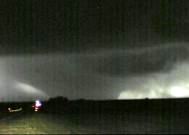
Greensburg, KS - 5/4/07
"Eternal vigilance is the price of Liberty." from John Philpot Curran, Speech upon the Right of Election, 1790


 Market Data
  Markets


 AI
AI