



 AI
AI







Friday, February 15, 2013 3:30:35 PM
Apparently one does need to re-read and yet again,
here, I'll help;
Obtained a Copy of the MSE-TA Presentation Abstract...
The WM2013 MSE-TA presentation, "Strategies for Treating and Dewatering
Contaminated Soils and Sediments Simultaneously," reviews the initial go/no-go MSE-TA laboratory testing of, specifically, Molecular Bonding System (MBS) and Waste Lock 770 (Waste Lock) to simultaneously treat
(they're talking about combining the two techs together),
v. com·bined, com·bin·ing, com·bines. v.tr.
1. To bring into a state of unity; merge.
2. To join (two or more substances) to make a single substance
such as a chemical compound; mix.
and dewater soils and or sediments. In the laboratory, MSE-TA simulated contaminated soil by spiking soil with lead, mercury, cadmium, and chromium.
(more on that in a minute).
The abstract's "Results/Lessons Learned" indicates, “Follow-on treatability testing… ,” or, additional testing needed, of this MBS with Waste Lock combination, for repeatability. See Below. GTGP's promotion of this presentation as being an avenue for near-term shareholder reward, implying 2013 monetary income, appears deceptive.
(I see nothing about a GTGP promo, reward, monetary income in this post.
It appears that line is indeed deceptive).
"Go/No-Go" testing method... From Wikipedia: "In general go/no go testing refers to a pass/fail test (or check) principle using two boundary conditions. The test is passed only when the Go condition is met and also the No go condition fails. The test gives no information as to the degree of conformance to, or deviation from the boundary conditions."
Results/Lessons Learned, typed word for word from the Abstract: "The small scale go/no-go testing proved that MBS and Waste Lock can be added simultaneously to dewater and treat metals contamination to TCLP levels below regulatory standards for the simulated soil samples. Follow-on treatability testing will consist of testing soils spiked with mercury, cadmium, chromium, lead, nickel, and zinc
(the next test, they are adding nickel and zinc),
because these metals were routinely used in industry and represent current treatment needs. The testing will be performed later this year using MBS and Waste Lock to obtain repeatable results."
Recap:
The small scale go/no-go testing proved that MBS and Waste Lock can be added simultaneously
Presentation is about go/no-go testing in the laboratory...
to see if a combination of both MBS and Waste Lock 77 can be used together;
Specifically, testing of MBS and Waste Lock 77 under lab conditions...
Results indicate additional lab testing for repeatability needed,
because;
The small scale go/no-go testing proved that MBS and Waste Lock can be added simultaneously.
Repeatability;
standard deviations can be pooled over days; runs; and check standards, if appropriate, to produce a more reliable precision measure.
One doesn't walk into a $420 mil, $2.2 bil, highly contaminated site,
with just one test under one's belt.
You are taught this in grade school science class.
Here's an example of repeatability;
This final report is the result of the compilation of multiple data sets which were received over a two month period by MSE and a final analysis completed by MSE Technology Applications, Inc.
This run was conducted under various conditions which included different temperatures within the baghouse as well as percentages of run time and the percentages of MBS added to the stream.
It showed the optimum conditions for the mercury capture from the gasses which exceed the 98% requirement for mercury capture by the EPA.
Will try and locate a link as time permits.
(here it is);
http://ih.advfn.com/p.php?pid=nmona&article=55305430
BTW, here's what Waste Lock 77 is;
http://www.m2polymer.com/html/waste_lock_770.html
I ordered a pound myself,
I've got some testing to do.
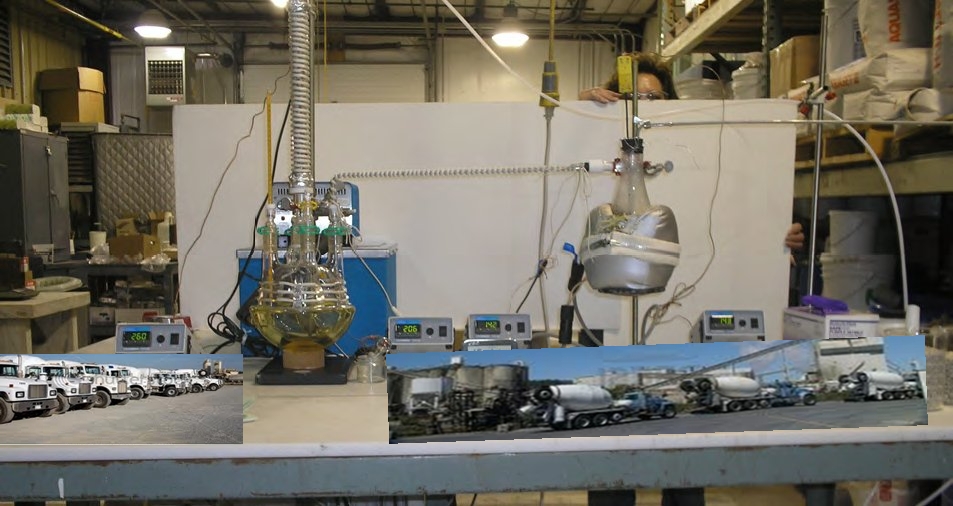
Ciao
here, I'll help;
Obtained a Copy of the MSE-TA Presentation Abstract...
The WM2013 MSE-TA presentation, "Strategies for Treating and Dewatering
Contaminated Soils and Sediments Simultaneously," reviews the initial go/no-go MSE-TA laboratory testing of, specifically, Molecular Bonding System (MBS) and Waste Lock 770 (Waste Lock) to simultaneously treat
(they're talking about combining the two techs together),
v. com·bined, com·bin·ing, com·bines. v.tr.
1. To bring into a state of unity; merge.
2. To join (two or more substances) to make a single substance
such as a chemical compound; mix.
and dewater soils and or sediments. In the laboratory, MSE-TA simulated contaminated soil by spiking soil with lead, mercury, cadmium, and chromium.
(more on that in a minute).
The abstract's "Results/Lessons Learned" indicates, “Follow-on treatability testing… ,” or, additional testing needed, of this MBS with Waste Lock combination, for repeatability. See Below. GTGP's promotion of this presentation as being an avenue for near-term shareholder reward, implying 2013 monetary income, appears deceptive.
(I see nothing about a GTGP promo, reward, monetary income in this post.
It appears that line is indeed deceptive).
"Go/No-Go" testing method... From Wikipedia: "In general go/no go testing refers to a pass/fail test (or check) principle using two boundary conditions. The test is passed only when the Go condition is met and also the No go condition fails. The test gives no information as to the degree of conformance to, or deviation from the boundary conditions."
Results/Lessons Learned, typed word for word from the Abstract: "The small scale go/no-go testing proved that MBS and Waste Lock can be added simultaneously to dewater and treat metals contamination to TCLP levels below regulatory standards for the simulated soil samples. Follow-on treatability testing will consist of testing soils spiked with mercury, cadmium, chromium, lead, nickel, and zinc
(the next test, they are adding nickel and zinc),
because these metals were routinely used in industry and represent current treatment needs. The testing will be performed later this year using MBS and Waste Lock to obtain repeatable results."
Recap:
The small scale go/no-go testing proved that MBS and Waste Lock can be added simultaneously
Presentation is about go/no-go testing in the laboratory...
to see if a combination of both MBS and Waste Lock 77 can be used together;
Specifically, testing of MBS and Waste Lock 77 under lab conditions...
Results indicate additional lab testing for repeatability needed,
because;
The small scale go/no-go testing proved that MBS and Waste Lock can be added simultaneously.
Repeatability;
standard deviations can be pooled over days; runs; and check standards, if appropriate, to produce a more reliable precision measure.
One doesn't walk into a $420 mil, $2.2 bil, highly contaminated site,
with just one test under one's belt.
You are taught this in grade school science class.
Here's an example of repeatability;
This final report is the result of the compilation of multiple data sets which were received over a two month period by MSE and a final analysis completed by MSE Technology Applications, Inc.
This run was conducted under various conditions which included different temperatures within the baghouse as well as percentages of run time and the percentages of MBS added to the stream.
It showed the optimum conditions for the mercury capture from the gasses which exceed the 98% requirement for mercury capture by the EPA.
Will try and locate a link as time permits.
(here it is);
http://ih.advfn.com/p.php?pid=nmona&article=55305430
BTW, here's what Waste Lock 77 is;
http://www.m2polymer.com/html/waste_lock_770.html
I ordered a pound myself,
I've got some testing to do.
Ciao
Avast ye Mateys, a statement of plunder is not upon ye,
only missing sails & lazy seamanship upon thy keel.
They hoist the Jolly Roger upon ye,

So B



