



 AI
AI







Wednesday, May 16, 2012 4:16:18 AM
F.B.I. Inquiry Adds to JPMorgan’s Woes

Protesters outside JPMorgan Chase’s annual meeting.
Joe Raedle/Getty Images

Protesting JPMorgan Chase’s recent $2 billion loss outside the bank’s annual stockholders meeting on Tuesday in Tampa, Fla.
Scott Iskowitz/Associated Press
By JESSICA SILVER-GREENBERG and BEN PROTESS
May 15, 2012, 9:03 pm
Investors and federal investigators turned up the heat on JPMorgan Chase [ http://dealbook.on.nytimes.com/public/overview?symbol=JPM ] on Tuesday, as shareholders called for pay givebacks from executives responsible for a stunning $2 billion trading loss and the Federal Bureau of Investigation [ http://topics.nytimes.com/top/reference/timestopics/organizations/f/federal_bureau_of_investigation/index.html ] opened a preliminary review of the debacle.
The F.B.I. case will examine potential criminal wrongdoing at JPMorgan, according to people briefed on the matter, representing the most serious inquiry to stem from the losses.
The inquiry, which is being led by the F.B.I.’s New York office, will in part scrutinize JPMorgan’s accounting practices and public disclosures about the trades that prompted the loss, the people briefed on the matter said. JPMorgan also recently received questions from federal prosecutors in New York, one person said.
They cautioned that the inquiry was at an early stage and that it was routine for federal authorities to open a case after a big bank disclosed a huge blunder. No one at JPMorgan has been accused of wrongdoing.
While the trading loss is not likely to blow a hole in JPMorgan’s balance sheet, the trades could continue to spill red ink for months, costing the bank several billion dollars.
The more lasting damage could be to the once-stellar reputation of the bank and its chief executive, Jamie Dimon [ http://topics.nytimes.com/top/reference/timestopics/people/d/james_dimon/index.html ].
News of an F.B.I. investigation came after the bank concluded its annual meeting, held in Tampa, Fla., on Tuesday morning. Shareholders generally showed support for the bank’s leadership at the meeting, but raised questions about the oversight of its embattled leader.
About nine out of 10 shareholders supported Mr. Dimon’s $23 million compensation package and elected management’s nominees to the board. But four out of 10 of them wanted to replace Mr. Dimon as chairman with an independent director. He is both chief executive and chairman.
While the majority of shareholders had voted before the bank’s announcement last Thursday of the bet gone bad, several investors said that the latest trading blunder illuminated the dangers of allowing a chief executive to operate with limited oversight.
“There is an essential and potentially disastrous conflict of interest when the same person shares both jobs,” said Lisa Lindsley, the director of capital strategies at AFSCME Employees Pension Plan, which proposed the independent chairman resolution. She added. “There is clearly not a sufficient check on Mr. Dimon.”
At the meeting Tuesday, a visibly agitated Mr. Dimon, who seemed to race through his opening remarks, said the board ensures that he is operating in the best interest of the company. He pointed to its 11-person operating committee as proof that he does not have undue influence.
Continuing his apologies about the trading loss, Mr. Dimon told investors that the bank had made mistakes, which he called “self inflicted.” Still, investors were not placated. Some seized on Mr. Dimon’s position on the board of the Federal Reserve Bank of New York [ http://topics.nytimes.com/top/reference/timestopics/organizations/f/federal_reserve_bank_of_new_york/index.html ] as even further evidence of the executive’s undue influence.
That concern was initially raised by Elizabeth Warren [ http://topics.nytimes.com/top/reference/timestopics/people/w/elizabeth_warren/index.html ], the driving force behind creation of the Consumer Financial Protection Bureau [ http://topics.nytimes.com/top/reference/timestopics/organizations/c/consumer_financial_protection_bureau/index.html ], who called Monday for Mr. Dimon to give up his seat on the board of the Fed. Mr. Dimon countered that he had limited influence in that role and could not even vote on the Fed’s chairman.
Adding to the fallout from the trade, New York City’s comptroller, John C. Liu [ http://topics.nytimes.com/top/reference/timestopics/people/l/john_c_liu/index.html ], demanded that the bank “clawback every single dollar possible” from the compensation of executives tainted by the trade, including Ina R. Drew, who oversaw the office that orchestrated the trade and resigned on Monday.
Mr. Dimon said Tuesday that the bank “will do the right thing” and that may include clawbacks.
The bank’s proxy statement says that stock awards can be wiped out or reclaimed if an “employee engages in conduct that causes material financial or reputational harm” to JPMorgan. A senior executive at JPMorgan said Tuesday that it was exceedingly likely that it would clawback compensation from Ms. Drew. She was among the most powerful women on Wall Street, and last year she earned roughly $14 million.
Clawbacks are rare, executive compensation consultants said, although they do happen. UBS said in 2010 that it would take back roughly $321 million in bonus pay that was earmarked to go to traders at the Swiss bank.
The ability to demand clawbacks is part of the Dodd-Frank financial regulatory law, which also mandates that companies give shareholders a nonbinding vote on “say on pay” so that investors can voice their opinions on executive compensation.
So far, shareholders have been reluctant to vote against executive compensation plans. Last year, for example, only 2 percent of compensation plans were voted against, according to ISS Proxy Advisory Services. But in April, Citibank shareholders rebuffed a $15 million pay package for the bank’s chief executive, Vikram S. Pandit [ http://topics.nytimes.com/top/reference/timestopics/people/p/vikram_s_pandit/index.html ].
Mr. Dimon assured shareholders that the bank had no plans to slash its dividend. Just a few months ago, Mr. Dimon, in a bold show of optimism about the bank’s performance announced he would increase dividends.
Shares of JPMorgan rose 1.26 percent on Tuesday, to close at $36.24, still down 11 percent from when the trading debacle was made public Thursday.
The revelation of the F.B.I. inquiry comes after a similar acknowledgment last week that civil regulators at the Securities and Exchange Commission [ http://topics.nytimes.com/top/reference/timestopics/organizations/s/securities_and_exchange_commission/index.html ] opened an inquiry into JPMorgan’s disclosures and accounting practices.
As media reports surfaced about the chief investment office in early April, Mr. Dimon publicly dismissed the concerns, calling them a “complete tempest in a teapot.” After Mr. Dimon and other senior executives learned more, he sounded a more contrite tone.
Investigators are also examining an accounting measure known as value-at-risk, which the company changed this year.
The federal scrutiny underscores the new reality facing the bank, which has abruptly lost much of its good will in Washington.
“To think it’s possible for the bank to go back to business as usual is ludicrous,” said Mike Mayo, an analyst with Credit Agricole Securities. “The investigations by the regulators will ultimately find out where the weak link was and you can’t simply blame the traders.”
The trading disaster has given critics fresh ammunition against Wall Street hubris and too-big-to-fail banks. While it is unclear whether regulators will tighten the Volcker Rule [ http://topics.nytimes.com/top/reference/timestopics/subjects/v/volcker_rule/index.html ], which prevents banks from trading with their own money, some lawmakers already are revisiting plans to temper oversight of Wall Street.
On Tuesday, the House agriculture committee postponed a hearing on three bills meant to ease crucial aspects of the Dodd-Frank financial overhaul law. The committee scrapped plans for Thursday to debate and amend legislation introduced as part of a broader effort to rein in Dodd-Frank.
The committee’s chairman, Frank Lucas, Republican of Oklahoma, said the staff “will take the time to gather all relevant information before we proceed to ensure there are no unintended consequences of the legislation that would encourage recklessness in our financial institutions.”
Copyright 2012 The New York Times Company
http://dealbook.nytimes.com/2012/05/15/f-b-i-inquiry-adds-to-jpmorgans-woes/ [with comments]
===
After JPMorgan Loss, Lawmakers Delay Dodd-Frank Debate

Representative Frank D. Lucas, a Republican from Oklahoma, chairs the House Agriculture Committee.
Jay Mallin/Bloomberg News
By BEN PROTESS
May 15, 2012, 4:09 pm
Will Wall Street pay the price for JPMorgan Chase‘s trading debacle?
While it is unclear whether regulators will tighten rules for big banks in the wake of JPMorgan’s $2 billion trading loss, some lawmakers already are revisiting plans to temper oversight of Wall Street.
On Tuesday, the House Agriculture Committee postponed a hearing on three bills that aim to ease crucial aspects of the Dodd-Frank financial overhaul law. The committee scrapped plans for Thursday to debate and amend the legislation, which lawmakers introduced as part of a broader effort to rein in Dodd-Frank.
In a statement, the committee’s chairman, Frank Lucas, Republican of Oklahoma, said the staff “will take the time to gather all relevant information before we proceed to ensure there are no unintended consequences of the legislation that would encourage recklessness in our financial institutions.”
The decision to delay the markup was the latest repercussion of JPMorgan’s trading blunder. Ever since the bank disclosed last week that it lost at least $2 billion tied to its credit derivatives trading, reformers and politicians have renewed calls for strict Wall Street regulation. Much attention has focused on the so-called Volcker Rule, which prevents banks from trading with their own money, a policy that is intended prevent bank blowups that necessitate bailouts.
Mr. Lucas painted the bills as unrelated to the JPMorgan activities that led to the trading blowup.
“As always, Washington has a tendency to overreact,” he said in the statement. “While the news of JP Morgan’s trading loss is unfortunate, the bipartisan legislation the committee was scheduled to consider is unrelated to the cause of the trading loss.”
Still, at least on the surface, there are some connections between JPMorgan and the new legislation. The three bills deal with Dodd-Frank’s overhaul of the derivatives business. If enacted, the measures would exempt foreign subsidiaries from some derivatives rules. Some of JPMorgan’s suspect derivatives trading took place in London.
Copyright 2012 The New York Times Company
http://dealbook.nytimes.com/2012/05/15/after-jpmorgan-loss-lawmakers-delay-dodd-frank-debate/ [with comments]
===
Red Flags Said to Go Unheeded by Bosses at JPMorgan

Jamie Dimon, chief of JPMorgan Chase, had approved the overall trading strategy, current and former employees said.
Jin Lee/Bloomberg News

Ina R. Drew has stepped down as chief investment officer at JPMorgan Chase.
JPMorgan Chase, via Bloomberg News
By JESSICA SILVER-GREENBERG and NELSON D. SCHWARTZ
May 14, 2012, 10:13 pm
In the years leading up to JPMorgan Chase’s $2 billion trading loss, risk managers and some senior investment bankers raised concerns that the bank was making increasingly large investments involving complex trades that were hard to understand. But even as the size of the bets climbed steadily, these former employees say, their concerns about the dangers were ignored or dismissed.
An increased appetite for such trades had the approval of the upper echelons of the bank, including Jamie Dimon, the chief executive, current and former employees said.
Initially, this led to sharply higher investing profits, but they said it also contributed to the bank’s lowering its guard.
“There was a lopsided situation, between really risky positions and relatively weaker risk managers,” said a former trader with the chief investment office, the JPMorgan unit that suffered the recent loss. The trader and other former employees spoke on the condition of anonymity because of the nature of the investigations into the trading losses.
Instead, the bank maintains that the losses were largely the fault of the chief investment office. Overall tolerance for risky trading did not increase, current executives said, just the scale of the office’s activities because of the bank’s acquisition of Washington Mutual in 2008 and its more risky credit portfolio.
Despite Mr. Dimon’s recent apologies about the losses, which will most likely be repeated on Tuesday as JPMorgan shareholders gather for the company’s annual meeting in Tampa, Fla., regulators will scrutinize risk management at the chief investment office.
Top investment bank executives raised concerns about the growing size and complexity of the bets held by the bank’s chief investment office as early as 2007, according to interviews with half a dozen current and former bank officials. Within the investment office, led by Ina Drew, who resigned on Monday, the bets were directed by the head of the Europe trading desk in London, Achilles Macris.
Mr. Macris, who is also expected to resign, failed to heed concerns as early as 2009 from the unit’s own internal risk officer, said current and former members of the chief investment office. Mr. Macris and Ms. Drew were not available for comment.
Under Mr. Dimon’s stewardship, JPMorgan Chase has long had a reputation for its strong risk-management abilities — indeed, it came through the 2008 financial crisis largely unscathed, unlike many big banks. For their part, senior bank officials on Monday disputed the assertions that the company weakened risk management in recent years while seeking higher trading profits.
Risk managers were largely sidelined by Mr. Macris, who had wide latitude and also had Ms. Drew’s support, with only modest interference from her. At one point, after concerns were raised about positions assembled by Bruno Iksil, now known as the London Whale, Mr. Macris brought in a risk officer with whom he had worked closely in the past.
Risk officers are empowered to halt trades deemed too dangerous, so the coziness of the arrangement generated talk in New York as well, according to the former trader within the chief investment office.
Several bankers said that risk controls were not sufficiently strengthened by Doug Braunstein, who took over as chief financial officer in 2010, another reason the bolder trades continued.
The bank disputes that Mr. Braunstein tolerated additional risk in any way, said Joe Evangelisti, a spokesman for the bank.
David Olson, who headed up credit trading for the chief investment office until December, said that in his trading “the management was very involved and the risk controls were very strong.”
Part of the breakdown in supervision, current executives said, was a fundamental disconnect between the chief investment office in London and the rest of the bank. Even within the chief investment office there were heightening concerns that the bets being made in London were incredibly complex and not fully understood by management in New York.
Despite these concerns, the scope of the chief investment’s offices trades widened sharply following the acquisition of Washington Mutual at the height of the financial crisis in 2008. Not only did the bank bring with it hundreds of billions more in assets, it also owned riskier securities that needed to be hedged against. As a result, the business’s investment securities portfolio rapidly grew, more than quadrupling to $356 billion in 2011, from $76.5 billion in 2007, company filing show.
Ms. Drew made presentations to the board about twice a year, one former executive recalled, “but it was just not talked about a lot,” he said.
What is more, said another senior former executive, Mr. Dimon had other fires to put out, and the chief investment office wasn’t a “problem child” for either top managers or the board of directors, despite its rapid expansion. Gigantic losses were piling up from bad mortgages, and new regulations were threatening the profitability of traditional banking, among other pressing matters.
All of these factors may explain why Mr. Dimon, an executive known for his ability to sense risk who also was familiar with the minutiae of his business, failed to heed the first alarm bells that were sounded in early April.
Sirens had gone off after a series of erratic trading sessions in late March resulted in big gains one day, followed by even bigger losses the next on the London trading desk of the bank’s chief investment office. Mr. Dimon was convinced by Ms. Drew and her team that the turbulence was “manageable,” executives said. Nor did anyone on the operating committee, of which Ms. Drew is a member, question her conclusion — in fact the full operating committee wasn’t told of the scope of the problem till early last week, just days before Mr. Dimon went public.
The alarm bells were silenced in early April, but days after first-quarter earnings were reported on April 13, the erratic trading pattern continued, except this time there were few gains to offset the losses, and the red ink was flowing faster by the day.
Mr. Dimon convened a second round of checks, which soon concluded there was a ticking time bomb, but by then it was too late, a situation made worse as traders actually increased their bets instead of shrinking them, resulting in a loss that now totals more than $2 billion and threatens a management team that until now could seemingly do no wrong.
The company has indicated publicly that the losses could eventually double, depending on market conditions.
On Monday, the bank replaced Ms. Drew with Matthew E. Zames and appointed a former chief financial officer, Mike Cavanagh, to head up the task of fixing what went wrong. One of the most respected senior executives at the bank, Mr. Cavanagh has been a loyal lieutenant of Mr. Dimon since before he took over JPMorgan Chase and has been discussed as a possible successor.
Copyright 2012 The New York Times Company
http://dealbook.nytimes.com/2012/05/14/warnings-said-to-go-unheeded-by-chase-bosses/ [with comments]
===
How Bank Handles Bad Bet Is Fraught With Peril

JP Morgan’s $2 billion trading loss has spurred talk of additional oversight.
Carl Court/Agence France-Presse — Getty Images
By PETER EAVIS
May 14, 2012, 9:39 pm
“If I go there will be trouble, and if I stay it will be double.”
That dilemma, grittily framed by the British rock band the Clash, could serve as a warning to JPMorgan Chase as it considers what to do with the soured bet that has already produced $2 billion of losses.
When a trade goes bad on Wall Street, the advice is typically to sell the holdings and bear the short-term pain. After all, the situation may only get worse if the bank maintains the position.
But the “cut your losses” approach may seem unappealing if the trade is too large. A bank that is forced to dump an outsize position could drive prices lower, increasing the size of its eventual losses.
Either way, a financial firm must weigh the unpredictable nature of the markets. Even a somewhat stable trade can later show large losses under adverse conditions.
“We’re going to be prudent about any of our moves,” said Matthew E. Zames, the JPMorgan executive who was tapped Monday to replace Ina Drew as the leader of the chief investment office, the trading group responsible for the losses.
JPMorgan’s response may depend on the makeup of the trade, and the bank is being extremely guarded about the details of the position. The bank’s chief executive, Jamie Dimon, wants the public to believe that the situation is under control. On a conference call last week, he suggested the bank was going to try to ride out the trade, even though it could produce losses of at least an additional $1 billion this quarter.
“We’re going to manage it to maximize economic value for shareholders,” Mr. Dimon said. “We’re willing to hold as long as necessary.”
Selling out of a bad trade is possible. In early 2008, the French bank Société Générale announced that the rogue trader Jérôme Kerviel had lost $7.2 billion after he made several unauthorized transactions. The bank got out of all of Mr. Kerviel’s positions before announcing the losses.
But there are indications that the JPMorgan trade has become too big to sell without piling up even more losses.
“The position may not be simple to liquidate,” Guy Moszkowski, an analyst at Bank of America Merrill Lynch, wrote in a note after the conference call.
The JPMorgan trade focuses attention on an opaque market for credit derivatives, which are financial instruments whose value is tied to the price of corporate bonds. Investors buy such derivatives as insurance against corporate defaults.
The chief investment office was making both bullish and bearish bets on corporate debt, using an index of credit derivatives called the CDX IG Series 9. It appears the bullish bet started to prompt big losses toward the end of April. At the time, the CDX index showed that the cost of insuring against company defaults was rising, a bearish signal. Given the size of the losses, people involved in the market surmise that JPMorgan’s bullish bet is substantially bigger than its bearish bet.
It is unclear just how large JPMorgan’s position is, but people involved in the market figure the bank dominates this part of the credit market. So even small moves in the index can prove costly to JPMorgan.
In addition, some analysts said they think JPMorgan focused its bearish bets on CDX indexes that mature within the next 12 months, while its bullish bets were on indexes that do not mature for a number of years. That mismatch could leave JPMorgan more exposed if the corporate market deteriorates.
Numbers buried in JPMorgan regulatory filings may provide some support for these theories. At the end of the first quarter, JPMorgan had a $149 billion net bullish position in credit protection, a figure that subtracts the bank’s bearish positions from its bullish ones. That is up from $66 billion at the end of 2011, a 126 percent increase. Most of the increase came from credit insurance that matures in five years or more. This suggests that the bank made an unusually large bet in the first quarter. JPMorgan did not comment on the numbers.
Other JPMorgan filings are flashing danger signs, too. The bank uses a metric known as value at risk as an early warning indicator for potential trading losses. In the first quarter, the chief investment office reported its maximum value at risk was $187 million, which represents the estimated daily loss in a highly stressed case. That was up from $80 million in 2011. The first-quarter figure also dwarfs the value at risk readings elsewhere in the bank.
It is hardly a fail-safe measure. The metric greatly underestimated losses in the financial crisis.
JPMorgan’s next move depends on what happens in the credit markets. If investors become fearful about companies’ prospects — not unlikely given the sovereign debt crisis in Europe — JPMorgan’s bet could face even bigger losses.
For now, Mr. Dimon is not panicking. “Clearly, markets and our decisions will be a critical factor here,” he said last Thursday. “Hopefully, this will not be an issue by the end of the year.”
Mr. Zames repeated his sentiments Monday. He has faced a crisis before. He was a trader at Long-Term Capital Management, the hedge fund that nearly collapsed and had to be bailed out by banks in 1998.
“I’ve never forgotten the lessons of 1998,” he said. “This is not all that similar to Long-Term, frankly.”
“This trade, although large, is certainly not substantial enough to cause a problem in the context of our capital,” Mr. Zames added.
JPMorgan may be proved right. But at the moment, the bank’s trade is at the mercy of the markets.
Kevin Roose and Susanne Craig contributed reporting.
Copyright 2012 The New York Times Company
http://dealbook.nytimes.com/2012/05/14/how-bank-handles-bad-bet-is-fraught-with-peril/ [with comments]
===
FBI investigating missing money at MF Global
Video [embedded]
NY Fed slams door on MF
By Jennifer Liberto
December 22, 2011: 9:49 AM ET
First Published: November 1, 2011: 6:55 PM ET
WASHINGTON (CNNMoney) -- The FBI and federal prosecutors are investigating how some $600 million of MF Global customers' money has gone missing, CNN learned Tuesday from sources close to the probe.
The investigation of MF Global (MF) is being conducted by the FBI and other federal regulators, including the U.S. Securities and Exchange Commission and the Commodities Futures Trading Commission. (MF Global: Sorting through the debacle [ http://money.cnn.com/2011/12/19/news/companies/mf_global/index.htm ].)
This past weekend, executives at MF Global had been scrambling to sell the firm to Interactive Brokers, but the missing money cost the firm the deal and forced it into bankruptcy, regulators said.
Earlier on Tuesday, Craig Donohue, CEO of CME Group (CME), the operator of the nation's largest commodity exchanges, told analysts that his firm has determined MF Global had broken government and CME rules requiring it to keep its customers' funds separate from the firm's assets.
Donohue said the CME is still investigating the extent of the violation. He also announced that floor brokers and traders guaranteed by MF Global or its division have been barred from CME's trading floors.
FBI spokesman Tim Flannelly said he couldn't confirm or deny an FBI investigation.
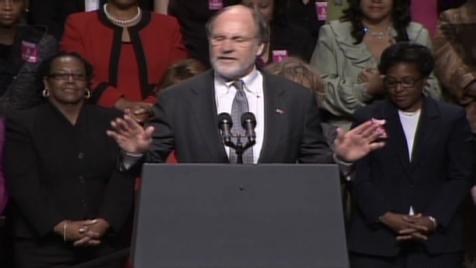
MF Global, (MF) a Wall Street brokerage firm led by former New Jersey governor and Goldman Sachs CEO Jon Corzine, filed for Chapter 11 protection on Monday.
MF Global did not return requests for comment.
MF Global's downfall has been attributed to, among other things, making bad bets on some $6.3 billion of European government debt.
When those bets went sour and its financial troubles worsened, MF Global may have tapped its clients money, according to the Wall Street Journal. It's unclear how the money may have been used.
Using clients money to help its own bottom line through risky bets would violate Commodities Futures Trading Commission rules on such trades, according to regulators and financial experts.
Financial experts say that they expect the investigation to turn up more questions in coming days. Expect congressional inquiries to follow, said Brian Gardner with investment firm Keefe, Bruyette & Woods.
"The question with MF Global is going to be: Was this fraudulent or was it sloppy paperwork and sloppy oversight?" Gardner said. "I think there are going to be lots of questions for CME and CFTC and a lot of good congressional hearings."
CNNMoney Senior Writer Chris Isidore and CNN's Susan Candiotti and Lisa Sylvester contributed to this report.
http://money.cnn.com/2011/11/01/news/economy/mf_global_fbi_investigation/index.htm [with comments]
===
(linked in):
http://investorshub.advfn.com/boards/read_msg.aspx?message_id=68539823 and preceding and following
http://investorshub.advfn.com/boards/read_msg.aspx?message_id=68540178 and preceding (and any future following)
http://investorshub.advfn.com/boards/read_msg.aspx?message_id=69167579 and preceding and following
http://investorshub.advfn.com/boards/read_msg.aspx?message_id=69632958 and preceding and following
http://investorshub.advfn.com/boards/read_msg.aspx?message_id=69870741 and preceding and following
http://investorshub.advfn.com/boards/read_msg.aspx?message_id=72480721 and preceding and following
http://investorshub.advfn.com/boards/read_msg.aspx?message_id=75627407 and following

Protesters outside JPMorgan Chase’s annual meeting.
Joe Raedle/Getty Images

Protesting JPMorgan Chase’s recent $2 billion loss outside the bank’s annual stockholders meeting on Tuesday in Tampa, Fla.
Scott Iskowitz/Associated Press
By JESSICA SILVER-GREENBERG and BEN PROTESS
May 15, 2012, 9:03 pm
Investors and federal investigators turned up the heat on JPMorgan Chase [ http://dealbook.on.nytimes.com/public/overview?symbol=JPM ] on Tuesday, as shareholders called for pay givebacks from executives responsible for a stunning $2 billion trading loss and the Federal Bureau of Investigation [ http://topics.nytimes.com/top/reference/timestopics/organizations/f/federal_bureau_of_investigation/index.html ] opened a preliminary review of the debacle.
The F.B.I. case will examine potential criminal wrongdoing at JPMorgan, according to people briefed on the matter, representing the most serious inquiry to stem from the losses.
The inquiry, which is being led by the F.B.I.’s New York office, will in part scrutinize JPMorgan’s accounting practices and public disclosures about the trades that prompted the loss, the people briefed on the matter said. JPMorgan also recently received questions from federal prosecutors in New York, one person said.
They cautioned that the inquiry was at an early stage and that it was routine for federal authorities to open a case after a big bank disclosed a huge blunder. No one at JPMorgan has been accused of wrongdoing.
While the trading loss is not likely to blow a hole in JPMorgan’s balance sheet, the trades could continue to spill red ink for months, costing the bank several billion dollars.
The more lasting damage could be to the once-stellar reputation of the bank and its chief executive, Jamie Dimon [ http://topics.nytimes.com/top/reference/timestopics/people/d/james_dimon/index.html ].
News of an F.B.I. investigation came after the bank concluded its annual meeting, held in Tampa, Fla., on Tuesday morning. Shareholders generally showed support for the bank’s leadership at the meeting, but raised questions about the oversight of its embattled leader.
About nine out of 10 shareholders supported Mr. Dimon’s $23 million compensation package and elected management’s nominees to the board. But four out of 10 of them wanted to replace Mr. Dimon as chairman with an independent director. He is both chief executive and chairman.
While the majority of shareholders had voted before the bank’s announcement last Thursday of the bet gone bad, several investors said that the latest trading blunder illuminated the dangers of allowing a chief executive to operate with limited oversight.
“There is an essential and potentially disastrous conflict of interest when the same person shares both jobs,” said Lisa Lindsley, the director of capital strategies at AFSCME Employees Pension Plan, which proposed the independent chairman resolution. She added. “There is clearly not a sufficient check on Mr. Dimon.”
At the meeting Tuesday, a visibly agitated Mr. Dimon, who seemed to race through his opening remarks, said the board ensures that he is operating in the best interest of the company. He pointed to its 11-person operating committee as proof that he does not have undue influence.
Continuing his apologies about the trading loss, Mr. Dimon told investors that the bank had made mistakes, which he called “self inflicted.” Still, investors were not placated. Some seized on Mr. Dimon’s position on the board of the Federal Reserve Bank of New York [ http://topics.nytimes.com/top/reference/timestopics/organizations/f/federal_reserve_bank_of_new_york/index.html ] as even further evidence of the executive’s undue influence.
That concern was initially raised by Elizabeth Warren [ http://topics.nytimes.com/top/reference/timestopics/people/w/elizabeth_warren/index.html ], the driving force behind creation of the Consumer Financial Protection Bureau [ http://topics.nytimes.com/top/reference/timestopics/organizations/c/consumer_financial_protection_bureau/index.html ], who called Monday for Mr. Dimon to give up his seat on the board of the Fed. Mr. Dimon countered that he had limited influence in that role and could not even vote on the Fed’s chairman.
Adding to the fallout from the trade, New York City’s comptroller, John C. Liu [ http://topics.nytimes.com/top/reference/timestopics/people/l/john_c_liu/index.html ], demanded that the bank “clawback every single dollar possible” from the compensation of executives tainted by the trade, including Ina R. Drew, who oversaw the office that orchestrated the trade and resigned on Monday.
Mr. Dimon said Tuesday that the bank “will do the right thing” and that may include clawbacks.
The bank’s proxy statement says that stock awards can be wiped out or reclaimed if an “employee engages in conduct that causes material financial or reputational harm” to JPMorgan. A senior executive at JPMorgan said Tuesday that it was exceedingly likely that it would clawback compensation from Ms. Drew. She was among the most powerful women on Wall Street, and last year she earned roughly $14 million.
Clawbacks are rare, executive compensation consultants said, although they do happen. UBS said in 2010 that it would take back roughly $321 million in bonus pay that was earmarked to go to traders at the Swiss bank.
The ability to demand clawbacks is part of the Dodd-Frank financial regulatory law, which also mandates that companies give shareholders a nonbinding vote on “say on pay” so that investors can voice their opinions on executive compensation.
So far, shareholders have been reluctant to vote against executive compensation plans. Last year, for example, only 2 percent of compensation plans were voted against, according to ISS Proxy Advisory Services. But in April, Citibank shareholders rebuffed a $15 million pay package for the bank’s chief executive, Vikram S. Pandit [ http://topics.nytimes.com/top/reference/timestopics/people/p/vikram_s_pandit/index.html ].
Mr. Dimon assured shareholders that the bank had no plans to slash its dividend. Just a few months ago, Mr. Dimon, in a bold show of optimism about the bank’s performance announced he would increase dividends.
Shares of JPMorgan rose 1.26 percent on Tuesday, to close at $36.24, still down 11 percent from when the trading debacle was made public Thursday.
The revelation of the F.B.I. inquiry comes after a similar acknowledgment last week that civil regulators at the Securities and Exchange Commission [ http://topics.nytimes.com/top/reference/timestopics/organizations/s/securities_and_exchange_commission/index.html ] opened an inquiry into JPMorgan’s disclosures and accounting practices.
As media reports surfaced about the chief investment office in early April, Mr. Dimon publicly dismissed the concerns, calling them a “complete tempest in a teapot.” After Mr. Dimon and other senior executives learned more, he sounded a more contrite tone.
Investigators are also examining an accounting measure known as value-at-risk, which the company changed this year.
The federal scrutiny underscores the new reality facing the bank, which has abruptly lost much of its good will in Washington.
“To think it’s possible for the bank to go back to business as usual is ludicrous,” said Mike Mayo, an analyst with Credit Agricole Securities. “The investigations by the regulators will ultimately find out where the weak link was and you can’t simply blame the traders.”
The trading disaster has given critics fresh ammunition against Wall Street hubris and too-big-to-fail banks. While it is unclear whether regulators will tighten the Volcker Rule [ http://topics.nytimes.com/top/reference/timestopics/subjects/v/volcker_rule/index.html ], which prevents banks from trading with their own money, some lawmakers already are revisiting plans to temper oversight of Wall Street.
On Tuesday, the House agriculture committee postponed a hearing on three bills meant to ease crucial aspects of the Dodd-Frank financial overhaul law. The committee scrapped plans for Thursday to debate and amend legislation introduced as part of a broader effort to rein in Dodd-Frank.
The committee’s chairman, Frank Lucas, Republican of Oklahoma, said the staff “will take the time to gather all relevant information before we proceed to ensure there are no unintended consequences of the legislation that would encourage recklessness in our financial institutions.”
Copyright 2012 The New York Times Company
http://dealbook.nytimes.com/2012/05/15/f-b-i-inquiry-adds-to-jpmorgans-woes/ [with comments]
===
After JPMorgan Loss, Lawmakers Delay Dodd-Frank Debate

Representative Frank D. Lucas, a Republican from Oklahoma, chairs the House Agriculture Committee.
Jay Mallin/Bloomberg News
By BEN PROTESS
May 15, 2012, 4:09 pm
Will Wall Street pay the price for JPMorgan Chase‘s trading debacle?
While it is unclear whether regulators will tighten rules for big banks in the wake of JPMorgan’s $2 billion trading loss, some lawmakers already are revisiting plans to temper oversight of Wall Street.
On Tuesday, the House Agriculture Committee postponed a hearing on three bills that aim to ease crucial aspects of the Dodd-Frank financial overhaul law. The committee scrapped plans for Thursday to debate and amend the legislation, which lawmakers introduced as part of a broader effort to rein in Dodd-Frank.
In a statement, the committee’s chairman, Frank Lucas, Republican of Oklahoma, said the staff “will take the time to gather all relevant information before we proceed to ensure there are no unintended consequences of the legislation that would encourage recklessness in our financial institutions.”
The decision to delay the markup was the latest repercussion of JPMorgan’s trading blunder. Ever since the bank disclosed last week that it lost at least $2 billion tied to its credit derivatives trading, reformers and politicians have renewed calls for strict Wall Street regulation. Much attention has focused on the so-called Volcker Rule, which prevents banks from trading with their own money, a policy that is intended prevent bank blowups that necessitate bailouts.
Mr. Lucas painted the bills as unrelated to the JPMorgan activities that led to the trading blowup.
“As always, Washington has a tendency to overreact,” he said in the statement. “While the news of JP Morgan’s trading loss is unfortunate, the bipartisan legislation the committee was scheduled to consider is unrelated to the cause of the trading loss.”
Still, at least on the surface, there are some connections between JPMorgan and the new legislation. The three bills deal with Dodd-Frank’s overhaul of the derivatives business. If enacted, the measures would exempt foreign subsidiaries from some derivatives rules. Some of JPMorgan’s suspect derivatives trading took place in London.
Copyright 2012 The New York Times Company
http://dealbook.nytimes.com/2012/05/15/after-jpmorgan-loss-lawmakers-delay-dodd-frank-debate/ [with comments]
===
Red Flags Said to Go Unheeded by Bosses at JPMorgan

Jamie Dimon, chief of JPMorgan Chase, had approved the overall trading strategy, current and former employees said.
Jin Lee/Bloomberg News

Ina R. Drew has stepped down as chief investment officer at JPMorgan Chase.
JPMorgan Chase, via Bloomberg News
By JESSICA SILVER-GREENBERG and NELSON D. SCHWARTZ
May 14, 2012, 10:13 pm
In the years leading up to JPMorgan Chase’s $2 billion trading loss, risk managers and some senior investment bankers raised concerns that the bank was making increasingly large investments involving complex trades that were hard to understand. But even as the size of the bets climbed steadily, these former employees say, their concerns about the dangers were ignored or dismissed.
An increased appetite for such trades had the approval of the upper echelons of the bank, including Jamie Dimon, the chief executive, current and former employees said.
Initially, this led to sharply higher investing profits, but they said it also contributed to the bank’s lowering its guard.
“There was a lopsided situation, between really risky positions and relatively weaker risk managers,” said a former trader with the chief investment office, the JPMorgan unit that suffered the recent loss. The trader and other former employees spoke on the condition of anonymity because of the nature of the investigations into the trading losses.
Instead, the bank maintains that the losses were largely the fault of the chief investment office. Overall tolerance for risky trading did not increase, current executives said, just the scale of the office’s activities because of the bank’s acquisition of Washington Mutual in 2008 and its more risky credit portfolio.
Despite Mr. Dimon’s recent apologies about the losses, which will most likely be repeated on Tuesday as JPMorgan shareholders gather for the company’s annual meeting in Tampa, Fla., regulators will scrutinize risk management at the chief investment office.
Top investment bank executives raised concerns about the growing size and complexity of the bets held by the bank’s chief investment office as early as 2007, according to interviews with half a dozen current and former bank officials. Within the investment office, led by Ina Drew, who resigned on Monday, the bets were directed by the head of the Europe trading desk in London, Achilles Macris.
Mr. Macris, who is also expected to resign, failed to heed concerns as early as 2009 from the unit’s own internal risk officer, said current and former members of the chief investment office. Mr. Macris and Ms. Drew were not available for comment.
Under Mr. Dimon’s stewardship, JPMorgan Chase has long had a reputation for its strong risk-management abilities — indeed, it came through the 2008 financial crisis largely unscathed, unlike many big banks. For their part, senior bank officials on Monday disputed the assertions that the company weakened risk management in recent years while seeking higher trading profits.
Risk managers were largely sidelined by Mr. Macris, who had wide latitude and also had Ms. Drew’s support, with only modest interference from her. At one point, after concerns were raised about positions assembled by Bruno Iksil, now known as the London Whale, Mr. Macris brought in a risk officer with whom he had worked closely in the past.
Risk officers are empowered to halt trades deemed too dangerous, so the coziness of the arrangement generated talk in New York as well, according to the former trader within the chief investment office.
Several bankers said that risk controls were not sufficiently strengthened by Doug Braunstein, who took over as chief financial officer in 2010, another reason the bolder trades continued.
The bank disputes that Mr. Braunstein tolerated additional risk in any way, said Joe Evangelisti, a spokesman for the bank.
David Olson, who headed up credit trading for the chief investment office until December, said that in his trading “the management was very involved and the risk controls were very strong.”
Part of the breakdown in supervision, current executives said, was a fundamental disconnect between the chief investment office in London and the rest of the bank. Even within the chief investment office there were heightening concerns that the bets being made in London were incredibly complex and not fully understood by management in New York.
Despite these concerns, the scope of the chief investment’s offices trades widened sharply following the acquisition of Washington Mutual at the height of the financial crisis in 2008. Not only did the bank bring with it hundreds of billions more in assets, it also owned riskier securities that needed to be hedged against. As a result, the business’s investment securities portfolio rapidly grew, more than quadrupling to $356 billion in 2011, from $76.5 billion in 2007, company filing show.
Ms. Drew made presentations to the board about twice a year, one former executive recalled, “but it was just not talked about a lot,” he said.
What is more, said another senior former executive, Mr. Dimon had other fires to put out, and the chief investment office wasn’t a “problem child” for either top managers or the board of directors, despite its rapid expansion. Gigantic losses were piling up from bad mortgages, and new regulations were threatening the profitability of traditional banking, among other pressing matters.
All of these factors may explain why Mr. Dimon, an executive known for his ability to sense risk who also was familiar with the minutiae of his business, failed to heed the first alarm bells that were sounded in early April.
Sirens had gone off after a series of erratic trading sessions in late March resulted in big gains one day, followed by even bigger losses the next on the London trading desk of the bank’s chief investment office. Mr. Dimon was convinced by Ms. Drew and her team that the turbulence was “manageable,” executives said. Nor did anyone on the operating committee, of which Ms. Drew is a member, question her conclusion — in fact the full operating committee wasn’t told of the scope of the problem till early last week, just days before Mr. Dimon went public.
The alarm bells were silenced in early April, but days after first-quarter earnings were reported on April 13, the erratic trading pattern continued, except this time there were few gains to offset the losses, and the red ink was flowing faster by the day.
Mr. Dimon convened a second round of checks, which soon concluded there was a ticking time bomb, but by then it was too late, a situation made worse as traders actually increased their bets instead of shrinking them, resulting in a loss that now totals more than $2 billion and threatens a management team that until now could seemingly do no wrong.
The company has indicated publicly that the losses could eventually double, depending on market conditions.
On Monday, the bank replaced Ms. Drew with Matthew E. Zames and appointed a former chief financial officer, Mike Cavanagh, to head up the task of fixing what went wrong. One of the most respected senior executives at the bank, Mr. Cavanagh has been a loyal lieutenant of Mr. Dimon since before he took over JPMorgan Chase and has been discussed as a possible successor.
Copyright 2012 The New York Times Company
http://dealbook.nytimes.com/2012/05/14/warnings-said-to-go-unheeded-by-chase-bosses/ [with comments]
===
How Bank Handles Bad Bet Is Fraught With Peril

JP Morgan’s $2 billion trading loss has spurred talk of additional oversight.
Carl Court/Agence France-Presse — Getty Images
By PETER EAVIS
May 14, 2012, 9:39 pm
“If I go there will be trouble, and if I stay it will be double.”
That dilemma, grittily framed by the British rock band the Clash, could serve as a warning to JPMorgan Chase as it considers what to do with the soured bet that has already produced $2 billion of losses.
When a trade goes bad on Wall Street, the advice is typically to sell the holdings and bear the short-term pain. After all, the situation may only get worse if the bank maintains the position.
But the “cut your losses” approach may seem unappealing if the trade is too large. A bank that is forced to dump an outsize position could drive prices lower, increasing the size of its eventual losses.
Either way, a financial firm must weigh the unpredictable nature of the markets. Even a somewhat stable trade can later show large losses under adverse conditions.
“We’re going to be prudent about any of our moves,” said Matthew E. Zames, the JPMorgan executive who was tapped Monday to replace Ina Drew as the leader of the chief investment office, the trading group responsible for the losses.
JPMorgan’s response may depend on the makeup of the trade, and the bank is being extremely guarded about the details of the position. The bank’s chief executive, Jamie Dimon, wants the public to believe that the situation is under control. On a conference call last week, he suggested the bank was going to try to ride out the trade, even though it could produce losses of at least an additional $1 billion this quarter.
“We’re going to manage it to maximize economic value for shareholders,” Mr. Dimon said. “We’re willing to hold as long as necessary.”
Selling out of a bad trade is possible. In early 2008, the French bank Société Générale announced that the rogue trader Jérôme Kerviel had lost $7.2 billion after he made several unauthorized transactions. The bank got out of all of Mr. Kerviel’s positions before announcing the losses.
But there are indications that the JPMorgan trade has become too big to sell without piling up even more losses.
“The position may not be simple to liquidate,” Guy Moszkowski, an analyst at Bank of America Merrill Lynch, wrote in a note after the conference call.
The JPMorgan trade focuses attention on an opaque market for credit derivatives, which are financial instruments whose value is tied to the price of corporate bonds. Investors buy such derivatives as insurance against corporate defaults.
The chief investment office was making both bullish and bearish bets on corporate debt, using an index of credit derivatives called the CDX IG Series 9. It appears the bullish bet started to prompt big losses toward the end of April. At the time, the CDX index showed that the cost of insuring against company defaults was rising, a bearish signal. Given the size of the losses, people involved in the market surmise that JPMorgan’s bullish bet is substantially bigger than its bearish bet.
It is unclear just how large JPMorgan’s position is, but people involved in the market figure the bank dominates this part of the credit market. So even small moves in the index can prove costly to JPMorgan.
In addition, some analysts said they think JPMorgan focused its bearish bets on CDX indexes that mature within the next 12 months, while its bullish bets were on indexes that do not mature for a number of years. That mismatch could leave JPMorgan more exposed if the corporate market deteriorates.
Numbers buried in JPMorgan regulatory filings may provide some support for these theories. At the end of the first quarter, JPMorgan had a $149 billion net bullish position in credit protection, a figure that subtracts the bank’s bearish positions from its bullish ones. That is up from $66 billion at the end of 2011, a 126 percent increase. Most of the increase came from credit insurance that matures in five years or more. This suggests that the bank made an unusually large bet in the first quarter. JPMorgan did not comment on the numbers.
Other JPMorgan filings are flashing danger signs, too. The bank uses a metric known as value at risk as an early warning indicator for potential trading losses. In the first quarter, the chief investment office reported its maximum value at risk was $187 million, which represents the estimated daily loss in a highly stressed case. That was up from $80 million in 2011. The first-quarter figure also dwarfs the value at risk readings elsewhere in the bank.
It is hardly a fail-safe measure. The metric greatly underestimated losses in the financial crisis.
JPMorgan’s next move depends on what happens in the credit markets. If investors become fearful about companies’ prospects — not unlikely given the sovereign debt crisis in Europe — JPMorgan’s bet could face even bigger losses.
For now, Mr. Dimon is not panicking. “Clearly, markets and our decisions will be a critical factor here,” he said last Thursday. “Hopefully, this will not be an issue by the end of the year.”
Mr. Zames repeated his sentiments Monday. He has faced a crisis before. He was a trader at Long-Term Capital Management, the hedge fund that nearly collapsed and had to be bailed out by banks in 1998.
“I’ve never forgotten the lessons of 1998,” he said. “This is not all that similar to Long-Term, frankly.”
“This trade, although large, is certainly not substantial enough to cause a problem in the context of our capital,” Mr. Zames added.
JPMorgan may be proved right. But at the moment, the bank’s trade is at the mercy of the markets.
Kevin Roose and Susanne Craig contributed reporting.
Copyright 2012 The New York Times Company
http://dealbook.nytimes.com/2012/05/14/how-bank-handles-bad-bet-is-fraught-with-peril/ [with comments]
===
FBI investigating missing money at MF Global
Video [embedded]
NY Fed slams door on MF
By Jennifer Liberto
December 22, 2011: 9:49 AM ET
First Published: November 1, 2011: 6:55 PM ET
WASHINGTON (CNNMoney) -- The FBI and federal prosecutors are investigating how some $600 million of MF Global customers' money has gone missing, CNN learned Tuesday from sources close to the probe.
The investigation of MF Global (MF) is being conducted by the FBI and other federal regulators, including the U.S. Securities and Exchange Commission and the Commodities Futures Trading Commission. (MF Global: Sorting through the debacle [ http://money.cnn.com/2011/12/19/news/companies/mf_global/index.htm ].)
This past weekend, executives at MF Global had been scrambling to sell the firm to Interactive Brokers, but the missing money cost the firm the deal and forced it into bankruptcy, regulators said.
Earlier on Tuesday, Craig Donohue, CEO of CME Group (CME), the operator of the nation's largest commodity exchanges, told analysts that his firm has determined MF Global had broken government and CME rules requiring it to keep its customers' funds separate from the firm's assets.
Donohue said the CME is still investigating the extent of the violation. He also announced that floor brokers and traders guaranteed by MF Global or its division have been barred from CME's trading floors.
FBI spokesman Tim Flannelly said he couldn't confirm or deny an FBI investigation.
MF Global, (MF) a Wall Street brokerage firm led by former New Jersey governor and Goldman Sachs CEO Jon Corzine, filed for Chapter 11 protection on Monday.
MF Global did not return requests for comment.
MF Global's downfall has been attributed to, among other things, making bad bets on some $6.3 billion of European government debt.
When those bets went sour and its financial troubles worsened, MF Global may have tapped its clients money, according to the Wall Street Journal. It's unclear how the money may have been used.
Using clients money to help its own bottom line through risky bets would violate Commodities Futures Trading Commission rules on such trades, according to regulators and financial experts.
Financial experts say that they expect the investigation to turn up more questions in coming days. Expect congressional inquiries to follow, said Brian Gardner with investment firm Keefe, Bruyette & Woods.
"The question with MF Global is going to be: Was this fraudulent or was it sloppy paperwork and sloppy oversight?" Gardner said. "I think there are going to be lots of questions for CME and CFTC and a lot of good congressional hearings."
CNNMoney Senior Writer Chris Isidore and CNN's Susan Candiotti and Lisa Sylvester contributed to this report.
http://money.cnn.com/2011/11/01/news/economy/mf_global_fbi_investigation/index.htm [with comments]
===
(linked in):
http://investorshub.advfn.com/boards/read_msg.aspx?message_id=68539823 and preceding and following
http://investorshub.advfn.com/boards/read_msg.aspx?message_id=68540178 and preceding (and any future following)
http://investorshub.advfn.com/boards/read_msg.aspx?message_id=69167579 and preceding and following
http://investorshub.advfn.com/boards/read_msg.aspx?message_id=69632958 and preceding and following
http://investorshub.advfn.com/boards/read_msg.aspx?message_id=69870741 and preceding and following
http://investorshub.advfn.com/boards/read_msg.aspx?message_id=72480721 and preceding and following
http://investorshub.advfn.com/boards/read_msg.aspx?message_id=75627407 and following

Greensburg, KS - 5/4/07
"Eternal vigilance is the price of Liberty."
from John Philpot Curran, Speech
upon the Right of Election, 1790
F6
Discover What Traders Are Watching
Explore small cap ideas before they hit the headlines.



