Sometimes, the writing is on the wall - but we just can't see it. I believe I may have told this story here, however I'm sure it was quite some time ago.
I was in a Martin's supermarket, and I noticed a large empty gap at the end of an aisle. There was a small, hand-written sign indicating that the Kodak film processing drop off point had been removed due to lack of customer interest (or words substantially to that effect.) By that time, drop boxes for local developers were everywhere (although they could not process Kodachrome - only Ektachrome and Fuji).
At that moment, it crystallized in me that American consumers didn't give a damn (even assuming that they knew) that Kodachrome was the de facto standard among true photographers; they didn't “insist” on Kodak processing presuming it to be better; and that they didn't even “insist” on Kodak papers as being necessarily superior enough to pay the minimal extra cost for.
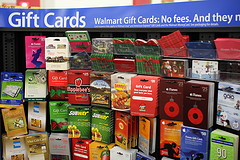
Just what is it that we do expect to see at the end of one or another supermarket aisle these days? Gift cards for Amazon, Wal-mart, eBay, Applebee's, as well as pre-paid VISA cards, and a host of charge-ups for pay-as-you-go cell phone services.
Now, let's talk movies. Movie Gallery was the first to pull up stakes in the town closest to me. Shortly thereafter another movie rental place on the North side of town next to a Food Lion shut its doors. Before you knew it, Blockbuster was closing its presumably rather expensive doors as well. A few Redbox machines popped up, and they were the only place in town to rent a movie. A few Blockbuster boxes stepped in to challenge them shortly thereafter.
Now you'll find either one or the other at every K-Mart, Wal-Mart, 7-11, and Sheetz in town.
No one complains about the lack of selection. All they know is that if they have a valid debit card, they can rent a movie for the night. And, they also know that they can return it elsewhere when they go out shopping. (E.g., rent the movie at the 7-11 down the street while buying cheap beer, and return it at Food Lion when doing their “real” food shopping the following night).
They aren't renting the movie to be enlightened, they aren't renting the movie to be challenged, and they certainly aren't renting the movie to become politically motivated. Those days began to fade ages ago when going to a real cinema became too damned expensive; when HBO became a household word; and when Blockbuster parked itself at every major intersection.
Today, we can stream movies online from nearly any legitimate source. Amazon Prime offers a variety of options, we also have Hulu, the SONY Entertainment Network, iTunes and Apple TV. Wal-Mart got in on the media-services game in 2010 by buying Vudu. Then there is is the incredible variety of stuff that you can find for free on Youtube. (Even Youtube now offers a $0.99 movie viewing package).
On a related note, here is a story of recent vintage from Businessweek about Rich Ross, chairman of Walt Disney's film unit stepping down after the company endured a $200 million loss on the science-fiction picture “John Carter,” possibly the biggest ever for a single movie.
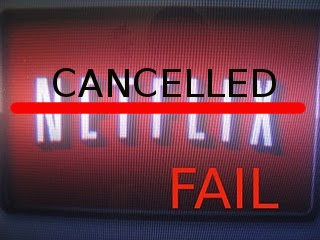
I believe that the last of major upside rallies for NFLX is well behind me. I know that it sounds counter-intuitive, but I'm leaving my chips on the table and betting that this company slides down into the single digits.


 Market Data
  Markets


 AI
AI