



 AI
AI








Friday, April 06, 2012 9:10:03 AM
A classic case of self-radicalizing
February 28th, 2012
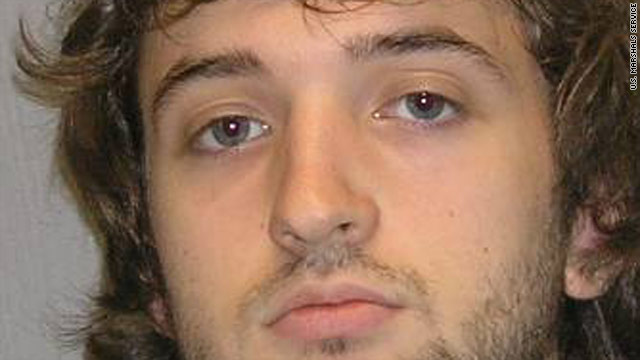
Zachary Chesser is barely legal. At the age of 21, the self-confessed terrorist ..
http://www.cnn.com/2012/02/09/us/south-park-threats/index.html ..
was sentenced to a 25-year prison term last year for posting radical Islamist
messages online and attempting to provide material support to a terrorist organization.
His online threat was aimed at the writers of "South Park." Their crime, according to the Virginia native: depicting the prophet Mohammed in a bear suit for an episode of the popular adult cartoon show.
In a new report released by the Senate Homeland Security Committee, staffers used Chesser's online writings and personal correspondence with him last year to get a better look at how the Internet influences his thinking. What they saw alarmed them.According to the report, which calls for stricter policies in dealing with global Internet radicalization and propaganda, Chesser was well-armed for his mission with membership in at least six online terrorist websites and harnessed the reach of social media by using YouTube, Twitter and Facebook to share his message of hate.
The committee called it a classic case study of just how quickly a terrorist can "self-radicalize."
Just over a week earlier, senators on another committee heard from the country's top intelligence officials on the greatest threats to national security. Lt. Gen. Ronald L. Burgess, director of the Defense Intelligence Agency, briefed the Senate Committee on Armed Services about the al Qaeda threat.
"While we have made important gains al Qaeda and its affiliates, we remain in a race against their ability to evolve, regenerate leadership and launch attacks," Burgess said. "Self-radicalization or lone wolf individuals including within the United States and even within our own ranks remain an enduring concern."
The how-to guide for terrorists
One of the reasons the self-radicalized terrorists are so difficult to detect is that they have very little interaction with others, which offers law enforcement very little opportunity to intercept communications or find out what they intend to do. And the Internet has given them the tools to understand how to launch an attack. However, experts like Scott Stewart, vice president of tactical information for the intelligence firm Stratfor, says that a lack of the traditional hands-on training that used to go on at camps in Pakistan can also be a blessing.
"Frankly, while these grass-roots guys are more widespread, frankly, their terrorist tradecraft is generally quite poor, so when it comes to doing things like surveillance or when it comes to doing things like acquiring weapons, they generally don't know what they're doing, and that's really the stage where they bring themselves to the attention of authorities," Stewart said.
Understanding the phenomenon of Internet-trained, self-radicalized extremists is one issue. Catching them early, or even rehabilitating them to become a part of the counterterrorism effort, is another.
"Overall, it's just very important for local law enforcement to be active and conscious of the threat Of course, generally, they're also going to have the best relations with their local Muslim communities, and that's another really, really important element," Stewart said. "It seems like more people are going toward the Arab Spring narrative than the jihadi narrative. The jihadi narrative needs to be undercut, but that's not something America can do or the CIA can do. That's something the Muslim communities need to do."
While self-radicalized attackers and their motivations may be different depending on where they live, many of the challenges for counterterrorism operatives around the world are the same.
Lessons from the past
A panel of experts in countering extremism met last week in Doha at the Qatar International Academy for Security Studies in an effort to share the security secrets that have worked in their own neighborhoods.
Among them was Stephen White, who served for 26 years as a senior police officer in the UK. He describes himself as just another teenager growing up on the streets of Belfast in 1969, when, he says, the Irish Republican Army tried to kill his father.
"When I came home one night (with my long hair and jeans), there was intelligence that my father was going to be killed. A short time after that, my mother, who was just an ordinary housewife, was caught in a series of bombings," White said. His mother survived, but the images of violence and terrorism had made their impression.
"I had school friends murdered. I had friends who joined paramilitary organizations," said White, now a vice president at the Soufan Group. "When you're a young kid, 14, 15, and there's mayhem and blood being spilled, it's almost accepted."
White teamed up with Kieran McEvoy, who wrote a book about paramilitary imprisonment in Northern Ireland, to present a paper on the success of community engagement programs in countering extremist behavior in a place that once understood it best.
"I've known Kieran for quite some time," White said. "I've had certain responsibilities as a chief police officer here in Northern Ireland. I was in charge of community policing. He was transitioning prisoners who were about to be released under the Good Friday Agreement. We were on opposite sides of the coin, but we actually came to the same conclusions, but it's not always straightforward."
The conclusions were that involving the entire community in the process was the only chance of success. It's the holistic approach of keeping your neighbors down the street from becoming tomorrow's extremist actors.
"The big debate now: Is counterterrorism and social integration the same or separate? Is it about tackling inclusion and unemployment, or do we take a more clinical specific approach and look for the signal into those who are being radicalized and put more effort into them?" asked White.
"There is no cookie-cutter approach," said former FBI Special Agent Ali Soufan, head of the Soufan Group, which works hand in hand with the Qatar International Academy for Security Studies. "There is a critical need for any kind of information sharing in any kind of cross-border operation in order to understand better countering violent extremism matters."
Soufan points to efforts in Singapore, where authorities developed a counterextremism program that included the formation of a leadership council made up of local religious leaders, social services workers, mental health professionals and psychologists.
"There are other ways of dealing with this," Soufan said. "They sit in their mother's basement watching these videos and radical sites, and they feel like they need to do something. If you build tools in the community where you can take these guys and put them through some program where they can be disengaged, there are programs around the world where they do these things. But you know we need to figure out a way to handle individuals like these with the help of the community."
The Homeland Security Committee staff report is formalizing that sentiment by calling on the government to adopt a "whole of society approach to countering violent Islamist radicalization that includes how to facilitate community intervention by family, friends, and community and religious leaders supported by federal, state, and local government resources."
It might give local communities a "how-to" book of their own.
http://security.blogs.cnn.com/2012/02/28/a-classic-case-of-self-radicalizing/
February 28th, 2012
Zachary Chesser is barely legal. At the age of 21, the self-confessed terrorist ..
http://www.cnn.com/2012/02/09/us/south-park-threats/index.html ..
was sentenced to a 25-year prison term last year for posting radical Islamist
messages online and attempting to provide material support to a terrorist organization.
His online threat was aimed at the writers of "South Park." Their crime, according to the Virginia native: depicting the prophet Mohammed in a bear suit for an episode of the popular adult cartoon show.
In a new report released by the Senate Homeland Security Committee, staffers used Chesser's online writings and personal correspondence with him last year to get a better look at how the Internet influences his thinking. What they saw alarmed them.According to the report, which calls for stricter policies in dealing with global Internet radicalization and propaganda, Chesser was well-armed for his mission with membership in at least six online terrorist websites and harnessed the reach of social media by using YouTube, Twitter and Facebook to share his message of hate.
The committee called it a classic case study of just how quickly a terrorist can "self-radicalize."
Just over a week earlier, senators on another committee heard from the country's top intelligence officials on the greatest threats to national security. Lt. Gen. Ronald L. Burgess, director of the Defense Intelligence Agency, briefed the Senate Committee on Armed Services about the al Qaeda threat.
"While we have made important gains al Qaeda and its affiliates, we remain in a race against their ability to evolve, regenerate leadership and launch attacks," Burgess said. "Self-radicalization or lone wolf individuals including within the United States and even within our own ranks remain an enduring concern."
The how-to guide for terrorists
One of the reasons the self-radicalized terrorists are so difficult to detect is that they have very little interaction with others, which offers law enforcement very little opportunity to intercept communications or find out what they intend to do. And the Internet has given them the tools to understand how to launch an attack. However, experts like Scott Stewart, vice president of tactical information for the intelligence firm Stratfor, says that a lack of the traditional hands-on training that used to go on at camps in Pakistan can also be a blessing.
"Frankly, while these grass-roots guys are more widespread, frankly, their terrorist tradecraft is generally quite poor, so when it comes to doing things like surveillance or when it comes to doing things like acquiring weapons, they generally don't know what they're doing, and that's really the stage where they bring themselves to the attention of authorities," Stewart said.
Understanding the phenomenon of Internet-trained, self-radicalized extremists is one issue. Catching them early, or even rehabilitating them to become a part of the counterterrorism effort, is another.
"Overall, it's just very important for local law enforcement to be active and conscious of the threat Of course, generally, they're also going to have the best relations with their local Muslim communities, and that's another really, really important element," Stewart said. "It seems like more people are going toward the Arab Spring narrative than the jihadi narrative. The jihadi narrative needs to be undercut, but that's not something America can do or the CIA can do. That's something the Muslim communities need to do."
While self-radicalized attackers and their motivations may be different depending on where they live, many of the challenges for counterterrorism operatives around the world are the same.
Lessons from the past
A panel of experts in countering extremism met last week in Doha at the Qatar International Academy for Security Studies in an effort to share the security secrets that have worked in their own neighborhoods.
Among them was Stephen White, who served for 26 years as a senior police officer in the UK. He describes himself as just another teenager growing up on the streets of Belfast in 1969, when, he says, the Irish Republican Army tried to kill his father.
"When I came home one night (with my long hair and jeans), there was intelligence that my father was going to be killed. A short time after that, my mother, who was just an ordinary housewife, was caught in a series of bombings," White said. His mother survived, but the images of violence and terrorism had made their impression.
"I had school friends murdered. I had friends who joined paramilitary organizations," said White, now a vice president at the Soufan Group. "When you're a young kid, 14, 15, and there's mayhem and blood being spilled, it's almost accepted."
White teamed up with Kieran McEvoy, who wrote a book about paramilitary imprisonment in Northern Ireland, to present a paper on the success of community engagement programs in countering extremist behavior in a place that once understood it best.
"I've known Kieran for quite some time," White said. "I've had certain responsibilities as a chief police officer here in Northern Ireland. I was in charge of community policing. He was transitioning prisoners who were about to be released under the Good Friday Agreement. We were on opposite sides of the coin, but we actually came to the same conclusions, but it's not always straightforward."
The conclusions were that involving the entire community in the process was the only chance of success. It's the holistic approach of keeping your neighbors down the street from becoming tomorrow's extremist actors.
"The big debate now: Is counterterrorism and social integration the same or separate? Is it about tackling inclusion and unemployment, or do we take a more clinical specific approach and look for the signal into those who are being radicalized and put more effort into them?" asked White.
"There is no cookie-cutter approach," said former FBI Special Agent Ali Soufan, head of the Soufan Group, which works hand in hand with the Qatar International Academy for Security Studies. "There is a critical need for any kind of information sharing in any kind of cross-border operation in order to understand better countering violent extremism matters."
Soufan points to efforts in Singapore, where authorities developed a counterextremism program that included the formation of a leadership council made up of local religious leaders, social services workers, mental health professionals and psychologists.
"There are other ways of dealing with this," Soufan said. "They sit in their mother's basement watching these videos and radical sites, and they feel like they need to do something. If you build tools in the community where you can take these guys and put them through some program where they can be disengaged, there are programs around the world where they do these things. But you know we need to figure out a way to handle individuals like these with the help of the community."
The Homeland Security Committee staff report is formalizing that sentiment by calling on the government to adopt a "whole of society approach to countering violent Islamist radicalization that includes how to facilitate community intervention by family, friends, and community and religious leaders supported by federal, state, and local government resources."
It might give local communities a "how-to" book of their own.
http://security.blogs.cnn.com/2012/02/28/a-classic-case-of-self-radicalizing/
It was Plato who said, “He, O men, is the wisest, who like Socrates, knows that his wisdom is in truth worth nothing”
Discover What Traders Are Watching
Explore small cap ideas before they hit the headlines.



