



 AI
AI







Wednesday, February 18, 2009 2:09:40 AM
Presidential tenures: The bad and the worst
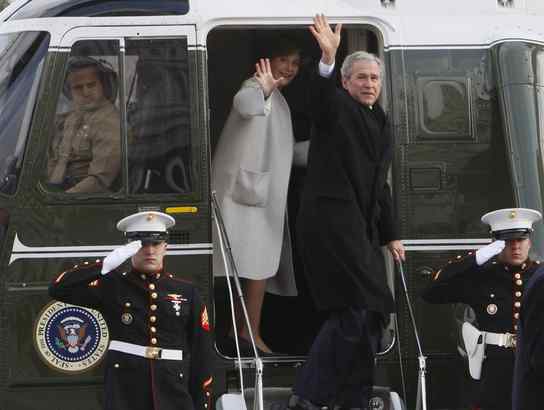
George W. Bush and Laura Bush leaving Washington.
(Former President)
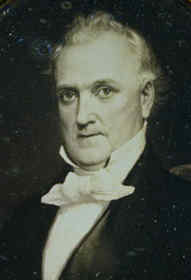
[iJames Buchanan was secessionists' tool.
](Library of Congress)
Bush was no Buchanan. And that's a good thing.
By John Hinshaw and Chris J. Dolan
Professors at Lebanon Valley College
Posted on Mon, Feb. 16, 2009
This Presidents' Day seems like a good time to ask: Was George W. Bush the worst president of all time?
No, only the second-worst.
Every outgoing president tries to grapple with how history will judge him. In this regard, Bush was not different from the rest.
Many Americans, especially Democrats, had no problem seeing Bush as the worst president in history. When a Marine helicopter carried him out of Washington on Jan. 20, many in the crowd gleefully chanted the chorus of the 1969 hit "Na Na Hey Hey Kiss Him Goodbye."
Bush plumbed the depths of presidential popularity in the postwar era, putting him in the company of Harry S. Truman (who oversaw the deadly, interminable Korean War) and Richard M. Nixon (Watergate). Bush would clearly prefer the company of Truman, whom historians and the public now think was a very good president, to that of Nixon, who remains an unpleasant subject even for the GOP.
Which will it be, Truman or Nixon? Or will Bush be in a category all his own?
We decided to try our hand at figuring out how history will judge Bush. We came up with the following working list of America's worst presidents ever.
1. James Buchanan (1857-61)
The only president to hail from Pennsylvania should, unfortunately, rank as America's worst. Buchanan was a tool for pro-slavery Southern secessionists. His anti-Union policies put the country in a downward spiral toward the Civil War, the deadliest war in U.S. history.
2. George W. Bush (2001-09)
Since he did not plunge us into civil war, Bush fell short of the No. 1 spot. But he did wreak havoc on our nation and its global reputation. The lowlights included suppression of science, torture, domestic spying, Katrina, unprecedented deficits and debt, corporate scandals, the Valerie Plame case, and the disastrous invasion and occupation of Iraq. Bush's foreign misadventures were costly in their own right, and they also meant ignoring other pressing problems abroad. He did more damage to U.S. power than any other individual in the last 100 years.
3. Andrew Johnson (1865-69)
Johnson assumed the presidency after the assassination of probably our nation's greatest president, Abraham Lincoln. His sympathy for racists and former Confederates, as well as his undermining of Reconstruction, led to the rise of Jim Crow segregation. If Reconstruction had not been bungled, there may not have been a century of racial terror in the South, necessitating the civil rights movement.
4. Richard Nixon (1969-74)
Nixon could have been one of our greatest presidents. He accomplished lasting achievements on civil rights, the environment, health, and protections for women and the poor. He also opened diplomatic relations with communist China. But he escalated the war in Vietnam by secretly invading Cambodia. And he ordered his operatives to break into Democratic headquarters and then cover up the crime. The Watergate scandal's damage to the U.S. political system has been far-reaching and devastating, making generations of Americans more cynical about government.
5. James Madison (1809-17)
The principal author of the Constitution will forever be known as one of our worst chief executives. As president, Madison launched an ill-conceived preemptive war against superior British forces in Canada, which almost destroyed the nation. The War of 1812 is discussed little in the United States, but it gets more attention in Canadian history books. Given the U.S. preference for the inevitability of Manifest Destiny and the exceptionalism of the Monroe Doctrine, it is little wonder why.
One striking feature of our list is that military missteps loom large. Presidents who were merely corrupt, inept, or responsible for driving the economy into a ditch did not warrant mention. Perhaps that's because the foreign-policy disasters involve avoidable deaths, or because the Iraq misadventure looms so large today.
But given the scale of the social and economic problems confronting the United States, it's possible that Bush will be remembered not for Iraq or the war on terror, but for his gross incompetence and facilitation of U.S. economic decline.
E-mail John Hinshaw, professor of history at Lebanon Valley College, at hinshaw@lvc.edu; e-mail Chris J. Dolan, professor of political science at Lebanon Valley College, at dolan@lvc.edu.
© Copyright 2009 Philly Online, LLC
http://www.philly.com/inquirer/opinion/39655492.html [with comments]
George W. Bush and Laura Bush leaving Washington.
(Former President)
[iJames Buchanan was secessionists' tool.
](Library of Congress)
Bush was no Buchanan. And that's a good thing.
By John Hinshaw and Chris J. Dolan
Professors at Lebanon Valley College
Posted on Mon, Feb. 16, 2009
This Presidents' Day seems like a good time to ask: Was George W. Bush the worst president of all time?
No, only the second-worst.
Every outgoing president tries to grapple with how history will judge him. In this regard, Bush was not different from the rest.
Many Americans, especially Democrats, had no problem seeing Bush as the worst president in history. When a Marine helicopter carried him out of Washington on Jan. 20, many in the crowd gleefully chanted the chorus of the 1969 hit "Na Na Hey Hey Kiss Him Goodbye."
Bush plumbed the depths of presidential popularity in the postwar era, putting him in the company of Harry S. Truman (who oversaw the deadly, interminable Korean War) and Richard M. Nixon (Watergate). Bush would clearly prefer the company of Truman, whom historians and the public now think was a very good president, to that of Nixon, who remains an unpleasant subject even for the GOP.
Which will it be, Truman or Nixon? Or will Bush be in a category all his own?
We decided to try our hand at figuring out how history will judge Bush. We came up with the following working list of America's worst presidents ever.
1. James Buchanan (1857-61)
The only president to hail from Pennsylvania should, unfortunately, rank as America's worst. Buchanan was a tool for pro-slavery Southern secessionists. His anti-Union policies put the country in a downward spiral toward the Civil War, the deadliest war in U.S. history.
2. George W. Bush (2001-09)
Since he did not plunge us into civil war, Bush fell short of the No. 1 spot. But he did wreak havoc on our nation and its global reputation. The lowlights included suppression of science, torture, domestic spying, Katrina, unprecedented deficits and debt, corporate scandals, the Valerie Plame case, and the disastrous invasion and occupation of Iraq. Bush's foreign misadventures were costly in their own right, and they also meant ignoring other pressing problems abroad. He did more damage to U.S. power than any other individual in the last 100 years.
3. Andrew Johnson (1865-69)
Johnson assumed the presidency after the assassination of probably our nation's greatest president, Abraham Lincoln. His sympathy for racists and former Confederates, as well as his undermining of Reconstruction, led to the rise of Jim Crow segregation. If Reconstruction had not been bungled, there may not have been a century of racial terror in the South, necessitating the civil rights movement.
4. Richard Nixon (1969-74)
Nixon could have been one of our greatest presidents. He accomplished lasting achievements on civil rights, the environment, health, and protections for women and the poor. He also opened diplomatic relations with communist China. But he escalated the war in Vietnam by secretly invading Cambodia. And he ordered his operatives to break into Democratic headquarters and then cover up the crime. The Watergate scandal's damage to the U.S. political system has been far-reaching and devastating, making generations of Americans more cynical about government.
5. James Madison (1809-17)
The principal author of the Constitution will forever be known as one of our worst chief executives. As president, Madison launched an ill-conceived preemptive war against superior British forces in Canada, which almost destroyed the nation. The War of 1812 is discussed little in the United States, but it gets more attention in Canadian history books. Given the U.S. preference for the inevitability of Manifest Destiny and the exceptionalism of the Monroe Doctrine, it is little wonder why.
One striking feature of our list is that military missteps loom large. Presidents who were merely corrupt, inept, or responsible for driving the economy into a ditch did not warrant mention. Perhaps that's because the foreign-policy disasters involve avoidable deaths, or because the Iraq misadventure looms so large today.
But given the scale of the social and economic problems confronting the United States, it's possible that Bush will be remembered not for Iraq or the war on terror, but for his gross incompetence and facilitation of U.S. economic decline.
E-mail John Hinshaw, professor of history at Lebanon Valley College, at hinshaw@lvc.edu; e-mail Chris J. Dolan, professor of political science at Lebanon Valley College, at dolan@lvc.edu.
© Copyright 2009 Philly Online, LLC
http://www.philly.com/inquirer/opinion/39655492.html [with comments]

Greensburg, KS - 5/4/07
"Eternal vigilance is the price of Liberty."
from John Philpot Curran, Speech
upon the Right of Election, 1790
F6
Discover What Traders Are Watching
Explore small cap ideas before they hit the headlines.



