



 AI
AI








Monday, August 11, 2025 10:36:42 PM
Att: B402 --Decades favorite, Krugman -- The Economics of Smoot-Hawley 2.0, Part I
"Trump/Brazil: Delusions of Grandeur Go South
"As Trump turns his back on renewables, China is building the future"
Tariffs will be very high as far as the eye can see. What does that mean?
Paul Krugman
Aug 03, 2025
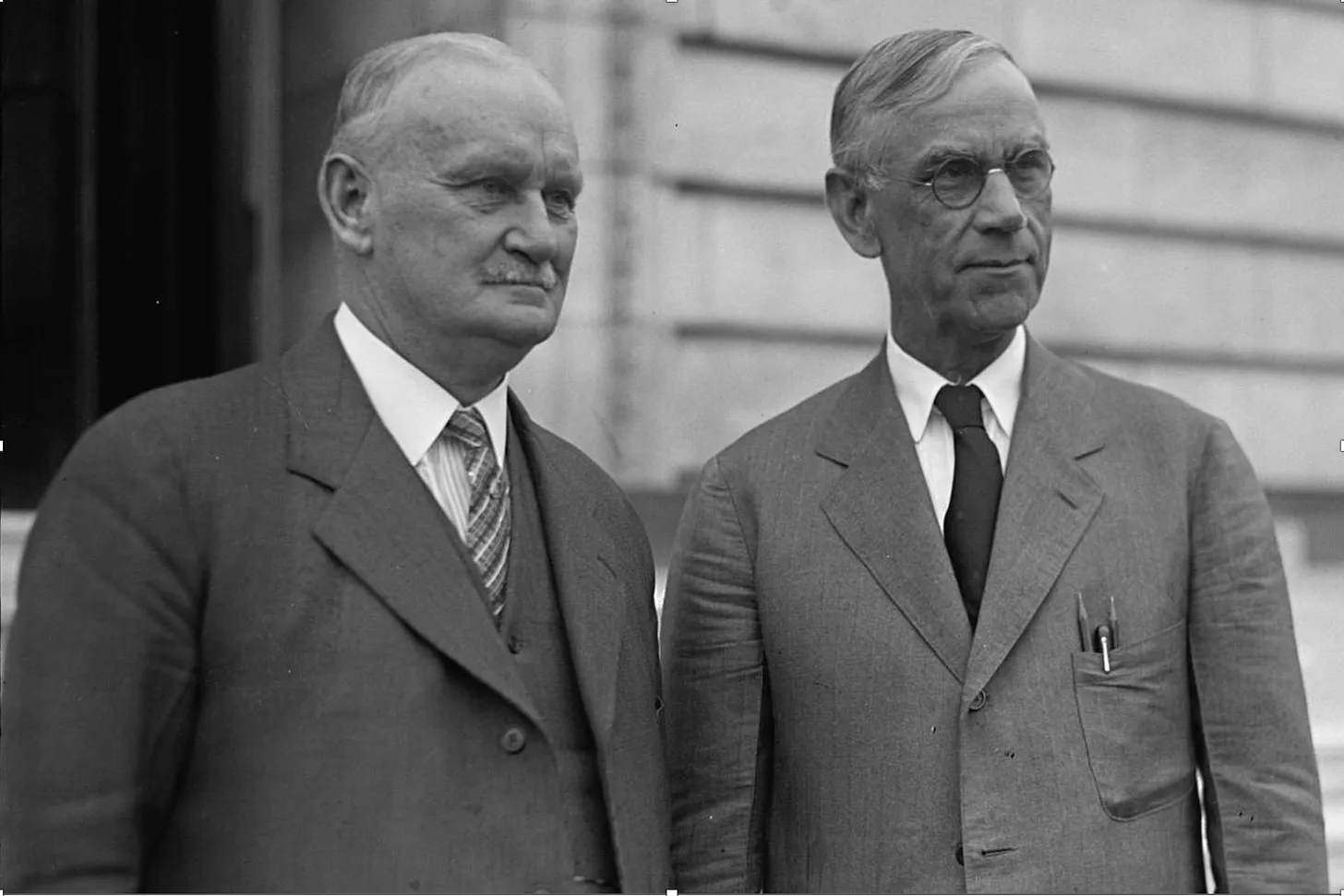
The Aug. 1 deadline has come and gone, and Donald Trump hasn’t made any trade deals. What some gullible reports call “deals” are at best “frameworks” in which other countries have suggested — without signing anything — that they’ll do things that might help the U.S. economy. For the most part even these understandings are vaporware. For example, the European Union literally has no way .. https://paulkrugman.substack.com/p/fossil-fool .. to deliver the increased U.S. investment and increased imports of U.S. energy the Trump administration has trumpeted as part of the so-called deal.
What we’re left with is that the United States has, for all practical purposes, unilaterally imposed high tariffs. So you should think of Trump’s trade policy as the second coming of the 1930 Smoot-Hawley tariff, effectively reversing the results of 90 years of trade liberalization. In fact, average U.S. tariffs, which were very low just a few months ago, are roughly back to Smoot-Hawley levels.
Unless the courts rule Trump’s tariffs illegal — which they clearly are, but I fully expect the Supreme Court to uphold them anyway — Smoot-Hawley 2.0 is the new normal.
----
[ Insert: Federal court strikes down Trump’s tariffs on countries around the world
The U.S. Court of International Trade ruled unanimously that the president overstepped his
powers in imposing the tariffs on dozens of trading partners, most of which he’s since paused.
https://investorshub.advfn.com/boards/read_msg.aspx?message_id=176249757
Add note on CIT - In 1956, the U.S. Customs Court was reconstituted by Congress as an Article III tribunal,
giving it the status and privileges of a federal court. The Customs Courts Act of 1980 established
the U.S. Court of International Trade in its current form, granting it jurisdiction over all trade
matters and conferring its judges with life tenure.
https://en.wikipedia.org/wiki/United_States_Court_of_International_Trade
... then ...
US appeals court reinstates Donald Trump's tariffs, a day after they were deemed illegal
Fri 30 May
[...]What's next?
The plaintiffs in the trade court case have been ordered to respond by June 5, and the US government by June 9.
[...]Mr Trump's tariffs had been imposed under the International Emergency Economic Powers Act (IEEPA) on April 2.
P - The 1977 Act provides the US president "broad authority to regulate a variety of economic transactions following a declaration of national emergency".
P - But the trade court ruled Mr Trump's sweeping tariffs "exceeded any authority" granted to the president by IEEPA to regulate importation by means of tariffs.
https://www.abc.net.au/news/2025-05-30/us-appeals-court-reinstates-trump-tariffs/105356190 ]
----
How should we think about this astonishing policy reversal? Beyond the paywall I’ll discuss the following issues:
1. Where we now stand on tariffs, with historical context
2. The likely impact of tariffs on U.S. and world trade
3. The effect of tariffs on U.S. growth. Spoiler: significantly negative, but maybe not as bad as you imagine. But big costs for families.
I’ll follow up next week with some of the larger implications of Trump’s tariffs. Crucially, what Trump is really waging is mostly a class war against middle- and lower-income Americans rather than a trade war against other countries. The hit from his tariffs to the typical family is much bigger than the hit to GDP. Also, it’s important to understand that all of Trump’s tariffs violate solemn agreements — agreements ratified by Congress — that the United States has made in the past. So the Trump tariffs have inflicted massive and possibly irreparable damage on U.S. credibility.
https://paulkrugman.substack.com/p/the-economics-of-smoot-hawley-20
**
The Economics of Smoot Hawley 2.0, Part II
This trade war is really a class war
Paul Krugman
Aug 10, 2025
Most of Donald Trump’s tariffs are clearly illegal. There is a special court, the Court of International Trade, which is supposed to have jurisdiction over these issues, and it ruled the tariffs illegal on May 28. However, the ruling was stayed while the administration appealed the decision to the Federal Circuit Court. Those following the deliberations mostly believe that this court will uphold the trade court’s ruling. But then the case will go to the Supreme Court, and almost everyone expects the Supremes to rule that Trump can do whatever he wants.
So high tariffs are probably here to stay. And I mean high tariffs. Trump has reversed 90 years of tariff reductions, achieved via reciprocal trade agreements — we’ll cut our tariffs if you cut yours. Here’s a chart of average U.S. tariffs since 1929, just before the infamous 1930 Smoot-Hawley tariff:

Source: Statista and Yale Budget Lab
How should we think about the economics of this huge policy reversal? In last week’s primer I focused on the macroeconomics of Smoot-Hawley 2.0 — its effects on trade flows and real GDP. But as I suggested at the end of that post, the real economic significance of the tariffs — even though they are ostensibly aimed at foreigners — is mainly how they will affect the distribution of income among Americans.
In 2020 Matthew Klein and Michael Pettis published a very good book titled Trade Wars Are Class Wars .. https://yalebooks.yale.edu/book/9780300261448/trade-wars-are-class-wars/ . They didn’t have Trumpian trade wars in mind, and their analysis was in important ways different from mine. But their meta point — trade policy is mostly about income distribution — was absolutely right, and I am going to steal their tagline.
Not to be coy about it, what I’ll argue in today’s post is that Trump’s trade war should be seen as part of a package of policies that amounts to class warfare — class warfare against middle and lower-income Americans in favor of the affluent, especially the top 10 percent of the income distribution.
Beyond the paywall I’ll discuss the following:
1. Tariffs as regressive tax increases that help pay for regressive tax cuts
2. The false promise of a revival in manufacturing jobs
3. The effects of tariffs on wages
https://paulkrugman.substack.com/p/the-economics-of-smoot-hawley-20-cf7
**
Love substacks but can't afford now to get behind paywalls on some of them.
The Economic Effects of President Trump’s Tariffs
Summary: Many trade models fail to capture the full harm of tariffs. PWBM projects Trump’s tariffs (April 8, 2025) will reduce long-run GDP by about 6% and wages by 5%. A middle-income household faces a $22K lifetime loss. These losses are twice as large as a revenue-equivalent corporate tax increase from 21% to 36%, an otherwise highly distorting tax.
https://budgetmodel.wharton.upenn.edu/issues/2025/4/10/economic-effects-of-president-trumps-tariffs
Where is the B402 who said he was so concerned about inequality yet is silent on Trump's tariffs which
will hurt the working class. Gotta think he really is the fraud some of us here have long seen him as.
"Trump/Brazil: Delusions of Grandeur Go South
"As Trump turns his back on renewables, China is building the future"
Tariffs will be very high as far as the eye can see. What does that mean?
Paul Krugman
Aug 03, 2025
The Aug. 1 deadline has come and gone, and Donald Trump hasn’t made any trade deals. What some gullible reports call “deals” are at best “frameworks” in which other countries have suggested — without signing anything — that they’ll do things that might help the U.S. economy. For the most part even these understandings are vaporware. For example, the European Union literally has no way .. https://paulkrugman.substack.com/p/fossil-fool .. to deliver the increased U.S. investment and increased imports of U.S. energy the Trump administration has trumpeted as part of the so-called deal.
What we’re left with is that the United States has, for all practical purposes, unilaterally imposed high tariffs. So you should think of Trump’s trade policy as the second coming of the 1930 Smoot-Hawley tariff, effectively reversing the results of 90 years of trade liberalization. In fact, average U.S. tariffs, which were very low just a few months ago, are roughly back to Smoot-Hawley levels.
Unless the courts rule Trump’s tariffs illegal — which they clearly are, but I fully expect the Supreme Court to uphold them anyway — Smoot-Hawley 2.0 is the new normal.
----
[ Insert: Federal court strikes down Trump’s tariffs on countries around the world
The U.S. Court of International Trade ruled unanimously that the president overstepped his
powers in imposing the tariffs on dozens of trading partners, most of which he’s since paused.
https://investorshub.advfn.com/boards/read_msg.aspx?message_id=176249757
Add note on CIT - In 1956, the U.S. Customs Court was reconstituted by Congress as an Article III tribunal,
giving it the status and privileges of a federal court. The Customs Courts Act of 1980 established
the U.S. Court of International Trade in its current form, granting it jurisdiction over all trade
matters and conferring its judges with life tenure.
https://en.wikipedia.org/wiki/United_States_Court_of_International_Trade
... then ...
US appeals court reinstates Donald Trump's tariffs, a day after they were deemed illegal
Fri 30 May
[...]What's next?
The plaintiffs in the trade court case have been ordered to respond by June 5, and the US government by June 9.
[...]Mr Trump's tariffs had been imposed under the International Emergency Economic Powers Act (IEEPA) on April 2.
P - The 1977 Act provides the US president "broad authority to regulate a variety of economic transactions following a declaration of national emergency".
P - But the trade court ruled Mr Trump's sweeping tariffs "exceeded any authority" granted to the president by IEEPA to regulate importation by means of tariffs.
https://www.abc.net.au/news/2025-05-30/us-appeals-court-reinstates-trump-tariffs/105356190 ]
----
How should we think about this astonishing policy reversal? Beyond the paywall I’ll discuss the following issues:
1. Where we now stand on tariffs, with historical context
2. The likely impact of tariffs on U.S. and world trade
3. The effect of tariffs on U.S. growth. Spoiler: significantly negative, but maybe not as bad as you imagine. But big costs for families.
I’ll follow up next week with some of the larger implications of Trump’s tariffs. Crucially, what Trump is really waging is mostly a class war against middle- and lower-income Americans rather than a trade war against other countries. The hit from his tariffs to the typical family is much bigger than the hit to GDP. Also, it’s important to understand that all of Trump’s tariffs violate solemn agreements — agreements ratified by Congress — that the United States has made in the past. So the Trump tariffs have inflicted massive and possibly irreparable damage on U.S. credibility.
https://paulkrugman.substack.com/p/the-economics-of-smoot-hawley-20
**
The Economics of Smoot Hawley 2.0, Part II
This trade war is really a class war
Paul Krugman
Aug 10, 2025
Most of Donald Trump’s tariffs are clearly illegal. There is a special court, the Court of International Trade, which is supposed to have jurisdiction over these issues, and it ruled the tariffs illegal on May 28. However, the ruling was stayed while the administration appealed the decision to the Federal Circuit Court. Those following the deliberations mostly believe that this court will uphold the trade court’s ruling. But then the case will go to the Supreme Court, and almost everyone expects the Supremes to rule that Trump can do whatever he wants.
So high tariffs are probably here to stay. And I mean high tariffs. Trump has reversed 90 years of tariff reductions, achieved via reciprocal trade agreements — we’ll cut our tariffs if you cut yours. Here’s a chart of average U.S. tariffs since 1929, just before the infamous 1930 Smoot-Hawley tariff:

Source: Statista and Yale Budget Lab
How should we think about the economics of this huge policy reversal? In last week’s primer I focused on the macroeconomics of Smoot-Hawley 2.0 — its effects on trade flows and real GDP. But as I suggested at the end of that post, the real economic significance of the tariffs — even though they are ostensibly aimed at foreigners — is mainly how they will affect the distribution of income among Americans.
In 2020 Matthew Klein and Michael Pettis published a very good book titled Trade Wars Are Class Wars .. https://yalebooks.yale.edu/book/9780300261448/trade-wars-are-class-wars/ . They didn’t have Trumpian trade wars in mind, and their analysis was in important ways different from mine. But their meta point — trade policy is mostly about income distribution — was absolutely right, and I am going to steal their tagline.
Not to be coy about it, what I’ll argue in today’s post is that Trump’s trade war should be seen as part of a package of policies that amounts to class warfare — class warfare against middle and lower-income Americans in favor of the affluent, especially the top 10 percent of the income distribution.
Beyond the paywall I’ll discuss the following:
1. Tariffs as regressive tax increases that help pay for regressive tax cuts
2. The false promise of a revival in manufacturing jobs
3. The effects of tariffs on wages
https://paulkrugman.substack.com/p/the-economics-of-smoot-hawley-20-cf7
**
Love substacks but can't afford now to get behind paywalls on some of them.
The Economic Effects of President Trump’s Tariffs
Summary: Many trade models fail to capture the full harm of tariffs. PWBM projects Trump’s tariffs (April 8, 2025) will reduce long-run GDP by about 6% and wages by 5%. A middle-income household faces a $22K lifetime loss. These losses are twice as large as a revenue-equivalent corporate tax increase from 21% to 36%, an otherwise highly distorting tax.
https://budgetmodel.wharton.upenn.edu/issues/2025/4/10/economic-effects-of-president-trumps-tariffs
Where is the B402 who said he was so concerned about inequality yet is silent on Trump's tariffs which
will hurt the working class. Gotta think he really is the fraud some of us here have long seen him as.
It was Plato who said, “He, O men, is the wisest, who like Socrates, knows that his wisdom is in truth worth nothing”
Discover What Traders Are Watching
Explore small cap ideas before they hit the headlines.



