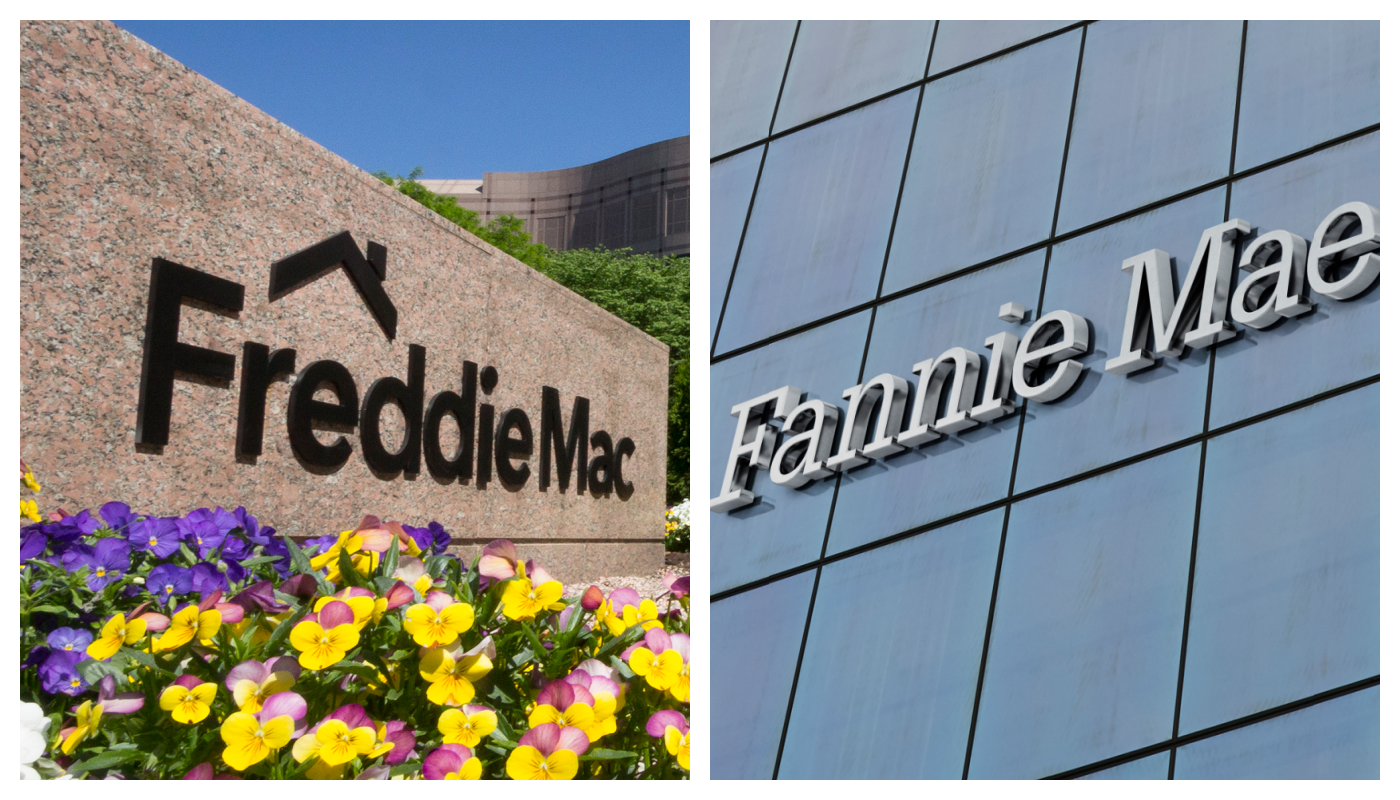
$Booooom ! What Happens if Fannie Mae and Freddie Mac Go Private?
Privatizing the government-sponsored mortgage giants could be a windfall for investors and raise interest rates for home buyers.
$Booooom ! For homeowners, the privatization of Fannie and Freddie
would have no impact on an existing mortgage, because
the terms they agreed to when they signed their loans
would not change. However, Fannie and Freddie buy
refinanced loans too, so a homeowner who wants to
refinance might also have to contend with the new marketplace.
By Ronda Kaysen - March 26, 2025, 5:02 a.m. ET
Fannie Mae and Freddie Mac have long been a bedrock of the American home-buying industry, turning what could otherwise be a volatile market into one that is stable and predictable for the people buying homes and the investors who purchase home loans as mortgage-backed securities.
But last week, William Pulte, President Trump’s appointee to lead the Federal Housing Finance Agency, shook the foundations of the two mortgage firms when he ousted 14 of their 25 sitting board members and installed himself as chairman of both boards. Mr. Pulte also removed executives at both companies and at FHFA, which regulates Fannie Mae and Freddie Mac. On Tuesday, he signed an order to end Fannie and Freddie programs designed to provide assistance with down payments and closing costs for some first-time home buyers.
The changes come as Trump administration officials ramp up talks of privatizing the mortgage giants, which have been under federal conservatorship since the foreclosure crisis in 2008.
While home buyers do not interact directly with Fannie Mae or Freddie Mac, their mortgages are likely backed by one of them. Together, the companies, which back single-family home loans up to $806,500, support around 70 percent of the U.S. mortgage market. Privatizing them could be a windfall for investors, but would likely make buying a home more expensive in the midst of an affordability crisis.
“It would mean that mortgage rates would increase — definitely,” said Laurie Goodman, the founder of the Housing Finance Policy Center at the Urban Institute, a think tank in Washington, D.C. What Are Fannie Mae and Freddie Mac?
Federal National Mortgage Association, or Fannie Mae, was created during the Great Depression, when almost a quarter of Americans lost their homes to foreclosure. Formed by Congress as part of the New Deal, it was intended to provide stability, liquidity and affordability to a crumbling housing market. Federal Home Loan Mortgage Corporation, or Freddie Mac, was formed by Congress in 1970 to expand the secondary market for home mortgages. They are known as government-sponsored entities, or GSEs.
After a lender gives a home buyer a loan, it has the option to sell that loan on the secondary mortgage market, which is dominated by Fannie Mae and Freddie Mac. The revenue gives the lender more money to issue more loans.
After buying the loan, the GSE can bundle it with other loans into mortgage-backed securities, then sell those securities to investors including pension funds, commercial banks, state and local governments, and investment fund managers.
This system of selling mortgages on the secondary market adds tremendous liquidity to the lending industry and fosters a stable, reliable marketplace. For example, Fannie Mae created the 30-year, fixed-rate mortgage. In other countries, mortgages have a variable rate, with interest rates rising and falling from year to year. “The presence of that secondary market is what makes that 30-year fixed mortgage available,” said Greg McBride, the chief financial analyst of Bankrate.com.
It had always been implicit that the federal government backed Fannie Mae and Freddie Mac, making them attractive to investors. But in 2008, as the housing market collapsed, the two GSEs faced bankruptcy after they bought too many toxic subprime loans. The government bailed them out, putting them into a conservatorship that continues to this day.
A Drumbeat for Privatization
Toward the end of President Trump’s first term, his administration began to consider privatizing the two mortgage companies. This would be music to the ears of investors who bought stock in the GSEs after the 2008 crisis, when it was cheap.
To privatize, there would be an initial public offering and investors would buy shares of the companies, moving them off the government’s books and providing a cash infusion for an administration that has made cost-cutting a priority. Wealthy investors and hedge fund managers who own shares at discounted prices stand to make billions from an IPO. Among the biggest proponents is the billionaire investor William B. Ackman.
Recently, Trump officials have been floating the idea again. In January, Mr. Ackman presented a detailed privatization plan on X. In February, Scott Turner, secretary of the Department of Housing and Urban Development, said privatizing the companies was a priority. Interest Rates Could Rise. Rate-lock Agreements Could Vanish.
While privatization would be a windfall for wealthy investors, it would raise interest rates for home buyers, Ms. Goodman said. How much would depend on how the companies are privatized.
Why would rates rise? Under the current system, the mortgage-backed securities that investors buy from the GSEs are guaranteed by the federal government, meaning investors are shielded from losses if too many borrowers default on their mortgages. In a privatized market without those guarantees, the securities could become riskier investments, causing the rates to go up. Lenders could also enact stricter borrowing requirements, making it harder for some buyers to qualify for a loan.
Rate-lock agreements could be another casualty of a more volatile market, Ms. Goodman said. Borrowers rely on rate-lock agreements, which typically last 30 to 60 days. These agreements give home buyers confidence that the interest rate their lender quoted them will remain fixed while they go through the slow process of finalizing a home purchase. A buyer is able to lock in that rate because their lender knows it can easily sell the loan once the sale closes. But if those conditions change in a privatized market, lenders might be hesitant to lock in rates, or charge significantly more for the option. For borrowers, this would mean more uncertainty at the closing table, potentially upending deals.
“Everyone talks about privatization like you flip the switch,” Ms. Goodman said. “In reality, there’s tons of questions you can answer before you do that IPO.” What Does This Mean for Existing Homeowners?
For homeowners, the privatization of Fannie and Freddie would have no impact on an existing mortgage, because the terms they agreed to when they signed their loans would not change. However, Fannie and Freddie buy refinanced loans too, so a homeowner who wants to refinance might also have to contend with the new marketplace.
Ronda Kaysen, a real estate reporter for The Times, writes about the intersection of housing and society. More about Ronda Kaysen




 AI
AI