



 AI
AI








Monday, September 09, 2024 9:47:47 PM
6 Economic Experts Reveal the Truth About the Inflation Reduction Act
"Why I Am Now Deeply Worried for America
[...]Trump spent four years claiming that a major infrastructure initiative was just around the corner, to the point that “It’s infrastructure week!” became a running joke; Biden actually got legislation passed .. https://www.nytimes.com/2021/11/15/us/politics/biden-signs-infrastructure-bill.html . Trump promised to revive American manufacturing, but didn’t. Biden’s technology .. https://www.whitehouse.gov/briefing-room/statements-releases/2022/08/09/fact-sheet-chips-and-science-act-will-lower-costs-create-jobs-strengthen-supply-chains-and-counter-china/ .. and climate .. https://www.epa.gov/green-power-markets/summary-inflation-reduction-act-provisions-related-renewable-energy .. policies — the latter passed against heavy odds — have produced a surge .. https://fred.stlouisfed.org/series/TLMFGCONS .. in manufacturing investment. His enhancement .. https://www.nytimes.com/2024/01/25/opinion/trump-biden-obamacare.html .. of Obamacare has brought health insurance coverage to millions .. https://www.nytimes.com/2024/01/25/us/politics/obamacare-open-enrollment.html .
If you ask me, these achievements say a lot more about Biden’s capacity than his occasional verbal slips."
Related: Kamala Harris Hits It Out of the Park, CNN Not So Much
[...]Then Bash turned to another favorite GOP approach and once again demonstrated why it has not worked for Trump or Vance. She started to poke at moments in Harris’ record where her views seem to have changed, suggesting that they might make it hard for voters to know where Harris stood.
P - She raised a position on fracking Harris took in 2019 and Harris noted her views had evolved by 2020 and that she has remained steadfast because, and this was her key point, her values have not changed. She made the reasonable case that she and Joe Biden found ways to address our climate needs without banning fracking, and she raised the achievements behind the Biden-Harris Inflation Reduction Act, the most sweeping and effective climate legislation in American history.
P - Bash went then to the issue of the border and Harris noted that her efforts to reduce the flow of migrants from the Northern Triangle countries had actually worked. She noted that the Biden-Harris administration had put forward a border bill backed by conservatives that she would sign on day one and that it was Trump who killed it for cynical political reasons.
https://investorshub.advfn.com/boards/read_msg.aspx?message_id=175010422
rooster, On reading this offering i'd guess these people, all with valid points to make, are more
in the Sanders progressive-mold than that of Harris. I mean i'd guess they are all left of Harris.
Will just add here, it's a real shame you aren't at least in the realm of reality that you cannot at least agree with the general positions Krugman takes. He cares for all Americans, meaning he cares for the general health of America. In contrast Trump only cares about what he can scrounge out of America for himself.
By Lynn Parramore
Aug 30, 2022 |
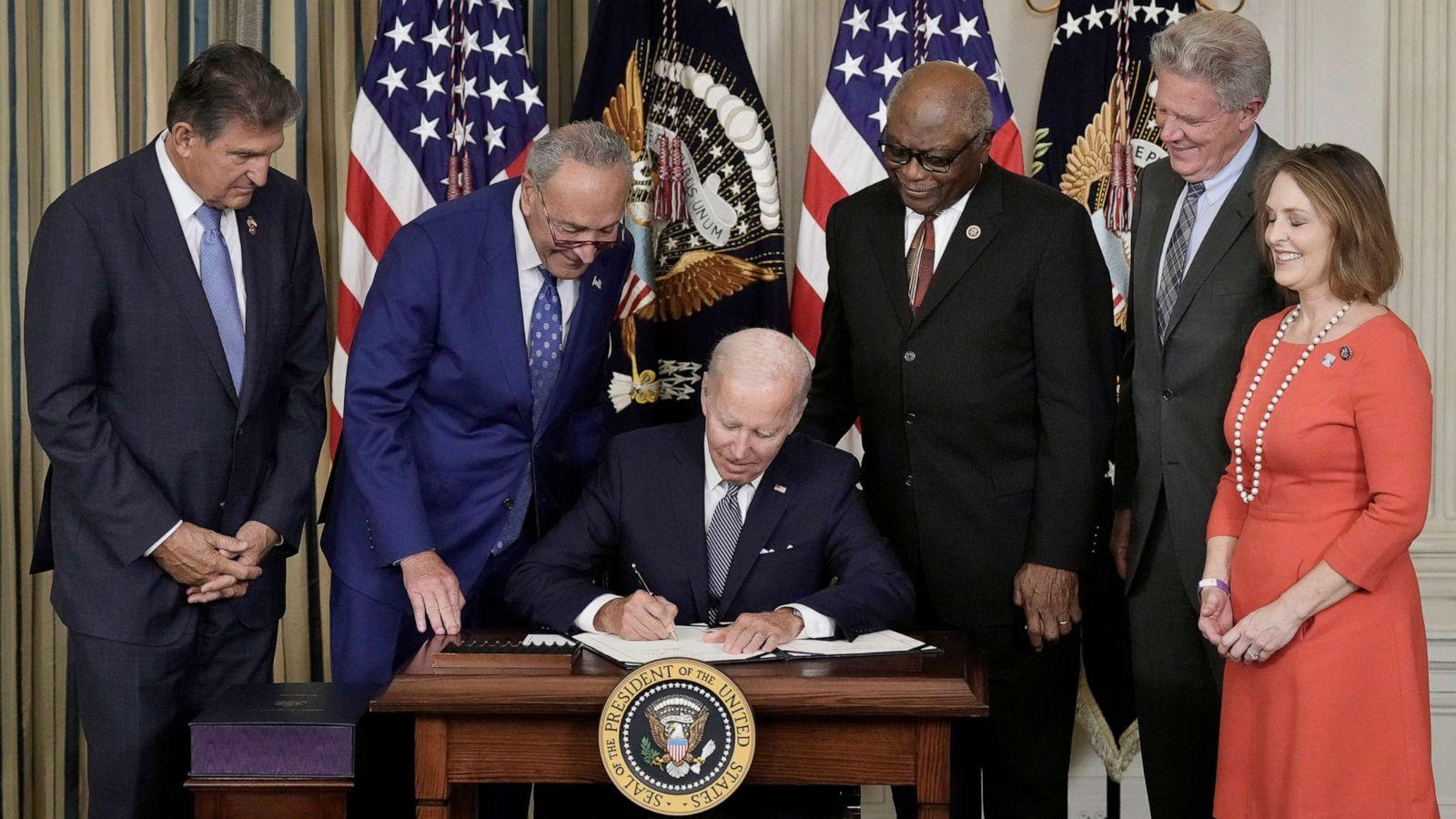
Is it good for your wallet? A climate bill in disguise? Landmark action or nothingburger?
Economic experts assess the Democrats’ legislative victory for the Institute for New Economic Thinking.
Now that Democrats have finally passed their much-touted legislation, key experts go beyond the hype to weigh in on how the Inflation Reduction Act (IRA) will likely impact your wallet in the short and long term, what it means to climate change, and what more is required to improve the lives of Americans and save the planet. Hint: the bill may not be all it’s cracked up to be — especially when it comes to curbing inflation.
On Climate, a Meaningful Small Step: Servaas Storm, Senior Lecturer of Economics, Delft University of Technology
Getting beyond the hyperbole and political drama, I would start by noting that the IRA does nothing to bring down inflation (in the foreseeable future). This is confirmed by analysts using the Penn Wharton Budget Model .. https://budgetmodel.wharton.upenn.edu/issues/2022/8/5/inflation-reduction-act-comparing-cbo-and-pwbm-estimates , who conclude that the impact is statistically indistinguishable from zero, as well as by CBO Director Philip L. Swagel .. https://www.cbo.gov/system/files/2022-08/58357-Graham.pdf , who finds that the bill will have a negligible impact in 2022 and 2023. Importantly, the IRA does help (lower-income) U.S. households to better manage price increases, especially on healthcare, medicines, and energy. However, the IRA is best considered as a climate bill, meant to lower U.S. CO2 emissions, promote clean energy, improve resilience to global warming, and reduce the risk of ‘fossilflation’ (Storm 2022).
As such, the IRA constitutes an important—albeit limited—step in the right direction. Using ‘pecuniary rewards’ (such as tax credits and rebates on renewable energy), funded by additional taxation of socially unproductive monopoly profits of corporations, the IRA aims to provide a boost to the renewable energy transition—and thus help to cut U.S. carbon emissions over time. Within the polarized stalemate of U.S. (climate and energy) politics, the IRA definitely constitutes a major break with the past—but, alas, one which falls rather short of ‘saving civilization’, as Paul Krugman is suggesting. The IRA falls short of what is needed for two reasons: the fiscal stimulus to the renewable energy transition is far too small compared to what is needed in view of the steadily building climate crisis; and the positive price incentives, loved by establishment economists, will not work, failing to bring about the required structural transformation of the U.S. economy, which is addicted to fossil fuels, to a net-zero-carbon system.
Much more will be needed—both in terms of public investment in clean energy and sustainable technology and in terms of direct interventions to scale back fossil fuels. There is no getting around it: direct measures including phasing out coal (power plants), taking climate liability litigation seriously, public investment in renewable energy generation and RD&D, and banning drilling, fracking, and (oil and gas) pipeline provisions, will be needed.
No Reform Without Banning Buybacks: William Lazonick, Professor emeritus of economics at the University of Massachusetts and co-founder and president of the Academic-Industry Research Network
The IRA provides U.S. business corporations with hundreds of billions in government subsidies to confront climate change and enables Medicaid to negotiate certain high-cost prescription drugs in 2026. Any chance of success depends on the SEC or Congress rescinding Rule 10b-18 .. https://www.baldwin.senate.gov/news/press-releases/reward-work-act-2019 , first adopted in November 1982.
Rule 10b-18 .. https://rooseveltinstitute.org/wp-content/uploads/2021/04/RI_Stock-Buybacks_Working-Paper_202105.pdf .. gives publicly listed companies a safe harbor against stock-price manipulation charges when they do stock buybacks — which have resulted in extreme income inequality .. https://www.ineteconomics.org/research/research-papers/equality-denied-tech-and-african-americans .. and setbacks in U.S. leadership .. https://www.ineteconomics.org/research/research-papers/investing-in-innovation-a-policy-framework-for-attaining-sustainable-prosperity-in-the-united-states .. in a range of critical technologies because key U.S.-based corporations have not invested in cutting-edge innovation.
Rule 10b-18 is a license to loot .. https://www.ineteconomics.org/perspectives/blog/letter-to-sec-a-policy-framework-for-attaining-sustainable-prosperity-in-the-united-states .. the corporate treasury. Based on stock prices and trading volume on August 15, 2022, the Rule’s safe-harbor “limit” permits Intel to do $459 million in buybacks per day, Cisco $181 million, GE $117 million, and Boeing $322 million—repeatedly, at the discretion of the company’s top executives, trading day after trading day. For the decade 2011-2020, total buybacks (and proportion of net income) for these corporations were Intel $80 billion (57%), Cisco $76 billion (90%), GE $49 billion (155%), and Boeing $43 billion (126%). While each company lavished and wasted corporate cash on buybacks, it lost global competitive advantage in, respectively, semiconductor fabrication, 5G and IoT, wind energy, and commercial aircraft.
Big Pharma companies are among the largest stock repurchasers .. https://www.ineteconomics.org/perspectives/blog/financialization-us-pharma-industry . In 2011-2020, Pfizer did $76 billion (59% of net income), J&J $63 billion (49%), and Merck $46 billion (73%). When Medicare starts negotiating drug prices, the government should insist that pharmaceutical companies refrain from doing buybacks .. https://www.ineteconomics.org/perspectives/blog/beyond-price-caps-a-regulatory-framework-for-pricing-of-medicine-innovation .. so that they can use profits for drug innovation. The SEC or Congress can ensure this condition by rescinding Rule 10b-18.
[Insert: Was better before, '70-Reagan's '80s --- Profits Without Prosperity
[...]Why are such massive resources being devoted to stock repurchases? Corporate executives give several reasons, which I will discuss later. But none of them has close to the explanatory power of this simple truth: Stock-based instruments make up the majority of their pay, and in the short term buybacks drive up stock prices. In 2012 the 500 highest-paid executives named in proxy statements of U.S. public companies received, on average, $30.3 million each; 42% of their compensation came from stock options and 41% from stock awards. By increasing the demand for a company’s shares, open-market buybacks automatically lift its stock price, even if only temporarily, and can enable the company to hit quarterly earnings per share (EPS) targets.
P - As a result, the very people we rely on to make investments in the productive capabilities that will increase our shared prosperity are instead devoting most of their companies’ profits to uses that will increase their own prosperity—with unsurprising results. Even when adjusted for inflation, the compensation of top U.S. executives has doubled or tripled since the first half of the 1990s, when it was already widely viewed as excessive. Meanwhile, overall U.S. economic performance has faltered.
https://investorshub.advfn.com/boards/read_msg.aspx?message_id=174443278]
If Apple had not done buybacks .. https://www.ineteconomics.org/research/research-papers/how-maximizing-shareholder-value-minimized-the-strategic-national-stockpile-the-5-3-trillion-question-for-pandemic-preparedness-raised-by-the-ventilator-fiasco , it could have made a huge difference to U.S. investment in critical technologies .. https://hbr.org/2014/10/what-apple-should-do-with-its-massive-piles-of-money . Currently, Apple can do an astounding $2.5 billion in buybacks per trading day while availing itself of Rule 10b-18. From October 2012 through June 2022, Apple did $529 billion in buybacks (96% of net income) along with $122 billion in dividends (22%). Apple does these distributions to shareholders under its “Capital Return Program .. https://www.ineteconomics.org/perspectives/blog/apples-capital-return-program-where-are-the-patient-capitalists ”, but the only funds that Apple has ever raised on the public stock market was $97 million in its 1980 IPO.
With a small fraction of this $529 billion, Apple could have invested in U.S.-based advanced semiconductor fabrication .. https://www.ineteconomics.org/perspectives/blog/does-america-want-a-chips-for-buybacks-act .. instead of outsourcing the manufacture of its iPhone chips to Taiwan’s TSMC. Rather than acquiescing in the use of over half a trillion dollars in buybacks, Apple’s second-longest serving board member (since 2003), Albert Gore Jr., could have advised the company on investing in clean technology. Likewise, Arthur Levinson, the longest serving board (since 2000) and a prominent biopharma CEO (formerly Genentech and now Calico) could have directed some of the big buyback bucks to medical innovation.
The IRA does not ignore buybacks, imposing a puny 1% tax on them to raise an estimated $74 billion over 10 years. This revenue measure serves to legitimize buybacks, a practice that Senate Majority Leader Chuck Schumer .. https://thehill.com/policy/finance/3590121-democrats-add-stock-buyback-tax-scrap-carried-interest-to-win-sinema-over/ .. thinks should be abolished. Meanwhile, in addition to $489 billion in dividends, the eight high-tech companies flagged spent a combined $811 billion on buybacks in 2011-2020. If the companies had spent the money on technologies, the U.S. economy would be far stronger now—and, driven by innovation rather than manipulation .. https://global.oup.com/academic/product/predatory-value-extraction-9780198846772?cc=us&lang=en&#:~:text=Predatory%20Value%20Extraction%20explains%20how,boardrooms%20in%20the%20United%20States. .. , the companies might have higher stock value, too.
May Help Fight Future Inflation: Claudia Sahm, Founder of Sahm Consulting and former Federal Reserve economist
By enacting the IRA, Congress is taking an important step toward claiming a role in fighting inflation, as opposed to leaving it to the Federal Reserve alone. The Fed reduces demand with higher interest rates, so it is not well equipped to slow the increases in prices of necessities like gasoline, food, and housing, for which supply is crucial. Moreover, the Fed is reactive to inflation and its tools are blunt, whereas Congress can act proactively and target specific cost-of-living pressures.
The current episode of high inflation shows that the United States is insufficiently prepared for the supply-side disruptions—from broken supply chains to labor shortages to global food and energy cutbacks—that the pandemic and the war in Ukraine caused. In fact, about half of the inflation is supply-driven, according to research at the San Francisco Fed. Higher interest rates are not the solution in this instance.
The Inflation Reduction Act is unlikely to make a noticeable dent .. https://www.budget.senate.gov/imo/media/doc/58357-Graham.pdf .. in current inflation, but it is an investment against future inflation. The clearest examples are the programs to increase energy efficiency and the use of renewable energy. Oil prices are set on the global market and prone to large, unpredictable swings, which have repeatedly created hardship for families and businesses. Rising temperatures and extreme weather are inflationary, too, a point too often omitted from the debate.
The future inflation that sensible energy policy could avert is hard to measure, but given recent experience, is real. It is missed in the macroeconomic analysis of the Act, which focuses almost entirely on its potential effects on aggregate demand regardless of what the spending is, as opposed to the ways it could increase supply and make the economy more resilient to inflationary shocks.
Tough Job for Fiscal Policy: Steven Fazzari, Professor of economics and sociology at Washington University in St. Louis
Yes, the bill contains some pieces that reduce prices, including authorization for Medicare to negotiate prices of some widely used prescription drugs and initiatives to increase the supply of renewable energy over time. But in terms of the inflation data driving today’s news, the impact of the IRA on inflation will be minimal.
While one might criticize its politically motivated name, it is important to recognize it is likely almost impossible to design an effective fiscal policy to address the recent inflation spike. The inability of supply chains to adjust to huge changes in the allocation of demand caused historic pressure on relative prices. A change in relative prices does not have to cause overall inflation, in principle. But the only way it would not cause higher inflation is if the prices of items less in demand fall to offset the increases in prices of items for which demand exceeds restricted supply.
Over the next few decades, perhaps the IRA really is an “inflation reduction act” because over shorter horizons it really is a climate bill.
How Significant are the Compromises? Pia Malaney, Co-Founder and Director of The Center for Innovation, Growth and Society and Senior Economist at the Institute for New Economic Thinking
While the White House and congressional Democrats point to this bill as being historic, another word we frequently hear associated with the bill is “compromise”. So how significant are the compromises? The bill is indeed historic in the amount of money committed to climate change, but in a world where every day brings more news of climate-related disasters, we can no longer afford to treat climate change as anything other than an existential risk. While the IRA will reduce greenhouse gas emissions significantly, it will not be sufficient to meet the goal of a 50% reduction from 2005 emissions by 2030. The “compromise” which makes the development of renewables on government territory conditional on the Interior Department making 2 million acres of public land and 60 million acres of federal waters available for oil and gas leases each year simply goes in the wrong direction.
The bill is careful to use markets to achieve climate change goals, strategically using financial incentives to encourage the development of renewable energy sources, and this should have a significant impact over the long term, but the fear is that some of the concessions will simply translate to business as usual for the fossil fuel industry, something we can scarcely afford.
Some of the other economic provisions in the bill are steps in the right direction, though not necessarily in terms of inflation, which it will barely affect in the short term, creating the unshakeable feeling that the rebranding was simply a convenient political move. That being said, giving the government the ability to negotiate drug prices and cap out-of-pocket expenses for seniors seems long overdue and should reduce health care costs in the longer term. The 15% corporate minimum tax is a start. The 1% tax on stock buybacks is an acknowledgment of a critical issue that INET-funded research by Lazonick et al has been highlighting for years.
Fast Action Needed to Curb Inflation Beyond the IRA: Thomas Ferguson, Director of Research, Institute for New Economic Thinking
Back in the fall of 2021, Paul Jorgensen, Jie Chen, and I predicted that the Biden administration’s failure to deal seriously with Covid .. https://www.ineteconomics.org/research/research-papers/the-knife-edge-election-of-2020-american-politics-between-washington-kabul-and-weimar .. would create endless headaches, not least in the economy. Then came Omicron and its worldwide impact. Because the virus hit China and many other countries, too, this latest version of the plague added to the woes of crews and mechanics working on ships, planes, and trucks; and workers in health care, education, and many other fields. Not surprisingly, supply problems snarled intractably.
Now the Biden administration is winding down health care support for Americans while the CDC is not even trying to test seriously, as new strains of the virus take off and long Covid balloons. Yes, death rates are lower, though they are rising a bit. But people are still getting sick – and in the widespread cases of long Covid, staying sick. When they are ill, people can’t work or care for their families without spreading the virus, even to folks who’ve had earlier strains.
Fed rate rises will do nothing to arrest any of this, any more than they will stop the war in Ukraine, cool down climate hotspots, put out wildfires, or pour water into rivers running dry all over the world. Nor, of course, will the rate increases do much to check businesses in concentrated markets from raising prices, as so many have been doing with abandon.
To effectively stem inflation, the U.S. needs to act on many fronts, fast. The government needs to pursue sweeping antitrust actions, set firm position limits for non-end users in commodities markets, and have OSHA and other federal agencies enforce mandates for ventilation in offices and schools. It also needs to set up some formal mechanism to sort out the climate mess that is developing out of the scramble to build new liquid natural gas terminals to offset the giant gas price rises facing the Europeans and the developing world as global warming intensifies.
Lynn Parramore
Senior Research Analyst
Senior Research Analyst, INET
https://www.ineteconomics.org/perspectives/blog/6-economic-experts-reveal-the-truth-about-the-inflation-reduction-act
"Why I Am Now Deeply Worried for America
[...]Trump spent four years claiming that a major infrastructure initiative was just around the corner, to the point that “It’s infrastructure week!” became a running joke; Biden actually got legislation passed .. https://www.nytimes.com/2021/11/15/us/politics/biden-signs-infrastructure-bill.html . Trump promised to revive American manufacturing, but didn’t. Biden’s technology .. https://www.whitehouse.gov/briefing-room/statements-releases/2022/08/09/fact-sheet-chips-and-science-act-will-lower-costs-create-jobs-strengthen-supply-chains-and-counter-china/ .. and climate .. https://www.epa.gov/green-power-markets/summary-inflation-reduction-act-provisions-related-renewable-energy .. policies — the latter passed against heavy odds — have produced a surge .. https://fred.stlouisfed.org/series/TLMFGCONS .. in manufacturing investment. His enhancement .. https://www.nytimes.com/2024/01/25/opinion/trump-biden-obamacare.html .. of Obamacare has brought health insurance coverage to millions .. https://www.nytimes.com/2024/01/25/us/politics/obamacare-open-enrollment.html .
If you ask me, these achievements say a lot more about Biden’s capacity than his occasional verbal slips."
Related: Kamala Harris Hits It Out of the Park, CNN Not So Much
[...]Then Bash turned to another favorite GOP approach and once again demonstrated why it has not worked for Trump or Vance. She started to poke at moments in Harris’ record where her views seem to have changed, suggesting that they might make it hard for voters to know where Harris stood.
P - She raised a position on fracking Harris took in 2019 and Harris noted her views had evolved by 2020 and that she has remained steadfast because, and this was her key point, her values have not changed. She made the reasonable case that she and Joe Biden found ways to address our climate needs without banning fracking, and she raised the achievements behind the Biden-Harris Inflation Reduction Act, the most sweeping and effective climate legislation in American history.
P - Bash went then to the issue of the border and Harris noted that her efforts to reduce the flow of migrants from the Northern Triangle countries had actually worked. She noted that the Biden-Harris administration had put forward a border bill backed by conservatives that she would sign on day one and that it was Trump who killed it for cynical political reasons.
https://investorshub.advfn.com/boards/read_msg.aspx?message_id=175010422
rooster, On reading this offering i'd guess these people, all with valid points to make, are more
in the Sanders progressive-mold than that of Harris. I mean i'd guess they are all left of Harris.
Will just add here, it's a real shame you aren't at least in the realm of reality that you cannot at least agree with the general positions Krugman takes. He cares for all Americans, meaning he cares for the general health of America. In contrast Trump only cares about what he can scrounge out of America for himself.
By Lynn Parramore
Aug 30, 2022 |
Is it good for your wallet? A climate bill in disguise? Landmark action or nothingburger?
Economic experts assess the Democrats’ legislative victory for the Institute for New Economic Thinking.
Now that Democrats have finally passed their much-touted legislation, key experts go beyond the hype to weigh in on how the Inflation Reduction Act (IRA) will likely impact your wallet in the short and long term, what it means to climate change, and what more is required to improve the lives of Americans and save the planet. Hint: the bill may not be all it’s cracked up to be — especially when it comes to curbing inflation.
On Climate, a Meaningful Small Step: Servaas Storm, Senior Lecturer of Economics, Delft University of Technology
Getting beyond the hyperbole and political drama, I would start by noting that the IRA does nothing to bring down inflation (in the foreseeable future). This is confirmed by analysts using the Penn Wharton Budget Model .. https://budgetmodel.wharton.upenn.edu/issues/2022/8/5/inflation-reduction-act-comparing-cbo-and-pwbm-estimates , who conclude that the impact is statistically indistinguishable from zero, as well as by CBO Director Philip L. Swagel .. https://www.cbo.gov/system/files/2022-08/58357-Graham.pdf , who finds that the bill will have a negligible impact in 2022 and 2023. Importantly, the IRA does help (lower-income) U.S. households to better manage price increases, especially on healthcare, medicines, and energy. However, the IRA is best considered as a climate bill, meant to lower U.S. CO2 emissions, promote clean energy, improve resilience to global warming, and reduce the risk of ‘fossilflation’ (Storm 2022).
As such, the IRA constitutes an important—albeit limited—step in the right direction. Using ‘pecuniary rewards’ (such as tax credits and rebates on renewable energy), funded by additional taxation of socially unproductive monopoly profits of corporations, the IRA aims to provide a boost to the renewable energy transition—and thus help to cut U.S. carbon emissions over time. Within the polarized stalemate of U.S. (climate and energy) politics, the IRA definitely constitutes a major break with the past—but, alas, one which falls rather short of ‘saving civilization’, as Paul Krugman is suggesting. The IRA falls short of what is needed for two reasons: the fiscal stimulus to the renewable energy transition is far too small compared to what is needed in view of the steadily building climate crisis; and the positive price incentives, loved by establishment economists, will not work, failing to bring about the required structural transformation of the U.S. economy, which is addicted to fossil fuels, to a net-zero-carbon system.
Much more will be needed—both in terms of public investment in clean energy and sustainable technology and in terms of direct interventions to scale back fossil fuels. There is no getting around it: direct measures including phasing out coal (power plants), taking climate liability litigation seriously, public investment in renewable energy generation and RD&D, and banning drilling, fracking, and (oil and gas) pipeline provisions, will be needed.
No Reform Without Banning Buybacks: William Lazonick, Professor emeritus of economics at the University of Massachusetts and co-founder and president of the Academic-Industry Research Network
The IRA provides U.S. business corporations with hundreds of billions in government subsidies to confront climate change and enables Medicaid to negotiate certain high-cost prescription drugs in 2026. Any chance of success depends on the SEC or Congress rescinding Rule 10b-18 .. https://www.baldwin.senate.gov/news/press-releases/reward-work-act-2019 , first adopted in November 1982.
Rule 10b-18 .. https://rooseveltinstitute.org/wp-content/uploads/2021/04/RI_Stock-Buybacks_Working-Paper_202105.pdf .. gives publicly listed companies a safe harbor against stock-price manipulation charges when they do stock buybacks — which have resulted in extreme income inequality .. https://www.ineteconomics.org/research/research-papers/equality-denied-tech-and-african-americans .. and setbacks in U.S. leadership .. https://www.ineteconomics.org/research/research-papers/investing-in-innovation-a-policy-framework-for-attaining-sustainable-prosperity-in-the-united-states .. in a range of critical technologies because key U.S.-based corporations have not invested in cutting-edge innovation.
Rule 10b-18 is a license to loot .. https://www.ineteconomics.org/perspectives/blog/letter-to-sec-a-policy-framework-for-attaining-sustainable-prosperity-in-the-united-states .. the corporate treasury. Based on stock prices and trading volume on August 15, 2022, the Rule’s safe-harbor “limit” permits Intel to do $459 million in buybacks per day, Cisco $181 million, GE $117 million, and Boeing $322 million—repeatedly, at the discretion of the company’s top executives, trading day after trading day. For the decade 2011-2020, total buybacks (and proportion of net income) for these corporations were Intel $80 billion (57%), Cisco $76 billion (90%), GE $49 billion (155%), and Boeing $43 billion (126%). While each company lavished and wasted corporate cash on buybacks, it lost global competitive advantage in, respectively, semiconductor fabrication, 5G and IoT, wind energy, and commercial aircraft.
Big Pharma companies are among the largest stock repurchasers .. https://www.ineteconomics.org/perspectives/blog/financialization-us-pharma-industry . In 2011-2020, Pfizer did $76 billion (59% of net income), J&J $63 billion (49%), and Merck $46 billion (73%). When Medicare starts negotiating drug prices, the government should insist that pharmaceutical companies refrain from doing buybacks .. https://www.ineteconomics.org/perspectives/blog/beyond-price-caps-a-regulatory-framework-for-pricing-of-medicine-innovation .. so that they can use profits for drug innovation. The SEC or Congress can ensure this condition by rescinding Rule 10b-18.
[Insert: Was better before, '70-Reagan's '80s --- Profits Without Prosperity
[...]Why are such massive resources being devoted to stock repurchases? Corporate executives give several reasons, which I will discuss later. But none of them has close to the explanatory power of this simple truth: Stock-based instruments make up the majority of their pay, and in the short term buybacks drive up stock prices. In 2012 the 500 highest-paid executives named in proxy statements of U.S. public companies received, on average, $30.3 million each; 42% of their compensation came from stock options and 41% from stock awards. By increasing the demand for a company’s shares, open-market buybacks automatically lift its stock price, even if only temporarily, and can enable the company to hit quarterly earnings per share (EPS) targets.
P - As a result, the very people we rely on to make investments in the productive capabilities that will increase our shared prosperity are instead devoting most of their companies’ profits to uses that will increase their own prosperity—with unsurprising results. Even when adjusted for inflation, the compensation of top U.S. executives has doubled or tripled since the first half of the 1990s, when it was already widely viewed as excessive. Meanwhile, overall U.S. economic performance has faltered.
https://investorshub.advfn.com/boards/read_msg.aspx?message_id=174443278]
If Apple had not done buybacks .. https://www.ineteconomics.org/research/research-papers/how-maximizing-shareholder-value-minimized-the-strategic-national-stockpile-the-5-3-trillion-question-for-pandemic-preparedness-raised-by-the-ventilator-fiasco , it could have made a huge difference to U.S. investment in critical technologies .. https://hbr.org/2014/10/what-apple-should-do-with-its-massive-piles-of-money . Currently, Apple can do an astounding $2.5 billion in buybacks per trading day while availing itself of Rule 10b-18. From October 2012 through June 2022, Apple did $529 billion in buybacks (96% of net income) along with $122 billion in dividends (22%). Apple does these distributions to shareholders under its “Capital Return Program .. https://www.ineteconomics.org/perspectives/blog/apples-capital-return-program-where-are-the-patient-capitalists ”, but the only funds that Apple has ever raised on the public stock market was $97 million in its 1980 IPO.
With a small fraction of this $529 billion, Apple could have invested in U.S.-based advanced semiconductor fabrication .. https://www.ineteconomics.org/perspectives/blog/does-america-want-a-chips-for-buybacks-act .. instead of outsourcing the manufacture of its iPhone chips to Taiwan’s TSMC. Rather than acquiescing in the use of over half a trillion dollars in buybacks, Apple’s second-longest serving board member (since 2003), Albert Gore Jr., could have advised the company on investing in clean technology. Likewise, Arthur Levinson, the longest serving board (since 2000) and a prominent biopharma CEO (formerly Genentech and now Calico) could have directed some of the big buyback bucks to medical innovation.
The IRA does not ignore buybacks, imposing a puny 1% tax on them to raise an estimated $74 billion over 10 years. This revenue measure serves to legitimize buybacks, a practice that Senate Majority Leader Chuck Schumer .. https://thehill.com/policy/finance/3590121-democrats-add-stock-buyback-tax-scrap-carried-interest-to-win-sinema-over/ .. thinks should be abolished. Meanwhile, in addition to $489 billion in dividends, the eight high-tech companies flagged spent a combined $811 billion on buybacks in 2011-2020. If the companies had spent the money on technologies, the U.S. economy would be far stronger now—and, driven by innovation rather than manipulation .. https://global.oup.com/academic/product/predatory-value-extraction-9780198846772?cc=us&lang=en&#:~:text=Predatory%20Value%20Extraction%20explains%20how,boardrooms%20in%20the%20United%20States. .. , the companies might have higher stock value, too.
May Help Fight Future Inflation: Claudia Sahm, Founder of Sahm Consulting and former Federal Reserve economist
By enacting the IRA, Congress is taking an important step toward claiming a role in fighting inflation, as opposed to leaving it to the Federal Reserve alone. The Fed reduces demand with higher interest rates, so it is not well equipped to slow the increases in prices of necessities like gasoline, food, and housing, for which supply is crucial. Moreover, the Fed is reactive to inflation and its tools are blunt, whereas Congress can act proactively and target specific cost-of-living pressures.
The current episode of high inflation shows that the United States is insufficiently prepared for the supply-side disruptions—from broken supply chains to labor shortages to global food and energy cutbacks—that the pandemic and the war in Ukraine caused. In fact, about half of the inflation is supply-driven, according to research at the San Francisco Fed. Higher interest rates are not the solution in this instance.
The Inflation Reduction Act is unlikely to make a noticeable dent .. https://www.budget.senate.gov/imo/media/doc/58357-Graham.pdf .. in current inflation, but it is an investment against future inflation. The clearest examples are the programs to increase energy efficiency and the use of renewable energy. Oil prices are set on the global market and prone to large, unpredictable swings, which have repeatedly created hardship for families and businesses. Rising temperatures and extreme weather are inflationary, too, a point too often omitted from the debate.
The future inflation that sensible energy policy could avert is hard to measure, but given recent experience, is real. It is missed in the macroeconomic analysis of the Act, which focuses almost entirely on its potential effects on aggregate demand regardless of what the spending is, as opposed to the ways it could increase supply and make the economy more resilient to inflationary shocks.
Tough Job for Fiscal Policy: Steven Fazzari, Professor of economics and sociology at Washington University in St. Louis
Yes, the bill contains some pieces that reduce prices, including authorization for Medicare to negotiate prices of some widely used prescription drugs and initiatives to increase the supply of renewable energy over time. But in terms of the inflation data driving today’s news, the impact of the IRA on inflation will be minimal.
While one might criticize its politically motivated name, it is important to recognize it is likely almost impossible to design an effective fiscal policy to address the recent inflation spike. The inability of supply chains to adjust to huge changes in the allocation of demand caused historic pressure on relative prices. A change in relative prices does not have to cause overall inflation, in principle. But the only way it would not cause higher inflation is if the prices of items less in demand fall to offset the increases in prices of items for which demand exceeds restricted supply.
Over the next few decades, perhaps the IRA really is an “inflation reduction act” because over shorter horizons it really is a climate bill.
How Significant are the Compromises? Pia Malaney, Co-Founder and Director of The Center for Innovation, Growth and Society and Senior Economist at the Institute for New Economic Thinking
While the White House and congressional Democrats point to this bill as being historic, another word we frequently hear associated with the bill is “compromise”. So how significant are the compromises? The bill is indeed historic in the amount of money committed to climate change, but in a world where every day brings more news of climate-related disasters, we can no longer afford to treat climate change as anything other than an existential risk. While the IRA will reduce greenhouse gas emissions significantly, it will not be sufficient to meet the goal of a 50% reduction from 2005 emissions by 2030. The “compromise” which makes the development of renewables on government territory conditional on the Interior Department making 2 million acres of public land and 60 million acres of federal waters available for oil and gas leases each year simply goes in the wrong direction.
The bill is careful to use markets to achieve climate change goals, strategically using financial incentives to encourage the development of renewable energy sources, and this should have a significant impact over the long term, but the fear is that some of the concessions will simply translate to business as usual for the fossil fuel industry, something we can scarcely afford.
Some of the other economic provisions in the bill are steps in the right direction, though not necessarily in terms of inflation, which it will barely affect in the short term, creating the unshakeable feeling that the rebranding was simply a convenient political move. That being said, giving the government the ability to negotiate drug prices and cap out-of-pocket expenses for seniors seems long overdue and should reduce health care costs in the longer term. The 15% corporate minimum tax is a start. The 1% tax on stock buybacks is an acknowledgment of a critical issue that INET-funded research by Lazonick et al has been highlighting for years.
Fast Action Needed to Curb Inflation Beyond the IRA: Thomas Ferguson, Director of Research, Institute for New Economic Thinking
Back in the fall of 2021, Paul Jorgensen, Jie Chen, and I predicted that the Biden administration’s failure to deal seriously with Covid .. https://www.ineteconomics.org/research/research-papers/the-knife-edge-election-of-2020-american-politics-between-washington-kabul-and-weimar .. would create endless headaches, not least in the economy. Then came Omicron and its worldwide impact. Because the virus hit China and many other countries, too, this latest version of the plague added to the woes of crews and mechanics working on ships, planes, and trucks; and workers in health care, education, and many other fields. Not surprisingly, supply problems snarled intractably.
Now the Biden administration is winding down health care support for Americans while the CDC is not even trying to test seriously, as new strains of the virus take off and long Covid balloons. Yes, death rates are lower, though they are rising a bit. But people are still getting sick – and in the widespread cases of long Covid, staying sick. When they are ill, people can’t work or care for their families without spreading the virus, even to folks who’ve had earlier strains.
Fed rate rises will do nothing to arrest any of this, any more than they will stop the war in Ukraine, cool down climate hotspots, put out wildfires, or pour water into rivers running dry all over the world. Nor, of course, will the rate increases do much to check businesses in concentrated markets from raising prices, as so many have been doing with abandon.
To effectively stem inflation, the U.S. needs to act on many fronts, fast. The government needs to pursue sweeping antitrust actions, set firm position limits for non-end users in commodities markets, and have OSHA and other federal agencies enforce mandates for ventilation in offices and schools. It also needs to set up some formal mechanism to sort out the climate mess that is developing out of the scramble to build new liquid natural gas terminals to offset the giant gas price rises facing the Europeans and the developing world as global warming intensifies.
Lynn Parramore
Senior Research Analyst
Senior Research Analyst, INET
https://www.ineteconomics.org/perspectives/blog/6-economic-experts-reveal-the-truth-about-the-inflation-reduction-act
It was Plato who said, “He, O men, is the wisest, who like Socrates, knows that his wisdom is in truth worth nothing”
Discover What Traders Are Watching
Explore small cap ideas before they hit the headlines.



