



 AI
AI








Monday, August 26, 2024 8:32:15 PM
A forgotten war and the hidden struggles of African Australians
"Sudan - Darfur - South Sudan
"Pursuant to my first reply - 'The World's Worst Humanitarian Crisis': Understanding the Darfur Conflict""
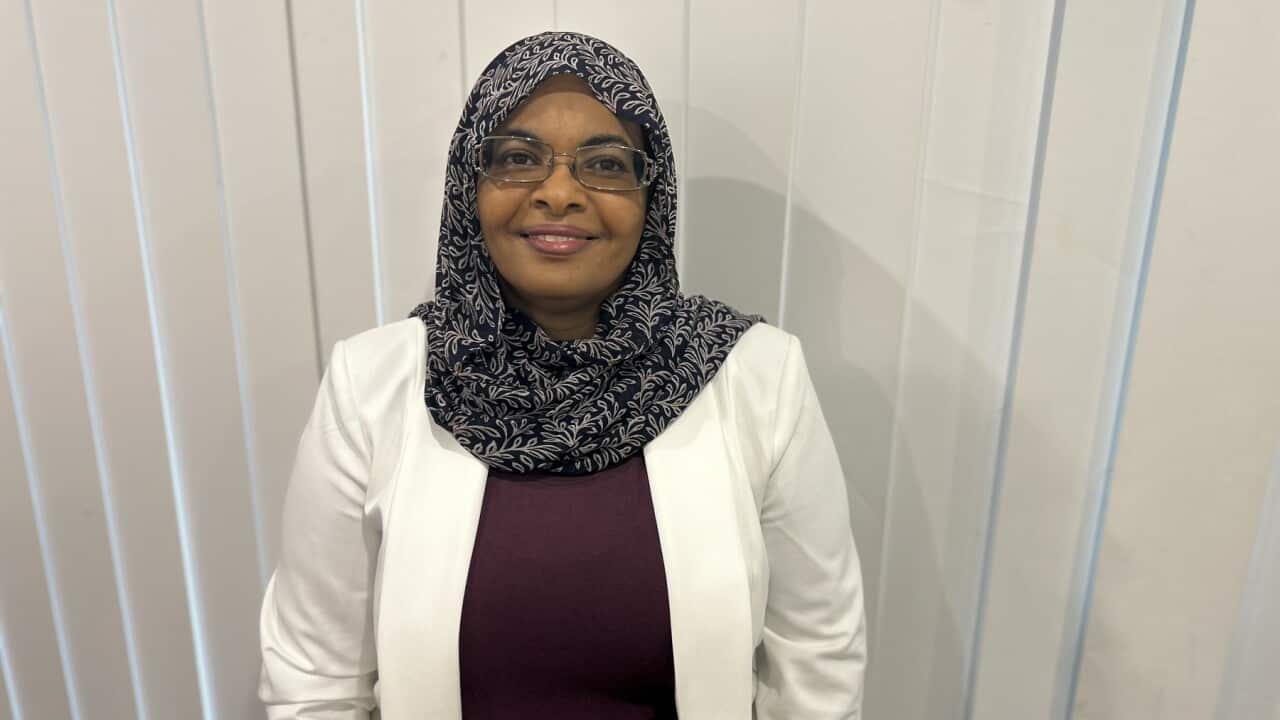
Ahlam Ibraheem says the war in her native Sudan has taken an emotional toll (SBS)
After almost a year and a half of fierce conflict in Sudan, the Sudanese-Australian community still fears for the lives of their loved ones as the humanitarian disaster worsens. Community leaders have also expressed a frustration at the lack of media coverage of the issue, arguing that it has slipped under the radar with wars in Ukraine and Gaza taking priority. With tens of thousands estimated killed and over 10 million people displaced by the violence, the war has left deep scars on civilians in Sudan and their concerned families in Australia.
Listen to Australian and world news, and follow trending topics with SBS News Podcasts
TRANSCRIPT:
Yasir EL-HASSAN: "Most nights we go to sleep and we don't know if tomorrow we're going to get a phone call that something horrible has happened to one of our own loved ones or family."
[...]
While information is scarce, the United Nations estimates that tens of thousands have been killed in the power struggle over the past year and a half.
Dr Ahlam Ibraheem, a Sudanese-Australian GP in Sydney whose family remains in Sudan, says she doesn't call the conflict a civil war.
"It's not a civil war. It is a war between military and paramilitary and who's the victim? It's the people there, the innocent people. They are fighting each other in the street, in the small towns, in the village. Killing, raping, all the crime. Whatever crime comes to your mind, it is happening over there. Now more than half of the Sudanese people are displaced by force. They're now in the street. No shelter, no food, the health system is completely collapsed and destroyed."
While Dr Ibraheem and her son first moved to Australia back in 2011, her family largely remains in Sudan.
Her brothers and mother have been displaced by the war with her mother escaping through Egypt in the first months of the conflict and eventually joining her in Australia.
One brother has been directly affected by the violence, with Dr Ibraheem claiming he suffered a devastating head injury at the hands of a Rapid Support Forces militant which caused the loss of his vision.
She says the disruption of communication networks in Sudan has made it very difficult to make sure her loved ones are safe.
"It's very hard to communicate. I still have my two brothers there and one of my brothers, he was hit in his head. He lost his vision. Just his son, he sent us a message, 'Dad lost his vision' and we couldn't communicate with them for a whole month. We didn't know what happened, was he shot by a gun? It was a very hard time. I couldn't tell my mum who was with me here. It was very stressed time for me. Sadly, one of our colleagues - she's a doctor - she was found dead in her house. They just left her body in her backyard."
Her son Yasir El Hassan says it's been incredibly painful to see the country he was born in devastated by violence.
"It is really difficult seeing over the internet, just seeing places you grew up in and visited and just hold so much memories in just being destroyed and you start to think that it's kind of gone forever. Hopefully in the future Sudan will be rebuilt and that's the best outcome we can hope for, but it's just not going to be the same."
He also mentions this pain is amplified by a lack of awareness of the issue in Australia.
"It feels like Sudan is just being forgotten about. Not even forgotten about because no one actually knows to begin with. Like you tell someone you're from Sudan here and they ask, 'oh, how is it there?' No one actually has any awareness of the situation at hand. And then when you start telling them, they're like, 'oh, I'm so sorry to hear that', but it doesn't really bother them too much. You won't really hear too much about it. The next time you have a conversation with said person, they've already forgotten."
So, why is it that we rarely hear about this crisis in Australia?
Emeritus Professor of Sociology at the University of Technology Sydney, Andrew Jakubowicz, says war zones like Sudan are difficult to cover for Australian media and are often considered a low priority.
"You need resources and assets on the ground in those places. And that's both expensive and dangerous. But also, I think, there's that sort of axiom in media studies that one person killed in your local area is as important, or probably more important, than 100,000 people killed on the other side of the world."
https://www.sbs.com.au/news/podcast-episode/a-forgotten-war-and-the-hidden-struggles-of-african-australians/kw179bnfh
"Sudan - Darfur - South Sudan
"Pursuant to my first reply - 'The World's Worst Humanitarian Crisis': Understanding the Darfur Conflict""
Ahlam Ibraheem says the war in her native Sudan has taken an emotional toll (SBS)
After almost a year and a half of fierce conflict in Sudan, the Sudanese-Australian community still fears for the lives of their loved ones as the humanitarian disaster worsens. Community leaders have also expressed a frustration at the lack of media coverage of the issue, arguing that it has slipped under the radar with wars in Ukraine and Gaza taking priority. With tens of thousands estimated killed and over 10 million people displaced by the violence, the war has left deep scars on civilians in Sudan and their concerned families in Australia.
Listen to Australian and world news, and follow trending topics with SBS News Podcasts
TRANSCRIPT:
Yasir EL-HASSAN: "Most nights we go to sleep and we don't know if tomorrow we're going to get a phone call that something horrible has happened to one of our own loved ones or family."
[...]
While information is scarce, the United Nations estimates that tens of thousands have been killed in the power struggle over the past year and a half.
Dr Ahlam Ibraheem, a Sudanese-Australian GP in Sydney whose family remains in Sudan, says she doesn't call the conflict a civil war.
"It's not a civil war. It is a war between military and paramilitary and who's the victim? It's the people there, the innocent people. They are fighting each other in the street, in the small towns, in the village. Killing, raping, all the crime. Whatever crime comes to your mind, it is happening over there. Now more than half of the Sudanese people are displaced by force. They're now in the street. No shelter, no food, the health system is completely collapsed and destroyed."
While Dr Ibraheem and her son first moved to Australia back in 2011, her family largely remains in Sudan.
Her brothers and mother have been displaced by the war with her mother escaping through Egypt in the first months of the conflict and eventually joining her in Australia.
One brother has been directly affected by the violence, with Dr Ibraheem claiming he suffered a devastating head injury at the hands of a Rapid Support Forces militant which caused the loss of his vision.
She says the disruption of communication networks in Sudan has made it very difficult to make sure her loved ones are safe.
"It's very hard to communicate. I still have my two brothers there and one of my brothers, he was hit in his head. He lost his vision. Just his son, he sent us a message, 'Dad lost his vision' and we couldn't communicate with them for a whole month. We didn't know what happened, was he shot by a gun? It was a very hard time. I couldn't tell my mum who was with me here. It was very stressed time for me. Sadly, one of our colleagues - she's a doctor - she was found dead in her house. They just left her body in her backyard."
Her son Yasir El Hassan says it's been incredibly painful to see the country he was born in devastated by violence.
"It is really difficult seeing over the internet, just seeing places you grew up in and visited and just hold so much memories in just being destroyed and you start to think that it's kind of gone forever. Hopefully in the future Sudan will be rebuilt and that's the best outcome we can hope for, but it's just not going to be the same."
He also mentions this pain is amplified by a lack of awareness of the issue in Australia.
"It feels like Sudan is just being forgotten about. Not even forgotten about because no one actually knows to begin with. Like you tell someone you're from Sudan here and they ask, 'oh, how is it there?' No one actually has any awareness of the situation at hand. And then when you start telling them, they're like, 'oh, I'm so sorry to hear that', but it doesn't really bother them too much. You won't really hear too much about it. The next time you have a conversation with said person, they've already forgotten."
So, why is it that we rarely hear about this crisis in Australia?
Emeritus Professor of Sociology at the University of Technology Sydney, Andrew Jakubowicz, says war zones like Sudan are difficult to cover for Australian media and are often considered a low priority.
"You need resources and assets on the ground in those places. And that's both expensive and dangerous. But also, I think, there's that sort of axiom in media studies that one person killed in your local area is as important, or probably more important, than 100,000 people killed on the other side of the world."
https://www.sbs.com.au/news/podcast-episode/a-forgotten-war-and-the-hidden-struggles-of-african-australians/kw179bnfh
It was Plato who said, “He, O men, is the wisest, who like Socrates, knows that his wisdom is in truth worth nothing”
Discover What Traders Are Watching
Explore small cap ideas before they hit the headlines.



