



 AI
AI








Friday, June 07, 2024 12:21:41 AM
Forty-four of 50 US states worsen inequality with ‘upside-down’ taxes
"Tougher on Trump the better, and - US election 2024: Where Biden and Trump stand on key issues
"Biden Takes the Gloves Off to Tear Into ‘Convicted Felon’ Trump"
[...]
Taxes
President Biden supports raising the corporate income tax rate to 28%, bringing it closer to the 35% rate that prevailed prior to Mr Trump's term. He has also proposed imposing higher tax rates on the wealthiest Americans, cracking down on tax avoidance, and expanding tax credits for low earners and families. He recently escalated Trump-imposed tariffs on China, including a 100 percent tax on its electric vehicles.
P - Mr Trump is pledging across-the-board tax cuts if he returns to office, in part by prolonging soon-to-expire income tax cuts, along with estate and wealth tax breaks, from legislation he signed in 2017. He will maintain the corporate income tax rate at 21% and proposes a universal 10% tariff on all US imports, and a 60% tariff on imports from China."
New research found that poorest fifth pay a tax rate 60% higher, on average, than the top 1% of households
Oliver Milman
Thu 11 Jan 2024 04.37 AEDT
Last modified on Mon 15 Jan 2024 01.05 AEDT
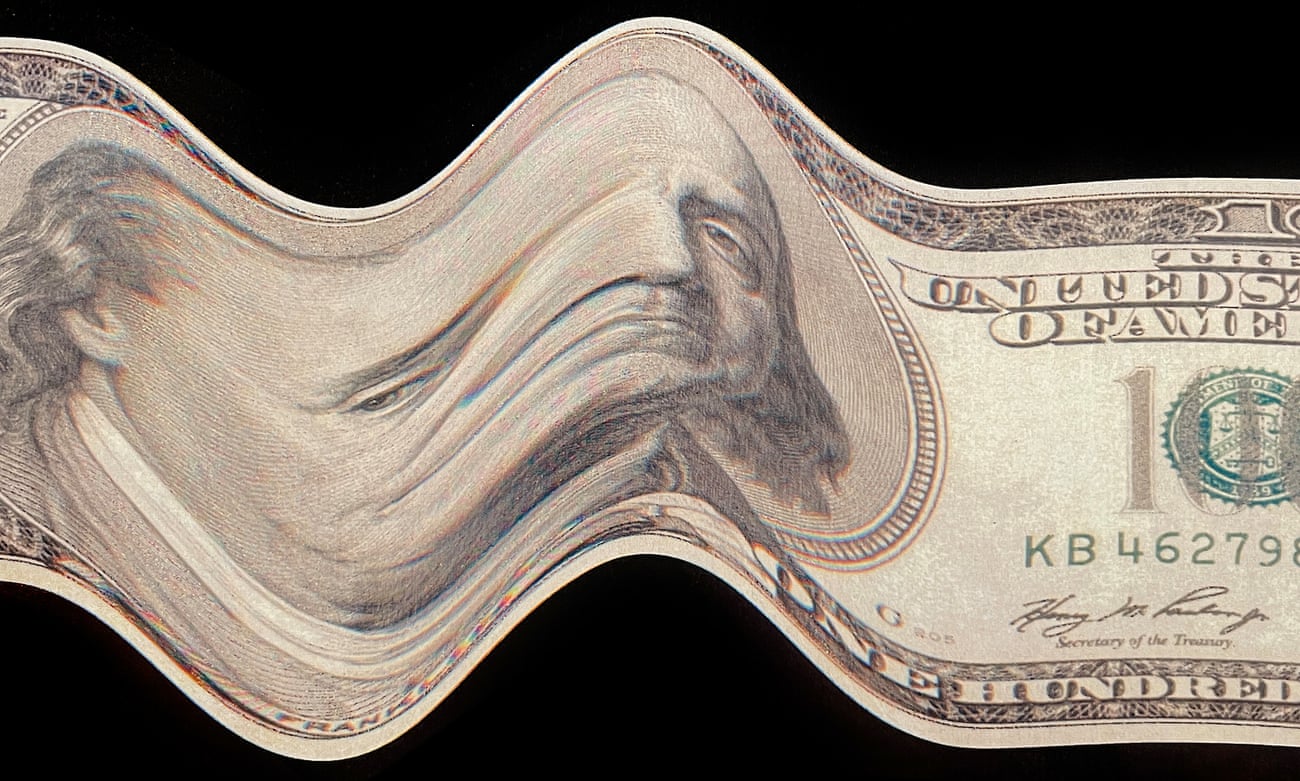
Reliance on sales and excise taxes has helped fuel this inequality, according to the report. Illustration: Guardian Design
A total of 44 of the 50 US states worsen inequality by making the wealthy pay a lesser share of their income in taxes than lower income people, a new analysis has found.
State and local tax regimes are “upside-down”, the new research finds, with weak or non-existent personal income taxes in many states allowing richer Americans to avoid tax. A reliance on sales and excise taxes, considered regressive because they disproportionately impact the poor, has helped fuel this inequality, according to the report .. https://itep.org/whopays-7th-edition/ .
CEOs of top 100 ‘low-wage’ US firms earn $601 for every $1 by worker, report finds
Read more > https://www.theguardian.com/us-news/2023/aug/24/ceos-100-low-wage-companies-income
“When you ask people what they think a fair tax code looks like, almost nobody says we should have the richest pay the least,” said Carl Davis, research director of the Institute on Taxation and Economic Policy (ITEP), which conducted the analysis.
“And yet when we look around the country, the vast majority of states have tax systems that do just that. There’s an alarming gap here between what the public wants and what state lawmakers have delivered.”
Only six states, plus the District of Columbia, have tax systems that reduce inequality rather than worsen it, with the poorest fifth of people paying a tax rate 60% higher, on average, than the top 1% of households.
The super-wealthy are treated particularly lightly by the tax system, with the top 1% paying less than every other income group across 42 states. In most states, 36 in all, the poorest residents are taxed at a higher rate than any other group.
The most regressive states in terms of taxation are, in order, Florida, Washington, Tennessee, Pennsylvania and Nevada. The least regressive jurisdictions are DC, Minnesota, Vermont, New York and California.
Various state-level policies, such as cutting taxes on the wealthy to supposedly drive economic activity, has worsened this situation, the report found. Inequality in recent .. https://www.theguardian.com/inequality .. decades has been far starker in the US than in other comparable countries and while some pandemic-era interventions, such as increased child tax credit, lessened the burden on the poorest in society, many of those measures have now lapsed.
“But we know it doesn’t have to be like this,” said Aidan Davis, ITEP’s state policy director.
“There is a clear path forward for flipping upside-down tax systems and we’ve seen a handful of states come pretty close to pulling it off. The regressive state tax laws we see today are a policy choice, and it’s clear there are better choices available to lawmakers.”
This article was amended on 11 and 12 January 2024. Owing to incorrect information supplied to us, an earlier version listed New Jersey as the fifth least regressive tax jurisdiction, according to the ITEP report, rather than California. Also, child tax credit was increased during the pandemic, not introduced then as an earlier version said.
https://www.theguardian.com/us-news/2024/jan/10/states-wealth-inequality-taxes
"Tougher on Trump the better, and - US election 2024: Where Biden and Trump stand on key issues
"Biden Takes the Gloves Off to Tear Into ‘Convicted Felon’ Trump"
[...]
Taxes
President Biden supports raising the corporate income tax rate to 28%, bringing it closer to the 35% rate that prevailed prior to Mr Trump's term. He has also proposed imposing higher tax rates on the wealthiest Americans, cracking down on tax avoidance, and expanding tax credits for low earners and families. He recently escalated Trump-imposed tariffs on China, including a 100 percent tax on its electric vehicles.
P - Mr Trump is pledging across-the-board tax cuts if he returns to office, in part by prolonging soon-to-expire income tax cuts, along with estate and wealth tax breaks, from legislation he signed in 2017. He will maintain the corporate income tax rate at 21% and proposes a universal 10% tariff on all US imports, and a 60% tariff on imports from China."
New research found that poorest fifth pay a tax rate 60% higher, on average, than the top 1% of households
Oliver Milman
Thu 11 Jan 2024 04.37 AEDT
Last modified on Mon 15 Jan 2024 01.05 AEDT
Reliance on sales and excise taxes has helped fuel this inequality, according to the report. Illustration: Guardian Design
A total of 44 of the 50 US states worsen inequality by making the wealthy pay a lesser share of their income in taxes than lower income people, a new analysis has found.
State and local tax regimes are “upside-down”, the new research finds, with weak or non-existent personal income taxes in many states allowing richer Americans to avoid tax. A reliance on sales and excise taxes, considered regressive because they disproportionately impact the poor, has helped fuel this inequality, according to the report .. https://itep.org/whopays-7th-edition/ .
CEOs of top 100 ‘low-wage’ US firms earn $601 for every $1 by worker, report finds
Read more > https://www.theguardian.com/us-news/2023/aug/24/ceos-100-low-wage-companies-income
“When you ask people what they think a fair tax code looks like, almost nobody says we should have the richest pay the least,” said Carl Davis, research director of the Institute on Taxation and Economic Policy (ITEP), which conducted the analysis.
“And yet when we look around the country, the vast majority of states have tax systems that do just that. There’s an alarming gap here between what the public wants and what state lawmakers have delivered.”
Only six states, plus the District of Columbia, have tax systems that reduce inequality rather than worsen it, with the poorest fifth of people paying a tax rate 60% higher, on average, than the top 1% of households.
The super-wealthy are treated particularly lightly by the tax system, with the top 1% paying less than every other income group across 42 states. In most states, 36 in all, the poorest residents are taxed at a higher rate than any other group.
The most regressive states in terms of taxation are, in order, Florida, Washington, Tennessee, Pennsylvania and Nevada. The least regressive jurisdictions are DC, Minnesota, Vermont, New York and California.
Various state-level policies, such as cutting taxes on the wealthy to supposedly drive economic activity, has worsened this situation, the report found. Inequality in recent .. https://www.theguardian.com/inequality .. decades has been far starker in the US than in other comparable countries and while some pandemic-era interventions, such as increased child tax credit, lessened the burden on the poorest in society, many of those measures have now lapsed.
“But we know it doesn’t have to be like this,” said Aidan Davis, ITEP’s state policy director.
“There is a clear path forward for flipping upside-down tax systems and we’ve seen a handful of states come pretty close to pulling it off. The regressive state tax laws we see today are a policy choice, and it’s clear there are better choices available to lawmakers.”
This article was amended on 11 and 12 January 2024. Owing to incorrect information supplied to us, an earlier version listed New Jersey as the fifth least regressive tax jurisdiction, according to the ITEP report, rather than California. Also, child tax credit was increased during the pandemic, not introduced then as an earlier version said.
https://www.theguardian.com/us-news/2024/jan/10/states-wealth-inequality-taxes
It was Plato who said, “He, O men, is the wisest, who like Socrates, knows that his wisdom is in truth worth nothing”
Discover What Traders Are Watching
Explore small cap ideas before they hit the headlines.



