



 AI
AI








Monday, December 11, 2023 12:00:37 AM
Gabon coup: The latest in a series of military takeovers on the continent
Related
Sudan crisis explained: What’s behind the latest fighting and how it fits nation’s troubled past
"Sudan Will Decide the Outcome of the Ethiopian Civil War
"Mali’s President Exits After Being Arrested in Military Coup
"Civilian deaths and atrocities escalate as chaos builds in Sahel
"Esper says ‘no decisions’ have been finalized on AFRICOM changes
"AFRICOM: Wrong for Liberia, Disastrous for Africa"""""
.. add today a link to that last one ..
https://investorshub.advfn.com/boards/read_msg.aspx?message_id=59092358
April, 2023 - https://investorshub.advfn.com/boards/read_msg.aspx?message_id=171728195
Published 30 August
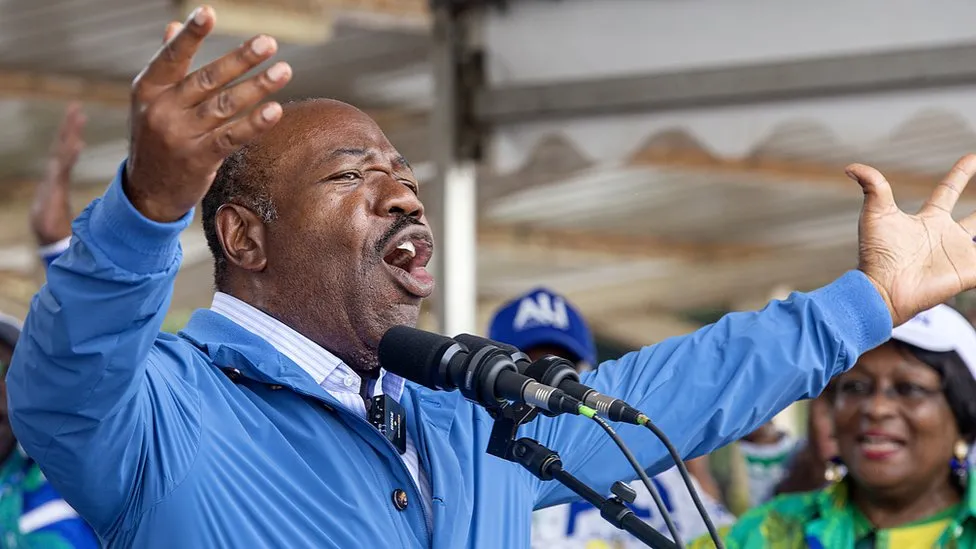
Ali Bongo Ondimba and his father have ruled Gabon for over fifty years. Getty Images
By Peter Mwai
BBC News, Nairobi
Military coups were a regular occurrence in some parts of Africa in the decades after independence. Now, after a period of relative democratic stability, there are indications they are on the rise again.
The takeover in Gabon is just the latest in a string of coups that have taken place in recent years, and comes just a month after soldiers took control in Niger.
There were two in Burkina Faso in 2022 as well as failed coup attempts in Guinea Bissau, The Gambia and the island nation of Sao Tome and Principe.
In 2021, there were six coup attempts in Africa, four of them successful.
Last year, a senior African Union official, Moussa Faki Mahamat, expressed concern about "the resurgence of unconstitutional changes of government".
When is a coup a coup?
A coup can be defined as an illegal and overt attempt by the military - or by other civilian officials - to unseat sitting leaders.
A study by two US researchers, Jonathan Powell and Clayton Thyne, has identified over 200 such attempts in Africa since the 1950s. About half of these have been successful.
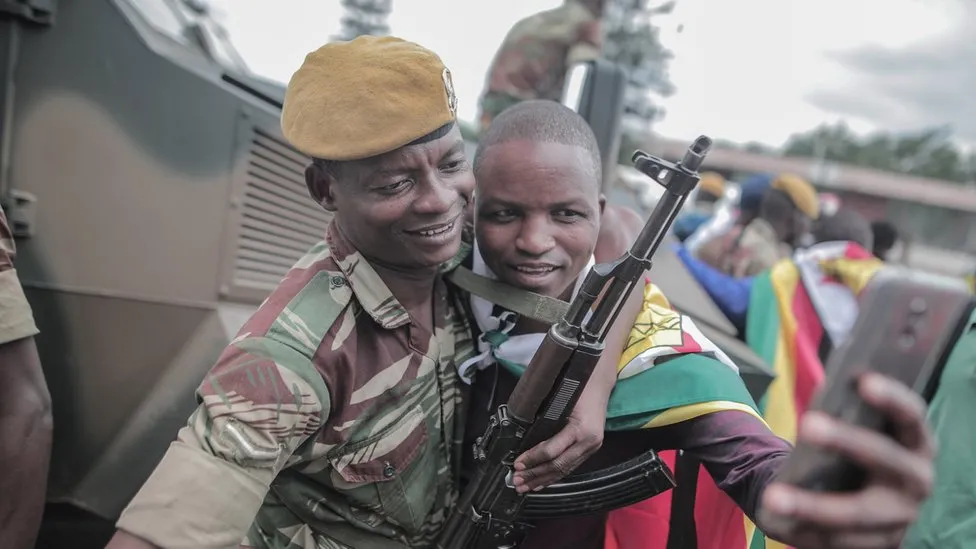
The army in Zimbabwe intervened against President Mugabe in 2017 but denied it was a coup Getty Images
Sometimes, those taking part in such an intervention deny it's a coup.
In 2017 in Zimbabwe, a military takeover brought Robert Mugabe's 37-year rule to and end. But one of the leaders, Maj Gen Sibusiso Moyo, appeared on television at the time, flatly denying it was a military takeover.
In April 2021 after the death of the Chadian leader, Idriss Déby, the army installed his son as interim president, leading a transitional military council. His opponents called it a "dynastic coup".
"Coup leaders almost invariably deny their action was a coup in an effort to appear legitimate," says Jonathan Powell.
How frequent are coups in Africa?
The overall number of coup attempts in Africa remained fairly consistent at an average of around four a year between 1960 and 2000.
Jonathan Powell says this is not surprising, given the instability many countries experienced in the years after independence.
"African countries have had conditions common for coups, like poverty and poor economic performance. When a country has one coup, that's often a harbinger of more coups."
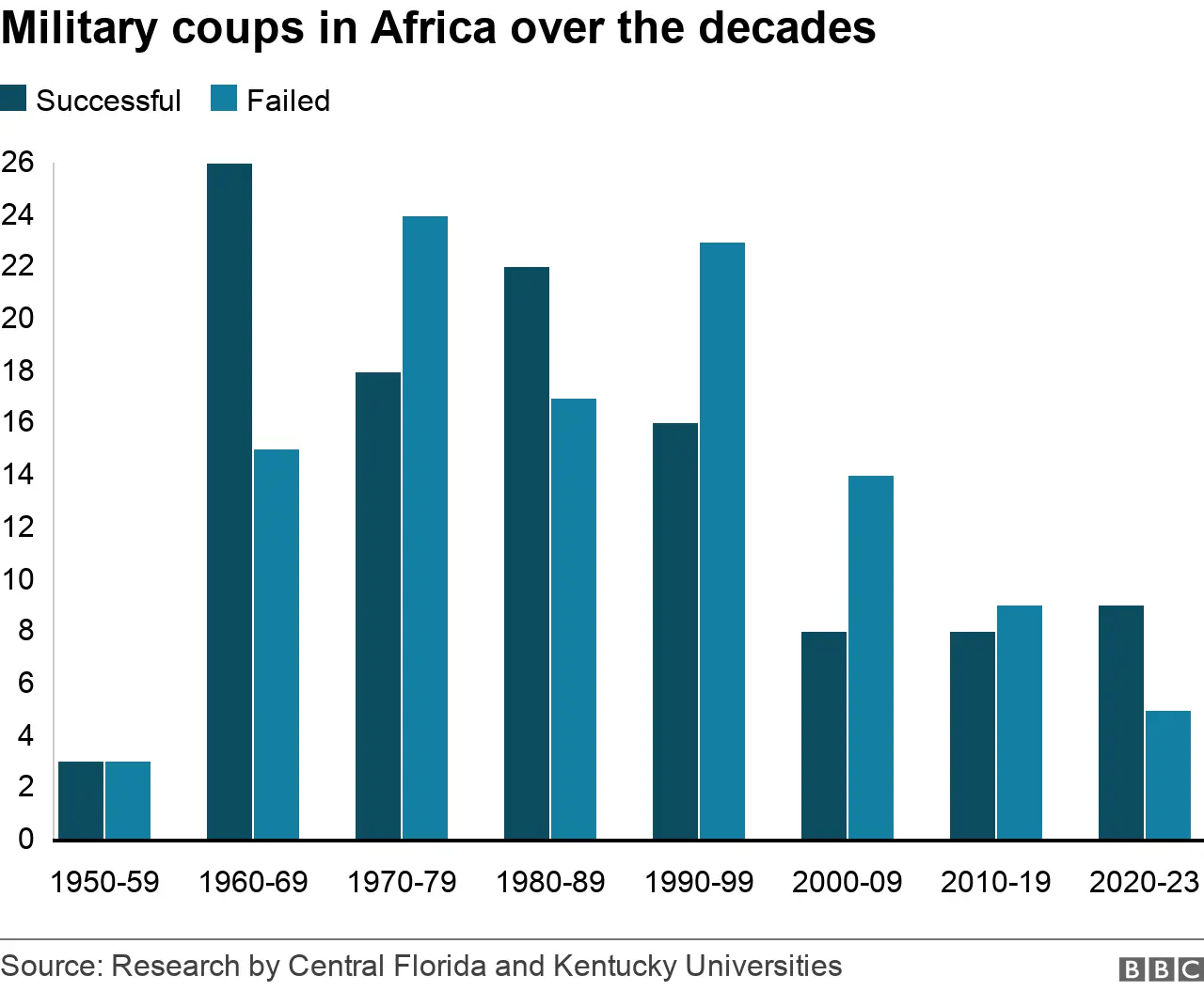
In the years after 2000, there was a noticeable decline in military interventions.
It's only in the last couple of years that coups have become more prevalent.
In 2020, there was just one coup (in Mali).
Then in 2021 five countries experienced military interventions (Chad, Mali, Guinea, Sudan and Niger).
In 2022, there were also five attempts, with two - both in Burkina Faso - succeeding.
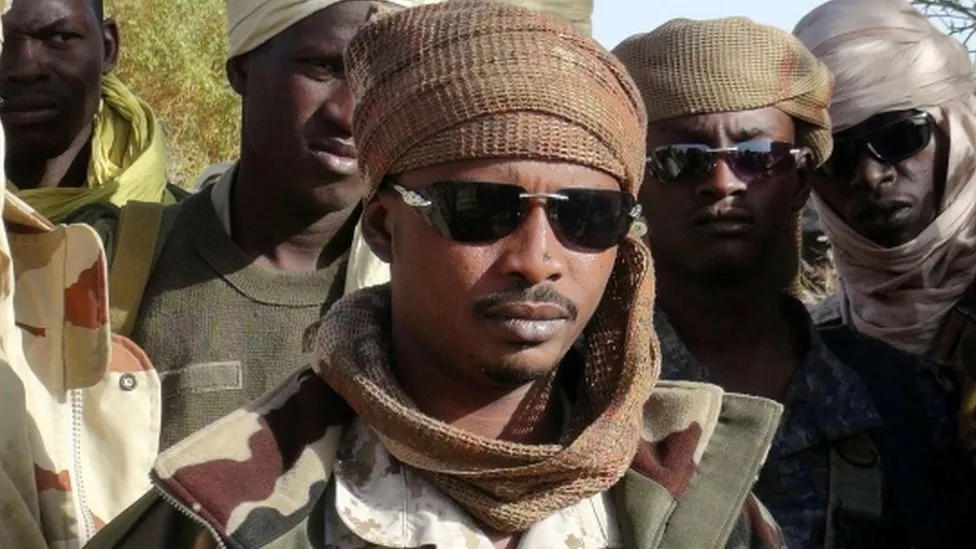
Mahamat Idriss Déby Itno succeeded his father as Chadian leader in April 2021 Reuters
Ndubuisi Christian Ani from the University of KwaZulu-Natal says popular uprisings against long-serving dictators have provided an opportunity for the return of coups in Africa.
"While popular uprisings are legitimate and people-led, success is often determined by the decisions taken by the military," he says.
Which countries have had the most coups?
Sudan has had the most coups and attempted takeovers amounting to 17 - six of them successful.
In 2019, long-serving leader Omar al-Bashir was removed from power following months of protests .. https://www.bbc.com/news/world-africa-47852496 . Bashir himself had taken over in a military coup in 1989.
Burkina Faso in West Africa, has had the most successful coups, with nine takeovers and one failed coup.
Nigeria had a reputation for military coups following independence with eight between January 1966 and the takeover by Gen Sani Abacha in 1993. However, since 1999 transfers of power in Africa's most populous nation have been by democratic election.
https://ichef.bbci.co.uk/news/976/cpsprodpb/3831/production/_130558341_1950s_updated_africa_coups_map_english_270723_640_nc-2x-nc.png.webp
Burundi's history has been marked by eleven separate coups, mostly driven by the tensions between the Hutu and Tutsi communities.
Sierra Leone experienced three coups between 1967 and 1968, and another one in 1971. Between 1992 and 1997, it experienced five further coup attempts.
Ghana has also had its share of military coups, with eight in two decades. The first was in 1966, when Kwame Nkrumah was removed from power, and in the following year there was an unsuccessful attempt by junior army officers.
In 2021, the UN Secretary-General António Guterres said that "military coups are back," adding that "geo-political divisions are undermining international co-operation and...a sense of impunity is taking hold," he said.
Overall, Africa has experienced more coups than any other continent. Of the 18 coups recorded globally since 2017, all but one - Myanmar in 2021 - have been in Africa.
https://www.bbc.com/news/world-africa-46783600
*
Chronology: Liberia's civil war left legacy of violence
Reuters 8 Nov 2005
Nov 8 (Reuters) - Liberians voted on Tuesday to choose their first president after a brutal civil war in an historic runoff ballot between millionaire soccer star George Weah and a Harvard-trained former finance minister. Here is a short chronology of the major political and military events in Liberia since the start of the war.
1989 - Charles Taylor's National Patriotic Front of Liberia (NPFL) begins an uprising against the government of President Samuel Doe, who came to power in a coup in 1980.
1990 - Peacekeeping troops of the Economic Community of West African States (ECOWAS) intervene in Liberia. Doe is gruesomely executed by an NPFL splinter group.
1997 - After several years of chaotic, stop-go fighting, Taylor wins a presidential election. Two years later, the last members of the West African peacekeeping force depart.
July 2000 - Government reports first attacks by rebels who it says are backed by Guinea. They identify themselves as Liberians United for Reconciliation and Democracy (LURD).
2003 - Rebels close in on Monrovia; a new rebel force, Movement for Democracy in Liberia (Model), emerges. Taylor is indicted by a U.N.-backed war crimes court for his alleged role in fuelling Sierra Leone's civil war.
June 2003 - Warring factions sign a ceasefire accord leading to negotiations to form a transition government without Taylor. In July, Taylor, under U.S. pressure to quit, accepts an offer of asylum from Nigeria.
Aug. 2003 - Nigerian soldiers reach Liberia as part of latest African peacekeeping force, soon to be followed by U.N. force. Government and rebels sign peace deal setting up new transitional administration to prepare for elections in 2005.
Oct. 2003 - Gyude Bryant becomes interim leader with a mission to rebuild after years of war.
April 2004 - Rebel fighters hand in weapons under U.N.-backed disarmament scheme.
Oct. 11 2005 - Parliamentary election and first round of presidential election. Weah wins, but must contest run-off against second-placed Johnson-Sirleaf.
Nov. 8 - Second round presidential runoff between Weah and Johnson-Sirleaf.
https://reliefweb.int/report/liberia/chronology-liberias-civil-war-left-legacy-violence
How many years in the future will pundits be saying something like this about Donald Trump
25 years after his demise, Samuel Doe continues to cast a long shadow across Liberian politics
By Brooks Marmon
September 9, 2015
When a 28-year-old Master Sergeant took power in 1980, he set in motion a series of events that reverberates in Liberia to this day.
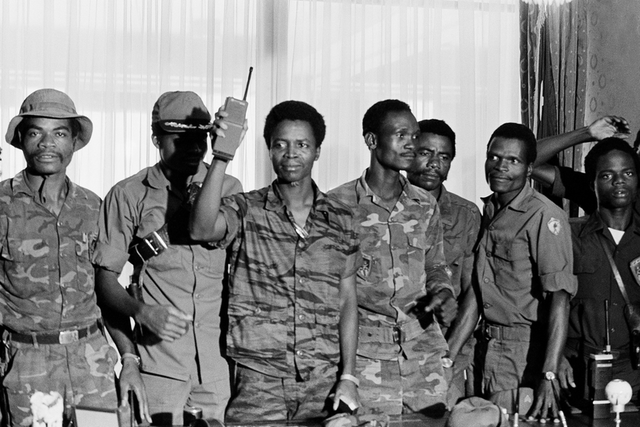
Former President Samuel K. Doe, holding a walkie-talkie, after the 1980 coup that toppled
President William Tolbert Jr. Photograph by Sando Moore/AP.
In 1980, Samuel K. Doe, a 28 year-old Master Sergeant, assumed power in Liberia in a blaze of glory. In a surprise night-time attack on the Executive Mansion overlooking the Atlantic Ocean, Doe and his accomplices brutally murdered President William R. Tolbert Jr, ending 133 years of rule by black American settlers and their descendants (known as Americo-Liberians). Having discarded with Tolbert, Doe became Liberia’s first president of “exclusive indigenous heritage”.
In the subsequent decade, President Doe inflamed ethnic politics and eked out a suspiciously close victory in the 1985 elections, before he met an even less dignified end than his predecessor. At the end of the Cold War, his previously unwavering support from the US evaporated and, as Liberia erupted into civil war, Doe was left vulnerable. Nine months into the conflict on 9 September, 1990, Doe was captured on a visit to the recently deployed ECOWAS Monitoring Group (ECOMOG) in Monrovia.
More -- https://africanarguments.org/2015/09/25-years-after-his-demise-samuel-doe-continues-to-cast-a-long-shadow-across-liberian-politics/
And so to today. This is super good to see
Liberia’s George Weah concedes to Joseph Boakai in presidential polls
Sitting President Weah was accused of failing to live up to his promises of curbing poverty and fighting corruption.
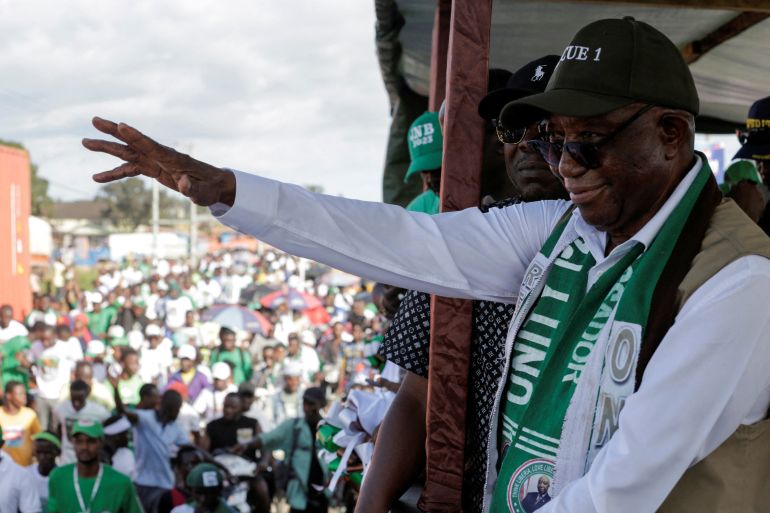
The peaceful Boakai victory comes at a time when the region has seen several military coups in the span
of a few years [File: Carielle Doe/Reuters]
Published On 18 Nov 202318 Nov 2023
Joseph Boakai has become Liberia’s new leader after his rival and sitting President George Weah conceded a tight election to mark a peaceful transfer of power in a region that has recently seen many military coups.
The country’s elections commission said on Friday that the 78-year-old Boakai, a former vice president, has managed to secure a narrow victory with 50.9 percent of the vote to Weah’s 49.1 percent, with almost all the votes counted.
Continued - https://www.aljazeera.com/news/2023/11/18/liberias-george-weah-concedes-to-joseph-boakai-in-presidential-polls
If only Trump and his GOP "big lie" supporter mates could accept defeat as graciously as George Weah of Liberia did.
Related
Sudan crisis explained: What’s behind the latest fighting and how it fits nation’s troubled past
"Sudan Will Decide the Outcome of the Ethiopian Civil War
"Mali’s President Exits After Being Arrested in Military Coup
"Civilian deaths and atrocities escalate as chaos builds in Sahel
"Esper says ‘no decisions’ have been finalized on AFRICOM changes
"AFRICOM: Wrong for Liberia, Disastrous for Africa"""""
.. add today a link to that last one ..
https://investorshub.advfn.com/boards/read_msg.aspx?message_id=59092358
April, 2023 - https://investorshub.advfn.com/boards/read_msg.aspx?message_id=171728195
Published 30 August
Ali Bongo Ondimba and his father have ruled Gabon for over fifty years. Getty Images
By Peter Mwai
BBC News, Nairobi
Military coups were a regular occurrence in some parts of Africa in the decades after independence. Now, after a period of relative democratic stability, there are indications they are on the rise again.
The takeover in Gabon is just the latest in a string of coups that have taken place in recent years, and comes just a month after soldiers took control in Niger.
There were two in Burkina Faso in 2022 as well as failed coup attempts in Guinea Bissau, The Gambia and the island nation of Sao Tome and Principe.
In 2021, there were six coup attempts in Africa, four of them successful.
Last year, a senior African Union official, Moussa Faki Mahamat, expressed concern about "the resurgence of unconstitutional changes of government".
When is a coup a coup?
A coup can be defined as an illegal and overt attempt by the military - or by other civilian officials - to unseat sitting leaders.
A study by two US researchers, Jonathan Powell and Clayton Thyne, has identified over 200 such attempts in Africa since the 1950s. About half of these have been successful.
The army in Zimbabwe intervened against President Mugabe in 2017 but denied it was a coup Getty Images
Sometimes, those taking part in such an intervention deny it's a coup.
In 2017 in Zimbabwe, a military takeover brought Robert Mugabe's 37-year rule to and end. But one of the leaders, Maj Gen Sibusiso Moyo, appeared on television at the time, flatly denying it was a military takeover.
In April 2021 after the death of the Chadian leader, Idriss Déby, the army installed his son as interim president, leading a transitional military council. His opponents called it a "dynastic coup".
"Coup leaders almost invariably deny their action was a coup in an effort to appear legitimate," says Jonathan Powell.
How frequent are coups in Africa?
The overall number of coup attempts in Africa remained fairly consistent at an average of around four a year between 1960 and 2000.
Jonathan Powell says this is not surprising, given the instability many countries experienced in the years after independence.
"African countries have had conditions common for coups, like poverty and poor economic performance. When a country has one coup, that's often a harbinger of more coups."
In the years after 2000, there was a noticeable decline in military interventions.
It's only in the last couple of years that coups have become more prevalent.
In 2020, there was just one coup (in Mali).
Then in 2021 five countries experienced military interventions (Chad, Mali, Guinea, Sudan and Niger).
In 2022, there were also five attempts, with two - both in Burkina Faso - succeeding.
Mahamat Idriss Déby Itno succeeded his father as Chadian leader in April 2021 Reuters
Ndubuisi Christian Ani from the University of KwaZulu-Natal says popular uprisings against long-serving dictators have provided an opportunity for the return of coups in Africa.
"While popular uprisings are legitimate and people-led, success is often determined by the decisions taken by the military," he says.
Which countries have had the most coups?
Sudan has had the most coups and attempted takeovers amounting to 17 - six of them successful.
In 2019, long-serving leader Omar al-Bashir was removed from power following months of protests .. https://www.bbc.com/news/world-africa-47852496 . Bashir himself had taken over in a military coup in 1989.
Burkina Faso in West Africa, has had the most successful coups, with nine takeovers and one failed coup.
Nigeria had a reputation for military coups following independence with eight between January 1966 and the takeover by Gen Sani Abacha in 1993. However, since 1999 transfers of power in Africa's most populous nation have been by democratic election.
https://ichef.bbci.co.uk/news/976/cpsprodpb/3831/production/_130558341_1950s_updated_africa_coups_map_english_270723_640_nc-2x-nc.png.webp
Burundi's history has been marked by eleven separate coups, mostly driven by the tensions between the Hutu and Tutsi communities.
Sierra Leone experienced three coups between 1967 and 1968, and another one in 1971. Between 1992 and 1997, it experienced five further coup attempts.
Ghana has also had its share of military coups, with eight in two decades. The first was in 1966, when Kwame Nkrumah was removed from power, and in the following year there was an unsuccessful attempt by junior army officers.
In 2021, the UN Secretary-General António Guterres said that "military coups are back," adding that "geo-political divisions are undermining international co-operation and...a sense of impunity is taking hold," he said.
Overall, Africa has experienced more coups than any other continent. Of the 18 coups recorded globally since 2017, all but one - Myanmar in 2021 - have been in Africa.
https://www.bbc.com/news/world-africa-46783600
*
Chronology: Liberia's civil war left legacy of violence
Reuters 8 Nov 2005
Nov 8 (Reuters) - Liberians voted on Tuesday to choose their first president after a brutal civil war in an historic runoff ballot between millionaire soccer star George Weah and a Harvard-trained former finance minister. Here is a short chronology of the major political and military events in Liberia since the start of the war.
1989 - Charles Taylor's National Patriotic Front of Liberia (NPFL) begins an uprising against the government of President Samuel Doe, who came to power in a coup in 1980.
1990 - Peacekeeping troops of the Economic Community of West African States (ECOWAS) intervene in Liberia. Doe is gruesomely executed by an NPFL splinter group.
1997 - After several years of chaotic, stop-go fighting, Taylor wins a presidential election. Two years later, the last members of the West African peacekeeping force depart.
July 2000 - Government reports first attacks by rebels who it says are backed by Guinea. They identify themselves as Liberians United for Reconciliation and Democracy (LURD).
2003 - Rebels close in on Monrovia; a new rebel force, Movement for Democracy in Liberia (Model), emerges. Taylor is indicted by a U.N.-backed war crimes court for his alleged role in fuelling Sierra Leone's civil war.
June 2003 - Warring factions sign a ceasefire accord leading to negotiations to form a transition government without Taylor. In July, Taylor, under U.S. pressure to quit, accepts an offer of asylum from Nigeria.
Aug. 2003 - Nigerian soldiers reach Liberia as part of latest African peacekeeping force, soon to be followed by U.N. force. Government and rebels sign peace deal setting up new transitional administration to prepare for elections in 2005.
Oct. 2003 - Gyude Bryant becomes interim leader with a mission to rebuild after years of war.
April 2004 - Rebel fighters hand in weapons under U.N.-backed disarmament scheme.
Oct. 11 2005 - Parliamentary election and first round of presidential election. Weah wins, but must contest run-off against second-placed Johnson-Sirleaf.
Nov. 8 - Second round presidential runoff between Weah and Johnson-Sirleaf.
https://reliefweb.int/report/liberia/chronology-liberias-civil-war-left-legacy-violence
How many years in the future will pundits be saying something like this about Donald Trump
25 years after his demise, Samuel Doe continues to cast a long shadow across Liberian politics
By Brooks Marmon
September 9, 2015
When a 28-year-old Master Sergeant took power in 1980, he set in motion a series of events that reverberates in Liberia to this day.
Former President Samuel K. Doe, holding a walkie-talkie, after the 1980 coup that toppled
President William Tolbert Jr. Photograph by Sando Moore/AP.
In 1980, Samuel K. Doe, a 28 year-old Master Sergeant, assumed power in Liberia in a blaze of glory. In a surprise night-time attack on the Executive Mansion overlooking the Atlantic Ocean, Doe and his accomplices brutally murdered President William R. Tolbert Jr, ending 133 years of rule by black American settlers and their descendants (known as Americo-Liberians). Having discarded with Tolbert, Doe became Liberia’s first president of “exclusive indigenous heritage”.
In the subsequent decade, President Doe inflamed ethnic politics and eked out a suspiciously close victory in the 1985 elections, before he met an even less dignified end than his predecessor. At the end of the Cold War, his previously unwavering support from the US evaporated and, as Liberia erupted into civil war, Doe was left vulnerable. Nine months into the conflict on 9 September, 1990, Doe was captured on a visit to the recently deployed ECOWAS Monitoring Group (ECOMOG) in Monrovia.
More -- https://africanarguments.org/2015/09/25-years-after-his-demise-samuel-doe-continues-to-cast-a-long-shadow-across-liberian-politics/
And so to today. This is super good to see
Liberia’s George Weah concedes to Joseph Boakai in presidential polls
Sitting President Weah was accused of failing to live up to his promises of curbing poverty and fighting corruption.
The peaceful Boakai victory comes at a time when the region has seen several military coups in the span
of a few years [File: Carielle Doe/Reuters]
Published On 18 Nov 202318 Nov 2023
Joseph Boakai has become Liberia’s new leader after his rival and sitting President George Weah conceded a tight election to mark a peaceful transfer of power in a region that has recently seen many military coups.
The country’s elections commission said on Friday that the 78-year-old Boakai, a former vice president, has managed to secure a narrow victory with 50.9 percent of the vote to Weah’s 49.1 percent, with almost all the votes counted.
Continued - https://www.aljazeera.com/news/2023/11/18/liberias-george-weah-concedes-to-joseph-boakai-in-presidential-polls
If only Trump and his GOP "big lie" supporter mates could accept defeat as graciously as George Weah of Liberia did.
It was Plato who said, “He, O men, is the wisest, who like Socrates, knows that his wisdom is in truth worth nothing”
Discover What Traders Are Watching
Explore small cap ideas before they hit the headlines.



