



 AI
AI








Sunday, December 10, 2023 5:29:44 PM
The Rise and Fall of Nikola Tesla and his Tower
"Nikola Tesla Describing Smart Phones in 1926
( from Reddit )
He was quite the visionary, didn’t get everything right (yet, heh), but sure was a thinker !"
Genius personified.
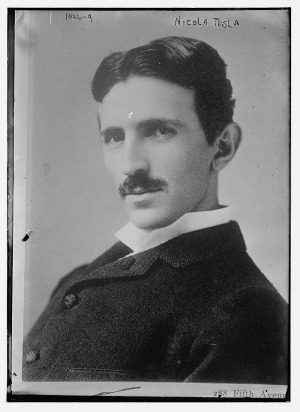
Nikola Tesla. Image courtesy of LIbrary of Congress
Posted By Gilbert King
February 4, 2013
By the end of his brilliant and tortured life, the Serbian-born physicist, engineer and inventor Nikola Tesla was penniless and living in a small New York City hotel room. He spent days in a park surrounded by the creatures that mattered most to him—pigeons—and his sleepless nights working over mathematical equations and scientific problems in his head. That habit would confound scientists and scholars for decades after he died, in 1943. His inventions were designed and perfected in his imagination.
Tesla believed his mind to be without equal, and he wasn’t above chiding his contemporaries, such as Thomas Edison, who once hired him. “If Edison had a needle to find in a haystack,” Tesla once wrote, “he would proceed at once with the diligence of the bee to examine straw after straw until he found the object of his search. I was a sorry witness of such doing that a little theory and calculation would have saved him ninety percent of his labor.”
But what his contemporaries may have been lacking in scientific talent (by Tesla’s estimation), men like Edison and George Westinghouse clearly possessed the one trait that Tesla did not—a mind for business. And in the last days of America’s Gilded Age, Nikola Tesla made a dramatic attempt to change the future of communications and power transmission around the world. He managed to convince J.P. Morgan that he was on the verge of a breakthrough, and the financier gave Tesla more than $150,000 to fund what would become a gigantic, futuristic and startling tower in the middle of Long Island, New York. In 1898, as Tesla’s plans to create a worldwide wireless transmission system became known, Wardenclyffe Tower would be Tesla’s last chance to claim the recognition and wealth that had always escaped him.
Nikola Tesla was born in modern-day Croatia in 1856; his father, Milutin, was a priest of the Serbian Orthodox Church. From an early age, he demonstrated the obsessiveness that would puzzle and amuse those around him. He could memorize entire books and store logarithmic tables in his brain. He picked up languages easily, and he could work through days and nights on only a few hours sleep.
[...]
Tesla patented his AC motors and power systems, which were said to be the most valuable inventions since the telephone. Soon, George Westinghouse, recognizing that Tesla’s designs might be just what he needed in his efforts to unseat Edison’s DC current, licensed his patents for $60,000 in stocks and cash and royalties based on how much electricity Westinghouse could sell. Ultimately, he won the “War of the Currents,” but at a steep cost in litigation and competition for both Westinghouse and Edison’s General Electric Company.
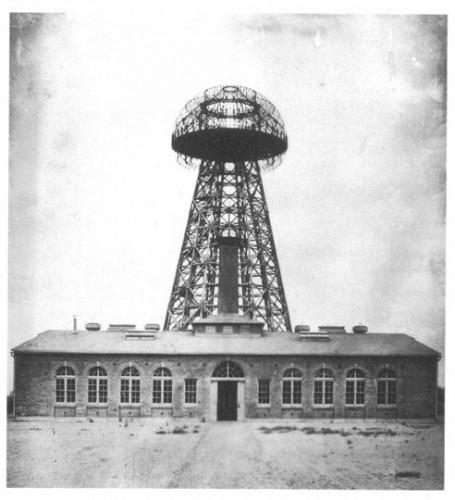
Wardenclyffe Tower. Photo: Wikipedia
Fearing ruin, Westinghouse begged Tesla for relief from the royalties Westinghouse agreed to. “Your decision determines the fate of the Westinghouse Company,” he said. Tesla, grateful to the man who had never tried to swindle him, tore up the royalty contract, walking away from millions in royalties that he was already owed and billions that would have accrued in the future. He would have been one of the wealthiest men in the world—a titan of the Gilded Age.
[...]
White quickly got to work designing Wardenclyffe Tower in 1901, but soon after construction began it became apparent that Tesla was going to run out of money before it was finished. An appeal to Morgan for more money proved fruitless, and in the meantime investors were rushing to throw their money behind Marconi. In December 1901, Marconi successfully sent a signal from England to Newfoundland. Tesla grumbled that the Italian was using 17 of his patents, but litigation eventually favored Marconi and the commercial damage was done. (The U.S. Supreme Court ultimately upheld Tesla’s claims, clarifying Tesla’s role in the invention of the radio—but not until 1943, after he died.) Thus the Italian inventor was credited as the inventor of radio and became rich. Wardenclyffe Tower became a 186-foot-tall relic (it would be razed in 1917), and the defeat—Tesla’s worst—led to another of his breakdowns. ”It is not a dream,” Tesla said, “it is a simple feat of scientific electrical engineering, only expensive—blind, faint-hearted, doubting world!”
[...]
Nikola Tesla would go on to make news from time to time while living on the 33rd floor of the New Yorker Hotel. In 1931 he made the cover of Time magazine, which featured his inventions on his 75th birthday. And in 1934, the New York Times reported that Tesla was working on a “Death Beam” capable of knocking 10,000 enemy airplanes out of the sky. He hoped to fund a prototypical defensive weapon in the interest of world peace, but his appeals to J.P. Morgan Jr. and British Prime Minister Neville Chamberlain went nowhere. Tesla did, however, receive a $25,000 check from the Soviet Union, but the project languished. He died in 1943, in debt, although Westinghouse had been paying his room and board at the hotel for years.
2013 - https://investorshub.advfn.com/boards/read_msg.aspx?message_id=84316168
Whenever Tesla is mentioned i think of Bobby Fischer ..
Bye, bobby, good bye, you wrote a great
book. Sad you were so used. Thank you.
2008 - https://investorshub.advfn.com/boards/read_msg.aspx?message_id=26108444
"Nikola Tesla Describing Smart Phones in 1926
( from Reddit )
He was quite the visionary, didn’t get everything right (yet, heh), but sure was a thinker !"
Genius personified.
Nikola Tesla. Image courtesy of LIbrary of Congress
Posted By Gilbert King
February 4, 2013
By the end of his brilliant and tortured life, the Serbian-born physicist, engineer and inventor Nikola Tesla was penniless and living in a small New York City hotel room. He spent days in a park surrounded by the creatures that mattered most to him—pigeons—and his sleepless nights working over mathematical equations and scientific problems in his head. That habit would confound scientists and scholars for decades after he died, in 1943. His inventions were designed and perfected in his imagination.
Tesla believed his mind to be without equal, and he wasn’t above chiding his contemporaries, such as Thomas Edison, who once hired him. “If Edison had a needle to find in a haystack,” Tesla once wrote, “he would proceed at once with the diligence of the bee to examine straw after straw until he found the object of his search. I was a sorry witness of such doing that a little theory and calculation would have saved him ninety percent of his labor.”
But what his contemporaries may have been lacking in scientific talent (by Tesla’s estimation), men like Edison and George Westinghouse clearly possessed the one trait that Tesla did not—a mind for business. And in the last days of America’s Gilded Age, Nikola Tesla made a dramatic attempt to change the future of communications and power transmission around the world. He managed to convince J.P. Morgan that he was on the verge of a breakthrough, and the financier gave Tesla more than $150,000 to fund what would become a gigantic, futuristic and startling tower in the middle of Long Island, New York. In 1898, as Tesla’s plans to create a worldwide wireless transmission system became known, Wardenclyffe Tower would be Tesla’s last chance to claim the recognition and wealth that had always escaped him.
Nikola Tesla was born in modern-day Croatia in 1856; his father, Milutin, was a priest of the Serbian Orthodox Church. From an early age, he demonstrated the obsessiveness that would puzzle and amuse those around him. He could memorize entire books and store logarithmic tables in his brain. He picked up languages easily, and he could work through days and nights on only a few hours sleep.
[...]
Tesla patented his AC motors and power systems, which were said to be the most valuable inventions since the telephone. Soon, George Westinghouse, recognizing that Tesla’s designs might be just what he needed in his efforts to unseat Edison’s DC current, licensed his patents for $60,000 in stocks and cash and royalties based on how much electricity Westinghouse could sell. Ultimately, he won the “War of the Currents,” but at a steep cost in litigation and competition for both Westinghouse and Edison’s General Electric Company.
Wardenclyffe Tower. Photo: Wikipedia
Fearing ruin, Westinghouse begged Tesla for relief from the royalties Westinghouse agreed to. “Your decision determines the fate of the Westinghouse Company,” he said. Tesla, grateful to the man who had never tried to swindle him, tore up the royalty contract, walking away from millions in royalties that he was already owed and billions that would have accrued in the future. He would have been one of the wealthiest men in the world—a titan of the Gilded Age.
[...]
White quickly got to work designing Wardenclyffe Tower in 1901, but soon after construction began it became apparent that Tesla was going to run out of money before it was finished. An appeal to Morgan for more money proved fruitless, and in the meantime investors were rushing to throw their money behind Marconi. In December 1901, Marconi successfully sent a signal from England to Newfoundland. Tesla grumbled that the Italian was using 17 of his patents, but litigation eventually favored Marconi and the commercial damage was done. (The U.S. Supreme Court ultimately upheld Tesla’s claims, clarifying Tesla’s role in the invention of the radio—but not until 1943, after he died.) Thus the Italian inventor was credited as the inventor of radio and became rich. Wardenclyffe Tower became a 186-foot-tall relic (it would be razed in 1917), and the defeat—Tesla’s worst—led to another of his breakdowns. ”It is not a dream,” Tesla said, “it is a simple feat of scientific electrical engineering, only expensive—blind, faint-hearted, doubting world!”
[...]
Nikola Tesla would go on to make news from time to time while living on the 33rd floor of the New Yorker Hotel. In 1931 he made the cover of Time magazine, which featured his inventions on his 75th birthday. And in 1934, the New York Times reported that Tesla was working on a “Death Beam” capable of knocking 10,000 enemy airplanes out of the sky. He hoped to fund a prototypical defensive weapon in the interest of world peace, but his appeals to J.P. Morgan Jr. and British Prime Minister Neville Chamberlain went nowhere. Tesla did, however, receive a $25,000 check from the Soviet Union, but the project languished. He died in 1943, in debt, although Westinghouse had been paying his room and board at the hotel for years.
2013 - https://investorshub.advfn.com/boards/read_msg.aspx?message_id=84316168
Whenever Tesla is mentioned i think of Bobby Fischer ..
Bye, bobby, good bye, you wrote a great
book. Sad you were so used. Thank you.
2008 - https://investorshub.advfn.com/boards/read_msg.aspx?message_id=26108444
It was Plato who said, “He, O men, is the wisest, who like Socrates, knows that his wisdom is in truth worth nothing”
Where Real Traders Talk Markets
Join thousands of traders sharing insights, catalysts, and charts.



