



 AI
AI








Thursday, December 07, 2023 3:27:03 AM
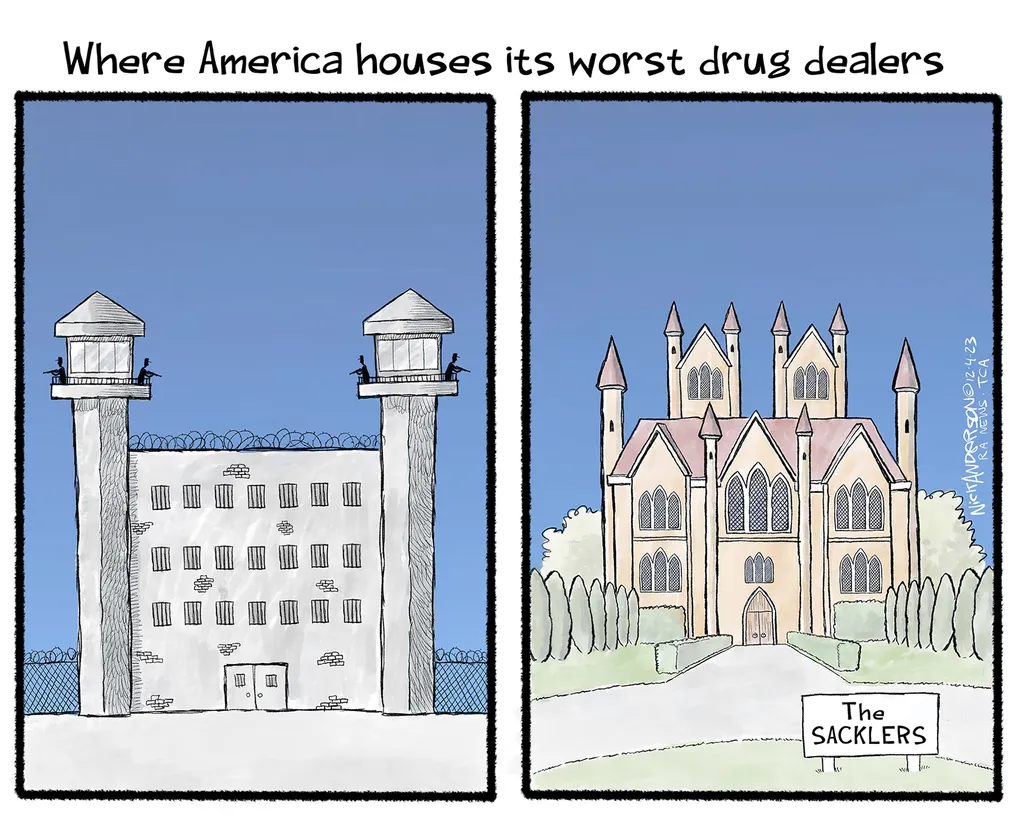
Purdue Pharma, Sacklers' OxyContin settlement lands at the Supreme Court
"The 'No Labels' agenda is more disturbing than you know
[...]In his twitter thread, Wilson notes:
“They formed No Labels as a long con, a way to break the Democrats, get rich doing it (and again, they are VERY rich), and punish their imagined enemies.”
P - Congressman Mark Pocan, former co-chair of the Congressional Progressive Caucus and a regular on my radio program for years, tells the story of joining No Labels and their “Problem Solvers Caucus” when he first went to Congress, thinking the idea of reaching across the aisle to get things done was noble.
P - When he asked the group who provided their funding, however, he said they instead offered to “quietly” delete his name from their membership roster.
[...]Most Americans want Social Security strengthened, for example, but New York bankers and hedge fund managers want those trillions parked with them. And some billionaire businessmen think it would be better for their industries if there were no social safety net at all, so workers would be more terrified, compliant, and willing to work for wages closer to what is paid in China or Mexico.
P - This is why today the entire GOP is dedicated to taking down what Alexander Hamilton called The American Plan — which built and created our middle class — and instead are working at turning America into an authoritarian oligarchy.
P - Giant insurance companies who fund and support them, similarly, want to get their hands on Medicare, which they’ve already seized half of through George W. Bush’s Medicare Advantage scam."
Insert
December 4, 20235:00 AM ET
Heard on Morning Edition
https://www.npr.org/programs/morning-edition/2023/12/04/1216887393/morning-edition-for-december-4-2023
Nina Totenberg
5-Minute Listen
Transcript
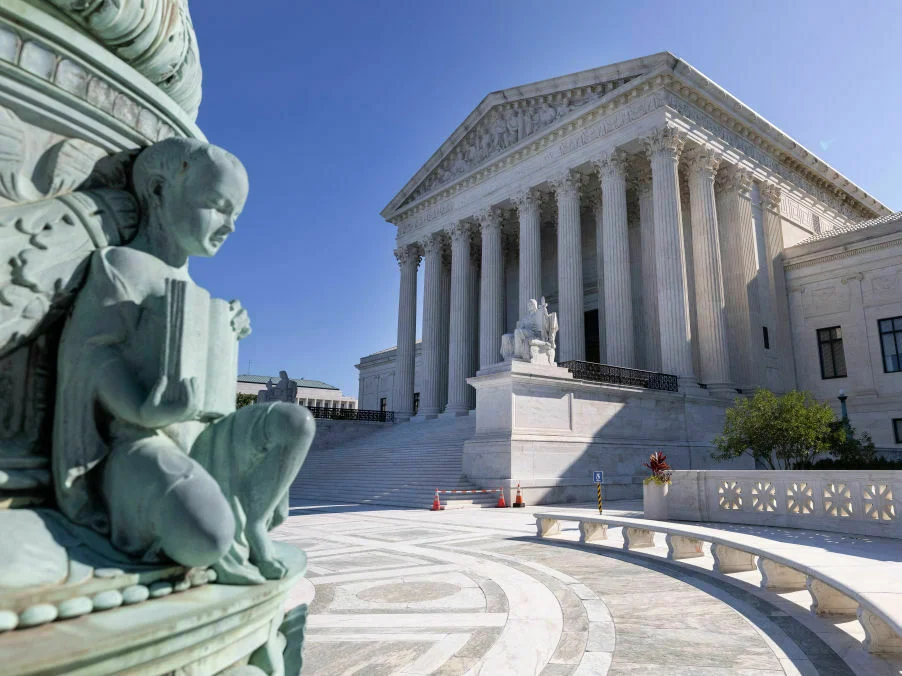
The Supreme Court hears arguments Monday in a challenge to the deal meant to compensate victims of the highly
addictive painkiller OxyContin. Kevin Dietsch/Getty Images
The opioid crisis comes to the Supreme Court Monday as the justices hear arguments in a challenge to the bankruptcy deal meant to compensate victims of the highly addictive pain killer OxyContin.
Under the terms of the deal approved by a lower court, Purdue Pharma—the maker, aggressive peddler, and deceptive marketer of Oxycontin— agreed to pay billions of dollars to those harmed in the opioid epidemic. In exchange, the deal shields members of the Sackler family from personal liability, though they owned and ran the company.
Just what happened at Purdue Pharma, and what the Sacklers did, was not known for a long time. Now, however, their role and the company's have been well documented, in court and movies, books, and documentaries, like Crime of the Century.
"Within the last 20 years, more than 500,000 Americans have been killed by overdoses," the documentary recounts. "This was a new drug cartel. They were drug dealers wearing suits and lab coats."
The deal at the center of the case
By 2020, Purdue Pharma pleaded guilty to three criminal charges. The company agreed that it owed $8 billion in criminal and civil fines, most of it to be paid to state and local governments handling the fallout of the opioid crisis. Most of the money was conditioned on the company reaching a deal in bankruptcy court that would reimburse victims of the opioid epidemic, including those state and local governments, as well as individuals who were harmed.
That deal that is at the center of Monday's case because it releases the Sacklers from personal liability, despite the fact that all three of the original Sackler brothers who bought Purdue and ultimately developed OxyContin were doctors. And, six Sacklers sat on the board of the company, including the chairman Richard Sackler, who closely directed the firm's aggressive and deceptive marketing strategy of OxyContin as not causing addiction.
Under the original bankruptcy deal with the company, the Sacklers kicked in $4 billion to be divided among the state and local governments, and others. But, at the same time the Sackler family members were to be released from any further liability.
When eight states and the District of Columbia balked at the amount, the Sacklers upped the ante to $6 billion, with the remaining $2 billion coming from the assets and future earnings of a new non-profit company formed after Purdue's dissolution.
After the Sacklers increased their contribution to $6 billion, the objecting states withdrew their opposition, and 95% of the state, local and tribal governments, as well as groups of individuals voted to approve the settlement.
What critics of the agreement say
But, United States Trustee William Harrington, who oversees bankruptcy cases in New York, Connecticut and Vermont, objected to the deal. Representing him in the Supreme Court Monday, the Biden administration will argue that the bankruptcy law does not authorize bankruptcy courts to approve a release from liability for third parties like the Sacklers.
Georgetown University law professor Adam Levitin says that the Sacklers' $6 billion to be paid over eight years is buying them not only a release from liability, it is ensuring that they will not have to testify about their misdeeds in future litigation, and they will be able to keep about half of their money and other assets.
"The Sacklers do not want to have to be in the bankruptcy fishbowl," Levitin says. "They're wanting to get bankruptcy at half price."
Levitin add that the release from liability covers more than just the Sacklers. It also includes lots of other Sackler acolytes, from their lawyers to consultants, doctors, even former Sen. Luther Strange, who was a Purdue lobbyist after leaving the Senate. "None of them have to pay a dime," he observers, but all of them would be released from liability in the deal.
"Bankruptcy is supposed to provide relief for honest but unfortunate debtors. And those are people who file for bankruptcy and pay the price. They come clean about their assets and give up all of their assets to their creditors," says Levitin. "The Sacklers are not doing either of those things."
'The perfect can't be the enemy of the good'
Not everyone who studies bankruptcy agrees.
"I think its backseat driving to say that it's not good enough," Columbia Law professor Edward Morrison says. "The perfect can't be the enemy of the good."
Indeed, as Morrison notes, the Sacklers have had 20 years to hide their money overseas in places that are perhaps possible but costly and time consuming to reach.
"Do we want to burn up value reaching those assets and those people, or do we want to just pay the money that's available to the victims?" Morrison asks. "Maybe its a tradeoff we wouldn't have to make in an ideal world. But we don't live in a perfect world."
Bankruptcy court has a special role to play particularly in large cases like this, he notes, because this is the one place where a settlement can be reached with so many victims from so many places, with so many diverse interests.
That said, though, the Supreme Court has, of late, signaled its skepticism about bankruptcy judges, viewing them as a lesser form of judge because they serve for limited terms and are appointed by courts of appeal, not the president.
And yet, as Morrison points out, bankruptcy courts serve as something of "a safety valve" for dealing with wrongful conduct that results in mass injuries.
So, if the justices do reverse the Purdue Pharma deal, Morrison says, "it'll be a huge mess."
https://www.npr.org/2023/12/04/1215717223/purdue-sacklers-oxycontin-supreme-court
"The 'No Labels' agenda is more disturbing than you know
[...]In his twitter thread, Wilson notes:
“They formed No Labels as a long con, a way to break the Democrats, get rich doing it (and again, they are VERY rich), and punish their imagined enemies.”
P - Congressman Mark Pocan, former co-chair of the Congressional Progressive Caucus and a regular on my radio program for years, tells the story of joining No Labels and their “Problem Solvers Caucus” when he first went to Congress, thinking the idea of reaching across the aisle to get things done was noble.
P - When he asked the group who provided their funding, however, he said they instead offered to “quietly” delete his name from their membership roster.
[...]Most Americans want Social Security strengthened, for example, but New York bankers and hedge fund managers want those trillions parked with them. And some billionaire businessmen think it would be better for their industries if there were no social safety net at all, so workers would be more terrified, compliant, and willing to work for wages closer to what is paid in China or Mexico.
P - This is why today the entire GOP is dedicated to taking down what Alexander Hamilton called The American Plan — which built and created our middle class — and instead are working at turning America into an authoritarian oligarchy.
P - Giant insurance companies who fund and support them, similarly, want to get their hands on Medicare, which they’ve already seized half of through George W. Bush’s Medicare Advantage scam."
Insert
December 4, 20235:00 AM ET
Heard on Morning Edition
https://www.npr.org/programs/morning-edition/2023/12/04/1216887393/morning-edition-for-december-4-2023
Nina Totenberg
5-Minute Listen
Transcript
The Supreme Court hears arguments Monday in a challenge to the deal meant to compensate victims of the highly
addictive painkiller OxyContin. Kevin Dietsch/Getty Images
The opioid crisis comes to the Supreme Court Monday as the justices hear arguments in a challenge to the bankruptcy deal meant to compensate victims of the highly addictive pain killer OxyContin.
Under the terms of the deal approved by a lower court, Purdue Pharma—the maker, aggressive peddler, and deceptive marketer of Oxycontin— agreed to pay billions of dollars to those harmed in the opioid epidemic. In exchange, the deal shields members of the Sackler family from personal liability, though they owned and ran the company.
Just what happened at Purdue Pharma, and what the Sacklers did, was not known for a long time. Now, however, their role and the company's have been well documented, in court and movies, books, and documentaries, like Crime of the Century.
"Within the last 20 years, more than 500,000 Americans have been killed by overdoses," the documentary recounts. "This was a new drug cartel. They were drug dealers wearing suits and lab coats."
The deal at the center of the case
By 2020, Purdue Pharma pleaded guilty to three criminal charges. The company agreed that it owed $8 billion in criminal and civil fines, most of it to be paid to state and local governments handling the fallout of the opioid crisis. Most of the money was conditioned on the company reaching a deal in bankruptcy court that would reimburse victims of the opioid epidemic, including those state and local governments, as well as individuals who were harmed.
That deal that is at the center of Monday's case because it releases the Sacklers from personal liability, despite the fact that all three of the original Sackler brothers who bought Purdue and ultimately developed OxyContin were doctors. And, six Sacklers sat on the board of the company, including the chairman Richard Sackler, who closely directed the firm's aggressive and deceptive marketing strategy of OxyContin as not causing addiction.
Under the original bankruptcy deal with the company, the Sacklers kicked in $4 billion to be divided among the state and local governments, and others. But, at the same time the Sackler family members were to be released from any further liability.
When eight states and the District of Columbia balked at the amount, the Sacklers upped the ante to $6 billion, with the remaining $2 billion coming from the assets and future earnings of a new non-profit company formed after Purdue's dissolution.
After the Sacklers increased their contribution to $6 billion, the objecting states withdrew their opposition, and 95% of the state, local and tribal governments, as well as groups of individuals voted to approve the settlement.
What critics of the agreement say
But, United States Trustee William Harrington, who oversees bankruptcy cases in New York, Connecticut and Vermont, objected to the deal. Representing him in the Supreme Court Monday, the Biden administration will argue that the bankruptcy law does not authorize bankruptcy courts to approve a release from liability for third parties like the Sacklers.
Georgetown University law professor Adam Levitin says that the Sacklers' $6 billion to be paid over eight years is buying them not only a release from liability, it is ensuring that they will not have to testify about their misdeeds in future litigation, and they will be able to keep about half of their money and other assets.
"The Sacklers do not want to have to be in the bankruptcy fishbowl," Levitin says. "They're wanting to get bankruptcy at half price."
Levitin add that the release from liability covers more than just the Sacklers. It also includes lots of other Sackler acolytes, from their lawyers to consultants, doctors, even former Sen. Luther Strange, who was a Purdue lobbyist after leaving the Senate. "None of them have to pay a dime," he observers, but all of them would be released from liability in the deal.
"Bankruptcy is supposed to provide relief for honest but unfortunate debtors. And those are people who file for bankruptcy and pay the price. They come clean about their assets and give up all of their assets to their creditors," says Levitin. "The Sacklers are not doing either of those things."
'The perfect can't be the enemy of the good'
Not everyone who studies bankruptcy agrees.
"I think its backseat driving to say that it's not good enough," Columbia Law professor Edward Morrison says. "The perfect can't be the enemy of the good."
Indeed, as Morrison notes, the Sacklers have had 20 years to hide their money overseas in places that are perhaps possible but costly and time consuming to reach.
"Do we want to burn up value reaching those assets and those people, or do we want to just pay the money that's available to the victims?" Morrison asks. "Maybe its a tradeoff we wouldn't have to make in an ideal world. But we don't live in a perfect world."
Bankruptcy court has a special role to play particularly in large cases like this, he notes, because this is the one place where a settlement can be reached with so many victims from so many places, with so many diverse interests.
That said, though, the Supreme Court has, of late, signaled its skepticism about bankruptcy judges, viewing them as a lesser form of judge because they serve for limited terms and are appointed by courts of appeal, not the president.
And yet, as Morrison points out, bankruptcy courts serve as something of "a safety valve" for dealing with wrongful conduct that results in mass injuries.
So, if the justices do reverse the Purdue Pharma deal, Morrison says, "it'll be a huge mess."
https://www.npr.org/2023/12/04/1215717223/purdue-sacklers-oxycontin-supreme-court
It was Plato who said, “He, O men, is the wisest, who like Socrates, knows that his wisdom is in truth worth nothing”
Discover What Traders Are Watching
Explore small cap ideas before they hit the headlines.



