










Monday, October 23, 2023 3:12:30 PM
Att: brooklyn13 - Who owns Australia? - Thanks, i didn't think of the land transfers to Aboriginal control as one reply to that poster's problem. Should have. Like you i am not aware of any occupied land in Palestine being handed back to freehold Palestinian control. As far as i am aware it's all about stealing more land. To Australia on that question:
The Modern Outback
Who owns Australia?
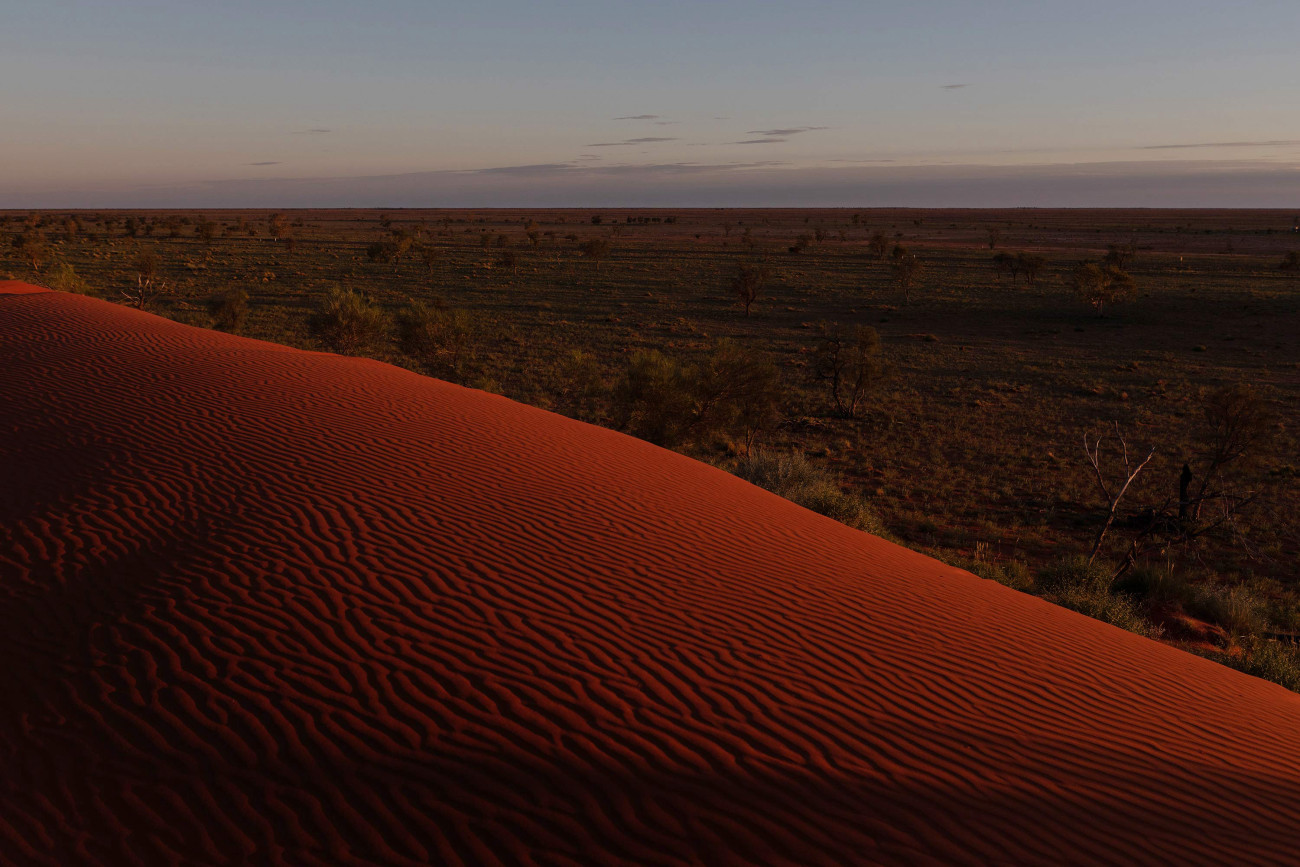
Complex web of data reveals large swathes of country controlled by small number of billionaires and large companies
Josh Nicholas, Calla Wahlquist, Andy Ball and Nick Evershed
Who owns the Australian outback is a vexed question. The true answer is First Nations peoples, whose ownership stems back 60,000 years. The legal answer is more complex. It’s a mess of titles – freehold, pastoral leases, crown leases, public land, native title and land held by Aboriginal trusts.
And no two jurisdictions store or share that data in the same way.
Six months ago Guardian Australia set out to learn who owns the outback. The data we received was unwieldy, incomplete, inconsistent and often came with a hefty price tag. There is no nationally consistent protocol for recording land tenure and land use information, or even clearly established definitions of what constitutes ownership or control of land.
So, in the absence of official data, we have collated large datasets from every state and territory and pieced together a database of land ownership. We then looked to the work of a rural newspaper, the Weekly Times .. https://www.weeklytimesnow.com.au/ , which has been tracking farm ownership. We also looked at information contained in media reports, official websites of known major landowners, cattle brand directories, government servers and other online maps.
The information we have sourced paints a picture of increasingly consolidated land ownership in outback Australia and a growing Indigenous estate.
Who owns Australia?
Showing land categorised by tenure type into three categories. Notes: 1) Pastoral leases are grouped with private ownership as the leaseholder effectively has control of the land for some purposes, though not to the same degree as for freehold. 2) The percentage for Indigenous ownership shows two measures, the first being exclusive title areas, the second includes non-exclusive native title areas 3) Crown Leases shows areas in NSW and TAS for which we were unable to determine if they are pastoral or public-use lands
Private and pastoral 54.5% ... Public 14.9% ... Indigenous 26.6% - 54.17%
[IMAGE ]Land use
* Indigenous
* Private and pastoral
* Public
* Crown Leases
* Unknown
Leaflet
See the notes section at the end of this article for data sources and other important notes about the map data
What the data shows
Pastoral leases cover 44% of Australia, according to Austrade. Pastoral leases are defined by Austrade as a title issued for the lease of an area of crown land to use for the limited purpose of grazing of stock and associated activities. We were able to identify the leaseholders for just over half that area, pulling together data on more than 400 owners who together hold 700 stations covering 189.5m hectares – or about a quarter of the country.
The person who holds the most land in this pastoral-lease data, by far, is the Western Australian mining magnate Gina Rinehart, [See below for one of many on the board with a Rinehart mention] who controls 9.2m hectares, or 1.2% of Australia’s landmass, through three different corporate entities.
The biggest corporate landholder is the ASX-listed Australian Agricultural Company. AACo’s biggest shareholder is the Bahamas-based AA Trust, controlled by the British billionaire Joe Lewis, who is also the owner of the UK football team Tottenham Hotspur.
About 40% of Australia is covered by native title, in both exclusive and shared title. Australian government reports state that Indigenous communities hold the freehold title to 17% of the country, mainly in the Northern Territory and South Australia.
Guardian Australia’s definition of Indigenous tenure, for mapping purposes, includes exclusive-possession native title and freehold, which confer the right to exclude others from the land. This amounts to about 26% of Australia’s landmass. This definition does not invalidate non-exclusive native title – land that features other forms of ownership such as pastoral stations – or Indigenous ownership in areas where native title has been extinguished. When non-exclusive native title is included, the proportion of Australia is about 54%.
Keven Smith, a Torres Strait man and chief executive of Queensland South Native Title Services, says the connection of traditional owners to a place is not defined by whether they are able to be granted native title.
“If you ask the question of who owns Australia, I would say that First Nations people own this country,” Smith says. “Even though there’s limited application of native title over the four corners of this nation, cultural heritage is tenure-blind.”
Continued - https://www.theguardian.com/australia-news/ng-interactive/2021/may/17/who-owns-australia
See also: The 0.01 Per Cent: The Rising Influence of Vested Interests in Australia
Wayne Swan
[Inserted October 2023 - https://www.google.com/search?client=firefox-b-d&q=wayne+swan+australia+&bshm=rimc/1]
The Monthly | The Monthly Essays | March 2012 |
Billionaire activists: Clive Palmer, Andrew Forrest and Gina Rinehart. © Philip
Norrish/Newspix; Greg Wood/AAP; Tony McDonough/AAP
The rising influence of vested interests is threatening Australia’s egalitarian social contract.
A decade ago, as I waited for my order outside a Maroochydore fish and chip shop, a tall, barefoot young man strolled past wearing a T-shirt that read: ‘Greed is good. Trample the weak. Hurdle the dead.’ Those brutal lines seemed to encapsulate what was then a growing sense of unease in Australia. The world of my Queensland childhood, governed by its implicit assumptions of equality and mutual care, was being driven from sight by a combination of ruthless individualism and unquestioning materialism. Looking out for number one was not only tolerated but encouraged by a government whose agenda, particularly in industrial relations, seemed very far from the social contract, based on a fair day’s pay for a fair day’s work with a decent social safety net for the vulnerable, that had served our nation so well for so long.
Today, when a would-be US president, Mitt Romney, is wealthier than 99.9975% of his fellow Americans, and wealthier than the last eight presidents combined, there’s a global conversation raging about the rich, the poor, the gap between them, and the role of vested interests in the significant widening of that gap in advanced economies over the past three decades.
This is a debate Australia too must be part of. We’ve always prided ourselves on being a nation that’s more equal than most – a place where, if you work hard, you can create a better life for yourself and your family. Our egalitarian spirit is the product of our history and our national character, as well as the institutions and safeguards built up over more than a century. This spirit informed our stimulus response to the global financial crisis, and meant we avoided the kinds of immense social dislocation that occurred elsewhere in the developed world.
But Australia’s fair go is today under threat from a new source. To be blunt, the rising power of vested interests is undermining our equality and threatening our democracy. We see this most obviously in the ferocious and highly misleading campaigns waged in recent years against resource taxation reforms and the pricing of carbon pollution. The infamous billionaires’ protest against the mining tax would have been laughed out of town in the Australia I grew up in, and yet it received a wide and favourable reception two years ago. A handful of vested interests that have pocketed a disproportionate share of the nation’s economic success now feel they have a right to shape Australia’s future to satisfy their own self-interest.
So I write this essay to make a simple point: if we don’t
grow together economically, our community will grow apart.
Of course, rewards should be proportionate to effort, recognising the hard work and entrepreneurship that create wealth and employment. We should not seek pure equality, but we do need to combat the types of disparities in opportunity that damage our society. That’s why providing more people with a good education and a decent job with fair rights and conditions should be an economic as well as a moral goal.
[...]
he latest example of this is the foray by Australia’s richest person, Gina Rinehart, into Fairfax Media, reportedly in an attempt to wield greater influence on public opinion and further her commercial interests at a time when the overwhelming economic consensus is that it’s critical to use the economic weight of the resources boom to strengthen the entire economy. Without a blush, her friend and fellow media owner John Singleton let the cat out of the bag when he told the Sydney Morning Herald that he and Rinehart had been “able to overtly and covertly attack governments … because we have people employed by us like Andrew Bolt and Alan Jones and Ray Hadley who agree with [our] thinking”.
I fear Australia’s extraordinary success has never been in more jeopardy than right now because of the rising power of vested interests. This poison has infected our politics and is seeping into our economy. Though these vested interests have not yet prevailed, every day their demands get louder.
November, 2912, more - https://investorshub.advfn.com/boards/read_msg.aspx?message_id=81738568
The Modern Outback
Who owns Australia?
Complex web of data reveals large swathes of country controlled by small number of billionaires and large companies
Josh Nicholas, Calla Wahlquist, Andy Ball and Nick Evershed
Who owns the Australian outback is a vexed question. The true answer is First Nations peoples, whose ownership stems back 60,000 years. The legal answer is more complex. It’s a mess of titles – freehold, pastoral leases, crown leases, public land, native title and land held by Aboriginal trusts.
And no two jurisdictions store or share that data in the same way.
Six months ago Guardian Australia set out to learn who owns the outback. The data we received was unwieldy, incomplete, inconsistent and often came with a hefty price tag. There is no nationally consistent protocol for recording land tenure and land use information, or even clearly established definitions of what constitutes ownership or control of land.
So, in the absence of official data, we have collated large datasets from every state and territory and pieced together a database of land ownership. We then looked to the work of a rural newspaper, the Weekly Times .. https://www.weeklytimesnow.com.au/ , which has been tracking farm ownership. We also looked at information contained in media reports, official websites of known major landowners, cattle brand directories, government servers and other online maps.
The information we have sourced paints a picture of increasingly consolidated land ownership in outback Australia and a growing Indigenous estate.
Who owns Australia?
Showing land categorised by tenure type into three categories. Notes: 1) Pastoral leases are grouped with private ownership as the leaseholder effectively has control of the land for some purposes, though not to the same degree as for freehold. 2) The percentage for Indigenous ownership shows two measures, the first being exclusive title areas, the second includes non-exclusive native title areas 3) Crown Leases shows areas in NSW and TAS for which we were unable to determine if they are pastoral or public-use lands
Private and pastoral 54.5% ... Public 14.9% ... Indigenous 26.6% - 54.17%
[IMAGE ]Land use
* Indigenous
* Private and pastoral
* Public
* Crown Leases
* Unknown
Leaflet
See the notes section at the end of this article for data sources and other important notes about the map data
What the data shows
Pastoral leases cover 44% of Australia, according to Austrade. Pastoral leases are defined by Austrade as a title issued for the lease of an area of crown land to use for the limited purpose of grazing of stock and associated activities. We were able to identify the leaseholders for just over half that area, pulling together data on more than 400 owners who together hold 700 stations covering 189.5m hectares – or about a quarter of the country.
The person who holds the most land in this pastoral-lease data, by far, is the Western Australian mining magnate Gina Rinehart, [See below for one of many on the board with a Rinehart mention] who controls 9.2m hectares, or 1.2% of Australia’s landmass, through three different corporate entities.
The biggest corporate landholder is the ASX-listed Australian Agricultural Company. AACo’s biggest shareholder is the Bahamas-based AA Trust, controlled by the British billionaire Joe Lewis, who is also the owner of the UK football team Tottenham Hotspur.
About 40% of Australia is covered by native title, in both exclusive and shared title. Australian government reports state that Indigenous communities hold the freehold title to 17% of the country, mainly in the Northern Territory and South Australia.
Guardian Australia’s definition of Indigenous tenure, for mapping purposes, includes exclusive-possession native title and freehold, which confer the right to exclude others from the land. This amounts to about 26% of Australia’s landmass. This definition does not invalidate non-exclusive native title – land that features other forms of ownership such as pastoral stations – or Indigenous ownership in areas where native title has been extinguished. When non-exclusive native title is included, the proportion of Australia is about 54%.
Keven Smith, a Torres Strait man and chief executive of Queensland South Native Title Services, says the connection of traditional owners to a place is not defined by whether they are able to be granted native title.
“If you ask the question of who owns Australia, I would say that First Nations people own this country,” Smith says. “Even though there’s limited application of native title over the four corners of this nation, cultural heritage is tenure-blind.”
Continued - https://www.theguardian.com/australia-news/ng-interactive/2021/may/17/who-owns-australia
See also: The 0.01 Per Cent: The Rising Influence of Vested Interests in Australia
Wayne Swan
[Inserted October 2023 - https://www.google.com/search?client=firefox-b-d&q=wayne+swan+australia+&bshm=rimc/1]
The Monthly | The Monthly Essays | March 2012 |
Billionaire activists: Clive Palmer, Andrew Forrest and Gina Rinehart. © Philip
Norrish/Newspix; Greg Wood/AAP; Tony McDonough/AAP
The rising influence of vested interests is threatening Australia’s egalitarian social contract.
A decade ago, as I waited for my order outside a Maroochydore fish and chip shop, a tall, barefoot young man strolled past wearing a T-shirt that read: ‘Greed is good. Trample the weak. Hurdle the dead.’ Those brutal lines seemed to encapsulate what was then a growing sense of unease in Australia. The world of my Queensland childhood, governed by its implicit assumptions of equality and mutual care, was being driven from sight by a combination of ruthless individualism and unquestioning materialism. Looking out for number one was not only tolerated but encouraged by a government whose agenda, particularly in industrial relations, seemed very far from the social contract, based on a fair day’s pay for a fair day’s work with a decent social safety net for the vulnerable, that had served our nation so well for so long.
Today, when a would-be US president, Mitt Romney, is wealthier than 99.9975% of his fellow Americans, and wealthier than the last eight presidents combined, there’s a global conversation raging about the rich, the poor, the gap between them, and the role of vested interests in the significant widening of that gap in advanced economies over the past three decades.
This is a debate Australia too must be part of. We’ve always prided ourselves on being a nation that’s more equal than most – a place where, if you work hard, you can create a better life for yourself and your family. Our egalitarian spirit is the product of our history and our national character, as well as the institutions and safeguards built up over more than a century. This spirit informed our stimulus response to the global financial crisis, and meant we avoided the kinds of immense social dislocation that occurred elsewhere in the developed world.
But Australia’s fair go is today under threat from a new source. To be blunt, the rising power of vested interests is undermining our equality and threatening our democracy. We see this most obviously in the ferocious and highly misleading campaigns waged in recent years against resource taxation reforms and the pricing of carbon pollution. The infamous billionaires’ protest against the mining tax would have been laughed out of town in the Australia I grew up in, and yet it received a wide and favourable reception two years ago. A handful of vested interests that have pocketed a disproportionate share of the nation’s economic success now feel they have a right to shape Australia’s future to satisfy their own self-interest.
So I write this essay to make a simple point: if we don’t
grow together economically, our community will grow apart.
Of course, rewards should be proportionate to effort, recognising the hard work and entrepreneurship that create wealth and employment. We should not seek pure equality, but we do need to combat the types of disparities in opportunity that damage our society. That’s why providing more people with a good education and a decent job with fair rights and conditions should be an economic as well as a moral goal.
[...]
he latest example of this is the foray by Australia’s richest person, Gina Rinehart, into Fairfax Media, reportedly in an attempt to wield greater influence on public opinion and further her commercial interests at a time when the overwhelming economic consensus is that it’s critical to use the economic weight of the resources boom to strengthen the entire economy. Without a blush, her friend and fellow media owner John Singleton let the cat out of the bag when he told the Sydney Morning Herald that he and Rinehart had been “able to overtly and covertly attack governments … because we have people employed by us like Andrew Bolt and Alan Jones and Ray Hadley who agree with [our] thinking”.
I fear Australia’s extraordinary success has never been in more jeopardy than right now because of the rising power of vested interests. This poison has infected our politics and is seeping into our economy. Though these vested interests have not yet prevailed, every day their demands get louder.
November, 2912, more - https://investorshub.advfn.com/boards/read_msg.aspx?message_id=81738568
It was Plato who said, “He, O men, is the wisest, who like Socrates, knows that his wisdom is in truth worth nothing”
Discover What Traders Are Watching
Explore small cap ideas before they hit the headlines.



